You've spent months perfecting your SEO strategy. Your content ranks well in Google. Your technical foundations are solid. But when someone asks ChatGPT or Claude for recommendations in your space, your brand doesn't show up. Meanwhile, your competitors are getting cited, mentioned, and recommended—driving traffic you can't even track in Google Analytics.
This is the new reality of organic discovery. AI-powered search engines and assistants are fundamentally changing how users find content online. When someone asks an AI model for advice, product recommendations, or how-to guidance, traditional search rankings matter less than whether these models recognize and trust your brand.
The shift creates both challenge and opportunity. The challenge? Your existing SEO playbook doesn't fully translate to AI visibility. The opportunity? Most brands haven't adapted yet, which means early movers can establish authority before their markets become saturated.
This guide walks you through a practical, step-by-step process to optimize your content for AI discovery—what's increasingly called Generative Engine Optimization (GEO). You'll learn how to audit your current AI visibility, structure content that AI models can easily parse and cite, and build the authority signals that get your brand mentioned in AI-generated responses.
By the end, you'll have a repeatable system for driving organic traffic through AI optimization that complements your existing SEO strategy. Let's start with understanding exactly where you stand today.
Step 1: Audit Your Current AI Visibility Baseline
You can't improve what you don't measure. Before implementing any optimization strategy, you need to understand how AI models currently perceive and mention your brand.
Start by querying the major AI platforms—ChatGPT, Claude, and Perplexity—with prompts your target audience would actually use. Don't just search for your brand name. Ask questions like "What are the best tools for [your category]?" or "How do I solve [problem your product addresses]?" These natural language queries reveal whether AI models consider you relevant enough to recommend unprompted.
Document everything systematically. Create a spreadsheet tracking which platforms mention you, in what context, and with what sentiment. Note whether mentions are positive, neutral, or negative. Capture the exact phrasing AI models use when describing your brand or product. This baseline becomes your benchmark for measuring improvement.
Here's where it gets interesting: query the same prompts for your competitors. This competitive analysis reveals gaps in your current strategy. If competitors consistently get mentioned for certain use cases while you don't, you've identified specific content opportunities to address.
Pay attention to mention frequency and accuracy. Some brands appear in AI responses but with outdated information or incorrect details. Others get mentioned only when directly asked about, never as organic recommendations. The goal is unprompted, accurate mentions in response to relevant queries.
Track context carefully. Are you mentioned as a leader, an alternative, or barely acknowledged? Context signals how AI models have learned to position your brand based on their training data and accessible web content. Understanding organic traffic from AI search patterns helps you benchmark against industry standards.
Set up a simple tracking system you can revisit monthly. AI models update frequently, and your visibility can shift as they incorporate new training data and web sources. Regular audits help you spot trends—both positive and negative—before they significantly impact your organic traffic.
Success indicator: You should have a clear picture of your current AI visibility across at least three major platforms, documented mentions for five to ten relevant queries, and identified three to five specific gaps where competitors appear but you don't.
Step 2: Structure Content for AI Comprehension
AI models don't read content the same way humans do. They parse structure, extract key information, and identify quotable statements that can be cited with confidence. Your content formatting directly impacts whether AI can understand and reference your expertise.
Start with hierarchical formatting using descriptive H2 and H3 headings that answer specific questions. Instead of vague headings like "Getting Started," use "What Tools Do You Need Before Beginning?" AI models scan these headings to understand content structure and locate relevant information quickly.
Think of your headings as a table of contents that could stand alone. Each should clearly signal what the section covers. This helps AI models determine which parts of your content answer specific user queries.
Include definition blocks and comparison elements that AI can easily extract. When you introduce a concept, provide a clear, concise definition in its own paragraph. When comparing options, structure information consistently so AI models can parse the differences accurately.
Write quotable statements that AI models can directly cite. These are clear, authoritative sentences that answer common questions without requiring surrounding context. For example: "Generative Engine Optimization focuses on getting cited in AI-generated responses rather than ranking in traditional search results." That's a complete, citable statement.
Break complex information into digestible chunks. AI models favor content they can confidently summarize and cite. Dense paragraphs filled with multiple concepts make extraction difficult. One clear idea per paragraph increases your citability. Mastering AI content optimization for search requires understanding these structural principles.
Use formatting to highlight key takeaways. Bold important terms on first use. Structure processes as clear, numbered steps. Present options as distinct, labeled paragraphs rather than running text. This visual hierarchy helps both human readers and AI parsers.
Verify your success by testing how AI models summarize your content. Paste a URL into ChatGPT or Claude and ask it to summarize the key points. If the AI accurately captures your main ideas and can quote specific passages, your structure is working. If it struggles or misrepresents your content, your formatting needs refinement.
The goal isn't to write for robots at the expense of humans. Well-structured content serves both audiences. Clear headings, concise definitions, and quotable statements make your content more valuable to readers while simultaneously making it more accessible to AI models.
Step 3: Build Topical Authority Through Content Clusters
AI models prioritize sources they perceive as authoritative on specific subjects. You build this authority through comprehensive coverage of core topics, not scattered content across random subjects.
Map your core topics first. What three to five subjects does your brand genuinely have deep expertise in? These become your content pillars—the foundation of your AI visibility strategy. Each pillar should be substantial enough to support multiple related subtopics.
Create comprehensive pillar content that covers subjects exhaustively. These aren't surface-level overviews. They're definitive guides that address every major aspect of a topic. When AI models scan for authoritative sources on a subject, thorough coverage signals expertise.
Think of pillar content as the hub in a hub-and-spoke model. From each pillar, you'll develop supporting content that addresses related long-tail queries and subtopics. This supporting content links back to the pillar, creating a network of topical relevance.
Develop supporting content strategically. Each piece should dive deep into a specific subtopic while connecting to the broader pillar theme. If your pillar covers "AI Optimization Strategies," supporting pieces might address "How AI Models Evaluate Content Authority" or "Technical Requirements for AI Crawler Access." Understanding the difference between generative engine optimization vs SEO helps you create content that serves both discovery channels.
Implement strategic internal linking that signals topic relationships to AI crawlers. Link from supporting content back to pillars using descriptive anchor text. Link between related supporting pieces. This creates a semantic web that helps AI models understand your topical expertise.
Focus on depth over breadth. Many brands make the mistake of publishing shallow content across dozens of topics. AI models favor sources that demonstrate deep knowledge in specific areas. Better to be the definitive source on three topics than a mediocre source on thirty.
Update and expand your content clusters regularly. As new questions emerge in your field, create supporting content that addresses them. As your understanding deepens, enhance your pillar content with additional insights. This ongoing development reinforces your authority signals.
Success indicator: You should have at least one fully developed content cluster with a comprehensive pillar piece and five to eight supporting articles, all strategically interlinked and covering a topic exhaustively.
Step 4: Optimize Technical Foundations for AI Crawlers
Even brilliant content won't drive AI visibility if models can't efficiently access and understand it. Technical optimization creates the foundation for AI discovery.
Start with schema markup implementation. Add structured data that helps AI models understand content context and extract key information. FAQ schema explicitly signals question-answer pairs. HowTo schema identifies step-by-step processes. Article schema provides publication details and content structure.
Schema markup acts as metadata that AI models can parse more easily than unstructured HTML. When an AI encounters properly marked-up content, it can quickly identify what type of information the page contains and how to extract relevant details.
Create or update your llms.txt file. This emerging standard provides guidelines for how AI models should crawl and interact with your site. Think of it as robots.txt specifically for large language models. You can specify which content you want AI models to prioritize, how often they should check for updates, and any special instructions for citation. Exploring LLM optimization tools for AI visibility can help you implement these technical requirements effectively.
Ensure fast indexing through IndexNow integration. This protocol notifies search engines and AI platforms immediately when you publish or update content, rather than waiting for them to discover changes through regular crawling. Faster indexing means your latest content becomes available for AI citations sooner.
Maintain clean sitemap structures that clearly organize your content hierarchy. AI models use sitemaps to understand site architecture and discover new content. A well-organized sitemap helps them identify your pillar content and understand how supporting pieces relate to broader topics.
Remove crawl barriers that might prevent AI access. Check your robots.txt file to ensure you're not accidentally blocking AI crawlers. Verify that important content isn't hidden behind authentication walls or JavaScript rendering that some AI crawlers can't process.
Optimize page speed for efficient AI bot access. While AI crawlers aren't affected by page speed the same way human visitors are, faster-loading pages allow crawlers to access more of your content within their crawl budget. Slow sites may get partially indexed, missing important pages.
Test your technical implementation systematically. Use schema validation tools to verify your markup is correct. Check server logs to confirm AI crawlers are accessing your content. Monitor indexing speed to ensure your IndexNow integration is working properly.
Step 5: Amplify Authority Signals Across the Web
AI models don't just evaluate your owned content. They assess authority based on how other trusted sources reference and discuss your brand across the web.
Earn mentions on high-authority sites that AI models frequently reference in their training data and real-time retrieval. Publications like industry-leading blogs, established news sources, and respected trade journals carry significant weight. A mention in these sources signals credibility to AI models.
Contribute expert insights to industry publications and podcasts. Guest articles, expert quotes, and podcast appearances create citation networks that reinforce your authority. When multiple respected sources cite your expertise, AI models learn to associate your brand with that topic area.
Focus on quality over quantity. A single mention in a highly authoritative source carries more weight than dozens of mentions in low-quality directories. AI models have learned to evaluate source credibility, and they prioritize information from trusted publishers. Implementing effective AI search optimization for brands requires building these external authority signals systematically.
Maintain consistent brand information across directories, profiles, and knowledge bases. Inconsistent information confuses AI models and reduces their confidence in citing you. Ensure your company description, key offerings, and core messaging remain consistent wherever your brand appears.
Monitor brand mentions across the web and respond when appropriate. Engaging with mentions—whether through comments, clarifications, or acknowledgments—keeps information accurate and demonstrates active brand presence. AI models may incorporate this engagement as a positive signal.
Build relationships with other authoritative voices in your space. Collaborative content, mutual citations, and genuine professional relationships create natural link and mention networks that AI models recognize as indicators of industry standing.
Success indicator: You should have at least three new mentions from authoritative industry sources, maintained consistent brand information across major directories, and established relationships with two to three other recognized experts in your field.
Step 6: Implement Continuous Monitoring and Iteration
AI visibility isn't a set-it-and-forget-it strategy. Models update frequently, competitor strategies evolve, and your own content needs ongoing refinement based on performance data.
Set up regular AI visibility checks across all major platforms. Weekly checks work well for brands actively building visibility. Monthly checks suffice for established brands maintaining position. Use the same queries you established in your baseline audit to track changes over time.
Track which content pieces drive the most AI mentions and analyze their common characteristics. Do certain formats get cited more frequently? Do specific topics generate more mentions? Identifying patterns helps you double down on what works.
Look for structural similarities in your most-cited content. Perhaps AI models favor your content with comparison tables. Maybe your definition-heavy articles get quoted more often. These insights inform your content creation strategy going forward. Reviewing AI search optimization tools can help you automate much of this monitoring process.
Test different content structures and formats systematically. Try varying heading styles, definition placements, or use of schema markup. Compare AI citation rates between variations. This A/B testing reveals what AI models prefer to reference.
Monitor AI platform updates and changes in how models surface information. When ChatGPT releases a new version or Perplexity adjusts its sourcing algorithm, your visibility may shift. Stay informed about platform changes so you can adapt quickly.
Adjust your strategy based on data, not assumptions. If certain topics consistently underperform in AI mentions despite strong traditional SEO performance, investigate why. Perhaps the content structure needs refinement, or maybe you need stronger authority signals in that area. Understanding how to increase organic traffic with AI requires this data-driven approach.
Review competitor visibility regularly. Track not just whether they appear in AI responses, but how they're positioned and what content drives their mentions. Competitive intelligence reveals emerging opportunities and potential threats to your visibility.
Success indicator: You should have a documented monitoring schedule, tracking spreadsheet with at least three months of data, identified patterns in your most-cited content, and made at least two strategic adjustments based on performance insights.
Your AI Optimization Action Plan
Growing organic traffic through AI optimization requires a systematic approach that goes beyond traditional SEO. The strategies in this guide work together as an integrated system—each step builds on the previous ones to create sustainable AI visibility.
Your implementation roadmap starts with understanding where you currently stand. Without a baseline audit, you're optimizing blind. Once you know your starting point, you can structure content that AI models can easily comprehend and cite. Building topical authority through content clusters signals expertise, while technical optimization ensures AI crawlers can efficiently access your content. Authority signals across the web reinforce your credibility, and continuous monitoring keeps your strategy aligned with AI platform changes.
Quick-reference checklist to get started: Complete your AI visibility audit across ChatGPT, Claude, and Perplexity. Restructure your three most important pages with AI-friendly formatting and clear hierarchical headings. Build or expand one content cluster around a core topic with comprehensive pillar content. Implement schema markup and create your llms.txt file. Develop an authority-building outreach plan targeting three high-value publications. Establish your monitoring cadence and tracking system.
The brands winning in AI-driven discovery aren't waiting for perfect strategies. They're implementing, testing, and iterating based on real performance data. Start with Step 1 today—understanding where you currently stand in AI responses is the foundation for everything that follows.
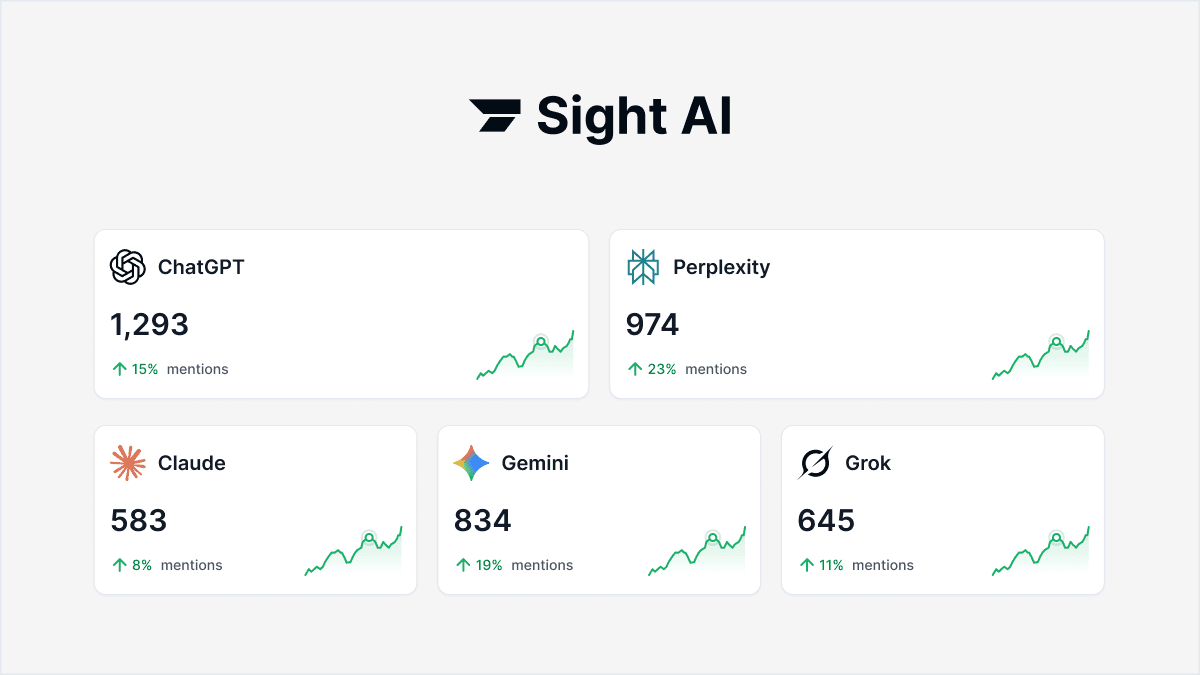
Start tracking your AI visibility today and see exactly where your brand appears across top AI platforms. Stop guessing how AI models like ChatGPT and Claude talk about your brand—get visibility into every mention, track content opportunities, and automate your path to organic traffic growth.