Organic traffic growth has fundamentally shifted. Traditional SEO tactics—keyword stuffing, mass link building, and generic content—no longer deliver the results they once did. Search engines have evolved, and AI now powers both how content gets discovered and how users find answers.
The brands winning organic traffic today are those leveraging AI strategically: using it to identify content gaps, optimize for AI-powered search experiences, and publish at scale without sacrificing quality.
This guide walks you through a practical, step-by-step process to improve your organic traffic using AI tools and strategies. Whether you're a marketer looking to scale content production, a founder trying to grow without a massive team, or an agency managing multiple client sites, these steps will help you build a sustainable organic traffic engine.
You'll learn how to audit your current performance, identify AI-driven opportunities, create optimized content efficiently, and track what's actually working. Let's get into it.
Step 1: Audit Your Current Organic Performance and AI Visibility
Before you can improve anything, you need to know where you stand. Think of this as taking a diagnostic snapshot of your entire organic presence—both in traditional search engines and across AI platforms.
Start with your traditional organic metrics. Pull data from Google Analytics or your preferred analytics platform covering the past 90 days. Identify your top-performing pages by organic sessions, pages that have seen traffic declines, and content that's consistently driving conversions. This gives you a baseline understanding of what organic traffic means in Google Analytics.
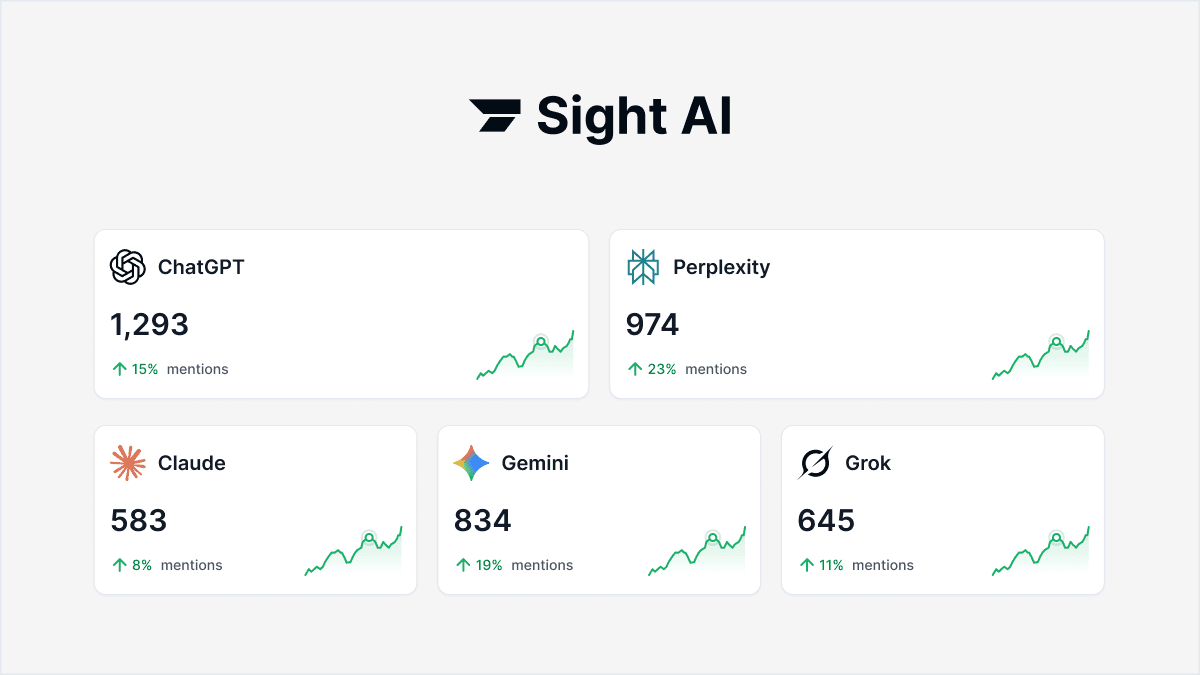
But here's where it gets interesting: you also need to understand your AI visibility. AI-powered search experiences like ChatGPT, Claude, and Perplexity are changing how users discover information. When someone asks these platforms for recommendations, solutions, or information in your niche, does your brand get mentioned?
Run queries related to your industry, products, or services across major AI platforms. Document when and how your brand appears in responses. Pay attention to the context—are you being recommended as a solution? Is the sentiment positive, neutral, or negative? Are you mentioned at all?
The gap between traditional search visibility and AI search visibility often reveals significant opportunities. You might rank well on Google for certain terms but be completely invisible when AI models answer related questions. Or you might discover that competitors with weaker traditional SEO are getting mentioned more frequently in AI responses because their content structure aligns better with how AI models process information.
Document your baseline metrics: organic sessions, keyword rankings, pages indexed, and AI mention frequency. This audit becomes your reference point for measuring progress over the next 60-90 days.
Step 2: Identify High-Impact Content Opportunities Using AI Analysis
Now that you understand your current position, it's time to identify where to focus your content efforts. The key is finding opportunities that deliver results in both traditional search and AI-powered discovery.
Use AI tools to analyze competitor content and identify gaps in your niche. Look for topics where competitors rank well but their content is outdated, superficial, or doesn't fully address user intent. These represent low-hanging fruit—topics with proven demand but inadequate existing content.
Map your content opportunities to different stages of user intent. Awareness-stage content answers broad questions and educates users about problems they're experiencing. Consideration-stage content compares solutions and explores different approaches. Decision-stage content addresses specific implementation questions and objections.
Prioritize topics based on three factors: search volume, competition level, and AI discoverability potential. Search volume tells you how many people are actively looking for this information. Competition level indicates how difficult it will be to rank. Understanding how to improve AI search visibility measures how likely AI models are to reference this type of content when answering related questions.
Here's a practical prioritization framework: high-value opportunities have moderate to high search volume, manageable competition, and strong AI discoverability potential. These are topics where comprehensive, well-structured content can gain traction in both traditional and AI search relatively quickly.
Create a content calendar with 30-60 day targets. Don't try to tackle everything at once. Focus on producing 8-12 high-quality pieces in your first month, then scale based on results. Each piece should target a specific keyword cluster and address a clear user intent.
Step 3: Generate SEO and GEO-Optimized Content at Scale
Content creation is where strategy meets execution. The goal is producing high-quality, optimized content efficiently—without sacrificing the depth and authority that both search engines and AI models reward.
Structure your content for dual optimization: traditional SEO and GEO (Generative Engine Optimization). Traditional SEO focuses on keyword placement, meta descriptions, header hierarchy, and internal linking. GEO focuses on how AI models consume and reference content: clear structure, authoritative sourcing, direct answers to questions, and comprehensive topic coverage.
Clear Structure: Use descriptive headings that directly state what each section covers. AI models parse content hierarchically, so well-organized articles with logical flow are more likely to be referenced accurately.
Authoritative Sourcing: When making claims or citing data, reference credible sources. AI models tend to favor content that demonstrates expertise and backs up assertions with evidence.
Direct Answers: Include concise, direct answers to the main questions your content addresses. Think of these as the "TL;DR" sections that AI models can easily extract and present to users.
Comprehensive Coverage: Address topics thoroughly rather than superficially. AI models are more likely to reference content that covers multiple dimensions of a topic rather than generic overviews.
Use AI writing tools to improve SEO with specialized capabilities for different content types. Listicles require different structural approaches than step-by-step guides or explainer articles. Tools with specialized agents can adapt tone, structure, and depth based on content type while maintaining consistency with your brand voice.
Maintain quality control through editorial review. AI can accelerate content production dramatically, but human oversight ensures accuracy, brand voice consistency, and strategic alignment. Establish a review process where subject matter experts validate technical accuracy and editors ensure readability and engagement.
Step 4: Optimize Technical SEO for Faster Indexing and Discovery
Even brilliant content won't drive traffic if search engines can't find and index it quickly. Technical optimization ensures your content gets discovered and evaluated as soon as it publishes.
Implement the IndexNow protocol for instant content indexing. This Microsoft-developed protocol allows websites to notify search engines immediately when content is published or updated. Instead of waiting days or weeks for search engine crawlers to discover new pages, IndexNow reduces indexing delays to minutes.
Automate sitemap updates when new content publishes. Your XML sitemap should reflect your current site structure in real-time. Many content management systems can automatically regenerate sitemaps and ping search engines when new pages go live.
Ensure proper schema markup for enhanced search visibility. Schema provides structured data that helps search engines understand your content's context, type, and key information. For articles, implement Article schema with properties like headline, author, date published, and featured image. For how-to content, use HowTo schema to highlight step-by-step instructions.
Monitor crawl efficiency and fix indexing issues proactively. Use Google Search Console to identify pages that aren't being indexed, crawl errors, and mobile usability issues. Learning how to improve content indexing speed helps you address these problems immediately rather than letting them accumulate. A single technical issue can prevent dozens of pages from ranking effectively.
Step 5: Build Authority Through Strategic Internal Linking and Content Clusters
Individual articles drive traffic. Content ecosystems build authority. The way you connect your content determines how effectively you establish topical expertise in your niche.
Create topic clusters that demonstrate comprehensive coverage of your core subjects. A topic cluster consists of a pillar page that covers a broad topic comprehensively, supported by cluster content that addresses specific subtopics in depth. All cluster content links back to the pillar page, and the pillar page links out to relevant cluster content.
For example, if your pillar page covers "AI-Powered Marketing Strategies," your cluster content might include articles on AI content creation for organic traffic, AI analytics tools, AI-powered personalization, and AI chatbot implementation. Each cluster article explores its specific topic thoroughly while connecting back to the broader pillar content.
Implement strategic internal linking to distribute page authority effectively. When you publish a new article, identify 3-5 existing high-performing pages where you can add contextually relevant links to the new content. This signals to search engines that the new page is part of your site's core content ecosystem.
Update existing high-performing content with links to new relevant pages. Your older articles likely already have authority and rankings. Adding links from these established pages to newer content helps the new pages gain traction faster.
Structure content hubs that AI models can easily understand and reference. When AI platforms analyze your site, mastering how to improve content discoverability makes it easier for them to understand your areas of expertise and reference your content accurately when answering related questions.
Step 6: Track Results and Iterate Based on AI Visibility Metrics
What gets measured gets improved. Tracking the right metrics tells you what's working, what's not, and where to focus your efforts next.
Monitor both traditional organic metrics and AI visibility scores. Traditional metrics—organic sessions, keyword rankings, click-through rates, and conversion rates—show how you're performing in search engines. Understanding how to improve AI visibility shows how frequently and favorably AI models mention your brand when answering questions in your domain.
Track brand mentions and sentiment across major AI platforms. When your brand appears in AI-generated responses, is the context positive? Are you being recommended as a solution? Understanding sentiment helps you identify content that's building positive associations versus content that might need adjustment.
Identify which content types drive the most AI recommendations. You might discover that comprehensive guides get referenced more frequently than listicles, or that data-driven content performs better than opinion pieces. These insights inform your content strategy going forward.
Establish a monthly review cycle to analyze performance and adjust strategy. Set aside time each month to review your metrics, identify top-performing content, and understand why certain pieces succeeded while others underperformed. Look for patterns in topics, formats, and optimization approaches.
Double down on what's working. If certain content types or topics consistently drive traffic and AI mentions, produce more of them. If specific optimization techniques improve indexing speed or ranking performance, apply them across your entire content library.
Pivot from what isn't working. If certain topics generate minimal traffic despite strong optimization, they might not align with actual user demand. If specific content formats consistently underperform, adjust your approach or shift resources to more effective formats.
Putting It All Together
Improving organic traffic with AI isn't about replacing your existing SEO strategy—it's about augmenting it with smarter tools and new optimization targets. By auditing your current visibility, identifying AI-driven opportunities, creating optimized content efficiently, and tracking results across both traditional and AI search, you build a compounding traffic engine.
The brands winning organic traffic today understand that search has evolved beyond traditional keyword rankings. AI-powered search experiences are changing how users discover information, and visibility in these new channels matters as much as traditional SERP positions.
Quick Checklist:
Completed organic and AI visibility audit
Identified 10+ high-impact content opportunities
Published first batch of SEO/GEO-optimized content
Implemented IndexNow for faster indexing
Built internal linking structure for topic clusters
Set up tracking for AI visibility metrics
Start with Step 1 this week. The brands that move fastest on AI-optimized content will capture the organic traffic others leave on the table.
Stop guessing how AI models like ChatGPT and Claude talk about your brand—get visibility into every mention, track content opportunities, and automate your path to organic traffic growth. Start tracking your AI visibility today and see exactly where your brand appears across top AI platforms.