Organic traffic growth has become increasingly challenging as search landscapes fragment across traditional engines and AI platforms. Marketers who relied on conventional SEO tactics now find their strategies delivering diminishing returns while competitors capture visibility in new channels.
The solution isn't working harder—it's working smarter by combining proven SEO fundamentals with emerging AI visibility strategies.
This guide walks you through six actionable steps to speed up your organic traffic growth, from auditing your current performance gaps to leveraging AI-optimized content that gets discovered across multiple platforms. Whether you're a founder watching traffic plateau or a marketing team struggling to scale content production, these steps provide a practical roadmap for faster results.
Step 1: Audit Your Current Traffic Sources and Identify Growth Gaps
Before you can accelerate growth, you need to understand exactly where you stand today. Think of this audit as your diagnostic scan—it reveals what's working, what's broken, and where your biggest opportunities hide.
Start by diving into Google Analytics and Search Console. Export your top 50 pages by organic traffic over the past 90 days. Which pages are your workhorses? Which ones underperform despite targeting valuable keywords? Look for pages ranking on page two of search results—these represent your quickest wins since they're already close to breaking through.
Next, map your traffic sources beyond Google. Many marketers still treat Google as the only game in town, but your audience increasingly discovers content through AI platforms like Perplexity, ChatGPT, and Claude. Check your referral traffic sources and direct traffic patterns. Are you seeing visits from users who likely discovered you through AI-generated recommendations?
Now comes the competitive intelligence phase. Identify 3-5 direct competitors and run their domains through SEO tools to see where they rank but you don't. These content gaps represent proven topics your audience cares about—topics where competitors are already capturing traffic you're missing.
Document your baseline metrics in a simple spreadsheet: total monthly organic sessions, average keyword rankings for your top 20 target terms, pages indexed in Search Console, and any AI platform mentions you can identify. This baseline becomes your measuring stick for improvement.
The key insight from this audit? Most businesses discover that 80% of their organic traffic comes from just 20% of their content. Your job is to identify which content types and topics drive that 20%, then systematically create more of what works while fixing or retiring what doesn't.
Step 2: Optimize Existing Content for Quick Ranking Improvements
Your existing content library represents your fastest path to traffic gains. While new content takes weeks or months to rank, optimized existing pages can jump positions within days.
Start with content freshness updates. Search engines favor recently updated content, especially for topics where timeliness matters. Go through your top-performing articles and update any statistics, examples, or references to reflect current 2026 data. Replace outdated screenshots, refresh product comparisons, and remove references to deprecated tools or strategies.
Next, tackle on-page SEO elements systematically. Rewrite title tags to include your target keyword naturally while staying under 60 characters. Craft compelling meta descriptions that act as mini-advertisements for your content—these don't directly impact rankings but dramatically affect click-through rates from search results. Review your header structure to ensure you're using H2 and H3 tags logically to break up content and signal topic hierarchy to search engines.
Internal linking is your secret weapon for distributing page authority. Add 3-5 contextual internal links from high-authority pages on your site to the content you're optimizing. This tells search engines these pages matter and helps crawlers discover them more efficiently.
Enhance content depth by answering related questions searchers ask. Check the "People Also Ask" boxes in Google for your target keywords. These questions reveal exactly what your audience wants to know—add sections addressing the most relevant ones. This expansion often helps you capture featured snippet positions and rank for additional long-tail variations.
Success indicator: You should see improved rankings within 2-4 weeks for updated pages. Monitor Search Console to track position changes for your target keywords. If pages don't improve after optimization, they likely face authority or relevance issues that require deeper strategic fixes. For more tactics, explore these strategies to improve organic search traffic.
Step 3: Build a Content Velocity System That Scales
Consistent content production separates brands that grow from those that stagnate. But velocity without strategy just creates noise—you need a system that scales quality, not just quantity.
Create detailed content briefs before writing anything. A solid brief includes your target keyword, search intent analysis, competitor content review, required sections, and internal linking opportunities. This upfront work ensures every piece of content serves a strategic purpose and aligns with what searchers actually want.
Leverage AI content creation tools to accelerate production without sacrificing quality. Modern AI writing assistants can help you draft outlines, generate section content, and maintain consistency across articles. The key is using AI as a force multiplier for human expertise—let it handle first drafts and research compilation while you focus on adding unique insights, brand voice, and strategic positioning.
Establish a publishing cadence that maintains consistency. For most B2B SaaS companies, 2-4 quality pieces weekly hits the sweet spot between velocity and resource constraints. This pace allows you to build topical authority without burning out your team or compromising content quality.
Develop content clusters around core topics to build topical authority. Instead of random one-off articles, create hub-and-spoke content architectures. Write a comprehensive pillar page on a broad topic, then create 8-10 supporting articles that dive deep into specific subtopics. Link them all together strategically. Search engines reward this topical depth with higher rankings across the entire cluster. Learn more about content velocity for organic growth.
Common pitfall: Many teams prioritize quantity over relevance, churning out content that doesn't align with search intent. Before publishing anything, ask: "Would this genuinely help someone searching for this keyword?" If the answer isn't an enthusiastic yes, rework it until it does.
Step 4: Accelerate Indexing to Get Content Discovered Faster
Publishing content is only half the battle—search engines need to discover, crawl, and index it before it can generate any traffic. Unindexed content generates zero organic visits regardless of quality.
Implement the IndexNow protocol for instant search engine notification. IndexNow allows you to ping search engines immediately when you publish or update content, dramatically reducing the time between publication and indexing. Major search engines including Bing and Yandex support IndexNow, and the protocol has gained significant adoption for its efficiency.
Maintain an updated, clean XML sitemap submitted to Google Search Console and Bing Webmaster Tools. Your sitemap acts as a roadmap for search engine crawlers, helping them discover new content efficiently. Exclude low-value pages like thank-you pages, admin sections, and duplicate content to keep your sitemap focused on what matters.
Use strategic internal linking from high-authority pages to new content. When you publish a new article, immediately add contextual links to it from 3-5 existing pages that already rank well. This creates pathways for crawlers to discover new content quickly while passing link equity to help it rank faster. Explore additional organic traffic acceleration methods for more techniques.
Monitor indexing status in Search Console religiously. Check the Coverage report weekly to identify crawl errors, pages blocked by robots.txt, or content excluded for technical reasons. Address issues immediately—every day content sits unindexed is a day of lost traffic opportunity.
Why this matters: Companies that optimize for faster indexing often see new content start generating traffic within days instead of weeks. This acceleration compounds over time, creating a significant competitive advantage in fast-moving industries where being first to cover emerging topics captures the lion's share of traffic.
Step 5: Expand Visibility Into AI Search Platforms
Traditional SEO focused exclusively on Google rankings, but the search landscape has fundamentally shifted. Your audience increasingly discovers brands through AI-powered platforms like ChatGPT, Claude, and Perplexity.
Understanding how AI models source and recommend brands requires a different mindset. These platforms don't crawl and rank pages like traditional search engines—they synthesize information from their training data and real-time sources to generate contextual responses. When someone asks ChatGPT for software recommendations or Perplexity for industry best practices, AI models decide which brands to mention based on relevance, authority, and how well your content answers common questions.
Structure your content to answer questions AI models commonly receive. Think about the conversational queries your audience asks: "What's the best tool for X?" or "How do I solve Y problem?" Create content that directly addresses these questions with clear, authoritative answers. Use natural language and conversational tone—AI models often prefer content that reads like expert advice rather than keyword-stuffed SEO copy.
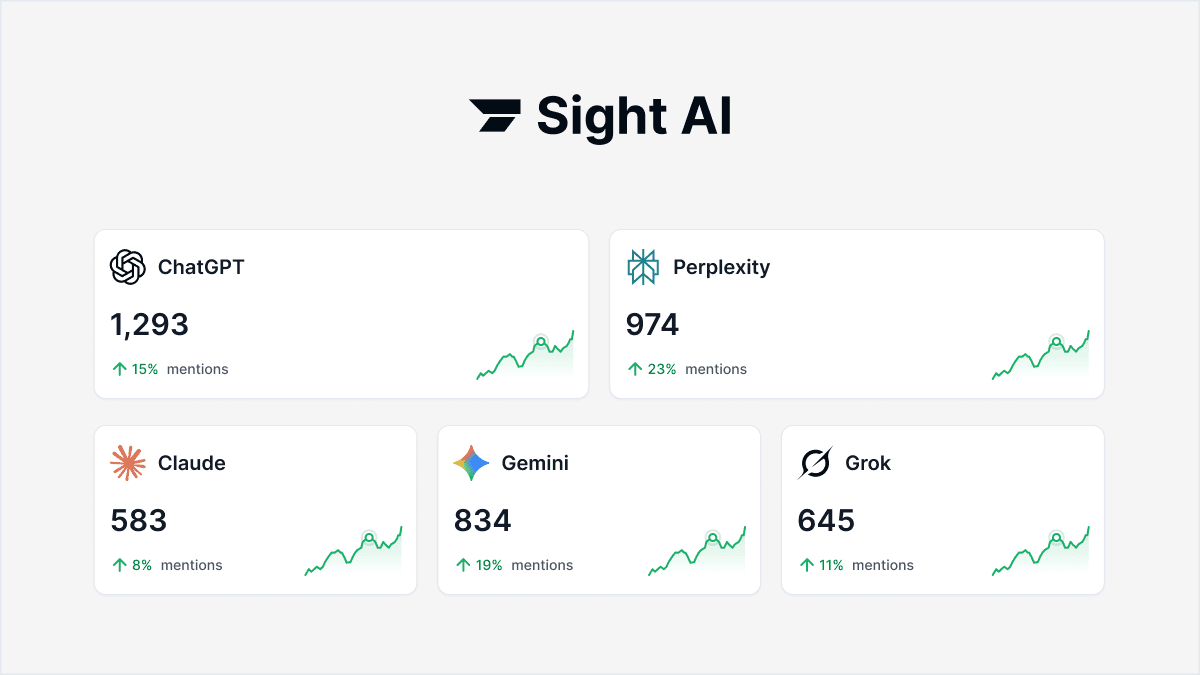
Track your brand mentions and sentiment across AI platforms. This visibility data reveals whether AI models recommend your brand, ignore it, or worse—mention competitors instead. Understanding your organic traffic from AI search baseline helps you measure improvement as you optimize for generative engine optimization (GEO).
Optimize for GEO alongside traditional SEO. While traditional SEO focuses on ranking for specific keywords, GEO emphasizes becoming the authoritative source AI models reference when generating responses. This means creating comprehensive, well-structured content that establishes topical expertise. Include clear definitions, step-by-step explanations, and practical examples that AI models can confidently cite. Dive deeper into organic growth through AI optimization strategies.
Success indicator: Increased brand mentions in AI-generated responses signal growing AI visibility. As you optimize content for GEO, you should see your brand recommended more frequently when users ask AI platforms for solutions in your category. This visibility often translates into direct traffic as users follow AI recommendations to learn more about your offering.
Step 6: Measure, Iterate, and Compound Your Gains
The difference between temporary traffic spikes and sustainable growth lies in systematic measurement and iteration. Building a compounding growth engine requires tracking the right metrics and continuously optimizing based on what the data reveals.
Set up weekly tracking dashboards that monitor organic traffic, keyword rankings, and AI visibility. Use Google Analytics for traffic trends, Search Console for ranking movements, and dedicated tools for AI platform monitoring. Weekly reviews keep you close enough to the data to spot trends early while avoiding the noise of daily fluctuations.
Identify which content types and topics drive the most growth. After 90 days of consistent publishing, patterns emerge. Maybe your how-to guides generate 3x more traffic than product comparisons. Perhaps content targeting bottom-funnel keywords converts better despite lower traffic volume. These insights guide your content strategy going forward.
Double down on what works by creating more content in successful clusters. If a particular topic cluster drives significant traffic, expand it with additional supporting articles. If certain content formats resonate with your audience, produce more of them. This focused approach compounds results faster than scattering efforts across random topics. Consider using organic traffic growth automation tools to streamline this process.
A/B test titles, meta descriptions, and content formats continuously. Small improvements in click-through rates compound dramatically over time. Test different title formulations for similar content to see which patterns attract more clicks. Experiment with content formats—does your audience prefer detailed guides, quick tips, or case study formats?
Build a feedback loop with monthly audits and quarterly strategy adjustments. Monthly audits catch tactical issues like broken links, indexing problems, or underperforming content. Quarterly strategy reviews assess whether your overall approach still aligns with business goals and market conditions. This rhythm balances agility with strategic consistency.
Putting It All Together
Faster organic traffic growth requires a systematic approach that combines quick wins with sustainable long-term strategies. By auditing your current state, optimizing existing assets, scaling content production, accelerating indexing, expanding into AI search platforms, and continuously measuring results, you create a compounding growth engine.
Start with Step 1 this week—your audit will reveal exactly where to focus first. Most businesses discover immediate opportunities in their existing content library that can generate results within weeks. Then systematically work through the remaining steps, building momentum as each element reinforces the others.
The brands winning organic traffic in 2026 aren't just optimizing for Google; they're building visibility across every platform where their audience searches for answers. Traditional search engines still drive significant traffic, but AI-powered discovery platforms increasingly influence how users find and evaluate solutions.
This dual-platform approach creates a strategic advantage. While competitors focus exclusively on traditional SEO, you capture traffic from both established and emerging channels. As AI search adoption grows, your early investment in GEO optimization compounds into a substantial competitive moat.
Remember that organic traffic growth is a marathon, not a sprint. The steps outlined here work because they create compounding effects—each improvement builds on previous ones, accelerating results over time. Consistency matters more than perfection. A solid content system that runs reliably beats sporadic bursts of activity every time.
Start tracking your AI visibility today and see exactly where your brand appears across top AI platforms. Stop guessing how AI models like ChatGPT and Claude talk about your brand—get visibility into every mention, track content opportunities, and automate your path to organic traffic growth.