Organic traffic growth often feels painfully slow. You publish content, optimize pages, wait weeks for indexing, then wait months more to see if anything actually ranks. Meanwhile, your competitors seem to climb search results faster, and you're left wondering what they know that you don't.
The landscape has shifted dramatically in 2026. Traditional search engines still drive the majority of organic traffic, but AI search platforms like ChatGPT, Claude, and Perplexity now represent a growing referral channel. Brands optimizing for both channels are building compounding momentum that leaves single-channel strategies behind.
Here's the reality: You don't need to wait six months to see meaningful traffic improvements. The brands experiencing the fastest organic growth right now are those who've stopped treating SEO as a "publish and pray" game. They're systematically removing friction, prioritizing high-impact opportunities, and ensuring their content reaches audiences through every available channel.
This guide walks you through six actionable steps to increase organic traffic faster. Whether you're a marketer at a growing SaaS company managing limited resources, a founder bootstrapping your content strategy, or an agency juggling multiple client sites, these steps will help you build measurable momentum quickly.
You'll learn how to audit your current performance to find immediate opportunities, fix technical barriers that slow indexing, optimize existing content before creating new pages, structure content that both search engines and AI assistants can easily reference, build topical authority strategically, and implement a publishing workflow that accelerates results. Let's get started.
Step 1: Audit Your Current Traffic Sources and Identify Quick Wins
Before you create another piece of content or tweak another meta description, you need to understand where you actually stand. Most marketers skip this step and jump straight to tactics, which means they're optimizing blindly.
Start by setting up proper tracking to distinguish traditional search traffic from AI referral traffic. Check your analytics for referral sources from AI platforms—these often appear as direct traffic or get misattributed. Understanding the difference between direct traffic vs organic search helps you allocate resources effectively between traditional SEO and AI visibility efforts.
Next, identify your striking distance keywords—pages currently ranking in positions 4-15 for relevant search terms. These represent your fastest path to traffic gains. Think about it: A page ranking position 8 that moves to position 3 can see dramatic click increases, while moving from position 45 to position 38 changes almost nothing. Export your search console data and filter for queries where you're getting impressions but ranking outside the top three positions.
Look for high-impression, low-CTR pages where simple title and meta description improvements can boost clicks immediately. These pages are already visible in search results but aren't compelling users to click. Often, you'll find generic titles like "Product Features" or meta descriptions that don't clearly communicate value. Rewriting these elements can deliver traffic improvements within days, not months.
Finally, map your current AI visibility. Open ChatGPT, Claude, or Perplexity and ask questions your target audience would ask. Are AI assistants mentioning your brand, your competitors, or generic alternatives? If competitors are getting mentioned and you're not, you've identified a critical gap. This isn't about vanity—AI citations increasingly drive referral traffic and influence purchase decisions.
Document everything you find. Create a spreadsheet with three tabs: striking distance keywords to optimize, technical issues to fix, and AI visibility gaps to address. This becomes your prioritized action list.
Step 2: Fix Technical Barriers Blocking Faster Indexing
You can create the best content in the world, but if search engines can't crawl, index, and serve it quickly, you're fighting with one hand tied behind your back. Technical barriers are silent traffic killers.
Run a crawlability audit to identify pages search engines can't access properly. Use tools like Screaming Frog or your website's built-in crawler to find broken internal links, redirect chains longer than two hops, orphaned pages with no internal links pointing to them, and pages blocked by robots.txt or noindex tags unintentionally. Many sites have valuable content that's technically invisible to search engines because of these issues.
Implement the IndexNow protocol for faster content discovery. This is a documented technical capability that major search engines support—when you publish or update a page, IndexNow sends an immediate notification rather than waiting for natural crawl cycles. For sites publishing frequently, this can compress the time from publish to indexed from days or weeks down to hours. Most modern CMS platforms either support IndexNow natively or through plugins.
Optimize your Core Web Vitals—the user experience metrics search engines use as ranking signals. Slow pages get deprioritized in rankings, particularly on mobile devices where most searches happen. Focus on three areas: reducing Largest Contentful Paint by optimizing images and server response times, minimizing Cumulative Layout Shift by reserving space for images and ads before they load, and improving First Input Delay by reducing JavaScript execution time.
Verify your success by checking Google Search Console regularly. Navigate to the Coverage report to see indexing errors and track how quickly new pages get indexed. Look for patterns—if certain page types consistently have indexing issues, you've found a systemic problem to fix. Set up email alerts for new coverage errors so you can address problems immediately rather than discovering them weeks later.
Technical SEO isn't glamorous, but it's foundational. Every hour you spend fixing these barriers compounds over time as search engines crawl and index your content more efficiently.
Step 3: Optimize Existing Content Before Creating New Pages
Here's a mistake nearly every content team makes: They focus obsessively on creating new content while neglecting pages that already have authority, backlinks, and some level of ranking. Optimizing existing content almost always delivers faster results than publishing new pages.
Start by updating outdated statistics, examples, and references to current year data. Content referencing 2023 or 2024 as "recent" signals to both search engines and readers that your page isn't being maintained. Search engines favor content freshness, particularly for informational queries where recency matters. Go through your top-performing pages and update dates, statistics, tool recommendations, and screenshots to reflect 2025-2026 reality.
Add missing sections that top-ranking competitors cover but you don't. Open an incognito window, search for your target keyword, and analyze the top five results. What sections do they include that you're missing? What questions do they answer that you skip? Often, you'll find that ranking pages have evolved to cover topics comprehensively while your older content addresses only part of the query. Adding these missing sections can help you improve organic search ranking more effectively.
Improve internal linking from high-authority pages to underperforming content. Internal links distribute page authority throughout your site and help search engines understand content relationships. If you have a well-ranking pillar page, add contextual links from it to related pages that aren't ranking as well. This passes authority and creates clearer topical connections.
Critical warning: Don't change URLs during updates. When you update content, preserve the existing URL structure. Changing URLs means losing all accumulated authority, backlinks, and ranking history—you're essentially starting from scratch. If you absolutely must change a URL, implement a 301 redirect, but understand you'll still lose some authority in the process.
Create a content refresh schedule. Identify your top 20 traffic-driving pages and commit to updating them quarterly. This consistent maintenance keeps your content competitive and signals to search engines that your site is actively managed. The compounding effect of regular updates often outperforms publishing new content at a higher frequency.
Step 4: Create Content Optimized for Both Search and AI Visibility
The content that performs best in 2026 isn't optimized exclusively for traditional search or AI platforms—it's structured to excel in both channels simultaneously. This isn't about creating separate content for each channel; it's about understanding what makes content easily discoverable and citable across platforms.
Structure your content with clear, factual statements that AI models can easily extract and cite. AI assistants excel at pulling definitive information from well-structured content. Use clear topic sentences, include specific data points in standalone sentences rather than buried in complex paragraphs, and format key information in ways that are easy to parse. When you make a claim, state it directly before elaborating.
Include definitive answers, comparisons, and data that AI assistants naturally reference. Think about the questions your audience asks and provide direct, quotable answers. If someone asks "What's the difference between X and Y?" create a section that clearly outlines the distinction. If they want to know "How long does Z take?" give a specific answer before explaining variables. AI models prioritize content that provides clear, authoritative information without requiring interpretation.
Target question-based queries that trigger AI assistant responses. These queries often begin with "how," "what," "why," "when," and "which." When users ask these questions in AI chat interfaces, the models pull from content that directly addresses those queries. Structure your headings and content around these question patterns. This serves both traditional search—where featured snippets often come from question-formatted content—and AI platforms that prioritize direct answers.
Balance depth with scannability. Comprehensive content performs well because it covers topics thoroughly, but if that content is a wall of text, both search engines and AI models struggle to extract key information. Use short paragraphs, clear headings, and strategic formatting to make your content easy to scan. Understanding how to capture organic traffic from AI search requires this dual optimization approach.
The brands seeing the strongest growth across both channels are those creating genuinely useful, well-structured content rather than trying to game either system. Focus on clarity, authority, and comprehensive coverage, and both search engines and AI assistants will naturally reference your content more frequently.
Step 5: Build Topical Authority Through Strategic Content Clusters
Publishing random articles across disconnected topics is the content equivalent of spreading resources too thin. Search engines reward comprehensive topic coverage—when you demonstrate deep expertise in a specific area, your content across that topic tends to rank more effectively.
Map your core topics and identify gaps in your content coverage. Start by listing the three to five main topics your business focuses on. For each topic, brainstorm every subtopic, question, and related concept your audience cares about. Then audit your existing content to see what you've already covered and what's missing. You'll likely find significant gaps—concepts you assumed you'd written about but haven't, or important questions your audience asks that you've never addressed.
Create pillar pages supported by related cluster content with strong internal linking. A pillar page is a comprehensive guide covering a topic broadly—think "The Complete Guide to Content Marketing" rather than "5 Content Marketing Tips." This pillar page should link out to more specific cluster content: detailed guides on content strategy, distribution channels, measurement frameworks, and specific tactics. Those cluster pages should link back to the pillar and to each other where relevant.
This structure accomplishes two things: It helps search engines understand your topical expertise and content relationships, and it provides a better user experience by allowing readers to navigate from broad overviews to specific deep dives based on their needs.
Publish consistently within clusters rather than randomly across topics. If you're building authority around "AI visibility," publish five related articles within that cluster before jumping to an entirely different topic. This concentrated publishing signals to search engines that you're developing genuine expertise rather than dabbling superficially across many areas. Understanding how blogging grows organic traffic helps you see why this focused approach works.
Why does this accelerate growth? Search engines use topical authority as a ranking signal. When you comprehensively cover a subject, you're more likely to rank for related queries—even ones you haven't explicitly optimized for. This creates a compounding effect where each new piece of cluster content strengthens the performance of existing pages within that cluster.
Track your progress by monitoring rankings across entire topic clusters, not just individual pages. As your topical authority grows, you should see improvements across multiple related keywords simultaneously.
Step 6: Implement a Rapid Publishing and Indexing Workflow
Having a great content strategy means nothing if execution is slow and inconsistent. The brands experiencing the fastest organic growth have systematized their publishing workflows to maintain velocity while ensuring quality.
Set up sitemap automation for faster indexing and IndexNow pings on publish. Your CMS should automatically update your XML sitemap whenever you publish new content and send IndexNow notifications to search engines immediately. This removes manual steps and ensures your content gets indexed as quickly as possible. Most modern platforms handle this automatically, but verify it's actually working—publish a test page and confirm the sitemap updates and IndexNow ping fires.
Create a content calendar that maintains consistent publishing velocity. Consistency matters more than volume. Publishing two high-quality articles per week consistently outperforms publishing ten articles one month and none the next. Search engines favor sites that demonstrate ongoing activity and fresh content. Build a realistic calendar based on your resources—whether that's one article per week or five—and stick to it.
Monitor indexing status and traffic impact within 48-72 hours of publishing. Don't wait weeks to see if content is performing. Check Google Search Console to verify new pages get indexed quickly. Look at early traffic patterns to identify content that's resonating versus content that's falling flat. This rapid feedback loop lets you adjust your strategy in real-time rather than months later.
Iterate based on what's working—double down on high-performing content types. If your how-to guides consistently outperform your opinion pieces, create more how-to guides. If certain topics drive more engagement and backlinks, expand your coverage in those areas. Many content teams waste resources creating content types that don't perform well simply because they haven't analyzed what actually works for their audience. Mastering content velocity for organic growth requires this data-driven iteration.
Document your workflow so it's repeatable. Create checklists for content creation, editing, optimization, and publishing. This reduces errors, speeds up production, and makes it easier to bring new team members up to speed. The goal is to remove friction at every step so publishing great content becomes routine rather than heroic.
Putting It All Together: Your Traffic Acceleration Checklist
Increasing organic traffic faster isn't about discovering secret tactics or gaming algorithms—it's about removing friction, prioritizing high-impact opportunities, and ensuring your content reaches audiences through every available channel. The difference between slow growth and rapid growth often comes down to execution discipline and systematic optimization.
Start with your audit to find quick wins. Those striking distance keywords and high-impression, low-CTR pages represent immediate opportunities that don't require creating new content. Fix technical barriers that slow indexing—every day content sits unindexed is a day of lost potential traffic. Optimize existing content before creating new pages, because improving what already has authority typically delivers faster results than building authority from scratch.
Then build a sustainable system for ongoing growth. Create content structured for both search engines and AI assistants, build topical authority through strategic clusters rather than random publishing, and implement workflows that maintain consistent velocity while ensuring quality.
The brands seeing the fastest organic growth in 2026 are those treating AI visibility as a complement to traditional SEO, not a separate initiative. When AI assistants mention your brand in response to user queries, that's referral traffic and brand exposure you wouldn't get otherwise. When your content ranks in traditional search and gets cited by AI platforms, you're building compounding momentum across channels.
Use this checklist to track your progress: Audit complete with striking distance keywords identified. Technical issues resolved and IndexNow implemented. Top ten pages optimized with current information. Content cluster mapped with pillar and supporting pages. Publishing workflow automated with consistent calendar. Each step compounds on the previous one—fixing technical issues makes your optimized content more discoverable, comprehensive topic coverage strengthens individual page rankings, and consistent publishing builds authority over time.
Start today and measure your results weekly. Track indexing speed, ranking movements, traffic changes, and AI mentions. Adjust your approach based on what's actually working for your specific audience and industry. The goal isn't perfection on day one—it's building a system that delivers measurable improvements week over week.
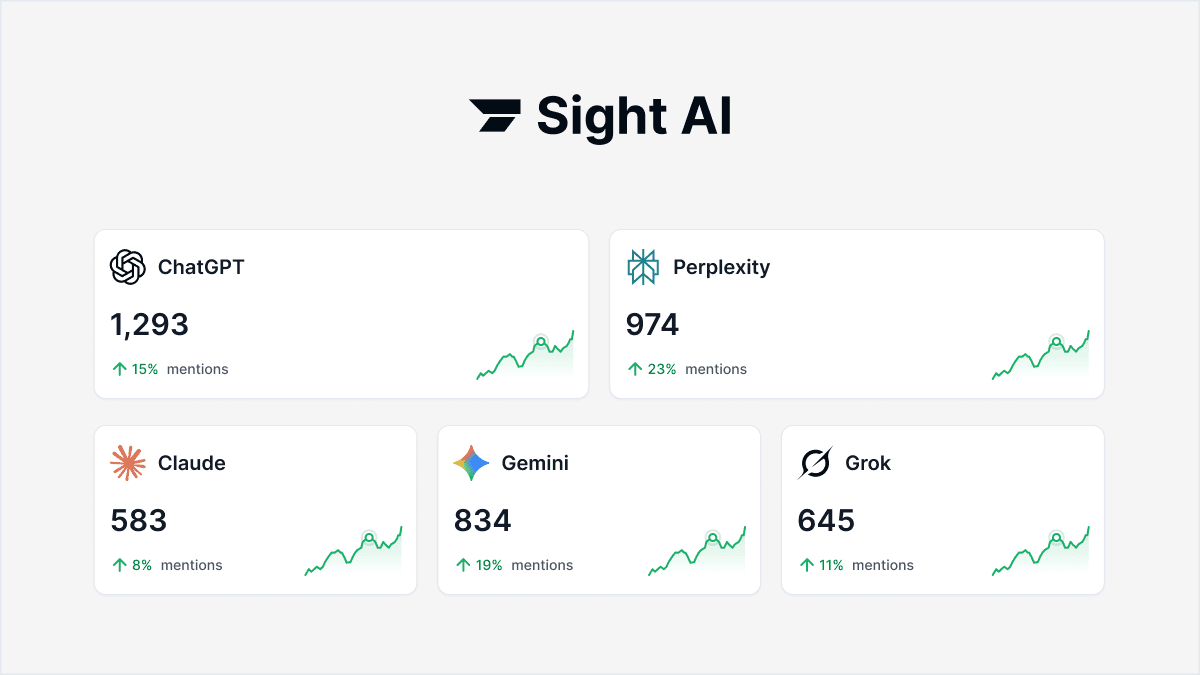
Stop guessing how AI models like ChatGPT and Claude talk about your brand—get visibility into every mention, track content opportunities, and automate your path to organic traffic growth. Start tracking your AI visibility today and see exactly where your brand appears across top AI platforms.