If you're building SEO dashboards, automating rank tracking workflows, or monitoring keyword positions at scale, you need a reliable Google rank checker API — not a manual tool you log into once a week. The right solution lets you pull ranking data programmatically, integrate it into your own systems, and track performance across thousands of keywords without constant manual intervention.
But here's where it gets interesting: in 2026, "ranking" means more than a position on a traditional SERP. As AI-powered answer engines like ChatGPT, Perplexity, and Claude reshape how people find information, tracking your brand's visibility inside AI-generated responses has become just as important as monitoring your blue-link positions. The tools below reflect that shift.
This list covers the best Google rank checker API tools and AI visibility platforms available right now, evaluated on data accuracy, API flexibility, AI search coverage, pricing transparency, and how well they serve agencies, SaaS platforms, and in-house marketing teams building custom reporting pipelines.
1. Sight AI
Best for: Teams that need SEO rank tracking context, AI brand visibility monitoring, and content production in a single platform.
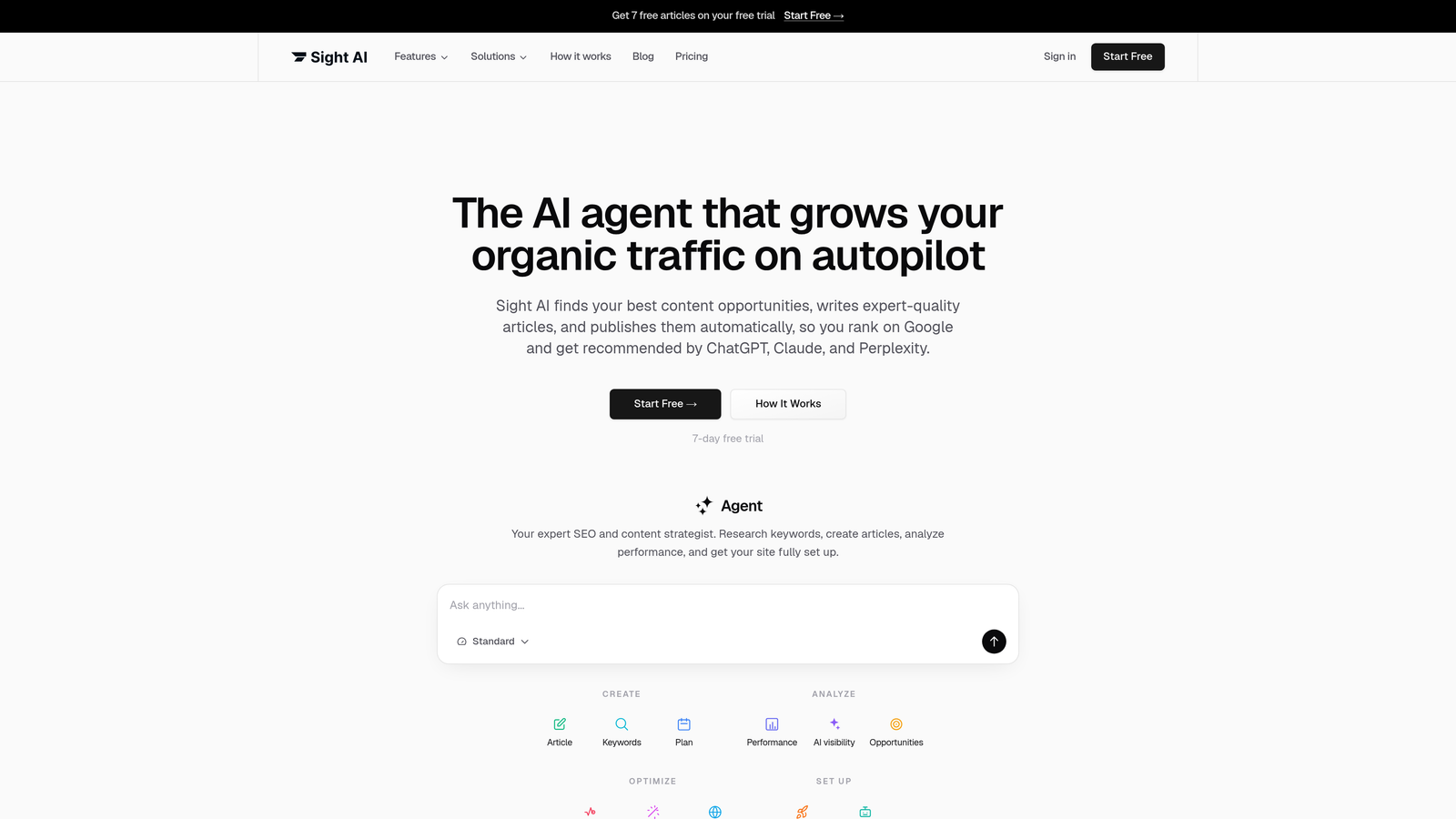
Sight AI is an all-in-one AI visibility and SEO platform that combines keyword rank tracking context, AI brand mention monitoring, automated content generation, and website indexing into a unified workflow.
Where This Tool Shines
Most rank tracking setups require stitching together multiple tools: one for SERP data, another for AI mention monitoring, a third for content creation, and a fourth for indexing. Sight AI collapses that stack. You get a single platform where ranking context, AI visibility signals, and content production all talk to each other.
The platform's AI Visibility Score is a standout feature for teams entering the GEO space. It tracks how your brand is represented across ChatGPT, Claude, Perplexity, and other major AI platforms, including sentiment analysis and prompt-level tracking. That's a meaningful layer on top of traditional rank data, especially as AI Overviews and AI-generated answers capture an increasing share of search traffic.
Key Features
AI Visibility Score: Tracks brand mentions and sentiment across 6+ AI platforms including ChatGPT, Claude, and Perplexity, giving you a quantified view of your AI search presence.
Prompt Tracking: Monitors which specific prompts and queries surface your brand in AI-generated responses, helping you understand where you appear and where you don't.
13+ Specialized AI Agents: Generates SEO and GEO-optimized articles, listicles, and guides through purpose-built agents, each tuned for a specific content format.
Autopilot Mode: Automates content production at scale so your publishing cadence doesn't depend on manual input from your team.
IndexNow Integration: Automatically submits new and updated content to search engines via IndexNow and keeps your sitemap current, accelerating content discovery.
CMS Auto-Publishing: Removes the manual publishing step entirely, pushing finalized content directly to your CMS.
Best For
Sight AI is best suited for marketers, founders, and agencies who want to track both traditional search rankings and AI visibility without managing separate tools. It's particularly valuable for teams whose workflow spans monitoring, content creation, and publishing — and who want those stages connected rather than siloed.
Pricing
Visit trysight.ai for current pricing plans. Tiers are designed to scale with team size and content volume.
2. Writesonic
Best for: Content-first teams that want to act on rank tracking insights by producing keyword-targeted content at scale.
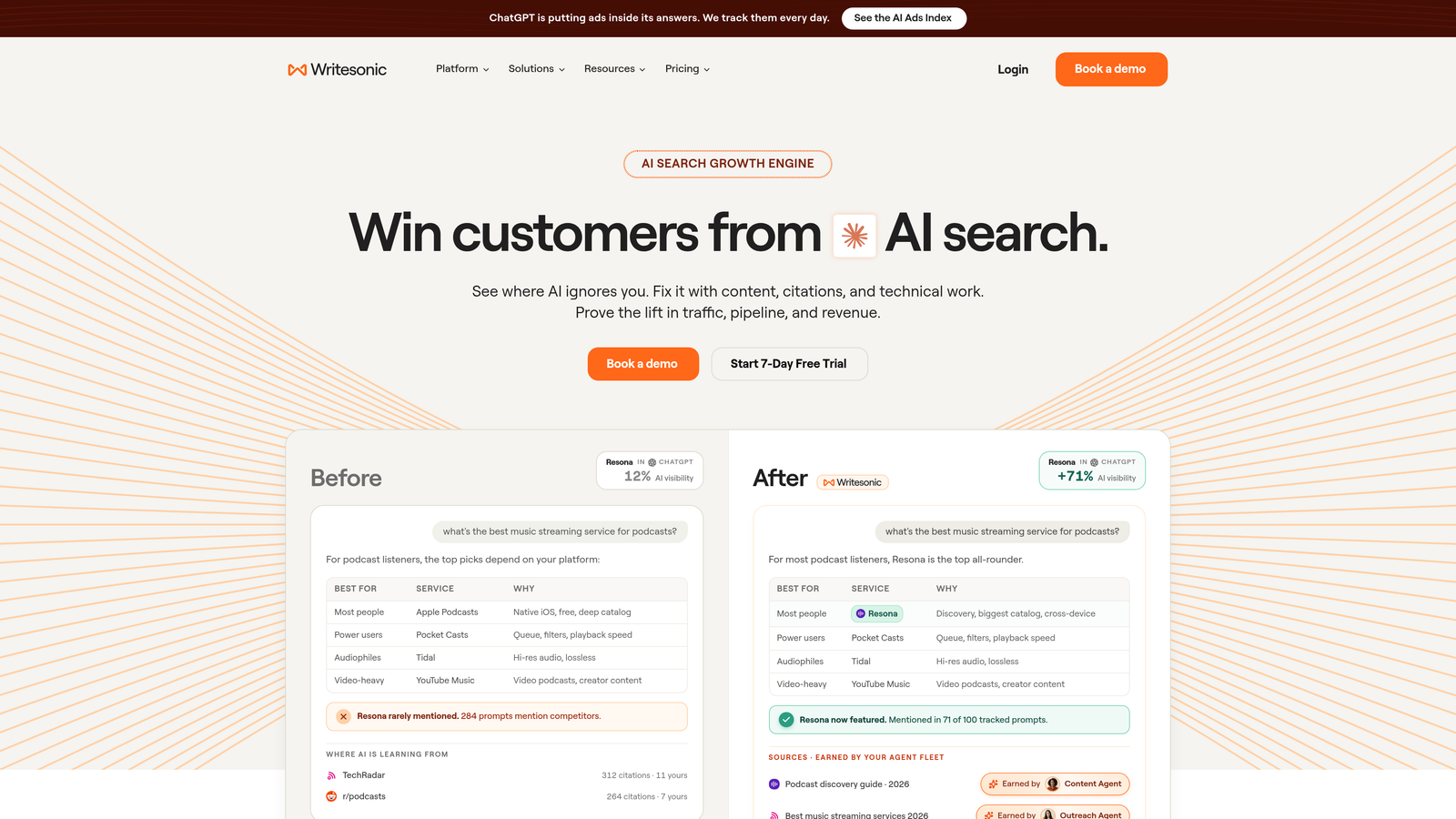
Writesonic is an AI content generation platform with built-in SEO optimization features, designed for teams that need to produce high volumes of keyword-targeted content quickly.
Where This Tool Shines
Writesonic's value in a rank-checking context is less about pulling SERP data and more about what you do after you have it. Once you know which keywords you're targeting or underperforming on, Writesonic gives you a fast path to producing content that addresses those gaps. Its SEO mode integrates keyword optimization directly into the writing workflow, reducing the back-and-forth between keyword research and content production.
For teams managing high content volume, the brand voice customization feature is genuinely useful. It keeps output consistent across writers and agents, which matters when you're publishing at scale across multiple clients or product lines.
Key Features
SEO Mode: Integrates keyword optimization suggestions directly into the article writing workflow, reducing the gap between research and production.
Long-Form Article Generation: Produces full-length blog posts and articles from a brief, with structure and formatting built in.
Multiple Content Formats: Covers long-form articles, product descriptions, social copy, and more from a single platform.
Brand Voice Customization: Allows teams to define and enforce a consistent tone and style across all AI-generated output.
Best For
Writesonic is a strong fit for content-heavy teams and agencies that have rank tracking handled elsewhere and need a reliable, fast content production layer. It works well when the goal is to turn keyword data into published articles quickly, without a heavy editorial lift.
Pricing
A free plan is available. Paid plans start at approximately $16/month; verify current pricing at writesonic.com as plans are updated periodically.
3. Profound
Best for: Enterprise brands that need structured analytics on how they appear inside AI-generated search responses.
Profound is an AI search visibility analytics platform focused on tracking brand presence inside AI-generated answers across major AI search engines and answer engines.
Where This Tool Shines
Profound is built around a premise that's becoming increasingly hard to ignore: as AI Overviews, Perplexity answers, and ChatGPT search responses capture more of the top of the search experience, appearing in those AI-generated results is its own form of ranking. Profound gives enterprise teams structured data on exactly that.
The competitive benchmarking capability is particularly relevant for brand teams that want to understand not just whether they appear in AI answers, but how their presence compares to direct competitors within those same responses. That's a meaningful signal for GEO strategy development.
Key Features
AI Answer Engine Tracking: Monitors brand visibility specifically inside AI-generated search responses, not just traditional SERP positions.
Competitive Benchmarking: Provides side-by-side visibility comparisons against competitors within AI-generated results.
Enterprise Reporting: Delivers structured, enterprise-grade reporting on AI search presence for teams with complex stakeholder reporting requirements.
Multi-Surface Monitoring: Tracks presence across major AI-powered search surfaces as the landscape continues to evolve.
Best For
Profound is best suited for enterprise marketing and SEO teams that need formal, structured reporting on AI search visibility and want competitive benchmarking built in. It's less suited for small teams or those primarily focused on traditional SERP rank data.
Pricing
Enterprise pricing model; contact Profound directly at profound.ai for a quote tailored to your team's needs.
4. Peec
Best for: Agencies managing multiple brand presences that need focused GEO monitoring across AI-powered search surfaces.
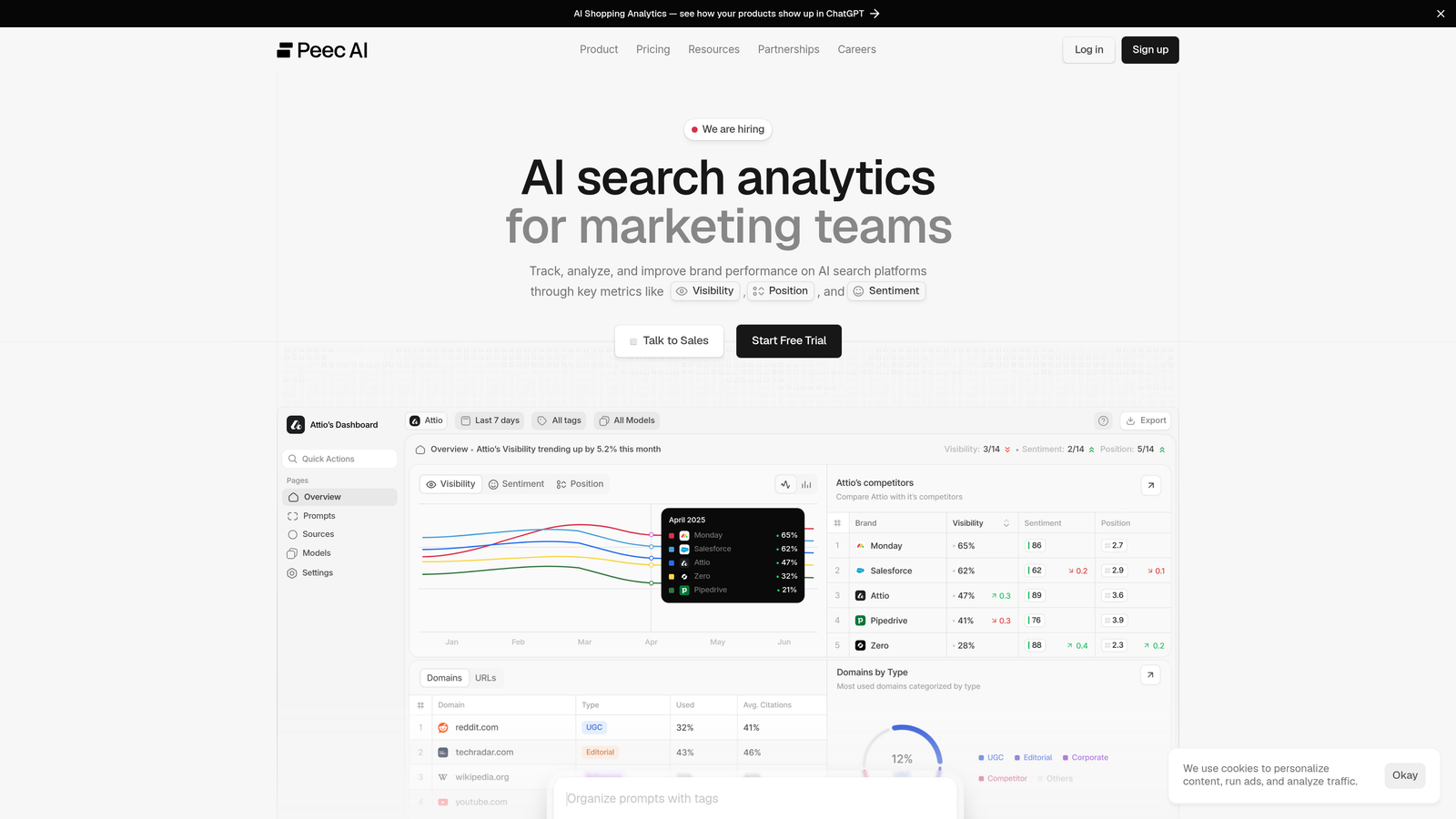
Peec is a dedicated AI search visibility monitoring tool that tracks brand mentions and competitive positioning inside AI-powered search results.
Where This Tool Shines
Where Profound leans enterprise and broad, Peec is tighter and more focused. It's built specifically for the GEO monitoring use case: understanding where your brand appears (or doesn't) inside AI-generated search results, and how that compares to competitors. For agencies managing multiple clients across different verticals, that focused scope is an asset rather than a limitation.
The competitive visibility benchmarking within AI-generated results gives agency teams something concrete to report back to clients. Instead of explaining the abstract concept of AI search presence, you can show comparative data on how a brand stacks up against its direct competitors in AI answer outputs.
Key Features
AI Search Brand Mention Tracking: Monitors how and when your brand is referenced across AI-powered search surfaces.
Competitive Visibility Benchmarking: Compares your AI search presence against competitors within the same result sets.
GEO Monitoring Dashboard: Provides a focused interface built specifically for generative engine optimization monitoring rather than traditional SEO metrics.
Multi-Brand Management: Designed with agencies in mind, supporting monitoring across multiple brand presences from a single account.
Best For
Peec is a strong fit for digital agencies managing multiple clients who need clean, reportable AI search visibility data without the overhead of a full enterprise platform. It's also useful for brand teams that have traditional rank tracking covered and want to add a dedicated GEO monitoring layer.
Pricing
Check current pricing directly at peec.ai, as plans may vary by team size and monitoring volume.
5. AirOps
Best for: Operations-heavy SEO teams that want to build automated workflows connecting rank data to content production and publishing.
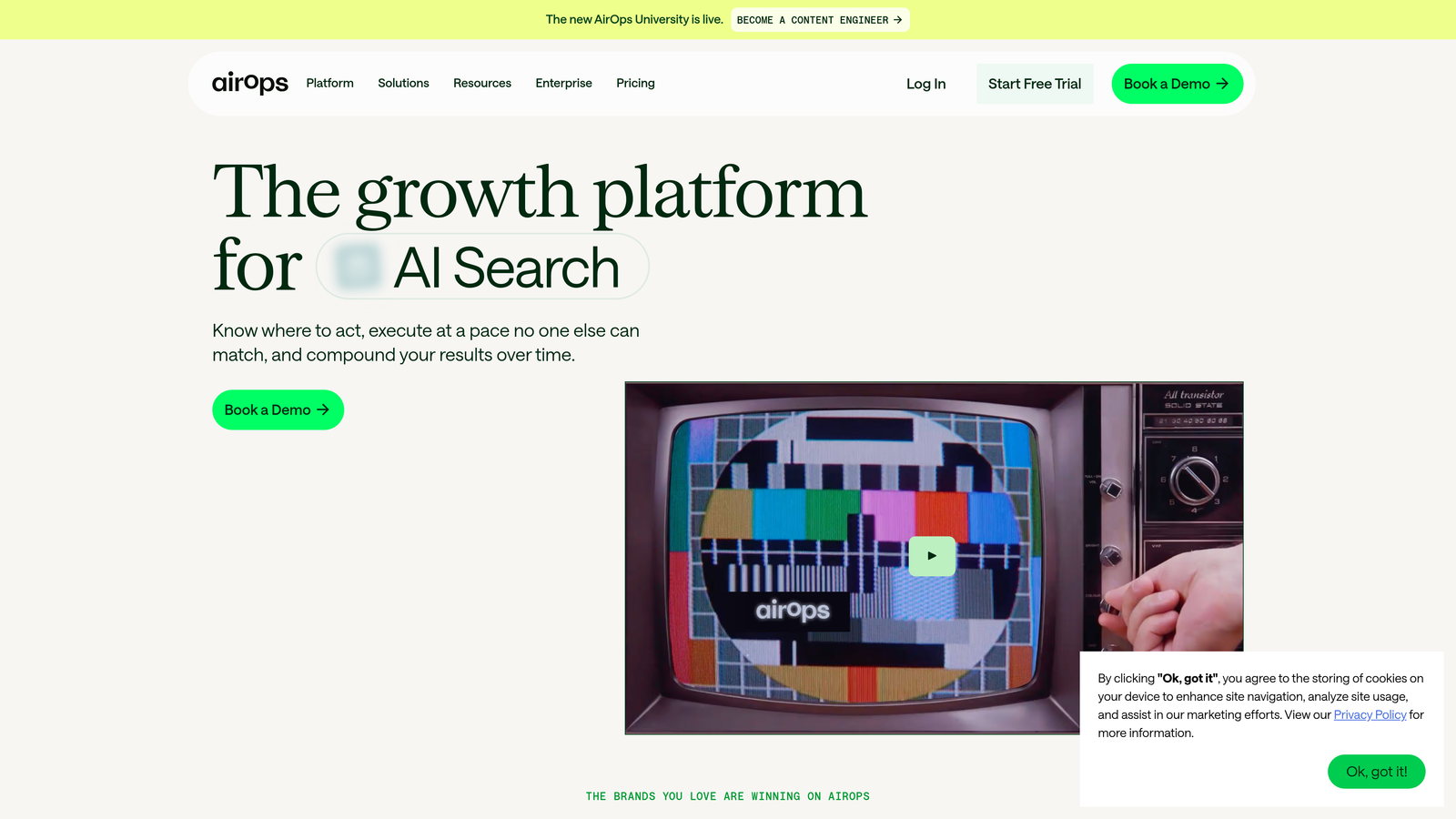
AirOps is an AI workflow automation platform that connects large language models to SEO and content operations, enabling teams to build automated pipelines that act on ranking signals without manual handoffs.
Where This Tool Shines
AirOps sits at a different layer than most tools on this list. It's not primarily a rank checker or a content generator — it's the connective tissue between your data sources and your content operations. If your team has rank data coming in from one tool, keyword research from another, and content going out through a third, AirOps can automate the handoffs between all of them.
The workflow builder is flexible enough to handle common SEO automation scenarios: triggering content brief creation when a keyword drops in rankings, routing drafts through review steps, or pushing finalized content to a CMS. For teams spending significant time on operational coordination rather than strategy, that automation layer can reclaim meaningful capacity.
Key Features
AI Workflow Builder: Connects LLMs to SEO data sources and content tools through a visual workflow interface, without requiring custom code for every integration.
Automated Content Pipelines: Triggers content production steps based on ranking signals or other defined inputs, reducing manual coordination.
SEO and CMS Integrations: Connects to existing SEO tools and content management systems, fitting into your current stack rather than replacing it.
Template Library: Provides pre-built workflow templates for common SEO and content automation use cases, reducing setup time.
Best For
AirOps is best suited for SEO teams with complex, multi-step content operations who want to automate the workflow between data, content creation, and publishing. It requires some setup investment but pays off for teams running high-volume, repeatable processes.
Pricing
A free tier is available. Paid plans vary by usage and team size; check current pricing at airops.com.
6. Promptwatch
Best for: SEO and brand teams building GEO strategies who need prompt-level visibility into how AI models represent their brand.
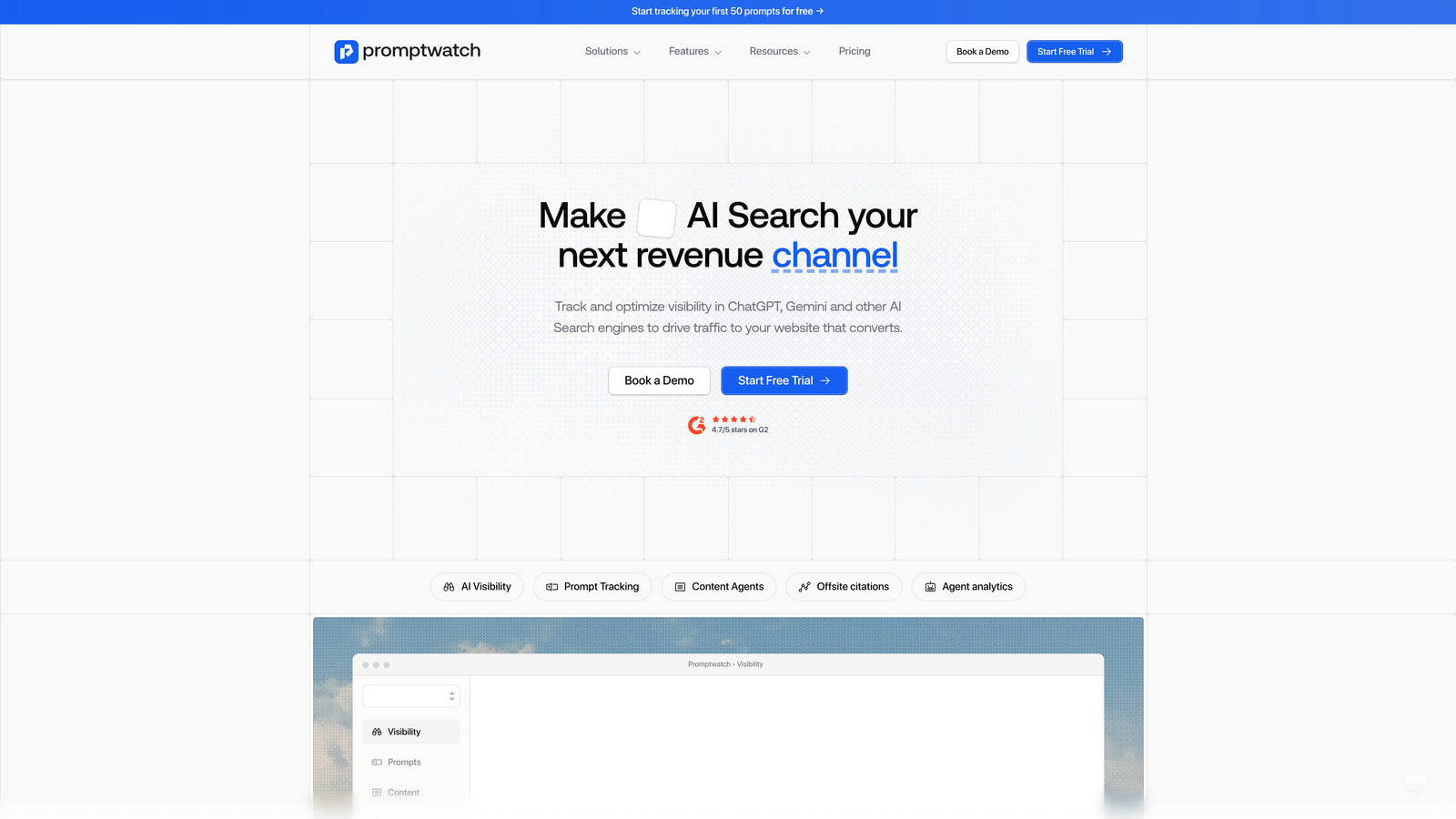
Promptwatch is a prompt-level AI monitoring tool that tracks how AI models respond to specific branded and category-level queries over time.
Where This Tool Shines
Promptwatch operates at a level of granularity that most AI visibility tools don't reach. Rather than just tracking whether your brand appears in AI search results broadly, it monitors how AI models respond to specific prompts, including branded queries, category comparisons, and competitor-adjacent searches. That distinction matters when you're trying to understand not just presence, but positioning.
The change-tracking capability is particularly useful for GEO strategy work. AI model behaviors shift as models are updated, fine-tuned, or trained on new data. Promptwatch surfaces those shifts so your team can respond to changes in how your brand is represented before they compound into a visibility problem.
Key Features
Prompt-Level Response Monitoring: Tracks AI model responses to specific branded and category prompts, giving you granular visibility into exactly how models describe your brand.
Behavioral Change Tracking: Identifies when AI model responses to your tracked prompts change over time, alerting you to shifts in brand representation.
Competitive Prompt Analysis: Shows which prompts surface your brand versus competitors, helping you identify where you're winning and where you're absent in AI outputs.
GEO Strategy Support: Provides the prompt-level data needed to inform generative engine optimization content decisions and prioritization.
Best For
Promptwatch is purpose-built for SEO professionals and brand teams who are actively developing GEO strategies and need precise, prompt-level data on AI model behavior. It's a specialized tool rather than an all-in-one platform, and it's most valuable when used alongside broader SEO and content infrastructure.
Pricing
Check current pricing at promptwatch.io.
Which Tool Fits Your Stack?
The right choice here depends on where your biggest gap actually sits. Here's a practical way to think through it.
If your primary need is understanding AI search visibility alongside traditional ranking context, and you want content generation and indexing built into the same workflow, Sight AI is the most complete option. It removes the need to manage separate tools for monitoring, content, and publishing, which matters if operational overhead is already a constraint.
If your team has rank tracking handled and needs a fast, reliable content production layer to act on that data, Writesonic is a focused, cost-effective choice. It's built for content volume, not visibility monitoring.
For enterprise teams that need formal reporting on AI answer engine presence, Profound offers the structured analytics and competitive benchmarking that large organizations typically require. Peec covers similar territory with a tighter, more agency-friendly interface suited to multi-client management.
AirOps fits best when your challenge is operational: you have the data and the content capability, but the handoffs between them are manual and slow. It's the automation layer that connects your existing tools rather than replacing them.
Promptwatch is the right choice when your GEO strategy requires granular, prompt-level intelligence on how specific AI models represent your brand. It's specialized by design, and most effective as part of a broader stack rather than a standalone solution.
Start by identifying whether your primary gap is rank data, AI visibility, content production, workflow automation, or prompt-level monitoring. Then match accordingly — the tools above cover each of those layers, and the best stack is the one that addresses your actual bottleneck without adding unnecessary complexity.
Stop guessing how AI models like ChatGPT and Claude talk about your brand. Start tracking your AI visibility today and see exactly where your brand appears across top AI platforms, alongside the content and indexing tools you need to improve that presence over time.