Choosing a Google keyword rank checker API comes down to what you are building: a rank tracker, a client dashboard, or a reporting pipeline. The tools below suit developers, agencies, and technical SEO teams. They were selected on data source (first-party versus live SERP), location and device targeting, pricing model, output format, and how well each fits a custom build versus a ready-made tracker. Pricing and limits change often, so treat every figure as "as of October 2026" and confirm on each vendor's site before committing.
Quick Comparison of the Google Rank Checker APIs
- Google Search Console API: teams wanting authoritative data on their own verified sites; free; the only source of first-party clicks and impressions straight from Google.
- DataForSEO SERP API: developers building high-volume trackers; pay-as-you-go; a choice between cheaper queued and faster live requests.
- SerpApi: teams needing many engines and verticals; free tier, paid plans on its site; widest engine coverage in one response format.
- Serper: developers feeding Google results into AI or automation workflows; free starter credits; low-latency, minimal payloads.
- SearchAPI: teams wanting a mid-priced API across Google products; subscription, see site; Google Trends alongside search in one plan.
- Zenserp: freelancers and small projects on a budget; free plan; batch requests at low entry cost.
- SE Ranking API: agencies embedding client rank history in reports; see site; stores position history per project.
- AccuRanker API: enterprises tracking tens of thousands of keywords; see site; fast on-demand refresh with deep segmentation.
- Semrush API: teams needing competitor ranking data; see site; ranking intelligence for any domain, not only tracked ones.
1. Google Search Console API
Google Search Console API is Google's official interface to search performance data for properties you have verified. It returns clicks, impressions, CTR, and average position broken down by query, page, country, and device. It is designed for site owners and the developers who serve them.
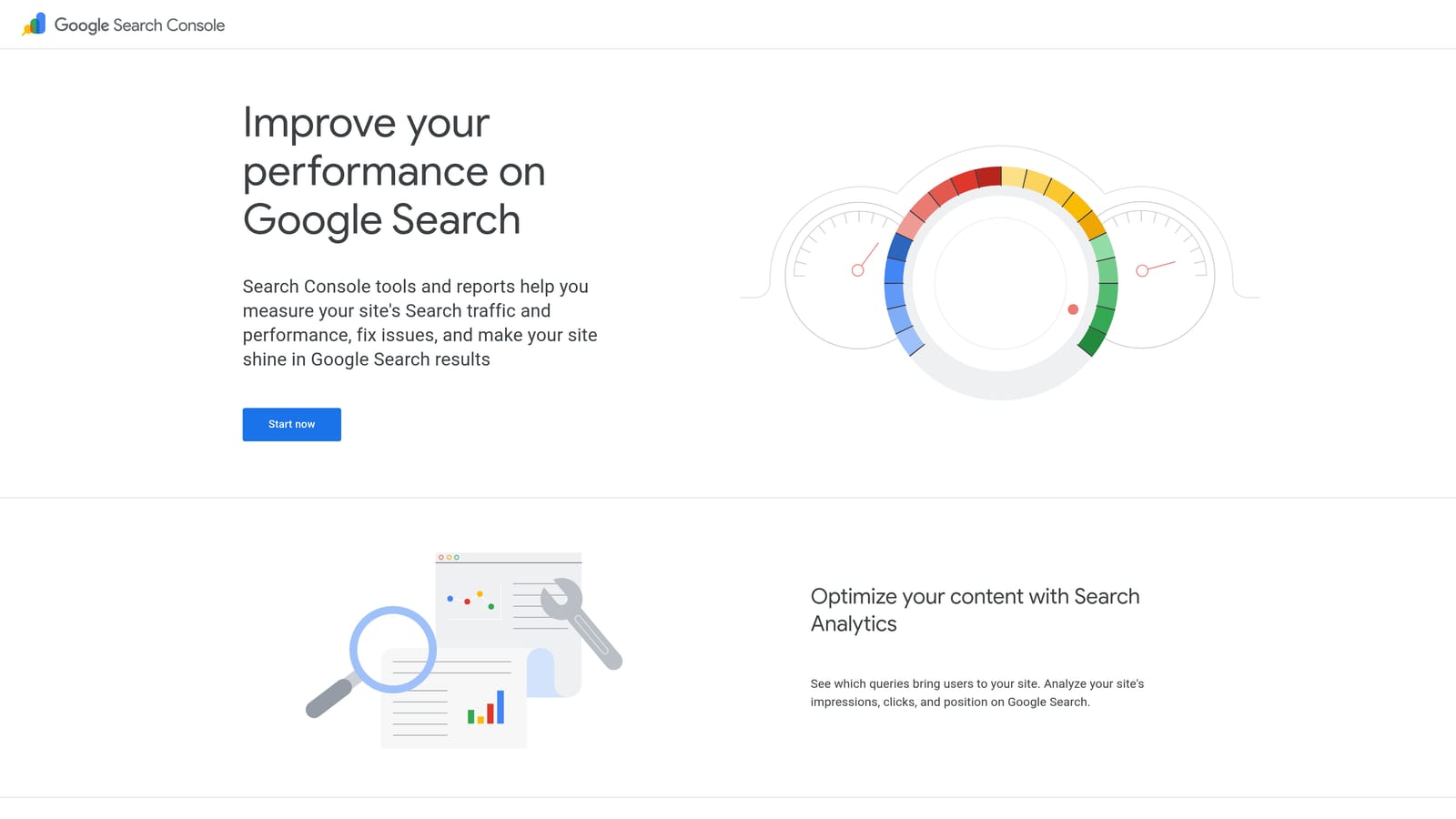
Its distinguishing strength is provenance. Every other tool on this list estimates rankings by querying Google's results; this one reports what Google itself recorded. One caveat matters for anyone building a tracker on it: the "position" value is an impression-weighted average, not a fixed rank. A query can average position 6.2 because it appeared at 3 for some users and 11 for others, so do not present it as "the" ranking.
- The Search Analytics query endpoint pulls performance rows with filters, so you can build per-query or per-page reports.
- Dimensions for query, page, country, device, and date let you slice trends without extra tooling.
- The URL Inspection API shows indexing status for specific URLs, which helps diagnose why a page is not ranking.
- Sitemaps management lets you submit and check sitemaps programmatically.
- OAuth-based access is free, with no per-query billing.
Integration is easy: Python and JavaScript client libraries, Looker Studio, BigQuery export, and Google Sheets connectors. Setup means creating a Google Cloud project, enabling the API, and handling OAuth, which is a modest afternoon of work for a developer. Usage quotas apply.
The limits are structural. It covers only sites you can verify, offers no competitor tracking, and cannot give an on-demand live rank for an arbitrary keyword. Data also arrives with a delay, so it is not suited to checking today's change. Pricing is free, subject to quotas.
Best for: Teams that want authoritative performance data for their own sites at no cost.
2. DataForSEO SERP API
DataForSEO is a developer-focused provider whose SERP API returns Google organic, local, and SERP-feature data. It is built for teams constructing their own rank tracking at scale, and it sits within a large catalog of related SEO APIs covering other data types.
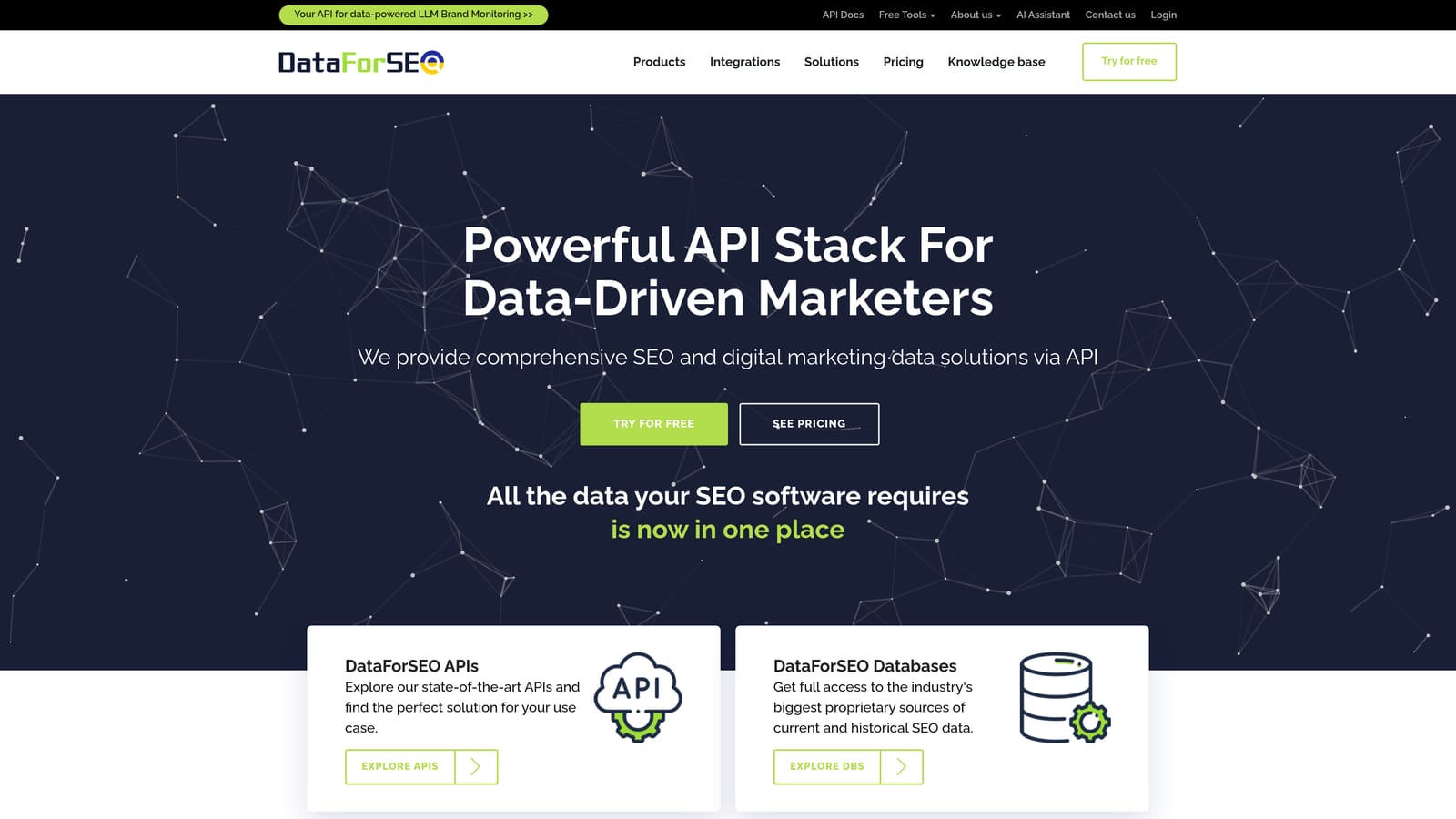
Its standout design choice is delivery mode. In queue mode you post a task and collect results later at a lower price; in live mode you get results in the same request at a higher price. A tracker that refreshes thousands of keywords overnight can use the cheap queue, while a user-facing "check now" button can use live. That lets you tune cost against speed per use case.
- Standard queue and live modes let you decide per workload whether to pay for speed.
- Location, language, and device targeting produce results that match what a specific audience sees.
- Parsing of organic, Maps, and SERP feature results means you can detect featured snippets or local packs without writing parsers.
- Pay-as-you-go billing avoids monthly commitments for variable workloads.
- The wider API catalog lets you add keyword volume or backlink data from the same account.
It is a REST API with client libraries, and it connects to Make, Zapier, and a Google Sheets add-on. Expect a developer to own the integration, including task submission, polling or callbacks, and result storage.
The trade-off is complexity. Task-based workflows and a detailed pricing structure create a learning curve that is overkill for a small project or a one-off script. Billing is pay-as-you-go per request with a minimum deposit; check current rates as of October 2026.
Best for: Developers building high-volume rank trackers who want to control cost per query.
3. SerpApi
SerpApi is a long-established scraping API that returns structured JSON for Google and many other engines. It targets teams that want one consistent interface and do not want to maintain scrapers, proxies, or CAPTCHA handling themselves.
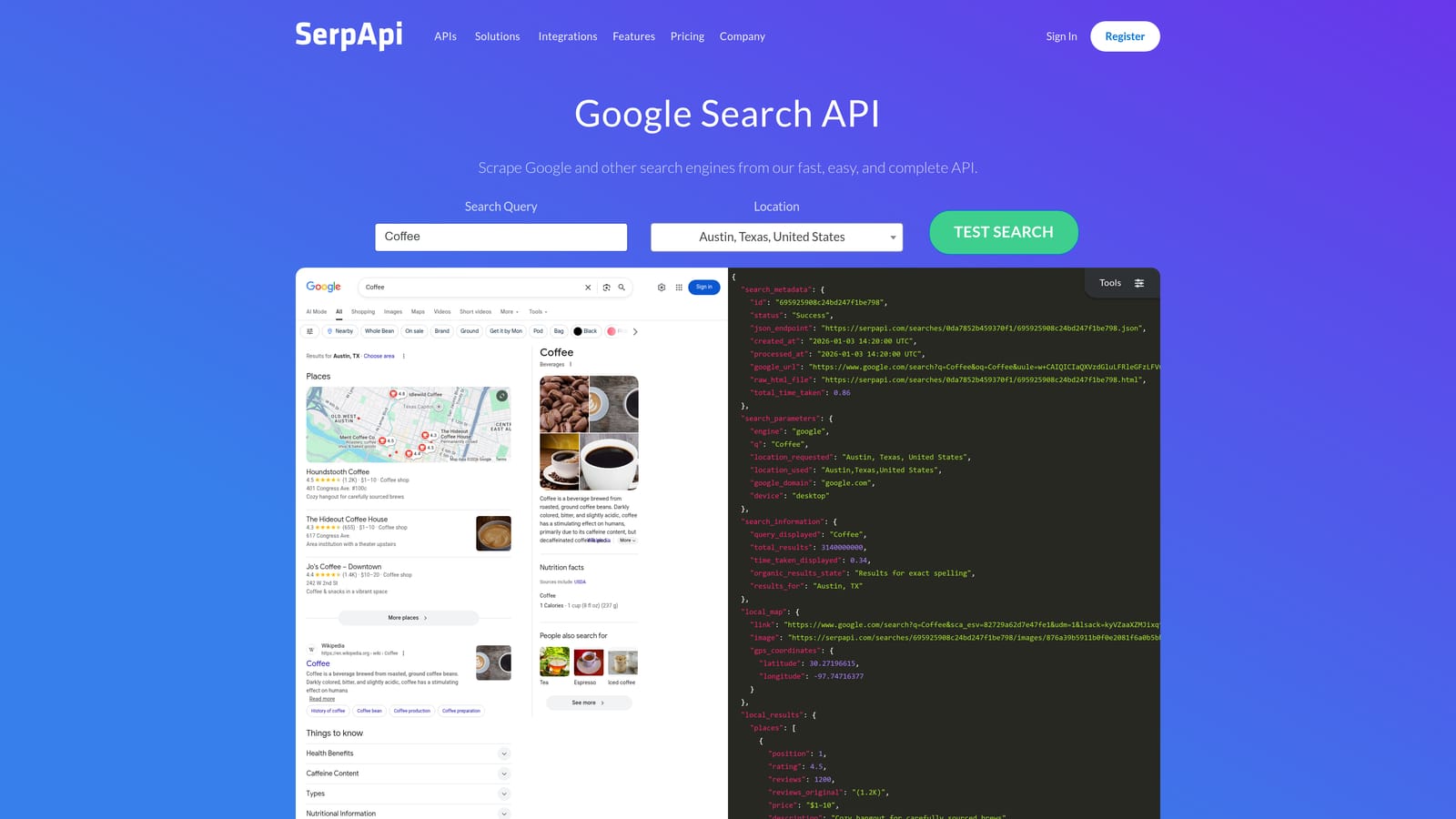
Where it differs from the rest of this list is breadth. Google Search, Maps, News, Shopping, and Images sit behind the same response conventions, and other search engines follow the same pattern. If your product tracks rankings on more than one engine, or pulls shopping and maps data alongside web results, you write one integration instead of several.
What you get
- Dedicated endpoints for Google Search, Maps, News, Shopping, and Images cover most vertical tracking needs.
- Location and device parameters let you check rankings as a specific market sees them.
- Result caching can save credits when the same query is repeated within a short window.
- SDKs in several languages shorten the path from signup to working code.
- A free monthly search allowance lets you test before paying.
Fit and limits
Official libraries exist for Python, Node.js, Ruby, and Java, and there are Google Sheets and no-code connectors, so setup is quick and a marketer comfortable with spreadsheets can use it too. The cost is price: per search it runs higher than bulk-focused providers, which matters if you are checking hundreds of thousands of keywords. Plans are monthly and scale with search volume; verify current tiers as of October 2026.
Best for: Teams needing multi-engine, multi-vertical SERP data with polished SDKs.
4. Serper
Serper is a lightweight Google Search API with simple credit pricing, popular in AI agent and retrieval workflows. It is aimed at developers who want fast, clean results rather than a full rank-tracking product.
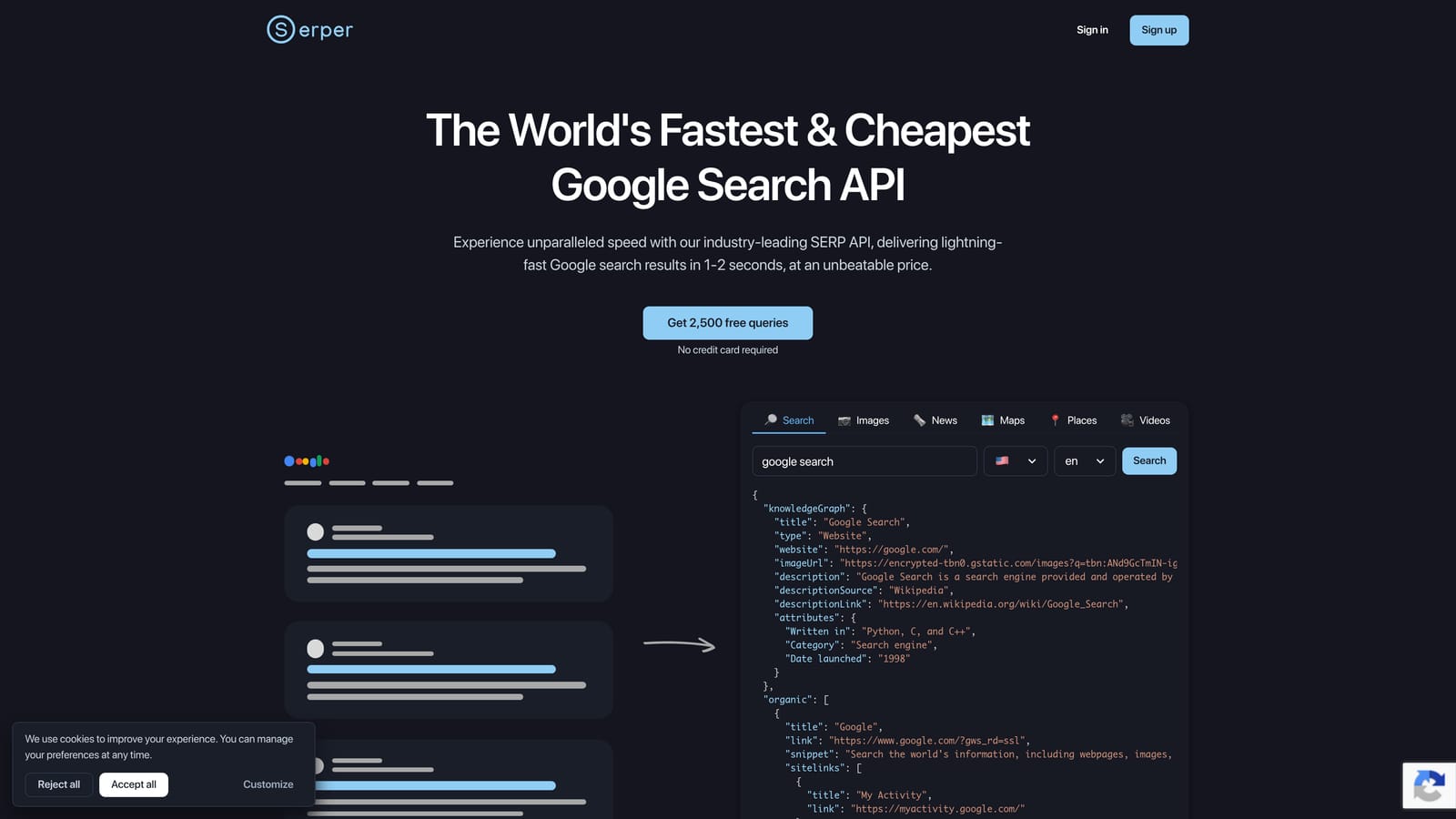
Its edge is latency and payload design. Responses come back quickly and in a compact structure that is easy to parse or pass to a language model. For a rank check, you read the organic array and find your domain's position; for agent pipelines, the same call supplies grounding data.
- The fast web search endpoint returns organic results with positions for straightforward rank lookups.
- Knowledge graph, People Also Ask, and related searches data expose SERP features beyond the blue links.
- Image, news, places, and shopping endpoints extend coverage to other result types.
- Credit-based pricing means you pay for what you use rather than a fixed seat.
- Free starter credits let you validate output before buying.
Integrations include LangChain, LlamaIndex, n8n, and the plain REST API, so setup is minutes for a developer. A single engineer typically owns it.
The limitation is that it is a query tool only. There is no built-in rank history, project structure, scheduling, or reporting, so you store results and build trend views yourself. If you want a ready-made tracker, look further down this list. Pricing is by credit pack with free starter credits; check current rates as of October 2026.
Best for: Developers wiring Google results into AI or automation workflows.
5. SearchAPI
SearchAPI is a real-time SERP API covering Google products and other engines under subscription pricing. It suits teams that want predictable monthly billing and more than just web search from one provider.
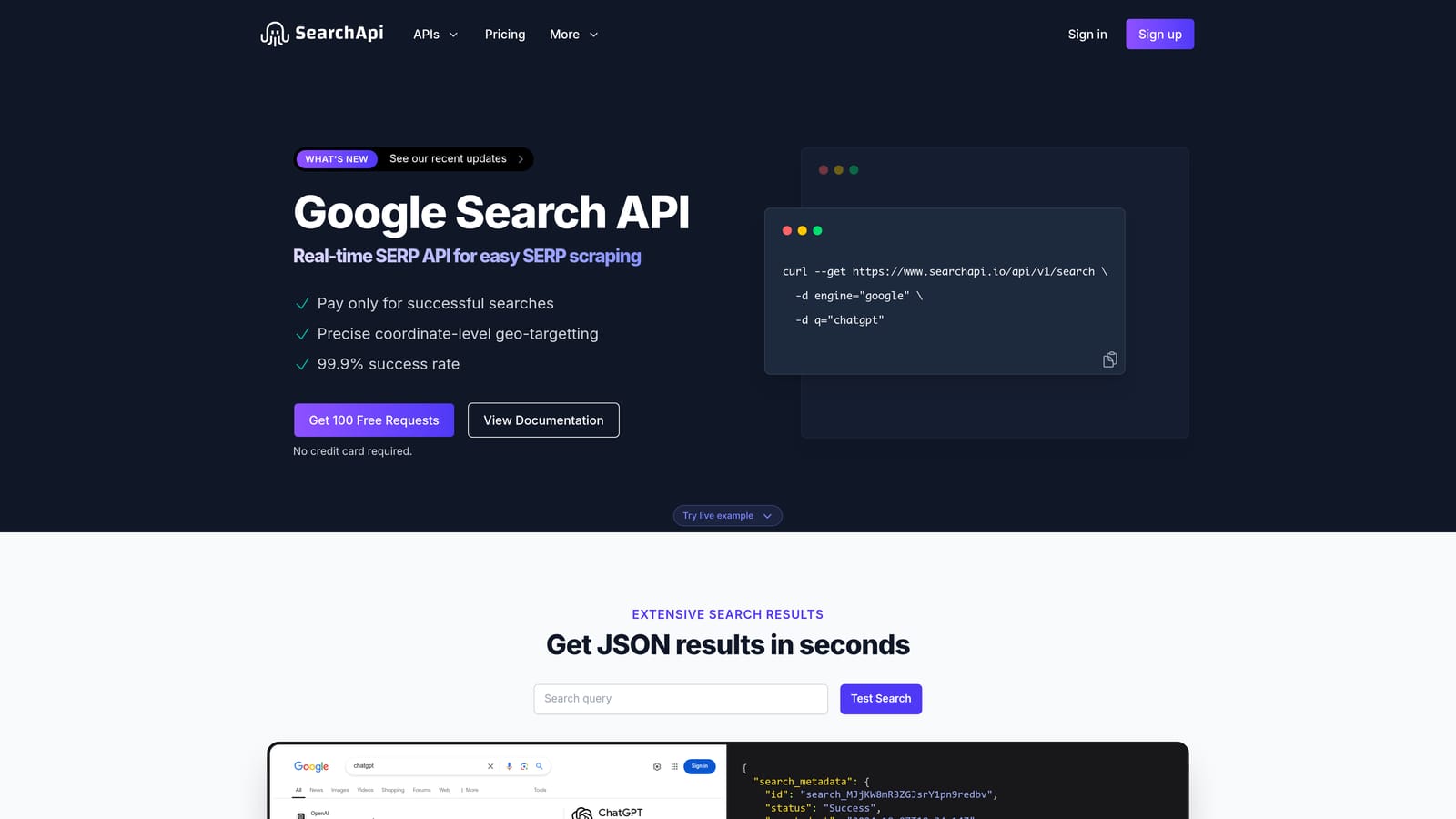
The distinctive piece is Google-product coverage, notably Google Trends alongside Search, Maps, and Shopping. A team that wants to correlate ranking changes with interest over time can pull both from a single plan and a single output format.
- Google Search, Maps, Shopping, and Trends endpoints cover ranking, local, product, and demand data together.
- Location and device controls make results reflect target markets.
- Structured JSON output reduces parsing work.
- Subscription tiers with a free trial let you test fit and then budget monthly.
It works through a REST API with Python and Node.js examples, plus no-code HTTP connectors, so setup is light and a developer or technical marketer can run it. The downside is ecosystem size. The community is smaller and third-party tutorials are fewer than for the best-known options, so you will lean more on the official documentation and support when something unusual comes up. Pricing is by monthly subscription tier; verify current plans as of October 2026.
Best for: Teams wanting a mid-priced SERP API spanning several Google products.
6. Zenserp
Zenserp is an affordable SERP API with Google web, image, news, and video search endpoints. It is pitched at individuals and small teams who need working rank checks without a large commitment.
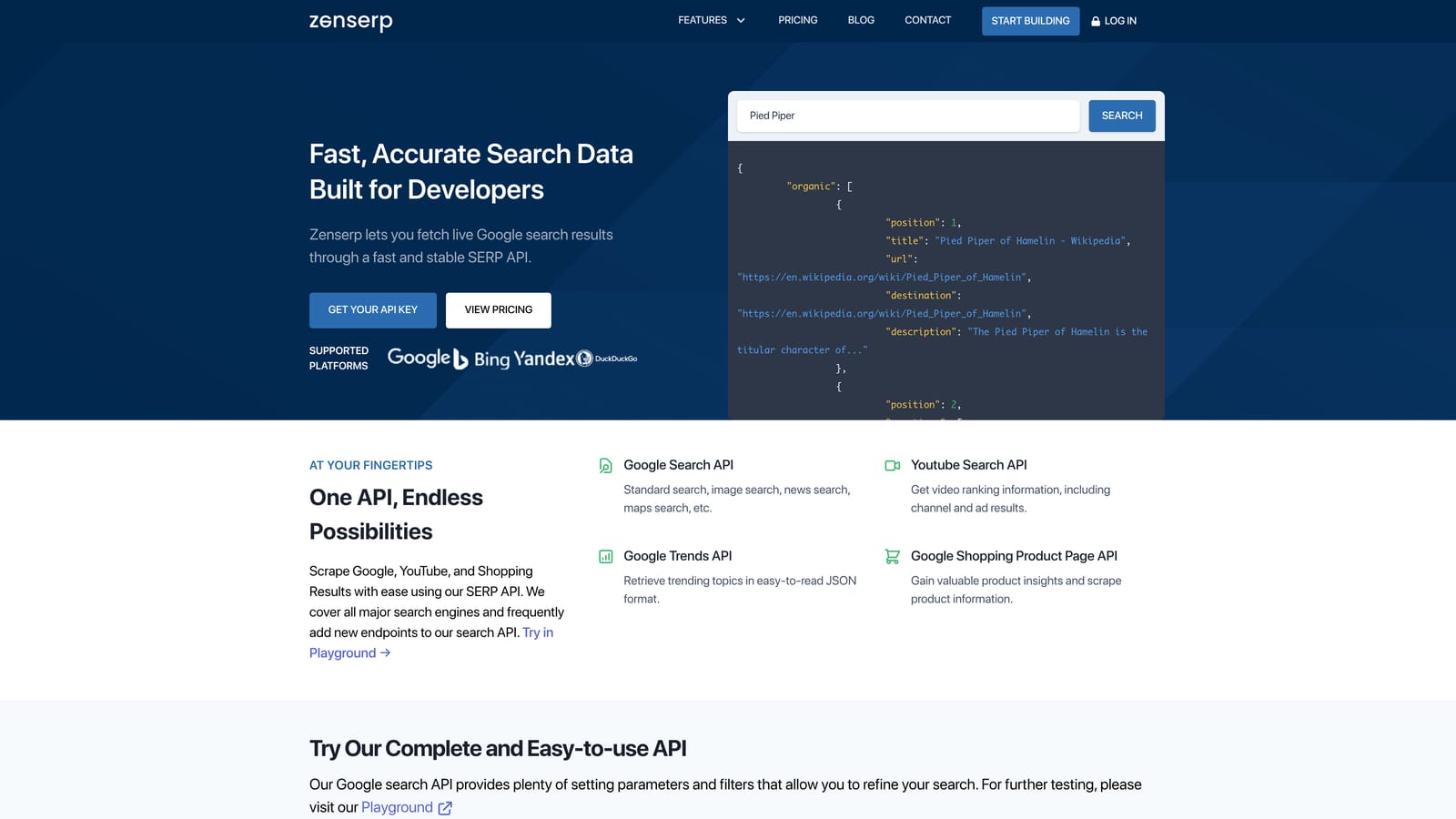
What it does well compared with the others is keep the entry point low while still offering batch requests. That makes it practical for a small keyword list checked on a schedule: send a group of keywords in one call rather than looping individually.
- Web, image, news, and video endpoints cover the common Google result types.
- Location and device parameters allow market-specific checks.
- Batch requests cut the number of calls needed for a keyword list.
- A free plan lets you prototype and test accuracy before spending.
Access is through a REST API, common language SDKs, and Google Sheets via scripts, which keeps setup short and within reach of a solo developer or technically minded SEO. The limits show up with growth. It is less suited to very large volumes or to enterprise needs such as formal service commitments, so a business that expects to scale should plan a migration path. Plans are tiered monthly with a free option; check current limits as of October 2026.
Best for: Freelancers and small projects prototyping a rank checker on a budget.
7. SE Ranking API
SE Ranking API exposes data from SE Ranking's project-based platform: rank tracking, keyword research, backlinks, and site audits. Unlike the raw SERP APIs above, it is a managed tracker you query, designed for agencies and teams that report on clients.
The main advantage is stored history. You add keywords to a project, the platform checks positions on its schedule, and you retrieve trends over time rather than building a database, scheduler, and retry logic yourself. That removes a large chunk of engineering from a client-reporting pipeline.
- Project-based position tracking with history gives you trend lines without your own storage layer.
- Daily update options keep client reports current.
- Keyword research and competitor data add context to raw positions.
- Backlink and audit endpoints let one integration feed a broader report.
It connects with Looker Studio and Zapier, offers a REST API, and supports white-label reporting, which agencies value. Setup is mostly account structure: creating projects, adding keywords, and mapping them to clients. The weakness is flexibility. It is built around tracked projects, so ad hoc, one-off lookups across arbitrary keywords are awkward and slower than a SERP API. Pricing is tied to an SE Ranking subscription or API plan; confirm terms as of October 2026.
Best for: Agencies embedding client rank history into custom reports.
8. AccuRanker API
AccuRanker is an enterprise rank tracking platform whose API serves keyword rankings, tags, and share of voice. It is built for large keyword sets where segmentation and refresh speed matter more than per-query price.
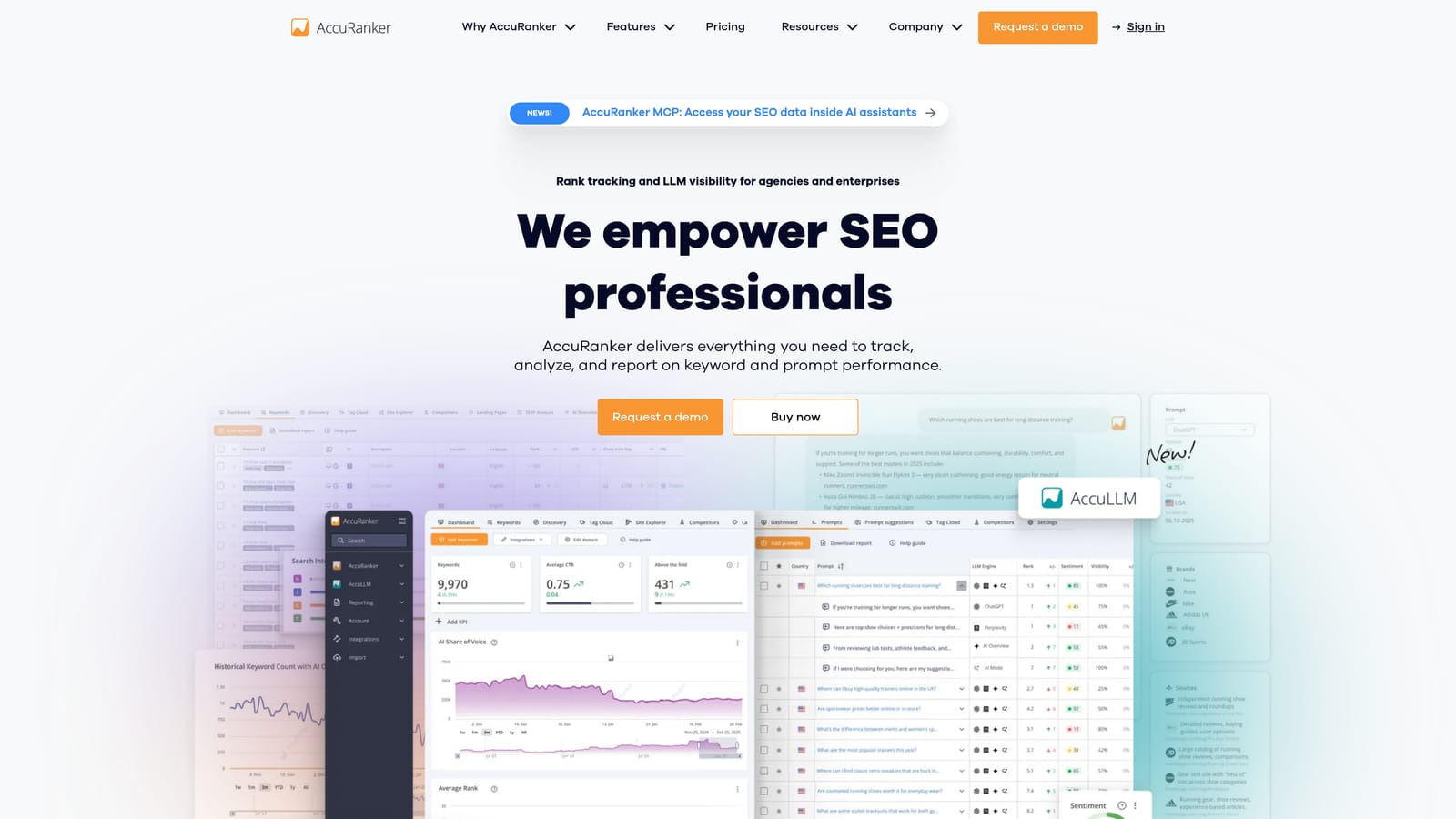
Its distinguishing combination is on-demand refresh with deep segmentation. Rather than waiting for a scheduled update, you can trigger a fresh check, then slice results by tags such as market, product line, or funnel stage. For an enterprise reporting on tens of thousands of keywords, that structure is the product.
- On-demand rank refresh lets you verify a change right after a release or migration.
- Tagging and segmentation turn huge keyword lists into meaningful groups.
- Share of voice metrics summarize visibility against competitors in one number.
- Competitor tracking shows who is gaining where you are losing.
- Data export and BI access feed existing analytics stacks.
It integrates with Looker Studio, Google Analytics, and Search Console, and works with Power BI through the API. Typically an SEO or analytics team owns it, with developers handling the BI connection. The limitation is economics: plans are based on tracked keyword volume, so small or sporadic use rarely justifies the cost. Check current pricing as of October 2026.
Best for: Enterprises and large agencies tracking tens of thousands of keywords.
9. Semrush API
Semrush API provides programmatic access to Semrush's keyword, domain, and Position Tracking data drawn from a very large database. It is for teams that need to see how any domain ranks, not only their own.
That is its unique contribution here. Every other option either checks specific keywords you supply or tracks projects you set up. Semrush can tell you which keywords a competitor ranks for and where, which supports gap analysis and market sizing.
- Domain organic keyword rankings reveal what any site ranks for without setting up tracking.
- Position Tracking reports cover keywords you monitor over time.
- Keyword difficulty and volume help prioritize targets.
- Backlink analytics add link context to ranking gaps.
- Competitor research outputs support benchmarking and pitch work.
It integrates with Looker Studio, Google Sheets, and Zapier, plus a REST API. Setup is simple, but cost management takes attention: API units are purchased separately, and access depends on your plan, so heavy pulls can get expensive. It is also not meant for cheap live SERP checks; the data comes from Semrush's database rather than a fresh query. Confirm current terms as of October 2026.
Best for: Teams that need competitor ranking data alongside their own.
Matching the Right API to Your Build
Start by deciding which of three categories you need: first-party data, live SERP queries, or managed tracking with history. Then pick within it.
- Your own verified sites: use the Search Console API. It is free and authoritative, as long as you treat position as an average.
- High-volume custom builds: DataForSEO gives the most control over cost per query, and Serper suits lighter, faster, agent-style use.
- Multi-engine coverage: SerpApi handles many engines and verticals in one format.
- Managed history: SE Ranking suits agency reporting, while AccuRanker suits very large enterprise keyword sets.
- Competitive data: Semrush shows rankings for domains you do not track.
Whatever you choose, validate results before trusting them. Spot-check a handful of keywords with a manual search in a private window, using the same location and device settings you sent to the API. Small differences are normal because of personalization and location, but large, consistent gaps point to a configuration problem. Avoid scraping Google directly: it violates Google's terms and breaks often.
Google rankings are only half the picture now. Stop guessing how AI models like ChatGPT and Claude talk about your brand: get visibility into every mention, track content opportunities, and automate your path to organic traffic growth. Start tracking your AI visibility today and see exactly where your brand appears across top AI platforms.