AI prompt tracking software runs a fixed set of prompts through AI engines such as ChatGPT, Claude, Perplexity and Google AI Mode on a schedule. It records whether your brand is mentioned, where it appears in the answer, which sources are cited and the sentiment of the mention. The best prompt tracking tools in 2026 are Sight AI for tracking combined with content optimization, Otterly.ai and Knowatoa for small budgets, Peec AI for competitor benchmarking, Profound for optimization guidance, Scrunch AI for real-time alerts and AIMonitor Pro for API-driven custom tracking.
When someone asks ChatGPT for product recommendations or asks Claude about solutions in your industry, your brand is either in the answer or it is not. Brands that measure this at the prompt level, and then optimize for it, gain an advantage in generative engine optimization (GEO). We evaluated dozens of tools on multi-model coverage, monitoring frequency, sentiment analysis, competitor benchmarking and how actionable their insights are.
Prompt tracking tools compared: features, pricing and use cases
| Tool | Best for | Standout capability | Starting price |
|---|---|---|---|
| Sight AI | Tracking plus content optimization | 6-model monitoring, AI Visibility Score, content agents | Contact for pricing |
| Brandwatch AI Monitor | Enterprises using social listening | Historical trends, CRM and Slack integrations | $800+/month |
| Otterly.ai | Simple, dedicated monitoring | Fast setup, weekly reports | Free tier; $49/month |
| Peec AI | Competitor benchmarking | Share of voice, prompt suggestions | $79/month |
| Profound | Optimization recommendations | Content gap analysis, keyword-to-prompt mapping | $99/month |
| Scrunch AI | Real-time alerts | Slack, email and webhook alerts | $59/month |
| AIMonitor Pro | Custom integrations | Full REST API, bulk prompt testing | $149/month |
| Knowatoa | Startups on a budget | Guided onboarding, free tier | Free tier; $29/month |
| HubSpot AI Insights (Beta) | HubSpot users | CRM-linked visibility data | Included in Marketing Hub Pro ($800+/month) |
What to look for in a prompt tracker
- Engine coverage: The tool should cover at least ChatGPT, Perplexity, Gemini or Google AI Overviews/AI Mode, and Claude. Answers differ a lot between engines.
- Custom prompt tracking: You need to add your own prompts and group them by topic, funnel stage or persona. A tool that only offers prompts it generates for you is not enough.
- Sampling and frequency: LLM answers are non-deterministic, so the same prompt can return a different answer on each run. Daily runs, or several runs per prompt, give more reliable visibility percentages than a single weekly check.
- Citation and source data: The tool should show which URLs the engines cite. Those citations tell you which pages to create or improve.
- Competitor share of voice: Raw mention counts mean little without a benchmark against your competitors.
- Scalability: Check the price per tracked prompt. Plans often cap you at 25–500 prompts, which matters once you track many products or markets.
- Exports and API: CSV exports or an API let you join prompt data with analytics and rank tracking.
1. Sight AI
Best for: Marketers who want comprehensive AI visibility tracking combined with content optimization tools.
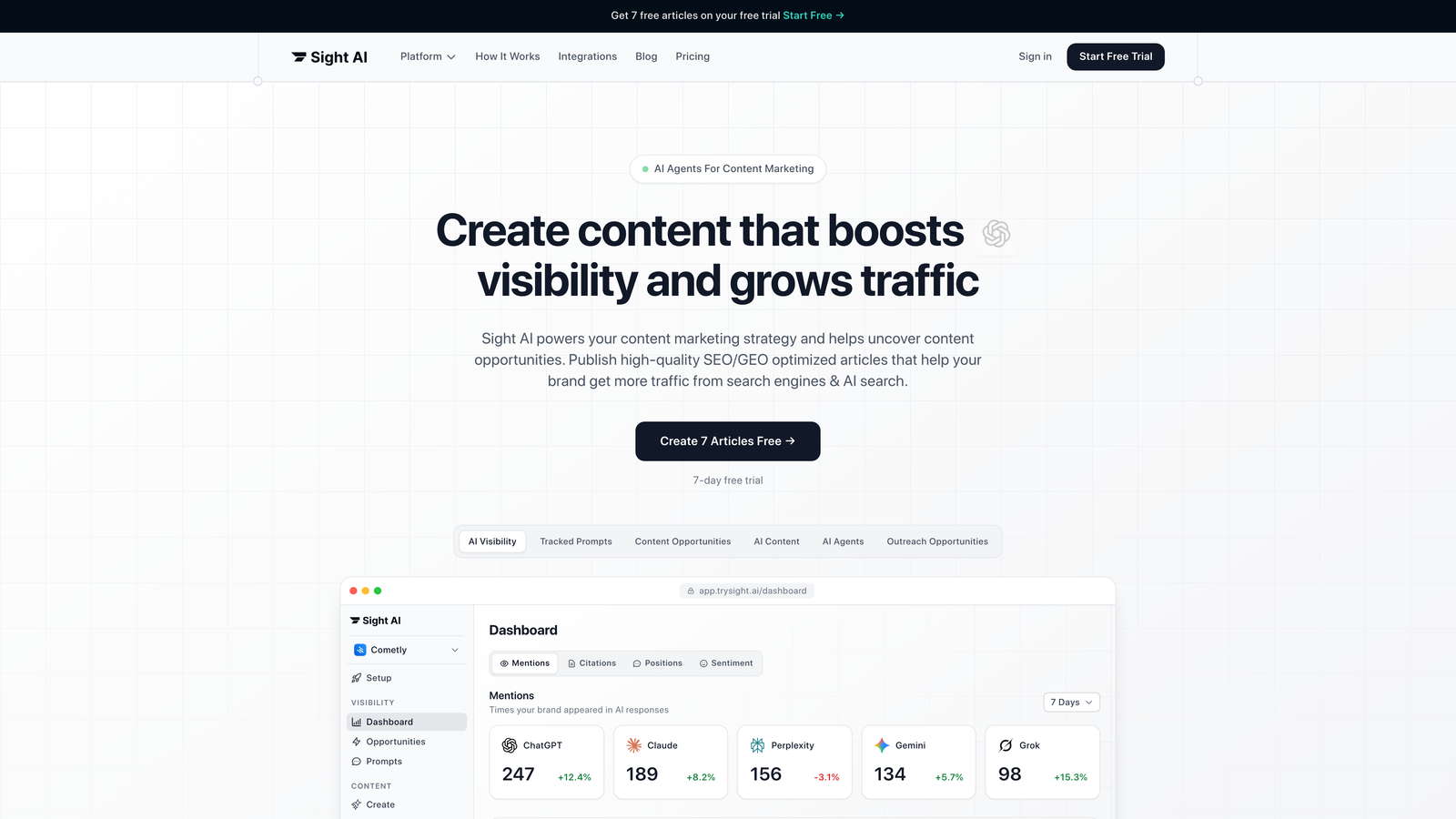
Sight AI is an all-in-one platform that tracks brand mentions across ChatGPT, Claude, Perplexity and other AI models. It also includes content generation capabilities to improve your AI presence.
Where This Tool Shines
Sight AI combines visibility tracking with content creation, so it answers both "what's happening" and "what to do about it." The platform monitors six major AI models at once, giving you a complete picture of your brand's AI presence.
The AI Visibility Score is a single metric that quantifies your brand's presence. It makes it easy to track improvements over time and benchmark against competitors. Because tracking and optimization live in one place, you don't need to juggle multiple tools.
Key Features
Multi-Model Monitoring: Tracks mentions across ChatGPT, Claude, Perplexity and three additional AI platforms in real time.
AI Visibility Score: A proprietary scoring system that quantifies brand presence, with sentiment analysis and context evaluation.
Prompt Intelligence: Identifies which specific queries trigger brand mentions, revealing content opportunities and gaps.
Integrated Content Writer: Thirteen specialized AI agents generate SEO- and GEO-optimized articles designed to improve AI visibility.
IndexNow Integration: Automatically submits new content to search engines and AI crawlers for faster discovery and indexing.
Best For
Marketing teams and agencies managing organic traffic growth who need both visibility insights and content creation. It is particularly valuable for brands building their AI presence from scratch, or optimizing an existing strategy based on real performance data.
Pricing
Contact for pricing. Tiered plans cover startups through enterprise organizations and scale with monitoring frequency and content generation volume.
2. Brandwatch AI Monitor
Best for: Enterprise organizations already using social listening tools who want to expand into AI visibility tracking.
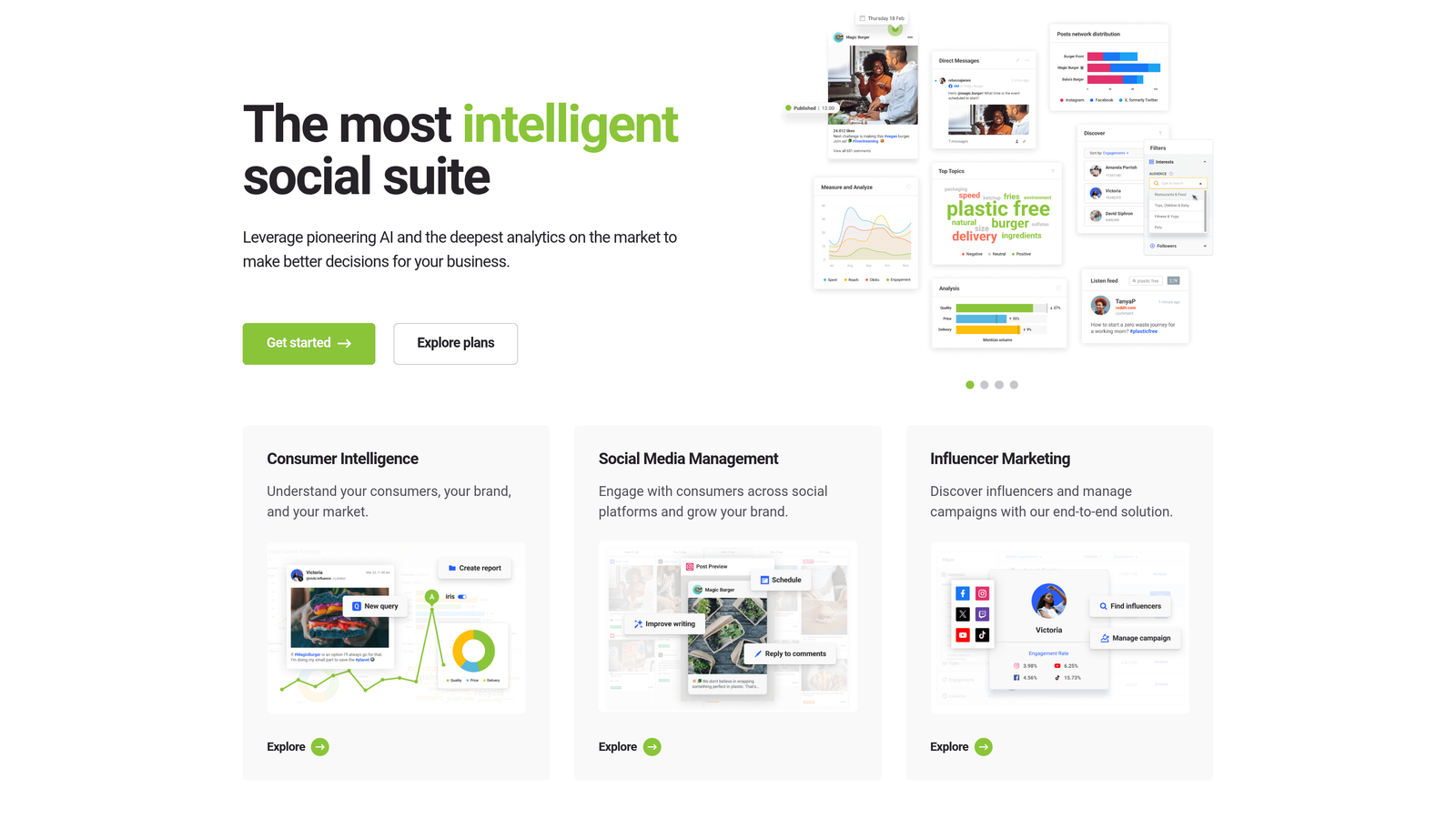
Brandwatch is an established social listening platform that has added AI search monitoring and generative response tracking.
Where This Tool Shines
Brandwatch brings a decade of social media analytics experience to the AI visibility space. It excels at historical trend analysis, so you can spot patterns in how AI models discuss your brand over time.
For enterprises already invested in Brandwatch, adding AI monitoring creates one view of brand perception across social media, news and AI channels. Its integrations are particularly strong for teams that use multiple marketing platforms.
Key Features
Historical Data Analysis: Deep archives of AI response trends, with customizable date ranges and comparison tools.
Advanced Sentiment Detection: AI-powered analysis that classifies mentions as positive, negative or neutral, with context.
Platform Integrations: Connects with major marketing tools, including Salesforce, HubSpot and Slack.
Custom Alert System: Configurable notifications based on mention volume, sentiment shifts or specific prompt patterns.
Enterprise Reporting: Automated reports with customizable templates, white-labeling options and executive dashboards.
Best For
Large marketing departments and agencies managing multiple brands who need enterprise-grade analytics and already use Brandwatch for social listening. The learning curve is steeper, but sophisticated teams get insights deep enough to justify the investment.
Pricing
Custom enterprise pricing based on the number of brands monitored and data volume. Plans typically start at $800+ per month and require annual commitments.
3. Otterly.ai
Best for: Teams seeking a dedicated, user-friendly AI search monitoring tool without unnecessary complexity.
Otterly.ai is a focused platform built specifically for tracking brand visibility in generative AI responses across multiple models.
Where This Tool Shines
Otterly.ai does one thing exceptionally well: monitoring AI search results. The interface is clean and intuitive, so you can see at a glance how your brand performs across AI platforms. Setup takes minutes rather than hours.
Weekly visibility reports give digestible summaries that work well for stakeholder updates. Otterly.ai skips the dozens of rarely used features found in enterprise platforms and focuses on the core functions that shape an AI visibility strategy.
Key Features
Generative AI Focus: Purpose-built for tracking ChatGPT, Claude, Perplexity and other generative search engines.
Intuitive Dashboard: A visual interface that highlights visibility trends and prompt performance without requiring training.
Prompt Analytics: A detailed breakdown of which query types generate brand mentions and which represent opportunities.
Competitor Tracking: Monitors how competing brands appear in AI responses so you understand relative positioning.
Automated Reports: Weekly email summaries with key metrics and notable changes in AI visibility.
Best For
Small to mid-size marketing teams who want actionable AI visibility data without the overhead of an enterprise platform. It is ideal for companies starting AI optimization that need clear, accessible insights.
Pricing
A free tier covers basic monitoring of one brand. Paid plans start at $49 per month and add higher monitoring frequency and more tracked brands.
4. Peec AI
Best for: Competitive intelligence teams focused on benchmarking AI visibility against industry rivals.
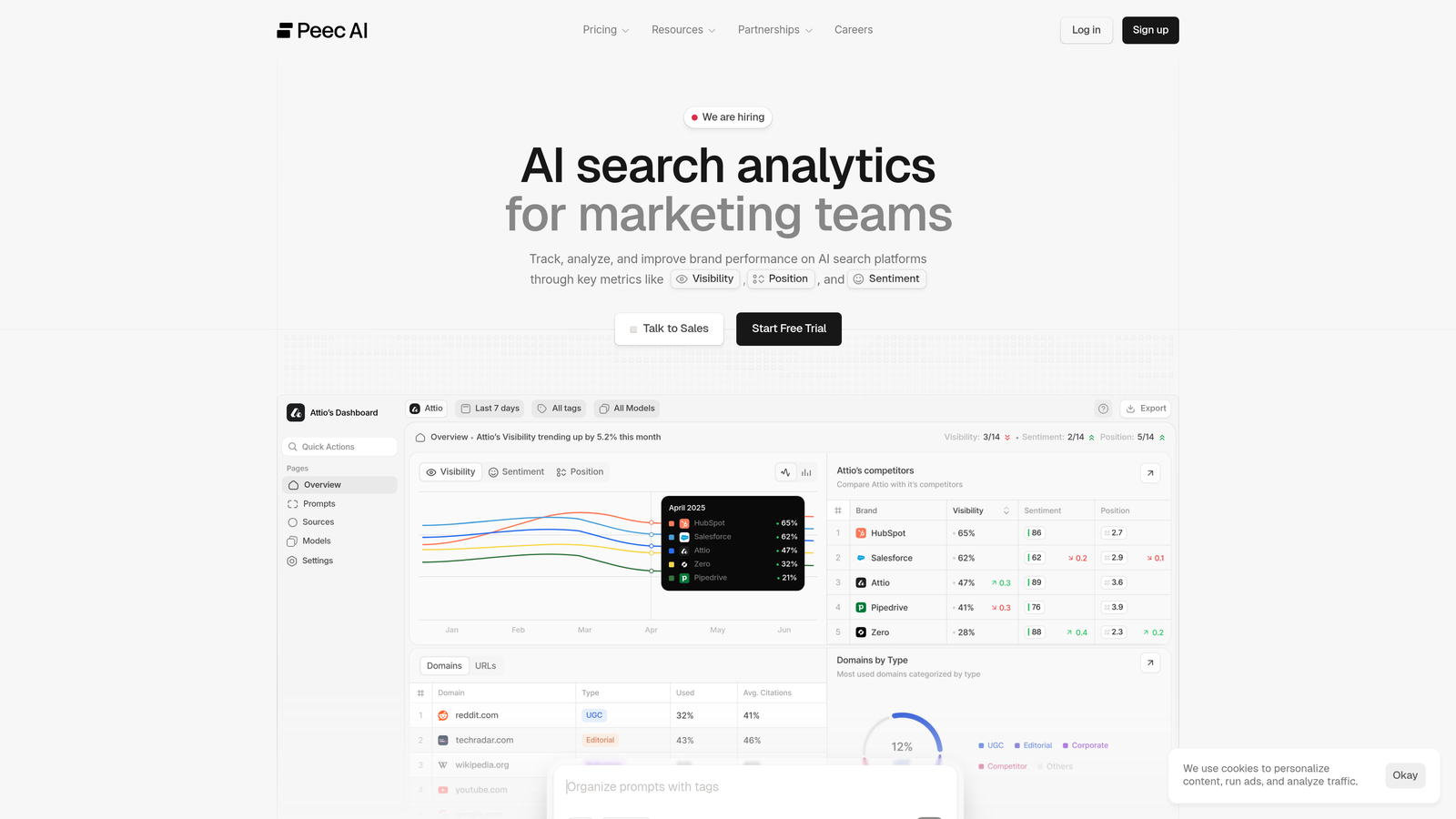
Peec AI is a competitive analysis platform that specializes in comparing your brand's AI search presence against competitors.
Where This Tool Shines
Peec AI excels at side-by-side competitor comparisons. It shows your visibility and also your share of voice relative to competitors across prompt categories. That context turns raw data into strategic intelligence.
The prompt suggestion engine is particularly valuable. It finds queries where competitors appear but your brand doesn't, which points to specific content opportunities. Industry benchmarking shows whether your AI visibility is strong for your sector or needs work.
Key Features
Competitor Benchmarking: Direct comparison of brand mentions across up to ten competitors, with visual performance charts.
Prompt Suggestions: AI-powered recommendations for queries to optimize, based on competitor analysis and gaps.
Share of Voice Metrics: Calculates your percentage of total brand mentions within your industry's AI search results.
Industry Standards: Benchmarks your performance against sector averages to show relative strengths and weaknesses.
Trend Identification: Highlights emerging prompt patterns and shifts in AI model behavior that affect visibility.
Best For
Marketing strategists and competitive intelligence professionals who need to understand market positioning in AI search. It is most valuable in competitive industries where AI visibility directly affects customer acquisition.
Pricing
Starts at $79 per month for basic monitoring and competitor tracking. Higher tiers add more competitors and advanced analytics.
5. Profound
Best for: Teams that want actionable optimization recommendations alongside visibility tracking.
Profound is an AI search optimization platform that combines monitoring with strategic recommendations for improving brand presence.
Where This Tool Shines
Profound bridges the gap between data and action. Beyond showing how visible you are, it gives specific, prioritized recommendations for improving your AI presence. Content gap analysis identifies topics where your brand should appear but doesn't.
Keyword-to-prompt mapping helps traditional SEO teams see how their existing keyword strategy translates to AI search optimization. ROI tracking connects visibility gains to business outcomes, which makes AI optimization spend easier to justify.
Key Features
Multi-Platform Tracking: Monitors brand mentions across major AI models, with customizable monitoring frequency.
Optimization Recommendations: Prioritized action items for improving AI visibility, based on current performance and opportunities.
Content Gap Analysis: Identifies topics and prompt categories where your brand should rank but currently doesn't appear.
Keyword Mapping: Translates traditional SEO keywords into relevant AI prompts to target.
ROI Tracking: Connects visibility improvements to traffic and conversion metrics.
Best For
Marketing teams moving from traditional SEO to AI search optimization who need guidance on where to focus. It is particularly useful for brands with existing content libraries that want to optimize them for AI visibility.
Pricing
Plans start at $99 per month for basic tracking and recommendations. Enterprise plans with custom features and dedicated support are available.
6. Scrunch AI
Best for: Brands needing real-time alerts when their company appears in AI-generated content.
Scrunch AI is a real-time monitoring solution focused on notifying you immediately when AI models mention your brand.
Where This Tool Shines
Scrunch AI prioritizes speed. It sends instant alerts via Slack or email when your brand appears in AI responses, so you can respond quickly to both opportunities and potential issues. That real-time capability is crucial for reputation management.
Historical mention archives put current performance in context. You can see how AI model behavior changes over time and identify patterns in when and how your brand is mentioned. Customizable monitoring parameters keep the focus on the prompts and contexts that matter most to your business.
Key Features
Real-Time Alerts: Immediate notifications when brand mentions occur in AI responses on monitored platforms.
Sentiment Tracking: Automatic classification of mention sentiment, with context preserved for review.
Custom Parameters: Lets you define specific prompt categories, competitors or topics to monitor.
Integration Support: Connects with Slack, email and webhook endpoints for workflow automation.
Historical Archives: A searchable database of past mentions, filterable by date, sentiment and AI model.
Best For
PR teams and brand managers who need to respond quickly to how AI models discuss their company. It is valuable for reputation management and for catching emerging narratives before they spread.
Pricing
Starts at $59 per month for basic real-time monitoring. Higher tiers add more frequent checks and advanced alert customization.
7. AIMonitor Pro
Best for: Development teams and technical marketers who need API access for custom integrations.
AIMonitor Pro is a developer-friendly platform with robust API access for building custom AI visibility solutions.
Where This Tool Shines
AIMonitor Pro gives technical teams complete control. Full API access lets you integrate with your existing marketing stack, custom dashboards and proprietary analytics systems. Webhook support sends data into your infrastructure in real time.
Bulk prompt testing is particularly powerful for teams optimizing content at scale. You can test hundreds of prompt variations at once to learn which content strategies drive AI visibility. For organizations with unusual monitoring needs, that flexibility justifies the higher price.
Key Features
Complete API Access: A RESTful API with comprehensive documentation for custom integrations and data extraction.
Detailed Logging: Granular prompt and response data, with full context preserved for analysis.
Webhook Support: Real-time data delivery to your systems as mentions occur across AI platforms.
Custom Dashboards: Lets you build your own visualization and reporting tools from raw API data.
Bulk Testing: Submits and analyzes hundreds of prompt variations at once for optimization research.
Best For
Engineering teams and technical marketing organizations that need to integrate AI visibility data into existing systems. It is most valuable for companies building proprietary AI optimization platforms or running custom analytics workflows.
Pricing
API-based pricing starts at $149 per month, with usage tiers based on request volume. Enterprise plans are available for high-volume implementations.
8. Knowatoa
Best for: Startups and small teams beginning AI monitoring on limited budgets.
Knowatoa is an accessible AI visibility tool designed for teams new to prompt tracking and AI search optimization.
Where This Tool Shines
Knowatoa removes barriers to entry. Setup is straightforward, and guided onboarding explains AI visibility concepts as you configure monitoring. The simplified interface focuses on essential metrics so new users aren't overwhelmed.
The free tier provides genuine value, so small teams can start tracking AI visibility before committing budget. Weekly email digests explain clearly what the data means and suggest next steps. For teams new to AI optimization, Knowatoa is a gentle introduction.
Key Features
Simple Setup: A guided onboarding process that needs minimal technical knowledge or configuration.
Essential Tracking: Core prompt monitoring across major AI platforms without feature bloat.
Basic Sentiment: Straightforward positive, negative and neutral classification of brand mentions.
Email Digests: Weekly summary reports with plain-language explanations and actionable suggestions.
Affordable Entry: A free tier with meaningful functionality and low-cost paid plans for growing teams.
Best For
Founders and small marketing teams exploring AI visibility for the first time. It is ideal for bootstrapped startups and solopreneurs who need basic monitoring without complexity or high costs.
Pricing
The free tier includes basic monitoring for one brand. Paid plans start at $29 per month and add higher check frequency and more features.
9. HubSpot AI Insights (Beta)
Best for: Existing HubSpot users who want AI monitoring inside their marketing platform.
HubSpot has added AI visibility features to its marketing platform. They are currently in beta, with capabilities still expanding.
Where This Tool Shines
HubSpot AI Insights uses the platform's existing CRM integration to connect AI visibility data with customer records. You can see which contacts interact with AI-generated content that mentions your brand and follow their journey through your funnel.
The unified dashboard removes context switching between tools. Teams already running campaigns, content and automation in HubSpot can monitor AI visibility in the same interface. Workflow automation can trigger actions based on AI visibility events, enabling more sophisticated responses.
Key Features
CRM Integration: Links AI mention data directly to contact records.
Unified Dashboard: Shows AI visibility alongside traditional marketing metrics in one interface.
Growing Capabilities: Beta features expand regularly with new AI models and monitoring options.
Contact Tracking: Identifies when specific contacts may have encountered AI-generated content about your brand.
Workflow Automation: Triggers marketing actions based on AI visibility events and mention patterns.
Best For
Marketing teams already using HubSpot who want to consolidate their technology stack. It is most valuable for organizations that prioritize integration over specialized AI monitoring features.
Pricing
AI Insights features are included in Marketing Hub Professional plans, which start at $800+ per month. There is no additional cost for AI monitoring beyond the base subscription.
How to set up prompt tracking in 5 steps
- Build a prompt set of 30–100 prompts that mirror real buyer questions. Include category prompts ("best CRM for startups"), comparison prompts ("HubSpot vs Pipedrive"), problem prompts ("how to reduce churn in SaaS") and branded prompts.
- Tag each prompt by topic, funnel stage and market so you can report visibility by segment instead of as one blended number.
- Add 3–10 competitors so share of voice has a baseline.
- Run prompts daily for two to four weeks before drawing conclusions. LLM answers vary from run to run, so trends matter more than single results.
- Act on cited sources. Create or update pages for prompts where competitors are cited and you are not, then re-measure.
For a fuller measurement model covering visibility rate, position, sentiment and citations, see our framework for measuring AI visibility performance.
Making the Right Choice
The right prompt tracking software depends on your specific needs and existing infrastructure. For comprehensive AI visibility combined with content optimization, Sight AI offers the most complete solution. It monitors six AI platforms and provides the content creation capabilities to actually improve your presence.
Enterprise teams already invested in social listening should consider Brandwatch, whose AI capabilities fit into existing workflows. Startups and small marketing teams will find accessible entry points in Knowatoa or Otterly.ai, both of which offer genuine value at lower prices.
Competitive intelligence teams should explore Peec AI for benchmarking. Technical organizations that need custom integrations will appreciate AIMonitor Pro's API-first approach. Teams that want actionable recommendations alongside data will benefit from Profound's optimization guidance.
Whatever you choose, start now. AI-powered search is reshaping how consumers discover brands, and the companies that understand how AI models discuss them today will lead AI-driven discovery tomorrow. The brands winning in 2026 aren't just tracking their AI visibility. They're actively optimizing for it.
Frequently asked questions
What is AI prompt tracking?
AI prompt tracking means repeatedly sending a defined set of prompts to AI engines such as ChatGPT, Perplexity, Gemini and Claude, then recording how they respond. Tools log whether your brand is mentioned, its position in the answer, the sentiment and the sources cited. Over time, this shows your visibility rate and share of voice by topic. It is the AI-search equivalent of keyword rank tracking.
How is prompt tracking different from keyword rank tracking?
Rank trackers report a fixed position for a keyword on a results page. Prompt trackers analyze generated answers that vary between runs, so they report how often you are mentioned, how you are described and which URLs are cited, rather than a single rank. Most teams use both. If you need the classic side, see our guide to the best rank checking software.
Can I track custom prompts?
Yes. Every tool above lets you add your own prompts, although the limits differ. Entry plans often cap you at a few dozen prompts, while enterprise and API-based tools such as AIMonitor Pro support hundreds or thousands. For scalable prompt tracking, compare the cost per prompt per month, how often each prompt runs and whether you can tag prompts by topic or market.
Is there a free prompt tracking tool?
Otterly.ai and Knowatoa both offer free tiers covering basic monitoring of one brand. Free plans usually limit the number of prompts, engines and check frequency, so they work best for validating that AI visibility tracking is worth investing in. Teams that track competitors or many product lines typically move to paid plans starting around $29–$79 per month.
Stop guessing how AI models like ChatGPT and Claude talk about your brand. Start tracking your AI visibility today and see exactly where your brand appears across top AI platforms. Then use those insights to uncover content opportunities and automate your path to organic traffic growth.