Rank checking now means two jobs: knowing where your pages sit in Google, and knowing whether ChatGPT, Claude, or Perplexity mention your brand when buyers ask. This list is for marketers, founders, and agencies who need to cover one or both. Tools were judged on tracking accuracy, update frequency, reporting, scalability, pricing transparency, and coverage of classic SERPs and AI search. Pricing and feature details change often, so confirm them on each vendor's site (details here reflect what was known as of October 2026).
Quick Comparison of the Rank Checking Tools
- Sight AI: teams measuring brand visibility in AI answers; see website for pricing; connects AI mention tracking to content generation and indexing.
- Ahrefs Rank Tracker: SEOs tying rankings to backlinks; subscription tiers, see website; rankings sit next to a very large backlink index.
- Semrush Position Tracking: in-house teams wanting one broad suite; subscription tiers plus add-ons, see website; rank tracking bundled with a wide marketing toolkit.
- AccuRanker: agencies and enterprises with huge keyword sets; priced by keyword volume, see website; fast on-demand refreshes at scale.
- SE Ranking: small agencies and freelancers on a budget; tiered by keyword limits, see website; low-cost suite with white-label reports.
- Advanced Web Ranking: agencies needing bespoke client reporting; tiered, see website; the deepest dashboard customization here.
- SERPWatcher by Mangools: solo marketers and small sites; bundled plans, see website; the easy-to-read Dominance Index.
- Nightwatch: teams wanting local rank data plus AI tracking; tiered, see website; local tracking paired with AI visibility monitoring.
- Google Search Console: anyone needing a free baseline; free; first-party Google data.
1. Sight AI
Sight AI is an AI visibility platform that shows how models such as ChatGPT, Claude, and Perplexity talk about your brand, then gives you content and indexing tools to act on what it finds. It is built for marketers, founders, and agencies who care about being mentioned inside AI answers, not only listed in a results page.
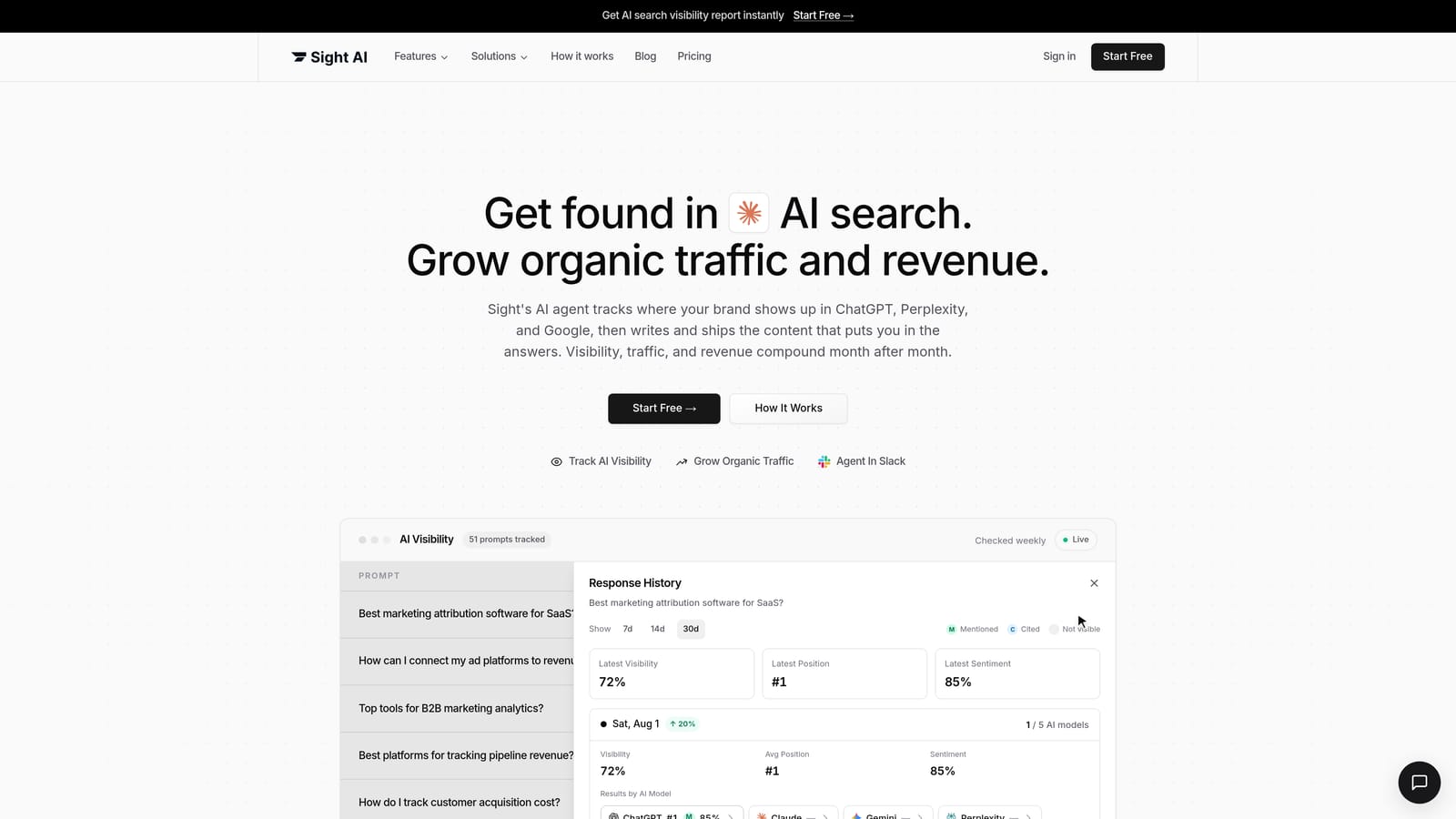
Its distinguishing trait on this list is the loop: most tools here report a position and stop. Sight AI tracks mentions, surfaces gaps, and lets you produce and publish content aimed at closing them within the same product.
- AI Visibility Score with sentiment analysis gives you one number to trend over time, plus a view of whether mentions are positive, neutral, or negative.
- Prompt tracking across 6+ AI platforms, including ChatGPT, Claude, and Perplexity, shows which questions surface your brand and which surface competitors.
- AI Content Writer with 13+ agents and Autopilot Mode drafts SEO and GEO-optimized articles such as listicles, guides, and explainers without a manual brief for each.
- IndexNow indexing and automated sitemap updates notify participating search engines when you publish, so new pages are discovered sooner.
- CMS auto-publishing pushes finished articles live, which removes copy-paste steps for small teams.
Setup is light: connect your site and CMS, define the prompts and brand terms you want monitored, and a marketer can run it day to day without developer help. Integrations centre on IndexNow and CMS publishing.
The limitation is plain: Sight AI is not a traditional keyword SERP position tracker. It will not tell you that you moved from position 7 to position 4 for a given keyword, so most teams should pair it with one of the classic trackers below. Pricing details are on the vendor's website.
Best for: Teams that need to measure and grow brand visibility in AI search.
2. Ahrefs Rank Tracker
Ahrefs Rank Tracker is the position tracking module inside the Ahrefs SEO suite. It is designed for SEOs who want to see a ranking change and immediately investigate why, using backlink and keyword data in the same account.
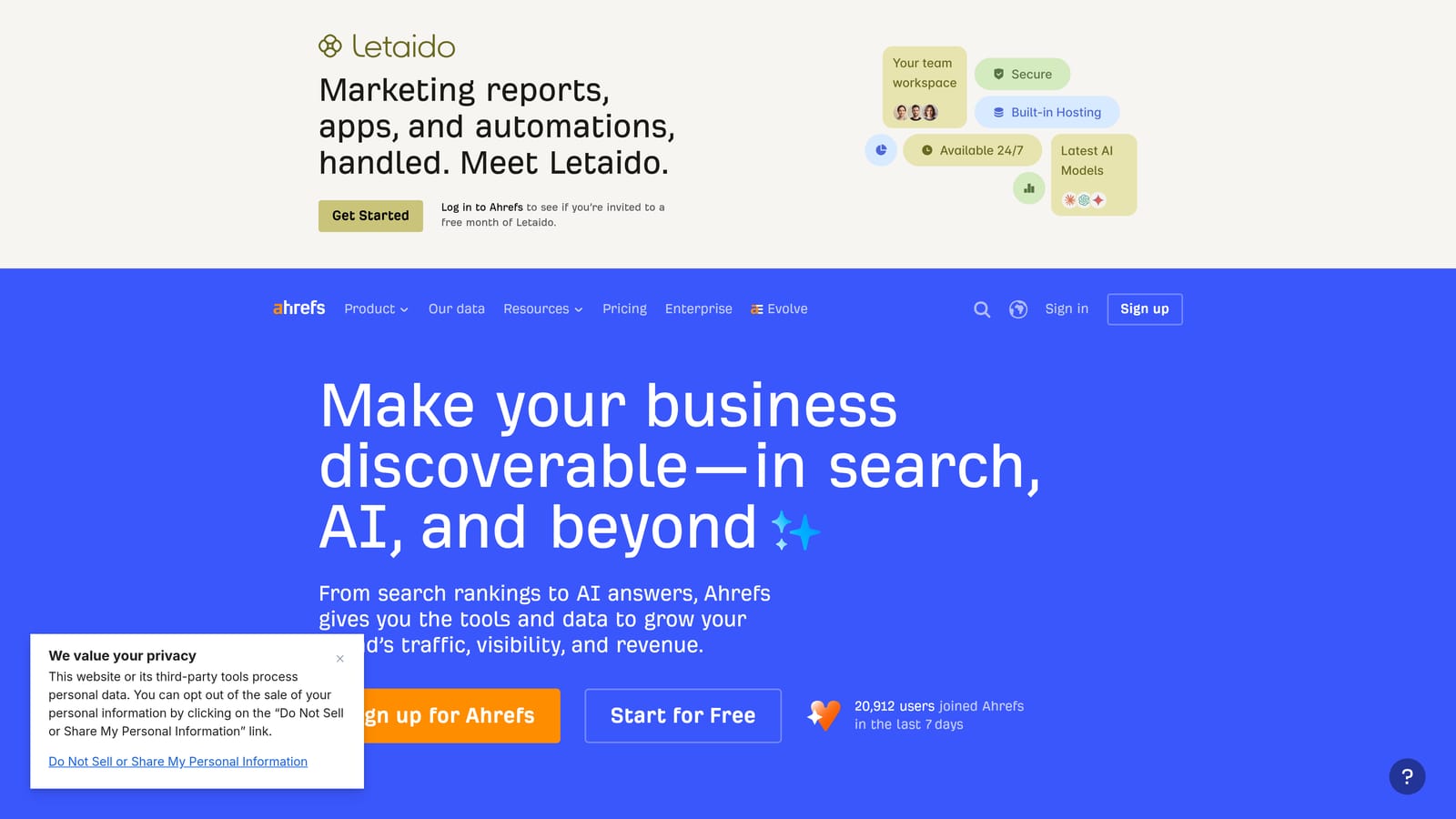
What sets it apart here is context. Rankings sit inside one of the largest backlink indexes, so when a competitor overtakes you, you can check whether they gained links, published new content, or earned a SERP feature without exporting anything.
- Tracking by location and device lets you see the results a real searcher in a given market would see, rather than one generic number.
- SERP feature tracking shows when you own or lose elements like featured snippets, which can matter more than a one-place move.
- Competitor comparison puts your positions beside rivals for the same keyword set.
- Historical position graphs make trends and the impact of site changes easy to spot.
- Scheduled reports send stakeholders updates without manual exports.
It integrates with Google Search Console and Looker Studio. Setup is quick, though getting value requires an SEO who can interpret the surrounding data, and Ahrefs is a full suite, so there is more to learn than in a single-purpose tracker.
The real limitation is cost at scale: tracked-keyword limits and usage-based costs can add up for large sites. It also is not a dedicated AI answer tracker, so check the vendor's current AI features before relying on it for that. Pricing is subscription-tiered; see the website.
Best for: SEOs linking ranking changes to backlink and competitor analysis.
3. Semrush Position Tracking
Semrush Position Tracking sits inside the Semrush suite, alongside keyword research, site audits, content tools, and advertising data. It suits in-house teams that would rather learn one platform than stitch several together.
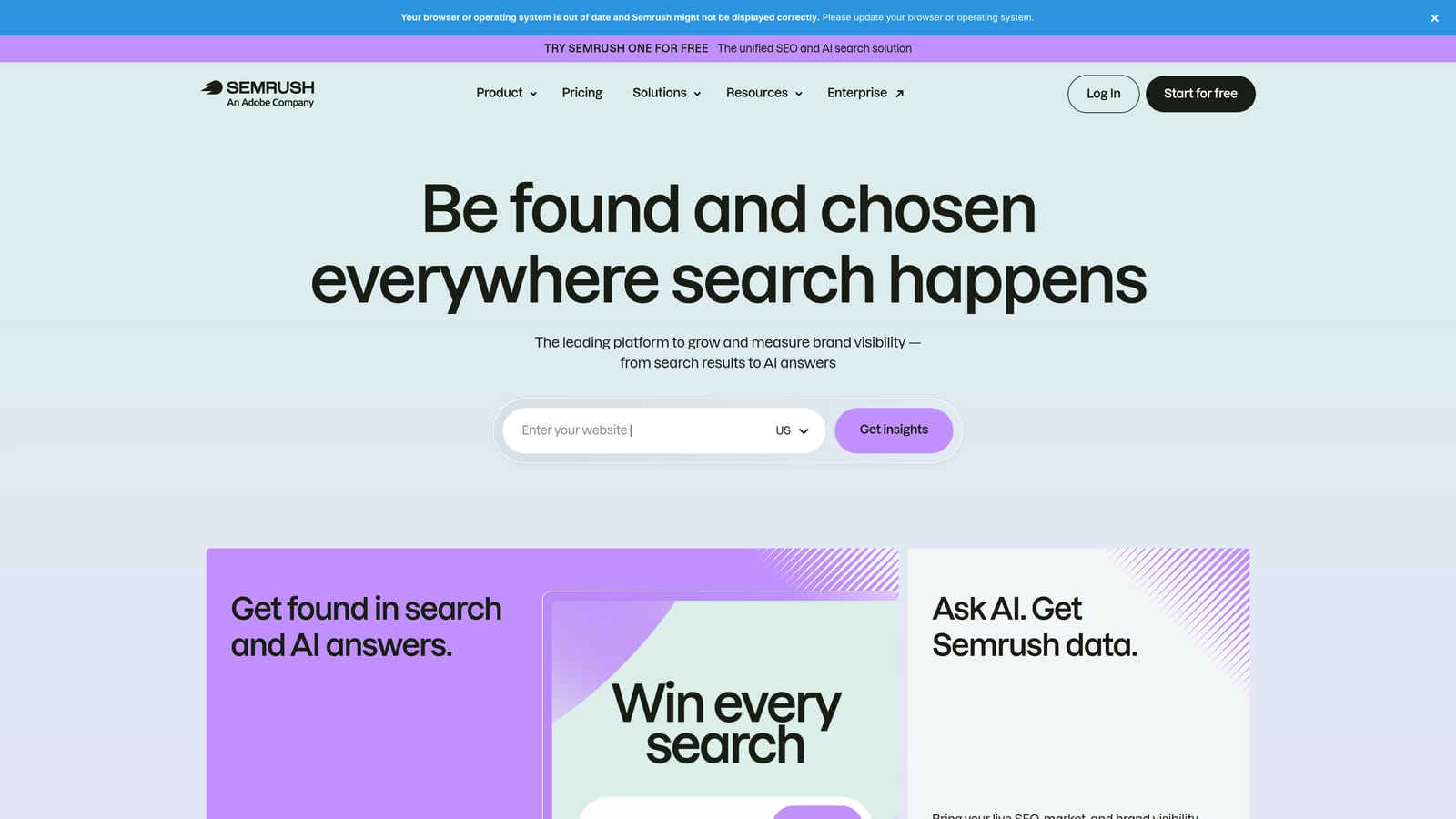
Its edge over single-purpose trackers is breadth: rank data feeds into the same workspace where you plan content, audit the site, and analyze competitors.
- Daily updates keep position data current enough to catch drops quickly.
- Local and device tracking separates desktop from mobile and city from city.
- Competitor tracking shows how rivals move across the same keywords.
- Visibility and Share of Voice metrics roll many keywords into a single trendable figure for reporting upward.
- Tagging and segments let you slice keywords by product line, funnel stage, or market.
Integrations include Google Search Console, Google Analytics, and Looker Studio. Setup is straightforward for the tracker itself, but the wider suite takes time to learn. Semrush has been adding AI search features; verify their current scope and whether they are included in your tier before buying for that purpose.
The main drawback is budgeting. Add-ons and tier limits complicate forecasting, and teams that only need rank data may pay for much they do not use. Pricing is subscription tiers plus add-ons; see the website.
Best for: In-house teams wanting one broad SEO and marketing suite.
4. AccuRanker
AccuRanker is a dedicated rank tracking platform built around speed and very large keyword volumes. It targets agencies and enterprises where a tracker is infrastructure, not a side feature.
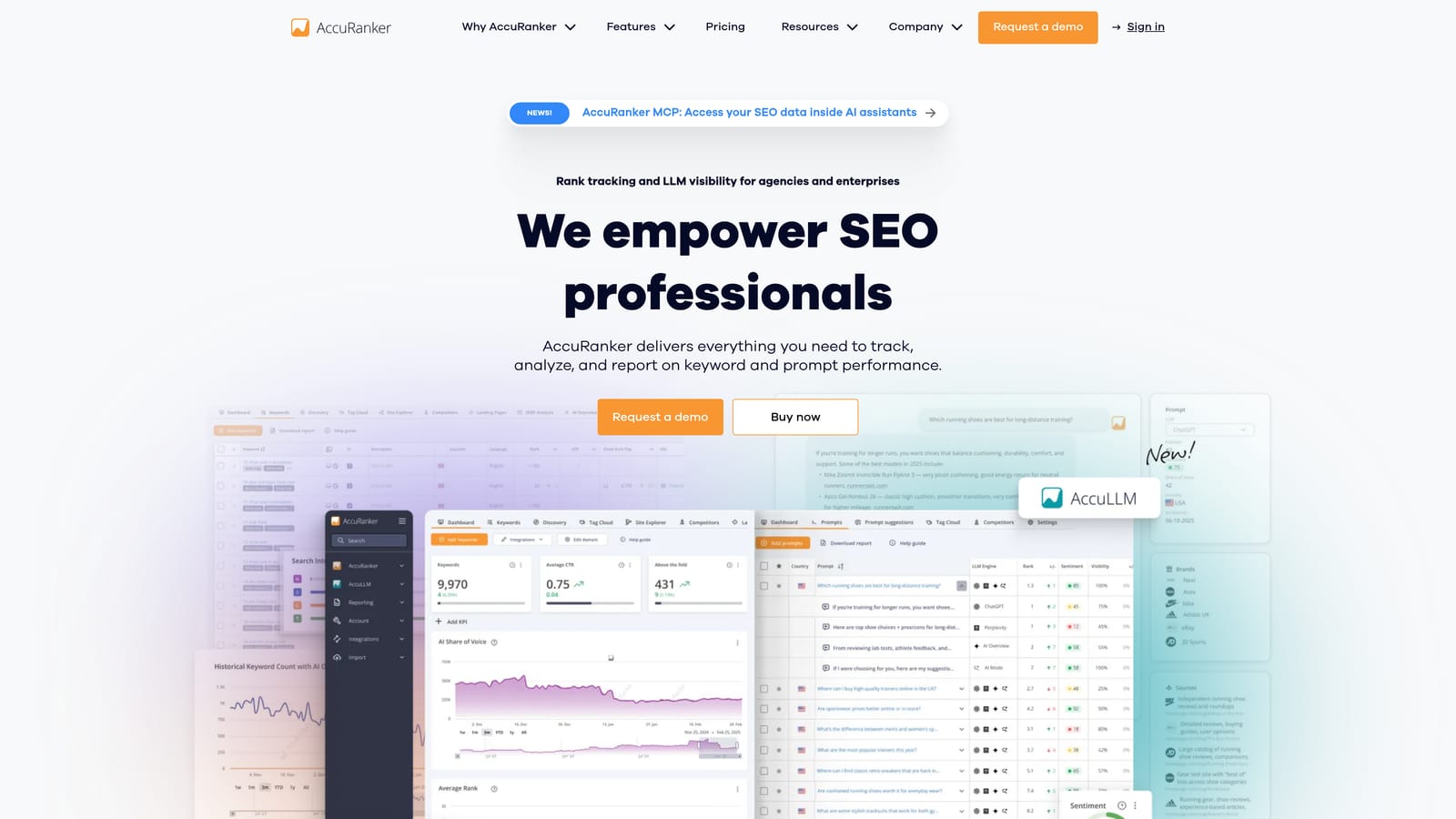
Its distinguishing strength is on-demand refreshes at scale: you can update positions when you need them, for example after a deployment or algorithm shift, rather than waiting for the next scheduled check.
- On-demand refreshes let you verify the effect of a change the same day.
- Large-scale keyword tracking handles big sets across many domains without becoming sluggish.
- Flexible reporting supports dashboards and client-facing outputs.
- API access lets data engineers pipe rankings into warehouses or custom dashboards.
- Share of voice condenses large keyword groups into a competitive visibility measure.
It connects with Google Search Console, Google Analytics, Looker Studio, and its API. Setup is simple because the product is narrow; day-to-day use usually falls to an SEO analyst or agency account team.
That narrowness is also the limitation: there is no keyword research or backlink data, so you will need another tool for those. It is also not an AI answer tracker. Pricing is based on keyword volume; see the website.
Best for: Agencies and enterprises tracking very large keyword sets.
5. SE Ranking
SE Ranking is an affordable SEO platform with rank tracking and white-label reporting at its core. It is aimed at small agencies, freelancers, and in-house marketers who need professional features without enterprise pricing.
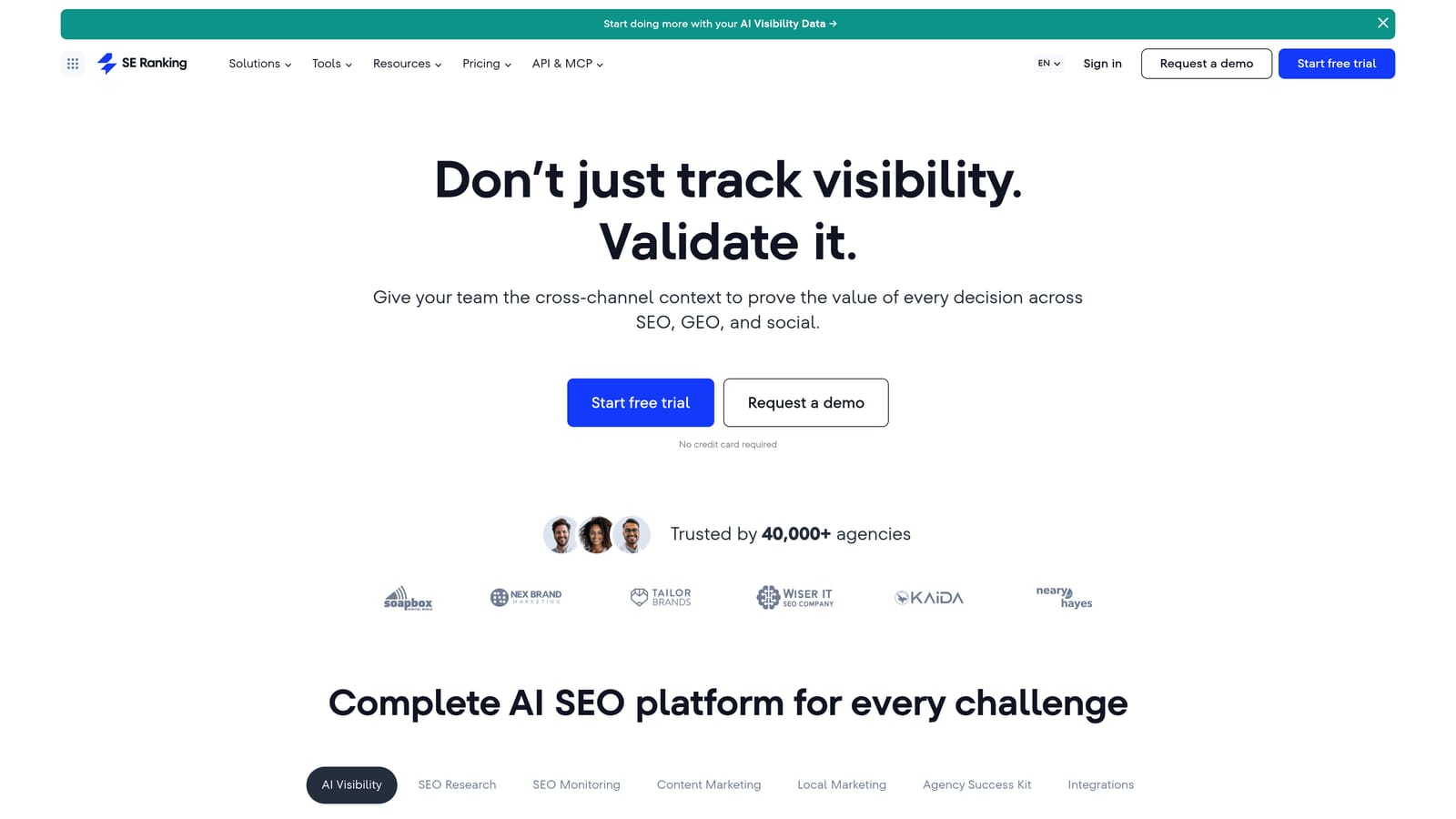
It stands out for packaging agency-ready reporting into a low-cost suite, so you can hand clients branded reports without paying for a heavyweight platform.
- Local rank tracking covers city-level results for service businesses and multi-location brands.
- Competitor monitoring shows how rivals move on your tracked terms.
- White-label reports carry your branding, which saves design and formatting time.
- Keyword grouping organizes terms by topic or page so reports stay readable.
- Multi-project management keeps several client sites in one account.
Integrations include Google Search Console, Google Analytics, and Looker Studio. Setup is quick, and a single marketer can run it. The trade-off is a smaller data index than the largest suites, so competitive and backlink data are less deep than in Ahrefs or Semrush. Check current AI search features on the vendor's site before assuming coverage. Pricing is tiered by keyword limits; see the website.
Best for: Small agencies and freelancers on a budget.
6. Advanced Web Ranking
Advanced Web Ranking is a professional rank tracking and reporting platform known for highly customizable dashboards. It is built for agencies whose clients expect reports shaped to their own questions.
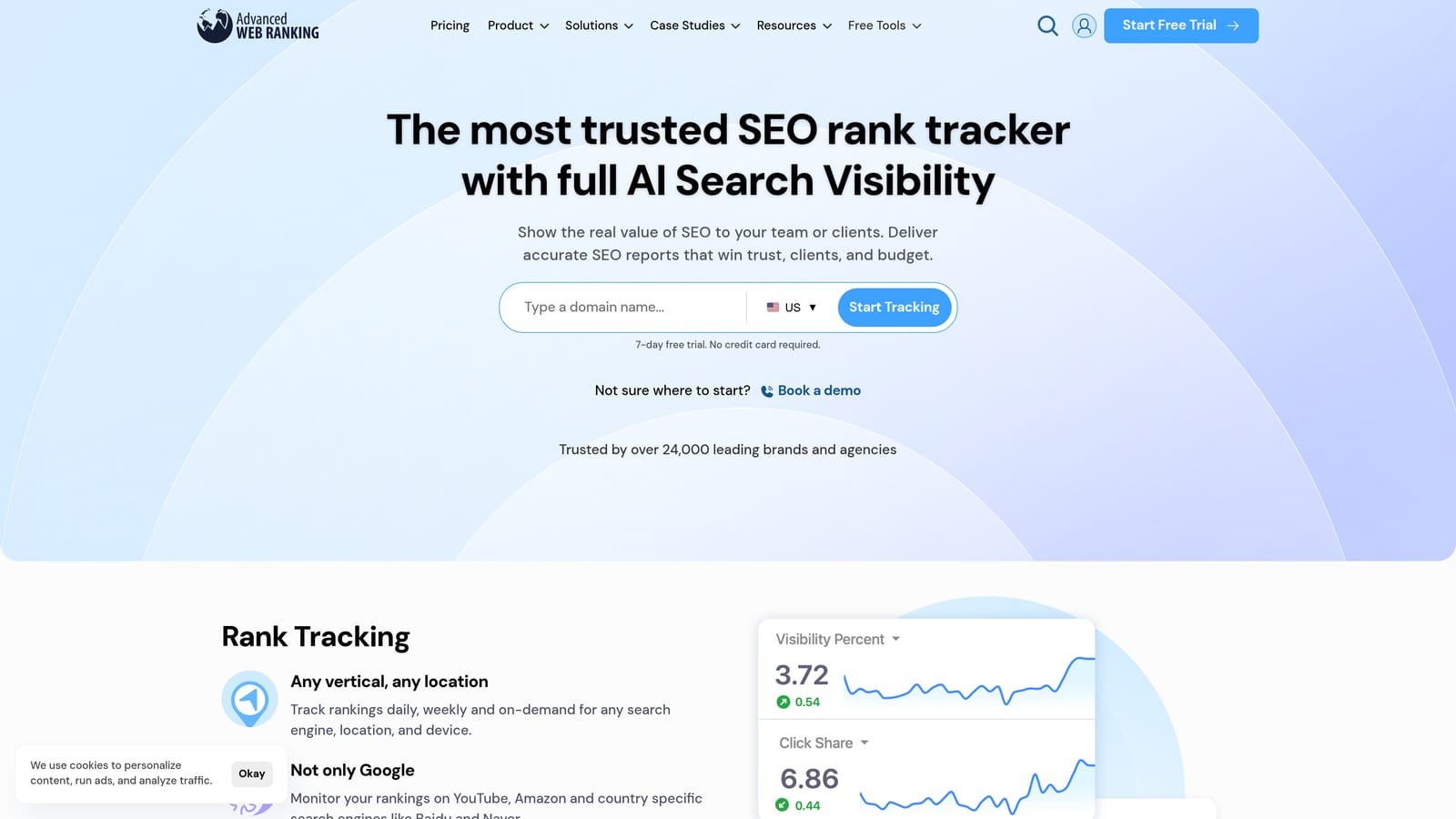
Its advantage is reporting depth: where other tools offer templates, this one lets you build dashboards around the metrics each client cares about.
- Broad search engine and location coverage supports international clients and non-Google engines.
- Custom dashboards let you present exactly the metrics a stakeholder asks for.
- Client reporting produces polished deliverables you can schedule.
- Competitor tracking benchmarks client performance against named rivals.
- Data export and API move rank data into other systems.
It integrates with Google Search Console, Google Analytics, Looker Studio, and its API. Expect more setup than with simpler tools, since the flexibility must be configured, and an analyst typically owns it.
The limitations are a steeper learning curve and professional-oriented pricing, which can be more than a solo marketer needs. It is not an AI answer tracker. Pricing is tiered; see the website.
Best for: Agencies needing bespoke client reporting.
7. SERPWatcher by Mangools
SERPWatcher is the rank tracker in the Mangools SEO toolset, designed to be readable on first use. It fits solo marketers and small sites that find enterprise dashboards overwhelming.
Its distinctive feature is the Dominance Index, which summarizes your overall ranking strength in one easy figure, so you can judge progress without reading every row.
- Dominance Index boils many keyword positions down to a single trend line.
- Position history shows how each keyword has moved over time.
- Location-based tracking checks results for the market you actually target.
- Email reports deliver updates without requiring a login.
- Simple interface keeps training time close to zero.
It connects with Google Search Console and Google Analytics. Setup takes minutes and one person can run it.
The limitations: lower keyword allowances and fewer advanced reporting options, so agencies with many clients will outgrow it. It also has no AI answer tracking that we can point to. Pricing comes in bundled plans with the other Mangools tools; see the website.
Best for: Solo marketers and small sites.
8. Nightwatch
Nightwatch is a rank tracking platform with local tracking and visibility reporting, and it has added AI search tracking features. It suits teams that want local rank data and some AI monitoring in a single tool.
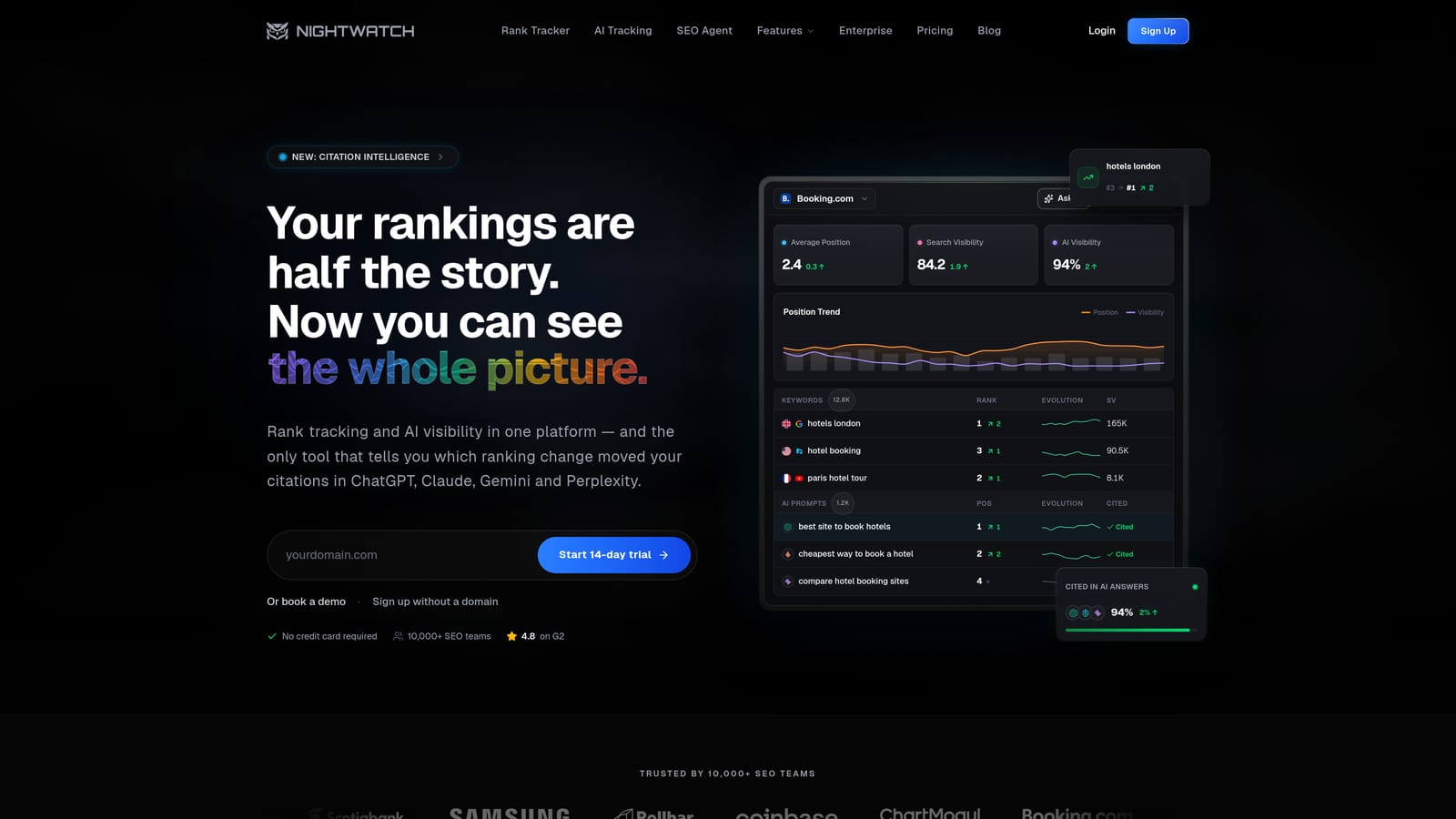
The pairing is what separates it: few classic trackers combine local and mobile position data with AI visibility monitoring.
- Local and mobile tracking reflects what searchers in specific places and on specific devices see.
- Visibility reporting summarizes share of search presence across your keyword set.
- Competitor tracking compares your positions with named rivals.
- AI search tracking monitors how your brand appears in AI answers; verify the current scope and which engines are covered.
- Dashboards bring the metrics together for reviews and client updates.
It integrates with Google Search Console and Looker Studio. Setup is modest and an SEO or marketing generalist can manage it.
The caution is that plans and limits have changed over time, so confirm current details before committing. Its AI tracking is a feature within a rank tracker, not a platform for acting on findings. Pricing is tiered; see the website.
Best for: Teams wanting local rank data plus AI tracking in one tool.
9. Google Search Console
Google Search Console is Google's free tool for impressions, clicks, and average position by query and page. Anyone who owns a site should have it set up, whatever else they use.
Its unmatched strength is that it is first-party Google data at no cost, which makes it the reference point for checking whether a paid tracker's numbers are plausible.
- Average position per query and page shows how Google reports your visibility for real searches.
- Impressions and click data reveal which rankings actually produce traffic.
- Index coverage flags pages Google has not indexed or has trouble with.
- Performance filters by country and device let you segment results.
- Free API lets you pull data into your own reports.
It feeds Looker Studio, links with Google Analytics, and offers an API. Setup requires verifying site ownership, usually through DNS or a file, and a marketer or developer can do it in minutes.
Understand what it is not. Average position is an average across searches, locations, and devices, not a daily rank for a specific keyword. There is no competitor data, history is limited, and it does not track AI answers. Use it as a baseline, not a replacement. Cost: free.
Best for: Anyone needing a free baseline to verify paid trackers.
Choosing a Rank Checker and Covering Both Layers of Search
Rankings differ by location, device, and personalization, and tracking more keywords is not better if they are unprioritized. Pick the tool that matches your situation, then add AI monitoring.
- AI visibility: Sight AI, for tracking mentions in ChatGPT, Claude, and Perplexity and acting on the gaps with content and indexing.
- Agencies: AccuRanker for scale, SE Ranking for budget and white-label reports, Advanced Web Ranking for custom reporting.
- All-in-one SEO: Ahrefs for backlink context, Semrush for the broadest toolkit.
- Budget: Mangools SERPWatcher and Google Search Console.
Because Sight AI is not a keyword SERP tracker, the strongest setup pairs a classic tracker with AI visibility monitoring, so you see both your Google positions and your presence in AI answers.
Stop guessing how AI models like ChatGPT and Claude talk about your brand. Get visibility into every mention, track content opportunities, and automate your path to organic traffic growth. Start tracking your AI visibility today and see exactly where your brand appears across top AI platforms.