As AI reshapes how brands get discovered — not just in Google, but inside ChatGPT, Claude, and Perplexity — the definition of "SEO tool" has fundamentally expanded. Today's top platforms need to do more than generate content: they need to track AI visibility, optimize for generative engine optimization (GEO), and publish at scale.
This comparison breaks down the best AI SEO tools available right now, starting with Sight AI, an all-in-one platform built specifically for the AI search era, alongside Writesonic and other leading alternatives. Whether you're a marketer, founder, or agency trying to grow organic traffic and get your brand cited by AI models, this guide will help you choose the right tool for your workflow.
We evaluated each platform on content quality, AI visibility features, indexing capabilities, ease of use, and pricing transparency.
1. Sight AI
Best for: All-in-one AI visibility tracking, SEO/GEO content generation, and automated indexing
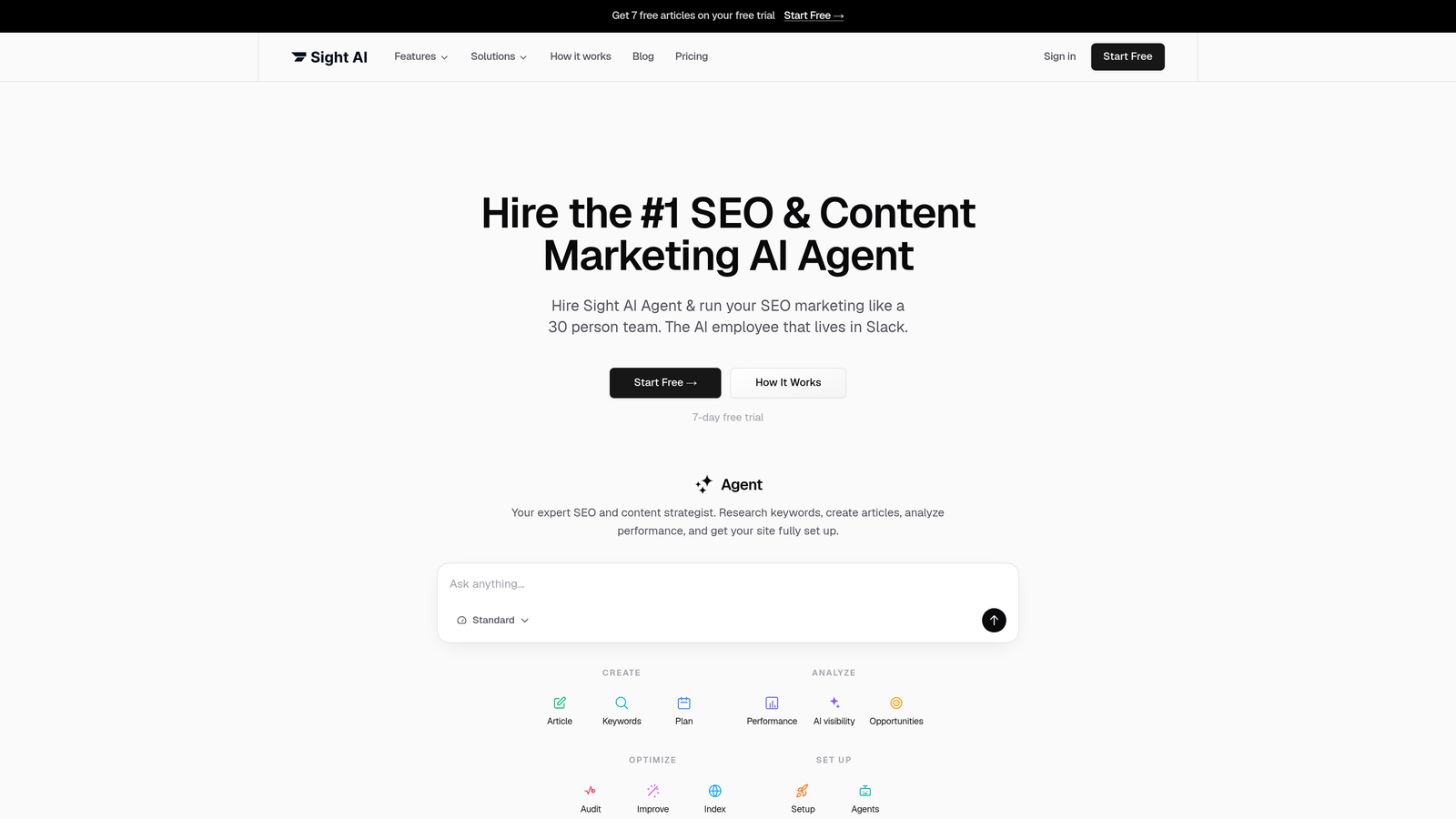
Sight AI is a purpose-built platform combining AI brand monitoring, specialized content generation, and automated website indexing under one roof.
Where This Tool Shines
Most AI SEO tools force you to choose: either you get a content generator or a visibility tracker. Sight AI is one of the few platforms that genuinely does both. Its AI Visibility Score gives you a real-time read on how your brand appears across six or more AI platforms, including ChatGPT, Claude, and Perplexity, with sentiment context attached to every mention.
On the content side, 13+ specialized AI agents handle different article formats, from listicles to explainers to long-form guides, each optimized for both traditional SEO and GEO. Autopilot Mode ties it together by managing the content pipeline with minimal manual intervention, making it particularly valuable for teams producing content at scale.
Key Features
AI Visibility Score: Tracks brand mentions across 6+ AI platforms with sentiment analysis and prompt-level tracking to show exactly how AI models talk about your brand.
13+ Specialized AI Agents: Purpose-built agents for generating listicles, guides, explainers, and other SEO/GEO-optimized formats rather than relying on a single generalist model.
Autopilot Mode: Hands-free content pipeline management that reduces the manual work of briefing, writing, reviewing, and publishing at scale.
IndexNow Integration: Automated sitemap updates and IndexNow submission for faster content discovery by search engines and AI crawlers.
CMS Auto-Publishing: Streamlined deployment that connects content generation directly to your CMS without extra manual steps.
Best For
Sight AI is the strongest fit for marketers, founders, and agencies who need a single platform to monitor their AI search presence and produce GEO-optimized content consistently. If you're tired of stitching together separate tools for content, tracking, and indexing, this is the platform designed to replace that stack.
Pricing
Multiple pricing tiers are available. Check trysight.ai for current plans, as pricing is updated regularly.
2. Writesonic
Best for: High-volume AI content generation across multiple formats and channels
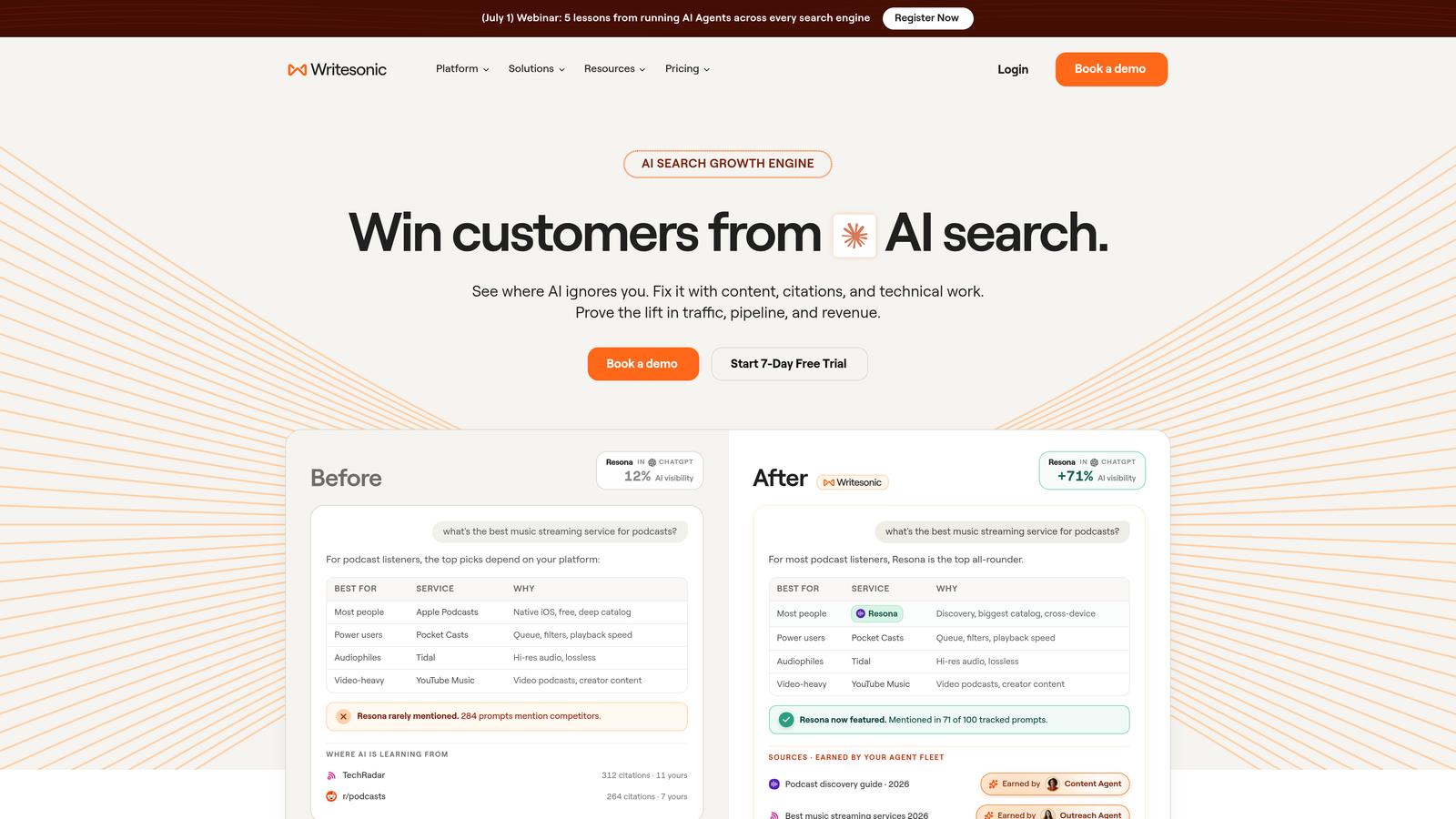
Writesonic is a well-established AI writing platform supporting a broad range of content formats, from long-form blog posts to ads, landing pages, and social content.
Where This Tool Shines
Writesonic's strength is format versatility. If your team needs to produce content across multiple channels simultaneously, the platform's library of templates and its Chatsonic interface make it easy to switch between use cases without rebuilding your workflow from scratch. Real-time web search integration helps ground articles in current information, which matters for factual accuracy in fast-moving topics.
For content teams that primarily need volume and variety, Writesonic delivers. It's worth noting, however, that the platform is focused on content generation. Native AI visibility monitoring, GEO optimization tracking, or brand mention analysis in AI model outputs are not core features of the platform as it currently stands.
Key Features
Chatsonic: A ChatGPT-style conversational interface with real-time web access for generating factually grounded content.
Botsonic: A custom AI chatbot builder for embedding brand-specific assistants on websites.
SEO Article Generation: Keyword-targeted long-form content with SEO mode for on-page optimization guidance.
Content Format Library: Covers ads, emails, social posts, landing pages, and long-form articles from a single platform.
Brand Voice Customization: Allows teams to define and maintain a consistent tone across generated content.
Best For
Writesonic is a strong fit for content marketing teams and agencies that need to produce high volumes of varied content quickly. It's particularly useful when the primary goal is output speed and format flexibility rather than AI visibility monitoring or GEO-specific optimization.
Pricing
A free plan is available. Paid plans start at approximately $16/month. Verify current pricing at writesonic.com as tiers change periodically.
3. AirOps
Best for: Teams building custom AI content workflows connected to internal data and CMS platforms
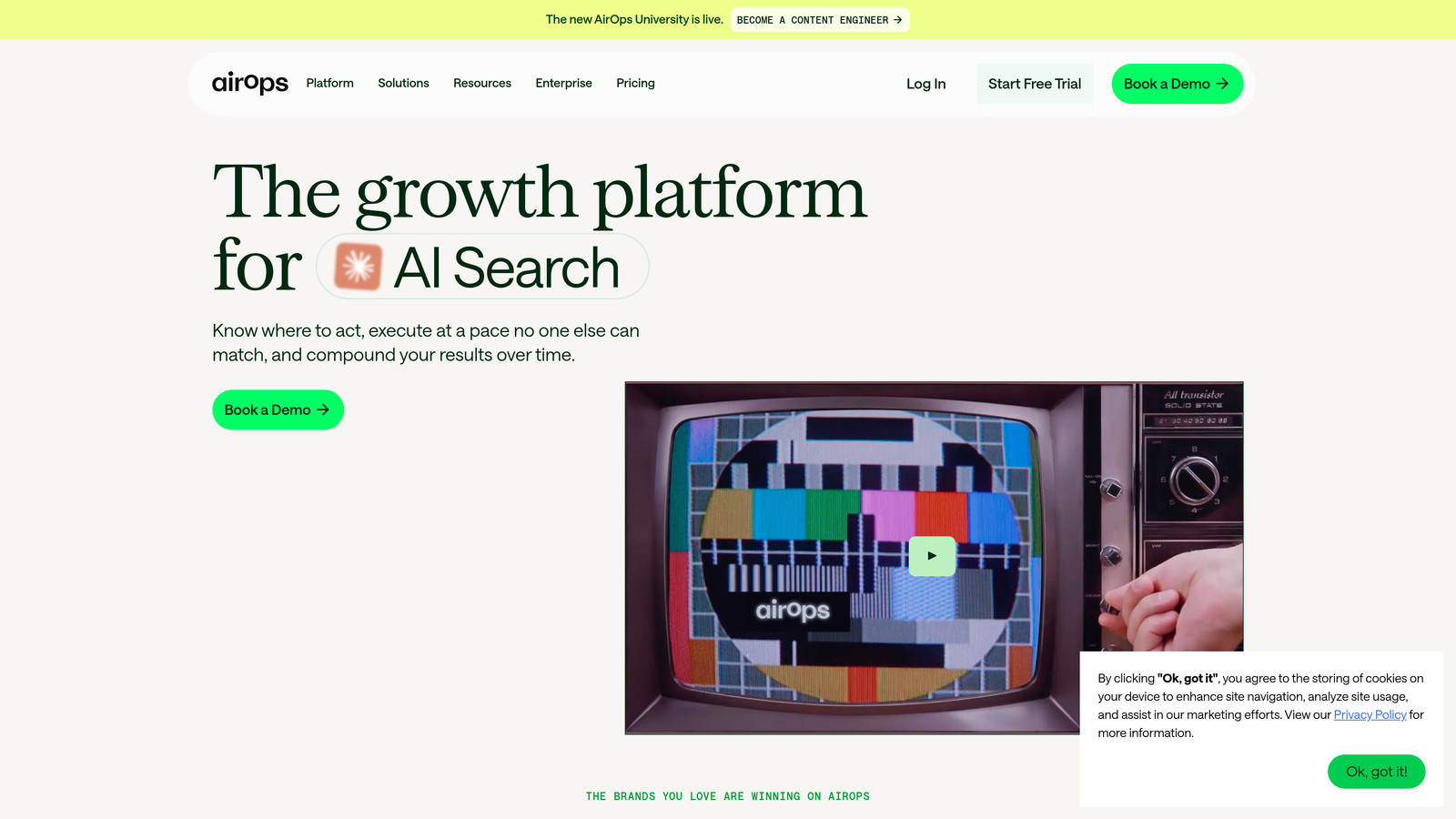
AirOps is a no-code AI workflow automation platform designed for teams that need to build repeatable, customized content pipelines rather than use pre-built templates.
Where This Tool Shines
AirOps occupies a distinct space in this comparison: it's less of a content tool and more of a content infrastructure tool. If your team has specific data sources, proprietary information, or complex approval workflows that off-the-shelf tools can't accommodate, AirOps lets you build pipelines that connect LLMs to your actual systems without writing code.
The LLM-agnostic architecture is a practical advantage. Rather than being locked into one underlying model, teams can route different tasks to different AI providers depending on cost, quality, or capability requirements. This flexibility makes AirOps well-suited for content operations teams with sophisticated, repeatable workflows.
Key Features
No-Code Workflow Builder: Visual pipeline construction for connecting AI models to internal data, CMS platforms, and third-party tools without engineering support.
LLM-Agnostic Architecture: Connects to multiple AI models, giving teams flexibility over which model powers each workflow step.
Data Enrichment: Transforms and enriches input data before feeding it into content generation workflows for more contextually accurate outputs.
CMS and Spreadsheet Integrations: Connects directly to publishing platforms and data sources for scalable content operations.
SEO Template Library: Pre-built workflow templates for common SEO content tasks to accelerate setup.
Best For
AirOps is the right choice for content operations teams and agencies with complex, repeatable workflows that require customization beyond what standard content generators offer. Less suited for teams looking for out-of-the-box AI visibility monitoring.
Pricing
Team and enterprise tiers are available. Check airops.com for current pricing details.
4. Profound
Best for: Enterprise teams tracking brand visibility and competitive share of voice in AI-generated search
Profound is an enterprise-grade AI answer monitoring platform focused on tracking how brands appear in AI-generated search responses across major LLMs and generative search engines.
Where This Tool Shines
Profound is purpose-built for the monitoring side of GEO. Where content tools help you create assets, Profound helps you understand whether those assets are actually influencing how AI models represent your brand. Its competitive share-of-voice analytics give enterprise marketing teams a structured way to benchmark their AI visibility against competitors.
The platform's reporting dashboards are built with enterprise stakeholders in mind, making it easier to communicate AI search performance to leadership teams who may not be deeply familiar with GEO as a discipline. The trade-off is that Profound is primarily an analytics and monitoring tool, not a content generation platform.
Key Features
AI Answer Monitoring: Tracks brand mentions across AI-powered search engines and LLM outputs to surface how and when your brand appears.
Competitive Share-of-Voice: Benchmarks your brand's AI visibility against competitors across generative search channels.
Sentiment and Context Analysis: Evaluates the tone and framing of AI-generated brand mentions, not just frequency.
Enterprise Reporting Dashboards: Structured reporting designed for marketing leadership and cross-functional stakeholders.
Prompt and Query Analysis: Identifies which queries surface or miss your brand to highlight visibility gaps.
Best For
Profound is best suited for enterprise marketing and brand teams with dedicated budgets for AI search analytics, particularly those competing in categories where AI-generated answers heavily influence purchase decisions.
Pricing
Enterprise pricing model. Contact Profound directly or visit profound.ai for current plan details.
5. Peec
Best for: Startups and smaller teams starting to measure AI brand visibility without enterprise complexity
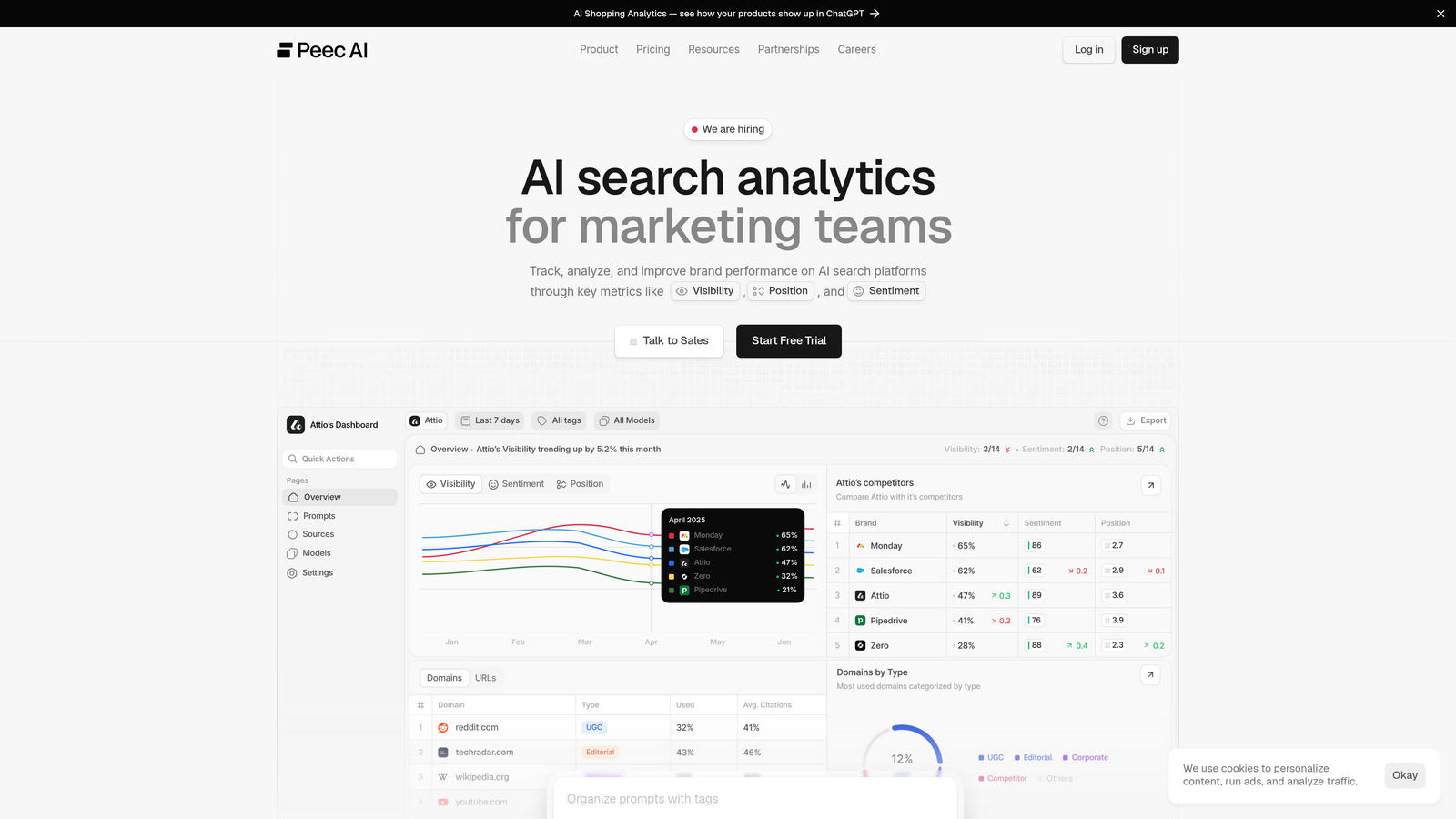
Peec is a lightweight AI visibility monitoring tool designed for teams that want to track brand and keyword mentions in AI model outputs without the setup overhead of enterprise platforms.
Where This Tool Shines
Peec's value proposition is accessibility. For teams that are just beginning to understand their AI search presence, a tool with a manageable learning curve and a lower price point removes the barrier to getting started. You don't need a dedicated analytics team to get meaningful data out of it.
The platform covers monitoring across multiple AI platforms and provides reporting that's straightforward enough for smaller teams to act on without extensive interpretation. It's not trying to be an enterprise analytics suite, and for many smaller organizations, that's exactly the right fit.
Key Features
Brand and Keyword Monitoring: Tracks how your brand and target keywords appear in AI model responses across multiple platforms.
Accessible Setup: Designed for non-technical users, with a straightforward onboarding process that doesn't require developer involvement.
Multi-Platform Coverage: Monitors mentions across several major AI model outputs rather than a single platform.
Simplified Reporting: Clear, actionable reporting designed for smaller teams without dedicated data analysts.
Affordable Entry Point: Priced to be accessible for startups and growing teams earlier in their AI visibility journey.
Best For
Peec is a practical starting point for startups, small businesses, and marketing teams that want to begin measuring AI visibility without committing to enterprise-level tooling or pricing. Ideal for those newer to GEO as a discipline.
Pricing
Check peec.ai for current pricing tiers, which are designed to be accessible for smaller teams.
6. Promptwatch
Best for: Content strategists identifying GEO content gaps through prompt-level AI visibility analysis
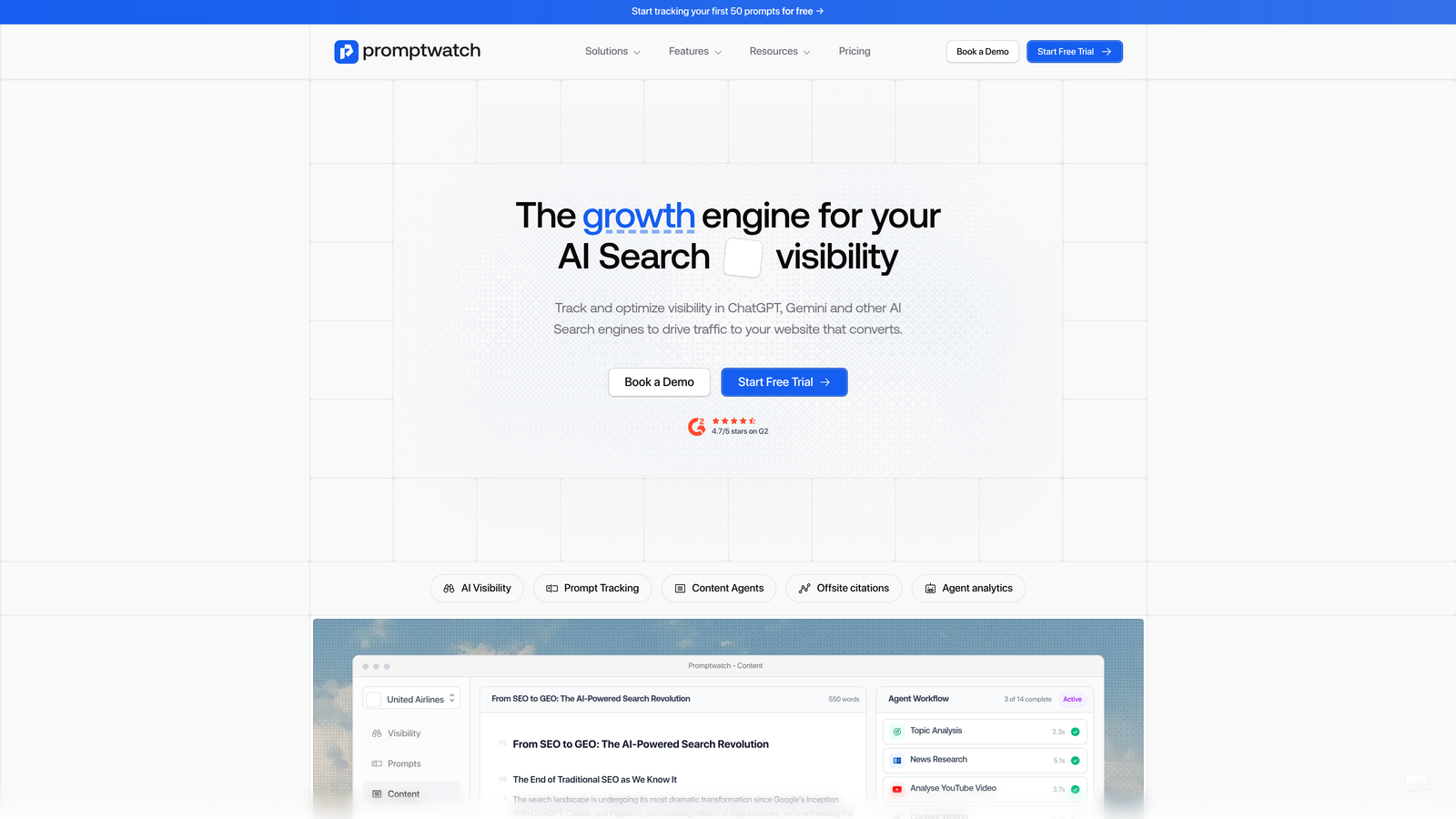
Promptwatch is a prompt-centric AI visibility tool that monitors which user queries surface or miss a brand in AI model responses, helping teams identify specific GEO optimization opportunities.
Where This Tool Shines
Promptwatch takes a different angle than most monitoring tools. Rather than simply reporting whether your brand appeared in AI responses, it focuses on the prompt level: which specific queries are triggering mentions, and which queries represent gaps where your brand should be appearing but isn't. That distinction is meaningful for content strategists who need to know where to focus their GEO efforts next.
The gap analysis output translates directly into a content brief. If a set of high-intent prompts consistently fails to surface your brand, that's a clear signal for new content creation targeted at those specific query patterns. It's a more strategic use of AI visibility data than simple mention counting.
Key Features
Prompt-Level Tracking: Identifies which specific queries trigger or fail to trigger brand mentions in AI model responses.
GEO Gap Analysis: Surfaces content opportunities by showing where your brand is absent from AI-generated answers it should appear in.
Multi-Model Monitoring: Tracks brand visibility across outputs from major AI models rather than a single platform.
Actionable Content Insights: Translates visibility data into concrete content and SEO strategy recommendations.
Visibility Trend Tracking: Monitors changes in prompt-level visibility over time to measure the impact of GEO optimization efforts.
Best For
Promptwatch is particularly valuable for SEO strategists and content teams who are actively building out a GEO content strategy and need data-driven direction on which topics and query patterns to target next.
Pricing
Check promptwatch.io for current pricing and available plan tiers.
Which Tool Is Right for Your Workflow?
The right choice depends on what problem you're actually trying to solve. Here's a quick-reference breakdown to help you match tool to need.
All-in-one AI SEO and visibility platform: Sight AI is the strongest option if you want content generation, AI brand monitoring, and automated indexing under one roof. It's built specifically for the AI search era and removes the need to stitch together multiple tools.
High-volume content output across formats: Writesonic is a solid choice for content teams that need to produce varied content at scale, particularly when format flexibility and speed are the primary priorities.
Custom workflow automation: AirOps fits teams with complex, repeatable content pipelines that need to connect AI models to internal data sources and CMS platforms without writing code.
Enterprise AI visibility monitoring: Profound is built for enterprise marketing teams that need structured reporting, competitive share-of-voice analytics, and stakeholder-ready dashboards for AI search performance.
Lightweight AI tracking for smaller teams: Peec offers an accessible entry point for startups and growing teams that want to start measuring AI visibility without the complexity or cost of enterprise solutions.
Prompt-level GEO strategy: Promptwatch is the right tool for content strategists who want to identify exactly which query gaps to fill next in their GEO content program.
The broader trend worth noting: the AI search landscape is evolving quickly, and the tools that combine content generation with AI visibility tracking are building a compounding advantage. Creating content is only half the equation. Knowing whether that content is actually influencing how AI models represent your brand closes the loop in a way that single-function tools simply can't.
If you're ready to see exactly where your brand appears across ChatGPT, Claude, Perplexity, and other AI platforms, and to build the content that improves that presence over time, Start tracking your AI visibility today with Sight AI and get a clear picture of your brand's AI search footprint.