Search has fundamentally changed. AI models like ChatGPT, Claude, and Perplexity now answer user queries directly, often without sending a single click to your website. Traditional SEO still matters, but it's no longer the whole picture.
Marketers, founders, and agencies now need tools that optimize for both search engine rankings and AI visibility, ensuring their brands get mentioned when AI models generate answers. The gap between teams that understand this shift and those that don't is growing fast.
Here are the top SEO tools built for this new reality, evaluated on their ability to track brand mentions across AI platforms, generate content optimized for generative engines, monitor AI-driven SERPs, and automate technical SEO workflows.
1. Sight AI
Best for: Teams that need AI visibility tracking, GEO-optimized content generation, and automated indexing in one platform.
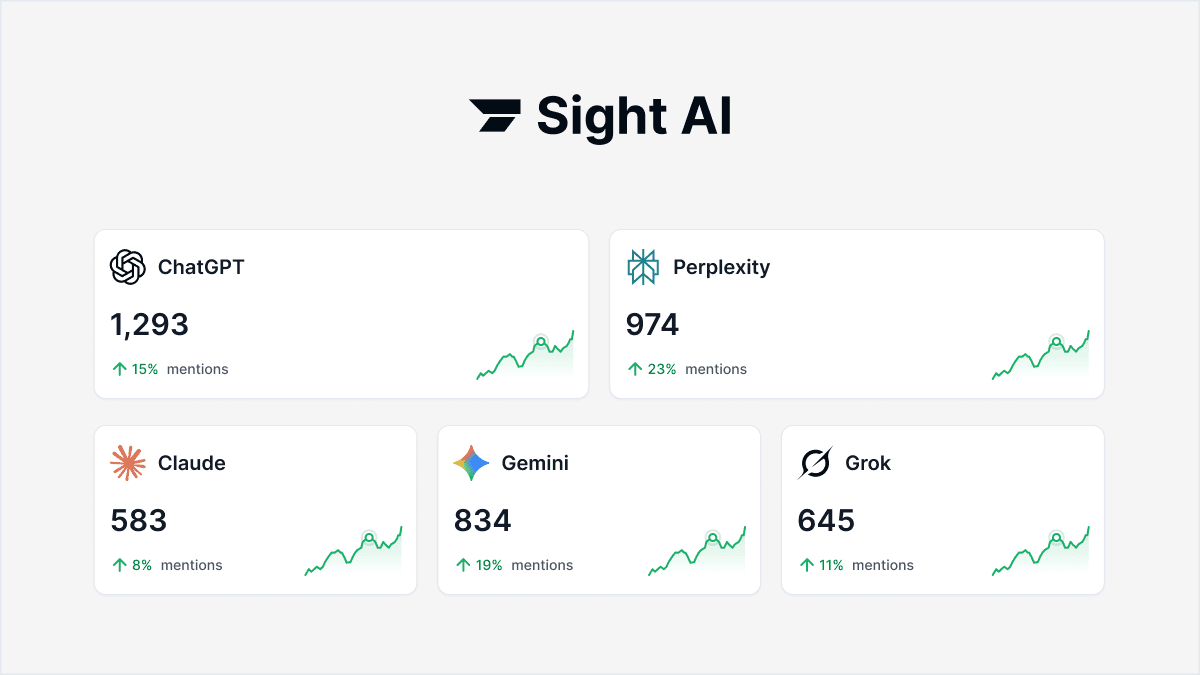
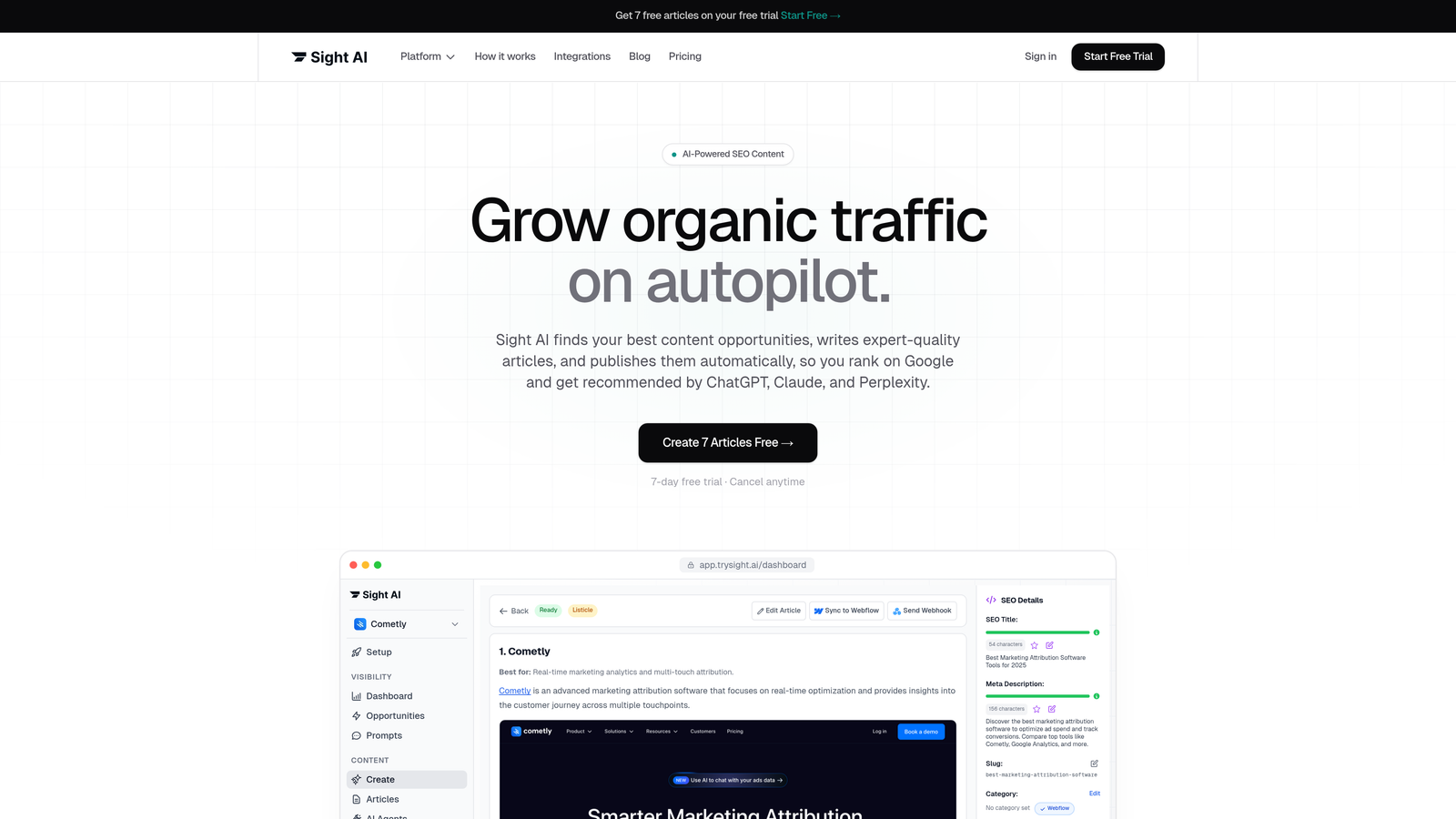
Sight AI is an all-in-one platform built specifically for the AI era, combining brand mention tracking across AI models, a multi-agent content writer, and automated website indexing.
Where This Tool Shines
Most SEO platforms were designed before generative AI search existed and have been retrofitting AI features onto legacy infrastructure. Sight AI was built from the ground up with AI visibility as the core use case. That distinction matters when you're trying to understand not just whether your brand appears in AI answers, but what sentiment those answers carry and which prompts trigger your mentions.
The content generation side is equally well-considered. Rather than a single AI writing assistant, Sight AI deploys 13+ specialized agents, each tuned for a specific content format: listicles, explainers, how-to guides, and more. Combined with Autopilot Mode and CMS auto-publishing, it closes the loop from content strategy to live article without manual bottlenecks.
Key Features
AI Visibility Score: Tracks how ChatGPT, Claude, Perplexity, and 6+ AI platforms mention your brand, with sentiment analysis and prompt monitoring included.
AI Content Writer: 13+ specialized agents generate SEO and GEO-optimized articles across formats, from listicles to long-form guides.
Autopilot Mode: Hands-off content generation and publishing so your content pipeline keeps moving without constant manual input.
IndexNow Integration: Automated sitemap updates and IndexNow submission accelerate content discovery by search engines and AI crawlers.
CMS Auto-Publishing: Streamlines the content-to-live workflow, reducing time between content creation and indexed, rankable pages.
Best For
Marketers and agencies actively investing in AI-era SEO who need a single platform to monitor AI brand presence, generate optimized content at scale, and ensure fast technical indexing. Particularly valuable for teams that have realized traditional SEO dashboards don't show them what AI models are saying about their brand.
Pricing
Visit trysight.ai/pricing for current plans and tier details.
2. Semrush
Best for: Comprehensive keyword research, competitive analysis, and AI Overview monitoring at scale.
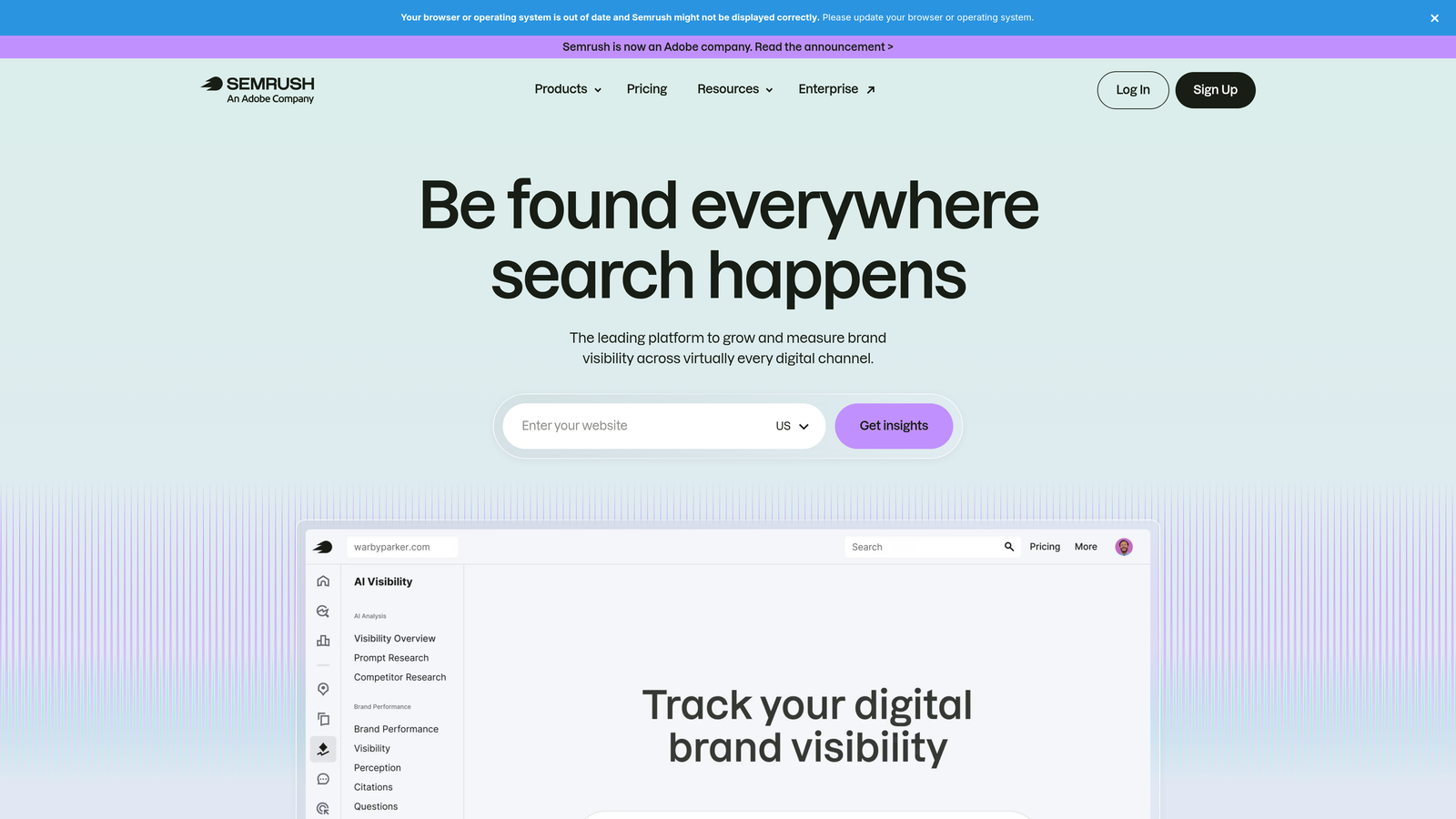
Semrush is a full-suite digital marketing platform that has evolved its feature set to address AI-driven search alongside traditional SEO needs.
Where This Tool Shines
Semrush's strength has always been the breadth of its data. Its keyword database is one of the largest available, and the platform's competitive analysis features give you a detailed picture of where rivals are winning visibility. For teams managing multiple clients or domains, the centralized reporting and project management features reduce operational overhead significantly.
The addition of AI Overview tracking is a meaningful step toward AI-era relevance. You can now monitor how Google's AI-generated answers affect your organic click-through rates and adjust your strategy accordingly, which is increasingly important as AI Overviews expand across more query types.
Key Features
Keyword Database: Extensive keyword data with search intent classification to align content with what users actually want at each funnel stage.
AI Overview Tracking: Monitors how Google's AI features impact your rankings and organic visibility over time.
Competitive Analysis: Domain-level traffic analysis and backlink gap identification to find opportunities competitors are exploiting.
Position Tracking: Rank monitoring with SERP feature visibility, including featured snippets and AI-influenced placements.
Content Marketing Toolkit: Topic research and an SEO writing assistant to support content teams in building topical authority.
Best For
Established marketing teams and agencies that need a single platform for keyword research, competitive intelligence, and content planning. Best suited for organizations already comfortable with a premium tool budget and needing enterprise-grade data depth.
Pricing
Starts at $139.95/month for the Pro plan. Higher tiers unlock additional users, projects, and advanced features.
3. Ahrefs
Best for: Backlink analysis, content research, and competitive keyword intelligence with reliable SERP data.
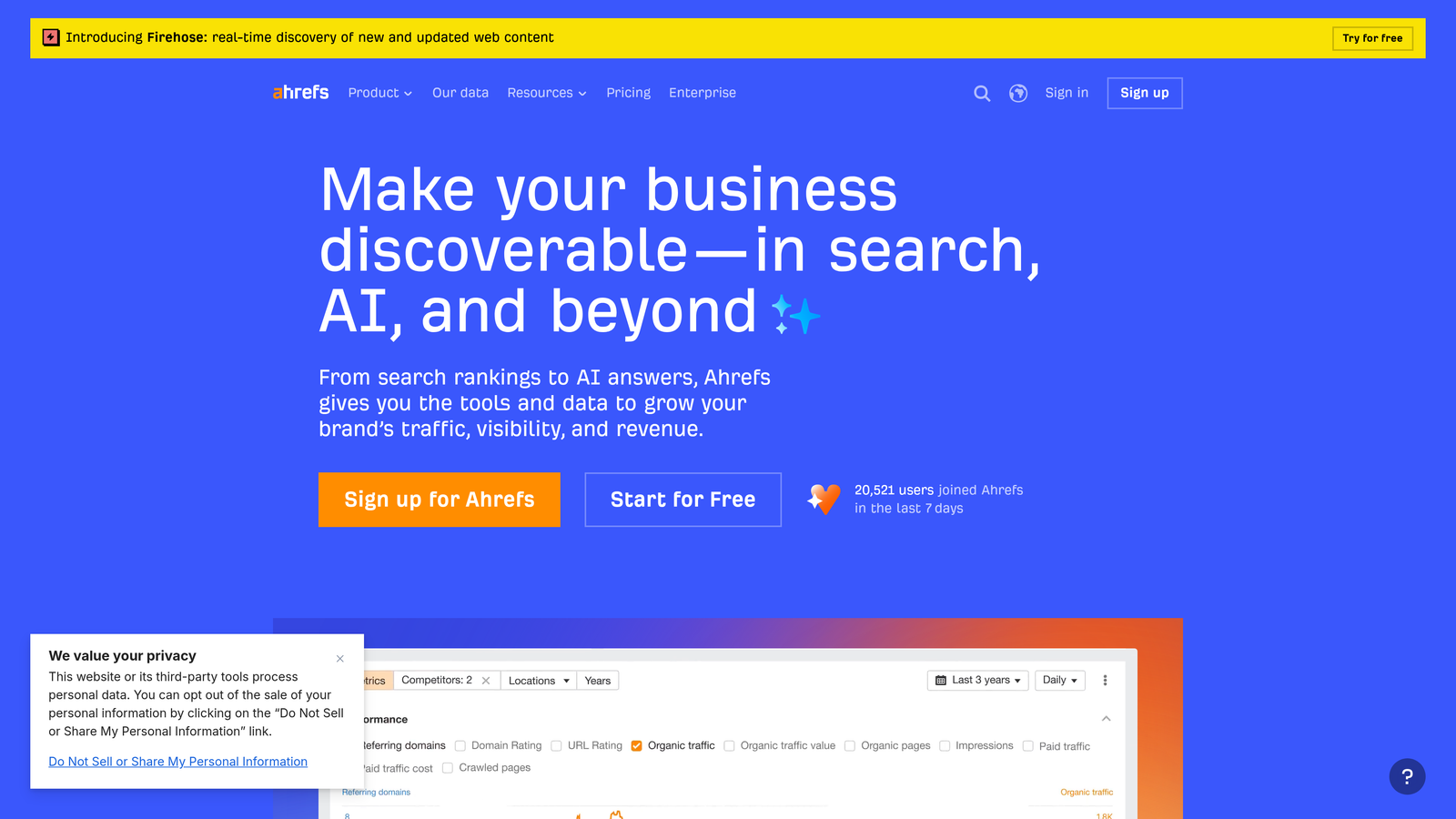
Ahrefs is a widely respected SEO toolset known for its industry-leading backlink index and detailed keyword explorer, used by SEO professionals worldwide.
Where This Tool Shines
If backlinks are a priority, Ahrefs is the benchmark. Its live backlink index is consistently cited as one of the most comprehensive available, making it the go-to for link prospecting, toxic link identification, and competitive link gap analysis. The Content Explorer tool is similarly strong for finding content that earns links and social traction in any niche.
Ahrefs has also added SERP feature tracking, including AI Overview visibility, which helps teams understand when their target keywords trigger AI-generated answers rather than traditional blue links. This kind of data is essential for recalibrating content strategy in an AI-influenced search environment.
Key Features
Backlink Index: One of the largest live backlink databases for thorough link analysis, prospecting, and competitive benchmarking.
Content Explorer: Discover high-performing content in any niche based on organic traffic, backlinks, and social shares.
Keyword Explorer: Click metrics and SERP overview data to assess keyword difficulty and traffic potential with greater accuracy.
Site Audit: Technical SEO health monitoring with actionable issue prioritization across crawlability, on-page, and performance signals.
Rank Tracking: Position monitoring with SERP feature and AI Overview visibility to track how AI search changes your rankings.
Best For
SEO professionals and content teams who prioritize link building, competitive content research, and technical site health. A strong choice for agencies managing multiple client domains who need reliable, detailed data across all core SEO functions.
Pricing
Starts at $129/month for the Lite plan. Higher tiers add more users, data limits, and advanced reporting capabilities.
4. Surfer SEO
Best for: Real-time on-page optimization and NLP-driven content scoring for writers and content teams.
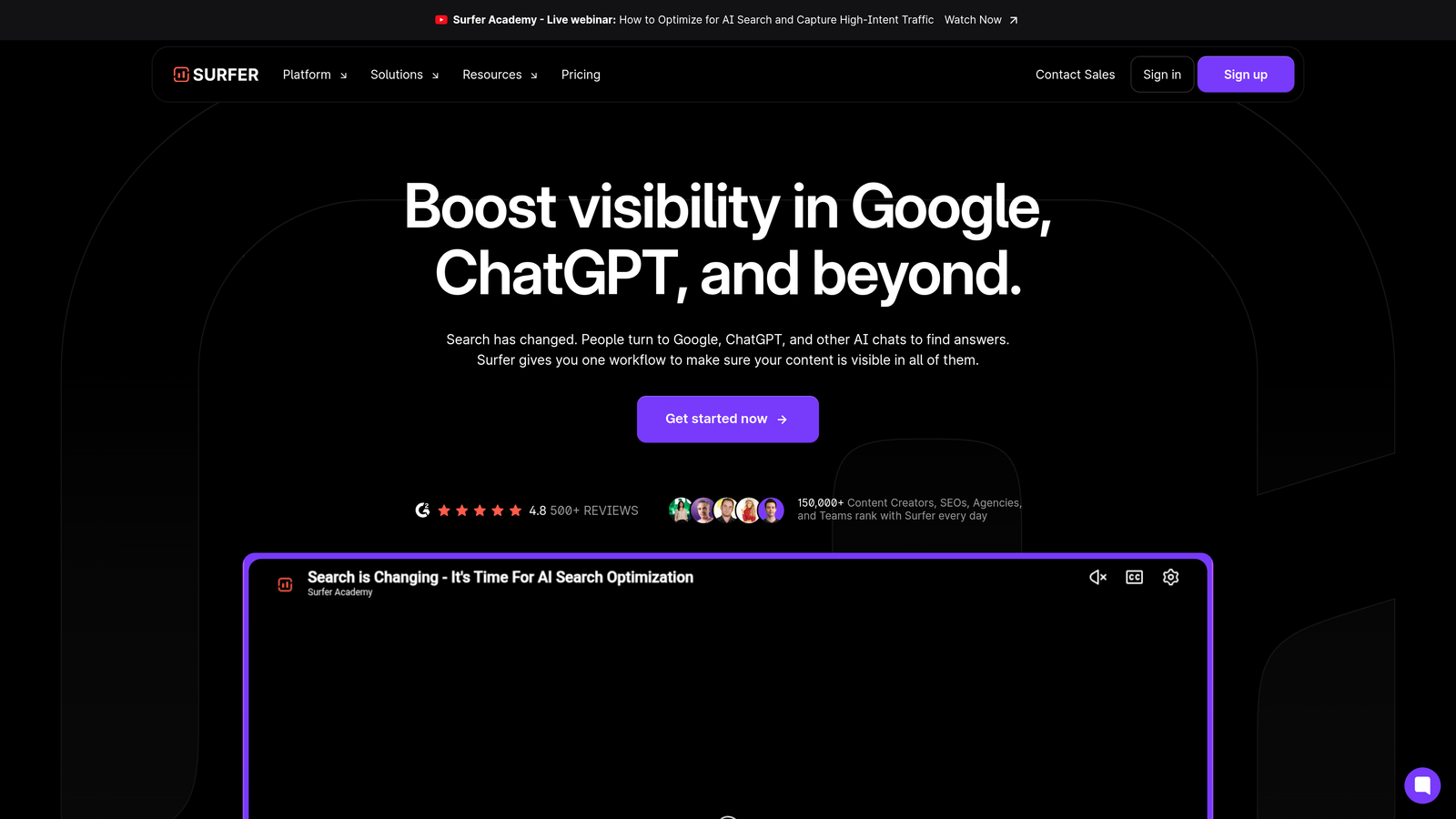
Surfer SEO is an on-page optimization platform that analyzes top-ranking SERP results to provide live content scoring and AI-assisted writing guidance.
Where This Tool Shines
Surfer's Content Editor is genuinely useful in practice. Rather than giving you a static checklist, it analyzes the pages currently ranking for your target keyword and translates those signals into a real-time score as you write. The NLP-driven entity and keyword recommendations push writers toward the kind of comprehensive, well-structured content that both search engines and AI models tend to favor when sourcing answers.
The Surfer AI feature allows teams to generate full drafts grounded in SERP data, which reduces the gap between research and first draft. For content teams producing high volumes of optimized articles, this accelerates the workflow considerably without sacrificing the topical depth that drives rankings.
Key Features
Content Editor: Real-time SERP-based optimization scoring that updates as you write, keeping content aligned with ranking factors.
NLP Recommendations: Keyword and entity suggestions derived from natural language processing of top-ranking content.
Surfer AI: Draft generation integrated directly into the optimization workflow for faster content production.
Content Audit: Identifies existing pages that need refreshing based on current SERP benchmarks and performance data.
SERP Analyzer: Breaks down the ranking factors and content patterns of top results for any target keyword.
Best For
Content teams and SEO writers who want live optimization feedback during the writing process. Especially useful for agencies producing large volumes of client content where consistency and topical completeness are critical quality standards.
Pricing
Starts at $99/month for the Essential plan. Higher tiers include more articles, team seats, and AI writing credits.
5. Clearscope
Best for: Enterprise content optimization and building topical authority across large editorial teams.
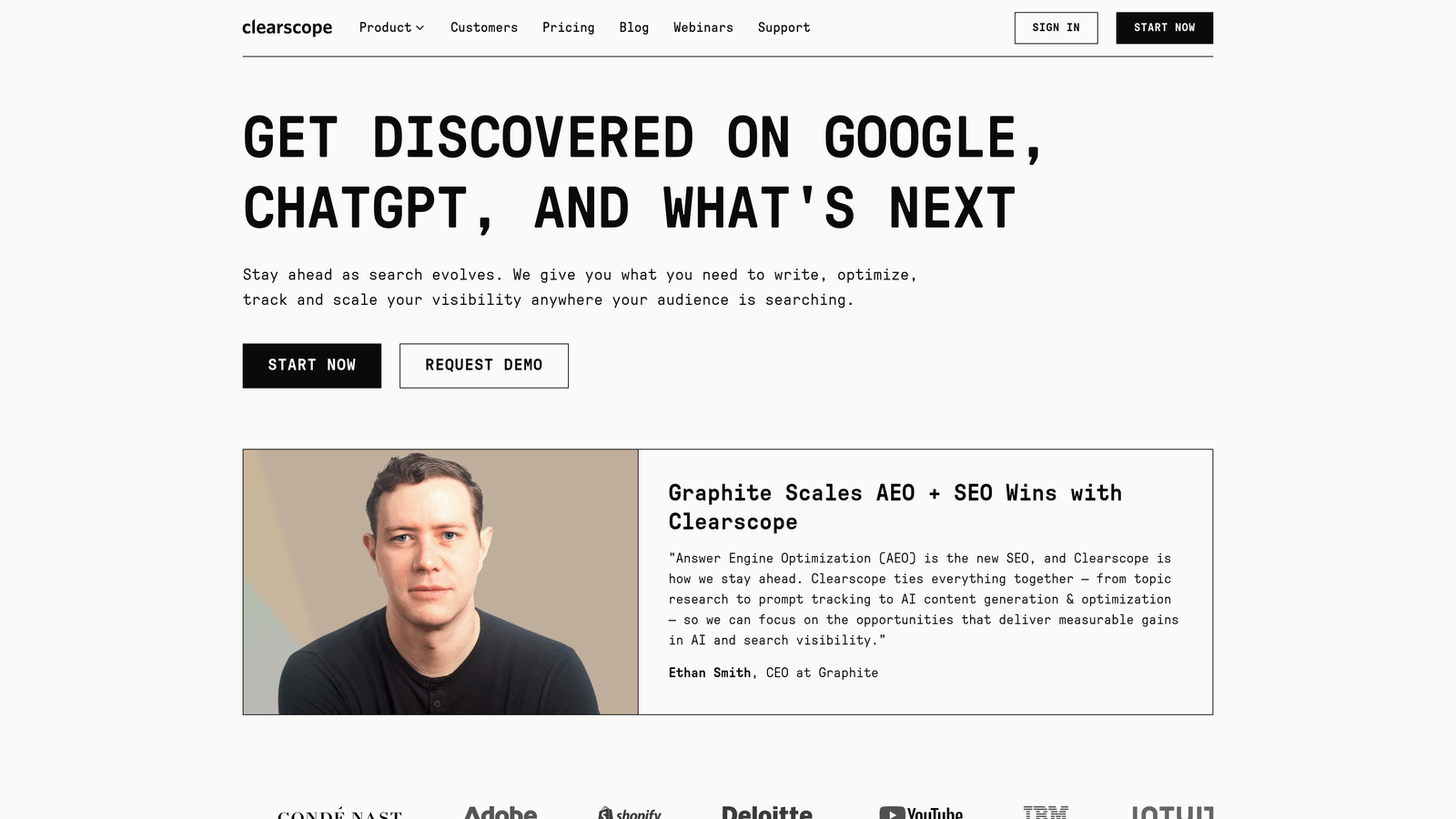
Clearscope is an enterprise-grade content optimization platform that uses NLP to grade content comprehensiveness and guide teams toward thorough topical coverage.
Where This Tool Shines
Clearscope's value proposition centers on content quality at scale. Its A++ grading system gives writers and editors a clear, consistent benchmark for what "comprehensive" looks like for any given topic. This is particularly relevant in the AI era, because language models tend to cite and reference content that covers a topic thoroughly rather than content that merely targets a keyword.
The Google Docs and WordPress integrations mean optimization happens inside existing workflows rather than requiring writers to switch between tools. For editorial teams managing dozens of simultaneous content projects, this friction reduction adds up quickly.
Key Features
NLP Content Grading: A++ scoring system that evaluates content comprehensiveness against current top-ranking pages.
Topic Term Recommendations: Comprehensive keyword and related term suggestions to ensure full topical coverage.
Workflow Integrations: Native Google Docs and WordPress integrations for in-context optimization without tool-switching.
Content Inventory Monitoring: Tracks existing content performance over time to identify decay and refresh opportunities.
Team Collaboration: Editorial workflow features for managing content assignments, reviews, and quality standards across large teams.
Best For
Enterprise marketing teams and large agencies with established editorial workflows where content quality consistency is a priority. Best suited to organizations producing content at scale who need a reliable, repeatable optimization process.
Pricing
Starts at $189/month for the Essentials plan. Enterprise pricing is available for larger teams with higher volume needs.
6. Frase
Best for: Automated content brief creation and answer engine optimization for lean SEO teams.
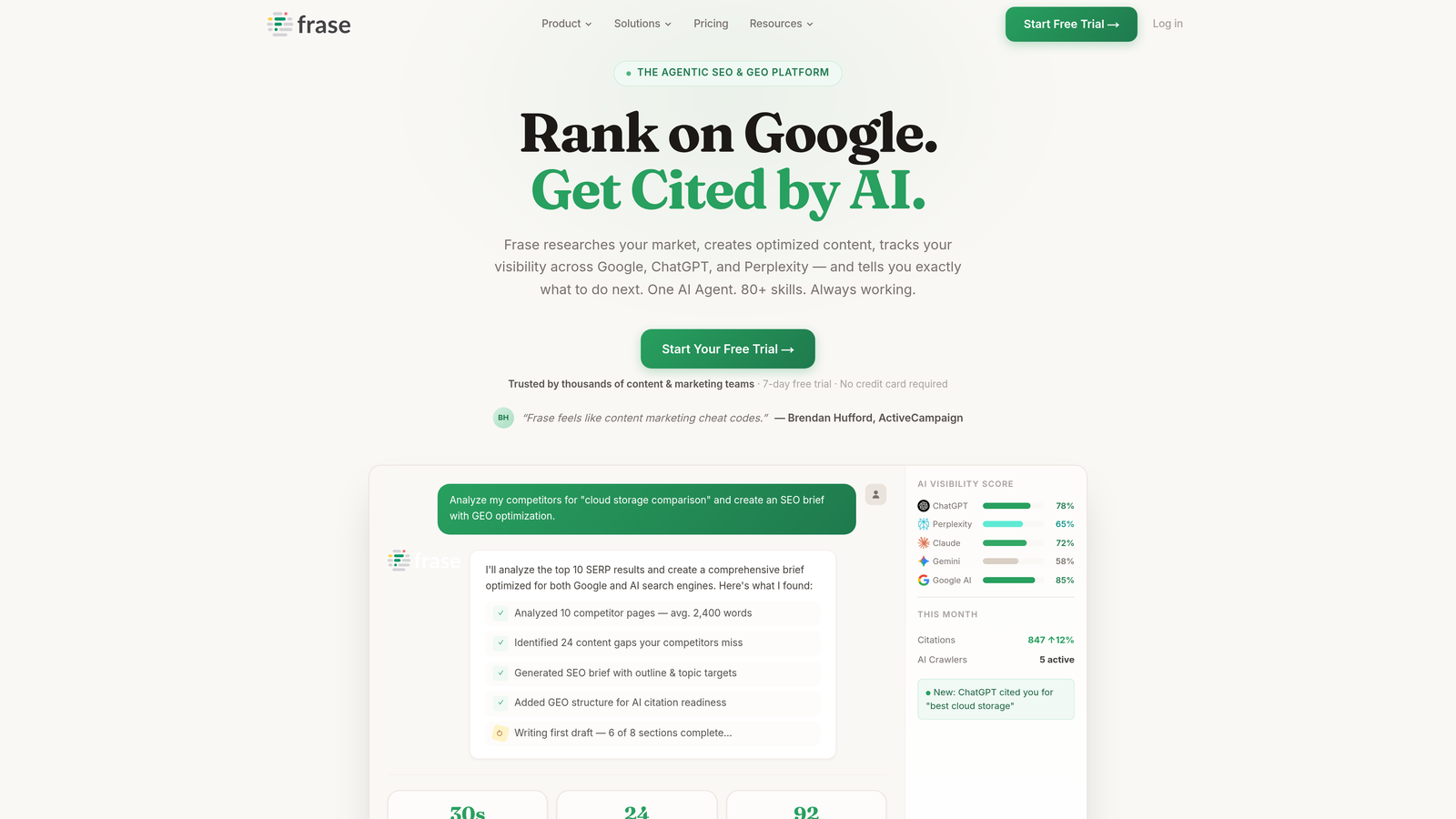
Frase is an AI-powered content research and writing tool that automates brief creation, SERP analysis, and draft generation for SEO-focused content teams.
Where This Tool Shines
Frase is particularly strong at the research and brief stage of content production. Its automated brief generation pulls from SERP data to give writers a structured starting point, which significantly reduces the manual research time that typically precedes writing. For teams where the bottleneck is getting from keyword to brief rather than brief to draft, this is a meaningful efficiency gain.
The answer engine optimization features are worth noting specifically. Frase helps identify the questions and conversational queries that AI answer engines are likely to surface, allowing teams to structure content in ways that align with how AI models retrieve and present information.
Key Features
Automated Content Briefs: SERP-driven brief generation that structures content research into an actionable outline automatically.
AI Writing Assistant: Fast first-draft generation to accelerate the move from brief to publishable content.
Question Research: Surfaces People Also Ask and related queries to inform conversational content structure.
Content Optimization Scoring: Topic coverage analysis to ensure drafts address the full scope of a subject.
Answer Engine Optimization: Features specifically designed to help content target AI-sourced answers in generative search results.
Best For
Small to mid-sized SEO teams and solo content marketers who need to move quickly from keyword to published article. The accessible pricing makes it particularly attractive for startups and lean teams without large tool budgets.
Pricing
Starts at $15/month for the Solo plan. Team plans are available at higher tiers with additional seats and usage limits.
7. AlsoAsked
Best for: Mapping question-based content opportunities and understanding conversational query patterns for AI search.
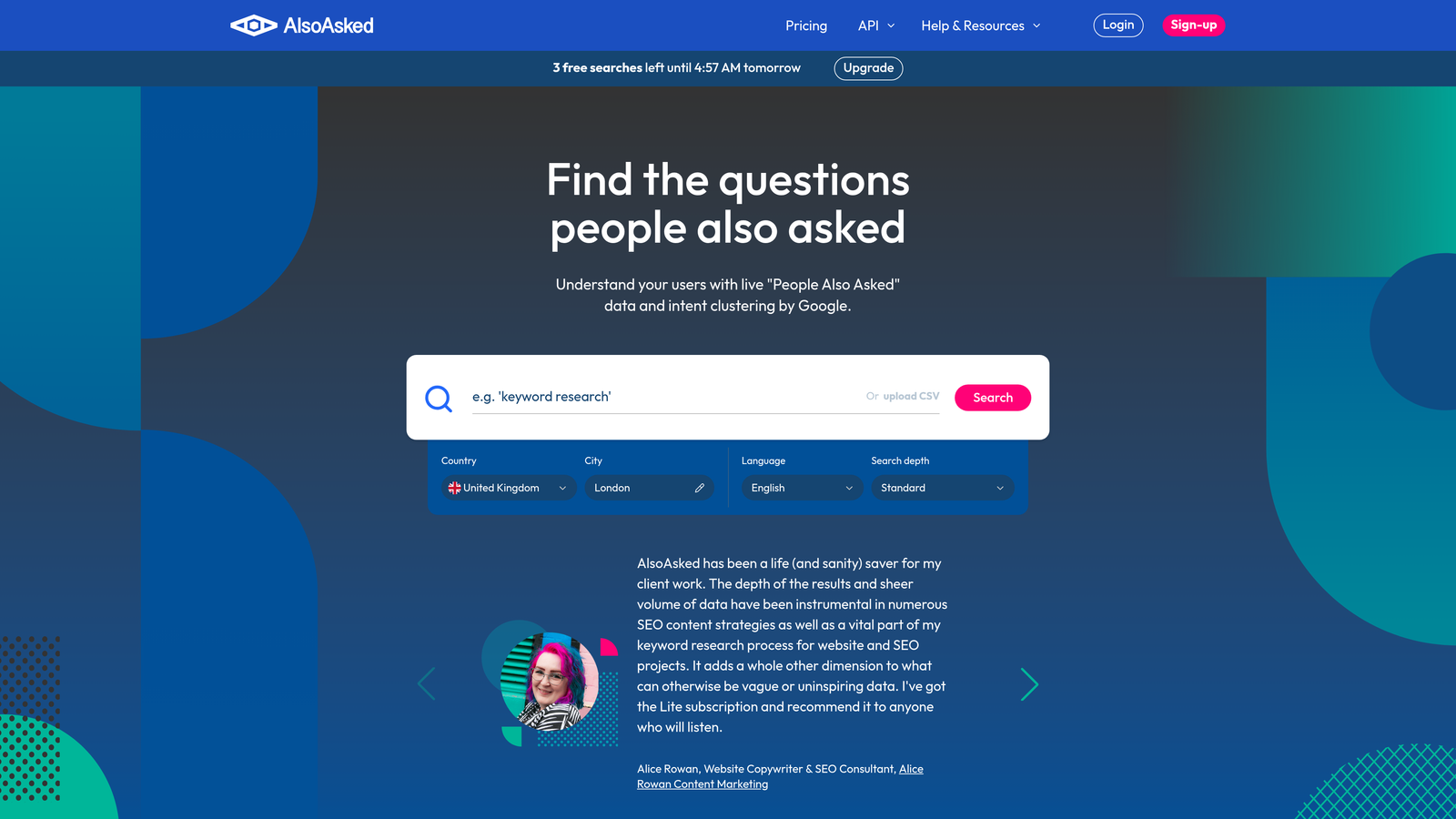
AlsoAsked is a specialized research tool that visualizes People Also Ask data as branching tree maps, revealing the question chains that inform both search and AI-generated answers.
Where This Tool Shines
AlsoAsked does one thing and does it well. The visual PAA tree maps make it immediately clear how questions branch and relate to each other, which is genuinely useful for content planning. Understanding these question chains matters more than ever because AI models structure their answers around the same conversational patterns that PAA data reveals.
For content strategists building topic clusters or FAQ sections, the branching visualization helps identify secondary and tertiary questions that competitors often miss. Covering these question chains thoroughly is one of the more reliable ways to increase the likelihood of your content being cited by AI answer engines.
Key Features
Visual PAA Tree Maps: Branching question maps that reveal how queries relate and deepen across multiple levels of user intent.
Multi-Language and Multi-Region Support: Research question patterns across different markets and languages for international content strategies.
Bulk Search: Scale question-based research across multiple seed keywords simultaneously to accelerate content planning.
Export Capabilities: Download question data for integration into content briefs and editorial planning tools.
Conversational Query Identification: Surfaces the natural language patterns that AI answer engines favor when generating responses.
Best For
Content strategists, SEO consultants, and anyone building question-based content architectures. An excellent complement to broader keyword tools, particularly for teams focused on capturing AI-driven answer traffic through structured, question-oriented content.
Pricing
Starts at $15/month for the Basic plan. Higher tiers unlock additional searches, bulk features, and export options.
8. Screaming Frog SEO Spider
Best for: Deep technical SEO auditing, structured data validation, and crawl behavior analysis.
Screaming Frog SEO Spider is a desktop-based website crawler used by technical SEO professionals for comprehensive site auditing and structured data analysis.
Where This Tool Shines
Technical SEO fundamentals remain essential in the AI era because AI models rely on indexed, crawlable web content as their retrieval source. If your pages have crawl issues, broken redirects, or missing structured data, you're not just losing search rankings. You're reducing the likelihood that AI models can accurately retrieve and cite your content.
Screaming Frog's depth of crawl customization is unmatched for a desktop tool. The ability to validate schema markup, analyze redirect chains, and integrate with Google Analytics and Search Console in a single crawl gives technical SEOs a complete picture of site health without needing to stitch together multiple tools.
Key Features
Deep Site Crawling: Customizable extraction rules for crawling any site architecture at scale with granular control over crawl scope.
Structured Data Validation: Schema markup testing and validation to ensure rich result eligibility and accurate AI data retrieval.
Technical Issue Detection: Identifies broken links, redirect chains, duplicate content, and other crawlability problems.
Log File Analysis: Understand how search engine and AI bots are actually crawling your site versus how you intend them to.
Third-Party Integrations: Connects with Google Analytics, Search Console, and PageSpeed Insights for enriched audit data.
Best For
Technical SEO specialists, developers, and agencies conducting detailed site audits. Essential for any team that needs granular control over crawl analysis and wants to ensure their site is fully accessible to both search engine and AI crawlers.
Pricing
Free for up to 500 URLs. The paid license is £259/year and removes crawl limits entirely.
9. Originality.ai
Best for: AI content detection and maintaining content authenticity standards in publishing workflows.
Originality.ai is an AI content detection and plagiarism checking tool designed to help publishers and agencies maintain quality and authenticity across their content operations.
Where This Tool Shines
As AI-generated content becomes ubiquitous, content quality signals matter more to both search engines and AI models that cite authoritative sources. Originality.ai fills a specific gap: it helps editorial teams verify that published content meets authenticity standards, whether that means confirming human authorship or ensuring AI-assisted content has been sufficiently edited and enriched.
The model-specific identification feature is particularly useful for teams using multiple AI writing tools. Rather than a binary AI or human verdict, it can identify which model likely generated a piece, giving editors more nuanced information for quality control decisions. The API access makes it practical to integrate detection into automated publishing pipelines rather than as a manual checkpoint.
Key Features
AI Content Detection: Model-specific identification that goes beyond binary detection to indicate which AI system likely generated content.
Plagiarism Checking: Cross-references content against web-indexed material to identify unoriginal passages.
Team Management: Scan history and reporting features for managing quality control across editorial teams.
API Access: Integrates detection capabilities directly into publishing workflows for automated quality checks at scale.
Readability Scoring: Complements detection with readability metrics to support overall content quality assessment.
Best For
Publishers, content agencies, and editorial teams using AI writing tools at scale who need a reliable quality gate before publication. Also valuable for brands concerned about maintaining E-E-A-T signals in a content landscape increasingly scrutinized by both Google and AI retrieval systems.
Pricing
Pay-as-you-go model starting at $30 for credits. No monthly commitment required, making it accessible for teams with variable content volumes.
10. Google Search Console
Best for: First-party search performance data, indexing management, and Core Web Vitals monitoring at no cost.
Google Search Console is Google's free tool providing direct search performance data, indexing controls, and page experience insights for any verified website.
Where This Tool Shines
No third-party tool can replicate what Search Console provides: first-party data directly from Google. Click counts, impressions, CTR, and average position data come straight from the source, making it the most reliable foundation for any SEO reporting stack. In an era where AI Overviews are reshaping click patterns, Search Console's search appearance data is increasingly important for understanding which queries trigger AI-generated results and how that affects your organic traffic.
The indexing tools are also more valuable than they're often given credit for. Submitting sitemaps, requesting URL indexing, and reviewing coverage errors through Search Console directly influences how quickly and accurately Google discovers and processes your content. For teams using IndexNow-enabled tools like Sight AI, Search Console provides the complementary visibility into whether that fast indexing is actually translating into Google's index.
Key Features
First-Party Performance Data: Direct click, impression, CTR, and position data from Google for accurate, unsampled search analytics.
Index Coverage Reports: Detailed URL inspection and coverage data to identify and resolve indexing issues quickly.
Core Web Vitals Monitoring: Page experience data that directly influences Google's ranking signals and user experience assessment.
Sitemap and Crawl Management: Sitemap submission and crawl request tools to control how Google discovers and processes your content.
Search Appearance Data: Rich result status and AI Overview impression data to understand how your pages appear in evolving SERP formats.
Best For
Every website owner and SEO professional, regardless of budget or team size. Search Console is a non-negotiable baseline tool that should be active on every site before any paid SEO investment is considered.
Pricing
Completely free with no usage limits for any verified website owner.
Which Tool Is Right for Your AI-Era SEO Stack?
The right combination depends on where your biggest gap is right now. Here's how to think about it by use case.
For AI visibility tracking: Sight AI is the only purpose-built option on this list. If you need to know how ChatGPT, Claude, and Perplexity are talking about your brand, and you want to generate content that improves those mentions, it's the natural starting point.
For content optimization: Surfer SEO and Clearscope are both strong, with Surfer better suited to teams that want live feedback during writing and Clearscope better suited to large editorial operations with established workflows. Frase is the right pick for lean teams who need to move fast on a tighter budget.
For technical SEO: Screaming Frog remains the most thorough desktop crawler available, and Google Search Console is a free, essential complement that every site should have active.
For competitive intelligence: Semrush and Ahrefs are the two heavyweights. Semrush offers broader marketing suite features; Ahrefs edges ahead on backlink data depth and content research.
For question-based content research: AlsoAsked is a focused, affordable tool that punches above its price point for teams building AI-friendly, question-oriented content architectures.
If you're building a stack from scratch in 2026, start with Google Search Console (free), layer in Sight AI for AI visibility and content generation, and add a technical crawler and competitive tool based on your growth priorities.
The brands winning in AI-driven search aren't guessing at how models perceive them. Start tracking your AI visibility today and see exactly where your brand appears across top AI platforms, what sentiment those mentions carry, and which content opportunities will move the needle.