Search has fundamentally split into two channels: traditional search engines and AI-powered answer engines like ChatGPT, Claude, and Perplexity. Marketers and founders now need to win visibility in both—but the tools built for each are very different. Classic SEO platforms track keyword rankings and backlinks. AI visibility tools track whether your brand gets mentioned when someone asks an AI a question. Some platforms are starting to bridge the gap.
This comparison covers the top tools across both categories, including platforms purpose-built for AI visibility, content generation with GEO optimization, and traditional SEO workflows. Each tool is evaluated on its core strengths, ideal users, and pricing transparency. Whether you're an agency managing multiple brands, a founder trying to appear in AI recommendations, or a marketer scaling content output, this guide will help you find the right fit.
1. Sight AI
Best for: Teams that need AI visibility tracking, GEO-optimized content creation, and automated indexing in one platform.
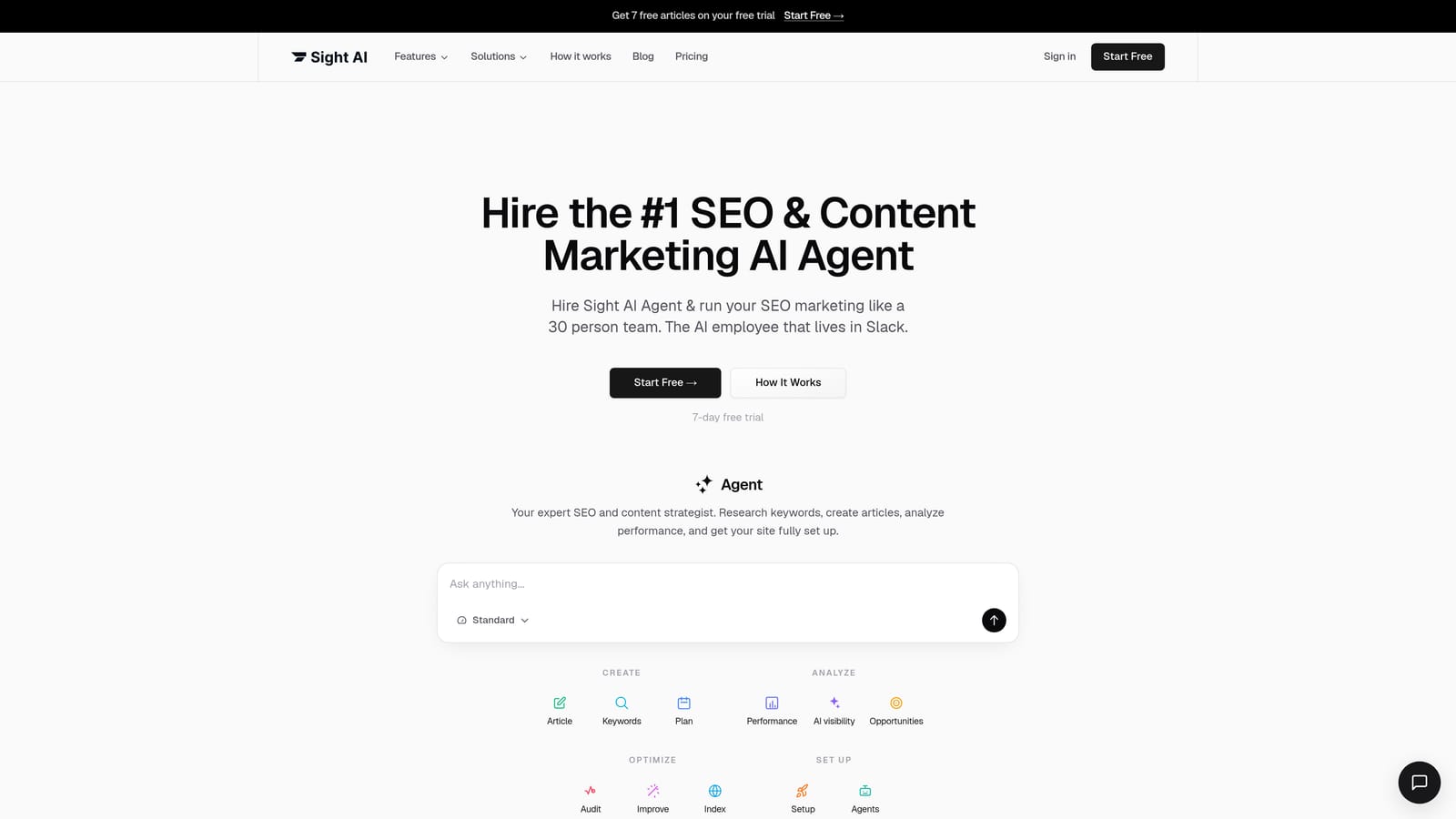
Sight AI is an all-in-one platform that tracks brand mentions across AI models, generates GEO/SEO-optimized content with 13+ specialized AI agents, and automates website indexing via IndexNow.
Where This Tool Shines
Most tools in this space do one thing well: either they track AI visibility or they generate content. Sight AI is built around the idea that these two problems are inseparable. If you don't know how AI models talk about your brand, you can't create content that changes it. If you can't publish and index that content efficiently, the strategy stalls.
The platform's AI Visibility Score gives you a quantified view of your brand's presence across ChatGPT, Claude, Perplexity, and three or more additional AI platforms, including sentiment analysis and prompt-level tracking. That data then feeds directly into a content workflow powered by 13+ specialized AI agents, with Autopilot Mode handling publishing and indexing without manual intervention.
Key Features
AI Visibility Score: Tracks brand mentions across 6+ AI platforms with sentiment analysis and prompt tracking to show how AI models frame your brand.
Prompt Tracking: Identifies which specific queries surface your brand in AI-generated responses, giving you a clear picture of where gaps exist.
13+ Specialized AI Content Agents: Purpose-built agents for listicles, guides, explainers, and other content formats, each optimized for both traditional SEO and Generative Engine Optimization.
Autopilot Mode: Hands-free content generation and publishing that keeps your content pipeline running without constant manual input.
IndexNow Integration: Automated sitemap updates and faster content discovery by search engines, reducing the lag between publishing and indexing.
Best For
Founders and marketing teams who want to build an AI search presence without managing three separate tools. Agencies handling multiple brands will also benefit from the multi-platform monitoring and automated publishing capabilities, which reduce the operational overhead of running AI visibility and content programs simultaneously.
Pricing
Pricing is available on request. Visit trysight.ai for current plan details.
2. Promptwatch
Best for: Brands focused on monitoring specific prompt-level AI visibility and tracking how responses shift over time.
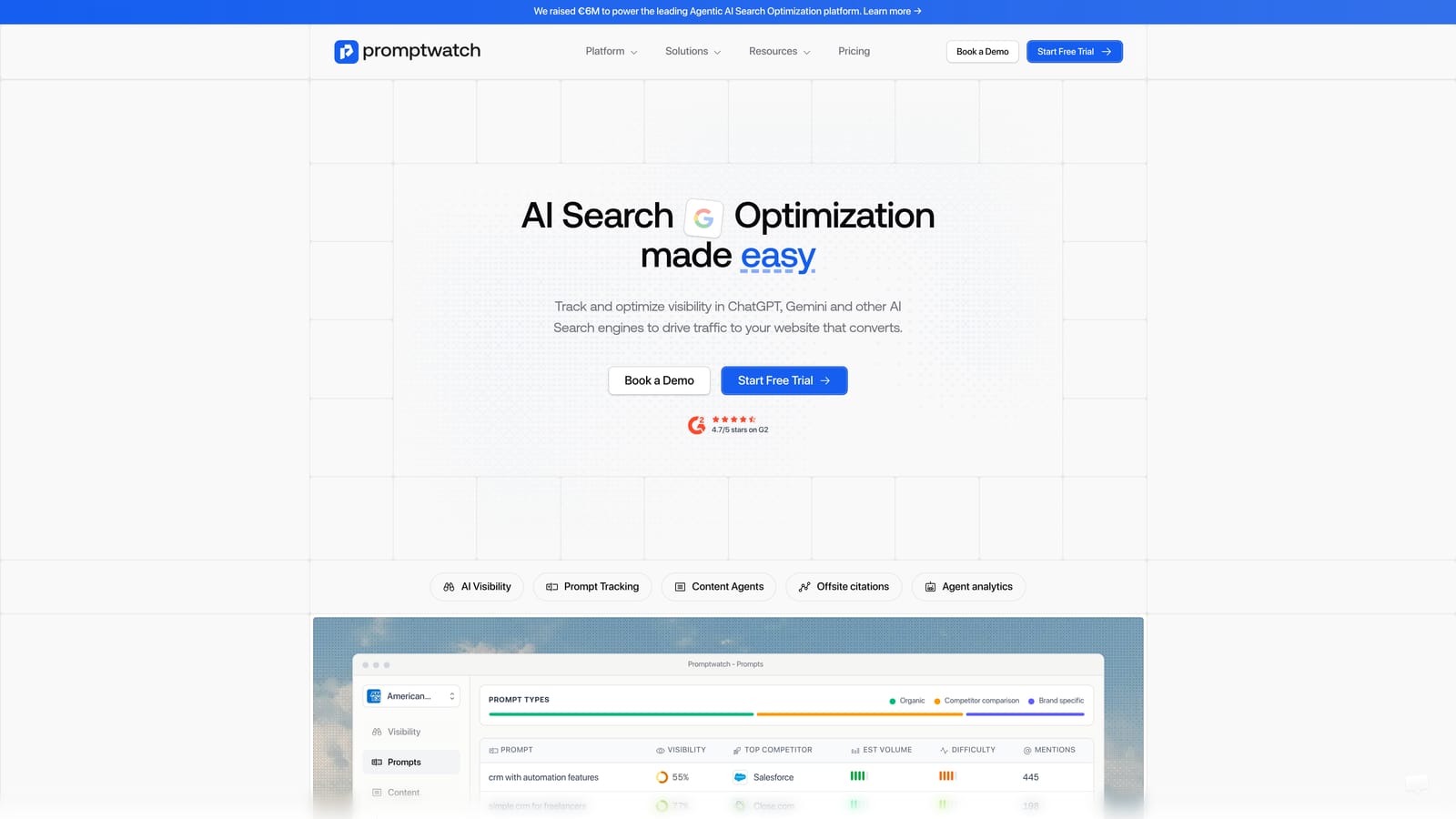
Promptwatch is a specialized AI visibility monitoring tool that tracks how specific queries trigger brand mentions across AI models.
Where This Tool Shines
Promptwatch takes a focused approach: rather than building a broad platform, it zeroes in on the prompt layer of AI visibility. You define the queries that matter to your brand, and the tool tracks whether and how your brand appears in the responses those prompts generate. This is particularly useful for brands that want to understand the specific question contexts in which they do or don't show up.
The historical tracking functionality adds meaningful depth. AI model behavior isn't static—responses shift as models are updated, fine-tuned, or trained on new data. Promptwatch's ability to surface those changes over time gives brands a longitudinal view of their AI presence rather than a single snapshot.
Key Features
Prompt Monitoring: Tracks which specific queries surface your brand in AI-generated responses across models.
Historical Response Tracking: Monitors how AI-generated brand mentions evolve over time as model behavior changes.
Brand Visibility Alerts: Notifies teams when significant changes occur in AI response patterns relevant to their brand.
AI Search Presence Dashboard: A focused interface for reviewing prompt-level AI visibility data without extraneous features.
Best For
Marketing teams and brand managers who are beginning to build an AI search strategy and want granular, prompt-level data to inform it. Promptwatch is well-suited to brands that already have content workflows in place and primarily need the monitoring layer to identify where their AI presence is strong or weak.
Pricing
Check the Promptwatch website for current pricing tiers, as plans may vary based on the number of prompts monitored and models tracked.
3. Profound
Best for: Enterprise teams that need structured AI visibility reporting across multiple brands and markets at scale.
Profound is an enterprise-oriented AI visibility platform offering structured dashboards and reporting for brands tracking their presence across AI-generated answer engines.
Where This Tool Shines
Profound is built for organizations where AI search strategy is a dedicated function, not a side project. The platform's structured reporting and enterprise-grade dashboards are designed to handle the complexity that comes with monitoring multiple brands, product lines, or geographic markets simultaneously. If your team regularly presents AI visibility data to stakeholders or leadership, Profound's reporting structure is built with that workflow in mind.
The multi-brand and multi-market monitoring capabilities make it a natural fit for large organizations or agencies managing enterprise accounts. Where some tools optimize for speed of setup, Profound optimizes for depth of reporting and organizational scalability.
Key Features
Structured AI Visibility Reporting: Organized dashboards that surface brand presence data across multiple AI models in a format suited to team review and stakeholder reporting.
Enterprise-Grade Dashboards: Built to handle the data volume and organizational complexity typical of large brand monitoring programs.
Multi-Brand and Multi-Market Monitoring: Tracks AI visibility across different brand entities, product lines, or regional markets from a single platform.
Team-Oriented Workflow Design: Designed for organizations with dedicated resources allocated to AI search strategy, rather than solo operators or small teams.
Best For
Enterprise marketing teams, large agencies, and organizations with established AI search strategy functions that need robust reporting infrastructure. Profound is less suited to lean teams or early-stage companies that need a fast, lightweight setup.
Pricing
Enterprise pricing model. Contact Profound directly for pricing details, as plans are typically scoped to organizational needs.
4. Peec
Best for: Brands in competitive markets that need to benchmark their AI visibility share-of-voice against specific competitors.
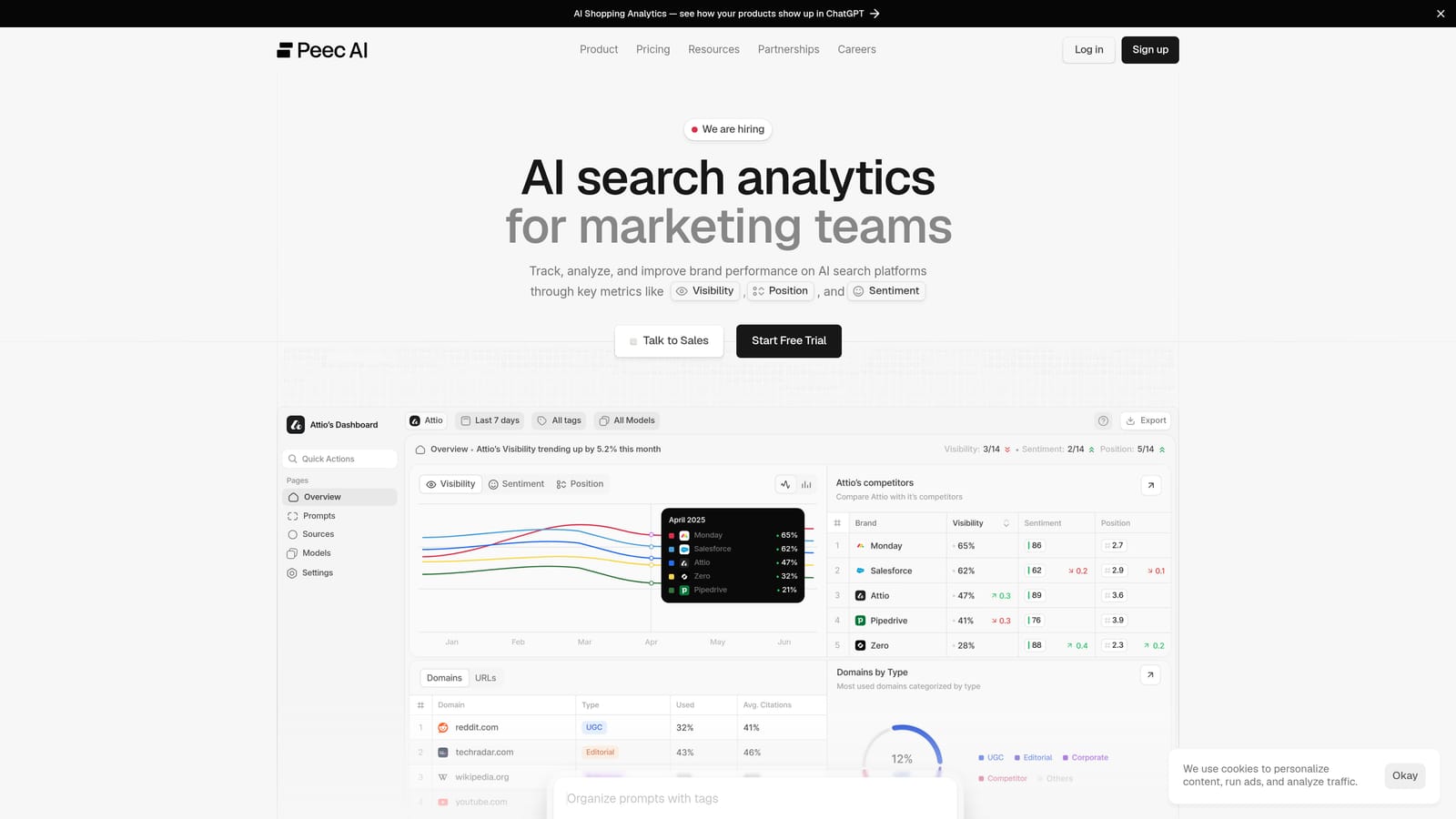
Peec is a competitive AI visibility analysis tool that lets brands measure and compare their presence in AI-generated responses against direct competitors.
Where This Tool Shines
Peec approaches AI visibility from a competitive intelligence angle. Rather than focusing exclusively on your own brand's mentions, it puts your AI presence in context by showing how you compare to competitors across the same query categories. This share-of-voice framing is familiar to anyone who has used competitive SEO tools, applied to the AI response layer.
For brands in markets where AI recommendations carry significant weight—software categories, financial services, consumer products—knowing whether a competitor consistently appears in AI answers while you don't is actionable intelligence. Peec makes that comparison direct and structured rather than requiring manual research.
Key Features
Competitive AI Mention Benchmarking: Measures your brand's share-of-voice in AI-generated responses relative to named competitors.
Side-by-Side Visibility Comparison: Displays brand vs. competitor AI visibility data in a format designed for direct comparison.
Multi-Category Query Tracking: Tracks AI visibility across different query categories relevant to your market or product area.
Competitive Positioning Insights: Surfaces actionable data on where competitors are outperforming your brand in AI responses and vice versa.
Best For
Brands and agencies in competitive verticals where AI recommendation positioning is a meaningful differentiator. Particularly useful for teams running competitive analysis programs who want to extend that analysis into AI-generated search results. Less suited to organizations primarily focused on content creation or technical SEO workflows.
Pricing
Check the Peec website for current pricing tiers, as plans may be structured around the number of competitors tracked or queries monitored.
5. AirOps
Best for: Teams building scalable, repeatable AI content operations with structured workflows and data integrations.
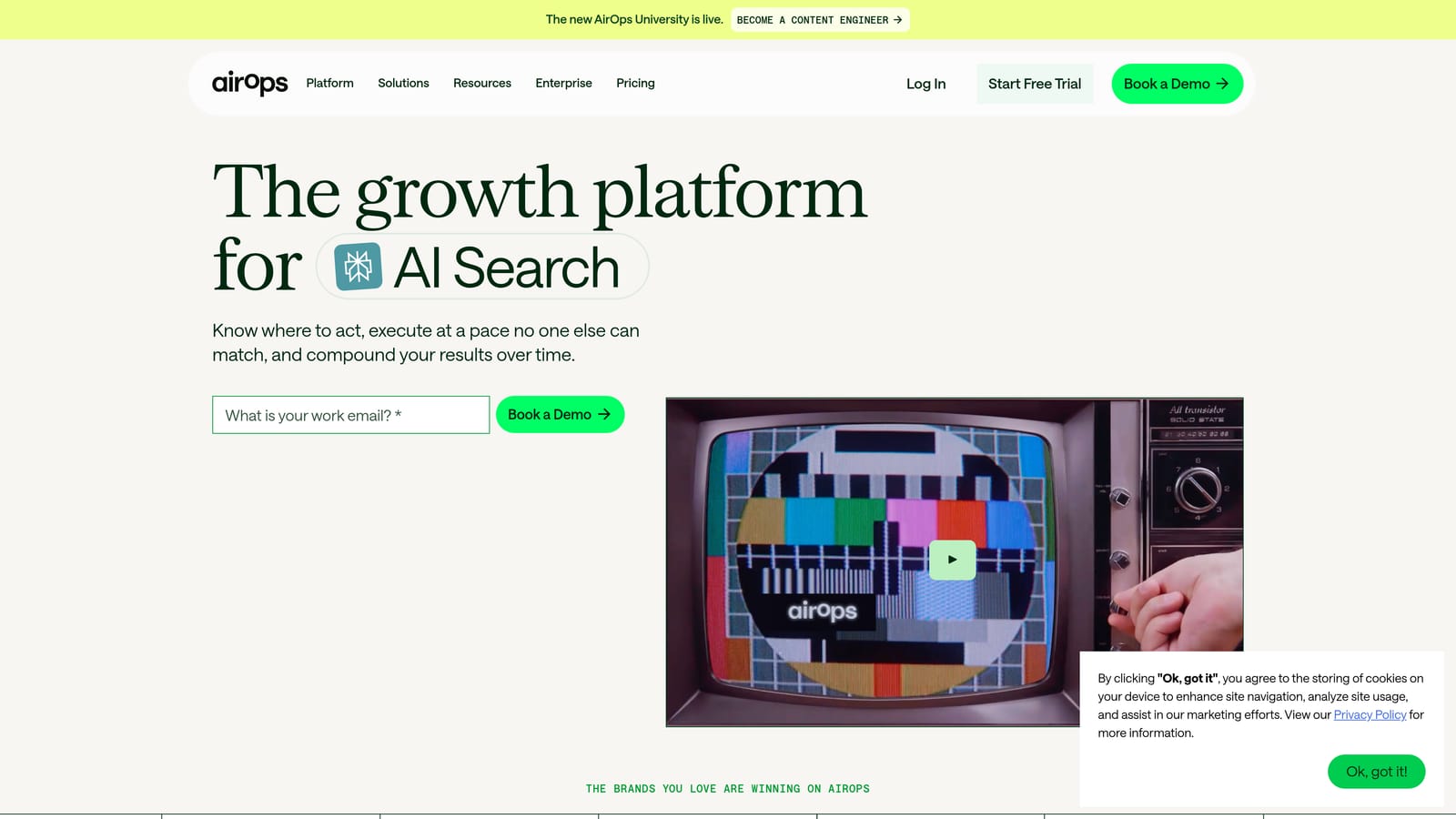
AirOps is a workflow automation platform that connects large language models to structured data and publishing pipelines, enabling teams to build scalable AI content operations.
Where This Tool Shines
AirOps is less a content tool and more a content operations infrastructure layer. It's built for teams that have already figured out what content they need to produce and want a system for producing it reliably at scale. The workflow builder connects LLMs to your data sources, CMS platforms, and publishing pipelines, so content generation becomes a structured, repeatable process rather than a series of one-off tasks.
The template and workflow library is a meaningful practical advantage for teams getting started. Rather than building every workflow from scratch, teams can adapt existing templates for common content operations tasks and customize from there. This reduces setup time considerably for teams with standard content needs.
Key Features
AI Workflow Builder: Connects LLMs to data sources and content systems to create structured, repeatable content production pipelines.
CMS and Data Tool Integrations: Works with common content management systems and data platforms to fit into existing tech stacks.
Template and Workflow Library: Pre-built workflows for common content operations tasks that teams can adapt and deploy quickly.
Scalable Content Pipeline Automation: Designed for teams that need to produce content at volume without proportionally increasing manual effort.
Best For
Content operations teams, growth marketers, and agencies that need to scale AI content production in a structured way. AirOps does not natively offer AI visibility tracking, so it's best suited to teams that either don't need that layer yet or are pairing it with a dedicated monitoring tool.
Pricing
Free tier available. Paid plans scale with usage. Check the AirOps website for current plan details and pricing tiers.
6. Writesonic
Best for: Content marketers and teams that need high-volume AI content generation across multiple formats with built-in SEO features.
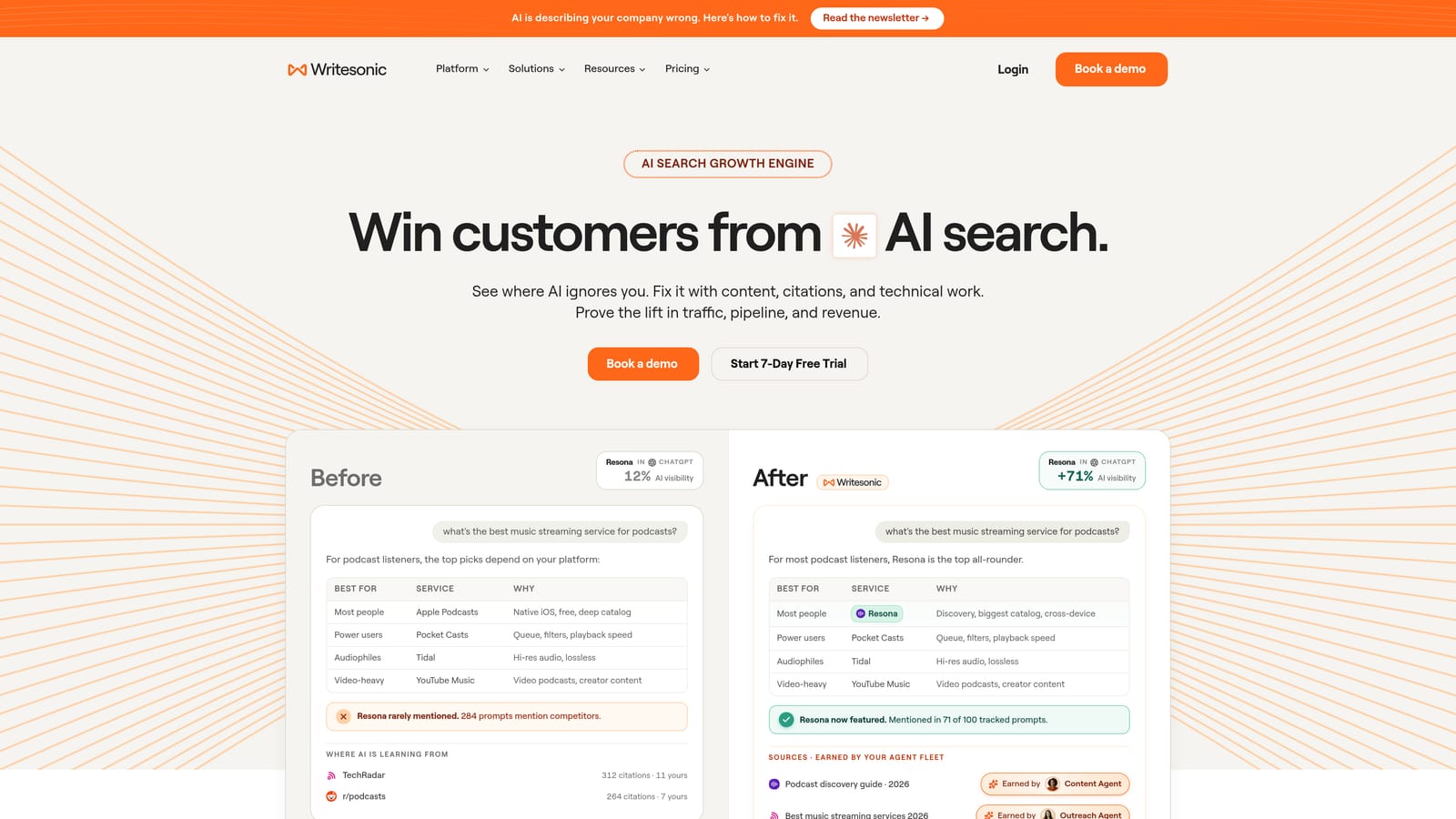
Writesonic is an established AI content generation platform with a broad template library covering blog posts, landing pages, ads, and more, with built-in SEO content features.
Where This Tool Shines
Writesonic's primary strength is breadth. The template library spans a wide range of content formats, from long-form blog articles to ad copy to social media posts, which makes it useful for marketing teams that need to produce content across multiple channels from a single tool. The keyword integration in the article writer adds a layer of SEO utility that helps teams align content output with search strategy.
Brand voice customization is a practical feature for teams managing consistent output across content types. Rather than manually editing every piece to match a brand's tone, teams can configure voice settings that carry through generated content. For agencies managing multiple client brands, this reduces the editing overhead that often slows high-volume content programs.
Key Features
Broad Template Library: Covers blog articles, ads, landing pages, social content, and more from a single platform.
AI Article Writer with Keyword Integration: Generates long-form content with SEO keyword targeting built into the generation process.
Brand Voice Customization: Configurable voice settings that apply consistently across content types and output.
Team Collaboration Features: Workflow tools designed for content marketing teams producing output collaboratively.
Best For
Content marketing teams and agencies that need to produce a high volume of content across formats and want SEO keyword integration baked in. Writesonic does not offer native AI visibility tracking, making it a content production tool rather than an AI search strategy platform. Teams that need both functions will need to pair it with a dedicated monitoring tool.
Pricing
Free trial available. Paid plans start at approximately $16 per month. Verify current pricing on the Writesonic website, as plans and pricing tiers may have been updated.
Which Tool Belongs in Your Stack
The honest answer is that the right tool depends on which problem you're actually trying to solve. These six tools fall into three natural categories, and understanding that split makes the decision straightforward.
If you need AI visibility tracking: Promptwatch, Profound, and Peec are all focused on this layer. Promptwatch is a strong starting point for teams new to AI search monitoring. Profound suits enterprise organizations with dedicated reporting needs. Peec is the right choice when competitive benchmarking is the primary use case.
If you need AI content generation at scale: AirOps and Writesonic both serve content production workflows, with AirOps leaning toward structured pipeline automation and Writesonic offering a broader template library with SEO features built in.
If you need both: Sight AI is the only platform on this list that combines AI visibility tracking, GEO-optimized content generation, and automated indexing in a single workflow. For teams that don't want to stitch together a monitoring tool, a content tool, and an indexing process, that integration is the core value proposition.
Agencies managing multiple brands, founders building an AI search presence from scratch, and marketing teams that want to move faster without adding tools to their stack will find the most leverage in a platform that handles the full loop: track where you stand, create content that improves it, and get that content indexed without delay.
Stop guessing how AI models like ChatGPT and Claude talk about your brand. Start tracking your AI visibility today and see exactly where your brand appears across top AI platforms, what content opportunities you're missing, and how to close the gap faster.