Webflow's CMS is powerful out of the box, but scaling content production, tracking AI visibility, and keeping search engines informed requires more than native features alone. Whether you're a marketer automating blog pipelines, a founder managing organic growth, or an agency publishing at scale, the right integration tools can turn Webflow into a full content engine.
This guide covers the best tools that connect directly with Webflow's CMS workflow: from AI content generation and auto-publishing to AI visibility tracking and search indexing. Each tool was selected based on its ability to solve real publishing bottlenecks, integrate cleanly with Webflow, and deliver measurable SEO or GEO outcomes.
If you're also trying to increase organic traffic or get your content discovered faster by both Google and AI models like ChatGPT and Perplexity, these integrations belong in your stack.
1. Sight AI
Best for: Teams that want AI content generation, Webflow auto-publishing, and AI visibility tracking in one platform.
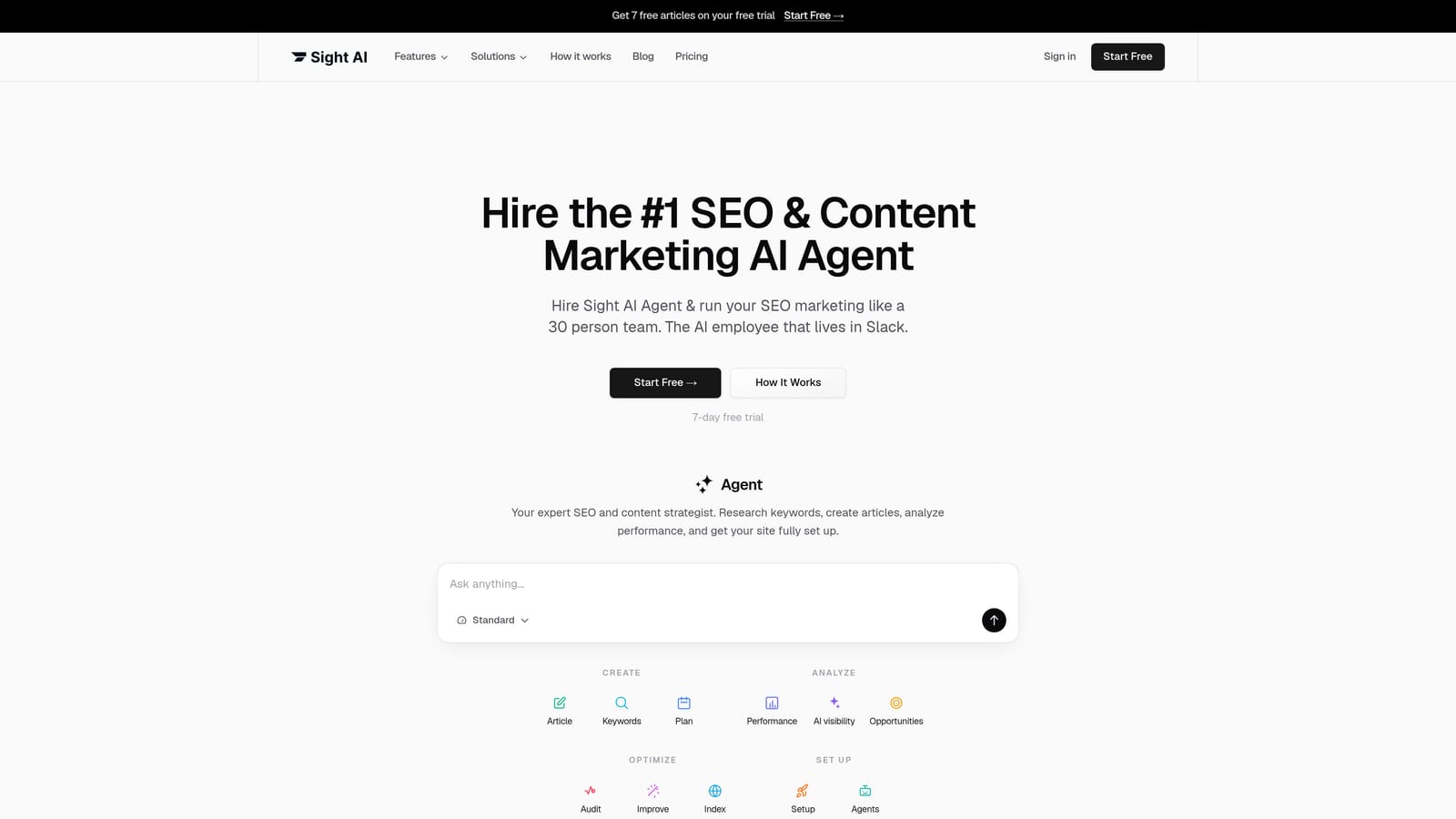
Sight AI is an all-in-one AI platform that generates SEO and GEO-optimized content, auto-publishes directly to Webflow CMS, triggers IndexNow for faster search indexing, and tracks brand mentions across AI models like ChatGPT, Claude, and Perplexity.
Where This Tool Shines
Most Webflow teams piece together separate tools for writing, publishing, indexing, and monitoring. Sight AI collapses that stack into a single platform. The 13+ specialized AI agents handle different content formats, from listicles and how-to guides to comparison pages, each optimized for both traditional search and AI-generated answers.
What makes it particularly compelling for Webflow publishers is the Autopilot Mode. Once configured, it runs a fully automated content pipeline: generate, publish to Webflow CMS, trigger IndexNow, and track how the resulting content performs in AI search responses. For agencies managing multiple client sites, that level of automation is genuinely hard to replicate with general-purpose tools.
Key Features
AI Content Writer with 13+ Agents: Generates listicles, guides, and explainers optimized for both SEO and Generative Engine Optimization (GEO).
CMS Auto-Publishing to Webflow: Pushes finished content directly into Webflow CMS collections without manual copy-paste workflows.
Autopilot Mode: Enables fully automated content pipelines from generation through publishing, reducing hands-on time significantly.
IndexNow Integration: Triggers faster discovery by Google and Bing immediately after new content is published, rather than waiting for the next crawl cycle.
AI Visibility Score: Tracks brand mentions across 6+ AI platforms with sentiment analysis, showing how AI models talk about your brand in real time.
Prompt Tracking: Monitors how AI models respond to queries relevant to your brand, helping identify content gaps and opportunities.
Best For
Sight AI is best suited for marketers, founders, and agencies who want to grow organic and AI-driven traffic without managing a fragmented tool stack. It's particularly valuable for Webflow teams that publish regularly and want their content to appear in both Google results and AI-generated answers.
Pricing
Paid plans are available. Visit trysight.ai for current pricing and plan details.
2. Writesonic
Best for: Content teams that need high-volume AI writing with consistent brand voice across formats.
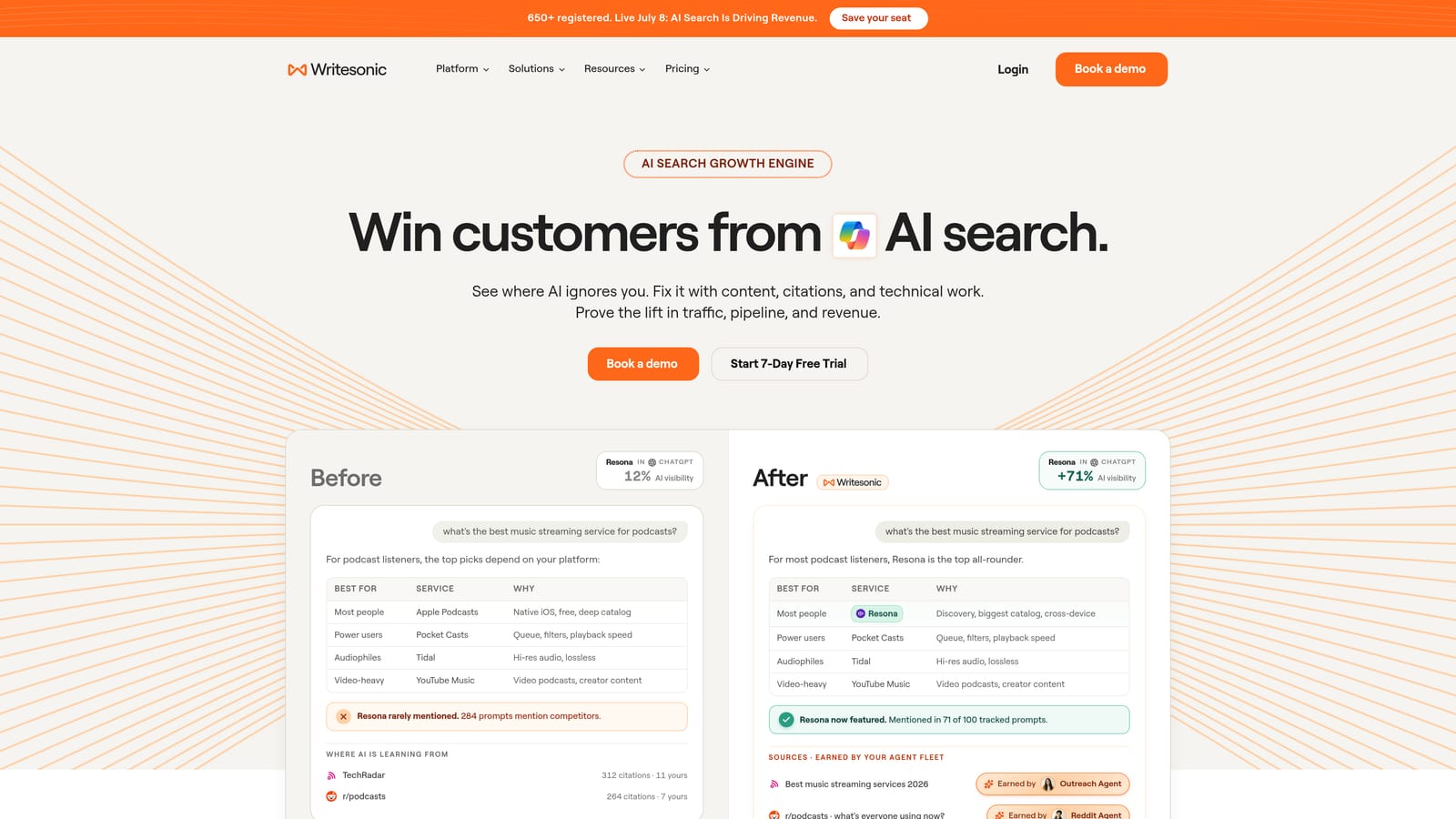
Writesonic is an AI writing platform that generates long-form blog content, landing pages, and marketing copy with brand voice customization, supporting CMS publishing workflows for teams scaling content production.
Where This Tool Shines
Writesonic's strength is content volume with tone consistency. If your team needs to produce a large number of articles quickly while maintaining a recognizable brand voice, its customization settings help keep output on-brand across writers and formats.
For Webflow users, Writesonic fits best as the content generation layer in a broader publishing workflow. It doesn't natively auto-publish to Webflow CMS or trigger indexing, so you'll typically pair it with a publishing automation tool. That said, for teams already comfortable with that kind of setup, Writesonic delivers solid long-form output with SEO settings built in.
Key Features
Long-Form Article Generation: Produces full blog posts and guides with configurable SEO optimization settings.
Brand Voice Customization: Maintains consistent tone and style across different content types and team members.
Multi-Format Content: Generates blogs, ads, social posts, and product descriptions from a single platform.
CMS Deployment Integrations: Supports workflows that connect to CMS platforms for streamlined content publishing.
Team Collaboration Features: Includes content review and approval workflows for editorial teams.
Best For
Writesonic works well for content marketing teams and agencies that prioritize publishing volume and brand consistency. It's a strong fit when the primary bottleneck is writing speed rather than publishing automation or AI visibility tracking.
Pricing
A free tier is available. Paid plans start at approximately $16 per month, with higher tiers for teams and agencies.
3. AirOps
Best for: Technical marketers building custom LLM-powered workflows connected to Webflow CMS via API.
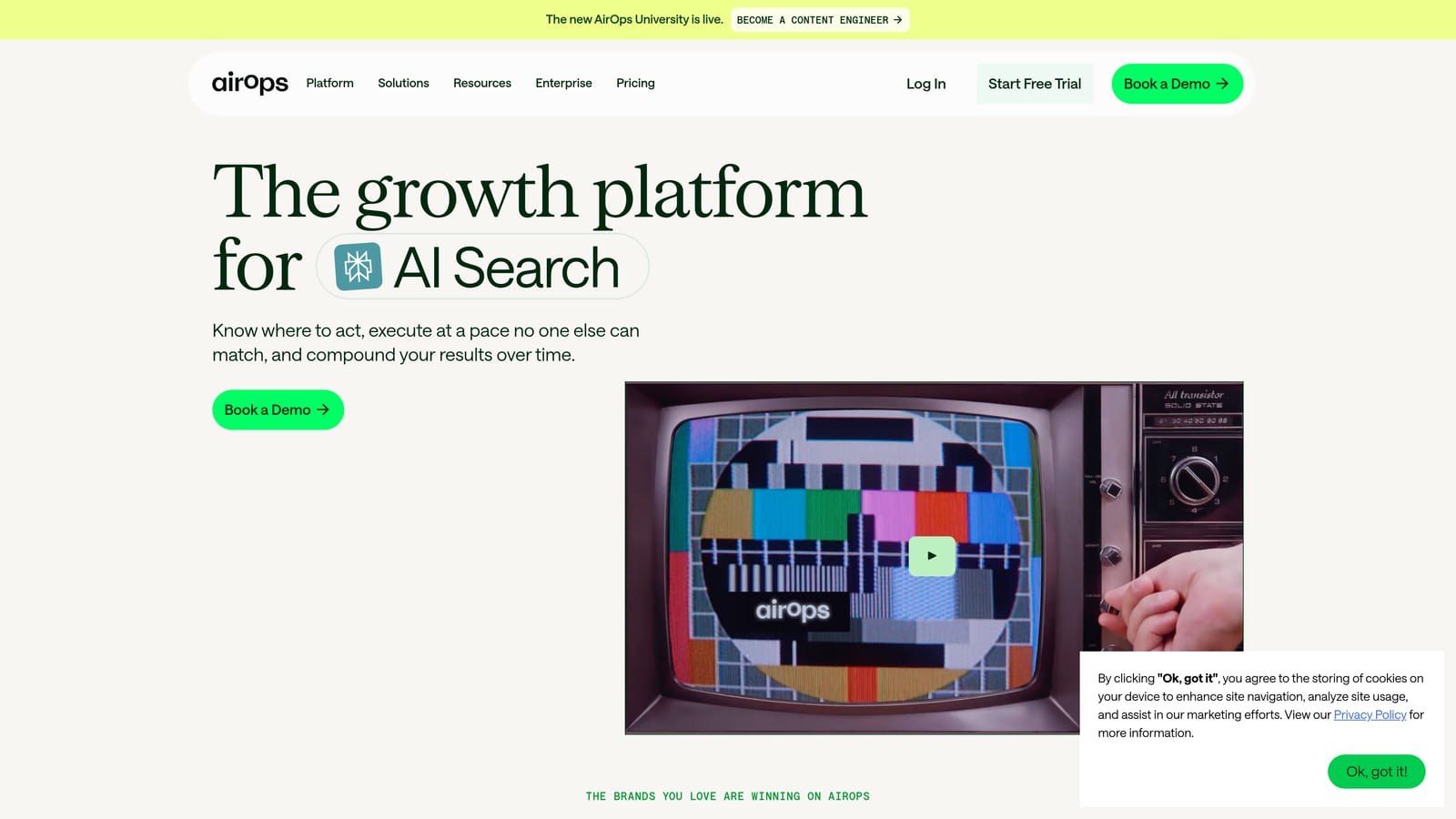
AirOps is a no-code AI workflow automation platform built for marketing and content operations teams, enabling custom LLM-powered pipelines that connect to Webflow CMS collections via API for programmatic content and data enrichment.
Where This Tool Shines
AirOps occupies a different category than pure AI writing tools. Think of it as the connective tissue for complex content operations. Instead of generating a single article, it lets you build multi-step workflows: pull data from a source, run it through an LLM, enrich Webflow CMS fields, and repeat at scale.
This makes it particularly powerful for programmatic SEO use cases, where you're generating hundreds of location pages, product descriptions, or comparison articles from structured data. If your Webflow CMS has collection items that need consistent meta descriptions, summaries, or tags, AirOps can automate that enrichment without a single line of custom code.
Key Features
Visual Workflow Builder: Connects LLMs to Webflow CMS collections via API using a no-code interface.
Programmatic SEO Support: Enables large-scale content generation workflows for structured, data-driven publishing.
CMS Data Enrichment: Automates the population of meta descriptions, tags, summaries, and other CMS fields.
Multi-Model Connectivity: Connects to multiple AI models and external data sources within a single pipeline.
No Engineering Required: Designed specifically for technical marketers who want API-level control without custom development work.
Best For
AirOps is best for content operations teams and technical marketers running programmatic SEO campaigns or needing to enrich Webflow CMS collections at scale. It's less suited for teams looking for a simple "write and publish" workflow.
Pricing
A free trial is available. Paid plans scale with usage. Visit airops.com for current pricing details.
4. Profound
Best for: Brand and content teams that need analytics on how their content performs inside AI-generated search results.
Profound is an AI search analytics platform that tracks how brands and their published content appear within AI-generated search results, helping teams measure and optimize their Generative Engine Optimization (GEO) strategy.

Where This Tool Shines
As AI answer engines become a meaningful traffic source, understanding whether your Webflow-published content is influencing those answers matters. Profound focuses specifically on this question: not just whether you rank on Google, but whether AI models surface your brand when users ask relevant questions.
For content strategists, this kind of data is genuinely useful for topic selection. If Profound shows that competitors consistently appear in AI answers for a category you should own, that's a clear signal about where to focus your next round of Webflow content.
Key Features
AI Search Visibility Tracking: Monitors how your brand and content appear within AI-generated search responses across major platforms.
Content Performance Monitoring: Tracks which published articles or pages earn placement in AI answer engines.
GEO Strategy Insights: Provides data to inform topic selection and content optimization for generative search.
Competitor Benchmarking: Shows how competitor brands perform in AI search results alongside your own.
Reporting Dashboards: Delivers structured reporting for brand and content teams tracking GEO performance over time.
Best For
Profound is best for brand teams and content strategists at companies where AI search visibility is becoming a measurable priority. It's particularly useful for teams that publish regularly to Webflow and want to understand how that content performs beyond traditional search rankings.
Pricing
Pricing is available on request. Visit profound.co for details and to get in touch with their team.
5. Peec
Best for: Content teams that want citation-level tracking of brand mentions within LLM-generated outputs.
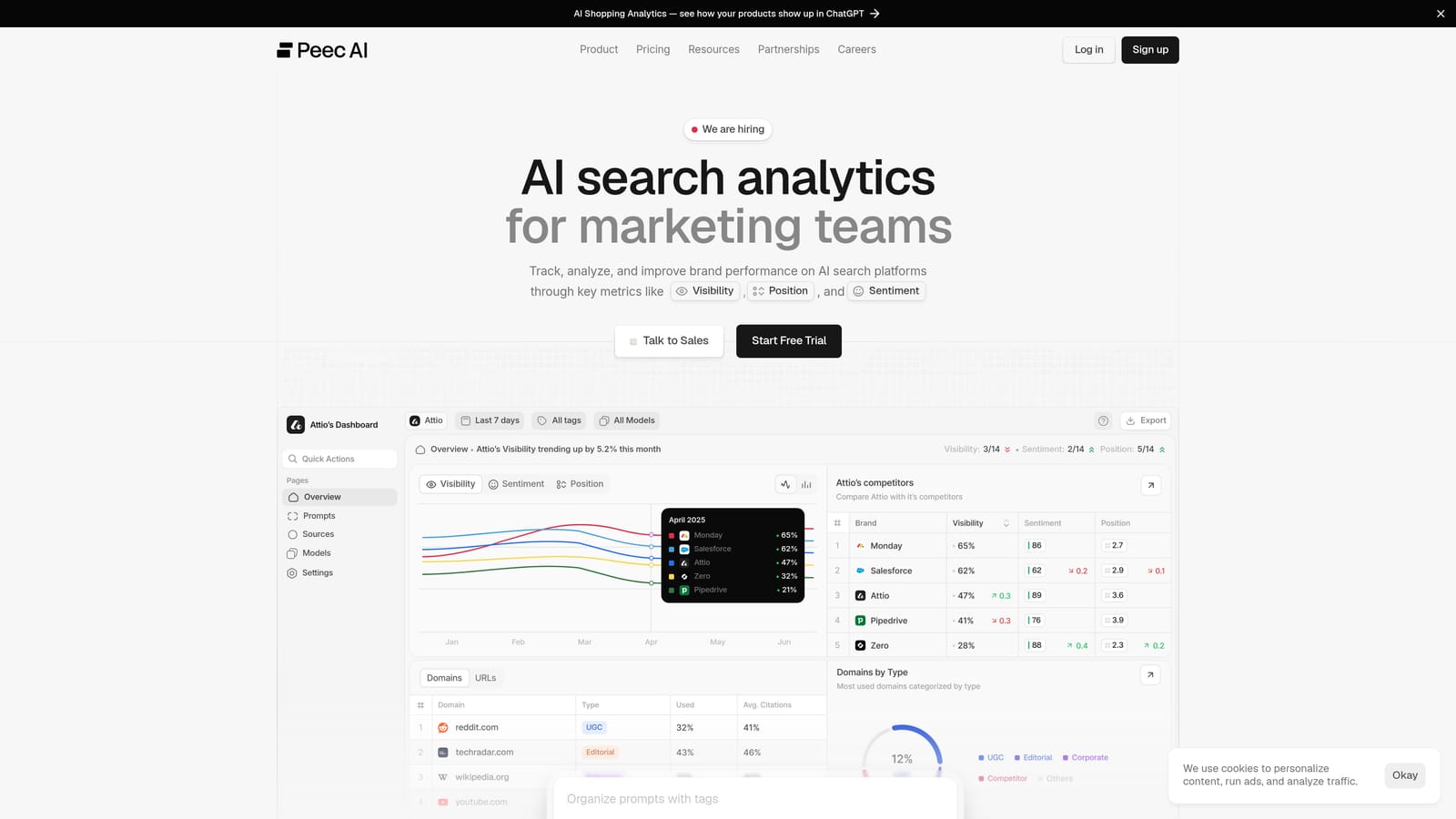
Peec is a brand monitoring tool focused on tracking how AI language models mention and cite brands and competitors within their responses, giving content teams citation-level visibility into AI-driven distribution.
Where This Tool Shines
There's a meaningful difference between appearing in an AI answer and being cited as a source within one. Peec focuses on the latter. It tracks whether specific pieces of content you've published, including content on your Webflow site, are being referenced by AI models when answering relevant queries.
This is useful for validating your content strategy. If you've published a detailed guide on Webflow and want to know whether ChatGPT or Claude is actually citing it, Peec surfaces that data. It also tracks competitor citations, so you can see which of their content earns AI references that yours doesn't yet.
Key Features
Brand and Competitor Mention Monitoring: Tracks how AI language models mention your brand and competitors within generated responses.
Citation Tracking: Identifies which published content pieces earn direct references in AI-generated answers.
Multi-Platform Coverage: Monitors mentions across multiple AI platforms simultaneously.
Alerts and Reporting: Notifies teams of changes in brand visibility within AI responses.
Content Validation: Helps confirm whether Webflow-published content is actually influencing AI-generated answers for target topics.
Best For
Peec is well-suited for content teams that want granular insight into how their published work influences AI model outputs. It's especially relevant for brands investing heavily in content-driven authority and wanting to verify that investment is paying off in AI-generated distribution.
Pricing
Visit peec.ai for current pricing and available trial options.
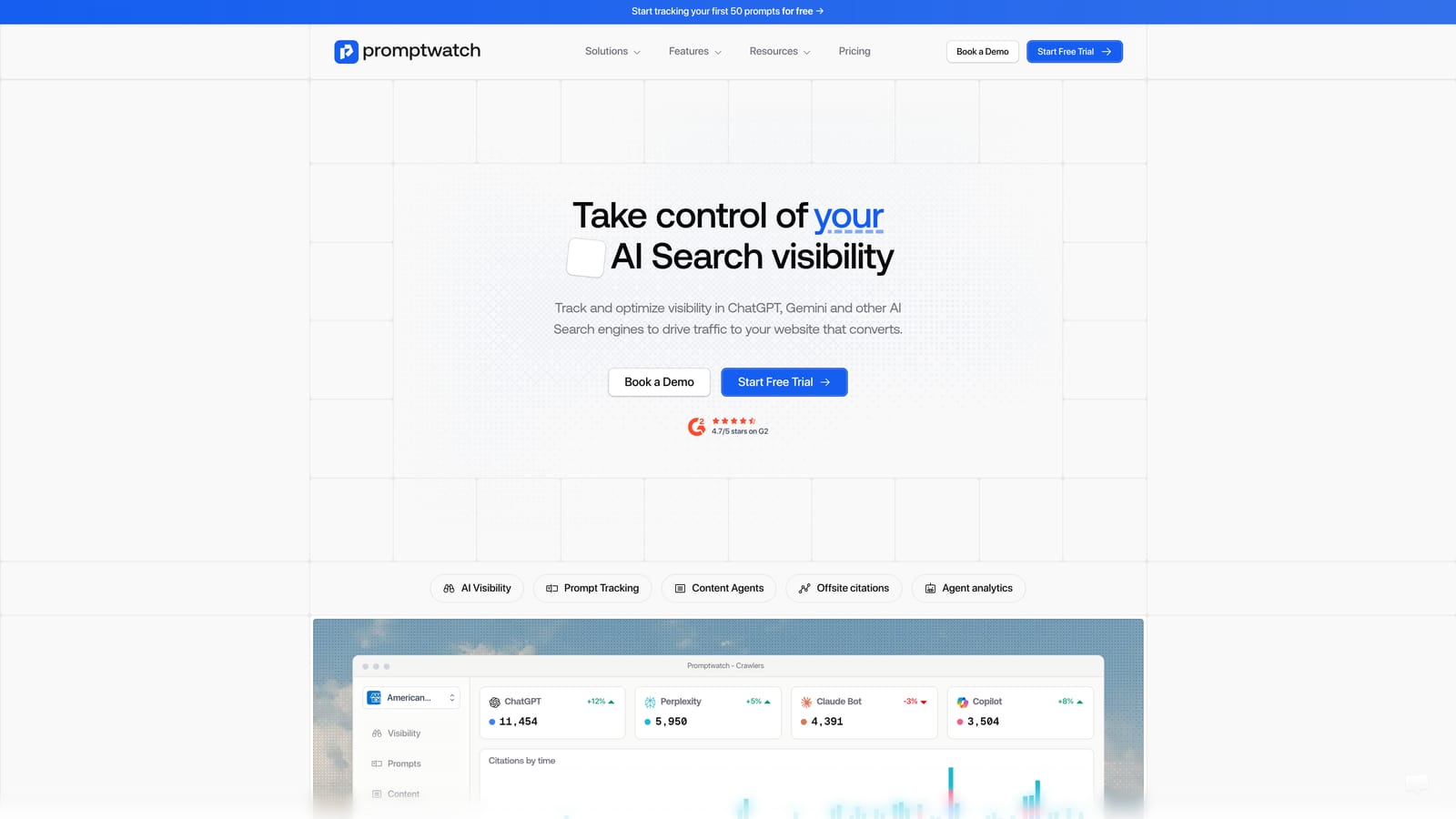
6. Promptwatch
Best for: Content strategists who want to understand which prompts and topics surface their brand in AI tools.
Promptwatch is a prompt and AI response tracking tool that helps content strategists understand which prompts and topics surface their brand within AI tools, informing smarter content decisions for Webflow publishing.
Where This Tool Shines
Promptwatch approaches AI visibility from the prompt side rather than the content side. Instead of asking "is our content being cited?", it asks "which questions, when typed into an AI tool, result in our brand appearing?" That framing is useful for content planning because it directly maps to how real users interact with AI search.
If Promptwatch reveals that your brand surfaces for certain prompt types but not others, that's a clear editorial signal. You can use that data to prioritize new Webflow content that closes the gap, particularly in categories where competitors are currently winning AI visibility.
Key Features
Prompt-Level Visibility Tracking: Monitors which specific prompts surface your brand content within AI-generated responses.
Content Gap Identification: Highlights areas where competitors appear in AI answers but your brand does not.
Topic Prioritization: Helps content teams decide what to publish next in Webflow based on actual AI prompt performance data.
Performance Tracking Over Time: Monitors how prompt-level visibility changes as new content is published.
AI-First Content Strategy Support: Designed specifically for teams building content strategies around AI search behavior.
Best For
Promptwatch is best for content strategists and SEO teams who want their Webflow publishing calendar informed by real AI prompt data rather than guesswork. It's a strong fit for brands actively building an AI-first content strategy and needing concrete signals about where to focus.
Pricing
Visit promptwatch.io for current pricing and plan details.
Which Tool Belongs in Your Webflow Stack
Each tool in this list addresses a distinct layer of the Webflow content workflow, and the right choice depends on where your biggest bottleneck actually sits.
Sight AI is the strongest option for teams that want a single platform covering content generation, Webflow auto-publishing, search indexing acceleration, and AI visibility tracking. The combination of 13+ AI writing agents, Autopilot Mode, IndexNow integration, and an AI Visibility Score is genuinely difficult to replicate by piecing together separate tools.
AirOps is the right pick if your priority is building custom, API-connected workflows between LLMs and Webflow CMS collections, especially for programmatic SEO at scale.
Writesonic serves teams where the primary need is content volume and brand voice consistency, and who already have a publishing pipeline in place.
For AI search monitoring specifically, Profound, Peec, and Promptwatch each offer a slightly different angle: Profound focuses on content performance within AI search results, Peec goes deeper on citation-level tracking, and Promptwatch maps prompt behavior to content strategy decisions. Many teams will find value in combining one of these with a content generation and publishing tool.
The broader shift happening right now is that publishing to Webflow is no longer just about Google rankings. AI models like ChatGPT, Claude, and Perplexity are becoming meaningful traffic sources, and the brands that appear in those answers are the ones investing in GEO-optimized content and AI visibility tracking today.
Stop guessing how AI models like ChatGPT and Claude talk about your brand. Start tracking your AI visibility today and see exactly where your brand appears across top AI platforms.