Your marketing team just received another content request. Blog posts for three product launches. Social media campaigns for two new features. Email sequences for four customer segments. Website updates across six landing pages. All due within two weeks.
Sound familiar?
Modern marketing teams face an impossible equation: content demand grows exponentially while budgets and headcount remain flat. The traditional solution—hire more writers, work longer hours, sacrifice quality—isn't sustainable. This is where a scalable content marketing platform becomes not just helpful, but essential.
But here's the thing: most platforms claiming to "scale your content" are just glorified text editors with a collaboration feature bolted on. True scalability means fundamentally different capabilities—the ability to multiply your output, expand across channels, and maintain quality without proportionally increasing your costs or burning out your team.
This guide breaks down what separates genuinely scalable platforms from basic content tools, how to evaluate the features that actually drive results, and the strategic shift required to transform your content operations from manual grind to efficient engine.
Beyond Basic Tools: What Makes a Content Platform Truly Scalable
Let's start with what scalability actually means in content marketing. It's not about producing more mediocre articles. It's about creating a system where increasing your content output by 10x doesn't require hiring 10x more people or spending 10x more time.
Think of traditional content tools like a bicycle. They help you move faster than walking, but your speed is still fundamentally limited by how hard you pedal. A scalable platform is more like an electric vehicle—it multiplies your effort through technology, taking you further with the same amount of energy.
Most marketing teams use a patchwork of standalone tools: a writing app here, a CMS there, maybe a scheduling tool somewhere else. Each piece requires manual handoffs. Writers draft in Google Docs, copy into WordPress, manually update meta descriptions, schedule social promotion separately, then track performance in yet another platform. Every transition point creates friction that limits how fast you can move.
A truly scalable platform eliminates these friction points through three fundamental pillars.
Automation: The platform handles repetitive tasks that consume disproportionate time. Formatting content for different channels. Updating sitemaps. Scheduling publication. Notifying team members. These aren't creative tasks—they're mechanical processes that should run automatically.
Integration: Instead of forcing you to adapt your workflow to the tool, the platform connects with your existing systems. It publishes directly to your CMS. It pulls data from your analytics. It syncs with your project management tools. You work within your established ecosystem, not around it.
AI-Powered Assistance: This goes beyond autocomplete suggestions. Scalable platforms use specialized AI to handle substantive work—generating SEO-optimized outlines, drafting complete sections, adapting content for different formats, even identifying content gaps based on search trends and competitor analysis. The best AI powered content marketing platforms transform how teams approach content creation entirely.
The difference becomes obvious when you compare outputs. A traditional setup might produce 4-5 quality blog posts per writer per month. A scalable platform can help that same writer oversee 20-30 pieces while maintaining or improving quality, because the platform handles the mechanical work and the writer focuses on strategy, editing, and optimization.
Core Capabilities That Drive Content Scale
So what specific capabilities actually enable this multiplication effect? Let's break down the features that separate platforms designed for scale from glorified word processors.
AI Content Generation With Specialization: Generic AI writing tools produce generic content. They might string together grammatically correct sentences, but they lack the nuance required for effective marketing content. Scalable platforms use specialized AI agents trained for specific content types.
One agent understands how to structure comprehensive guides with proper hierarchy and internal linking. Another specializes in listicles with compelling hooks and scannable formatting. A third focuses on explainer content that balances technical accuracy with readability. This specialization matters because a guide about enterprise software requires fundamentally different structure and tone than a listicle about productivity hacks.
The best platforms also maintain brand voice consistency across high volumes. They learn your terminology, tone preferences, and style guidelines, then apply them automatically. This means you can produce 50 articles that sound like they came from the same strategic mind, not 50 random contractors. Exploring the best AI content marketing tools reveals significant differences in specialization capabilities.
Multi-Channel Publishing From a Single Source: You shouldn't need to recreate content for every channel. Write once, publish everywhere—but intelligently adapted for each platform's requirements.
A scalable platform takes your core content and automatically formats it for your blog, extracts key points for social media, creates email-friendly versions, and generates meta descriptions optimized for search. Each version maintains the core message while respecting the channel's unique constraints and audience expectations.
This isn't just about saving time. It's about maintaining message consistency while maximizing reach. When your blog post, LinkedIn update, and email newsletter all reinforce the same strategic narrative, your content compounds instead of competing with itself.
Workflow Automation for the Entire Content Lifecycle: Content creation is just one phase. Ideation, assignment, review, optimization, publication, and promotion each require coordination. Manual coordination doesn't scale.
Look for platforms that automate the full cycle. Autopilot modes that generate content ideas based on keyword opportunities and trending topics. Automated assignment to the right specialized agent. Built-in review workflows that route drafts to appropriate stakeholders. Scheduled publication that coordinates timing across channels. Automatic indexing that accelerates search engine discovery. Understanding content marketing automation platforms helps teams identify which workflow features matter most.
When these workflows run automatically, your team shifts from managing logistics to making strategic decisions. Instead of spending Tuesday morning copying content between systems, you're analyzing which topics drive the most engagement and adjusting your strategy accordingly.
The AI Visibility Factor: Why Modern Platforms Must Track More Than Google
Here's where most content platforms miss a critical evolution in how people discover information. They're still optimized for a world where Google is the only search game in town. That world ended.
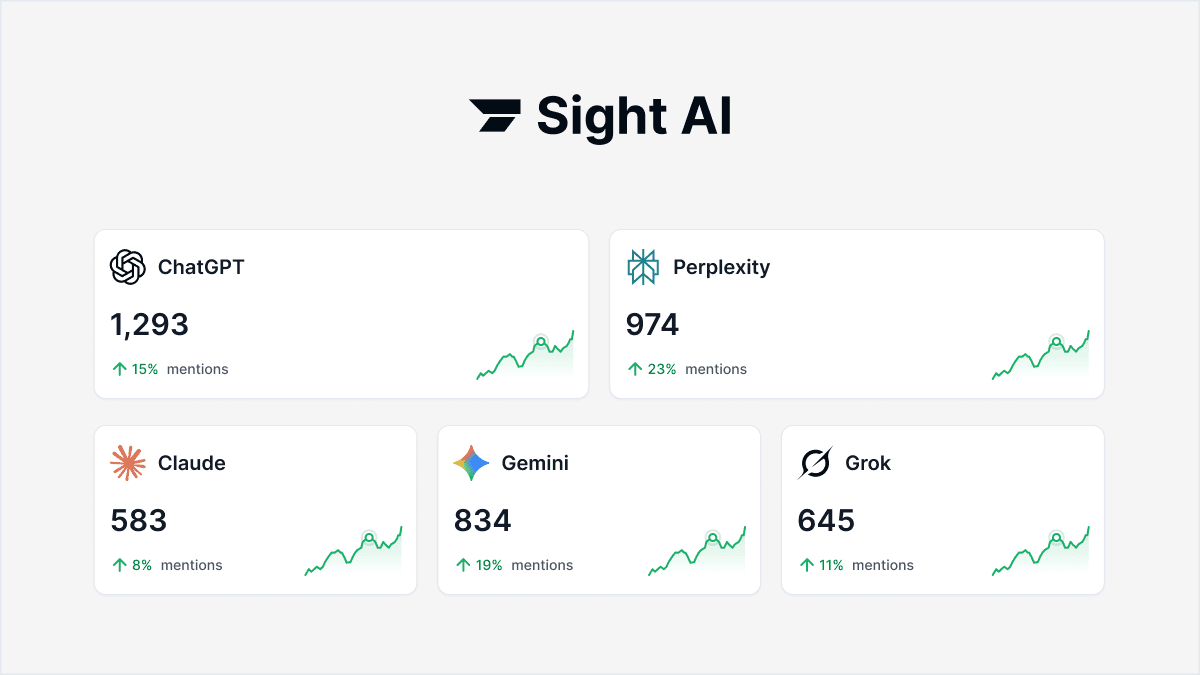
Millions of users now turn to ChatGPT, Claude, Perplexity, and other AI models for information instead of traditional search engines. They ask conversational questions and receive synthesized answers drawn from across the web. The question isn't whether AI search matters—it's whether your content gets mentioned when these models answer questions in your domain.
Traditional SEO focuses on ranking for specific keywords in Google's results. That's still important, but it's incomplete. You also need visibility in AI-generated responses. When someone asks ChatGPT about solutions in your category, does your brand appear in the answer? When Claude explains industry best practices, is your methodology referenced?
This creates an entirely new content challenge. You're not just optimizing for search algorithms—you're optimizing for how AI models synthesize and cite information. This is called Generative Engine Optimization, or GEO, and it requires different strategies than traditional SEO.
Why AI Visibility Tracking Matters: You can't optimize what you don't measure. If you don't know how AI models currently discuss your brand, you're creating content blind. Maybe ChatGPT consistently mentions your competitors when users ask about your product category. Maybe Perplexity references outdated information about your services. Maybe Claude doesn't mention you at all.
Scalable platforms built for the modern landscape include AI visibility tracking alongside traditional analytics. They monitor how your brand appears across multiple AI models, track sentiment in those mentions, and identify the prompts that trigger references to your company. This visibility shows you exactly where you're winning in AI search and where competitors have the advantage. The most effective content marketing software with AI capabilities now includes these tracking features as standard.
Content Strategy Implications: This intelligence transforms your content strategy. Instead of guessing which topics might improve AI visibility, you see concrete data about where gaps exist. You discover that AI models frequently discuss a problem you solve but never mention your solution. That's a content opportunity with clear ROI.
The platforms that enable genuine scale understand this dual optimization requirement. They help you create content that performs in traditional search while also increasing the likelihood that AI models cite your brand as authoritative. That's the difference between a tool built for 2020 and a platform designed for the current landscape.
Evaluating Scalable Platforms: The Features That Actually Matter
When you're comparing platforms, vendor websites all claim similar capabilities. Everyone promises to "streamline your workflow" and "boost productivity." Here's how to cut through the marketing speak and identify features that genuinely enable scale.
Content Indexing Speed and Automation: Publishing content is pointless if search engines take weeks to discover it. By the time Google indexes your article about a trending topic, the moment has passed. Fast indexing gives you a competitive advantage, especially for time-sensitive content.
Look for platforms with IndexNow integration. This protocol notifies search engines immediately when you publish new content, dramatically accelerating discovery. Platforms should also handle sitemap updates automatically—no manual XML editing or remembering to ping search engines. These technical details sound minor, but they determine whether your content reaches audiences while it's still relevant. A thorough content marketing platform comparison should evaluate indexing capabilities alongside content features.
Integration Ecosystem Depth: A platform might offer impressive AI capabilities, but if it doesn't connect to your existing systems, you've just added another silo to manage. Evaluate the actual integration points, not just the integrations list.
Can it publish directly to your CMS, or does it only export files you must manually upload? Does it pull real performance data from your analytics, or just display generic metrics? Can it trigger actions in your project management tools, or does coordination still require manual updates? The difference between surface-level integrations and deep workflow connections determines whether the platform actually reduces friction or just relocates it.
For example, auto-publishing to WordPress, Webflow, or your headless CMS means content moves from creation to live publication without human intervention. That's genuine automation. Exporting to a file that someone must manually upload is just a different manual step.
AI Agent Specialization Versus Generic Generation: Not all AI content capabilities are created equal. Generic AI tools use the same model for every content type, producing serviceable but undifferentiated output. Specialized agents are trained for specific formats and objectives.
Ask specific questions during evaluation: Does the platform use different AI approaches for listicles versus comprehensive guides? Can it optimize content specifically for SEO versus GEO? Does it understand the structural differences between explainer content and comparison articles? Platforms with 10+ specialized agents will consistently outperform those using a single general-purpose model. Reviewing best AI content platforms reveals significant variation in agent specialization.
Visibility and Measurement Capabilities: You need clear visibility into what's working. Traditional metrics like organic traffic and rankings remain important, but modern platforms should also track AI visibility scores, brand mention sentiment across AI models, and content performance across both traditional search and AI-generated responses.
The platform should make it easy to connect content performance to business outcomes. Which articles drive the most qualified leads? Which topics improve AI visibility most efficiently? Where should you invest more content resources? These insights transform content from a cost center into a measurable growth engine.
Building Your Scalable Content Engine: Implementation Roadmap
Choosing the right platform is just the beginning. Implementation determines whether you actually achieve scale or just add complexity to your existing chaos. Here's a practical roadmap for building a content engine that genuinely multiplies your output.
Phase 1: Audit Current Operations and Identify Bottlenecks: Before selecting any platform, map your existing content workflow from ideation through publication. Where does work pile up? What tasks consume disproportionate time relative to their value? Where do handoffs create delays?
Common bottlenecks include: ideation processes that rely on sporadic brainstorming sessions, writing that happens in tools disconnected from your CMS, review cycles requiring multiple email threads and document versions, manual formatting and optimization before publication, separate processes for each distribution channel.
Document current metrics too. How many pieces does your team produce monthly? What's the average time from assignment to publication? What percentage of content actually gets published versus abandoned mid-process? These baselines let you measure improvement objectively. Teams exploring content marketing tools for startups often discover their bottlenecks differ from enterprise organizations.
Phase 2: Platform Selection Aligned With Growth Goals: Your growth objectives should drive platform requirements, not the other way around. If you need to expand from one blog to multiple content hubs across different audience segments, prioritize multi-channel capabilities. If speed-to-market is critical, emphasize automation and indexing features. If you're entering new markets where AI search dominates, AI visibility tracking becomes essential.
Test platforms with real use cases, not theoretical scenarios. Have your team create actual content you need, publish it through the platform's workflow, and measure the time savings and quality outcomes. A platform that looks impressive in a demo might introduce friction in your specific workflow.
Phase 3: Gradual Rollout With Measurement Frameworks: Don't attempt to transform your entire content operation overnight. Start with a single content type or channel. Master the platform's capabilities in that limited scope, then expand gradually.
Establish clear metrics for each phase: content velocity (pieces published per week), cost per piece (including platform cost and team time), quality indicators (engagement rates, organic traffic), and AI visibility scores. Track these weekly to identify what's working and what needs adjustment. Understanding content marketing platform pricing helps teams calculate accurate cost-per-piece metrics.
Build feedback loops with your team. What's easier with the new platform? Where does it create unexpected friction? The goal isn't to force adoption of every feature—it's to configure the platform to genuinely multiply your team's effectiveness.
Putting It All Together: Your Path to Content Scale
The transformation from manual content operations to a scalable system isn't about working harder—it's about working fundamentally differently. When you move from disconnected tools to an integrated platform, from manual workflows to automated processes, and from guessing to measuring both traditional SEO and AI visibility, you unlock exponential improvements in output without proportional increases in cost or effort.
The right scalable content marketing platform becomes your force multiplier. It handles the mechanical work that consumes hours but adds little strategic value. It maintains quality and consistency across high volumes. It optimizes for both traditional search engines and the AI models that increasingly mediate information discovery. It connects your content operations to measurable business outcomes.
Track These Key Metrics: Content velocity shows whether you're actually producing more. Cost per piece reveals efficiency gains. Organic traffic growth demonstrates SEO effectiveness. AI visibility scores indicate how well you're optimizing for generative engine optimization. Together, these metrics tell you whether your platform investment is delivering returns or just adding complexity.
Your Next Steps: Start by auditing your current content bottlenecks. Identify where manual processes limit your scale. Evaluate platforms based on their ability to automate those specific friction points, not just their feature lists. Test with real content before committing. Implement gradually with clear measurement frameworks.
Most importantly, recognize that the content landscape has fundamentally shifted. Platforms optimized only for traditional SEO are already obsolete. The teams winning in 2026 are those tracking and optimizing for AI visibility alongside search rankings, using specialized AI agents instead of generic tools, and automating the entire content lifecycle from ideation through distribution.
The question isn't whether to adopt a scalable content marketing platform—it's whether you'll make the transition before your competitors do. Every week you operate with manual workflows and disconnected tools is a week your competitors gain ground with systems designed for genuine scale.
Stop guessing how AI models like ChatGPT and Claude talk about your brand—get visibility into every mention, track content opportunities, and automate your path to organic traffic growth. Start tracking your AI visibility today and see exactly where your brand appears across top AI platforms.