Content marketing has evolved from a nice-to-have into the backbone of digital growth strategies. Yet many marketing teams find themselves drowning in manual tasks—scheduling social posts at 2 AM, manually tracking campaign performance across six different dashboards, and struggling to maintain consistent messaging across multiple channels.
The solution lies in content marketing automation platforms that handle the heavy lifting while you focus on strategy and creativity. These tools don't just schedule posts; they orchestrate entire content ecosystems, from ideation and creation to distribution and performance analysis.
Modern content marketing automation platforms leverage AI to optimize posting times, personalize content for different audience segments, and provide actionable insights that drive real business results. The best platforms integrate seamlessly with your existing tech stack, scaling with your business as it grows.
But with dozens of options available, choosing the right platform can feel overwhelming. Some excel at social media automation, others at email marketing integration, and a few offer comprehensive solutions that handle everything from content planning to ROI tracking.
Here are the leading content marketing automation platforms that are transforming how businesses approach content strategy in 2026.
1. Sight AI
Best for: AI-powered content creation and SEO optimization with automated publishing workflows
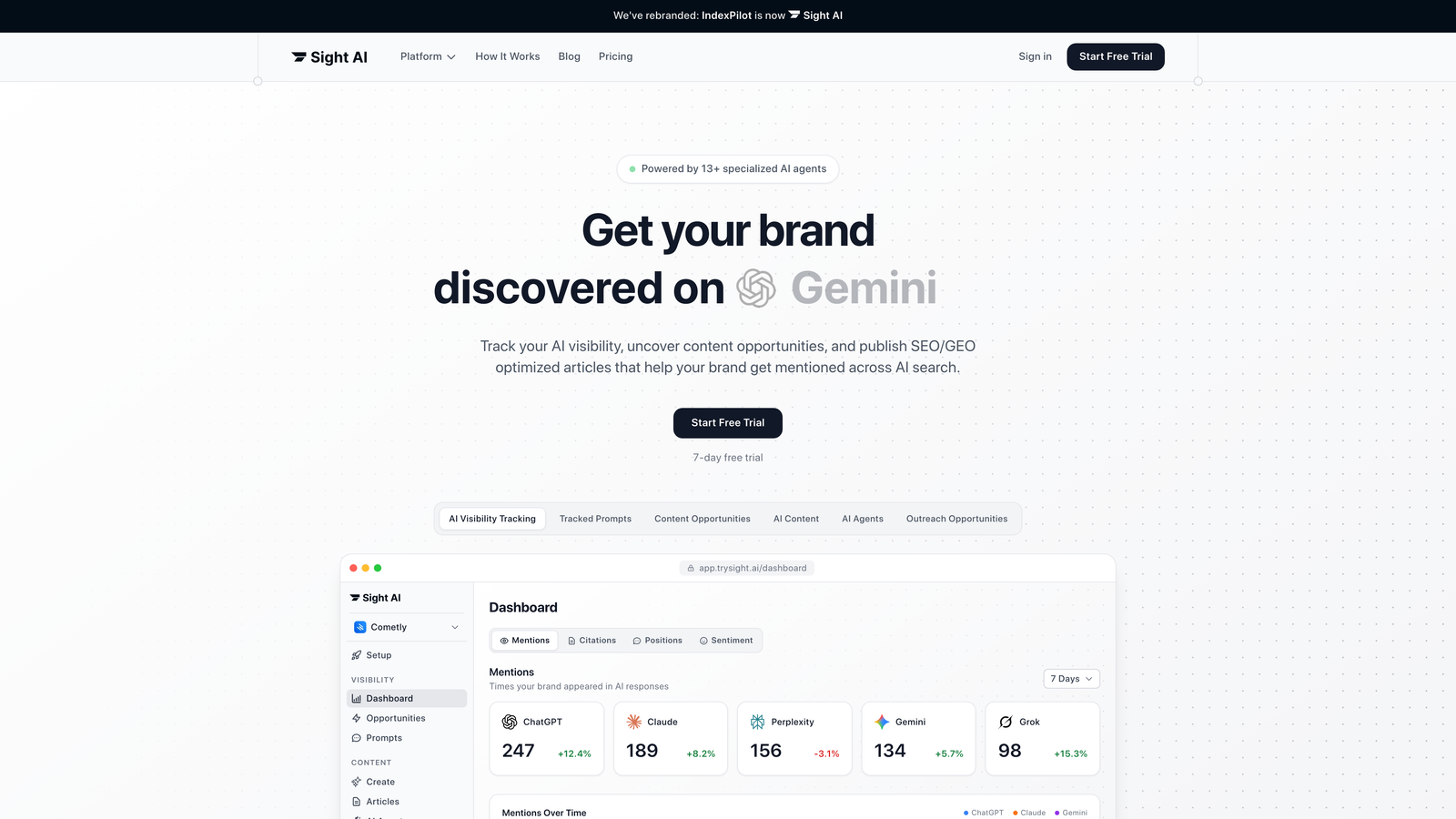
Sight AI represents the next generation of content marketing automation, combining advanced AI content generation with comprehensive SEO optimization and automated publishing capabilities.
Where This Tool Shines
Sight AI excels at creating high-quality, SEO-optimized content at scale while maintaining brand voice consistency. The platform's AI agents handle everything from keyword research and content planning to writing, editing, and publishing.
What sets Sight AI apart is its ability to track AI visibility across search engines and optimize content for both traditional SEO and emerging AI search platforms like ChatGPT, Claude, and Perplexity. The system learns your brand voice and industry nuances, producing content that feels authentically human while leveraging AI efficiency.
Key Features & Capabilities
AI-Powered Content Creation: Uses 13+ specialized AI agents working together to research, write, and optimize long-form articles that match your brand voice.
AI Visibility Tracking: Monitors how AI models like ChatGPT and Claude mention your brand, providing sentiment analysis and prompt tracking to understand your AI search presence.
Automated Publishing Workflows: Connects directly to your CMS with autopilot mode, handling everything from content generation to publication without manual intervention.
SEO and GEO Optimization: Optimizes content for both traditional search engines and AI-powered search experiences, ensuring visibility across all discovery channels.
Instant Indexing: Submits content via IndexNow and maintains always-updated sitemaps for faster content discovery and organic traffic growth.
Best For / Ideal Users
Perfect for marketers, founders, and agencies focused on organic traffic growth who need to scale content production without sacrificing quality. Ideal for businesses that want to stay ahead of AI search trends while maintaining strong traditional SEO performance.
Particularly valuable for teams that struggle with consistent content publishing or want to understand how AI models perceive and recommend their brand.
Pricing
Offers flexible pricing plans starting with a free tier, scaling based on content volume and advanced features needed for enterprise-level automation and AI visibility tracking.
2. HubSpot Marketing Hub
Best for: All-in-one inbound marketing automation with robust CRM integration
HubSpot Marketing Hub provides comprehensive content marketing automation within a complete inbound marketing ecosystem that connects content efforts directly to revenue outcomes.
Where This Tool Shines
HubSpot excels at bridging the gap between content creation and business results through its integrated CRM foundation. Unlike standalone content tools, every piece of content you create, schedule, or publish connects directly to contact records, deal stages, and revenue data.
The platform's real power emerges when you track how a prospect downloads your ebook, receives nurturing emails, engages with social posts, and eventually converts into a customer—all visible in one unified timeline. This visibility transforms content from a creative exercise into a measurable revenue driver with clear attribution.
Key Features & Capabilities
Content Strategy Tools: Visual calendar planning with campaign organization and team collaboration features built in.
Email Marketing Automation: Drag-and-drop workflow builder creates sophisticated nurturing sequences triggered by content engagement.
Social Media Management: Schedule posts across platforms, monitor mentions, and track social-driven conversions back to revenue.
Landing Page Builder: Create conversion-focused pages without developers, with built-in A/B testing and form integration.
Lead Scoring & Nurturing: Automatically prioritize leads based on content interaction patterns and engagement depth.
Attribution Reporting: Multi-touch attribution shows which content pieces contribute to closed deals and revenue generation.
Best For / Ideal Users
Perfect for B2B companies where content marketing directly supports lead generation and sales processes. The platform works best when your team needs to prove content ROI and wants marketing and sales working from the same data.
Ideal for growing businesses that prefer integrated tools over managing multiple disconnected platforms. Companies with longer sales cycles benefit most from the nurturing and attribution capabilities.
Pricing
Free tier available with basic features for small teams. Paid plans start at $45/month for Starter, with Professional and Enterprise tiers offering advanced automation, custom reporting, and team management features.
3. Mailchimp
Best for: Email-first content marketing automation with strong e-commerce integration
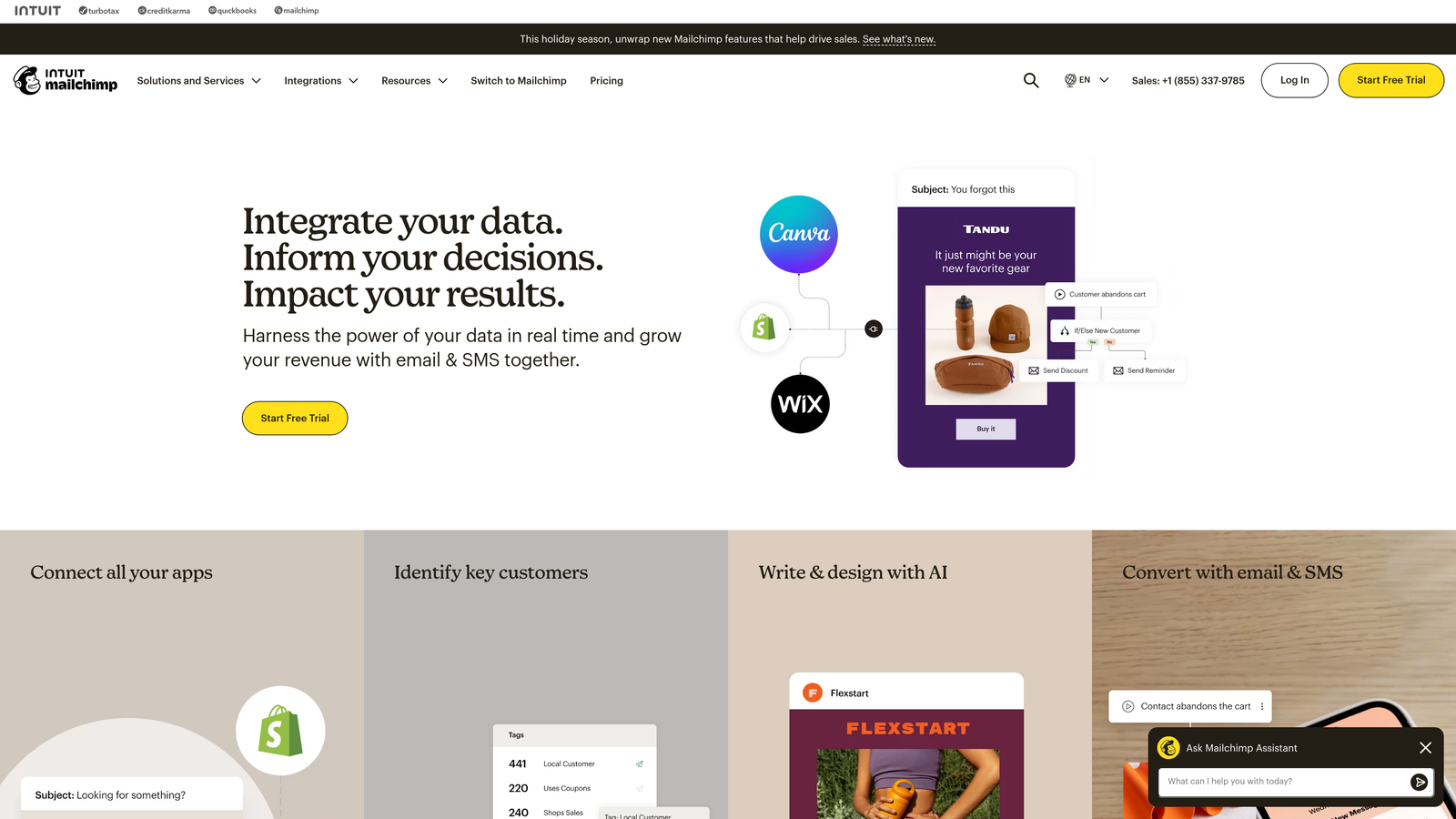
Mailchimp has evolved from an email marketing tool into a comprehensive marketing automation platform with robust content marketing capabilities.
Where This Tool Shines
Mailchimp's strength lies in email marketing automation combined with audience segmentation and behavioral targeting. The platform excels at creating personalized content experiences based on customer data and purchase history.
Its e-commerce integrations make it particularly powerful for retail businesses looking to automate product recommendations and abandoned cart sequences. The visual automation builder makes complex workflows accessible to non-technical users, allowing teams to create sophisticated campaigns without coding knowledge.
Key Features & Capabilities
Advanced Email Automation: Build behavior-triggered campaigns that respond to customer actions in real-time.
Audience Segmentation: Divide subscribers based on purchase history, engagement patterns, and demographic data for targeted messaging.
E-commerce Integration: Connect with major platforms to automate product recommendations and transactional emails.
Social Media Management: Create and schedule social ads directly from the platform to complement email campaigns.
Landing Page Builder: Design conversion-focused pages without technical expertise using drag-and-drop tools.
Predictive Analytics: Leverage AI-powered insights to identify high-value customers and optimize send times.
A/B Testing: Test subject lines, content variations, and send times to continuously improve performance.
Best For / Ideal Users
Perfect for e-commerce businesses and small to medium companies that prioritize email marketing as their primary customer communication channel. The platform works especially well for retailers with strong customer data who want to create highly personalized content experiences.
Ideal for teams that need accessible automation tools without requiring technical expertise. Marketing teams managing multiple campaigns across email and social channels will appreciate the unified dashboard approach.
Pricing
Free plan supports up to 500 contacts with basic email marketing features. Paid plans start at $13/month for Essentials, with Standard and Premium tiers offering advanced automation, predictive analytics, and priority support.
4. Hootsuite
Best for: Social media-focused content marketing automation with team collaboration features
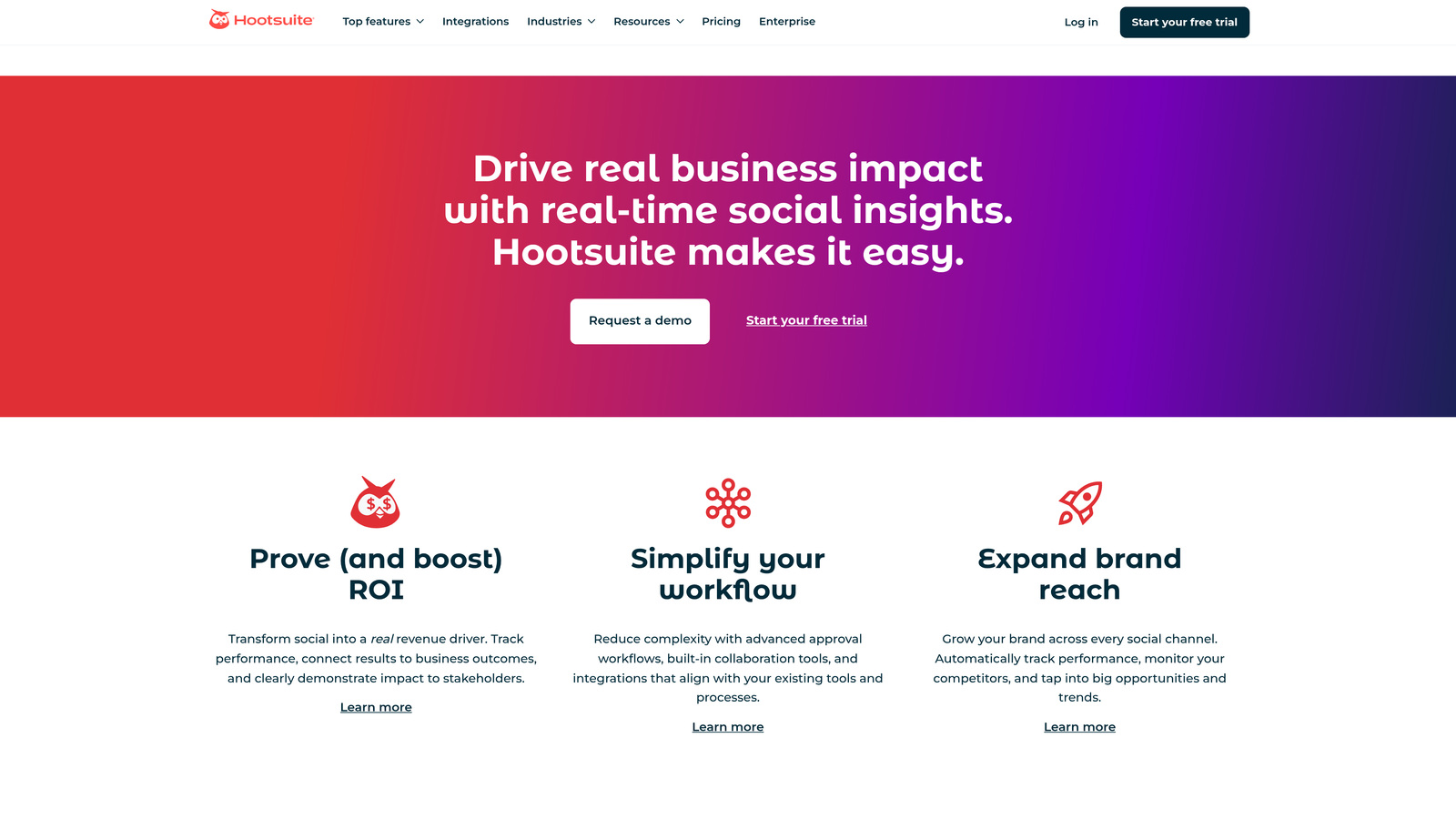
Hootsuite brings scheduling, content creation, analytics, and social listening together in one user-friendly dashboard, making it easy to manage multiple social platforms while driving real business impact with real-time social insights.
Where This Tool Shines
Hootsuite excels at centralizing social media operations for teams managing multiple accounts across different platforms. The dashboard eliminates the need to log into each social network separately, saving hours of context-switching time.
What makes Hootsuite particularly powerful is its bulk scheduling capability combined with content curation tools. Teams can plan weeks of content in advance, upload multiple posts at once, and maintain a consistent publishing schedule without daily manual intervention. The platform's social listening features monitor brand mentions and industry conversations in real-time, enabling quick responses to customer inquiries and emerging trends.
Key Features & Capabilities
Multi-Platform Scheduling: Publish and schedule posts across all major social networks from a single interface.
AI Content Assistant: Generate post ideas and optimize content using built-in AI tools.
Social Listening & Monitoring: Track brand mentions, keywords, and competitor activity across social channels.
Team Collaboration Workflows: Assign tasks, set approval processes, and coordinate content across team members.
Comprehensive Analytics: Access detailed performance metrics and create custom reports to prove ROI.
Content Library Management: Store and organize approved assets for easy access and brand consistency.
Inbox & Messaging Tools: Manage all social messages and comments from one centralized inbox.
Best For / Ideal Users
Perfect for businesses with active social media presence across multiple platforms, particularly those in financial services, real estate, and professional services. The collaboration features make it especially valuable for marketing teams where multiple people contribute to social content.
Agencies managing social media for multiple clients benefit from Hootsuite's ability to organize separate workspaces and maintain distinct brand voices. Small businesses appreciate the all-in-one approach that eliminates the need for multiple social media tools.
Pricing
Plans start at $99/month for Professional (1 user), with Team and Enterprise options available for larger organizations requiring multiple users and advanced features like custom analytics and dedicated support.
5. Buffer
Best for: Streamlined social media automation with focus on simplicity and analytics
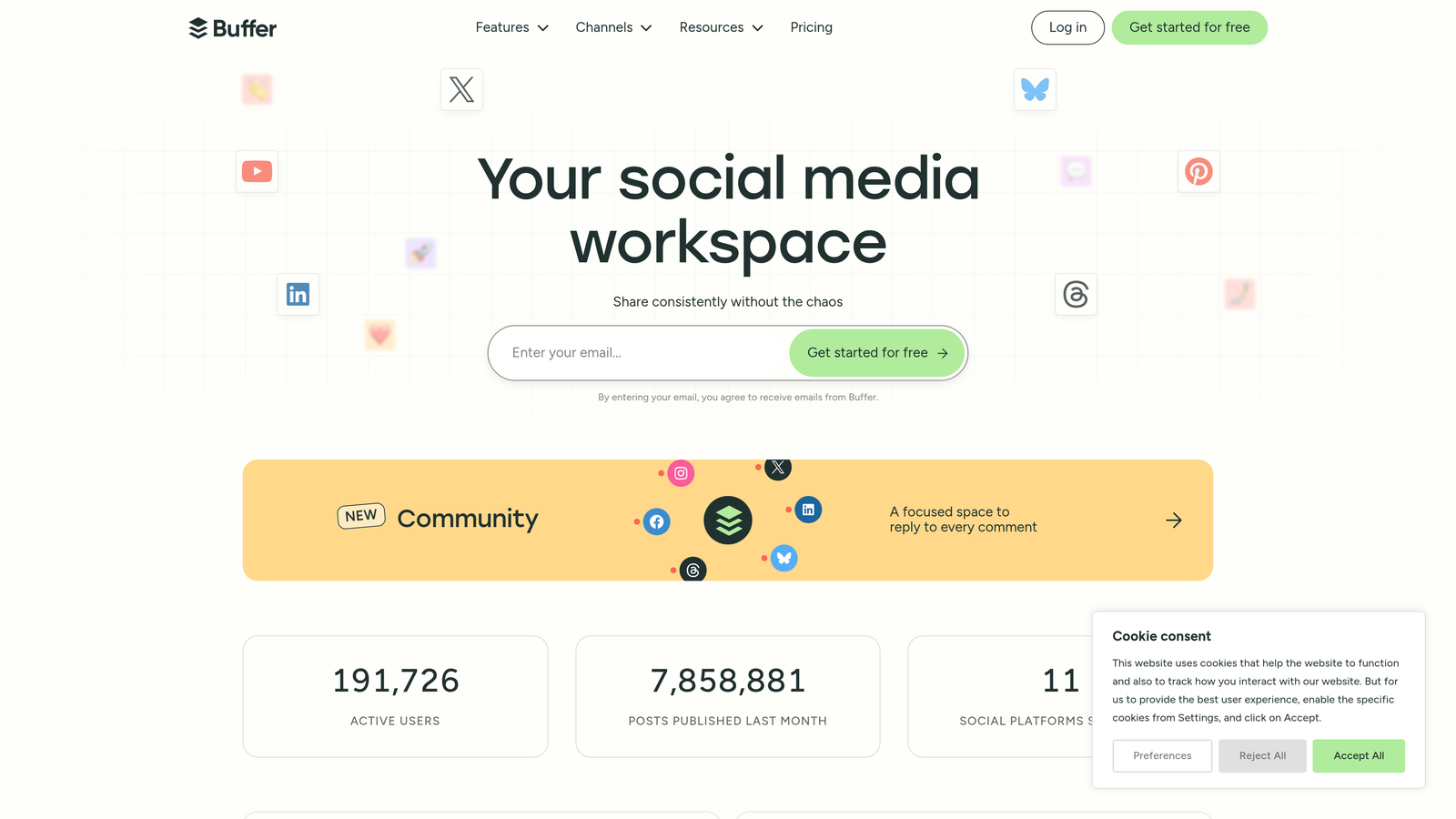
Buffer is a social media management platform that helps businesses and individuals plan, schedule, create, and share content across multiple social media platforms consistently.
Where This Tool Shines
Buffer distinguishes itself through its clean, intuitive interface that removes the complexity often associated with social media management. The platform excels at helping teams maintain consistent social media presence without overwhelming users with features they don't need.
What makes Buffer particularly effective is its data-driven approach to content optimization. The platform analyzes your posting history and audience engagement patterns to recommend optimal posting times for each social network. This takes the guesswork out of scheduling and helps maximize content visibility without requiring deep analytics expertise.
Key Features & Capabilities
AI-Powered Scheduling: Automatically suggests best times to post based on when your audience is most active and engaged.
Unified Publishing Dashboard: Manage content across Facebook, Instagram, Twitter, LinkedIn, and Pinterest from a single, streamlined interface.
Engagement Analytics: Track post performance with clear metrics showing reach, engagement, and clicks to understand what content resonates.
Team Collaboration Tools: Coordinate content creation and approval workflows with team members through shared calendars and draft management.
Content Optimization: Receive suggestions for hashtags, post timing, and content improvements to boost engagement rates.
Story Scheduling: Plan and schedule Instagram and Facebook Stories in advance, maintaining consistent presence across ephemeral content.
Best For / Ideal Users
Buffer is ideal for small to medium businesses that want effective social media automation without unnecessary complexity. The platform works particularly well for marketing teams that prioritize data-driven decisions but don't need enterprise-level features.
Solopreneurs and small agencies appreciate Buffer's straightforward approach to social media management. The platform's focus on essential features means teams can get up and running quickly without extensive training or onboarding.
Companies that value clean workflows and actionable analytics will find Buffer's approach refreshing compared to more complex alternatives. The platform trusted by over 100,000 businesses and individuals proves that simplicity and effectiveness can coexist.
Pricing
Buffer offers a forever free plan that includes basic scheduling for three social channels. Paid plans start at $6 per month per channel for the Essentials tier, with Team and Agency plans available for larger operations requiring multiple users and advanced collaboration features.
6. CoSchedule
Best for: Editorial calendar management with integrated content marketing automation and team collaboration
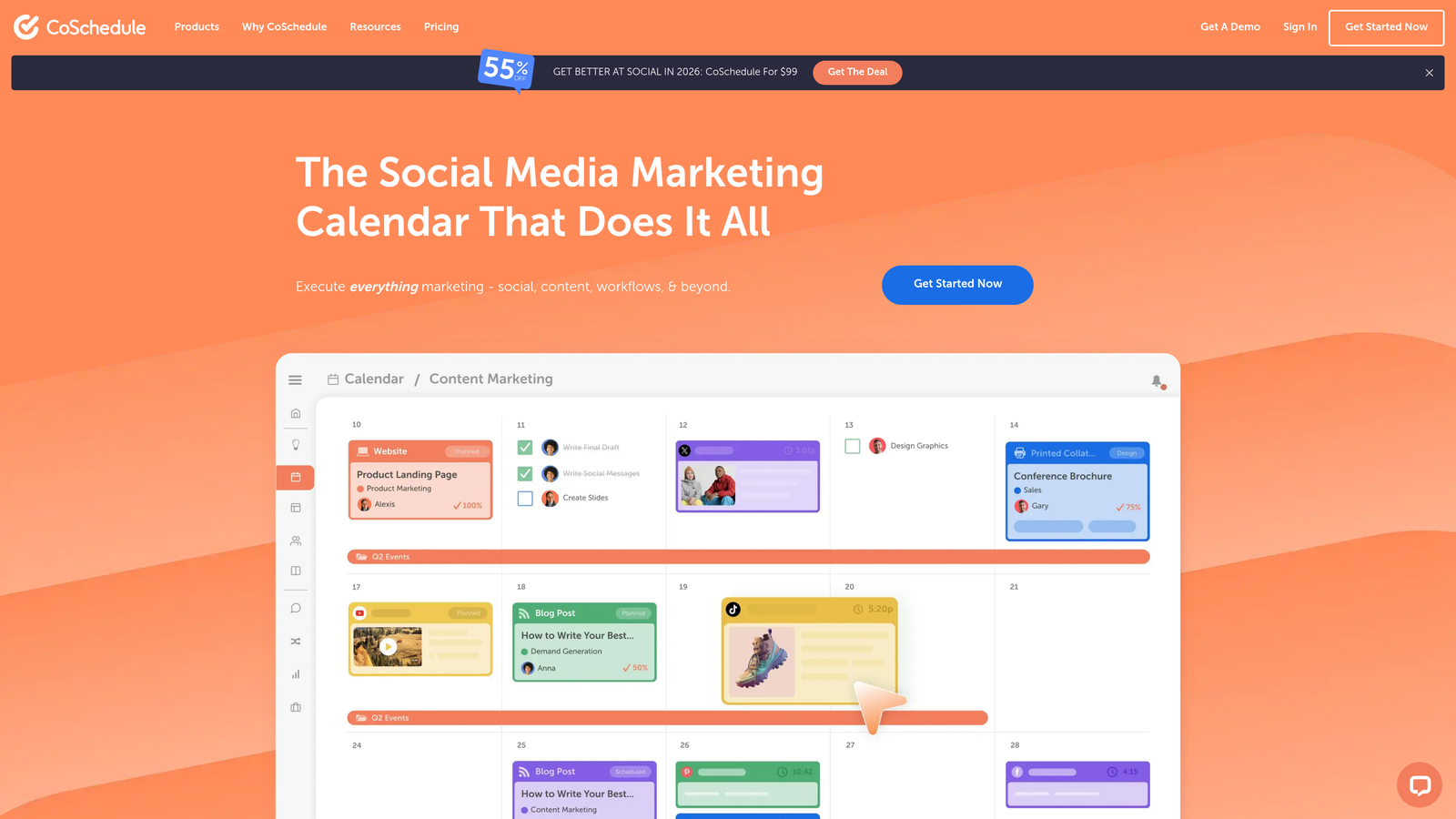
CoSchedule is a marketing calendar platform that centralizes content planning, social media scheduling, and team project management into a single visual workspace.
Where This Tool Shines
CoSchedule excels at bringing order to chaotic content operations through its visual calendar interface. The platform's real strength emerges when teams need to coordinate multiple content types—blog posts, social campaigns, email newsletters—and see how everything fits together chronologically.
The calendar view transforms abstract content plans into concrete timelines, making it immediately clear when workloads pile up or gaps appear in your publishing schedule. Teams can drag and drop content pieces to adjust timing, assign tasks to specific team members, and track progress without endless status meetings.
Key Features & Capabilities
Social Calendar: Create, schedule, and publish social media content with AI-powered optimization tools that suggest best posting times.
Content Calendar: Visualize all marketing tasks, projects, and campaigns in one unified calendar view for complete visibility.
Hire Mia (Collaborative AI-Editor): Work with AI assistance to multiply marketing output while maintaining brand voice consistency.
ReQueue: Automatically recycle your best-performing social content to fill gaps in your posting schedule without manual effort.
Social Inbox: Respond to direct messages, comments, and replies across platforms from a centralized dashboard.
Agency Calendar: Specialized workspace for agencies managing multiple client accounts with separate calendars and team permissions.
WordPress Integration: Publish blog content directly from CoSchedule to WordPress sites with automated social promotion.
Best For / Ideal Users
Perfect for content-heavy marketing teams that publish regularly across multiple channels and need visual coordination. The platform works especially well for companies with 5-20 team members who collaborate on content creation and need clear task assignments.
Agencies managing multiple client accounts benefit from the dedicated agency calendar features that keep client work organized and separated. Editorial teams at media companies and content publishers find the calendar view essential for planning seasonal campaigns and maintaining consistent publishing rhythms.
Pricing
Plans start at $29/month for the Calendar plan. Marketing Suite and Agency options provide advanced automation features, team collaboration tools, and multi-client management capabilities for larger operations.
7. ActiveCampaign
Best for: Advanced email automation with CRM integration and behavioral targeting
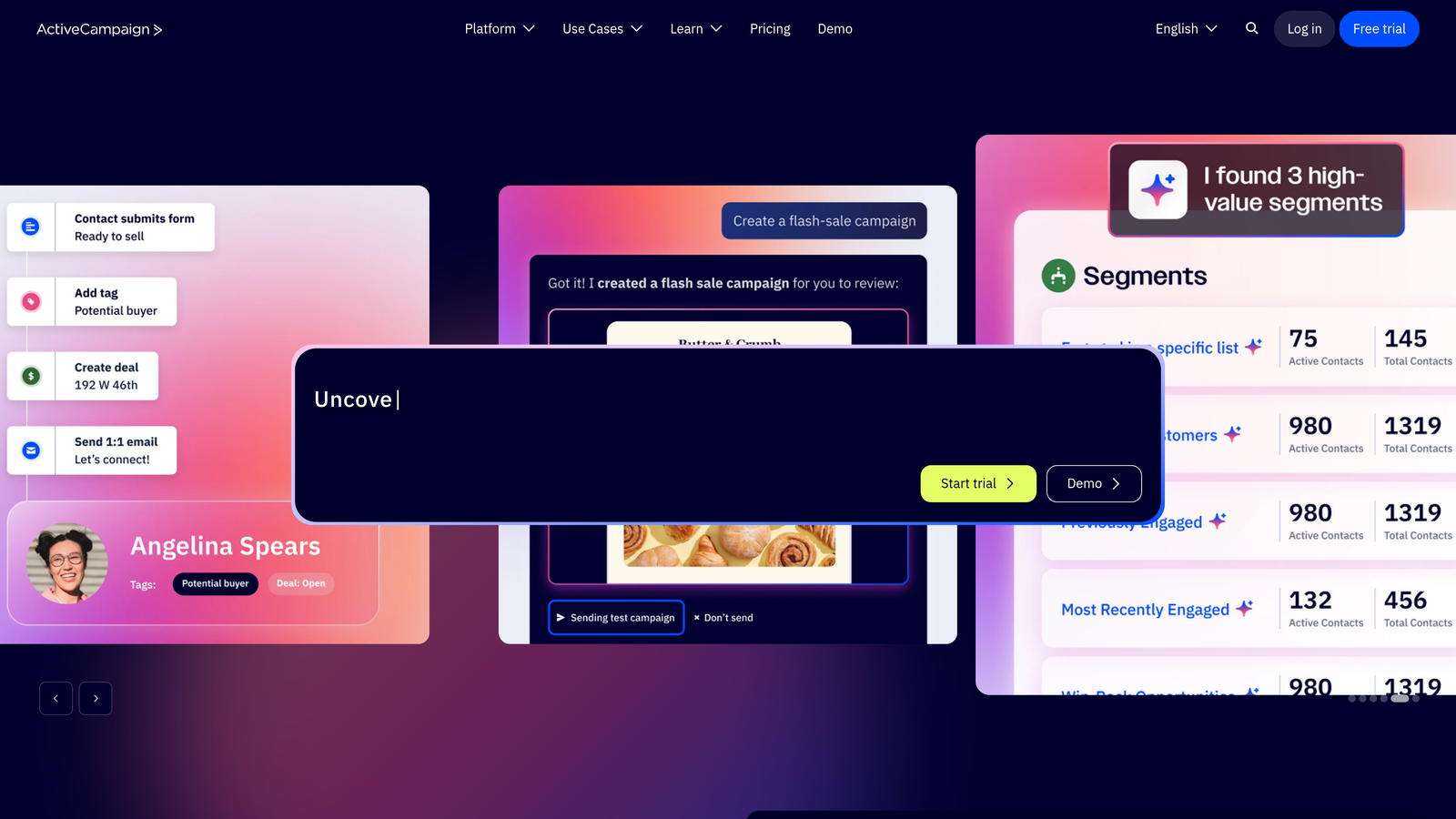
ActiveCampaign is an autonomous marketing platform that goes beyond traditional marketing automation, using AI agents to handle email, SMS, WhatsApp and other marketing channels, backed by billions of data points.
Where This Tool Shines
ActiveCampaign excels at creating sophisticated, behavior-driven automation sequences that adapt based on how customers interact with your content. The platform's autonomous marketing approach uses AI agents to handle repetitive marketing tasks, potentially cutting significant time from weekly marketing operations.
What sets ActiveCampaign apart is its visual automation builder combined with powerful conditional logic. You can create complex workflows that branch based on customer actions, preferences, and lifecycle stage—without writing code. The built-in CRM means your content automation connects directly with sales data, enabling highly personalized experiences based on deal stage and customer value.
Key Features & Capabilities
Autonomous Marketing with AI Agents: AI handles routine marketing tasks across email, SMS, and WhatsApp channels automatically.
Advanced Email Automation: Create complex workflows with conditional logic, wait conditions, and behavioral triggers.
Multi-Channel Marketing: Coordinate content across email, SMS, and WhatsApp from a single platform.
Built-in CRM Integration: Track deals, manage contacts, and personalize content based on sales pipeline position.
Predictive Sending: Machine learning optimizes send times for individual subscribers based on engagement patterns.
Dynamic Content Personalization: Automatically customize email content based on subscriber data and behavior.
Attribution Tracking: Connect content engagement with revenue outcomes through comprehensive reporting.
Best For / Ideal Users
Perfect for businesses with complex customer journeys that require sophisticated nurturing sequences. The platform works particularly well for B2B companies, online course creators, and service businesses that need to coordinate content across multiple channels while tracking impact on sales outcomes.
Ideal for marketing teams that want CRM functionality without purchasing separate tools, and for businesses ready to move beyond basic email marketing into behavioral automation.
Pricing
Plans start at $15/month for Lite (500 contacts), with Plus, Professional, and Enterprise tiers offering advanced automation features, CRM capabilities, and additional AI-powered tools as you scale.
Making the Right Choice
Selecting the right content marketing automation platform depends on your specific needs, team size, and growth objectives. Each platform offers unique strengths that align with different business models and marketing strategies.
For businesses prioritizing AI-powered content creation and SEO optimization, Sight AI provides cutting-edge capabilities that address modern search challenges while tracking your visibility across AI platforms. Companies seeking comprehensive inbound marketing solutions will find HubSpot's integrated approach valuable for connecting content efforts with sales outcomes.
E-commerce businesses often benefit from Mailchimp's strong email automation and customer segmentation features, while social media-focused companies might prefer Hootsuite's comprehensive social management or Buffer's streamlined approach.
Consider your primary content channels, team collaboration needs, and integration requirements when making your decision. Most platforms offer free trials or freemium tiers, allowing you to test functionality before committing to a paid plan.
The key is choosing a platform that not only meets your current needs but can scale with your business as your content marketing efforts grow more sophisticated. Look for tools that integrate well with your existing tech stack and provide the analytics needed to continuously improve your content performance.
Remember that the best content marketing automation platform is the one your team will actually use consistently. Sometimes a simpler tool that gets adopted across your organization delivers better results than a feature-rich platform that sits unused due to complexity. Start tracking your AI visibility today and see how modern automation can transform your content strategy.