Your content team is drowning. Demand for blog posts, guides, case studies, and social content has tripled in the past year. Meanwhile, your headcount request got denied, your budget stayed flat, and your team is working nights and weekends just to keep up with the baseline. Sound familiar?
This is the scalability crisis facing modern marketing teams. The old solution—hire more writers—no longer works in an environment where budgets are scrutinized and every hire requires a business case thick enough to use as a doorstop. The new solution isn't about throwing more people at the problem. It's about building systems that multiply the impact of the people you already have.
Scalable content marketing automation represents a fundamental shift in how content operations work. It's not about scheduling tweets three weeks in advance or auto-posting to LinkedIn. It's about creating intelligent systems that handle the mechanical, repetitive aspects of content production while freeing your team to focus on strategy, creativity, and the nuanced work that actually differentiates your brand. This guide will walk you through what true scalability looks like, the technology that makes it possible, and how to implement automation that increases output without sacrificing the quality that makes your content worth reading in the first place.
What Separates Real Scalability from Glorified Scheduling
Most marketing teams think they have content automation when they're really just using a calendar with extra steps. True scalable content marketing automation is fundamentally different. It's the ability to maintain or improve content quality as volume increases—a system where doubling your output doesn't require doubling your team, your budget, or your working hours.
Here's the distinction that matters: scheduling tools move content around on a timeline. Scalable automation multiplies what your team can actually produce. One publishes existing work at optimal times. The other expands the boundaries of what's possible with your current resources.
Real content scalability rests on three interconnected pillars. First, workflow automation that eliminates the administrative friction between ideation and publication. This means systems that route content through approval chains automatically, track revisions without endless email threads, and manage the dozens of micro-tasks that consume hours but add zero value. Second, AI-assisted creation that handles first drafts, research synthesis, and format adaptation—the mechanical writing work that doesn't require human creativity. Third, intelligent distribution that ensures your scaled content actually reaches audiences through automated indexing, cross-platform publishing, and optimization for both traditional search and AI discovery.
You know you've hit a scalability ceiling when certain symptoms start appearing. Publication schedules slip despite everyone working harder. Content quality becomes inconsistent because there's no time for proper editing. Opportunities vanish because your team can't respond fast enough—a competitor mentions your category and you need two weeks just to draft a response. Team members burn out from the hamster wheel of never-ending content demands. And perhaps most tellingly, you start saying no to good ideas not because they're bad strategy, but simply because there aren't enough hours in the day.
These bottlenecks reveal the fundamental problem with the traditional content model: it scales linearly. One writer produces X articles per month. Want 2X articles? Hire another writer. But budgets don't scale linearly, and neither does coordination overhead. Adding team members introduces new communication complexity, approval layers, and management burden. The math simply doesn't work.
Scalable automation breaks this linear constraint. It creates leverage. Your team of three can produce what previously required six people, not through longer hours or corner-cutting, but through systems that handle the repetitive mechanics while humans focus on strategic decisions, creative direction, and quality control. The output scales, but the headcount doesn't.
The Technology Stack That Makes Scaling Possible
Building a scalable content operation requires understanding the specific technologies that enable multiplication of effort. This isn't about a single tool—it's about an integrated stack where each component handles a distinct part of the content lifecycle.
At the foundation sits AI content generation, but not the crude, generic systems that produce obvious robot-speak. Modern AI content tools use specialized agents designed for specific content formats. A listicle agent understands how to structure comparison posts with consistent formatting and balanced coverage. A guide agent knows how to build progressive explanations that assume no prior knowledge. An explainer agent can break down complex topics into digestible sections with appropriate examples and analogies. This specialization matters because different content types require different approaches—trying to use a single generic AI for everything produces mediocre results across the board.
These specialized systems work best when they operate within defined parameters. You're not asking AI to invent your brand voice from scratch. You're providing style guidelines, approved terminology, example content that represents your standards, and editorial frameworks that ensure consistency. The AI handles the mechanical work of transforming outlines into full drafts, but it does so within guardrails that maintain your brand identity. Think of it as hiring a writer who's read your entire content library and internalized your style guide—they can produce first drafts that sound like you, even if they still need human editing.
Workflow orchestration platforms connect the discrete steps of content creation into a seamless pipeline. These systems manage the handoffs between research, brief creation, drafting, editing, approval, and publication. Instead of manually tracking which articles are stuck in review or who's supposed to edit what, the platform routes work automatically based on rules you define. When a draft is complete, it moves to the editing queue. When edits are done, it routes to the approver. When approved, it advances to scheduling. No Slack messages asking about status. No spreadsheets tracking progress. The system handles coordination so humans can focus on actual work.
But producing content at scale means nothing if that content sits undiscovered. This is where indexing and distribution automation becomes critical. Tools that integrate with IndexNow can notify search engines about new content immediately, rather than waiting for crawlers to eventually find it. Automated sitemap updates ensure your entire content catalog remains visible to search infrastructure. CMS auto-publishing capabilities mean approved content goes live without manual intervention—no more bottlenecks where finished articles sit in draft status waiting for someone to remember to hit publish. Choosing the right content marketing automation tools makes this entire process seamless.
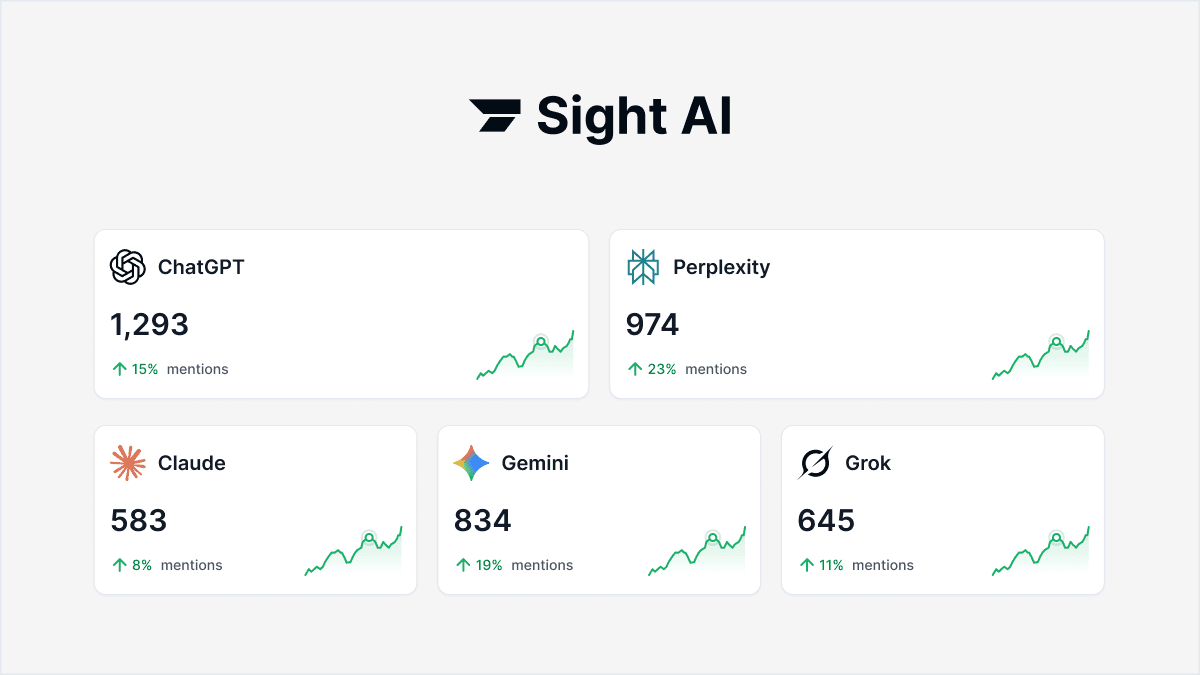
The most sophisticated operations add another layer: AI visibility tracking. As AI assistants like ChatGPT, Claude, and Perplexity become primary research tools, getting mentioned in AI responses matters as much as ranking in traditional search. Platforms that monitor how AI models discuss your brand, track which prompts trigger mentions, and identify content gaps that prevent visibility give you intelligence about a completely new discovery channel. This isn't future-thinking—it's addressing how audiences find information right now, in 2026.
The key is integration. Each component should feed data to the others. Performance metrics from published content should inform future topic selection. AI visibility scores should highlight content gaps. Publishing systems should automatically trigger indexing. When these tools work in isolation, you've just created more dashboards to check. When they work together, you've built a content engine that learns and optimizes itself.
Implementing Automation Without Breaking Everything
The biggest mistake teams make with content automation is trying to transform everything overnight. They buy a suite of tools, declare "we're automated now," and wonder why nothing works. Successful implementation follows a phased approach that builds capability progressively while maintaining stability.
Phase One: Audit and Identify High-Impact Opportunities
Start by mapping your current content workflow from ideation through publication. Document every step, every handoff, every approval gate, every manual task. Time how long each stage takes. Identify where work stalls. Look for patterns in bottlenecks—are articles stuck in review? Does research take forever? Do formatting and publishing consume disproportionate time?
The goal is finding automation opportunities that deliver maximum impact with minimum disruption. Research synthesis is often low-hanging fruit—AI can gather and summarize source material far faster than humans reading dozens of articles. Brief creation from outlines can be automated while maintaining human oversight of strategic direction. First draft generation for straightforward content types (how-to guides, explainers, listicles) removes the blank-page problem that causes writer's block. These automations save substantial time without requiring teams to trust AI with final output.
Phase Two: Implement AI-Assisted Creation with Human Oversight
Once you've identified where automation adds value, implement it with clear human checkpoints. This is the human-in-the-loop model: AI handles volume, humans handle nuance. An AI agent might generate a complete first draft from an outline, but a human editor reviews it for accuracy, brand voice, and strategic alignment before publication.
Create clear guidelines for your AI systems. Define your brand voice with specific examples. Provide approved terminology and phrases to use. Specify what to avoid—certain competitors to never mention, technical jargon to explain rather than assume, claims that require citation. The more specific your parameters, the better your AI-generated drafts will align with your standards. Understanding the nuances of content automation vs manual writing helps you determine where each approach works best.
Start with content types where consistency matters more than creativity. Comparison posts, feature explanations, how-to guides—these formats benefit from AI's ability to maintain structure and cover topics comprehensively. Save highly creative, opinion-driven, or deeply technical content for full human authorship. Not everything needs to be automated, and trying to automate everything often backfires.
Phase Three: Close the Loop with Publishing and Performance Tracking
The final phase connects creation to distribution and learning. Set up automated publishing workflows where approved content moves from draft to live without manual intervention. Implement IndexNow integration so new content gets discovered immediately rather than languishing in indexing limbo. Configure automated sitemap updates that keep search engines aware of your full content catalog.
Then close the feedback loop. Connect performance data back to your content planning. Which topics drive engagement? Which formats convert? What content gets mentioned by AI models when users ask about your category? Use this intelligence to inform future content decisions automatically—your system should surface high-potential topics based on what's working, not just what someone thought might be interesting.
This phased approach lets you build confidence incrementally. You're not betting the farm on automation working perfectly from day one. You're learning what works in your specific context, adjusting based on results, and expanding automation where it delivers value while keeping human control where judgment matters.
Protecting Quality When Volume Increases
The fear that stops many teams from embracing automation is simple: won't our content become generic robot-speak? It's a legitimate concern. Scale without quality is just noise. The solution isn't avoiding automation—it's building quality assurance into your automated systems.
Start by codifying your brand voice in ways AI systems can follow. This goes beyond "be conversational" or "sound professional." Document specific patterns: Do you use contractions or write formally? Do you address readers as "you" or use more distant language? What's your stance on humor, analogies, rhetorical questions? Provide concrete examples of writing that represents your brand at its best. The more specific your guidelines, the more consistently AI can match your voice.
Create style parameters that prevent common AI pitfalls. Ban certain phrases that scream "this was written by a robot"—things like "in today's digital landscape" or "it's important to note that" or "at the end of the day." Specify that claims require context, that statistics need sources, that examples should be specific rather than generic. These constraints don't limit creativity—they channel it toward output that meets your standards. The right AI content marketing automation approach builds these guardrails directly into your workflow.
The human-in-the-loop model is your quality insurance policy. AI generates drafts, humans ensure they're worth publishing. This division of labor is actually more efficient than traditional writing. Editing a solid first draft is faster than staring at a blank page. Reviewing AI output for accuracy and brand alignment takes less time than researching and writing from scratch. Your team's expertise gets applied where it matters most—ensuring quality, maintaining voice, making strategic decisions about positioning and messaging.
Build quality checkpoints that catch issues without creating bottlenecks. Automated systems can flag potential problems: content that's too short or too long, missing required elements like meta descriptions or headers, claims that lack attribution, sections that repeat points already covered. These pre-checks catch obvious issues before human review, making editorial oversight more efficient. Your editors spend time on substantive improvements, not formatting fixes or basic quality control.
Accept that automation will occasionally produce content that misses the mark. The question isn't whether AI will ever make mistakes—it will. The question is whether your quality assurance catches those mistakes before publication. With proper oversight, automated content should be indistinguishable from human-written work because humans have reviewed and approved every piece before it goes live.
Measuring What Actually Indicates Success
Implementing content automation without measuring its impact is like driving blindfolded. You need metrics that reveal whether automation is delivering the scale, quality, and efficiency you're building it for. But not all metrics matter equally.
Content Velocity: How Fast Your Engine Runs
Time-to-publish measures how quickly you move from idea to live content. Before automation, this might take weeks. After automation, it could be days or even hours for certain content types. Track this metric by content format—complex guides will always take longer than straightforward explainers, but both should accelerate with automation. Output per team member reveals whether automation is actually multiplying individual impact. If each team member can shepherd twice as many articles from conception to publication, automation is working. Topic coverage expansion shows whether you're able to address more subjects, answer more questions, and compete for more keywords than before—a direct indicator of scaled capability.
Quality Indicators: Ensuring Scale Doesn't Mean Sacrifice
Engagement rates tell you whether audiences actually value your scaled content. If time-on-page drops or bounce rates spike after implementing automation, something's wrong with quality. Search rankings reveal whether your content remains competitive—automation should help you rank for more keywords, not dilute quality so much that you rank for fewer. AI visibility scores show whether your content gets mentioned when users ask AI assistants about your category. In 2026, this matters as much as traditional search rankings. Track mentions across platforms like ChatGPT, Claude, and Perplexity to understand your presence in this new discovery channel.
Cost Efficiency: The Business Case for Automation
Compare fully-loaded content costs before and after automation. Include not just writer salaries, but project management time, tool costs, and opportunity costs of slow production. If you're producing twice as much content with the same team and budget, your per-article cost has dropped substantially. This metric makes the business case for continued investment in automation. Reviewing content marketing automation platform pricing helps you understand the ROI potential before committing.
But avoid fixating on vanity metrics. Total articles published means nothing if they're low-quality filler. Traffic without engagement is just noise. Rankings for keywords nobody searches are worthless. Focus on metrics that indicate whether automation is helping you produce more valuable content, faster, with the same or better quality standards.
Set benchmarks before you start, then measure regularly. Monthly reviews show trends. Are you publishing more content? Is quality holding steady or improving? Are costs per article declining? Is your team working more reasonable hours? These indicators collectively reveal whether your automation investment is paying off or needs adjustment.
Building for Tomorrow's Content Landscape
The content game is changing faster than most teams realize. AI search has fundamentally altered how people discover information. When someone asks ChatGPT or Claude for recommendations in your category, your brand either gets mentioned or it doesn't. Traditional SEO optimization isn't enough anymore—you need GEO (Generative Engine Optimization) strategies that ensure AI models surface your content in responses.
This shift makes automation even more critical. Optimizing content for AI discovery requires covering topics comprehensively, using clear terminology AI models can parse, and maintaining the kind of authoritative, well-structured content that language models prefer to reference. Doing this manually for every article is impractical. Automated systems can apply GEO best practices consistently across all content, ensuring your scaled output is optimized for both traditional search and AI discovery. Investing in SEO content writing automation ensures your content performs across both discovery channels.
Build flexibility into your automation stack from the start. AI capabilities evolve rapidly. The content generation tools that work well today will be surpassed by more sophisticated systems tomorrow. Choose platforms that integrate with multiple AI providers rather than locking you into a single vendor. Ensure your workflow orchestration can adapt to new tools without requiring complete rebuilds. The teams that thrive in this environment are those who can swap components and adopt new capabilities without disrupting their entire content engine.
Watch for convergence in content platforms. The future isn't separate tools for content creation, visibility tracking, and distribution—it's unified systems that handle all three. Platforms that combine AI content generation with visibility monitoring and automated indexing eliminate integration headaches and provide closed-loop intelligence. Your content performance informs future topic selection. Your AI visibility gaps reveal content opportunities. Your publishing triggers automatic indexing. Everything works together rather than requiring manual coordination. Enterprise teams should explore enterprise content automation tools designed for this level of integration.
The teams winning in 2026 aren't those with the biggest budgets or largest staffs. They're the ones who've built content engines that can identify opportunities, produce relevant content, and get it discovered—all in timeframes measured in hours, not weeks. They respond to market changes while competitors are still scheduling editorial meetings. They cover emerging topics while others are still researching. They maintain consistent publication velocity regardless of team capacity fluctuations.
Putting It All Together
Scalable content marketing automation isn't about replacing human creativity with robots. It's about freeing your team from the mechanical, repetitive tasks that consume time without adding value. It's about building systems where humans focus on strategy, creativity, and the nuanced work that differentiates your brand, while automation handles research synthesis, first draft generation, workflow coordination, publishing logistics, and distribution mechanics.
The content teams succeeding today have recognized a fundamental truth: scaling content isn't about hiring more writers. It's about building smarter systems. Systems that maintain quality while increasing volume. Systems that learn from performance data and surface high-potential opportunities automatically. Systems that ensure content gets discovered by both traditional search engines and AI assistants. Systems that turn a team of three into a content engine that rivals departments of ten.
Implementation doesn't require perfection from day one. Start by identifying your highest-impact automation opportunities. Implement AI-assisted creation with human oversight. Build quality assurance into your workflows rather than bolting it on afterward. Measure what actually matters—velocity, quality, and cost efficiency. And construct your stack with flexibility to adapt as AI capabilities evolve and content discovery channels shift.
The gap between content ambition and content reality doesn't have to widen. Automation is the bridge. Not automation that produces generic filler, but intelligent systems that multiply the impact of talented teams. The question isn't whether to embrace scalable content marketing automation—it's whether you can afford not to while competitors build content engines that leave you scrambling to keep up.
Stop guessing how AI models like ChatGPT and Claude talk about your brand—get visibility into every mention, track content opportunities, and automate your path to organic traffic growth. Start tracking your AI visibility today and see exactly where your brand appears across top AI platforms.