Your content team publishes 20 pieces this month. Your competitors publish 50. Next month, you push for 30. They hit 75. The treadmill never stops, but here's what's interesting: volume isn't your real problem. The chaos behind the scenes is.
Picture this: your writer finishes a draft in Google Docs. Your editor reviews it in a different tool. Your SEO specialist runs it through three separate platforms. Your designer creates assets in Figma. Your social team copies snippets into their scheduler. And somewhere in this game of digital telephone, deadlines slip, brand voice drifts, and that brilliant strategy you mapped out in January becomes unrecognizable by March.
This is where content operations platforms enter the conversation. Not as another tool to add to your stack, but as the system that replaces the stack entirely. These platforms don't just help you create content faster—they fundamentally change how content moves from idea to published asset to measurable result. They're the difference between running a content operation and being run by one.
The timing matters more than ever. As AI models like ChatGPT, Claude, and Perplexity reshape how people discover information, your content needs to work harder across more channels. Traditional SEO is table stakes. AI visibility is the new frontier. And the only way to compete on both fronts without burning out your team is to build an operational foundation that can scale with demand.
This guide breaks down everything you need to understand about content operations platforms: what they actually do beyond the marketing promises, when your team has genuinely outgrown manual processes, and how to evaluate options that align with where content strategy is heading in 2026 and beyond.
Breaking Down the Content Operations Stack
Let's clear up the confusion first. A content operations platform is not a glorified content management system. It's not project management software with a content template library. And it's definitely not another AI writing tool that spits out generic drafts.
Think of it as the central nervous system for your entire content lifecycle. Where a CMS stores and displays your finished content, and project management tools track who's doing what, a content operations platform orchestrates the entire journey from strategy through measurement. It's the layer that connects planning, creation, optimization, distribution, and analysis into a single, coherent workflow.
Workflow Automation: This is where platforms earn their keep. Automated approval chains that route content to the right reviewers based on type and topic. Publishing schedules that trigger across multiple channels simultaneously. Notification systems that keep everyone informed without flooding Slack. The goal is eliminating the manual handoffs that create bottlenecks and errors.
Centralized Asset Management: Every image, video, brand guideline, and content template lives in one searchable repository. No more hunting through shared drives or asking "who has the updated logo?" Version control becomes automatic rather than aspirational. Teams can find and reuse assets without recreating them from scratch.
Real-Time Collaboration: Multiple team members working on the same piece simultaneously, with changes tracked and conflicts resolved automatically. Comments and feedback attached directly to specific sections rather than scattered across email threads. Role-based permissions that give everyone the access they need without compromising security or brand consistency.
Multi-Channel Publishing: The same content optimized and formatted for your blog, social platforms, email newsletters, and emerging channels like AI search. Integration with your CMS means one-click publishing rather than copy-paste chaos. Automated indexing ensures search engines and AI models discover your content immediately rather than weeks later. Teams looking to streamline this process often explore blog content platform tools that handle formatting across channels automatically.
Integrated Analytics: Performance data flowing back into the platform so you can see what's working before you plan your next 50 pieces. Not just pageviews and rankings, but how AI models reference your content, which topics drive engagement, and where your brand appears in AI-generated responses. This closes the loop between creation and optimization.
The real power emerges when these components work together. Your analytics reveal that AI models frequently mention your brand when discussing a specific topic. That insight flows into your content calendar. Your team creates an optimized piece using AI-assisted writing features. Automated workflows route it through approvals. Publishing happens simultaneously across channels with proper indexing. And the cycle begins again, informed by new data.
This is what unifying a fragmented tech stack actually looks like. Instead of logging into eight different tools and manually connecting the dots, you have a single source of truth where strategy informs execution, and execution generates insights that refine strategy.
Signs Your Team Has Outgrown Spreadsheets and Siloed Tools
There's a moment every content team experiences. You're in your third meeting this week trying to figure out why last month's content calendar fell apart. Someone published the wrong version of an article. Two people wrote competing pieces on the same topic because the spreadsheet wasn't updated. Your brand voice sounds different across channels because there's no central place to check messaging guidelines.
Sound familiar? These aren't isolated incidents. They're symptoms of operational infrastructure that can't keep pace with your ambitions.
Version Control Becomes a Daily Crisis: When you're passing documents between tools and team members, version chaos is inevitable. Is this the draft Sarah reviewed or the one Mike updated? Did we incorporate the legal team's feedback? The final version exists somewhere, but finding it requires a Slack archaeology expedition. Each mistake erodes trust and wastes hours of productive time.
Manual Handoffs Create Bottlenecks: Your writer finishes a piece and emails it to the editor. The editor reviews it and sends it to SEO. SEO optimizes it and forwards it to the designer. Each handoff is an opportunity for delays, miscommunication, and context loss. What should take hours stretches into days or weeks.
Context-Switching Drains Productivity: Your team juggles Google Docs for drafting, Trello for project tracking, SEMrush for optimization, Canva for design, Buffer for social scheduling, and Google Analytics for measurement. Each tool switch costs mental energy and time. Industry observers note that knowledge workers lose up to 40% of productive time to tool-switching and information hunting. Many teams find relief by adopting content automation platforms that consolidate these functions.
Inconsistent Brand Voice Across Channels: Without centralized guidelines and templates, every team member interprets your brand voice slightly differently. Your blog sounds professional and technical. Your social posts feel casual and playful. Your email newsletters land somewhere in between. This inconsistency confuses your audience and dilutes brand recognition.
Missed Deadlines Become the Norm: When visibility into who's working on what requires checking multiple tools and asking around, deadlines slip through the cracks. You discover bottlenecks too late to fix them. Rush jobs become standard because you can't see problems forming until they're critical.
Scaling Feels Impossible: You want to double content output, but the manual processes that barely work for current volume would collapse under increased load. Hiring more people just means more coordination chaos. The operational ceiling becomes the growth ceiling.
The tipping point usually arrives when content volume or team size crosses a threshold. For some teams, that's 10-15 pieces per month. For others, it's when the team grows beyond 5-6 people. The specific numbers matter less than the pattern: the informal systems that worked when you were small start breaking when you're scaling.
Here's the thing about operational debt: it compounds silently until it doesn't. You adapt to inefficiency, normalize firefighting, and convince yourself that content chaos is just how things work. But your competitors who've invested in proper infrastructure are publishing faster, maintaining higher quality, and capturing opportunities you're too overwhelmed to notice.
Core Capabilities That Define Modern Content Operations
The content operations landscape has evolved dramatically in the past two years. Platforms that were essentially glorified editorial calendars in 2024 now incorporate AI capabilities that fundamentally change what's possible at scale. Understanding which features actually move the needle helps you separate substance from marketing hype.
AI-Powered Content Creation and Optimization: Modern platforms don't just provide a blank text box. They employ specialized AI agents trained for specific content types—one agent optimized for listicles, another for technical guides, another for explainer content. This specialization produces better results than general-purpose AI writers because each agent understands the structural and stylistic requirements of its format. For a deeper dive into these tools, explore our AI content creation platform comparison.
The optimization layer goes deeper than basic keyword insertion. Advanced platforms analyze how AI models like ChatGPT and Claude discuss topics in your industry, identifying the language patterns and contextual signals that improve your chances of being cited in AI-generated responses. This isn't traditional SEO—it's GEO, or Generative Engine Optimization, and it's becoming critical for organic visibility.
Automated Publishing Workflows with Multi-Channel Distribution: Think beyond "schedule a blog post." Sophisticated platforms transform a single piece of content into channel-specific formats automatically. Your comprehensive guide becomes a blog post on your site, a thread on Twitter, a carousel on LinkedIn, and a newsletter feature—each optimized for its platform's best practices.
The automation extends to technical requirements. Integration with IndexNow means your content gets pushed to search engines and AI model training pipelines immediately upon publication rather than waiting for the next crawl cycle. Automated sitemap updates ensure your content architecture stays current. These technical details might seem minor, but they determine whether your content gets discovered in days versus weeks.
Real-Time Collaboration with Role-Based Permissions: Multiple team members can work on the same content simultaneously without stepping on each other's toes. Writers draft while editors review earlier sections. SEO specialists optimize in parallel with design work. Changes sync in real-time, with granular version history that lets you roll back specific edits without losing everything.
Permission systems get sophisticated. Your freelance writers can access assigned content and templates but not strategic planning documents. Editors can approve within their domain but escalate legal or compliance questions automatically. Stakeholders can comment without accidentally editing. This granularity prevents both security issues and workflow confusion.
Approval Chains That Actually Work: Manual approval processes collapse under scale. Modern platforms automate routing based on content type, topic sensitivity, and organizational structure. A technical blog post about your product might require engineering review, legal clearance, and executive approval—all triggered automatically with deadline tracking and escalation protocols.
The system knows when approvals are stuck and can notify managers or reroute to backup reviewers. It prevents bottlenecks from becoming black holes where content disappears for weeks. Approval becomes a managed process rather than an exercise in chasing people through Slack.
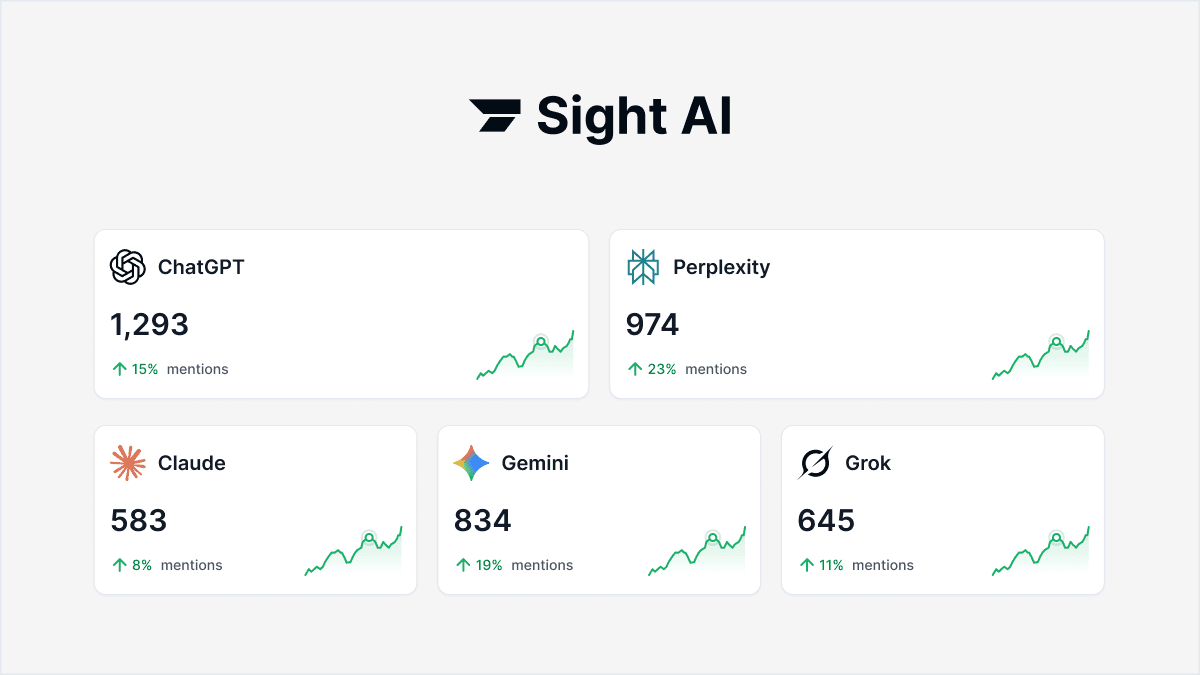
AI Visibility Tracking and Brand Mention Monitoring: This is where content operations platforms diverge most dramatically from traditional tools. Advanced platforms monitor how AI models reference your brand across ChatGPT, Claude, Perplexity, and other platforms. You see exactly which prompts trigger mentions, what context surrounds those mentions, and whether the sentiment is positive, neutral, or negative.
This visibility creates a feedback loop. You discover that AI models mention your brand when users ask about a specific problem but not when they use different terminology. That insight shapes your content strategy. You create optimized content targeting the high-value prompts where you're currently invisible. Then you track whether your AI visibility score improves.
Integrated Analytics That Drive Decisions: Data flows from multiple sources into unified dashboards. Traditional metrics like organic traffic and rankings sit alongside AI visibility scores and brand mention frequency. You can see which content performs in traditional search versus AI search, identifying gaps and opportunities. Teams serious about measurement should consider platforms with robust SEO content analytics capabilities.
The best platforms close the loop by feeding analytics back into content creation. Performance data automatically influences topic suggestions, optimization recommendations, and distribution strategies. Your content operation becomes self-improving rather than flying blind.
How Content Operations Platforms Drive Measurable ROI
Let's talk about the business case, because operational efficiency sounds great in theory but needs to translate to results that executives care about. Content operations platforms justify their investment through three primary value drivers: speed, performance, and scalability.
Reduced Time-to-Publish Through Automation: Manual workflows are time sinks. A piece of content might spend three days in actual work but two weeks in total cycle time because of handoff delays, approval bottlenecks, and coordination overhead. Automation collapses those gaps.
Many marketing teams report cutting time-to-publish by 40-60% after implementing proper content operations infrastructure. That's not because people work faster—it's because the system eliminates waiting. Automated routing means content moves to the next step immediately rather than sitting in someone's inbox. Parallel workflows mean editing, design, and SEO optimization happen simultaneously rather than sequentially.
The speed advantage compounds when you're producing high volumes. If you publish 50 pieces monthly and cut average time-to-publish from 10 days to 6 days, you've created capacity for an additional 20 pieces without increasing headcount. Or you maintain volume while reducing the stress and overtime that leads to burnout. Organizations needing to scale rapidly often turn to bulk content generation platforms that maintain quality at volume.
Improved Content Performance Via Optimization Loops: When analytics are disconnected from creation, insights rarely influence future work. Teams publish content, check performance weeks later, and maybe remember to apply learnings to the next batch. The feedback loop is slow and leaky.
Integrated platforms tighten this loop dramatically. Performance data feeds directly into content planning. You see which topics drive engagement before you finalize next month's calendar. AI visibility tracking reveals which content gets cited by AI models, informing optimization priorities. The system can even suggest content updates based on performance trends.
This continuous optimization approach typically yields better results than one-time publication. Content becomes a living asset that improves over time rather than a static artifact that slowly decays in search rankings. Teams often observe that their top-performing content continues improving because the platform surfaces optimization opportunities automatically.
Team Scalability Without Proportional Headcount Increases: This is where CFOs get interested. Traditional content operations scale linearly—double your output, double your team. But that assumes operational overhead stays constant, which it doesn't. Coordination complexity increases exponentially with team size.
Content operations platforms break this pattern by handling coordination automatically. A ten-person team with proper infrastructure can often match the output of a fifteen-person team using manual processes. The platform absorbs complexity that would otherwise require additional project managers, coordinators, and administrative support.
The scalability extends beyond pure volume. Teams can tackle more complex, multi-channel campaigns without proportionally increasing planning and coordination effort. They can experiment with new content types and distribution channels because the infrastructure supports iteration rather than punishing it.
Reduced Operational Risk and Quality Consistency: Manual processes create risk. Someone publishes the wrong version. Brand guidelines get ignored. Legal requirements slip through. Each mistake costs time, money, and potentially reputation.
Automated workflows and centralized asset management dramatically reduce these risks. Templates enforce brand consistency. Approval chains ensure compliance. Version control prevents publication errors. The system catches mistakes that humans miss when they're juggling too many tools and responsibilities.
Faster Response to Market Opportunities: When you can move from idea to published content in days rather than weeks, you can capitalize on trending topics, respond to competitive moves, and address customer questions while they're still relevant. This agility creates competitive advantage that's difficult to quantify but extremely valuable.
Teams with streamlined operations report being able to publish timely content that their slower competitors miss entirely. In fast-moving industries, this responsiveness can be the difference between leading conversations and playing catch-up.
Evaluating Platforms: What to Prioritize for Your Use Case
The content operations platform market has exploded, which means you're choosing between dozens of options with overlapping feature lists and similar marketing promises. Cutting through the noise requires understanding what actually matters for your specific situation.
Enterprise Versus SMB Considerations: Enterprise platforms prioritize complexity management—handling hundreds of users, intricate approval workflows, and extensive integration requirements. They offer sophisticated permission systems, audit trails, and compliance features that smaller teams rarely need. The trade-off is steeper learning curves and higher price points. For large organizations, exploring AI content platforms built for enterprises is essential.
SMB-focused platforms emphasize ease of use and rapid time-to-value. They assume smaller teams, simpler workflows, and tighter budgets. The best ones punch above their weight by incorporating AI capabilities that were enterprise-only features two years ago. The limitation is usually customization—you adapt to the platform's workflow rather than configuring it to match your existing processes.
Your decision point isn't just current team size. Consider growth trajectory. If you're ten people today but planning to be thirty in eighteen months, enterprise-grade infrastructure might make sense despite the overhead. Migrating platforms mid-growth is painful.
Critical Integration Requirements: No platform exists in isolation. Your content operations system needs to connect with your existing tech stack, and integration quality varies wildly.
CMS integration is foundational. Look for platforms that publish directly to WordPress, Webflow, or whatever powers your site—not just export HTML that you manually paste. The best integrations handle formatting, metadata, and featured images automatically.
SEO tool integration matters for teams serious about organic visibility. Your platform should pull keyword data from tools like Ahrefs or SEMrush, incorporate it into content briefs, and track ranking performance without manual exports and imports.
AI visibility tracking integration is emerging as a critical capability. As AI search grows, you need platforms that monitor brand mentions across ChatGPT, Claude, Perplexity, and similar models. This isn't just interesting data—it's actionable intelligence that shapes content strategy.
Analytics integration determines whether you can actually measure ROI. Platforms should connect with Google Analytics, pull performance data automatically, and surface insights that influence future content decisions.
AI Capabilities That Actually Matter: Every platform claims AI features now, but quality varies dramatically. Ask specific questions: How many specialized AI agents does the platform employ? Are they trained for different content types, or is it one general model? Can you customize tone and style, or are you stuck with generic output? Our guide to best AI content writing platforms breaks down these distinctions in detail.
GEO optimization capabilities separate leaders from followers. Does the platform understand how to optimize content for AI model citations, or does it just rehash traditional SEO best practices? Can it analyze which prompts trigger brand mentions and suggest content targeting those opportunities?
AI-assisted editing and optimization should go beyond grammar checking. Look for platforms that suggest structural improvements, identify gaps in coverage, and recommend internal linking opportunities based on your existing content library.
Publishing Automation and Indexing Speed: Fast indexing matters more in 2026 than ever before. AI models update their knowledge bases continuously, and search engines reward fresh, properly indexed content. Ask vendors about IndexNow integration—it's the difference between your content being discoverable in hours versus weeks.
Multi-channel publishing automation saves enormous time if implemented well. Can the platform automatically format content for different channels, or does it just schedule posts? Does it optimize for each platform's best practices, or publish identical content everywhere?
Automated sitemap updates and technical SEO management might seem minor but prevent common issues that hurt discoverability. The best platforms handle these details automatically so you can focus on content quality rather than technical plumbing.
Questions to Ask During Vendor Demos: How does your platform handle version control and conflict resolution when multiple people edit simultaneously? What happens when someone accidentally deletes content—how robust is your recovery process? How granular are permission controls, and can they scale with organizational complexity?
Can you show me how AI visibility tracking works with real examples? What's your roadmap for GEO optimization features? How do you handle content updates and republishing—is it as automated as initial publication?
What does onboarding look like, and how long until we're productive? Do you provide migration assistance if we're coming from other tools? What level of support is included, and what costs extra?
The answers reveal whether a platform is genuinely mature or still working out fundamental workflows. Trust your instincts—if the demo feels clunky or the answers are vague, implementation will be worse.
Putting Your Content Operations Engine to Work
Start with a Phased Rollout: Resist the urge to migrate everything overnight. Begin with a single content type or team. Learn the platform's quirks with manageable scope before expanding. This approach reduces risk and builds internal expertise gradually.
Your pilot phase should last 30-60 days and include enough volume to stress-test workflows but not so much that problems become crises. Document what works, what doesn't, and what requires customization. Use these insights to refine your approach before full rollout.
Invest in Proper Team Training: The best platform fails if your team doesn't understand how to use it. Budget time for comprehensive training, not just a single kickoff session. Different roles need different training—writers care about content creation features, editors focus on review workflows, and administrators need deep dives into permissions and integrations.
Create internal documentation that complements vendor materials. Your team's specific workflows and use cases should be documented with screenshots and step-by-step guides. This resource becomes invaluable for onboarding new team members and troubleshooting common issues.
Define Success Metrics Before Launch: What does success look like in 90 days? Six months? A year? Establish baseline metrics for time-to-publish, content volume, quality consistency, and performance outcomes. Track these metrics consistently so you can demonstrate ROI and identify areas needing refinement.
Include both efficiency metrics (time saved, bottlenecks eliminated) and outcome metrics (traffic growth, AI visibility improvements, conversion rates). The combination tells a complete story about platform value.
Future-Proof with AI Visibility Tracking: As AI search continues growing, your content operations platform should help you monitor and improve your presence in AI-generated responses. Track which prompts trigger brand mentions, analyze sentiment around those mentions, and create content targeting high-value opportunities where you're currently invisible. Understanding AI-powered content strategy is becoming essential for forward-thinking teams.
This isn't a nice-to-have feature—it's becoming foundational for organic visibility. Teams that ignore AI search while competitors optimize for it will find themselves increasingly invisible to audiences who rely on AI for information discovery.
Audit Your Current Workflow: Before committing to any platform, map your existing content workflow in detail. Where do bottlenecks occur? Which handoffs create delays? What causes quality inconsistencies? Which tools create the most context-switching overhead?
This audit reveals your specific pain points and requirements. Generic feature lists don't matter—what matters is whether a platform solves your actual problems. Use your audit findings to create a prioritized requirements list that guides vendor evaluation.
Build in Regular Optimization Cycles: Your content operation should improve continuously, not stagnate after initial setup. Schedule quarterly reviews where you analyze performance data, identify inefficiencies, and implement improvements. The platform should make this analysis easy by surfacing relevant insights automatically.
Your Content Operations Foundation for Sustainable Growth
The content landscape has fundamentally changed. What worked in 2024—publishing consistently, optimizing for traditional search, and hoping for the best—no longer cuts it. Your content needs to perform in traditional search results and AI-generated responses. It needs to reach audiences across multiple channels with consistent quality and messaging. And it needs to happen at scale without burning out your team.
This is why content operations platforms have moved from "nice to have" to "competitive necessity." They're not just productivity tools—they're the infrastructure that makes modern content strategy executable. The teams winning in 2026 aren't necessarily creating better individual pieces of content. They're creating more content, publishing it faster, optimizing it continuously, and measuring performance across traditional and AI search.
The convergence of content creation, AI optimization, and distribution into unified platforms represents the next evolution in content marketing. Fragmented tool stacks made sense when content operations were simpler. But as AI reshapes information discovery and content demands continue growing, the operational overhead of disconnected tools becomes unsustainable.
Your next steps are straightforward: audit your current workflow to identify specific pain points, establish clear requirements based on your team's actual needs, and evaluate platforms that solve your problems rather than offering impressive but irrelevant features. Prioritize AI capabilities that improve visibility in AI search, automation that eliminates bottlenecks, and integrations that unify your tech stack.
The goal isn't just producing more content—it's building a content operation that scales efficiently, maintains quality consistently, and adapts quickly to changing market dynamics. With the right operational foundation, your team can focus on strategy and creativity rather than fighting with tools and processes.
Stop guessing how AI models like ChatGPT and Claude talk about your brand—get visibility into every mention, track content opportunities, and automate your path to organic traffic growth. Start tracking your AI visibility today and see exactly where your brand appears across top AI platforms.