Long form content remains one of the most powerful tools for organic visibility, but creating comprehensive 2,000+ word articles consistently is resource-intensive. AI-powered long form SEO content generators have emerged as a solution, helping marketers and agencies scale their content production without sacrificing quality.
However, simply using these tools isn't enough. The strategy behind how you use them determines whether your content ranks, engages readers, and gets mentioned by AI models.
This guide covers seven battle-tested strategies for maximizing results from long form content generators, from optimizing your inputs to ensuring your content performs across both traditional search and AI platforms.
1. Master the Art of Strategic Brief Creation
The Challenge It Solves
Generic prompts produce generic content. When you feed a long form SEO content generator vague instructions like "write about email marketing," you get surface-level articles that mirror what's already ranking. These pieces lack the depth and specificity that both search algorithms and readers reward.
The gap between mediocre and exceptional AI-generated content often comes down to the quality of your brief. Without clear direction on keyword clusters, search intent, and competitive differentiation, even the most sophisticated AI tools struggle to produce content that stands out.
The Strategy Explained
Think of your content brief as the blueprint that transforms AI capability into competitive advantage. A strategic brief goes beyond basic keyword input to map the entire content landscape you're targeting.
Start by analyzing the search intent behind your target keyword. Are users looking for definitions, comparisons, implementation guides, or troubleshooting help? This intent should shape your content structure from the opening hook to the conclusion.
Next, identify keyword clusters that naturally relate to your main topic. For a piece on "email automation," your cluster might include "workflow triggers," "segmentation strategies," and "deliverability optimization." These clusters signal to your AI generator which subtopics deserve dedicated sections.
The most effective briefs also include competitor gap analysis. Review the top-ranking articles for your target keyword and note what they cover well and where they fall short. These gaps become your opportunity to create more comprehensive, valuable content.
Implementation Steps
1. Conduct search intent analysis by examining the top 10 results for your target keyword and categorizing their primary purpose (educational, commercial, navigational, or transactional).
2. Build a keyword cluster map using tools or manual research to identify 8-12 related terms and questions that your content should address in dedicated sections.
3. Create a structured brief document that includes your target keyword, search intent summary, required H2 sections based on keyword clusters, competitor content gaps to fill, and any proprietary data or unique angles you want to incorporate.
Pro Tips
Include specific examples you want referenced in your brief. If you're writing about conversion optimization, mention the exact case studies or frameworks you want the AI to build upon. This guidance helps the generator produce content that feels researched rather than assembled from common knowledge.
Save your best-performing briefs as templates. When you identify a brief structure that consistently produces high-ranking content, document it and reuse the framework for similar topics.
2. Build Topic Clusters Instead of Standalone Articles
The Challenge It Solves
Publishing isolated articles creates fragmented authority. When each piece of content exists in a silo, search engines struggle to understand your expertise depth on any given subject. This scattered approach also makes it harder for AI platforms to recognize your brand as a comprehensive resource worth citing.
Many teams use long form content generators reactively, creating one-off articles based on trending keywords or immediate needs. This tactical approach misses the strategic advantage of interconnected content that compounds in value over time.
The Strategy Explained
Topic clusters transform your content library from a collection of individual articles into an interconnected knowledge hub. The model centers on pillar content (comprehensive guides covering broad topics) supported by cluster content (detailed articles exploring specific subtopics).
Let's say your pillar content covers "Content Marketing Strategy." Your cluster articles might dive deep into "Content Calendar Planning," "Distribution Channel Selection," "Performance Measurement," and "Content Repurposing." Each cluster piece links back to the pillar, and the pillar links out to all clusters.
This structure accomplishes multiple goals simultaneously. Search engines recognize your topical authority when they see comprehensive coverage of a subject area. Readers find related information easily through internal links. AI platforms are more likely to reference your brand when your content demonstrates depth across multiple angles of a topic.
The beauty of using a long form content generator for SEO cluster building is efficiency. Once you've mapped your cluster structure, you can create multiple interconnected pieces quickly while maintaining consistency in terminology, examples, and brand voice.
Implementation Steps
1. Select a pillar topic central to your business expertise and create a mind map of 6-10 subtopics that deserve their own detailed articles.
2. Generate your pillar content first using your long form SEO content generator, ensuring it provides a comprehensive overview with sections that naturally lead to deeper exploration.
3. Create cluster articles that expand on each pillar section, using consistent internal linking phrases that connect clusters back to the pillar and to related cluster pieces.
Pro Tips
When briefing your AI generator for cluster content, reference the pillar article explicitly. Include phrases like "This article expands on the 'X' section from our pillar guide" to maintain thematic consistency across the cluster.
Update your pillar content quarterly to link to new cluster articles as you expand your coverage. This keeps the pillar fresh and ensures it remains your central authority piece.
3. Layer Human Expertise Into AI-Generated Drafts
The Challenge It Solves
Pure AI content lacks the proprietary insights and real-world experience that make articles memorable and trustworthy. While long form generators excel at structure and comprehensiveness, they can't draw from your company's unique data, customer conversations, or implementation lessons learned.
This limitation becomes particularly problematic in competitive niches where multiple sites publish similar AI-generated content on the same topics. Without human expertise layered in, your articles blend into the background noise rather than establishing your brand as a distinctive authority.
The Strategy Explained
The 70/30 approach treats your long form SEO content generator as a foundation builder rather than a complete solution. The AI handles 70% of the heavy lifting by creating structure, covering fundamental concepts, and ensuring comprehensive topic coverage. Your human expertise fills the remaining 30% with elements that only you can provide.
This human layer includes proprietary research from your customer base, specific examples from your implementation experience, original frameworks you've developed, contrarian perspectives that challenge conventional wisdom, and data from your internal analytics or case studies.
Picture this: Your AI generator creates a solid 2,500-word article on "Customer Retention Strategies." The structure is sound, the basics are covered, but it reads like every other retention guide. Now you add a section analyzing retention data from 200 of your customers, revealing unexpected patterns. You insert a real conversation with a client who implemented your approach. You challenge a commonly-held belief with evidence from your experience.
Suddenly, the article transforms from competent to compelling. It offers something readers can't find anywhere else, which is exactly what both search algorithms and AI platforms reward. Understanding the nuances of AI content vs human content for SEO helps you strike this balance effectively.
Implementation Steps
1. Generate your base content using your long form content generator, focusing on comprehensive coverage and solid structure without worrying about differentiation yet.
2. Review the draft and identify 3-5 sections where proprietary insights would add the most value, typically in implementation details, common mistakes, or advanced strategies.
3. Enhance these sections with specific examples from your experience, original data points, unique frameworks, customer quotes, or contrarian perspectives that challenge the standard advice in your industry.
Pro Tips
Create a "proprietary insights library" where you document interesting customer conversations, unexpected data patterns, and lessons learned from implementations. Reference this library when enhancing AI-generated drafts to ensure you're consistently adding valuable human perspective.
Don't limit human expertise to the body content. The introduction and conclusion are prime real estate for establishing your unique voice and perspective. Use these sections to frame the topic in a way only your brand can.
4. Optimize for Both Traditional Search and AI Platforms
The Challenge It Solves
Focusing exclusively on traditional SEO means missing the growing audience discovering content through ChatGPT, Claude, Perplexity, and other AI platforms. These tools are increasingly becoming the first stop for research and recommendations, yet many content strategies ignore them entirely.
The risk is significant. When AI platforms don't mention your brand or link to your content, you're invisible to users who might never visit a traditional search engine. This blind spot becomes more costly as AI-assisted search continues gaining adoption.
The Strategy Explained
Generative Engine Optimization (GEO) adapts your content strategy for AI platforms while maintaining traditional SEO effectiveness. The core principle is that AI models favor content that directly answers questions, provides clear explanations, and demonstrates authority through comprehensive coverage.
Structure matters enormously for AI visibility. Use clear hierarchical headings that signal topic organization. Include question-based H2 and H3 headings that match natural language queries. Provide concise definitions before diving into details. These elements help AI models parse and reference your content accurately.
Citation-friendly formatting also increases AI mentions. When you present information in scannable formats with clear attribution to your brand, AI platforms find it easier to extract and cite. Think of sections that begin with "According to [Your Company]'s analysis..." or "Research from [Your Brand] shows..."
Your long form SEO content generator can incorporate these GEO principles from the start when you include them in your brief. Leveraging AI content generation with SEO optimization ensures you're building for both traditional search and AI visibility simultaneously.
Implementation Steps
1. Audit your existing top-performing content by testing how AI platforms respond when users ask questions related to your topics, noting whether your brand gets mentioned and how information is presented.
2. Update your content brief templates to include GEO requirements such as question-based H2 headings, definition paragraphs for key concepts, and citation-friendly formatting that attributes insights to your brand.
3. Generate new content with dual optimization in mind, ensuring your long form articles satisfy both traditional search ranking factors and the structural preferences of AI platforms.
Pro Tips
Test your published content by asking AI platforms questions your target audience would ask. If the AI doesn't mention your article or misrepresents your information, revise the content structure to make it more citation-friendly.
Include explicit brand attribution in your content. Phrases like "Our research indicates..." or "We've found that..." help AI platforms understand that insights originate from your brand, increasing the likelihood of proper citation.
5. Implement a Systematic Review and Refinement Process
The Challenge It Solves
Publishing AI-generated content without review risks accuracy errors, inconsistent brand voice, and readability issues that damage credibility. While long form content generators have improved dramatically, they still produce drafts that require human quality control.
The temptation to publish directly from your generator is strong, especially when facing tight deadlines or high content volume requirements. However, this shortcut often backfires when readers encounter factual errors, awkward phrasing, or content that doesn't align with your brand's established voice and values.
The Strategy Explained
A systematic review process creates consistent quality checkpoints between generation and publication. This workflow ensures every article meets your standards regardless of which team member reviews it or how rushed the timeline feels.
Your review process should address three distinct quality dimensions. First, factual accuracy and logical coherence. AI generators occasionally produce plausible-sounding statements that don't hold up under scrutiny. Second, brand voice and tone consistency. The content should sound like it came from your team, not a generic AI. Third, readability and engagement. Even accurate, on-brand content fails if readers abandon it halfway through.
Build your review process as a checklist rather than a vague "make it better" instruction. Specific criteria make reviews faster and more consistent across team members. Your checklist might include verifying claims that sound statistical, checking that examples are relevant to your audience, ensuring transitions between sections flow naturally, and confirming that the conclusion includes clear next steps.
The most efficient teams separate review types. A subject matter expert handles accuracy and expertise verification. An editor focuses on voice, flow, and readability. This division of labor speeds up the process while maintaining thoroughness.
Implementation Steps
1. Create a standardized review checklist covering factual accuracy (verify claims, check for logical consistency), brand alignment (voice, terminology, examples), and readability (paragraph length, transition quality, engagement elements).
2. Establish a two-tier review workflow where subject matter experts verify accuracy and strategic alignment while editors handle voice, flow, and polish.
3. Document common issues you discover during reviews and update your content brief templates to prevent these problems in future AI-generated drafts.
Pro Tips
Use your review findings to improve your prompts. If you consistently need to add transitions between sections, specify "include transitional sentences between major sections" in your brief. Each review cycle should make your next generation better.
Set up a style guide specifically for AI-generated content that documents preferred phrasings, examples to avoid, and voice characteristics. Reference this guide during reviews to maintain consistency across all content.
6. Accelerate Indexing to Capture Time-Sensitive Traffic
The Challenge It Solves
Creating excellent content means nothing if search engines don't discover it quickly. Traditional crawling can take days or weeks, during which your content sits invisible while competitors capture traffic for trending topics or time-sensitive queries.
This delay is particularly frustrating when you've used a long form SEO content generator to quickly produce content around emerging topics. You've gained efficiency in creation but lost it waiting for indexing, essentially wasting the speed advantage that AI generation provides.
The Strategy Explained
IndexNow protocol revolutionizes how quickly your content enters search indexes. Instead of waiting for search engines to crawl your site and discover new pages, you proactively notify them the moment content publishes. Participating search engines including Microsoft Bing and Yandex immediately receive your notification and prioritize crawling.
The implementation is straightforward but the impact is significant. When you publish a new article, your system automatically pings IndexNow endpoints with the URL. Search engines receive this notification within seconds and typically crawl the page within hours rather than days or weeks.
Combine IndexNow with automated sitemap updates for comprehensive coverage. Your XML sitemap should reflect new content immediately upon publication, and search engines should be notified of sitemap changes. This dual approach ensures maximum visibility across all search platforms.
For teams publishing multiple articles daily using long form content generators, automated indexing becomes essential infrastructure. Exploring automated SEO content generation platforms that include publishing and indexing features can streamline this entire workflow.
Implementation Steps
1. Implement IndexNow integration in your publishing workflow, either through your CMS plugin or custom API integration that automatically submits new URLs when content goes live.
2. Configure automatic sitemap updates so your XML sitemap regenerates immediately when new content publishes, then submit the updated sitemap to search engines.
3. Monitor indexing speed by tracking the time between publication and appearance in search results, using this data to optimize your indexing strategy.
Pro Tips
Don't wait until content is perfect to index it. Publish and index your content as soon as it meets your quality standards, then make updates as needed. Search engines handle content updates routinely, and early indexing establishes your publication date advantage.
Track which content types index fastest and perform best immediately after indexing. Use these insights to prioritize topics where speed provides competitive advantage, such as trending industry news or emerging best practices.
7. Measure What Matters: Beyond Basic Traffic Metrics
The Challenge It Solves
Tracking only page views and rankings misses critical signals about content effectiveness in the AI era. Your article might rank well but never get mentioned by AI platforms. It might drive traffic but fail to establish your brand as an authority. Traditional metrics don't reveal these gaps.
Without comprehensive measurement, you can't iterate intelligently. You're essentially flying blind, unable to determine which content strategies deserve more investment and which need adjustment. This limitation becomes particularly problematic when using long form content generators at scale.
The Strategy Explained
Modern content measurement requires tracking performance across multiple dimensions. Traditional SEO metrics remain important, but they're insufficient alone. You need visibility into how AI platforms reference your content, how readers engage beyond the initial visit, and whether your content achieves its strategic goals.
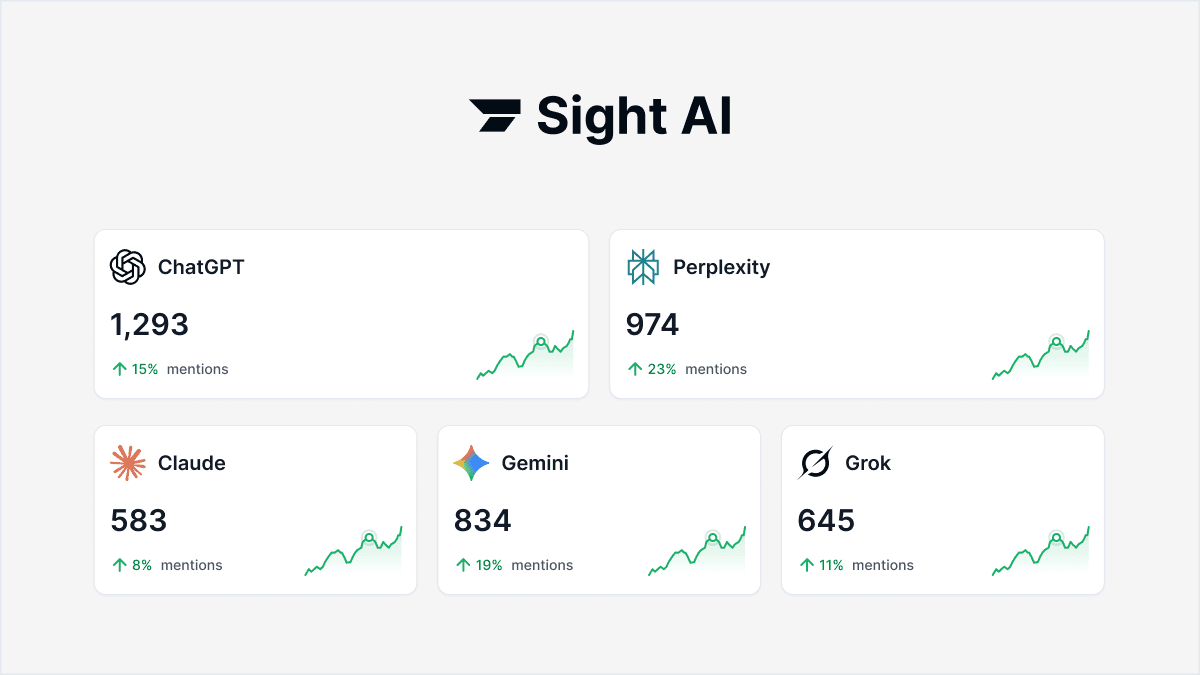
AI visibility tracking reveals when and how platforms like ChatGPT, Claude, and Perplexity mention your brand or cite your content. This metric becomes increasingly important as more users rely on AI for research and recommendations. Track not just whether you're mentioned, but the context and sentiment of those mentions.
Engagement metrics tell you whether readers find your content valuable beyond the headline. Time on page, scroll depth, and internal link clicks reveal whether your long form content holds attention throughout its length. High traffic with low engagement suggests your headlines promise more than your content delivers.
Conversion metrics connect content performance to business outcomes. Whether your goal is newsletter signups, demo requests, or product trials, track how different content types and topics drive desired actions. Using an SEO content platform with analytics helps you connect content creation directly to measurable results.
Sentiment analysis helps you understand how your content shapes brand perception. Are readers responding positively? Do they view your brand as helpful and authoritative? This qualitative dimension complements quantitative metrics.
Implementation Steps
1. Set up AI visibility monitoring to track when and how AI platforms mention your brand, including the specific queries that trigger mentions and the sentiment of those references.
2. Configure enhanced engagement tracking in your analytics platform, measuring scroll depth, time on page, internal link clicks, and return visitor rates for your long form content.
3. Create a content performance dashboard that combines traditional SEO metrics (rankings, organic traffic) with AI visibility scores, engagement indicators, and conversion data to provide a complete picture of content effectiveness.
Pro Tips
Review your metrics monthly to identify patterns in what performs well. If certain content structures or topics consistently achieve high AI visibility, incorporate those elements into future briefs for your long form SEO content generator.
Don't just measure your own content. Track how competitors appear in AI platform responses and traditional search results. These competitive insights reveal content gaps you can fill and strategies worth emulating.
Putting These Strategies Into Action
Start by auditing your current content generation workflow against these seven strategies. If you're seeing quality issues, prioritize brief creation and human expertise layering. If your content isn't getting discovered, focus on indexing acceleration and AI optimization.
The most successful teams treat their long form SEO content generator as one component of a larger system. They combine AI efficiency with human judgment, strategic planning, and continuous measurement. Reviewing the best AI content generators for SEO can help you identify tools that fit your specific workflow needs.
As AI platforms increasingly influence how audiences discover brands, optimizing for both traditional search and AI visibility becomes essential for sustainable organic growth. The strategies in this guide position you to succeed across both channels while maintaining the efficiency that makes long form content generation scalable.
Stop guessing how AI models like ChatGPT and Claude talk about your brand. Get visibility into every mention, track content opportunities, and automate your path to organic traffic growth. Start tracking your AI visibility today and see exactly where your brand appears across top AI platforms.