The AI content generation market has exploded, with new tools launching every month promising to revolutionize your SEO strategy. Yet many marketers discover a harsh reality: most AI writers produce generic content that never ranks, lacks the expertise signals Google demands, and gets buried under genuinely helpful content from competitors who know better.
Here's what separates the best AI content generators for SEO from the rest: they don't just spit out words. They understand search intent, optimize for both traditional search engines and emerging AI discovery platforms, integrate real-time SEO data, and produce content that actually serves your audience's needs rather than gaming algorithms.
The stakes have never been higher. As AI assistants like ChatGPT and Perplexity increasingly influence purchasing decisions, your content needs to rank not just on Google but also get mentioned when AI models answer relevant queries. The right AI content generator becomes a strategic asset that compounds in value over time—the wrong one wastes budget producing content that sits in your CMS collecting dust.
This guide evaluates seven AI content generators specifically through an SEO performance lens. We're not looking at feature lists or marketing promises—we're examining which tools actually help you build sustainable organic traffic, which workflows integrate seamlessly into real content operations, and which emerging capabilities matter for staying competitive in 2026 and beyond.
1. Sight AI
Why It Stands Out for SEO
Most AI content generators stop at the publishing stage, leaving you blind to whether your content actually gets discovered or mentioned. Sight AI takes a fundamentally different approach by combining content generation with AI visibility tracking and automated indexing—creating a closed-loop system where you can see exactly how your content performs across both traditional search engines and AI platforms.
The platform addresses a critical gap that emerged in 2025-2026: as AI assistants increasingly influence purchasing decisions, brands need to know how models like ChatGPT, Claude, and Perplexity talk about them. Sight AI tracks brand mentions across six-plus AI platforms, providing an AI Visibility Score with sentiment analysis that shows whether your content strategy is actually working in this new landscape.
Core SEO Capabilities
Sight AI's content generation system uses 13-plus specialized AI agents working together rather than relying on a single prompt. This multi-agent architecture means different aspects of your content—research, structure, optimization, tone—get handled by agents specifically trained for those tasks. The result is content that reads naturally while hitting technical SEO requirements.
The Autopilot Mode handles the entire content workflow: topic research, outline generation, full article writing, SEO optimization, and even publishing directly to your CMS. For teams managing multiple content calendars, this automation eliminates the manual coordination that typically bottlenecks production.
What makes Sight AI particularly valuable is the integration between content creation and indexing. The platform includes IndexNow integration and automated sitemap updates, which means your content gets discovered by search engines faster than traditional crawl-based indexing. In competitive niches where being first matters, this speed advantage can be significant.
The AI Visibility Advantage
Here's where Sight AI diverges from pure content generators: you can track exactly how AI models mention your brand across different platforms and prompts. This visibility lets you identify content gaps where competitors are getting mentioned but you're not, then create optimized content specifically targeting those opportunities.
The platform shows which prompts trigger brand mentions, what sentiment those mentions carry, and how your visibility score trends over time. This feedback loop means your content strategy evolves based on actual AI performance data rather than assumptions about what might work.
Best For
Sight AI fits teams who want an all-in-one solution that handles content generation, optimization, publishing, indexing, and performance tracking in one platform. It's particularly valuable for brands competing in spaces where AI-powered search is growing—B2B SaaS, professional services, technical products—where potential customers increasingly ask AI assistants for recommendations before ever visiting a search engine.
The platform scales well from solo marketers to agencies managing multiple client accounts, with the AI visibility tracking providing a differentiator when demonstrating ROI to stakeholders.
2. Surfer SEO AI
Data-Driven Optimization at Scale
Surfer SEO built its reputation on one core promise: give writers the exact data they need to outrank competitors. The platform's AI content generator extends this philosophy, producing drafts that are pre-optimized based on real-time SERP analysis rather than generic best practices.
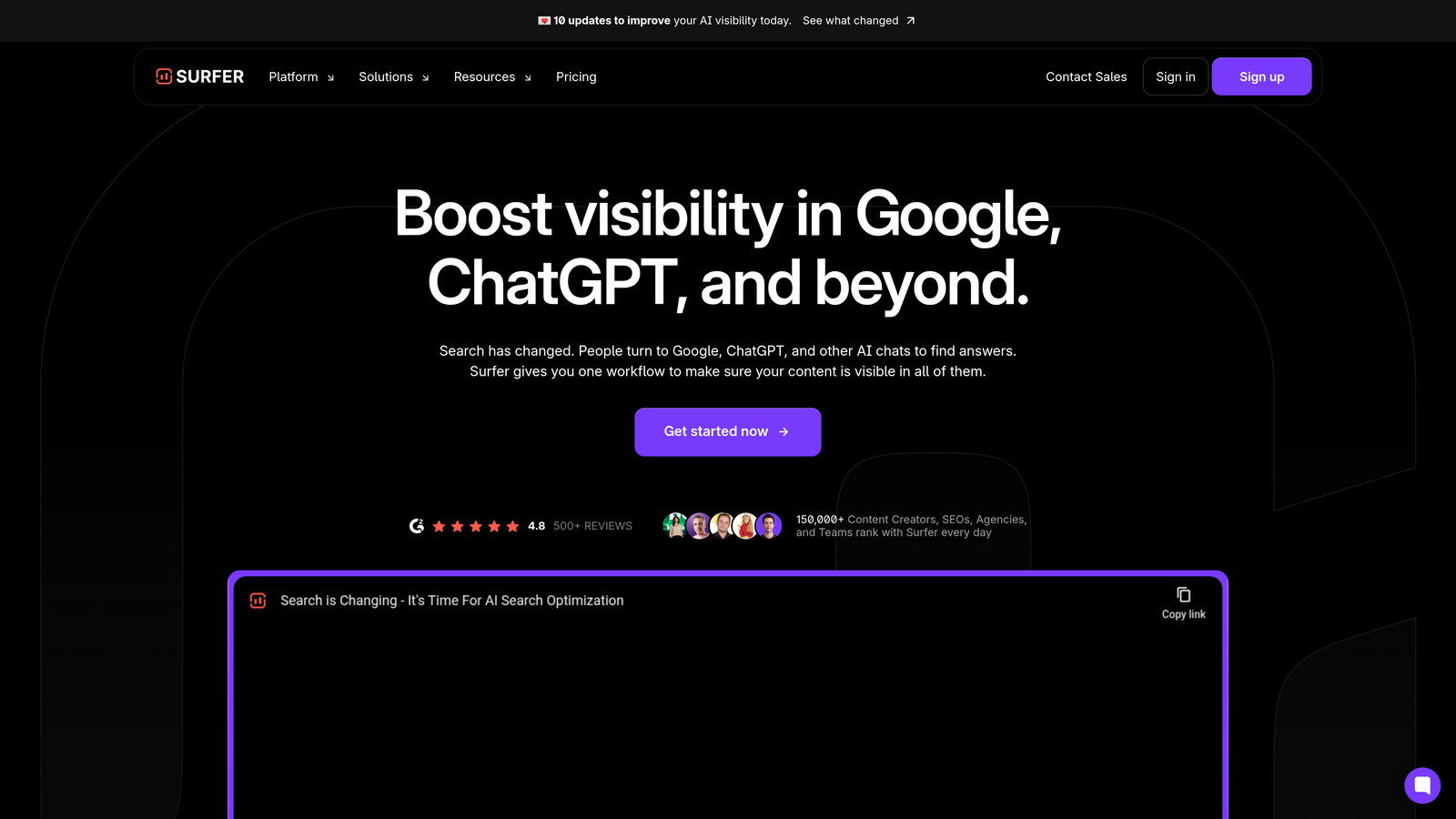
When you create content with Surfer, the tool analyzes the top-ranking pages for your target keyword, extracts patterns around content structure, semantic relationships, and topic coverage, then generates content that matches those patterns while maintaining readability. This approach works particularly well for informational queries where search intent is clear and SERP patterns are consistent.
The Content Score Methodology
Surfer's standout feature is its Content Score—a real-time grade that updates as you write or edit AI-generated content. The score considers factors like keyword usage, semantic relevance, content length, readability, and structural elements. While no score perfectly predicts rankings, Surfer's methodology provides concrete targets rather than leaving writers guessing about optimization.
The NLP-powered recommendations suggest related terms and concepts to include, helping you achieve topical comprehensiveness without keyword stuffing. For teams with junior writers or subject matter experts who aren't SEO specialists, these guardrails prevent common optimization mistakes.
Workflow Integration
Surfer integrates directly with Google Docs and WordPress, letting writers optimize content in their preferred environment rather than forcing workflow changes. The browser extension provides Content Score feedback wherever you're working, making optimization feel less like a separate task and more like part of the natural writing process.
The platform also includes a Content Editor that shows competing pages side-by-side with your draft, making it easy to identify coverage gaps or structural differences that might affect rankings.
Limitations to Consider
Surfer excels at optimization but doesn't handle the full content lifecycle. You'll need separate tools for content ideation, publishing workflows, and performance tracking. The platform also focuses primarily on traditional SEO—it doesn't provide visibility into how AI platforms mention your brand or optimize for generative engine results.
The data-driven approach works best for established keywords with clear SERP patterns. For emerging topics or highly creative content where you're trying to establish new angles rather than match existing patterns, Surfer's recommendations can feel constraining.
Best For
Surfer fits teams with established content operations who want granular control over optimization. It's particularly strong for agencies managing multiple clients who need to demonstrate clear optimization rationale, and for in-house teams producing high volumes of informational content where SERP analysis provides clear direction.
3. Jasper AI
Brand Voice at Enterprise Scale
Jasper AI positioned itself early as the enterprise-friendly AI content platform, and that focus shows in its brand voice capabilities. The platform lets you train custom AI models on your existing content, style guides, and brand documentation—then generate new content that maintains consistent voice across hundreds or thousands of pieces.

For larger organizations where brand consistency matters as much as SEO performance, this capability addresses a real pain point. Marketing teams can scale content production without every piece sounding like it came from a different writer (or worse, obviously came from a generic AI).
Template Library and Campaign Planning
Jasper provides an extensive template library covering everything from blog posts to product descriptions to social media content. While templates can feel limiting, they provide useful structure for teams who need to maintain consistency across content types or who have less experienced writers who benefit from guided workflows.
The campaign planning features let you create multiple content pieces around a central theme, maintaining topical consistency across formats. This approach works well for integrated campaigns where blog content, landing pages, and social posts need to reinforce the same messaging.
SEO Optimization Approach
Jasper includes Surfer SEO integration, essentially outsourcing the technical optimization layer to a specialized tool. This integration means you get Surfer's Content Score and optimization recommendations within Jasper's interface, combining brand voice consistency with data-driven SEO guidance.
The platform also offers templates specifically designed for SEO content types—listicles, how-to guides, comparison posts—that include structural elements search engines favor. These templates provide a reasonable starting point, though they require customization to avoid the generic feel that comes from template-driven content.
Team Collaboration Features
Jasper's collaboration tools support multi-step workflows with roles for writers, editors, and approvers. For organizations with established content approval processes, these features help AI-generated content flow through existing governance rather than requiring new workflows.
The platform also includes usage analytics showing which team members are generating what types of content, helping managers identify training needs or optimize team capacity.
Best For
Jasper fits enterprise marketing teams and larger agencies where brand consistency, team collaboration, and governance matter as much as raw content production. It's particularly valuable for organizations producing content across multiple formats and channels who need that content to sound cohesive.
The platform is less suited for solo marketers or small teams who don't need enterprise features and might find the pricing structure expensive relative to more focused tools.
4. Frase
Research-First Content Development
Frase takes a fundamentally research-driven approach to AI content generation. Rather than starting with a blank prompt, the platform begins by analyzing the SERP for your target keyword, extracting the questions people ask, topics competitors cover, and structural patterns that define high-ranking content in that space.
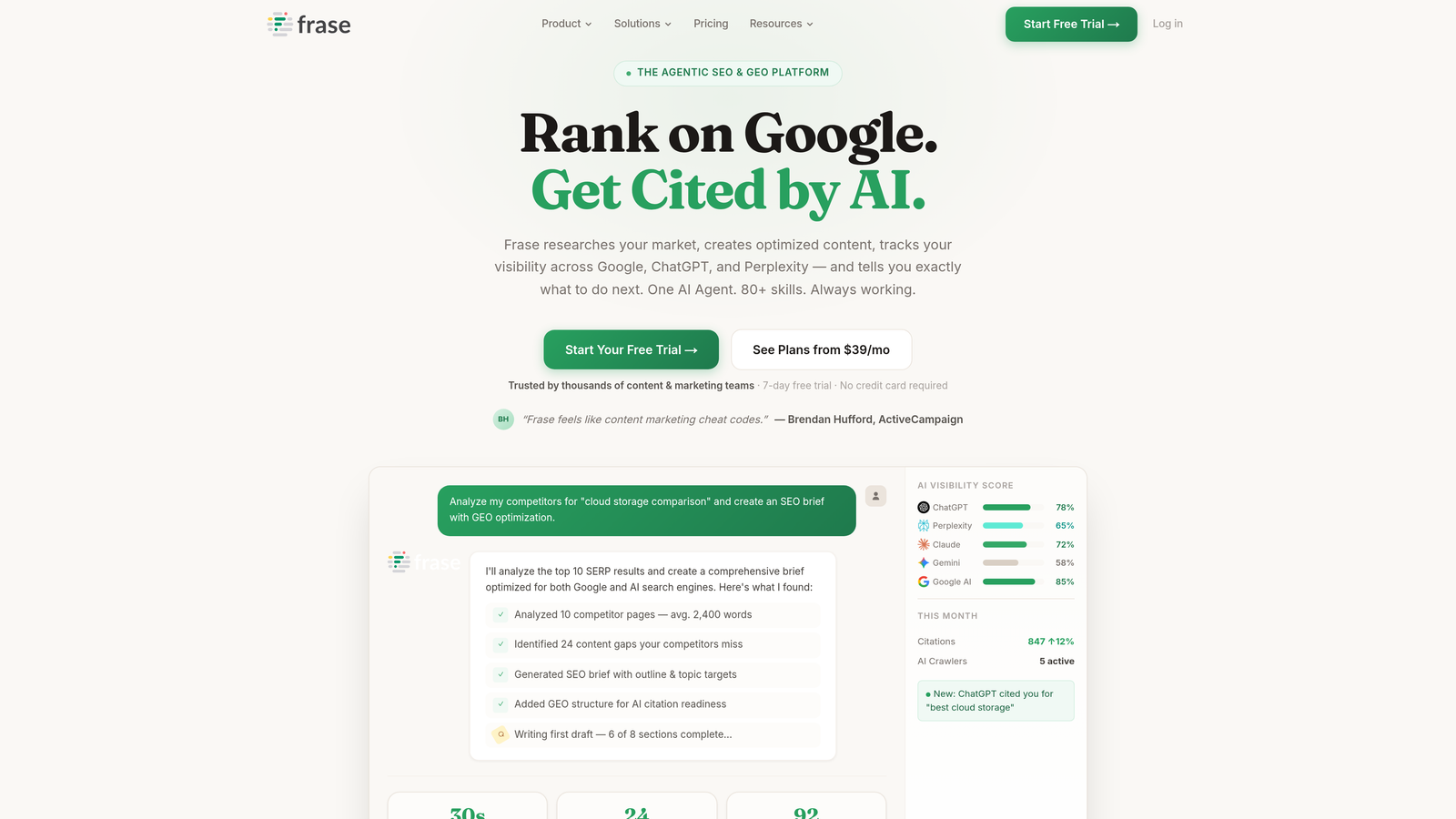
This research-first methodology works particularly well for informational content where comprehensiveness matters. The platform identifies knowledge gaps in your existing content and shows exactly what topics you need to cover to compete with top-ranking pages.
Question-Based Optimization
One of Frase's standout features is its focus on questions. The platform extracts questions from sources like Google's People Also Ask, forums, and competitor content, then organizes them into logical clusters. This approach helps you structure content around the actual questions your audience asks rather than guessing at what might be relevant.
For content targeting featured snippets or trying to rank for question-based queries, this question-centric approach provides clear direction. The AI writer can generate answers to specific questions, which you can then weave into comprehensive guides.
Content Brief Automation
Frase excels at generating content briefs that freelance writers or team members can follow. The briefs include target keywords, questions to answer, topics to cover, and structural recommendations—essentially providing a detailed roadmap for content creation whether you're using AI generation or human writers.
This capability makes Frase valuable for teams that use a hybrid approach, generating some content with AI while still working with human writers for more complex or sensitive topics. The briefs ensure consistency in coverage and optimization regardless of who creates the final content.
SEO Performance Tracking
Frase includes basic rank tracking and content analytics, letting you monitor how your AI-generated content performs over time. While not as comprehensive as dedicated SEO platforms, this integration means you can see which content is driving results without switching between multiple tools.
The platform also provides optimization suggestions for existing content, helping you identify underperforming pages that could benefit from AI-assisted updates or expansion.
Best For
Frase fits content teams focused on informational content—guides, tutorials, educational resources—where comprehensive topic coverage and question-answering drive rankings. It's particularly strong for teams managing large content libraries who need to systematically identify and fill content gaps.
The research capabilities also make Frase valuable for teams working with freelance writers, as the platform generates detailed briefs that ensure consistent quality regardless of who's writing.
5. Clearscope
Enterprise-Grade Content Intelligence
Clearscope built its platform for enterprise content teams who need sophisticated optimization without sacrificing content quality. The platform's grading system has become an industry standard, with many content teams using Clearscope scores as benchmarks for content quality regardless of whether they use the platform's AI generation features.
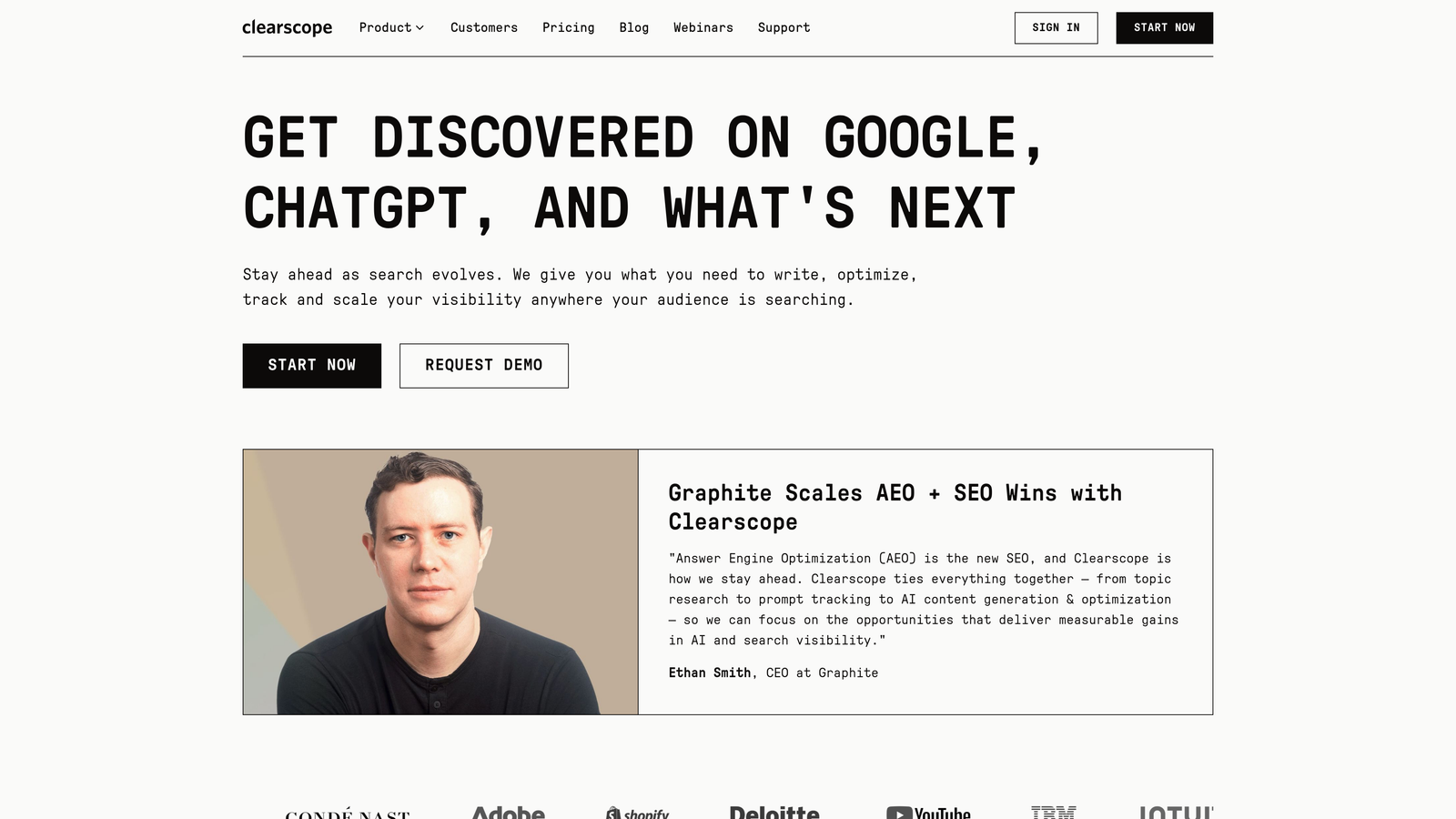
The tool analyzes top-ranking content to identify semantic relationships, topic clusters, and coverage patterns, then provides recommendations that help your content achieve similar comprehensiveness. Unlike simpler tools that focus primarily on keyword density, Clearscope emphasizes topical relevance and natural language patterns.
The Grading Methodology
Clearscope's content grades consider multiple factors: topical coverage, semantic relevance, readability, and structural elements. The platform provides specific term recommendations but emphasizes using them naturally rather than forcing inclusion. This approach helps teams avoid the over-optimization that can make AI-generated content feel robotic.
The grading system updates in real-time as you write or edit, providing immediate feedback on how changes affect your optimization score. This instant feedback loop helps writers internalize SEO best practices rather than treating optimization as a separate post-writing task.
Team Collaboration at Scale
Clearscope's collaboration features support large content teams with complex workflows. Multiple team members can work on content simultaneously, leave comments and suggestions, and track changes through revision history. For organizations producing dozens or hundreds of pieces monthly, these workflow tools prevent the coordination chaos that often comes with scaled content production.
The platform also includes reporting features that help content leaders demonstrate ROI to executives, showing how optimized content performs compared to unoptimized pieces.
Integration Ecosystem
Clearscope integrates with major content management systems, Google Docs, and WordPress, letting teams optimize content in their existing workflows rather than forcing tool switches. These integrations make Clearscope feel like an enhancement to existing processes rather than a disruptive new platform.
The platform also offers API access for enterprises who want to build custom integrations or incorporate Clearscope's grading into proprietary content tools.
Best For
Clearscope fits enterprise content teams and large agencies who need sophisticated optimization capabilities, robust collaboration features, and the ability to demonstrate content ROI to stakeholders. The platform's pricing reflects its enterprise positioning, making it less accessible for solo marketers or small teams.
Teams who prioritize content quality over pure production volume will appreciate Clearscope's emphasis on natural language and topical relevance rather than mechanical keyword optimization.
6. MarketMuse
Strategic Content Intelligence Over Generation
MarketMuse takes a different approach than pure AI content generators—it focuses on content strategy and intelligence rather than just production. The platform helps you identify content gaps, plan topic clusters, analyze competitive landscapes, and prioritize content investments based on potential impact.
This strategic focus makes MarketMuse particularly valuable for content leaders planning quarterly or annual content roadmaps rather than individual writers trying to optimize single pieces. The platform answers questions like "What topics should we cover?" and "Where are we losing to competitors?" before you ever start writing.
Topic Cluster Planning
MarketMuse excels at identifying topic clusters and pillar content opportunities. The platform analyzes your existing content, identifies gaps in coverage, and suggests how to structure content around core topics to build topical authority. This approach aligns with how search engines increasingly evaluate content—looking at comprehensive coverage of topics rather than just individual keyword optimization.
For teams building or restructuring content libraries, MarketMuse provides a strategic framework that ensures your content investments build on each other rather than creating disconnected pieces that compete for the same rankings.
Competitive Content Analysis
The platform's competitive analysis features show where competitors are investing in content, which topics they're winning, and where gaps exist that you could exploit. This competitive intelligence helps you prioritize content creation based on actual opportunities rather than assumptions about what might work.
MarketMuse also provides difficulty scores for topics, helping you understand which content opportunities are realistic given your domain authority and which require building foundational content first.
Content Brief Generation
While MarketMuse does offer content generation capabilities, its strength lies in creating detailed content briefs that human writers or AI tools can follow. These briefs include target keywords, questions to answer, topics to cover, and competitive benchmarks—providing comprehensive direction for content creation.
The platform's AI-generated content tends to be more outline-focused than fully written articles, reflecting MarketMuse's philosophy that strategic planning matters more than pure production volume.
Best For
MarketMuse fits content strategists, SEO directors, and content marketing leaders who need to plan and prioritize content investments at scale. It's particularly valuable for organizations with large existing content libraries who need to systematically identify gaps and opportunities rather than creating content reactively.
The platform is less suited for teams who need high-volume content production or who want a simple tool for generating and publishing articles quickly. MarketMuse rewards strategic thinking over tactical execution.
Putting It All Together
The best AI content generator for SEO isn't the one with the most features or the slickest interface—it's the one that aligns with your specific content strategy, workflow, and competitive landscape. Each platform in this guide excels at different aspects of the content creation and optimization process.
If you need comprehensive visibility into how your content performs across both traditional search and emerging AI platforms, Sight AI's integrated approach to generation, indexing, and AI visibility tracking provides strategic advantages that pure content generators can't match. For teams focused on data-driven optimization with granular control, Surfer SEO's real-time SERP analysis delivers concrete targets. Enterprise teams prioritizing brand consistency at scale will find value in Jasper's voice training capabilities, while research-focused teams benefit from Frase's question-based methodology.
The critical factor separating tools that drive real organic growth from those that simply produce content is integration. The best platforms don't just generate words—they connect content creation to strategic planning, optimization data, publishing workflows, indexing acceleration, and performance tracking. This integration creates feedback loops where your content strategy evolves based on actual performance data rather than assumptions.
As AI-powered search experiences continue growing in 2026 and beyond, the tools that optimize for both traditional search engines and AI discovery platforms will provide the strongest competitive advantage. When potential customers ask ChatGPT or Perplexity for recommendations, your brand needs to be part of those conversations—and that requires content strategies that extend beyond traditional SEO.
Start by auditing your current content performance and identifying the biggest gaps in your workflow. Are you struggling with production volume? Focus on tools with strong automation and team collaboration features. Is content quality inconsistent? Prioritize platforms with robust optimization frameworks and grading systems. Are you blind to how AI models talk about your brand? Look for integrated visibility tracking that shows where you're mentioned and where opportunities exist.
The content landscape has fundamentally shifted. The tools that help you succeed in this new environment are those that understand content as a strategic asset that compounds in value over time, not just words on pages. Start tracking your AI visibility today and see exactly where your brand appears across top AI platforms—because the content that wins tomorrow is the content that serves both search engines and the AI assistants increasingly mediating how people discover solutions.