You've just published what you thought was a solid blog post. It's informative, well-written, covers the basics. Then you check your analytics a month later and find it's barely making a dent in search results. Meanwhile, your competitor's 4,000-word guide on the same topic sits comfortably in position three, pulling thousands of monthly visitors.
This scenario plays out constantly across the digital landscape. As search algorithms grow more sophisticated and AI models like ChatGPT and Claude increasingly shape how people find information, the content that wins isn't just accurate—it's comprehensive. It demonstrates depth. It answers not just the initial question but the five follow-up questions users didn't know they had.
Long form content has become the strategic weapon for marketers, founders, and agencies serious about organic visibility. But here's the critical distinction: we're not talking about artificially inflating word counts or padding articles with fluff. We're talking about creating genuinely valuable resources that establish your expertise, satisfy complex search intent, and give both search engines and AI models something substantial to reference.
This guide breaks down everything you need to know about long form content—what it actually is, why it works, when to deploy it, and how to create it efficiently without sacrificing the quality that makes it effective in the first place.
Beyond Word Count: Defining True Long Form Content
Ask ten content strategists to define long form content and you'll get ten different word count thresholds. Some draw the line at 1,500 words. Others insist it starts at 3,000. A few will argue that anything under 5,000 words doesn't qualify for competitive topics.
Here's the truth: the specific number matters far less than what you're actually delivering. Long form content typically falls somewhere between 1,500 and 7,000+ words, but context determines where you land in that range. A comprehensive guide to enterprise software implementation might demand 6,000 words to do the topic justice. A thorough explanation of a specific marketing tactic might deliver complete value in 2,500 words.
The real metric isn't length—it's value density. Think of it this way: you can write a 4,000-word article that repeats the same three points in slightly different ways, or you can write a 2,500-word piece that systematically addresses every dimension of a topic with original insights and practical examples. The shorter piece is the better long form content.
What separates substantive depth from padded content? Substantive content introduces new information in every section. It builds complexity progressively. It answers questions you didn't explicitly ask but naturally arise as you read. Padded content, by contrast, circles the same concepts, uses excessive examples that don't add new understanding, and includes filler sections that could be cut without losing meaning.
Long form content also takes different shapes depending on its purpose. Pillar pages serve as comprehensive hubs for broad topics, linking out to more specific subtopics. Ultimate guides walk readers through complex processes step-by-step. In-depth case studies examine real implementations with detailed analysis. Explainer articles break down sophisticated concepts into understandable frameworks. Each format has its place, and each demands different structural approaches even when they share similar word counts.
Why Search Engines and AI Models Reward Comprehensive Content
Search algorithms have evolved dramatically over the past decade. Early SEO focused heavily on keyword density and backlinks. Modern search prioritizes something more nuanced: topical authority. When you thoroughly cover a subject—addressing not just the main query but related questions, context, implications, and practical applications—you signal expertise to search engines.
This isn't speculation. Google's own quality rater guidelines emphasize E-E-A-T: Experience, Expertise, Authoritativeness, and Trustworthiness. Comprehensive content naturally demonstrates these qualities better than surface-level articles. When you explore a topic from multiple angles, cite sources, provide original analysis, and connect related concepts, you're building the kind of authority signals that search algorithms are designed to recognize and reward.
But there's another dimension that matters just as much: user engagement metrics. Search engines track how people interact with your content after clicking through from results. Do they immediately bounce back to search? Or do they stay, scroll, and engage with your content? Long form articles that deliver genuine value tend to generate higher dwell time, lower bounce rates, and stronger engagement signals—all factors that correlate with improved ranking performance.
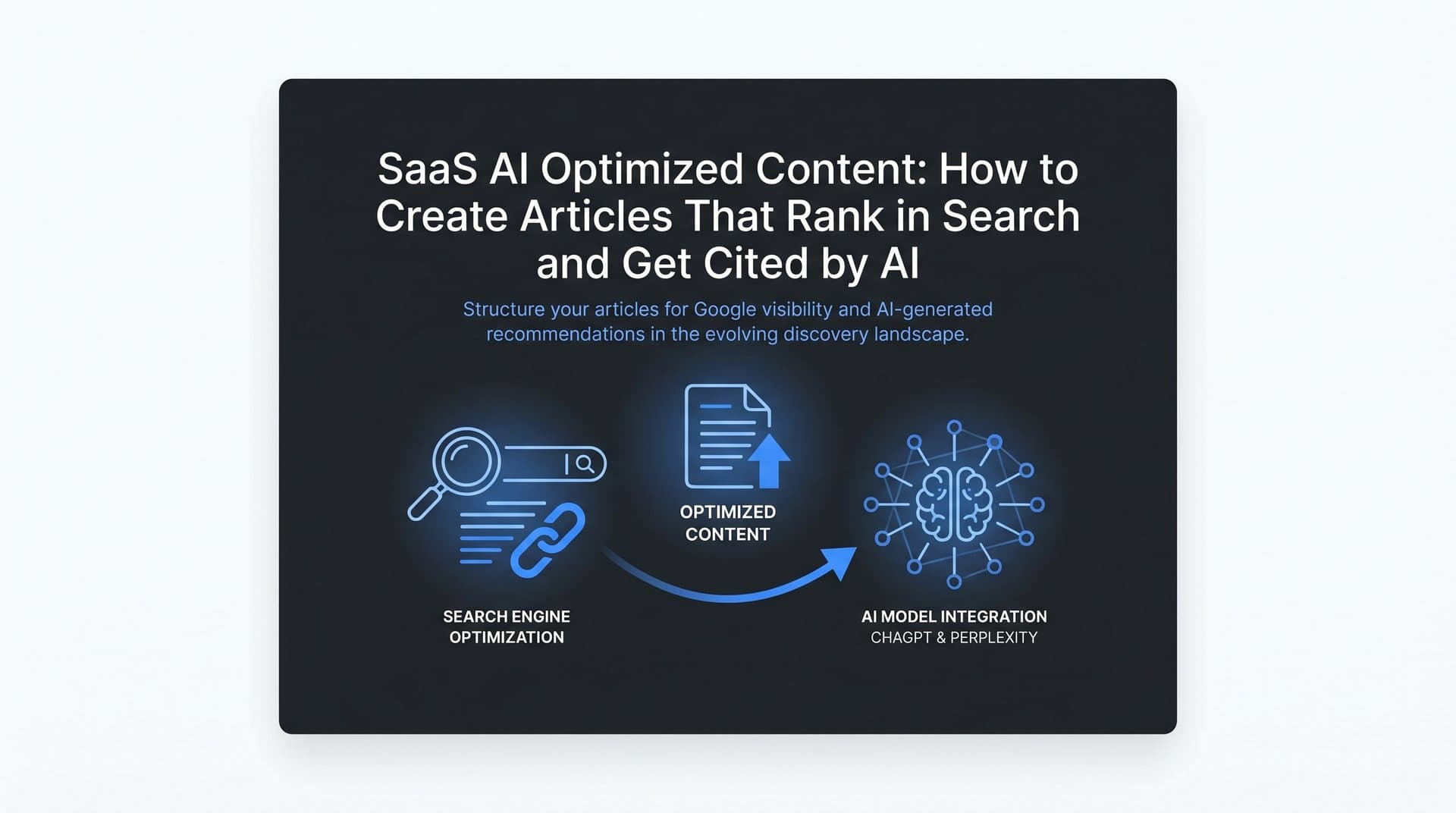
The rise of AI search adds another layer to this dynamic. Large language models like ChatGPT, Claude, and Perplexity don't just scrape snippets—they synthesize information from sources they consider authoritative and comprehensive. When these models generate responses to user queries, they're more likely to reference and cite content that thoroughly addresses topics rather than surface-level overviews.
This creates a visibility advantage beyond traditional search. If your long form content gets referenced in AI-generated responses, you're capturing attention in an entirely new channel. Users who might never have found you through conventional search discover your brand through AI citations. This is why tracking your AI visibility has become essential—you need to know not just where you rank in Google, but how AI models are talking about your brand and content across platforms.
The correlation between content depth and ranking performance isn't absolute—plenty of short, focused content ranks well for specific queries. But for competitive keywords and complex topics, comprehensive coverage has become table stakes. You're not just competing with other websites anymore. You're competing with the collective knowledge that AI models synthesize from thousands of sources. Understanding AI generated content SEO performance helps you navigate this evolving landscape effectively.
Strategic Use Cases: When Long Form Makes Sense (And When It Doesn't)
Not every topic deserves a 4,000-word treatment. The art of content strategy lies in knowing when to go deep and when brevity serves your audience better. Let's start with the scenarios where long form content becomes your competitive advantage.
High-intent keywords with complex search intent practically demand comprehensive coverage. When someone searches for "how to implement account-based marketing" or "choosing enterprise CRM software," they're not looking for a 500-word overview. They want detailed frameworks, decision criteria, implementation steps, and real-world considerations. These queries signal that the searcher is willing to invest time in understanding the topic thoroughly—and they'll reward content that delivers that depth.
Competitive analysis often reveals when long form is necessary. If the top-ranking content for your target keyword averages 3,500 words and covers the topic from multiple angles, your 1,200-word article faces an uphill battle. You need to match or exceed that depth while adding unique value—original research, fresh perspectives, or practical insights the existing content lacks. This doesn't mean mindlessly writing longer content, but it does mean recognizing when thoroughness is the price of entry.
Topics that naturally involve multiple components or stages also benefit from long form treatment. Content marketing strategy, for instance, encompasses research, planning, creation, distribution, and measurement. Trying to address all those dimensions in 800 words means either skipping crucial elements or covering everything so superficially that you don't actually help readers. Long form lets you do justice to complex, multi-faceted subjects.
But here's where strategic thinking separates effective content marketers from those who waste resources. Long form content isn't always the answer. Transactional queries—searches like "buy running shoes online" or "pizza delivery near me"—don't need depth. Users want quick answers and clear paths to conversion. A 3,000-word exploration of pizza delivery options would frustrate rather than serve that intent.
Simple informational queries often work better with concise answers. If someone searches "what is CTR," they probably want a clear definition and maybe a brief example, not a 2,500-word deep dive into click-through rate optimization strategies. Featured snippets and quick answers serve these queries more effectively than long form content.
Time-sensitive topics like news updates and trend reactions also favor shorter formats. By the time you've researched and written a comprehensive 4,000-word analysis, the news cycle has moved on. Quick, focused responses capture attention when timeliness matters more than exhaustive coverage.
The strategic question isn't "should we always create long form content?" It's "does this topic and keyword justify the investment in comprehensive coverage?" When the answer is yes—when you're targeting high-value keywords, complex topics, or competitive spaces where depth creates differentiation—long form content becomes one of your most powerful tools for building organic visibility.
Anatomy of High-Performing Long Form Articles
Length alone doesn't make content effective. The difference between a 3,500-word article that keeps readers engaged and one that sends them fleeing back to search results comes down to structure, substance, and strategic design. Let's break down what separates high-performing long form content from bloated article that wastes everyone's time.
Start with structural elements that create hierarchy and scannability. Your article needs clear H2 sections that break the topic into logical chunks. Within those sections, H3 subheadings help readers navigate to specific information they're seeking. This isn't just about readability—it's about respecting how people actually consume content online. Most readers scan before they commit to reading. Clear headings let them quickly assess whether your article covers what they need.
Paragraph length matters more than most writers realize. Dense blocks of text create visual fatigue and make even valuable content feel like work. Keep paragraphs to two to four sentences maximum. Use single-sentence paragraphs for emphasis. Create breathing room with varied paragraph lengths. This visual rhythm keeps readers moving through your content rather than abandoning it halfway through.
Content components separate substantive articles from superficial ones. Original insights—your unique perspective, analysis, or framework—give readers something they can't find elsewhere. Data integration, whether from your own research or cited sources, adds credibility and specificity. Practical examples ground abstract concepts in reality, showing readers how ideas apply in real situations. When you claim "many companies have found success with this approach," you're being vague. When you explain "this approach typically helps companies improve efficiency by streamlining workflows and reducing manual tasks," you're being concrete without fabricating data.
Visual elements provide mental breaks in long form content, though we're not talking about placeholder images or decorative graphics. Strategic formatting—bold labels for key concepts, formatted lists when presenting multiple options, numbered steps for sequential processes—creates visual variety while enhancing comprehension. The goal is making information easier to absorb, not just making the page look less text-heavy.
Internal linking architecture turns individual articles into strategic assets. When you link to related content on your site, you're doing several things simultaneously. You're helping readers explore topics more deeply. You're distributing authority across your site from a content perspective. You're creating pathways that keep visitors engaged with your content ecosystem rather than bouncing after one article. Strategic internal linking means connecting to genuinely relevant resources—not just stuffing links to hit some arbitrary quota.
Transitions between sections keep the narrative flowing. Each section should connect naturally to the next, creating a logical progression through your topic. "Now that we understand what makes long form content work, let's explore when to deploy it strategically" bridges concepts better than abrupt section breaks. These connective sentences guide readers through your article's architecture.
The conclusion matters as much as the introduction. This is where you synthesize key points, reinforce the strategic value you've outlined, and give readers a clear sense of what to do with the information you've provided. A strong conclusion doesn't just summarize—it crystallizes understanding and motivates action.
Creating Long Form Content at Scale Without Compromising Quality
Here's the challenge every content marketer faces: long form content delivers results, but it's resource-intensive to produce. A comprehensive 3,500-word guide might take a skilled writer eight to twelve hours between research, writing, and editing. Scale that across the content volume you need to compete, and you're looking at significant time and budget investment.
This is where strategic workflows and modern tools create leverage. The key is accelerating production without sacrificing the quality that makes long form content effective. Let's break down how to do this efficiently.
Research and outlining workflows prevent the bloat that plagues poorly planned long form content. Before writing a single word, map out your topic's dimensions. What are the core questions readers need answered? What subtopics naturally branch from the main concept? What's the logical sequence for presenting this information? A solid outline keeps you focused on value delivery rather than hitting arbitrary word counts. If your outline has seven main sections and each genuinely covers new ground, you'll naturally reach appropriate length. If you're stretching to fill sections, that's a signal you're padding rather than adding value.
AI content tools have fundamentally changed the economics of long form content production. Platforms with specialized AI agents can accelerate research, generate initial drafts, and help structure complex topics—cutting production time significantly. Exploring AI writing tools for long form content reveals how these solutions have matured beyond simple text generation. The critical distinction is using AI as a production accelerator while maintaining editorial standards, not as a replacement for strategic thinking and quality control.
Think of AI tools as expert research assistants who can rapidly compile information, suggest structural approaches, and generate initial content frameworks. You still need human oversight to ensure accuracy, inject original insights, and maintain brand voice. The workflow becomes: outline strategically, leverage AI to generate foundational content, then edit rigorously to ensure every section delivers genuine value.
Quality checkpoints prevent the drift toward mediocrity that happens when you're producing content at scale. After drafting, edit specifically for value density. Read each paragraph and ask: does this introduce new information or insight? If you removed this section, would readers lose something important? Ruthlessly eliminate redundancy—if you've made a point once, you don't need to repeat it with slightly different phrasing three paragraphs later.
Accuracy verification becomes essential when working with AI-generated content or synthesizing information from multiple sources. Every statistic needs a real, cited source. Every claim about how things work should be verifiable. If you're making general observations based on industry trends, use appropriate language: "many companies find" rather than "73% of companies experience" unless you have actual data to back that percentage.
The goal isn't just producing more content faster—it's maintaining the quality standards that make long form content effective while removing bottlenecks that slow production. When you combine strategic outlining, AI-powered acceleration, and rigorous quality control, you can scale comprehensive content production without the exponential resource increase that traditional approaches demand. Many teams are now evaluating long form content generation tools to find the right balance between speed and quality.
Measuring Success: Metrics That Actually Matter
Publishing long form content is an investment. Like any investment, you need to track whether it's delivering returns. But not all metrics tell you what you actually need to know. Let's focus on the measurements that reveal whether your comprehensive content is working.
Pageviews are the most visible metric, but they're also the least informative in isolation. A thousand visitors who bounce after ten seconds tells a very different story than five hundred visitors who spend five minutes engaging with your content. Look beyond surface traffic to engagement depth. How long are people actually spending with your article? Are they scrolling through multiple sections or abandoning after the introduction? Scroll depth tracking shows you how far down the page readers go—critical data for long form content where the value might be distributed throughout the piece.
Conversion tracking connects content performance to business outcomes. If you're creating long form content to build authority and drive leads, you need to know whether readers are taking desired actions. Are they clicking through to product pages? Downloading resources? Requesting demos? Track these conversions specifically from your long form content to understand its role in your funnel.
SEO performance indicators show you how search engines are valuing your comprehensive content. Ranking positions for your target keywords are the obvious metric, but also track featured snippet captures—Google often pulls these from long form content that thoroughly addresses topics. Organic traffic growth to specific articles reveals whether your content is gaining traction over time. Many high-performing long form pieces build momentum gradually as they accumulate backlinks and authority signals. Using an SEO content platform with analytics helps consolidate these metrics into actionable insights.
AI visibility tracking has become essential as large language models reshape how people discover information. When ChatGPT, Claude, or Perplexity reference your content in responses, you're gaining exposure in an entirely new channel. But unlike traditional search where you can check rankings manually, AI visibility requires dedicated tracking. You need to monitor how AI models talk about your brand, whether they cite your content as authoritative sources, and which topics drive the most AI mentions.
This is where platforms built specifically for AI visibility provide strategic advantage. Rather than guessing how your content performs across AI platforms, you can track exactly where your brand appears, what prompts trigger mentions, and how sentiment varies across different models. This data informs not just whether your long form content is working, but how to optimize future content for maximum AI visibility. Understanding predictive content performance analytics can help you anticipate which topics will resonate before you invest in creating them.
The metrics that matter most depend on your specific goals. If you're building topical authority, focus on ranking improvements and backlink acquisition. If you're driving leads, prioritize conversion rates and lead quality from content. If you're establishing thought leadership, track social shares and citations from industry publications. Define success clearly before you publish, then measure against those specific objectives rather than vanity metrics that look impressive but don't drive business outcomes.
The Strategic Path Forward
Long form content isn't just a tactic—it's a strategic commitment to demonstrating expertise, serving complex search intent, and building the kind of authority that both search engines and AI models recognize and reward. But success comes from intentional depth, not arbitrary length. The difference between comprehensive content that drives results and bloated articles that waste resources lies in how thoughtfully you approach creation.
Start with strategic questions. Does this topic justify comprehensive treatment? Will depth create competitive advantage? Can we deliver genuine value throughout, or are we padding to hit word counts? When the answers point toward long form, invest in doing it well—solid research, clear structure, original insights, and rigorous quality control.
The landscape is shifting rapidly. AI powered content marketing platforms are making comprehensive content creation more accessible, reducing the resource barrier that once made long form content viable only for organizations with substantial content budgets. But these tools are accelerators, not replacements for strategic thinking. The marketers and agencies who win are those who combine AI efficiency with editorial excellence.
AI visibility adds another dimension to content strategy that didn't exist two years ago. Your long form content isn't just competing in traditional search anymore—it's potentially being referenced across ChatGPT, Claude, Perplexity, and emerging AI platforms. Understanding how these models talk about your brand, which content they cite, and where opportunities exist requires visibility you can't get from traditional analytics.
This is the future of content marketing: comprehensive resources that serve genuine user intent, optimized for both traditional search and AI discovery, created efficiently through strategic use of modern tools, and measured across the full spectrum of visibility channels. Start tracking your AI visibility today and see exactly where your brand appears across top AI platforms—because understanding how AI models reference your content is no longer optional. It's essential for staying competitive as search continues its rapid evolution.