Organic traffic remains the most sustainable and cost-effective growth channel for digital businesses, but the traditional approach of manually producing content at scale has become increasingly impractical. Marketers and founders now face a critical challenge: how to produce enough high-quality content to capture search demand without burning through resources or compromising quality.
AI generated content offers a compelling solution when implemented strategically.
This guide walks you through the exact process of leveraging AI content generation to accelerate organic growth—from initial setup and workflow design to optimization and performance tracking. You'll learn how to build a content engine that produces SEO-optimized articles at scale while maintaining the quality signals that search engines and AI platforms reward.
Whether you're a solo founder looking to compete with larger competitors or an agency managing multiple client campaigns, these six steps will help you transform AI content generation from an experiment into a reliable organic growth system.
Step 1: Audit Your Current Content Gaps and Keyword Opportunities
Before generating a single piece of AI content, you need to understand exactly what to create. Think of this as building your content roadmap—without it, you're just creating noise instead of capturing demand.
Start by mapping your existing content against the keywords you want to rank for. Export your current site structure and compare it to your target keyword list. You'll quickly spot the gaps: high-value search terms with no corresponding content, thin pages that need expansion, or topics your competitors dominate while you're completely absent.
Prioritize these opportunities based on three factors: search volume, competition level, and alignment with buyer intent. A keyword with 2,000 monthly searches and low competition beats a 10,000-volume term where you're competing against established authority sites. Focus especially on keywords that signal purchase intent or problem-solving behavior—these drive conversions, not just traffic.
Next, analyze what content formats actually perform in your niche. Run a competitive analysis on the top-ranking pages for your target keywords. Are they comprehensive guides? Quick listicles? Comparison articles? Tool reviews? The format matters because search engines have learned what users prefer for specific query types.
Document your competitors' content strategies systematically. What topics do they cover that you don't? How frequently do they publish? What content gaps exist that neither you nor your competitors have addressed? These white space opportunities often deliver the fastest wins because you're capturing demand with no competition.
Create a prioritized content backlog organized by potential traffic impact. Group related keywords into topic clusters—this approach builds topical authority faster than scattered one-off articles. For each content opportunity, note the target keyword, search volume, estimated difficulty, and the content format that's winning in search results.
This audit becomes your content production blueprint. You're not guessing what to write—you're building exactly what the market is searching for, in formats proven to rank.
Step 2: Configure Your AI Content Generation Workflow
Your AI content workflow determines whether you produce scalable quality or scalable mediocrity. The setup phase is where you encode your standards into the system.
Select AI content tools that support genuine SEO optimization features, not just text generation. You need platforms that understand keyword placement, header hierarchy, meta description optimization, and content structure. Tools that generate raw text without SEO awareness create more work, not less—you'll spend hours retrofitting optimization into content that should have been structured correctly from the start.
Establish your brand voice guidelines and content parameters within your chosen system. Document your tone (professional but conversational? technical and authoritative?), vocabulary preferences, and any industry-specific terminology. Define what topics are on-brand and which fall outside your scope. The more specific your guidelines, the more consistent your AI output becomes.
Create reusable content templates for different article types. Your how-to guide template should differ structurally from your listicle template, which differs from your comparison article format. Each template should specify the expected word count range, required sections, header structure, and internal linking opportunities. This standardization dramatically reduces editing time and ensures every piece meets your quality baseline.
Build quality checkpoints into your workflow before content goes live. Establish a multi-stage review process: AI generation, automated SEO check, human editorial review, and final technical validation. Define clear criteria for each checkpoint—keyword density within acceptable ranges, readability scores above your threshold, proper header hierarchy, functional internal links, and accurate information.
Integrate your content generation system directly with your CMS whenever possible. Manual copying and pasting introduces errors and slows your publishing velocity. Automated publishing workflows let you move from content creation to live publication in minutes instead of hours, but always maintain that human review checkpoint before anything goes live.
The goal is creating a repeatable system where quality control is built into the process, not added as an afterthought. When your workflow is properly configured, scaling content production doesn't mean scaling chaos.
Step 3: Generate SEO-Optimized Content at Scale
With your workflow configured and content backlog prioritized, you're ready to produce. The key to scaling AI content generation is working in strategic batches, not random one-offs.
Batch similar content topics together for efficient production runs. If you're creating ten articles about email marketing tactics, generate them in a single session while your AI system is calibrated to that topic area. This approach improves consistency and reduces the context-switching that degrades content quality. You're essentially creating a focused content sprint around a specific theme.
Use keyword clustering to build topical authority through interconnected articles. Instead of isolated pieces targeting random keywords, create content hubs where multiple articles support a pillar topic. Generate a comprehensive guide as your pillar content, then surround it with supporting articles that dive deeper into specific subtopics. This structure signals expertise to search engines and creates natural internal linking opportunities.
Implement your internal linking strategy during content creation, not after. As each article is generated, identify relevant existing content to link to and note where this new piece should be linked from older articles. Strong internal linking distributes page authority across your site and helps search engines understand your content relationships. Make this a standard step in your generation checklist.
Optimize meta descriptions, headers, and structured data as part of the generation process. Your AI system should automatically format H2 and H3 headers with target keywords, create compelling meta descriptions within character limits, and structure content for featured snippet opportunities. These technical elements should be native to your output, not added manually afterward.
Balance content volume with your actual quality review capacity. Generating fifty articles per week means nothing if your editorial team can only properly review ten. Find your sustainable pace—the production volume where you can maintain quality standards without creating a review bottleneck. It's better to publish fewer pieces that perform well than flood your site with content that never ranks.
Track your production metrics: articles generated per week, time from generation to publication, percentage requiring significant revision, and average editorial time per piece. These metrics reveal where your workflow needs refinement and help you forecast realistic content production capacity.
Step 4: Optimize Content for AI Platform Visibility
Search engine optimization is no longer enough. AI platforms like ChatGPT, Claude, and Perplexity are becoming primary research tools, and they discover and recommend content differently than traditional search engines.
Structure your content to be easily parsed and referenced by AI models. These platforms favor clear, factual statements over flowery language. Use definitive sentences that can stand alone as answers: "Email subject lines with personalization tokens increase open rates" works better than "Many marketers have found that when they personalize their email subject lines, they tend to see some improvement in how many people open their messages."
Include authoritative citations and data points that build credibility with AI systems. When you reference industry research, name the source and year. When you cite statistics, attribute them properly. AI platforms are increasingly sophisticated at evaluating source quality—content with verifiable claims gets recommended more frequently than unsupported assertions. According to Google's helpful content guidelines, demonstrating expertise through cited sources and first-hand experience improves content quality signals.
Optimize specifically for featured snippets and direct answer formats. AI platforms often pull information from content that's already structured for quick extraction. Use clear definitions, numbered lists for process steps, and comparison tables where appropriate. When someone asks an AI platform a question your content answers, you want that content formatted for easy citation. Learn more about optimizing content for ChatGPT recommendations to maximize your visibility.
Add context that helps AI platforms understand when and why to recommend your content. Include the problems your content solves, the audience it serves, and the outcomes it delivers. This semantic richness helps AI models match your content to relevant queries. Think about the questions people ask AI platforms, not just the keywords they type into search engines.
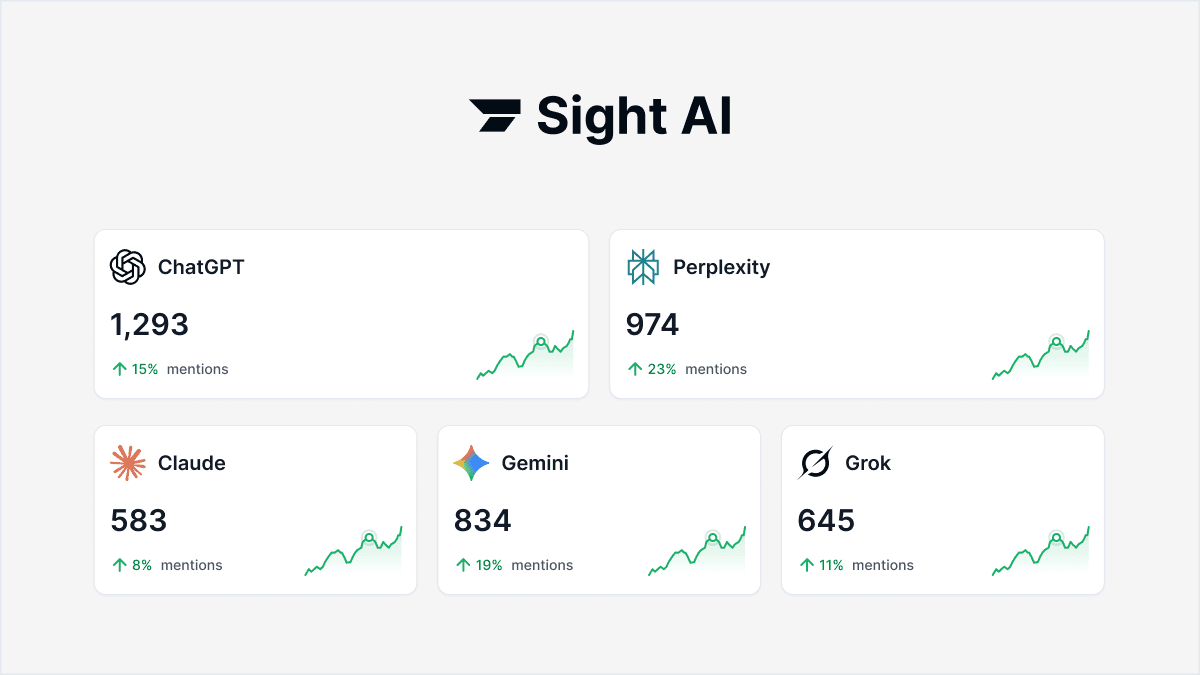
Monitor how AI platforms actually mention and recommend your brand. Track whether your content appears in AI-generated responses, how you're described, and which topics trigger mentions of your brand. This visibility data reveals what's working and where you need to adjust your content strategy. Understanding your AI visibility helps you optimize for this emerging traffic channel before your competitors do.
Step 5: Accelerate Indexing and Content Discovery
Publishing content is pointless if search engines take weeks to discover and index it. Fast indexing means faster rankings, which means faster organic growth.
Implement IndexNow or similar rapid indexing protocols immediately. IndexNow is a protocol supported by Microsoft Bing and other search engines that lets you notify them instantly when you publish or update content. According to official Microsoft documentation, IndexNow can reduce indexing time from days or weeks to hours. Set up automated IndexNow pings whenever new content goes live.
Automate sitemap updates when new content publishes. Your XML sitemap should regenerate automatically with every new article, and search engines should be pinged about the update. Most modern CMS platforms support this automation, but verify it's actually working—check your sitemap regularly to ensure new URLs appear within minutes of publishing.
Monitor crawl rates and indexing status through Google Search Console and Bing Webmaster Tools. Track how quickly new pages move from discovered to indexed. If you're seeing consistent delays, investigate technical issues: slow page speed, crawl budget limitations, or server response problems. Search engines crawl fast sites more frequently, so technical performance directly impacts indexing velocity.
Fix technical SEO issues that slow content discovery. Ensure your robots.txt file isn't blocking important content. Verify that internal links point to new articles immediately after publishing. Check that your site architecture doesn't bury new content three or four clicks from your homepage. The easier you make it for search engine crawlers to find and access your content, the faster it gets indexed.
Track time-to-index metrics to optimize your publishing workflow. Measure the hours or days between publication and indexing for each article. Look for patterns: do certain content types index faster? Does publishing time affect indexing speed? Use this data to refine your publishing schedule and technical setup. Faster indexing means you can measure content performance sooner and iterate your strategy more quickly.
Step 6: Measure Performance and Iterate Your Strategy
Content generation without measurement is just publishing into the void. Your performance data tells you what's working and what needs adjustment.
Set up comprehensive tracking for organic traffic, keyword rankings, and conversion metrics. Use Google Analytics to monitor traffic sources and user behavior. Track ranking positions for your target keywords weekly. Most importantly, connect content performance to business outcomes—which articles drive newsletter signups, product trials, or sales? Traffic without conversions is vanity, not value.
Compare AI-generated content performance against manually written pieces if you have both. This comparison reveals whether your AI workflow is actually delivering results or just creating volume. Look at engagement metrics: time on page, bounce rate, pages per session. Check ranking velocity—how quickly do AI pieces reach target positions compared to manual content? This data informs how much of your content production should be AI-powered versus human-written.
Identify top-performing content patterns to replicate. Which article formats drive the most traffic? What content lengths perform best? Which topics generate the most engagement? Do certain header structures or internal linking patterns correlate with better rankings? Document these patterns and encode them into your content templates and AI generation guidelines.
Track AI visibility scores to understand how AI platforms mention and recommend your brand. Monitor which content pieces get cited by ChatGPT, Claude, Perplexity, and other AI tools. Analyze the sentiment and context of these mentions. This emerging metric matters because AI platforms are becoming significant traffic sources—you need visibility into how they perceive and present your brand.
Refine your content guidelines based on performance data continuously. If shorter articles are outperforming longer ones, adjust your word count targets. If certain keyword densities correlate with better rankings, update your optimization parameters. If specific content structures drive more AI platform mentions, make those structures standard. Your content system should evolve based on real results, not assumptions.
Schedule regular content audits—monthly or quarterly depending on your publishing volume. Review what's ranking, what's stagnating, and what's declining. Update underperforming content with fresh information, better optimization, or improved structure. Delete or consolidate thin content that's dragging down your site quality. If you're struggling with AI generated content not ranking, these audits help identify the root causes. Content strategy is never "set it and forget it"—it's a continuous optimization cycle.
Putting It All Together
Implementing AI generated content for organic growth is not about replacing human creativity—it's about amplifying your capacity to capture search demand efficiently.
By following these six steps, you've built a system that identifies opportunities, produces optimized content at scale, ensures rapid indexing, and continuously improves based on performance data. You've moved from manual content creation bottlenecks to a scalable engine that generates quality at velocity.
The key to long-term success is treating this as an iterative process. Audit your content gaps regularly as search trends evolve and new opportunities emerge. Refine your AI workflows based on what actually performs, not what you think should work. Stay ahead of how AI platforms discover and recommend content—this channel will only grow more important as AI adoption accelerates.
Start with a focused content sprint targeting your highest-priority keywords. Generate ten to twenty pieces using your new workflow, publish them with proper optimization and indexing protocols, then measure the results after sixty to ninety days. This focused approach lets you validate your system before scaling to full production volume.
Track everything: which content ranks, what drives traffic, what converts visitors, and how AI platforms reference your brand. Use this data to refine your templates, adjust your keyword targeting, and improve your generation parameters. Scale what works and eliminate what doesn't.
Remember that AI content generation is a tool, not a magic solution. Your strategic decisions—which keywords to target, what content formats to create, how to structure your site architecture—remain critical. AI accelerates execution, but you still need sound strategy guiding that execution.
The competitive advantage goes to teams that implement AI content generation with discipline: clear quality standards, rigorous measurement, and continuous optimization. Done right, you can compete with larger competitors who still rely on slow, expensive manual content production. You can test content strategies faster, capture more search demand, and build topical authority across broader keyword sets.
Stop guessing how AI models like ChatGPT and Claude talk about your brand—get visibility into every mention, track content opportunities, and automate your path to organic traffic growth. Start tracking your AI visibility today and see exactly where your brand appears across top AI platforms.