You know the feeling. Another Monday morning, another content calendar staring back at you with empty slots that need to be filled. Your team is stretched thin. The demand for fresh content never stops—blog posts, guides, social updates, email campaigns. Meanwhile, your competitors are publishing daily, your organic traffic needs a boost, and your boss wants to know why it takes three weeks to produce a single article.
This is where an AI content generation workflow changes everything.
Not as a magic button that spits out perfect content. Not as a replacement for your creative team. But as a systematic approach that combines human strategy with AI execution—turning content production from a bottleneck into a competitive advantage. When you build the right workflow, you can scale output without sacrificing quality, maintain brand consistency across dozens of pieces, and actually enjoy the creative process again.
Breaking Down the Modern Content Production Pipeline
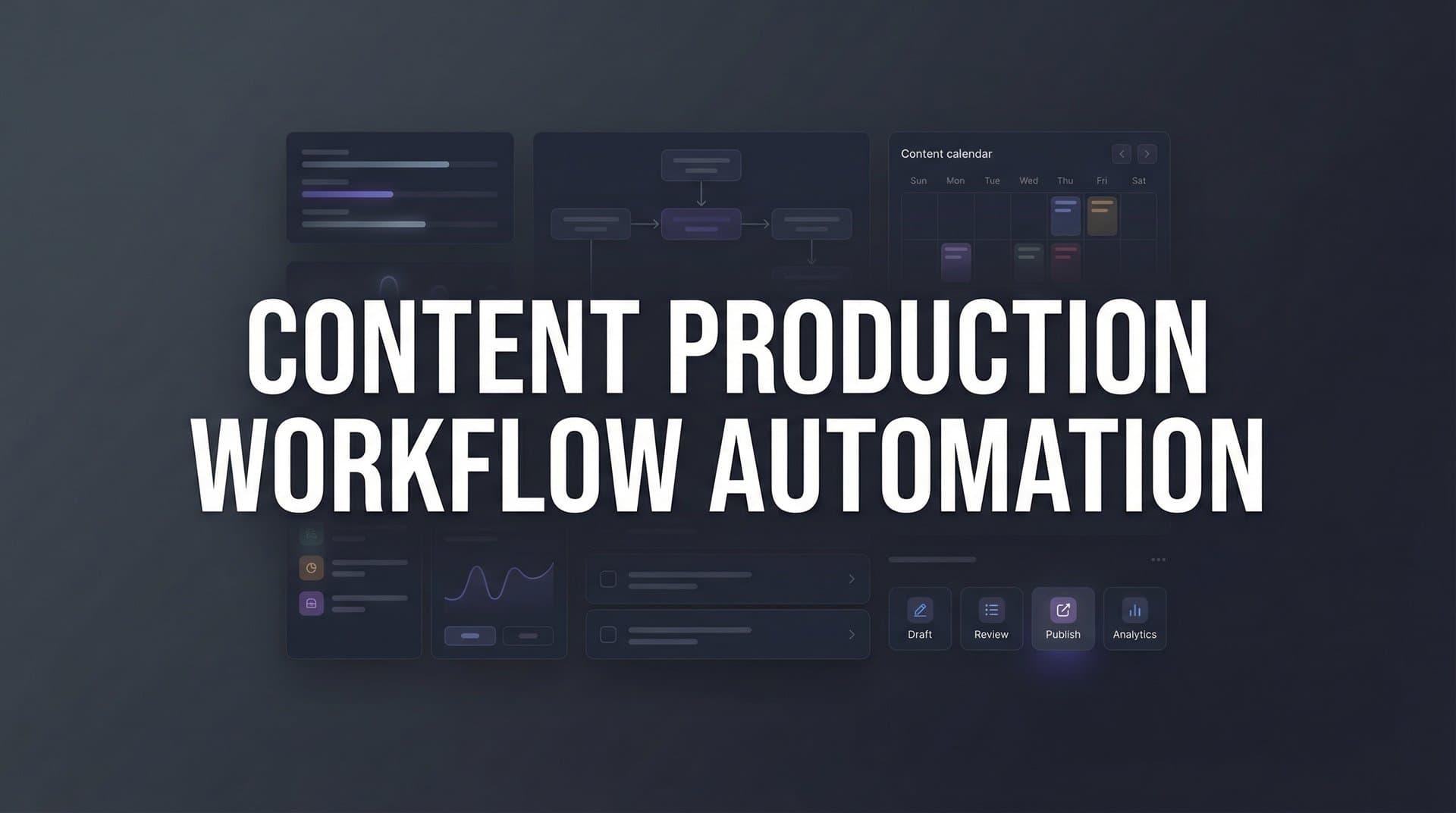
An AI content generation workflow is more than just "ask ChatGPT to write something." It's a structured system with distinct stages: ideation, research, drafting, optimization, and publishing. Each stage has clear inputs, outputs, and decision points where human judgment adds the most value.
Think of it like an assembly line, but for content. Raw materials (your strategy, keywords, audience insights) enter at one end. They move through various stations where AI and humans collaborate. What emerges is polished, optimized content ready to publish.
Here's what makes this different from traditional content processes: parallel processing. In the old model, you'd write one article start to finish, then move to the next. Linear. Sequential. Slow. With an AI workflow, you can have multiple pieces in different stages simultaneously. While AI drafts Article A, you're editing Article B and researching Article C.
The core components work together like this:
Ideation: Where topics are identified based on keyword research, audience questions, and content gaps. AI can suggest angles and variations, but humans decide what aligns with business goals. If you're struggling with this phase, exploring content generation ideas can spark new directions for your editorial calendar.
Research: Gathering data, statistics, examples, and sources that will inform the content. AI excels at summarizing information, but humans verify accuracy and relevance.
Drafting: The actual writing phase where AI generates initial content based on structured prompts and briefs. This is where AI does its heaviest lifting.
Optimization: Refining content for SEO, readability, brand voice, and AI visibility. Both AI and humans play crucial roles here—AI handles technical optimization while humans ensure strategic alignment.
Publishing: Getting content live and indexed. Modern workflows automate this stage, reducing the time from "draft complete" to "driving traffic" from days to hours.
The key decision points where human oversight matters most? Strategy setting, quality control, and brand alignment. AI can draft a thousand words in seconds, but it can't decide whether those words serve your business objectives. It can optimize for keywords, but it can't judge whether the tone matches your brand personality. It can generate examples, but it can't verify they're accurate.
This is where the workflow approach shines. By clearly defining where AI assists and where humans decide, you eliminate the chaos of ad-hoc content creation. No more wondering whether to use AI for this task or that one. No more inconsistent quality because different team members use AI differently. Just a repeatable process that gets better with each iteration.
Building Your Foundation: Strategy and Tool Selection
Before you generate a single word, you need clarity on what you're trying to achieve. An AI content generation workflow without strategic direction is like having a sports car with no destination—fast, but pointless.
Start by defining your content goals in specific, measurable terms. Are you building topical authority in a particular niche? Driving organic traffic to product pages? Establishing thought leadership? Each goal requires a different content approach, and your workflow should reflect that.
For traffic growth, you'll emphasize keyword targeting, comprehensive coverage of search intent, and rapid publishing cadence. For authority building, you'll focus on depth, original research, and expert perspectives. For conversions, you'll optimize for user intent and clear calls-to-action. Your workflow adapts to these priorities.
Now comes tool selection. The AI content landscape is crowded—dozens of platforms claiming to revolutionize your content production. Here's what actually matters: integration capabilities, output quality, and workflow automation features. A thorough SEO content generation software comparison can help you evaluate options based on your specific needs.
Integration capabilities: Can the tool connect with your CMS? Does it work with your keyword research platform? Will it publish directly or require manual copying and pasting? The more friction between tools, the slower your workflow.
Output quality: Test the AI's ability to follow detailed instructions, maintain consistent tone, and structure content logically. Generate sample articles on topics you know well. Look for factual accuracy, natural language flow, and the ability to incorporate specific examples or data points you provide.
Workflow automation: The best tools handle multiple stages of the pipeline. Look for platforms that combine content generation with SEO optimization, AI visibility tracking, and automated publishing. Every manual step you eliminate is time saved and consistency gained.
Once you've selected your tools, create content briefs and templates that guide AI output. Think of these as blueprints for your content. A good brief includes the target keyword, search intent, key points to cover, desired structure, tone guidelines, and any specific examples or data to incorporate.
Templates take this further by defining repeatable structures for different content types. Your "ultimate guide" template might specify an introduction format, section structure, and conclusion approach. Your "listicle" template outlines how to present each item. These templates ensure consistency across hundreds of pieces, even as different team members use the workflow.
The goal is to reduce decision fatigue. When you sit down to create content, you shouldn't be reinventing the process each time. You should be executing a proven system that delivers predictable results.
From Idea to Draft: Executing the AI-Assisted Writing Process
This is where your workflow comes alive. You've got strategy, tools, and templates. Now you need to transform ideas into actual content—at scale, with quality, systematically.
The secret to great AI-generated content is in the prompt structure. Vague instructions produce vague output. Detailed, specific prompts that provide context, constraints, and examples produce content that needs minimal editing. Your prompt should answer these questions: What is the article about? Who is it for? What tone should it use? What structure should it follow? What key points must it cover?
Let's say you're creating a guide about email marketing automation. A weak prompt: "Write an article about email marketing automation." A strong prompt: "Write a comprehensive guide for small business owners who want to implement email marketing automation. Use a conversational, encouraging tone. Cover these sections: benefits of automation, choosing the right platform, setting up your first workflow, common mistakes to avoid. Include practical examples and avoid technical jargon. Target length: 2000 words."
The difference in output quality is dramatic.
But even with perfect prompts, AI drafts are rarely publish-ready. This is where the iterative refinement process comes in. Think of it as collaborative editing between you and the AI. The first draft establishes structure and covers key points. Your first review identifies gaps, awkward phrasing, or sections that need expansion. You provide specific feedback, and the AI refines those sections.
This iteration cycle is faster than writing from scratch but more thorough than light editing. You're not just fixing typos—you're shaping the content to match your vision. Maybe the introduction needs a stronger hook. Maybe a section requires a more detailed example. Maybe the conclusion should emphasize a different takeaway.
Maintaining brand voice throughout this process requires clear guidelines and consistent feedback. Create a brand voice document that defines your tone, preferred phrases, words to avoid, and example sentences that capture your style. Reference this document when crafting prompts and when reviewing AI output.
Factual accuracy is non-negotiable. AI can generate plausible-sounding content that's completely wrong. Your workflow must include verification steps. When AI cites statistics, check the sources. When it makes claims about how something works, verify against authoritative sources. When it references companies or case studies, confirm they're real and accurately described.
Here's a practical approach: as you review each draft, highlight any claim that seems specific or surprising. Then verify it. If you can't confirm it's accurate, either remove it or rewrite it in more general terms. Better to say "many companies find this approach effective" than to cite a fake statistic about effectiveness rates.
The editing phase is also where you inject personality and originality. AI tends toward generic phrasing and predictable structures. You add the unexpected analogies, the conversational asides, the specific examples from your industry experience. These human touches transform competent AI drafts into engaging content that resonates with readers.
Optimization Layers: SEO, GEO, and AI Visibility
You've got a solid draft. Now you need to ensure it actually gets found, read, and referenced—by both search engines and AI models.
Traditional SEO optimization remains foundational. Your workflow should integrate keyword research from the start, not as an afterthought. Identify your target keyword and related terms before drafting begins. Include them in your content brief so AI can naturally incorporate them throughout the piece. Understanding content generation with SEO optimization principles ensures your workflow produces search-friendly content from the start.
On-page SEO elements follow a checklist: target keyword in the title, naturally used throughout the content, present in at least one heading. Related keywords and semantic variations distributed across sections. Internal links to relevant content on your site. Meta description that includes the keyword and entices clicks. Clear, descriptive headings that structure the content logically.
But here's what's changing: optimization for AI search engines and generative experiences. When someone asks ChatGPT or Claude a question, these models pull from their training data and real-time sources to construct answers. If your content is well-structured, authoritative, and comprehensive, it's more likely to be referenced.
This is Generative Engine Optimization—making your content AI-friendly. It means writing in clear, definitive language that AI models can easily parse and quote. It means structuring information hierarchically so key points are easy to extract. It means building topical authority so AI models recognize your site as a credible source.
Practical GEO tactics include using question-based headings that match how people query AI models, providing direct answers to common questions, including relevant statistics and data that AI can cite, and creating comprehensive coverage of topics rather than surface-level overviews.
But optimization doesn't stop at publication. You need visibility into how AI models actually talk about your brand and content. Are they mentioning you when users ask relevant questions? Are they recommending your articles? What's the sentiment when they reference your brand?
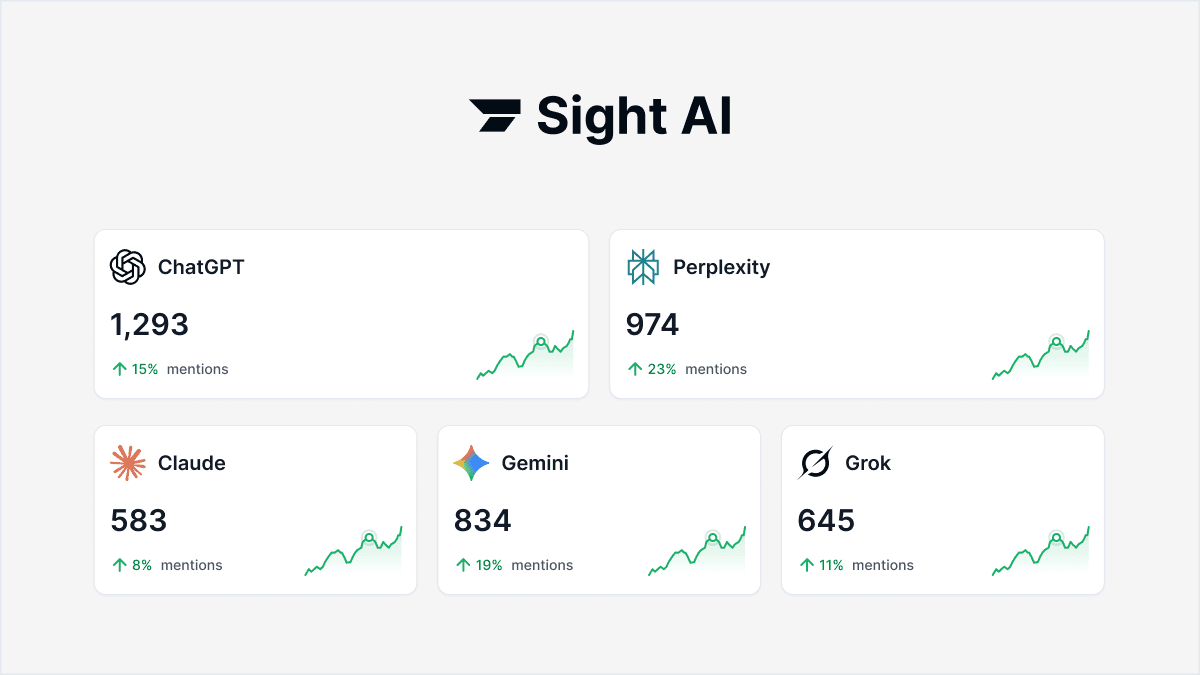
This is where AI visibility tracking becomes crucial. Instead of guessing whether your content strategy is working in the AI search landscape, you can see exactly where and how your brand appears across platforms like ChatGPT, Claude, and Perplexity. You can track which content pieces get referenced most often, identify new content opportunities based on questions AI models struggle to answer well, and measure the real impact of your optimization efforts.
Your workflow should include regular visibility audits. Check how AI models respond to questions in your niche. See if they mention your brand or competitors. Identify gaps where you could create content that AI models would reference. Use these insights to inform your content strategy and refine your optimization approach.
Publishing and Indexing: Closing the Loop
Your content is optimized and ready. The final stage of your workflow determines how quickly it starts driving results.
Manual publishing is a workflow killer. Copying content into your CMS, formatting it, adding images, setting categories, scheduling publication—these tasks add up. Multiply them across dozens of articles per month, and you've got hours of work that adds zero strategic value.
Automate it. Modern content platforms offer CMS integrations that publish directly to WordPress, Webflow, and other popular systems. Implementing content publishing workflow automation allows you to generate content, review it, approve it, and have it automatically published with proper formatting, metadata, and scheduling. No copying, no manual formatting, no room for publishing errors.
But publication is only half the equation. Your content won't drive traffic until search engines discover and index it. Traditional indexing can take days or even weeks—time during which your content sits invisible to potential readers.
This is where instant indexing protocols change the game. Technologies like IndexNow allow you to notify search engines immediately when you publish new content. Instead of waiting for search engine crawlers to eventually find your article, you're actively telling them "this content is live and ready to be indexed."
The impact on your workflow is significant. Content you publish Monday morning can start appearing in search results by Monday afternoon instead of the following week. Your content calendar becomes more responsive—you can create timely pieces about trending topics and get them indexed while the topic is still hot.
But the workflow doesn't end at publication. You need feedback loops that measure performance and inform future content decisions. Set up tracking for key metrics: organic traffic, keyword rankings, time on page, conversions, and AI visibility mentions.
Review this data regularly. Which content types perform best? Which topics drive the most traffic? Which articles get referenced by AI models most often? Use these insights to refine your content strategy, adjust your templates, and optimize your workflow.
Create a simple performance dashboard that shows these metrics at a glance. When you plan your next batch of content, reference this data. Double down on what's working. Experiment with variations on successful formats. Retire approaches that consistently underperform.
This closes the loop. Your workflow becomes self-improving. Each content cycle generates data that makes the next cycle more effective. You're not just producing content—you're building an increasingly efficient content engine.
Putting It All Together: Your Workflow Action Plan
You've seen the components. Now here's how to actually implement your AI content generation workflow, step by step.
Week 1: Foundation Setup. Define your content goals and success metrics. Document your brand voice guidelines. Research and select your AI content generation tools based on integration capabilities and output quality. Set up accounts and integrations with your CMS.
Week 2: Template Creation. Build content briefs for your top three content types. Create detailed templates that specify structure, tone, and key elements. Test these templates by generating sample content and refining based on output quality.
Week 3: Process Documentation. Write down your workflow steps from ideation through publishing. Assign responsibilities for each stage. Create checklists for quality control and optimization. Set up your performance tracking dashboard.
Week 4: Pilot Run. Execute your workflow on five pieces of content. Track time spent at each stage. Identify bottlenecks and friction points. Gather feedback from team members involved in the process.
Ongoing: Refinement and Scaling. Review performance data monthly. Update templates based on what's working. Streamline steps that create unnecessary friction. Gradually increase content volume as the workflow becomes more efficient. For teams managing high-volume production, exploring content at scale generation software can unlock the next level of output.
Common pitfalls to avoid: trying to automate too much too quickly. Start with semi-automated processes and increase automation as you gain confidence. Skipping the strategy phase and jumping straight to content generation. Without clear goals, you'll produce content that doesn't serve your business. Neglecting quality control in favor of volume. A workflow that produces mediocre content at scale is worse than no workflow at all.
When you encounter workflow bottlenecks, ask these questions: Is this step necessary, or is it legacy process? Can this decision be made earlier in the workflow? Can this manual task be automated? Is this quality check catching real issues, or is it just creating busywork?
Troubleshooting inconsistent output quality? Revisit your prompts and templates. Add more specific guidelines. Include examples of good output. Provide clearer context about audience and purpose. Sometimes the issue isn't the AI—it's insufficient instruction.
As you scale, maintain quality by establishing clear approval gates. Not every piece needs the same level of review, but every piece should meet minimum standards. Create tiered review processes: quick checks for routine content, thorough reviews for flagship pieces, automated checks for technical SEO elements. Agencies handling multiple clients should explore AI content generation for agencies to manage diverse brand voices efficiently.
Your Path to Systematic Content Success
An effective AI content generation workflow isn't about replacing human creativity with artificial intelligence. It's about amplifying what your team does best—strategic thinking, quality judgment, brand storytelling—by offloading the mechanical aspects of content production to AI.
When you build the right workflow, content creation shifts from overwhelming to manageable. From unpredictable to systematic. From a bottleneck to a competitive advantage. You can finally meet the demand for consistent, high-quality content without burning out your team or sacrificing quality for quantity.
The competitive landscape makes this approach essential, not optional. Your competitors are already using AI to scale their content production. The question isn't whether to adopt AI workflows—it's whether you'll implement them strategically or haphazardly. Whether you'll build systematic processes that improve over time or rely on ad-hoc approaches that create inconsistent results.
But here's what most content teams miss: the workflow doesn't end with publishing. You need visibility into how your content performs not just in traditional search, but across AI platforms where more users are finding information. You need to know which pieces AI models reference, what questions they're answering with your content, and where opportunities exist to increase your AI visibility.
This complete picture—from content generation through AI visibility tracking—is what transforms content from a cost center into a growth engine. When you can see exactly how AI models talk about your brand, identify content gaps that AI struggles to answer, and automatically index new content for rapid discovery, you're not just producing content. You're building systematic visibility across every channel where your audience searches for information.
Stop guessing how AI models like ChatGPT and Claude talk about your brand—get visibility into every mention, track content opportunities, and automate your path to organic traffic growth. Start tracking your AI visibility today and see exactly where your brand appears across top AI platforms.