You've published content, waited weeks for it to get indexed, and watched traffic trickle in at a frustratingly slow pace. Meanwhile, competitors seem to be gaining momentum faster than ever. The traditional playbook of "create great content and wait" no longer cuts it when you're competing against teams leveraging AI-powered workflows that compress months of work into days.
The shift isn't just about speed—it's about strategic efficiency. AI content tools have evolved beyond simple text generation into sophisticated systems that can produce SEO-optimized articles, maintain brand consistency, and target specific search intents. But here's what most marketers miss: faster organic traffic requires more than just AI-generated content. You need a complete system that identifies opportunities, produces optimized material, ensures rapid discovery by search engines, and tracks performance across both traditional search and emerging AI platforms.
This guide walks you through six concrete steps that transform AI content from a novelty into a growth engine. Whether you're a founder bootstrapping your first hundred visitors, a marketer managing multiple campaigns, or an agency scaling client results, you'll learn exactly how to audit opportunities, build efficient workflows, optimize for dual visibility, accelerate indexing, scale production, and measure what matters. No theory—just actionable steps you can implement this week.
Step 1: Audit Your Current Content Gaps and Quick-Win Opportunities
Before you generate a single piece of AI content, you need to know where to aim. Think of this like a treasure map—you're identifying buried opportunities that competitors haven't fully exploited yet.
Start by analyzing your existing content performance. Pull up your analytics and identify pages that rank on page two or three for valuable keywords. These are your quick wins—content that's already in the game but needs a boost. Look for pages receiving impressions but low clicks, or ranking for related terms but missing the primary target keyword.
Next, conduct keyword research specifically for low-competition, high-intent opportunities. You're looking for keywords with clear commercial or informational intent that don't have ten authoritative sites dominating the first page. Tools like Ahrefs, SEMrush, or even Google's own keyword planner can surface these gaps. Pay special attention to long-tail variations and question-based queries—these often have less competition and convert better.
Map what your competitors are ranking for that you're not. This isn't about copying—it's about understanding market coverage. If three competitors all rank for "best [your category] for small businesses" and you don't have that content, you've found a gap worth filling. Understanding how blogging grows organic traffic can help you prioritize which gaps to fill first.
Create a prioritization matrix. On one axis, plot traffic potential (search volume, conversion likelihood). On the other, plot effort required (competition level, content complexity). Your sweet spot is high traffic potential with medium to low effort. These become your first targets.
Build a spreadsheet with 20-30 prioritized opportunities. Include target keyword, current ranking position (if any), estimated monthly search volume, competition assessment, and content type needed. This becomes your production roadmap.
Success indicator: You have a documented list of content opportunities ranked by ROI potential, with clear targets for the next 30-60 days. You know exactly what to create and why it matters.
Step 2: Build Your AI Content Generation Workflow
A workflow isn't just a tool—it's a repeatable system that produces consistent results. Your goal here is to create a documented process that takes you from keyword to publish-ready draft in under 30 minutes.
Select AI content tools based on your specific needs. Different content formats require different approaches. Listicles benefit from tools that can research and compare options systematically. Step-by-step guides need logical sequencing and clear instruction formatting. Explainer articles require depth and clarity. Modern AI content creation with SEO optimization often includes specialized agents for each format—use them strategically rather than forcing one tool to do everything.
Configure your brand voice settings upfront. Feed your AI system examples of your best existing content, key messaging documents, and tone guidelines. The more context you provide about how your brand communicates, the less editing you'll need later. Include specific terminology your audience uses, phrases to avoid, and the level of technical depth appropriate for your readers.
Create content brief templates that guide AI output toward search intent. A good brief includes target keyword, related terms to incorporate naturally, user questions to answer, content structure preferences, and desired word count range. Think of these briefs as instructions you'd give a human writer—specific enough to ensure quality, flexible enough to allow natural expression.
Establish quality checkpoints before anything goes live. This might include fact-checking claims, verifying that examples are relevant and current, ensuring proper attribution for any referenced sources, and confirming that the content actually answers the target query comprehensively. Your workflow should include a review stage, even if you're the only person on the team.
Document everything. Write down each step of your workflow, including which tools you use at each stage, what settings work best, and common issues you've solved. This documentation becomes invaluable when you scale or bring team members onboard.
Success indicator: You can move from approved content brief to publish-ready draft in under 30 minutes consistently. The content requires minimal editing and maintains your brand voice throughout.
Step 3: Optimize Content for Both Search Engines and AI Models
Here's where the landscape has fundamentally changed. You're no longer just optimizing for Google's crawlers—you're also optimizing for how AI models like ChatGPT, Claude, and Perplexity consume and cite information. The good news? Many optimization principles overlap.
Structure content with clear hierarchies. Use descriptive headings that accurately reflect section content. Search crawlers and AI models both rely on heading structure to understand content organization and importance. Your H2 and H3 tags should create a logical outline that makes sense even without reading the body text.
Include semantic variations and related entities naturally throughout your content. Instead of repeating the exact target keyword mechanically, use natural language that covers the topic comprehensively. If you're writing about "email marketing automation," naturally incorporate related terms like "automated email sequences," "drip campaigns," and "behavioral triggers." This helps both search engines understand topic relevance and AI models recognize your content as authoritative on the subject.
Add structured data markup where appropriate. Schema.org markup helps search engines display rich results and provides clear signals about content type and purpose. For how-to guides, use HowTo schema. For articles, use Article schema with proper author and publication date information. Leveraging an AI content generator with SEO features can automate much of this optimization work.
Write content that answers questions directly and comprehensively. AI models source information from content that provides clear, authoritative answers. When you address a question, state the answer explicitly before diving into supporting details. This direct approach serves both human readers scanning for quick answers and AI models extracting information to include in responses.
Success indicator: Your content passes technical SEO audits with proper heading hierarchy, includes natural semantic variations, implements appropriate structured data, and provides direct answers to target queries. Most importantly, it reads naturally and engages human readers—if it feels robotic or keyword-stuffed, you've missed the mark.
Step 4: Accelerate Indexing with Automated Submission
Publishing content is only half the battle. If search engines take weeks to discover and index your new pages, you're losing valuable time when that content could be driving traffic. Automated indexing submission dramatically reduces this lag.
Implement IndexNow protocol on your website. IndexNow for faster content discovery is supported by Microsoft Bing and Yandex, allowing you to notify these search engines instantly when content is published or updated. Instead of waiting for crawlers to eventually discover your new page, you're actively telling search engines it exists. Implementation typically involves adding a simple API call that triggers when content goes live.
Set up automated sitemap updates. Your XML sitemap should regenerate automatically whenever new content publishes. Many content management systems can handle this natively, or you can use plugins and integrations to ensure your sitemap stays current. Search engines rely on sitemaps to discover new content efficiently—an outdated sitemap means delayed indexing.
Monitor indexing status actively rather than passively. Use Google Search Console to track when new URLs are discovered, crawled, and indexed. If you notice pages stuck in "Discovered - currently not indexed" status, investigate potential issues like thin content, duplicate content flags, or crawl budget limitations. Learning how to get content indexed faster can help you troubleshoot these common problems.
Avoid common technical misconfigurations that delay indexing. Check that your robots.txt file isn't accidentally blocking important pages. Verify that your site's crawl budget isn't being wasted on low-value pages. Ensure your site speed is acceptable—slow-loading pages often get deprioritized in crawl queues. Fix broken internal links that prevent crawlers from discovering new content.
Success indicator: New content appears in search engine indexes within 24-48 hours instead of the traditional 1-2 weeks. You have visibility into indexing status and can troubleshoot issues quickly when they arise.
Step 5: Scale Content Production Without Sacrificing Quality
Velocity matters, but only when quality remains consistent. The goal isn't to flood the internet with mediocre content—it's to produce valuable material at a pace that compounds your organic visibility.
Establish content calendars that balance quantity with strategic timing. Rather than randomly publishing whenever content is ready, plan publication schedules that align with seasonal trends, product launches, or industry events. Batch similar content types together—if you're creating multiple comparison articles, produce them in sequence while your research and framework are fresh.
Use AI content writing with multiple agents for different content formats. Modern AI content platforms often include agents optimized for specific tasks—one for research and outlining, another for writing body content, another for creating compelling introductions. Leveraging these specialized capabilities produces better results than forcing a single general-purpose tool to handle everything. Think of it like an assembly line where each station has a specific expertise.
Implement editorial review processes that catch errors without creating bottlenecks. This might mean using AI-powered grammar and style checkers as a first pass, then having human reviewers focus on strategic elements like brand alignment, factual accuracy, and whether the content truly serves user intent. The key is identifying which quality checks can be automated and which require human judgment.
Batch similar content types for production efficiency. If you're creating five "best [product category]" articles, develop a template and workflow that works for all five, then execute them in sequence. Explore bulk content creation with AI to maximize your output while maintaining consistency across pieces.
Success indicator: You're publishing three to five times more content than before while maintaining or improving engagement metrics like time on page, bounce rate, and conversion rates. Your analytics show that newer content performs as well or better than older manually-created content.
Step 6: Track Performance Across Search and AI Platforms
What you don't measure, you can't improve. Comprehensive tracking reveals which strategies work, which content types drive results, and where to focus future efforts.
Monitor traditional organic traffic metrics consistently. Track keyword rankings, organic clicks, impressions, and click-through rates in Google Search Console. Identify which content pieces are gaining traction and which are stagnating. Look for patterns—do certain content formats consistently outperform others? Do specific topic clusters drive more engagement? Using an SEO content platform with analytics can centralize this data for easier analysis.
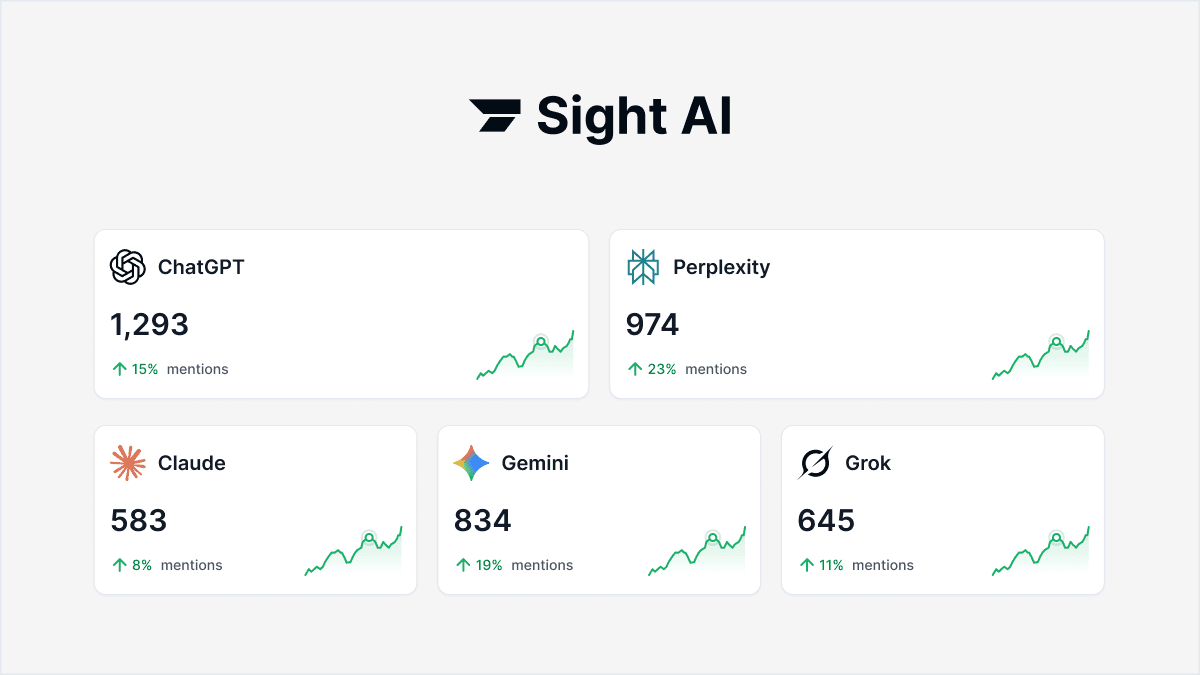
Track how AI models reference and recommend your content. This emerging practice, sometimes called AI visibility tracking, monitors whether platforms like ChatGPT, Claude, or Perplexity mention your brand, cite your content, or recommend your products when users ask relevant questions. This visibility matters increasingly as more users turn to AI platforms for research and recommendations before ever visiting traditional search engines.
Analyze which content types drive the fastest traffic growth. Compare performance across listicles, guides, explainers, and other formats you're producing. You might discover that step-by-step guides consistently drive more organic traffic than comparison articles, or that explainer content gets cited more frequently by AI models. These insights inform your content strategy going forward.
Iterate based on data rather than assumptions. Double down on content types and topics that demonstrate strong performance. Retire or refresh content that's underperforming despite optimization efforts. Update high-performing content regularly to maintain freshness and accuracy. Let your analytics drive decisions about where to invest production resources.
Success indicator: You have clear visibility into both traditional search performance and AI platform mentions. You can answer questions like "Which content drove the most organic traffic this month?" and "How often are AI models recommending our brand?" with concrete data. Most importantly, you're using these insights to continuously refine your content strategy.
Putting It All Together: Your Implementation Roadmap
Faster organic traffic with AI content isn't about shortcuts or gaming the system. It's about working smarter at every stage of the content lifecycle—from identifying opportunities to tracking results. The six steps you've learned create a compounding growth engine that accelerates results while maintaining quality.
Here's your quick implementation checklist to get started immediately:
Week 1: Complete your content gap audit and prioritize 20-30 opportunities by ROI potential. This foundation determines everything that follows.
Week 2: Configure your AI content workflow with brand voice settings and quality checkpoints. Document the process so it's repeatable.
Week 3: Optimize your first batch of content for both SEO and AI visibility. Focus on clear structure, semantic richness, and direct answers to target queries.
Week 4: Set up IndexNow and automated sitemap updates to accelerate indexing. Monitor results to ensure new content appears in search indexes within 48 hours.
Ongoing: Establish your sustainable publishing cadence and implement comprehensive tracking across search and AI platforms. Use performance data to continuously refine your approach.
The landscape has shifted. Traditional search engines remain important, but AI platforms are increasingly where users start their research. Your content needs to perform in both environments. By implementing these six steps, you're building a system that adapts to this new reality while driving measurable traffic growth.
Start with Step 1 today. Audit your opportunities, identify your quick wins, and you'll have your first AI-optimized content live within the week. The compounding effects of consistent, strategic content production will become evident within the first month—and accelerate from there.
Start tracking your AI visibility today and see exactly where your brand appears across top AI platforms. Stop guessing how AI models like ChatGPT and Claude talk about your brand—get visibility into every mention, track content opportunities, and automate your path to organic traffic growth.