AI content writing tools have evolved far beyond simple text generation. In 2026, the best platforms don't just produce words: they optimize for traditional search engines and the AI models (ChatGPT, Perplexity, Claude) that millions of users now query directly. That dual focus, SEO plus Generative Engine Optimization (GEO), is what separates genuinely useful tools from glorified autocomplete.
This comparison covers six platforms built for marketers, founders, and agencies who need content that ranks on Google and gets cited by AI. We evaluated each tool on content quality, SEO/GEO optimization depth, workflow automation, and how well it integrates with broader visibility strategies. Whether you're scaling a content operation or trying to get your brand mentioned in AI-generated answers, this guide will help you choose the right tool for the job.
1. Sight AI
Best for: Marketers and agencies who need content creation, AI visibility tracking, and indexing in one platform
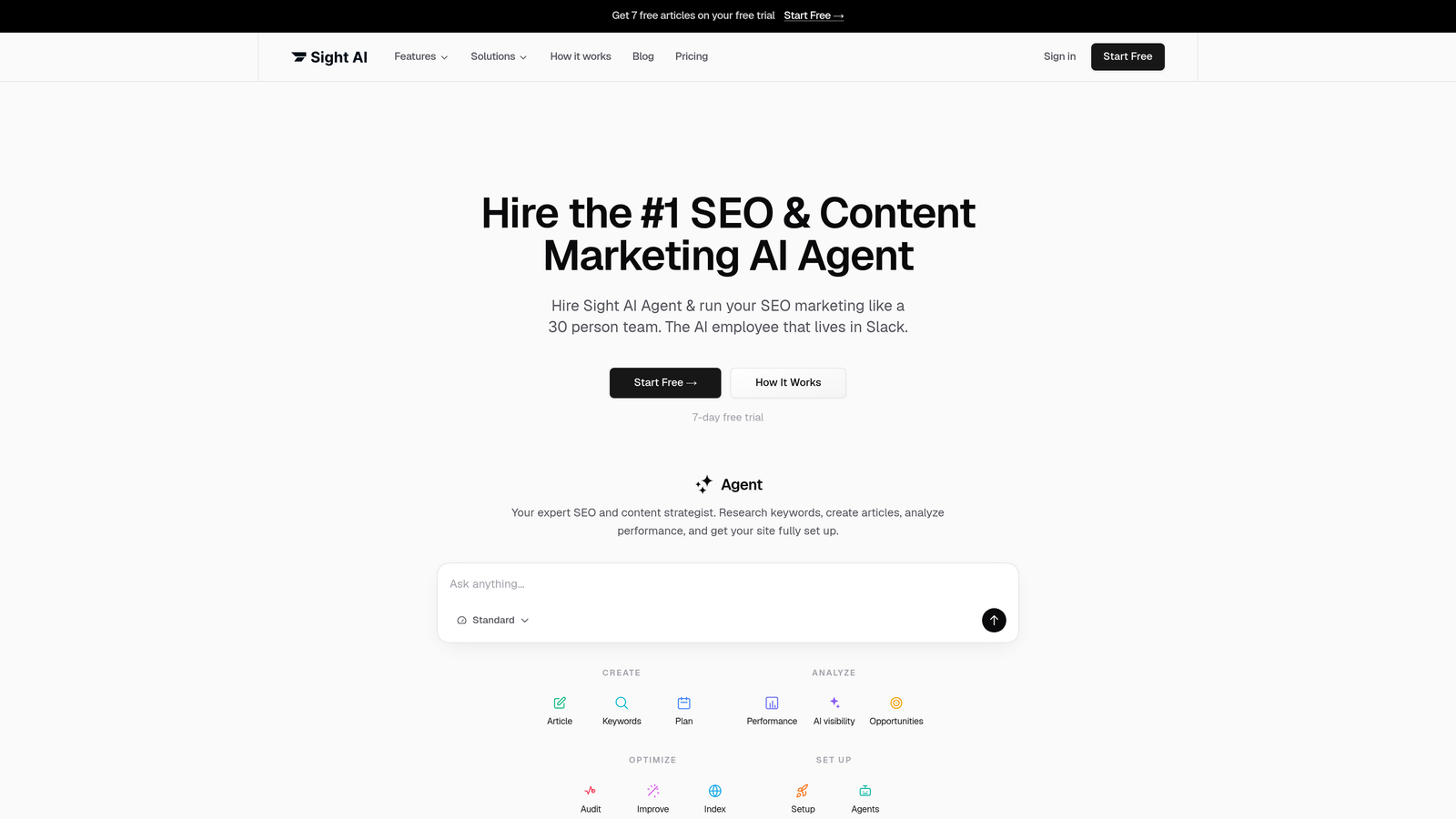
Sight AI is an all-in-one platform combining an AI Content Writer, AI Visibility tracking across 6+ AI platforms, and IndexNow-powered website indexing.
Where This Tool Shines
Most AI writing tools stop at content generation. Sight AI goes further by closing the loop between what you publish and how AI models actually talk about your brand. That combination is genuinely rare: you can create a GEO-optimized article, publish it automatically, index it via IndexNow, and then track whether ChatGPT, Claude, or Perplexity starts citing your brand, all within the same platform.
The 13+ specialized AI agents are designed for specific content formats, so you're not feeding a generic prompt into a general-purpose model and hoping for the best. Each agent is tuned for listicles, how-to guides, explainers, and other formats that tend to perform well in both traditional search and AI-generated answers. Autopilot Mode takes this further by automating the entire creation-to-publishing workflow, which is a meaningful time saver for teams running high-volume content operations.
Key Features
13+ Specialized AI Agents: Purpose-built agents for SEO/GEO-optimized listicles, guides, and explainers, each tuned to the specific format rather than relying on a single general-purpose model.
AI Visibility Score: A proprietary metric that tracks brand mention frequency and sentiment across ChatGPT, Claude, Perplexity, and three or more additional AI platforms.
Autopilot Mode: Automates the full content workflow from creation through publishing, reducing the manual steps that slow down content operations teams.
IndexNow Integration: Automated sitemap updates and IndexNow submission accelerate content discovery, getting new pages indexed faster than standard crawl cycles allow.
CMS Auto-Publishing: Connects directly to your CMS to eliminate the copy-paste deployment step that adds unnecessary friction to high-volume publishing.
Best For
Sight AI is the strongest fit for marketers, founders, and agencies who are thinking about both SEO and GEO simultaneously. If you want a single platform that handles content creation, tracks how AI models reference your brand, and automates the publishing and indexing process, this is the most complete option in this comparison.
Pricing
Multiple tiers available to suit different team sizes and publishing volumes. Visit trysight.ai for current pricing details.
2. Writesonic
Best for: High-volume content teams needing multi-format output across blog posts, ads, and social copy
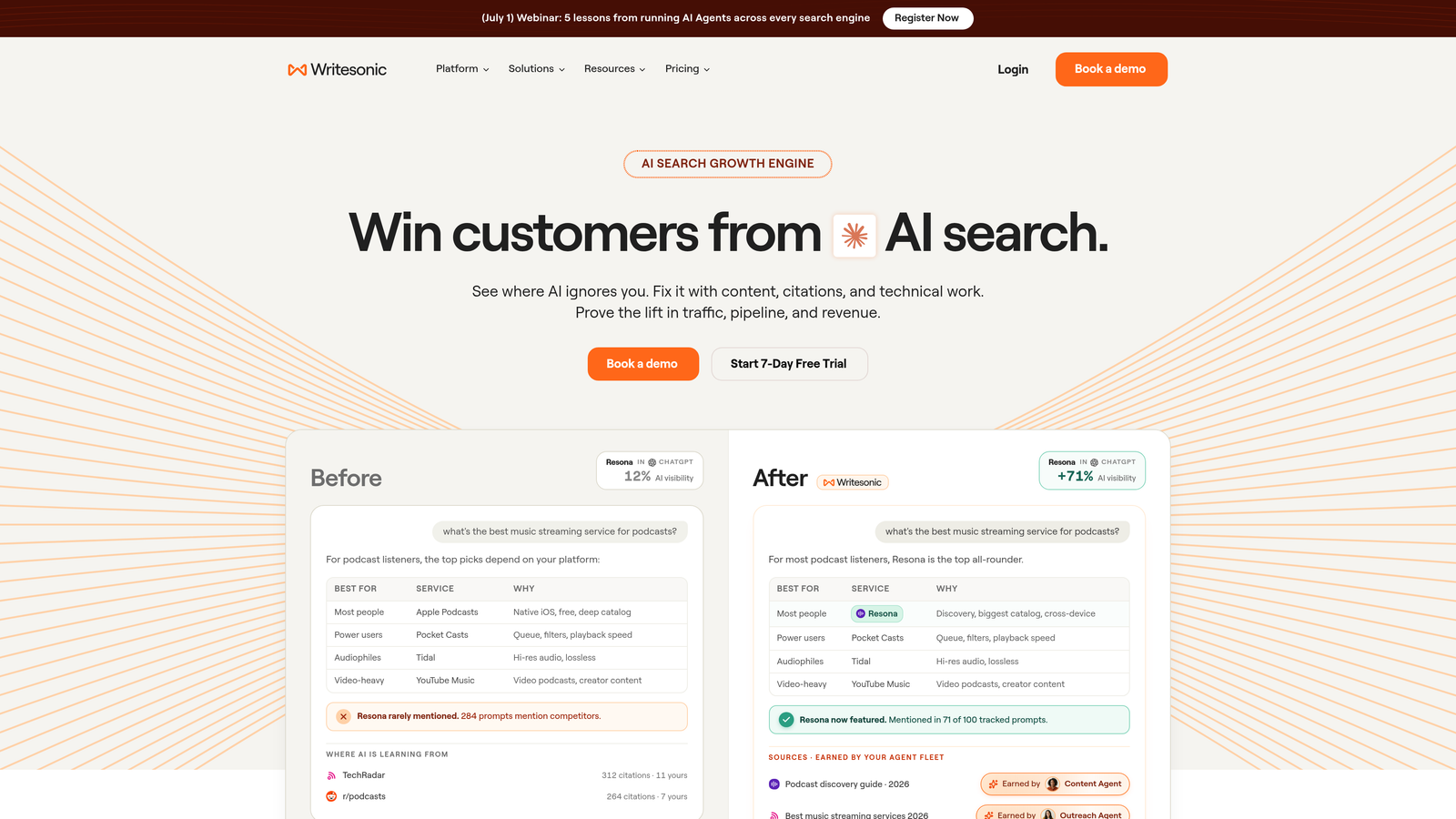
Writesonic is a versatile AI writing platform with a broad template library, multi-format content generation, and an SEO-focused writing mode.
Where This Tool Shines
Writesonic's strength is breadth. If your team produces content across many formats simultaneously, the template library covers a wide range of use cases without requiring you to build custom workflows from scratch. The accessible interface means writers can get up and running quickly, which matters when you're onboarding a larger team or working with clients who need fast turnaround.
The Chatsonic conversational AI adds a research layer that helps writers gather context before drafting, which is useful for topic areas that require more than a basic prompt. The SEO writing mode provides on-page optimization guidance, though the platform's focus remains primarily on content generation rather than GEO tracking or AI visibility monitoring.
Key Features
Broad Template Library: Covers blog posts, ads, product descriptions, social copy, and more, reducing setup time for teams working across multiple content formats.
SEO Writing Mode: Provides on-page optimization guidance to help writers align content with search intent and keyword targets.
Chatsonic: A conversational AI interface that supports research-assisted writing, letting writers gather context before or during the drafting process.
Multi-Language Support: Useful for global content teams producing localized content across multiple markets.
Team Collaboration Features: Workflow tools designed for agency environments where multiple contributors work on the same content pipeline.
Best For
Writesonic is well-suited to content teams that prioritize volume and format variety over deep GEO optimization. It works well as a standalone writing tool for teams focused on traditional SEO content, though teams with GEO goals will likely need to pair it with a dedicated AI visibility platform.
Pricing
A free tier is available for getting started. Paid plans scale with usage and team size. Visit writesonic.com for current pricing.
3. AirOps
Best for: Technical content operations teams building custom LLM-powered workflows at scale
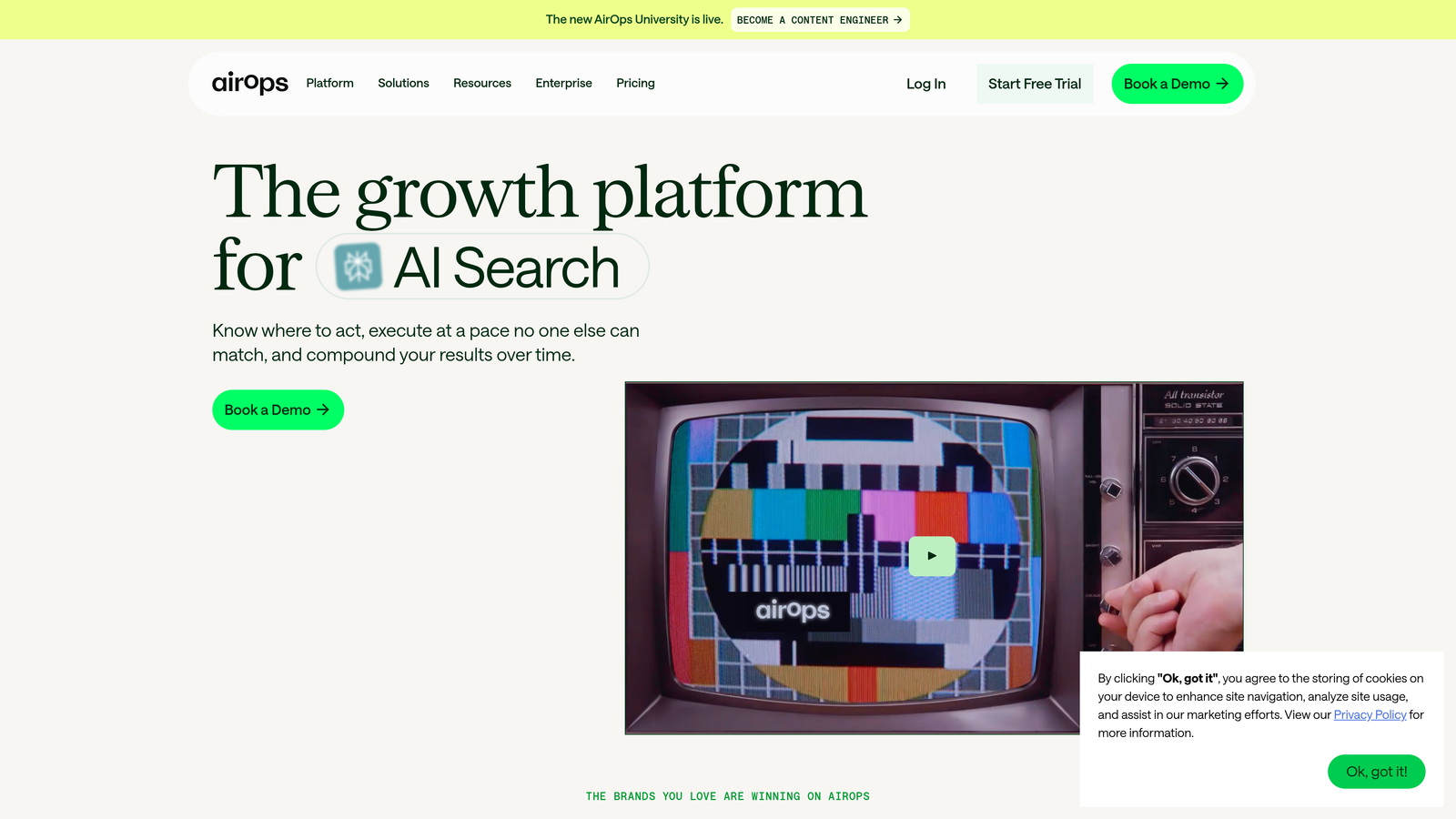
AirOps is an AI workflow automation platform that lets content teams build custom LLM-powered pipelines rather than relying on a single writing interface.
Where This Tool Shines
AirOps is built for teams that have outgrown off-the-shelf writing tools and need something more configurable. Think of it less as a writing assistant and more as a content operations layer: you define the workflow, connect your data sources, chain your prompts, and automate multi-step processes that would otherwise require manual intervention at every stage.
The ability to work with multiple LLMs within a single workflow is a meaningful advantage for teams that want to route different content tasks to the model best suited for that job. This level of customization comes with a steeper learning curve, but for ops-minded teams, the payoff is a repeatable, scalable content system rather than a collection of one-off outputs.
Key Features
Custom LLM Workflow Builder: Lets teams chain prompts and automate multi-step content processes without being locked into a single model or interface.
Multi-LLM Support: Enables routing different content tasks to different language models within the same workflow, optimizing for quality and cost.
Data Source Integrations: Connect external data to enrich content workflows, useful for teams building content from structured datasets or proprietary sources.
Repeatable Workflow Templates: Save and reuse workflow configurations to ensure consistency across large-scale content operations.
API Access: Allows technical teams to build custom content systems on top of the AirOps infrastructure.
Best For
AirOps is the right choice for technically sophisticated content operations teams that need maximum flexibility. It is not the tool for marketers who want a simple "write this article" experience. If your team includes engineers or ops specialists who can build and maintain custom workflows, AirOps offers a level of control that template-based tools cannot match.
Pricing
Plans vary based on usage and workflow complexity. Visit airops.com for current pricing details.
4. Profound
Best for: Marketers who need deep intelligence on how their brand appears in AI-generated search results
Profound is an AI search visibility and content intelligence platform focused on tracking how brands appear in AI-generated answers and identifying content gaps that affect GEO performance.
Where This Tool Shines
Profound approaches GEO from the intelligence side rather than the content creation side. If your primary question is "where does my brand appear in AI-generated answers, and where are my competitors showing up instead?", Profound is designed to answer that. The platform maps your GEO footprint across AI answer engines and surfaces the gaps that are costing you visibility.
The competitive analysis layer is particularly useful for teams that need to understand the landscape before deciding where to invest their content efforts. Rather than producing content and hoping it surfaces in AI answers, Profound gives you the data to make informed decisions about which topics and formats are most likely to improve your GEO standing.
Key Features
Brand Mention Tracking: Monitors how your brand appears across AI answer engines, providing a clear picture of your current GEO footprint.
Competitive GEO Analysis: Shows how rivals appear in AI-generated results, identifying where competitors are gaining visibility at your expense.
Content Gap Identification: Surfaces topics and formats where your brand is absent from AI answers, informing your content strategy priorities.
Content Strategy Recommendations: Translates AI visibility data into actionable guidance for improving GEO performance over time.
Reporting Dashboards: Tracks GEO progress over time, giving teams a way to measure the impact of content investments on AI visibility.
Best For
Profound works best as an intelligence layer alongside a content creation tool. It is ideal for marketers and strategists who need to understand their GEO position before deciding where to direct content efforts. Teams that want content creation and GEO monitoring in a single platform may find they need to pair Profound with a separate writing tool.
Pricing
Visit profound.com for current pricing tiers and plan details.
5. Peec
Best for: Brands tracking competitor mentions across AI answer engines to sharpen GEO content strategy
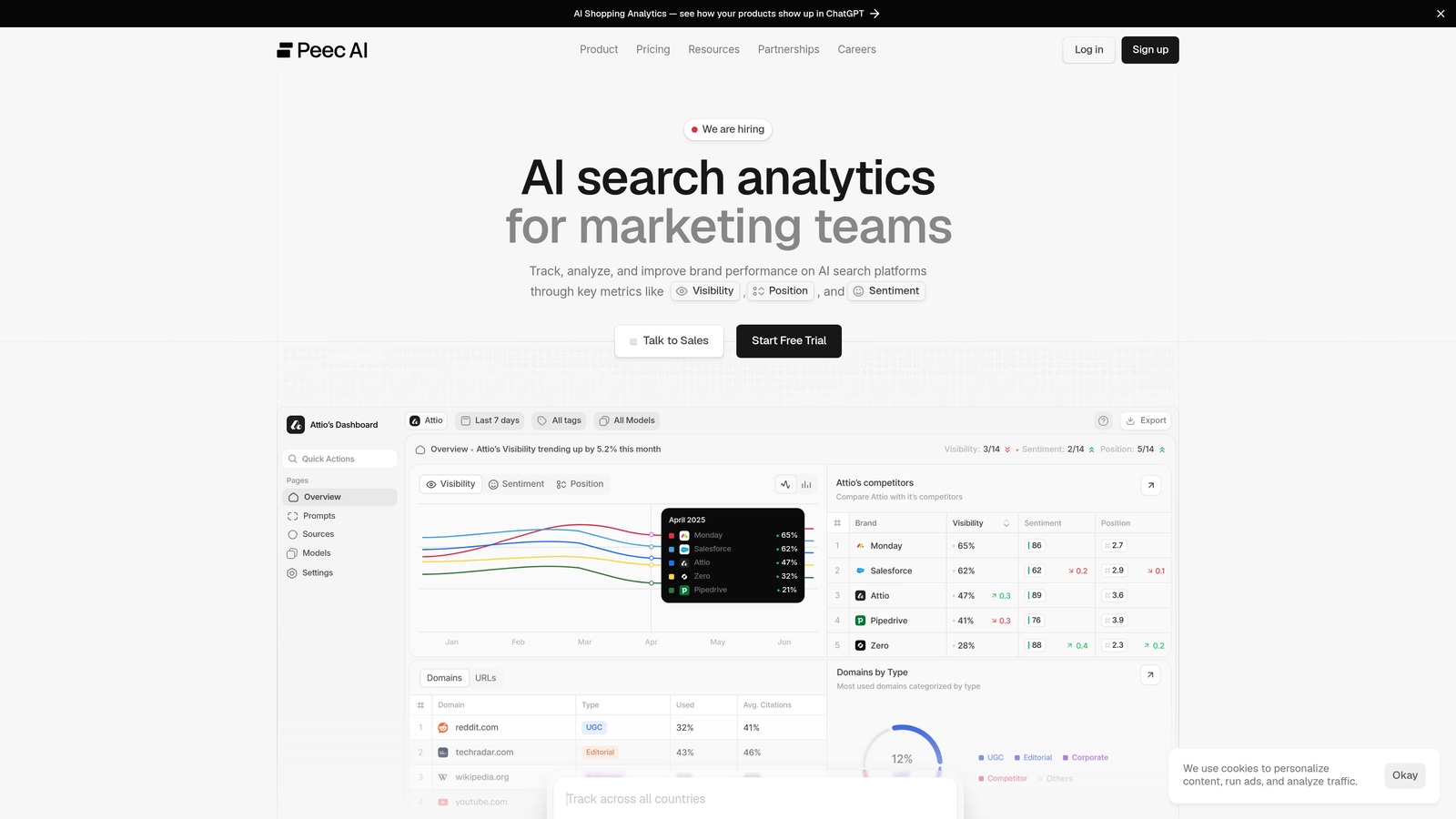
Peec is an AI visibility monitoring tool that tracks how AI answer engines reference brands and competitors, providing actionable insights for GEO-focused content strategy.
Where This Tool Shines
Peec occupies a focused niche: understanding how AI answer engines talk about your brand versus your competitors. The platform is built around monitoring and analysis rather than content generation, which means it delivers depth on the visibility side without trying to be everything at once. For teams that already have a content workflow in place and need better data to direct it, Peec adds a layer of competitive intelligence that is difficult to get from general-purpose tools.
The mention frequency and context tracking over time is particularly valuable for teams running ongoing GEO experiments. Rather than checking AI answers manually or sporadically, Peec provides a systematic view of how your brand's AI visibility evolves as you publish new content and optimize existing assets.
Key Features
AI Answer Engine Monitoring: Tracks brand and competitor mentions across major AI platforms, providing a consistent view of your GEO presence.
Competitive Brand Analysis: Compares your brand's AI visibility against competitors, identifying where rivals are outperforming you in AI-generated answers.
Content Gap Identification: Highlights topics where your brand is underrepresented in AI answers, guiding content planning decisions.
Mention Frequency and Context Tracking: Monitors how often and in what context your brand appears over time, enabling trend analysis.
Insights Dashboard: Centralizes brand visibility data into a reporting view that teams can use to track GEO progress and communicate results.
Best For
Peec is a strong fit for GEO-focused strategists who want dedicated monitoring without the overhead of a full content platform. It works best as part of a broader stack alongside a content creation tool, rather than as a standalone solution for teams that also need to produce content at scale.
Pricing
Visit peec.ai for current pricing and plan options.
6. Promptwatch
Best for: GEO strategists who want prompt-level data on which queries surface their brand in AI model outputs
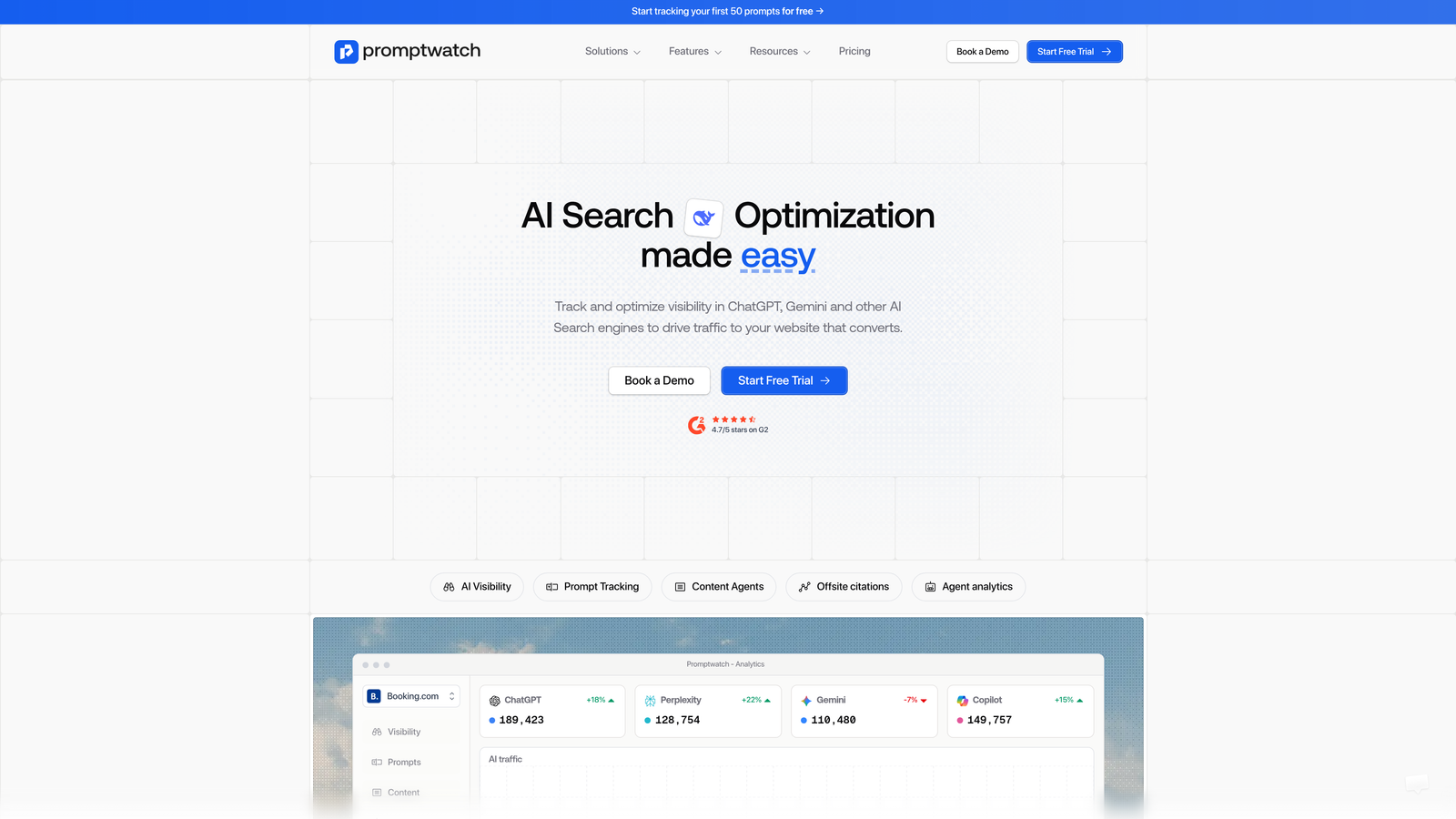
Promptwatch is a specialized prompt tracking tool that analyzes which user prompts lead to brand mentions in AI model outputs, giving content teams precise data to build a GEO-first content strategy.
Where This Tool Shines
Promptwatch is the most granular tool in this comparison. Where other GEO monitoring platforms tell you whether your brand appears in AI answers, Promptwatch tells you which specific prompts are generating those appearances. That distinction matters because it shifts your content strategy from reactive to proactive: instead of publishing content and waiting to see if AI models pick it up, you can identify the exact queries worth targeting and build content specifically designed to surface in those contexts.
The competitive prompt analysis takes this further by showing where rivals are being cited in response to prompts where your brand is absent. For teams building a GEO content strategy from the ground up, this kind of prompt-level intelligence is a meaningful accelerant, helping you prioritize content investments based on real AI search behavior rather than assumptions.
Key Features
Prompt-Level Tracking: Identifies which specific user queries surface your brand in AI model responses, providing granular data that broader monitoring tools don't offer.
Competitive Prompt Analysis: Shows which prompts are generating citations for competitors, revealing gaps in your current GEO coverage.
Content Strategy Recommendations: Translates prompt performance data into actionable guidance for building content that targets high-value AI queries.
Historical Tracking: Monitors GEO improvements over time as you publish new content targeting identified prompt opportunities.
Workflow Integration: Designed to complement broader SEO and content workflows rather than replace them, fitting into existing content operations stacks.
Best For
Promptwatch is best suited to GEO-focused content strategists who want the most precise data available on AI search behavior. It is a specialized tool rather than an all-in-one platform, so it delivers the most value when used alongside a content creation tool and a broader SEO workflow. Teams at the early stages of building a GEO strategy will find the prompt-level data particularly useful for prioritizing where to start.
Pricing
Visit promptwatch.io for current pricing and plan details.
Which Tool Is Right for Your Situation?
The right choice here depends on what stage of the SEO/GEO journey you're on and what gaps you're trying to close.
If you're looking for a single platform that handles content creation, AI visibility monitoring, and automated indexing without stitching together multiple tools, Sight AI is the most complete option in this list. The combination of 13+ specialized AI agents, an AI Visibility Score, and IndexNow-powered indexing is a genuine differentiator that none of the other platforms replicate in one place. It's particularly well-suited to marketers and agencies who want to grow organic traffic while also building a GEO presence across ChatGPT, Claude, and Perplexity.
For teams that already have a content workflow and need dedicated GEO intelligence, Profound and Peec both offer strong monitoring capabilities. Profound leans toward competitive analysis and content strategy recommendations, while Peec focuses on ongoing mention tracking and trend analysis. Promptwatch is the right addition for teams that want prompt-level granularity to inform exactly which content to create next.
If you need high-volume, multi-format content output with a simple interface, Writesonic covers that ground well. And for technically sophisticated teams that need to build custom LLM-powered workflows rather than use a pre-built interface, AirOps offers the flexibility that template-based tools can't match.
The broader trend is clear: content that earns rankings and content that gets cited by AI are increasingly the same content, structured well, genuinely useful, and published consistently. The tools that help you do all three at once are the ones worth investing in.
Stop guessing how AI models like ChatGPT and Claude talk about your brand. Start tracking your AI visibility today and see exactly where your brand appears across top AI platforms. You can also explore how to automate your content creation workflow and discover proven strategies to increase organic traffic through AI-optimized content.