The best GEO tools for enterprise teams in 2026 are Sight AI (full-stack monitoring, content and indexing), Profound (enterprise AI answer analytics), Promptwatch (prompt-level tracking), Peec (competitive share of voice), AirOps (content workflow automation) and Writesonic (high-volume content). Pick a monitoring tool if you lack AI visibility data, a workflow tool if production is the bottleneck, or an all-in-one platform if you want to consolidate the stack.
When a buyer asks ChatGPT or Perplexity to recommend a vendor in your category, the brands that appear invested in content AI models can parse, cite, and surface with confidence. Traditional SEO platforms weren't built to track AI mentions, generate content structured for answer engines, or speed indexing into AI retrieval pipelines. This guide compares the tools built for that workflow, plus how to evaluate pricing models and competitive intelligence features.
How to Evaluate an Enterprise GEO Platform
Before comparing vendors, score each candidate against the criteria that matter at enterprise scale:
- AI engine coverage: ChatGPT, Claude, Perplexity, Gemini, Google AI Overviews and AI Mode at minimum. Missing engines create blind spots in reporting.
- Prompt volume and frequency: How many prompts you can track, how often they are re-run, and whether results are sampled across regions and personas.
- Competitive intelligence: Share of voice against named competitors, citation source analysis (which URLs AI engines cite), and sentiment comparison.
- Segmentation: The ability to group prompts and scores by product line, brand, market or content pillar, essential for retail and CPG portfolios.
- Action layer: Whether the tool only reports, or also helps produce, publish and index content that closes the gaps.
- Governance: SSO, role-based access, multi-workspace support, API/data export and audit trails.
Enterprise GEO Tools Compared
| Tool | Primary strength | Monitoring | Content production | Competitive benchmarking |
|---|---|---|---|---|
| Sight AI | Closed-loop GEO platform | Yes | Yes (AI agents, autopilot) | Yes |
| Profound | Enterprise answer-engine analytics | Yes | Limited | Yes |
| Promptwatch | Prompt-level gap analysis | Yes | Limited | Partial |
| Peec | AI share of voice | Yes | No | Yes (core focus) |
| AirOps | Content workflow automation | Limited | Yes | No |
| Writesonic | High-volume multi-format content | Partial | Yes | Limited |
1. Sight AI
Best for: Enterprise teams that want a closed-loop GEO platform combining AI visibility tracking, content generation, and indexing.
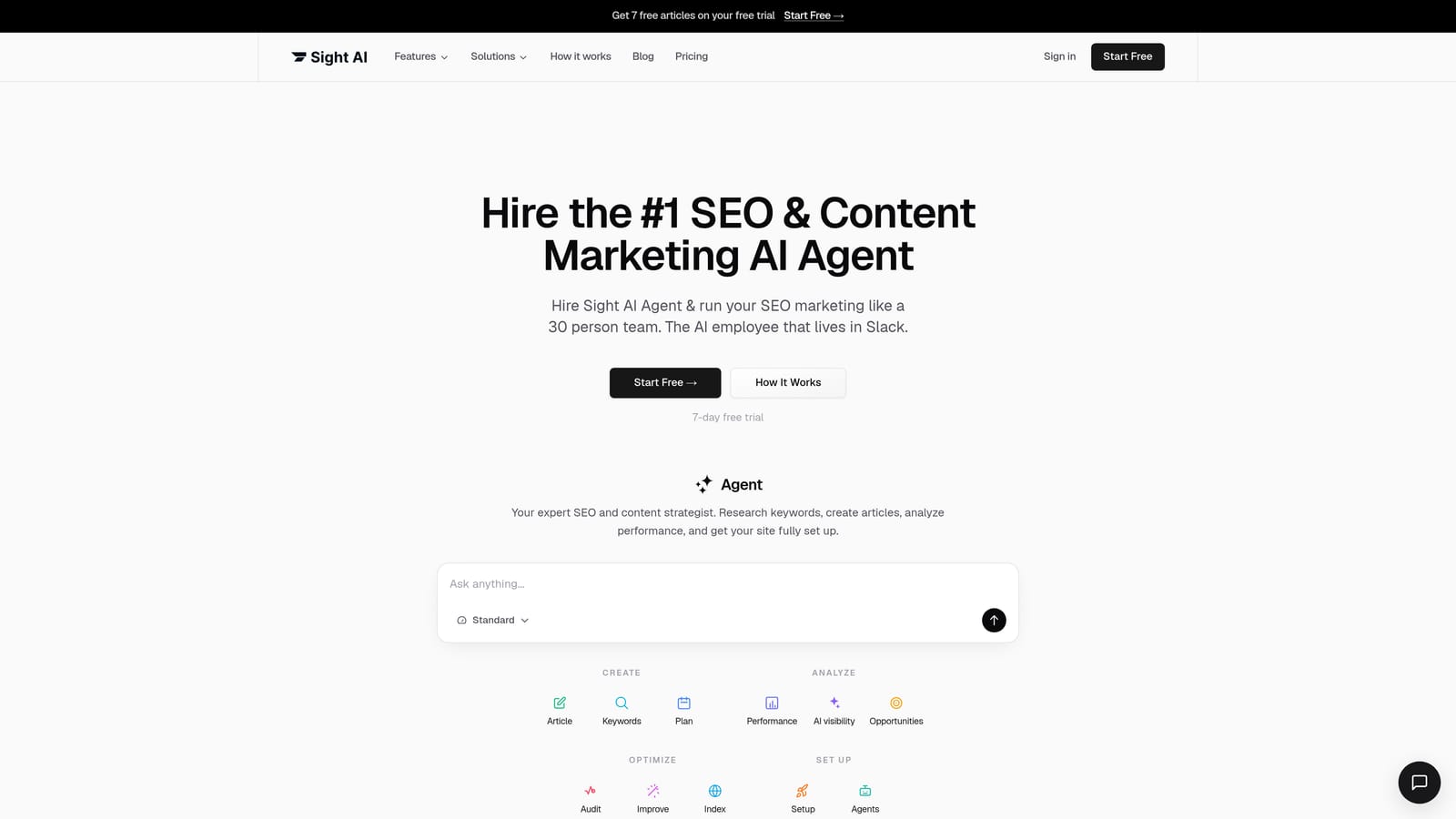
Sight AI is an all-in-one GEO platform that monitors brand mentions across AI models, generates SEO/GEO-optimized content at scale, and automates indexing through IndexNow integration.
Where This Tool Shines
Most enterprise teams cobble together three or four separate tools to cover the GEO workflow: one for AI monitoring, another for content production, and a third for indexing. Sight AI collapses that stack into a single platform. The result is a feedback loop that most point solutions can't offer: you see which prompts are surfacing (or missing) your brand, generate content to close those gaps, and push that content to indexing pipelines almost immediately.
The AI Visibility Score is particularly useful for enterprise stakeholders who need a single metric to track progress over time. Rather than exporting raw mention data and building your own reporting, you get structured analytics that are ready for executive or cross-team sharing.
Key Features
AI Visibility Score: Tracks brand mentions across ChatGPT, Claude, Perplexity, and 3+ additional AI platforms, with AI brand sentiment analysis to show not just whether your brand appears but how it's framed.
Prompt Tracking: Identifies which specific queries are driving AI mentions and which ones are missing your brand entirely, giving content teams a prioritized roadmap.
13+ Specialized AI Agents: Generates GEO and SEO-optimized content in multiple formats including listicles, guides, and explainers, each agent tuned for a specific content type and structure.
Autopilot Mode: Enables hands-off, scalable content production for teams that need volume without proportional headcount increases.
IndexNow Integration: Submits new content for near-instant indexing and handles automated sitemap updates, reducing the lag between publication and AI discoverability.
CMS Auto-Publishing: Connects content generation directly to your CMS, streamlining deployment and reducing manual handoff steps.
Best For
Enterprise marketing teams, agencies, and founders who want a single platform covering the entire GEO workflow. Particularly strong for teams that are currently using separate tools for monitoring, content, and indexing and want to consolidate without sacrificing capability.
Pricing
Enterprise pricing is available directly through the platform. Visit trysight.ai for current plans and to discuss enterprise-scale requirements.
2. Profound
Best for: Enterprise brand and SEO teams focused on structured analytics for AI answer engine visibility.
Profound is an AI answer engine monitoring platform that gives enterprise teams structured reporting on how AI models reference and position their brand across major LLM platforms.

Where This Tool Shines
Profound is built with enterprise reporting workflows in mind. The platform doesn't just surface raw mention data; it structures that data in ways that are useful for brand teams, SEO leads, and executive stakeholders who need to understand competitive positioning in AI-generated responses.
For organizations where multiple teams need visibility into AI answer engine performance, Profound's reporting layer makes it easier to share insights across functions without requiring everyone to dig into raw data exports.
Key Features
Brand Mention Tracking: Monitors how and when your brand appears across major AI answer engines, with organized reporting on mention frequency and context.
AI Answer Engine Analytics: Provides structured analytics on brand visibility within AI-generated responses, going beyond simple mention counts.
Competitive Positioning Intelligence: Shows how your brand is positioned relative to competitors within AI-generated responses, helping teams understand their share of AI-driven consideration.
Enterprise Reporting: Designed for cross-team stakeholder sharing, with reporting formats suitable for brand, SEO, and executive audiences.
Best For
Enterprise brand and SEO teams that need structured, shareable analytics on AI answer engine visibility. A strong fit for organizations where multiple stakeholders need to track AI presence without building their own reporting infrastructure.
Pricing
Enterprise-focused pricing. Visit profound.co for current plans and enterprise options.
3. Promptwatch
Best for: GEO strategy teams that need granular, prompt-level data on which queries drive AI brand mentions.
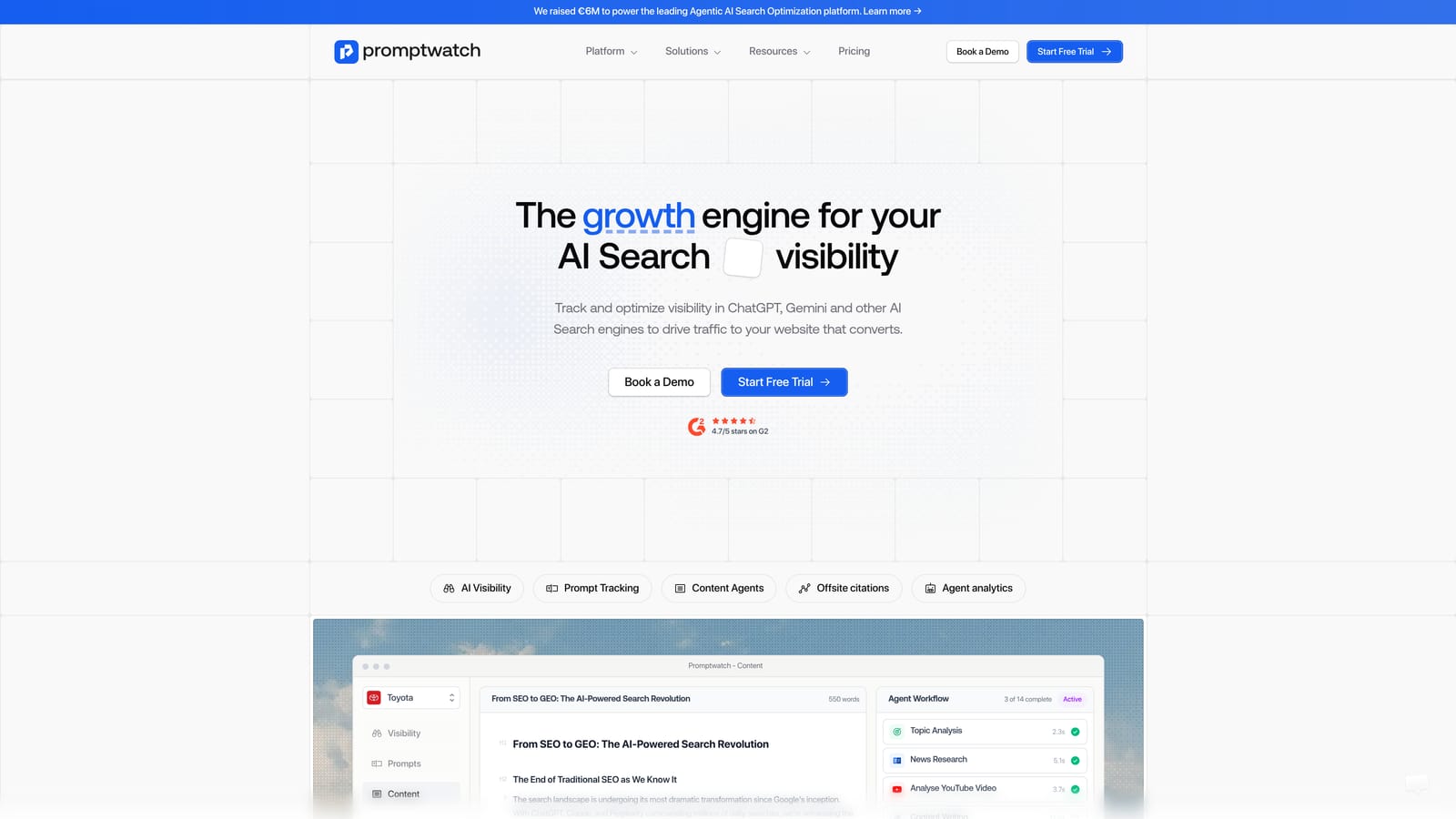
Promptwatch is a prompt and brand mention tracking tool that monitors which specific queries result in brand visibility across AI search platforms, giving teams the data they need to build targeted GEO content strategies.
Where This Tool Shines
The key insight Promptwatch offers is specificity. Most AI visibility tools tell you whether your brand is being mentioned. Promptwatch tells you which exact prompts are driving those mentions and, critically, which prompts are not surfacing your brand when they should be. That gap analysis is what makes it actionable.
For content strategists building a GEO roadmap, knowing the specific query types where your brand is absent is more useful than a broad visibility score. Promptwatch makes that information accessible without requiring manual testing across AI platforms.
Key Features
Prompt-Level Tracking: Shows exactly which queries and question types surface your brand in AI responses, providing granular data that broader monitoring tools often miss.
Brand Mention Monitoring: Tracks brand appearances across AI platforms with organized reporting on mention context and frequency.
Visibility Gap Identification: Highlights the specific prompts where your brand should appear but doesn't, directly informing content strategy priorities.
Prompt Performance Reporting: Tracks changes in prompt-level visibility over time, allowing teams to measure the impact of GEO content efforts.
Best For
GEO content strategists and SEO teams that want prompt-level granularity to inform content planning. Particularly useful for teams in competitive categories where understanding exactly which queries drive AI citations is critical to prioritizing content investment.
Pricing
Multiple pricing tiers available. Visit promptwatch.io for current options.
4. Peec
Best for: Enterprise teams in competitive verticals that need AI share-of-voice data benchmarked against named competitors.
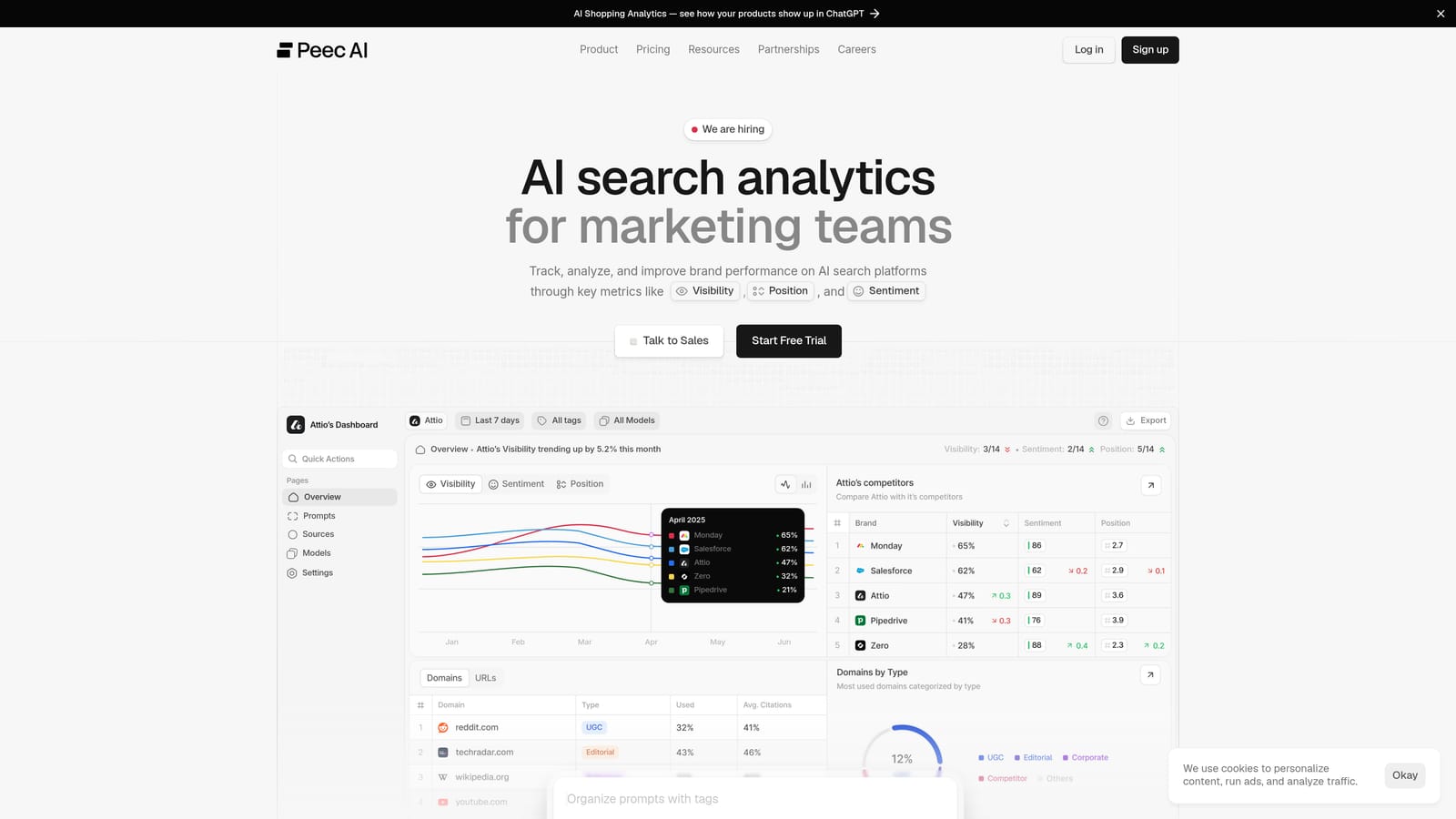
Peec is an AI search visibility monitoring platform with competitive benchmarking capabilities, enabling enterprise teams to track their relative position in AI answer engines alongside direct competitors.
Where This Tool Shines
Peec's differentiator is the competitive intelligence layer. Many AI monitoring tools focus on absolute visibility: how often does your brand appear? Peec adds the relative dimension: how does your visibility compare to specific competitors in the same AI-generated responses? For enterprise teams in crowded markets, that context changes how you interpret your data and prioritize your GEO investments.
The share-of-voice framing is also useful for stakeholder reporting. Presenting AI visibility as a competitive metric, rather than an isolated brand metric, tends to resonate more clearly with executive audiences who are used to thinking in market share terms.
Key Features
AI Share-of-Voice Tracking: Measures your brand's presence in AI answer engines as a proportion of total mentions in your category, providing competitive context for visibility data.
Competitive Benchmarking: Allows enterprise teams to track named competitors' AI visibility alongside their own, surfacing relative positioning changes over time.
Brand Visibility Monitoring: Covers brand mentions across major AI search platforms with organized reporting on appearance frequency and context.
Competitive Intelligence Reporting: Delivers enterprise-grade reports designed for stakeholders who need to understand competitive AI positioning, not just raw mention counts.
Best For
Enterprise teams in competitive verticals where understanding relative AI visibility is as important as absolute visibility. Strong fit for marketing and SEO leaders who need to present AI performance data in competitive terms to executive stakeholders.
Pricing
Visit peec.ai for current pricing and enterprise plan details.
5. AirOps
Best for: Enterprise content operations teams building repeatable, scalable AI content production pipelines.
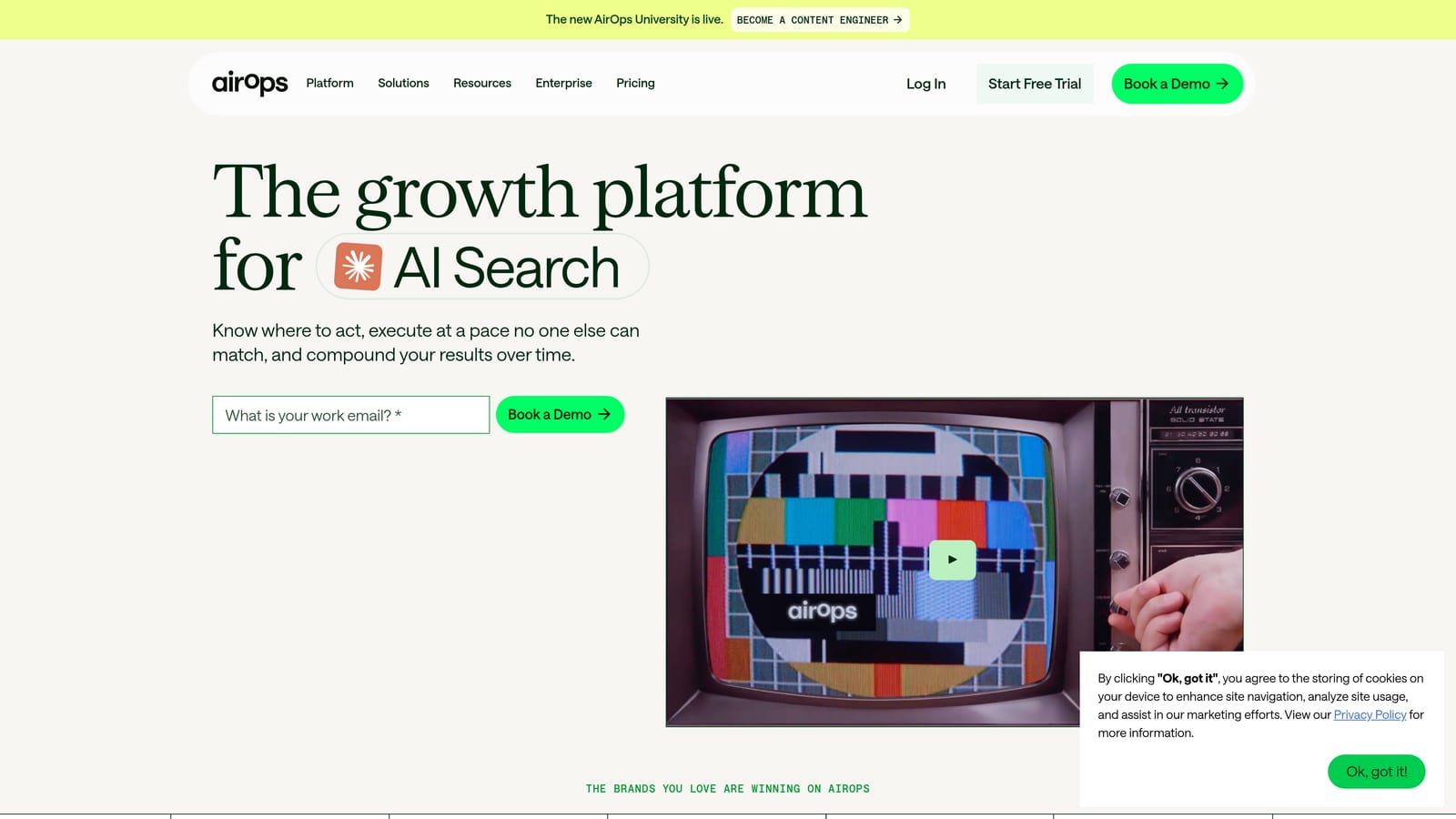
AirOps is an AI content workflow automation platform that enables large content teams to build structured, repeatable AI-powered production pipelines with prompt engineering and workflow templating at the core.
Where This Tool Shines
AirOps is less about generating a single piece of content and more about systematizing how your team generates content at scale. The platform lets you build workflows that connect LLMs to structured content production processes, with prompt templates that ensure consistency across large teams and high content volumes.
For enterprise content operations that have already decided to use AI in their production process but need to standardize how that happens across dozens of contributors, AirOps provides the workflow infrastructure that ad-hoc LLM usage lacks. For more options in this category, see our comparison of content pipeline automation software.
Key Features
Repeatable Workflow Builder: Creates structured AI content workflows with prompt templating, ensuring consistent output quality across large teams and multiple content formats.
LLM Integration: Connects to leading large language models for structured content production, with controls that keep outputs aligned to your brand and content standards.
Workflow Automation: Links AI content generation to broader content operations processes, reducing manual steps between generation and publication.
Team Collaboration Features: Built for large content organizations where multiple contributors need access to shared workflows, templates, and production pipelines.
Customizable Pipelines: Supports different content types and formats through configurable pipeline structures, adaptable to varied enterprise content needs.
Best For
Enterprise content operations teams that need to standardize and scale AI-assisted content production across large teams. Best suited for organizations where process consistency and workflow repeatability are the primary challenges, rather than AI visibility monitoring.
Pricing
Enterprise plans available. Visit airops.com for current pricing and plan details.
6. Writesonic
Best for: Enterprise marketing teams producing high volumes of content across multiple formats with built-in SEO guidance.
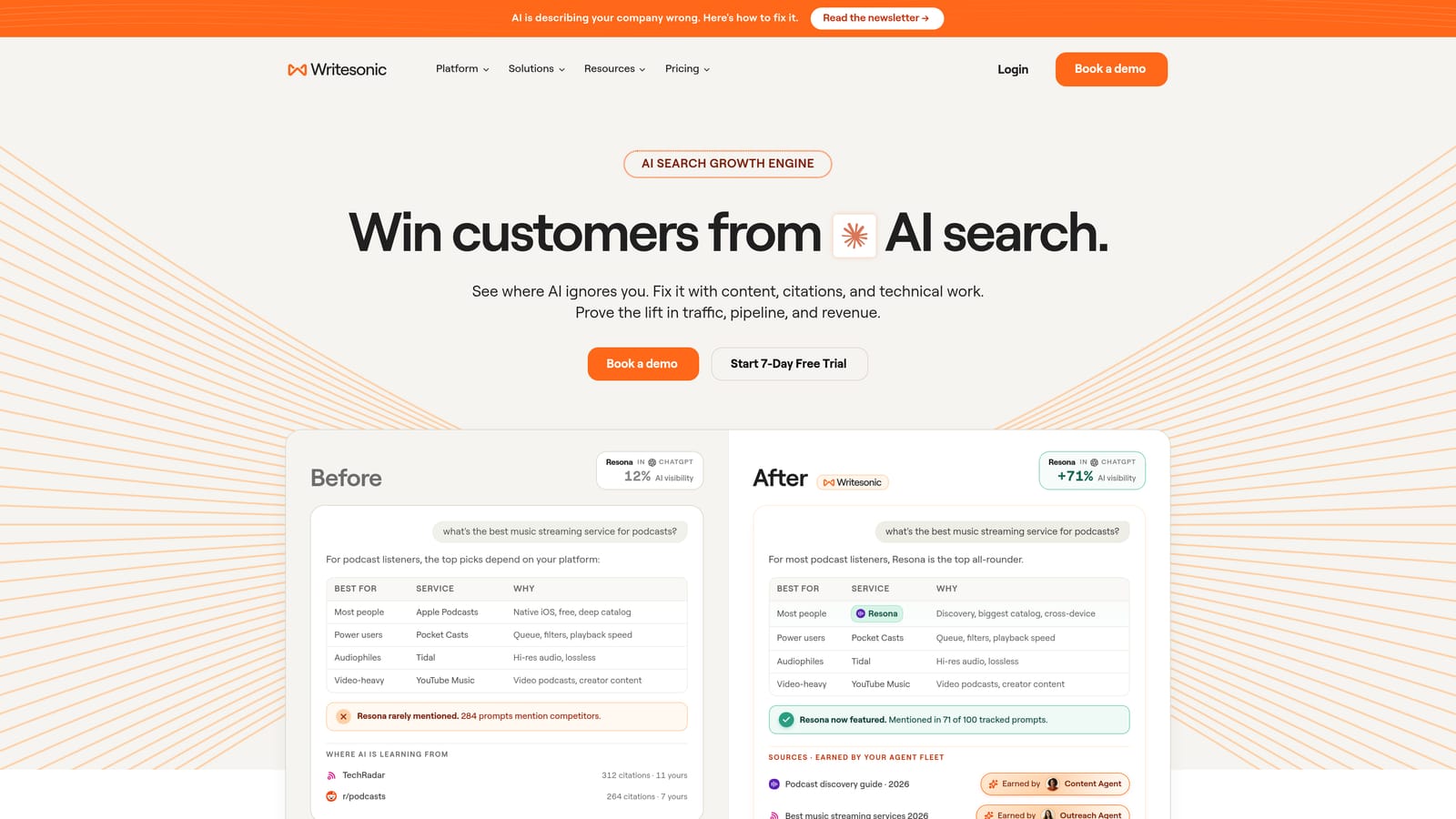
Writesonic is a broad-format AI content generation platform with built-in SEO mode and brand voice controls, designed for enterprise teams that need to produce large volumes of content consistently across multiple channels.
Where This Tool Shines
Writesonic covers a wide range of content formats from a single platform: blog posts, landing pages, social content, ad copy, and more. For enterprise marketing teams managing multiple channels simultaneously, that format breadth reduces the need to switch between different generation tools for different content types.
The brand voice controls are particularly relevant for large teams where consistency is a persistent challenge. When dozens of contributors are producing content, having guardrails that keep tone and messaging aligned matters as much as the quality of any individual piece.
Key Features
Multi-Format Content Generation: Produces blog posts, landing pages, ad copy, social content, and more from a single platform, covering the full range of enterprise marketing content needs.
Built-In SEO Mode: Integrates keyword guidance directly into the content generation process, helping teams produce content that aligns with search optimization requirements.
Brand Voice Controls: Maintains consistent tone and messaging across large teams by applying brand voice parameters to AI-generated content.
Team Collaboration and Templates: Supports large content organizations with shared templates, team access controls, and content management features.
Enterprise Plan: Includes advanced controls, higher usage limits, and features designed for the scale and governance needs of enterprise marketing teams.
Best For
Enterprise marketing teams producing high content volumes across multiple formats who need SEO integration and brand voice consistency built into the generation process. A practical choice for teams that prioritize format breadth and content volume over deep GEO monitoring capabilities.
Pricing
Enterprise plans available with advanced features and higher usage limits. Visit writesonic.com for current pricing.
Enterprise GEO Pricing Models Explained
Most enterprise GEO platforms don't publish enterprise list prices, but they use a handful of recognizable pricing models. Knowing which one a vendor uses tells you how costs will scale:
- Prompt-based: Price scales with the number of tracked prompts and how often they are re-run. Common among monitoring tools; costs climb quickly when you segment by market, product line or persona.
- Seat-based: Price scales with users. Predictable, but can penalize organizations that want broad stakeholder access to dashboards.
- Credit or usage-based: Common among content and workflow tools; you pay for generations, workflow runs or words. Watch for overage pricing.
- Platform/annual contract: Custom enterprise agreements bundling prompts, seats, brands and support, usually with SSO, API access and a dedicated success manager.
When comparing quotes, normalize them to cost per tracked prompt per month and cost per published article, and confirm what's included: number of AI engines, brands or workspaces, data history retention and API limits.
Which GEO Tool Is Right for Your Enterprise?
The right choice depends on where your GEO workflow has the biggest gaps. Here's a quick framework to guide your decision.
If your team needs a full-funnel GEO platform covering AI visibility monitoring, content generation, and rapid indexing in a single system, Sight AI is the most complete option on this list. The closed-loop workflow, where you identify which prompts are missing your brand, generate content to address them, and push that content to indexing pipelines immediately, is difficult to replicate with separate point solutions.
If your primary need is AI answer engine intelligence, the monitoring-focused platforms offer strong options. Profound is well-suited for teams that need structured, shareable analytics across multiple stakeholders. Promptwatch is the right choice when prompt-level granularity is the priority, particularly for content strategists who need to know exactly which queries to target. Peec is the strongest fit when competitive benchmarking matters as much as absolute visibility, especially in crowded verticals. For a broader shortlist of monitoring options, see our guide to AI visibility software tools.
If your challenge is scaling content production workflows rather than monitoring, AirOps and Writesonic address that side of the equation. AirOps is the better choice for teams that need to systematize AI content workflows across large contributor teams. Writesonic is more practical for teams that need broad format coverage and SEO integration without building custom pipelines.
For most enterprise teams, GEO is not a single-tool problem. But if you're looking for a platform that reduces tool sprawl while covering the most critical parts of the workflow, starting with AI visibility monitoring and content generation in one place is the most efficient path forward.
Frequently asked questions
What does a GEO tool cost for enterprise teams?
Enterprise GEO pricing is almost always custom and quoted on an annual contract. Costs are driven by the number of tracked prompts, AI engines covered, brands or workspaces, seats and content generation volume. Monitoring-only tools usually price by prompts, while content platforms price by credits or output. Request quotes from two or three vendors and normalize them to cost per tracked prompt and cost per published article. See the pricing models section above for details.
What competitive intelligence features should a GEO tool have?
Look for AI share of voice against named competitors, prompt-level comparison showing which competitor appears where you don't, citation source analysis revealing which URLs AI engines cite, and sentiment comparison across brands. Trend history matters too, so you can see whether competitors gain ground after publishing. Peec and Profound emphasize benchmarking, while Sight AI ties competitive gaps directly to content production.
Can GEO software grade performance by product or content pillar?
Yes, if the platform supports prompt grouping or tagging. You assign tracked prompts to a product line, category or content pillar, and the tool reports visibility, share of voice and sentiment for each group. This is essential for retail and CPG brands with large catalogs. Confirm during evaluation that segment-level scores can be exported or shared, not just viewed in an aggregate dashboard.
What are the best GEO tools for enterprise marketing teams?
Sight AI suits teams wanting monitoring, content and indexing in one platform; Profound, Promptwatch and Peec suit teams focused on AI answer analytics; AirOps and Writesonic suit teams whose bottleneck is content production. The comparison table and decision framework above map each tool to the specific gap it solves.
Stop guessing how AI models like ChatGPT and Claude talk about your brand. Start tracking your AI visibility today and see exactly where your brand appears across top AI platforms, which content gaps are costing you mentions, and how to close them at enterprise scale.