AI agent writing software has moved well beyond basic text generation. Today's leading platforms deploy multiple specialized agents working in sequence: researching, outlining, drafting, optimizing, and publishing, so content teams can scale output without sacrificing quality or search visibility.
For marketers and agencies focused on organic traffic and AI search presence, the right tool doesn't just write. It produces content structured for both traditional search engines and the AI models (ChatGPT, Perplexity, Claude) that increasingly surface brand recommendations. This guide covers the best AI agent writing software available in 2026, evaluated on agent specialization, SEO/GEO optimization capabilities, workflow automation, and publishing integrations. For deeper context on improving your search presence, see our guide on how to optimize content for SEO.
1. Sight AI
Best for: Teams wanting AI content generation and AI visibility tracking in one platform.
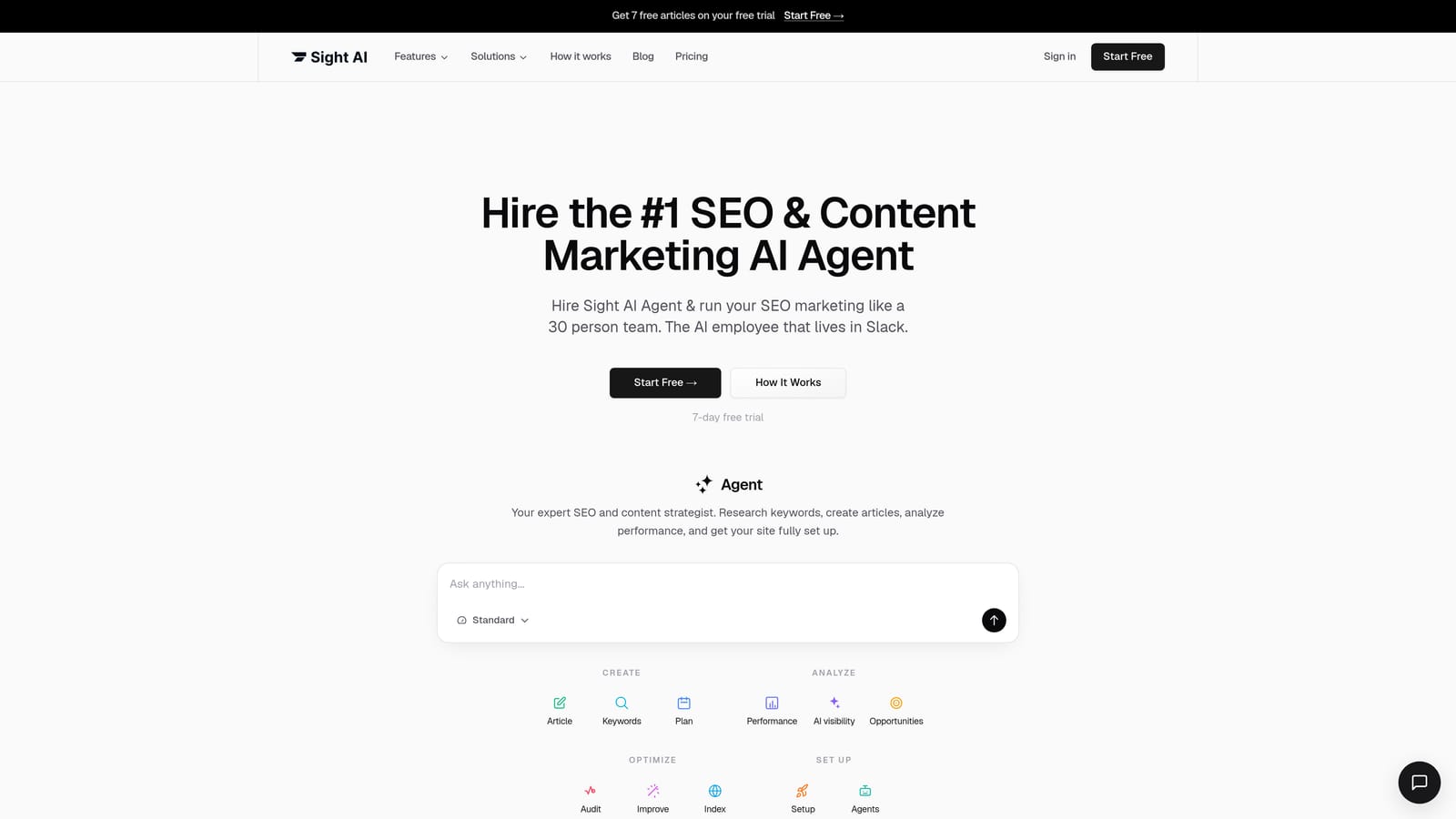
Sight AI is an all-in-one AI content and visibility platform that uses 13+ specialized agents to research, write, optimize, and publish SEO/GEO-optimized content while tracking how your brand appears across AI models like ChatGPT, Claude, and Perplexity.
Where This Tool Shines
Most AI writing tools handle content creation. Sight AI goes a step further by pairing that content engine with an AI Visibility Score: a real-time measure of how often and how favorably your brand appears in AI-generated responses across six or more platforms. This combination is genuinely rare in the market.
The 13+ specialized agents collaborate across the full content lifecycle. One agent handles keyword research, another builds the outline, others draft and optimize, and a publishing agent handles CMS delivery. The result is a coherent, end-to-end workflow rather than a collection of disconnected features.
Key Features
13+ Specialized AI Agents: Dedicated agents for research, outlining, drafting, SEO optimization, internal linking, and CMS publishing work in sequence to produce structured, optimized content.
AI Visibility Score: Tracks brand mentions, sentiment, and positioning across ChatGPT, Claude, Perplexity, and additional AI platforms so you can see exactly where your brand surfaces in AI-generated answers.
Autopilot Mode: A fully automated pipeline that takes a target keyword and produces a published article with minimal manual intervention, useful for scaling content operations without adding headcount.
IndexNow Integration: Newly published content is submitted to search engines near-instantly, reducing the lag between publication and discovery that can slow organic traffic growth.
Multi-Format Content Support: Produces listicles, how-to guides, explainers, and comparison articles, each structured for both traditional SEO and generative engine optimization (GEO).
Best For
Sight AI is well suited to marketers, founders, and agencies who want a single platform covering content production, search indexing, and AI visibility monitoring. If you're currently stitching together separate tools for writing, publishing, and tracking AI mentions, this consolidates all three into one workflow.
Pricing
Paid plans are available. Visit trysight.ai for current pricing tiers, as plans and features are updated regularly.
2. Writesonic
Best for: High-volume content teams needing broad format coverage with an accessible entry point.
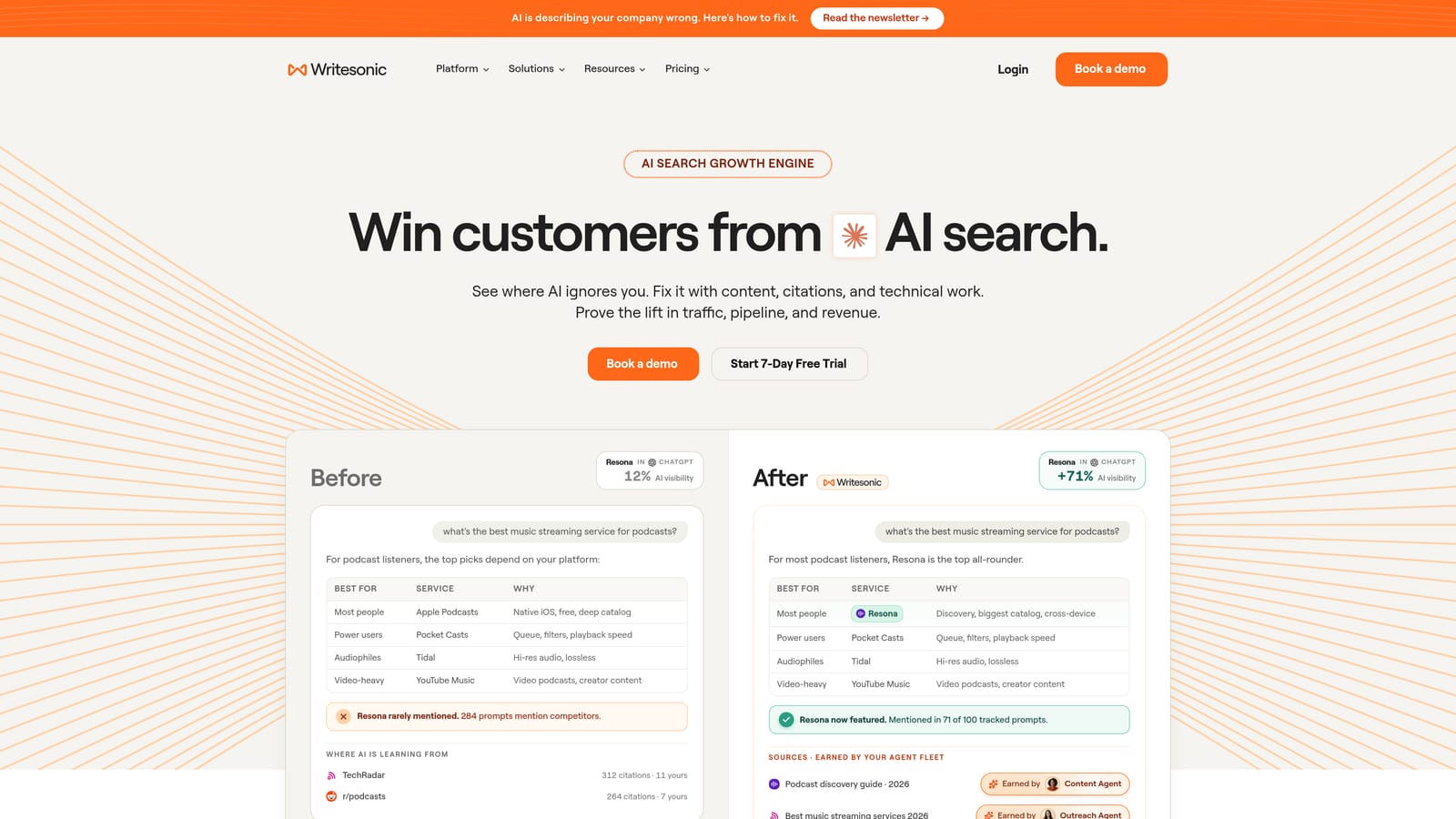
Writesonic is a versatile AI writing platform with long-form article generation, a conversational AI assistant called Chatsonic, and agent-style workflows suited to producing blogs, ads, social copy, and product descriptions at scale.
Where This Tool Shines
Writesonic's strength is breadth. It covers more content formats than most competitors, making it practical for teams that need to produce blog posts on Monday, ad copy on Wednesday, and product descriptions by Friday, all from a single subscription.
Chatsonic adds a conversational layer that works well for ideation and iterative drafting. Rather than generating a single output and moving on, you can refine and redirect through dialogue, which suits writers who prefer a collaborative working style with their AI tools.
Key Features
Long-Form Article Generation: Produces structured blog posts and articles with SEO keyword integration built into the drafting process.
Chatsonic: A conversational AI assistant designed for ideation, brainstorming, and iterative content refinement through natural dialogue.
Botsonic: A custom AI chatbot builder that lets teams create branded AI workflows and customer-facing assistants without deep technical knowledge.
Wide Format Coverage: Handles blogs, ads, social copy, and product descriptions from a single platform, reducing the need for multiple specialized tools.
Freemium Entry Point: A free plan lowers the barrier to evaluation, with scalable paid tiers for teams that need higher output volumes.
Best For
Writesonic suits content teams and small agencies that produce a wide variety of content types and want one tool to cover most of them. It's a practical choice for teams earlier in their SEO journey who prioritize volume and format flexibility over deep agent orchestration or AI visibility tracking.
Pricing
A free plan is available. Paid plans start at a monthly subscription rate. Verify current pricing at writesonic.com, as tiers change periodically.
3. AirOps
Best for: Technical teams and agencies building custom multi-agent content pipelines with complex data integrations.
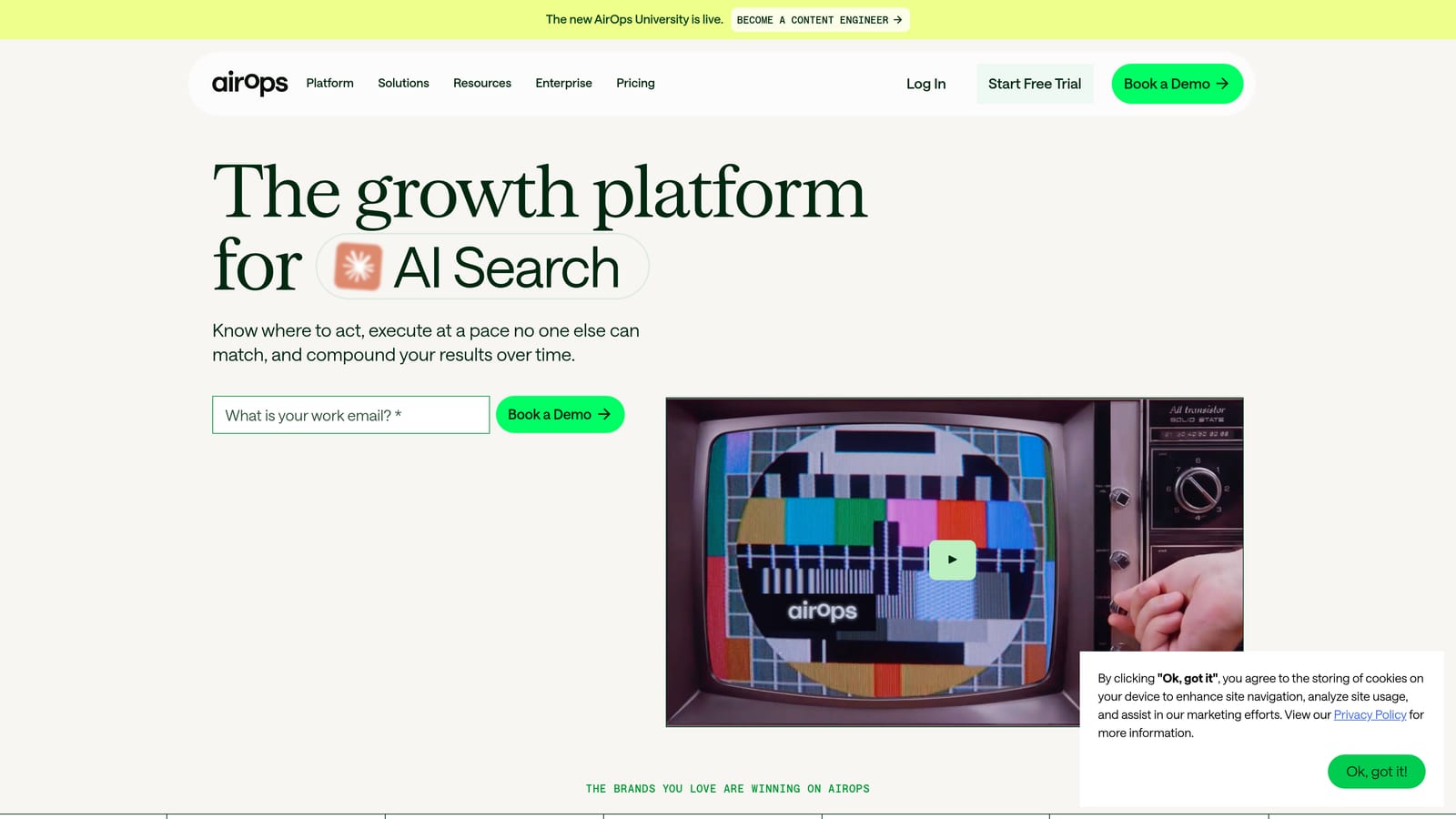
AirOps is an AI workflow and content operations platform that lets teams design custom multi-agent pipelines using a visual, low-code interface, with deep integrations into CRMs, databases, and content management systems.
Where This Tool Shines
AirOps is less a writing tool and more a content operations infrastructure layer. If your content workflow doesn't fit neatly into a standard template — because you're pulling data from proprietary databases, routing outputs through approval systems, or managing content at enterprise scale — AirOps gives you the flexibility to build exactly what you need.
The visual pipeline builder makes this accessible to ops-minded marketers without requiring deep engineering resources. You can connect data sources, define agent tasks, and set conditional logic in a way that most purpose-built writing tools simply don't allow.
Key Features
Visual Low-Code Pipeline Builder: A drag-and-drop interface for designing multi-agent content workflows without writing custom code from scratch.
Deep Data Integrations: Connects to CRMs, databases, and CMS platforms, enabling content pipelines that pull from and push to your existing data infrastructure.
Flexible LLM Selection: Teams can choose which underlying language models power different steps in their workflows, rather than being locked into a single provider.
Complex Workflow Support: Handles non-standard content production scenarios, including multi-step approvals, conditional branching, and large-scale batch operations.
Agency Scalability: Built to manage large content operations across multiple clients or projects simultaneously.
Best For
AirOps is best suited to content operations teams, technical marketers, and agencies with complex, non-standard workflows that off-the-shelf writing tools can't accommodate. If your team has an ops mindset and needs fine-grained control over every step of the content pipeline, this platform delivers that control.
Pricing
Subscription-based pricing is available. Verify current plans and pricing at airops.com.
4. Promptwatch
Best for: AI-forward teams managing prompt consistency and output quality across large-scale content operations.
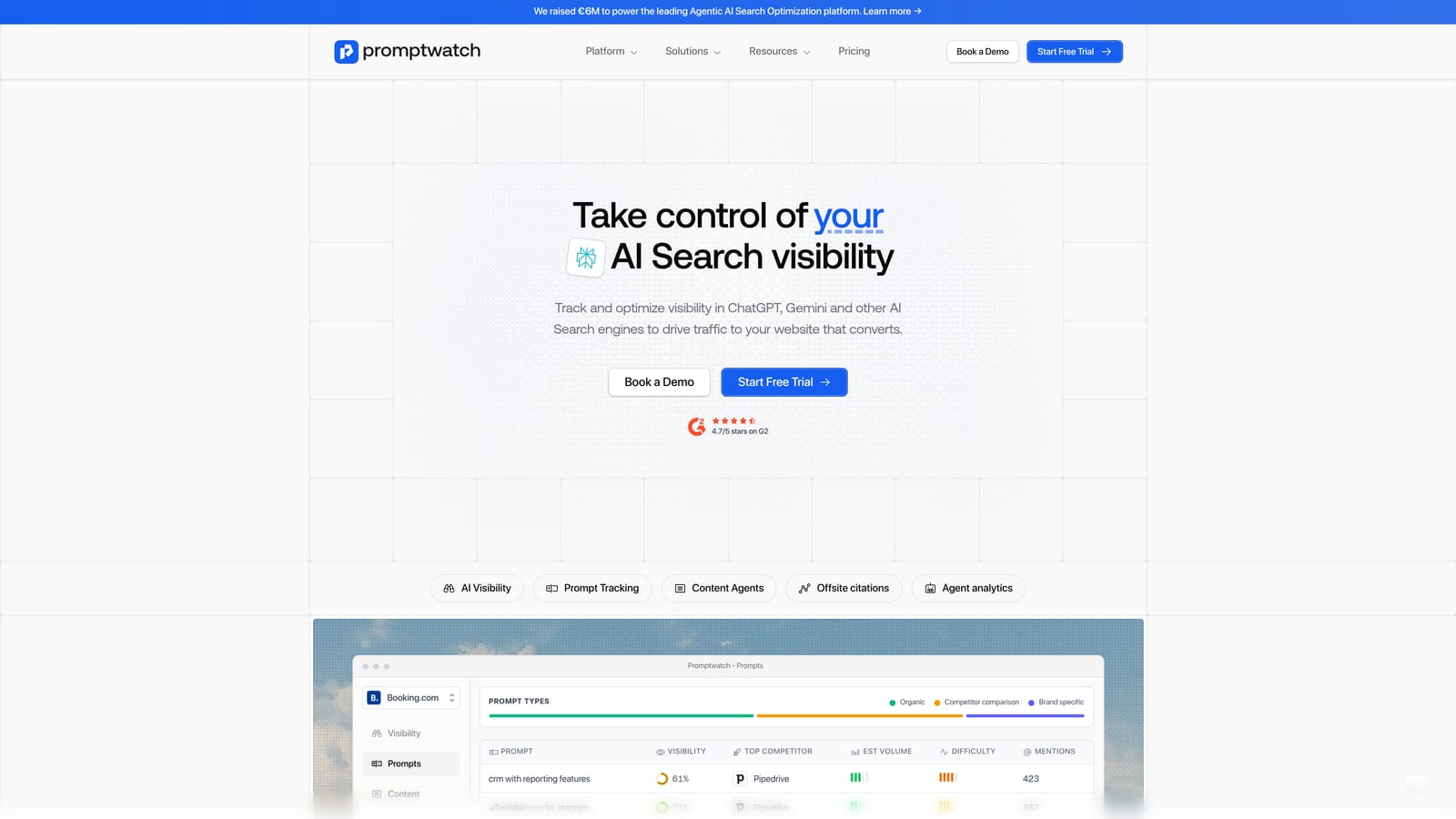
Promptwatch is a prompt management and monitoring platform that helps teams track, version, and iterate on the prompts driving their AI content workflows, improving output consistency as operations scale.
Where This Tool Shines
Here's a problem that doesn't get enough attention: as AI content operations grow, prompt drift becomes a real issue. A prompt that worked well in January may produce noticeably different output by June, either because the underlying model has been updated or because small edits have accumulated. Promptwatch exists specifically to catch and address this.
Think of it as version control for your AI instructions. Just as engineering teams track code changes, Promptwatch lets content teams track prompt changes and correlate them with output quality over time. This is an infrastructure layer that makes every other AI writing tool in your stack more reliable.
Key Features
Prompt Versioning: Maintains a full history of prompt iterations so teams can roll back to previous versions or compare outputs across different prompt configurations.
Output Monitoring: Tracks AI agent outputs over time to detect quality drift before it affects published content at scale.
Team Collaboration: Shared prompt libraries and templates allow content teams to standardize the instructions powering their AI workflows across multiple contributors.
Performance Analytics: Provides data on how different prompt versions perform across content runs, enabling systematic improvement rather than guesswork.
Stack Integration: Designed to integrate with existing AI writing and automation platforms rather than replacing them.
Best For
Promptwatch is best suited to teams that are already running AI-powered content operations at meaningful scale and want to add an observability and governance layer. It complements, rather than replaces, a primary AI writing platform, making it most valuable as part of a broader AI content stack.
Pricing
Verify current pricing and plan details at promptwatch.io.
5. Profound
Best for: Enterprise teams investing in GEO as a distinct discipline alongside traditional SEO strategy.
Profound is an AI answer engine analytics platform that tracks how brands appear in AI-generated responses and provides content strategy recommendations to improve generative engine visibility.
Where This Tool Shines
Profound sits at the strategic end of the AI content stack. Rather than generating content directly, it tells you what content to create and how to position it based on how AI models are currently responding to queries in your category. That intelligence is increasingly valuable as AI search surfaces become a primary discovery channel.
The competitive benchmarking capability is particularly useful for enterprise teams. Understanding not just where your brand appears in AI-generated answers, but where competitors appear relative to you, gives content strategy a precision that keyword rank tracking alone doesn't provide.
Key Features
AI Response Tracking: Monitors brand mentions and positioning within AI model responses across platforms, providing a clear picture of current AI search visibility.
Content Strategy Recommendations: Translates AI visibility gaps into actionable content recommendations, connecting analytics to execution.
Competitive Benchmarking: Compares your brand's AI-generated answer presence against competitors, identifying where you're winning and where you're being displaced.
GEO-Focused Reporting: Built around generative engine optimization as a discipline, with reporting frameworks designed for teams treating AI visibility as a strategic priority.
Enterprise Reporting: Delivers the depth and customization of reporting that enterprise marketing teams and agencies need for stakeholder communication.
Best For
Profound is best suited to enterprise marketing teams and large agencies with dedicated SEO or content strategy functions. It works best when paired with a content production platform, as its primary value is strategic intelligence rather than content creation.
Pricing
Enterprise pricing model. Verify current plans at profound.ai.
6. Peec
Best for: Content teams that need real-time intelligence on brand and competitor mentions across AI model outputs.
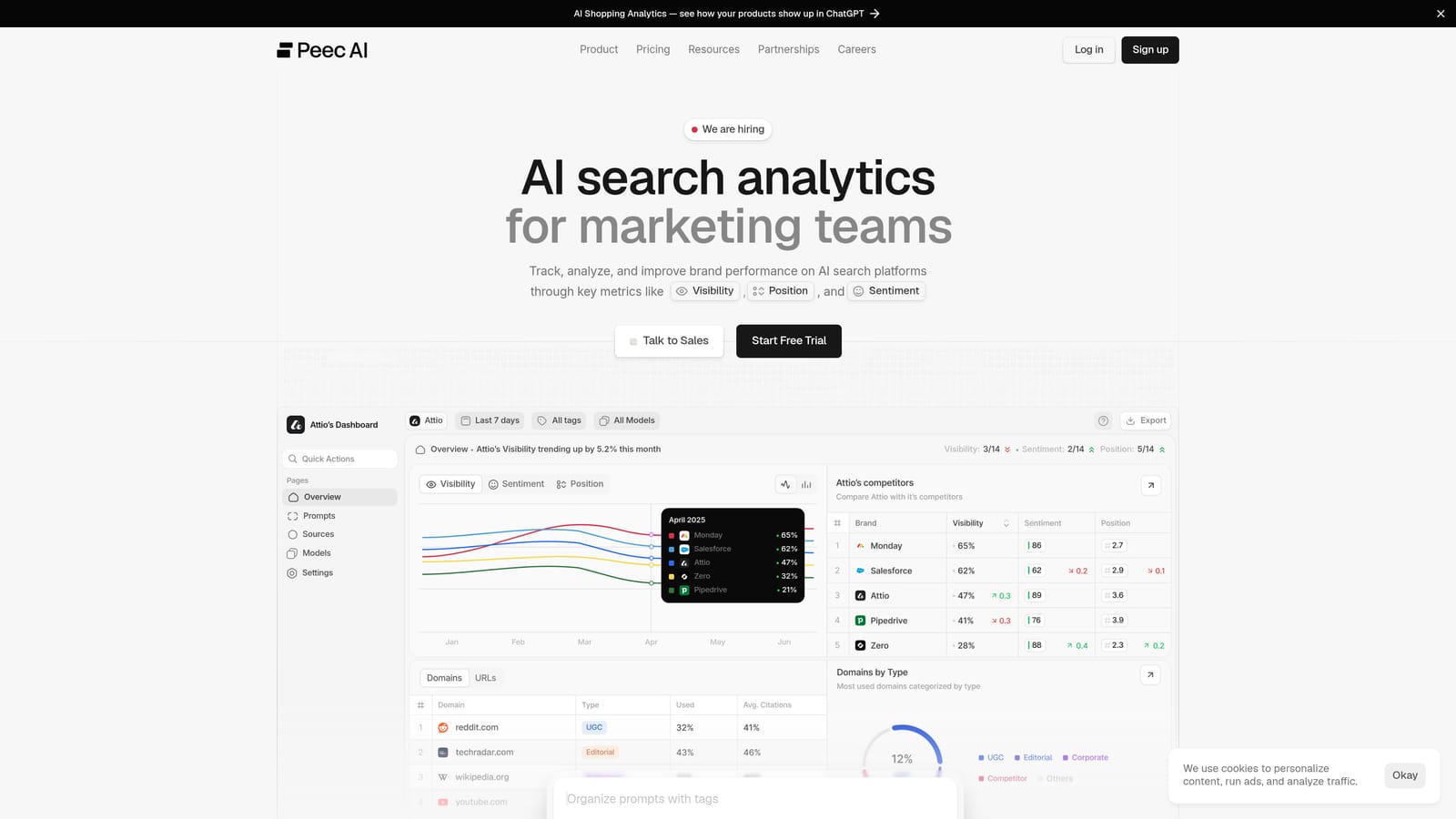
Peec is an AI search monitoring tool that tracks brand and competitor mentions within AI model outputs, helping content teams understand which topics and formats are driving AI citations.
Where This Tool Shines
Peec operates as an intelligence layer for AI search. If you want to know which of your published pieces are being cited by AI models, which competitor content is getting surfaced instead of yours, and which topic areas represent untapped citation opportunities, Peec surfaces that information in a digestible format.
The real-time monitoring and alerting capability is particularly practical for brands in competitive categories. Rather than running periodic manual checks, you get notified when your brand mention patterns shift, allowing your content team to respond with updated or new content before visibility erodes further.
Key Features
Real-Time Brand Monitoring: Tracks mentions of your brand across AI model responses as they happen, rather than relying on periodic snapshots.
Competitor Visibility Tracking: Shows how competitor brands are appearing in AI-generated search results relative to your own presence.
Topic and Format Analysis: Identifies which content topics and formats are most likely to earn AI citations, informing future content planning.
Alerts and Reporting: Delivers notifications when brand mention patterns change, with reporting tools for communicating AI visibility performance to stakeholders.
Content Strategy Intelligence: Functions as an intelligence layer that informs topic selection and content prioritization for teams focused on AI search presence.
Best For
Peec is well suited to content teams and agencies that are actively managing AI search visibility and need real-time data to guide content decisions. Like Profound, it pairs most effectively with a dedicated content production platform rather than serving as a standalone solution.
Pricing
Verify current pricing and plan details at peec.ai.
Which Tool Is Right for Your Team?
The tools in this list serve meaningfully different needs, so the right choice depends on where you are in your content and AI visibility journey.
If you want a single platform that handles AI content generation, SEO and GEO optimization, CMS publishing, and AI visibility tracking in one place, Sight AI is the most complete solution in this list. The combination of 13+ specialized agents with an AI Visibility Score and Autopilot Mode is particularly well suited to founders, marketers, and agencies who can't afford to manage five separate tools.
If your priority is high-volume content across diverse formats with an accessible starting price, Writesonic offers strong breadth and a free entry point. For teams with complex, non-standard content workflows that need custom pipeline control, AirOps delivers the flexibility that purpose-built writing tools don't.
Promptwatch, Profound, and Peec each serve as intelligence and infrastructure layers rather than primary content creation tools. Promptwatch improves consistency across existing AI writing stacks. Profound and Peec both focus on AI visibility analytics, with Profound skewing toward enterprise strategy and Peec toward real-time monitoring and alerting. All three are most powerful when paired with a dedicated content production platform.
The clearest signal for which category you need: if you're still figuring out how AI models talk about your brand and what content to create next, start with visibility and intelligence. If you know what to create and need to produce it faster and more consistently, an agent-based writing platform is your priority.
Stop guessing how AI models like ChatGPT and Claude talk about your brand. Start tracking your AI visibility today and see exactly where your brand appears across top AI platforms, while generating the SEO and GEO-optimized content that gets you mentioned more often.