Guide writing has shifted from a purely manual craft to an AI-assisted workflow, and the tools you choose now determine whether your content ranks on Google or gets cited by ChatGPT, Claude, and Perplexity. The challenge isn't finding an AI writing tool; it's finding one built for the full content lifecycle: research, drafting, optimization, indexing, and AI visibility.
This list covers the best guide writing AI tools available in 2026, evaluated on content quality, SEO and GEO optimization capabilities, workflow automation, and how well each tool positions your brand in both traditional search and AI-generated answers. Whether you're a solo founder, a marketing team, or an agency managing multiple clients, these tools represent the strongest options on the market today.
1. Sight AI
Best for: Full-lifecycle guide production with built-in AI visibility tracking and indexing automation
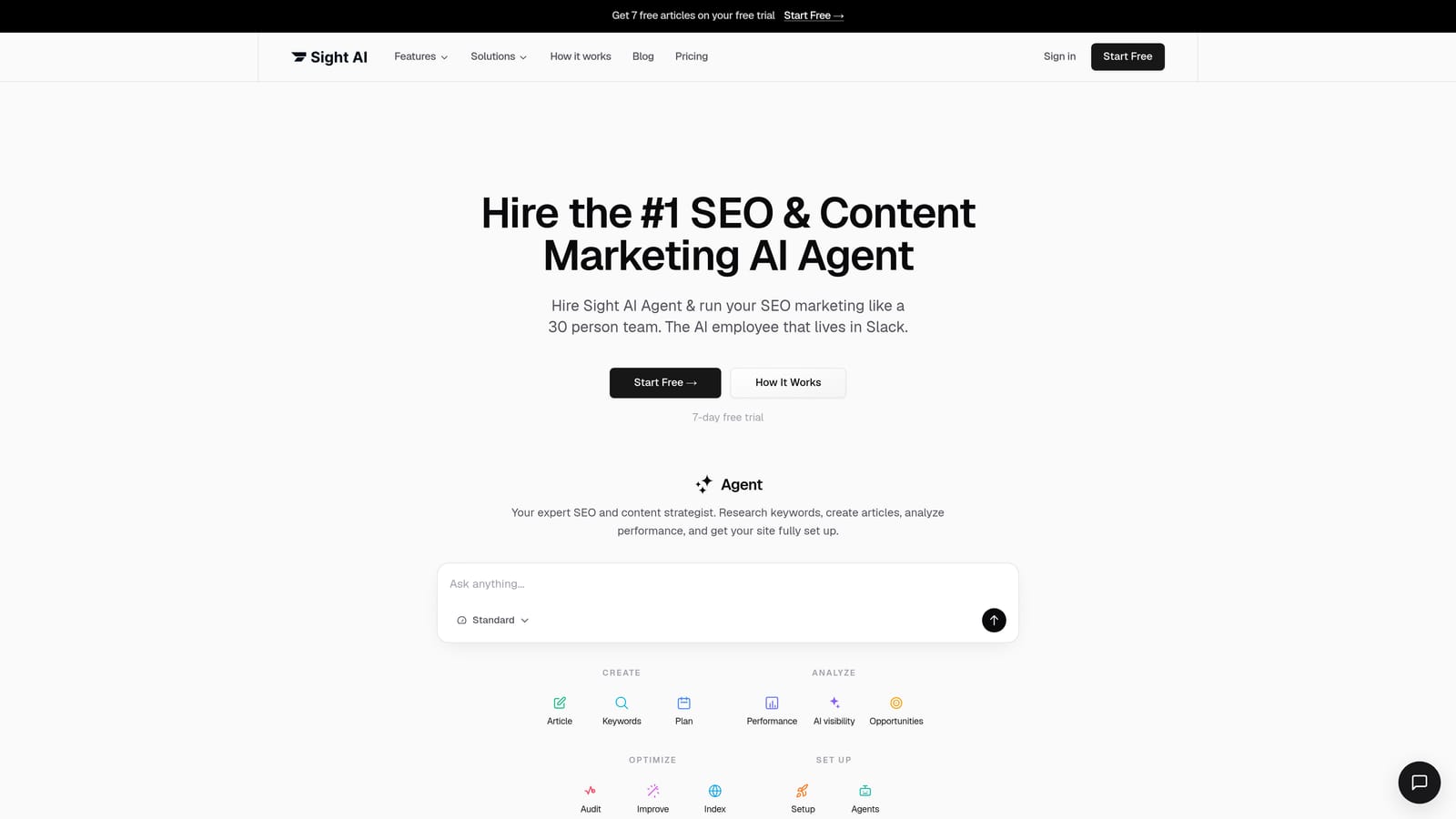
Sight AI is an all-in-one AI content platform that combines guide writing, AI visibility monitoring, automated indexing, and CMS publishing in a single workflow built for SEO and GEO-optimized content.
Where This Tool Shines
Most AI writing tools stop at the draft. Sight AI is built around the idea that writing a guide is only half the job. The other half is making sure that guide gets discovered by search engines and cited by AI models. That full-lifecycle thinking is what separates it from the rest of this list.
The 13+ specialized AI agents handle different content formats natively, including how-to guides, listicles, explainers, and comparison articles. Each agent is optimized for GEO as well as SEO, meaning the content is structured to earn citations from AI platforms, not just rank in traditional search. Autopilot Mode takes this further by automating the end-to-end production process with minimal manual input.
Key Features
13+ Specialized AI Agents: Purpose-built agents for guides, listicles, explainers, and comparison articles, each optimized for both SEO and GEO content requirements.
Autopilot Mode: Automates the full guide production workflow from topic selection through publishing, reducing the manual effort required at each stage.
AI Visibility Score: Tracks brand and content mentions across 6+ AI platforms including ChatGPT, Claude, and Perplexity, with sentiment analysis and prompt tracking built in.
IndexNow Integration: Automatically submits new and updated content to search engines via IndexNow and manages sitemap updates to accelerate content discovery.
CMS Auto-Publishing: Connects the content creation workflow directly to your CMS, eliminating the manual copy-paste step that slows down high-volume publishing.
Best For
Sight AI is the strongest fit for marketers, founders, and agencies who need to produce SEO and GEO-optimized guides at scale and want to track whether that content earns AI citations after publishing. It's particularly valuable for teams that currently manage writing, optimization, indexing, and monitoring across separate tools and want to consolidate into one platform.
Pricing
Paid plans are available. Visit trysight.ai for current pricing details and plan options.
2. Writesonic
Best for: Scaling guide and blog production with built-in SEO keyword integration
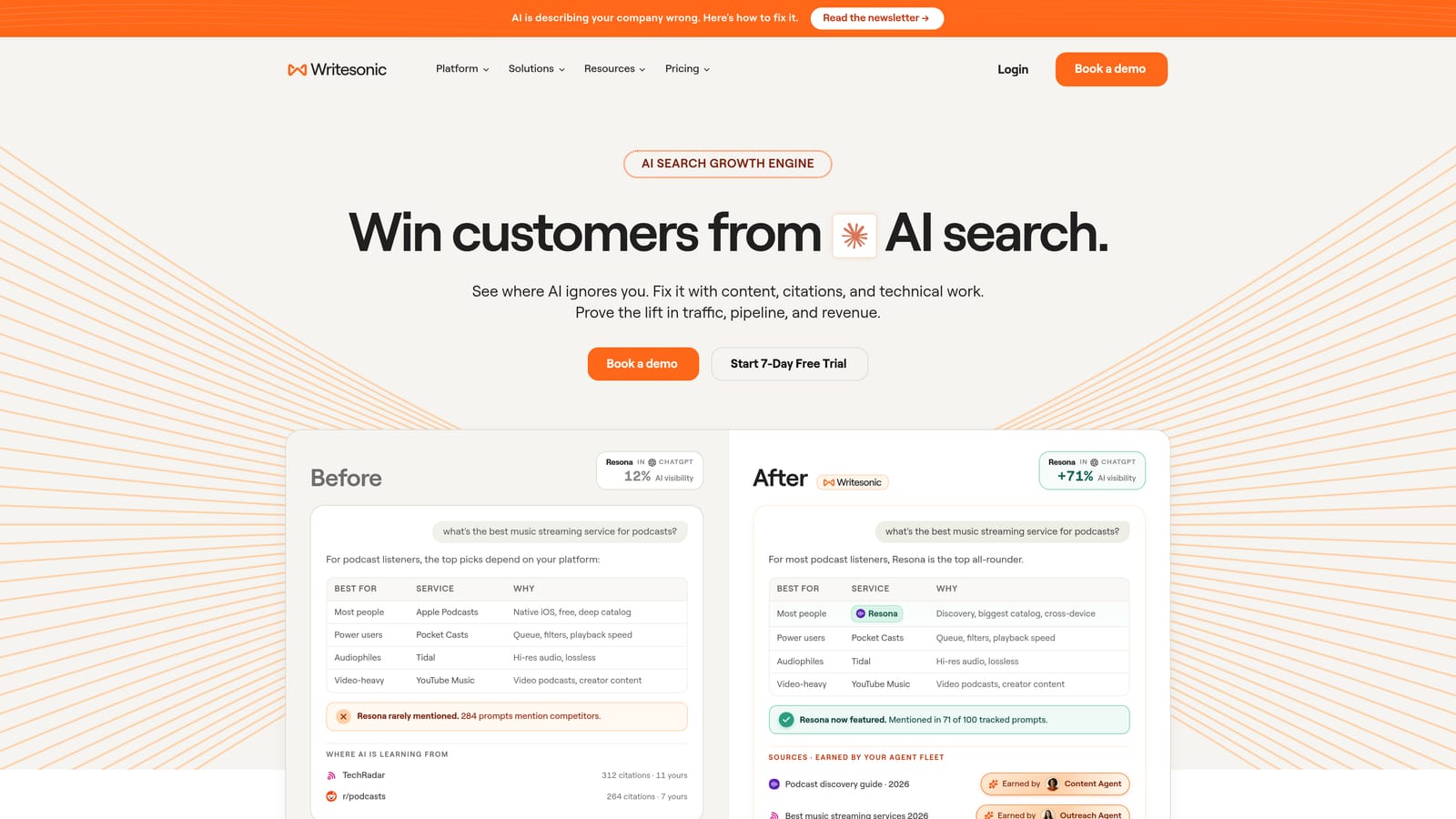
Writesonic is a widely used AI writing platform with a dedicated long-form Article Writer, real-time web access via Chatsonic, and SEO optimization features designed for content teams scaling guide production.
Where This Tool Shines
Writesonic has built a strong reputation among content marketing teams for its balance of ease-of-use and output quality. The Article Writer handles long-form guide drafts well, and the SEO mode integrates keyword targeting and readability scoring directly into the writing interface, reducing the back-and-forth between writing and optimization tools.
Chatsonic adds real-time web access, which is genuinely useful when writing guides that need current data, recent product updates, or up-to-date industry context. For teams producing a high volume of guides on time-sensitive topics, that live web access is a meaningful differentiator compared to tools working from static training data.
Key Features
Article Writer: Long-form guide drafting with SEO keyword integration and readability scoring built into the workflow.
Chatsonic: Real-time web access for generating guide content that reflects current information rather than outdated training data.
Brand Voice Customization: Saves tone and style preferences so guides maintain a consistent voice across different writers and topics.
Bulk Content Generation: Supports high-volume publishing workflows by generating multiple guide drafts or sections simultaneously.
CMS Integrations: Connects with popular content management platforms to streamline publishing after drafts are finalized.
Best For
Writesonic suits content marketing teams and agencies that need to produce guides at volume with SEO optimization baked in. It's a strong choice for teams comfortable managing indexing and AI visibility monitoring through separate tools, as Writesonic focuses on the writing and optimization phases rather than the full content lifecycle.
Pricing
A free plan is available. Paid plans start at approximately $20 per month, scaling with word count and feature access.
3. AirOps
Best for: Building repeatable, no-code AI workflows for structured guide production at scale
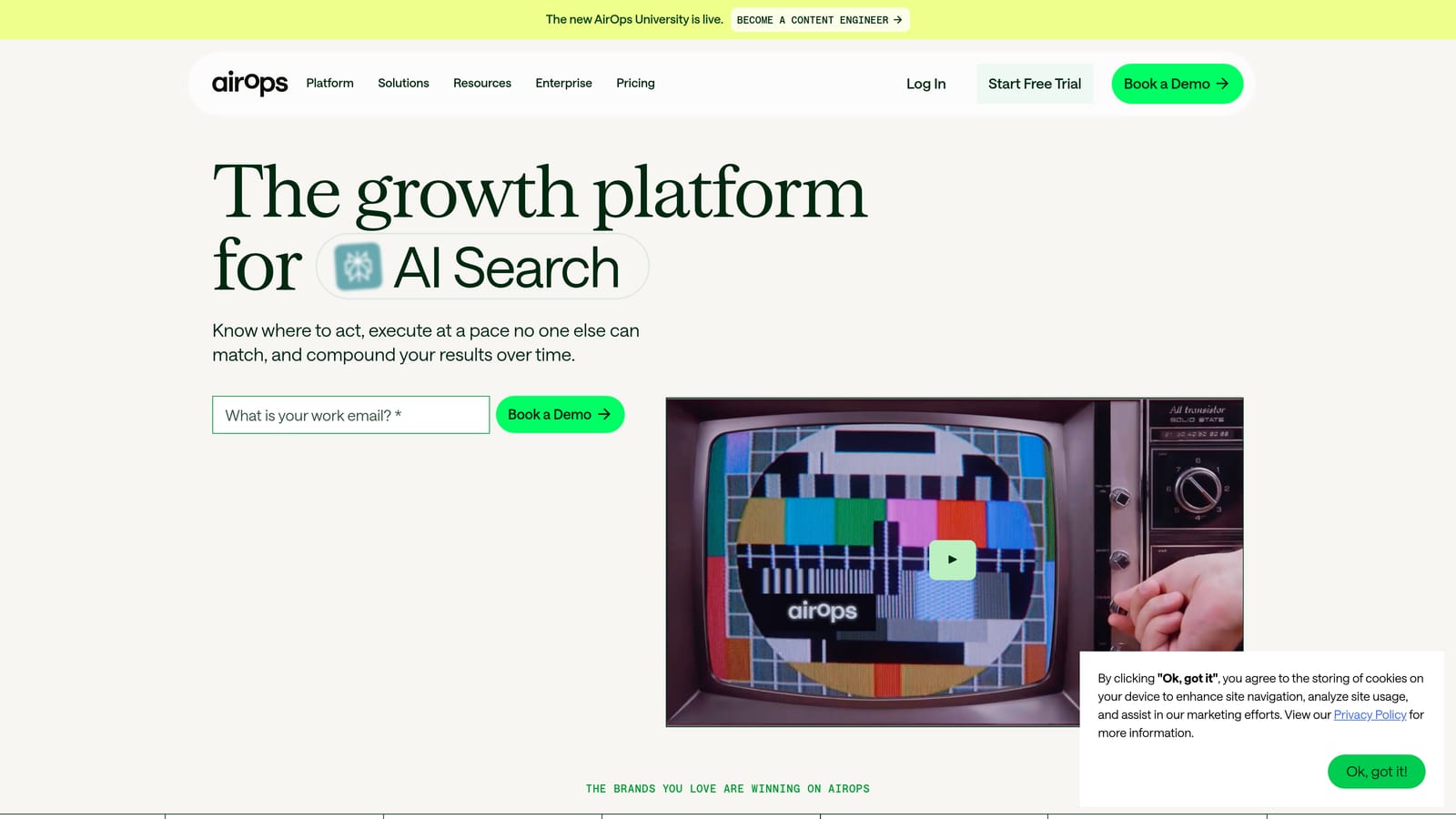
AirOps is an AI workflow platform that lets marketing and content teams build no-code pipelines for structured guide production, connecting AI models, data sources, and templates in a single repeatable system.
Where This Tool Shines
AirOps approaches guide writing differently from most tools on this list. Rather than giving you a writing interface, it gives you a workflow builder. You design the process: which AI model handles which step, what data sources feed into the content, which templates govern structure, and how outputs get routed to your CMS. Once built, that workflow runs consistently across every guide you produce.
This makes AirOps particularly powerful for organizations managing guide production across multiple topics, verticals, or client accounts. The consistency and repeatability are hard to match with a standard writing tool, and the ability to chain multiple AI models within a single pipeline gives technically sophisticated teams a lot of flexibility in how they structure their content operations.
Key Features
No-Code Workflow Builder: Drag-and-drop pipeline creation for chaining prompts, data sources, and content templates without engineering resources.
Multi-Model Support: Connect multiple AI models within a single guide production pipeline to optimize different stages of the writing process.
CMS and Data Integrations: Pull external data into guide content automatically and push finished drafts to your CMS without manual intervention.
Reusable Workflow Templates: Save and replicate guide production workflows to maintain consistent structure and quality across high-volume publishing.
Team Collaboration Features: Shared workflow access and permissions designed for enterprise content operations with multiple contributors.
Best For
AirOps is best suited for content operations teams, agencies managing multiple clients, and enterprise marketing departments that need structured, repeatable guide production systems. It rewards teams willing to invest time in workflow setup and is less accessible for solo users or small teams looking for a quick writing solution.
Pricing
Tiered pricing is available. Visit airops.com for current plan details.
4. Profound
Best for: GEO analytics and content strategy to identify which guide topics earn AI citations
Profound is a GEO analytics platform that helps brands understand which topics and content formats earn citations in AI-generated answers, enabling smarter guide strategy before and after publishing.
Where This Tool Shines
Profound occupies a distinct position in this list: it's less about writing guides and more about making sure the guides you write are the right ones. Before you invest in producing a comprehensive guide on a topic, Profound helps you understand whether that topic is one where AI models are actively citing sources, which brands are currently being recommended, and where the content gaps are.
This kind of pre-publication intelligence is increasingly valuable as GEO becomes a strategic priority alongside traditional SEO. Knowing that AI models consistently cite a particular content format or angle in a category gives your guide writing a strategic foundation that keyword research alone can't provide.
Key Features
AI Citation Tracking: Identifies which guide topics and content formats are earning mentions in AI-generated answers across major LLM platforms.
Competitive Analysis: Shows which brands are being cited by AI models for your target queries, revealing where you stand relative to competitors.
Content Gap Identification: Surfaces GEO-focused opportunities where AI models lack strong citations, highlighting where a well-written guide could earn visibility.
Visibility Trends: Tracks how AI platform citation patterns shift over time, helping teams adapt guide strategy as AI model behavior evolves.
Strategic Recommendations: Provides actionable guidance on improving AI answer presence based on citation data and content analysis.
Best For
Profound is the right tool for content strategists and SEO leads who want to build their guide publishing calendar around data on what AI models actually recommend. It works best as a complement to a writing platform rather than a standalone solution, since it focuses on strategy and analytics rather than draft generation.
Pricing
Contact Profound directly for pricing. Visit profound.ai for more information.
5. Peec
Best for: Monitoring how AI models reference your published guides and brand content
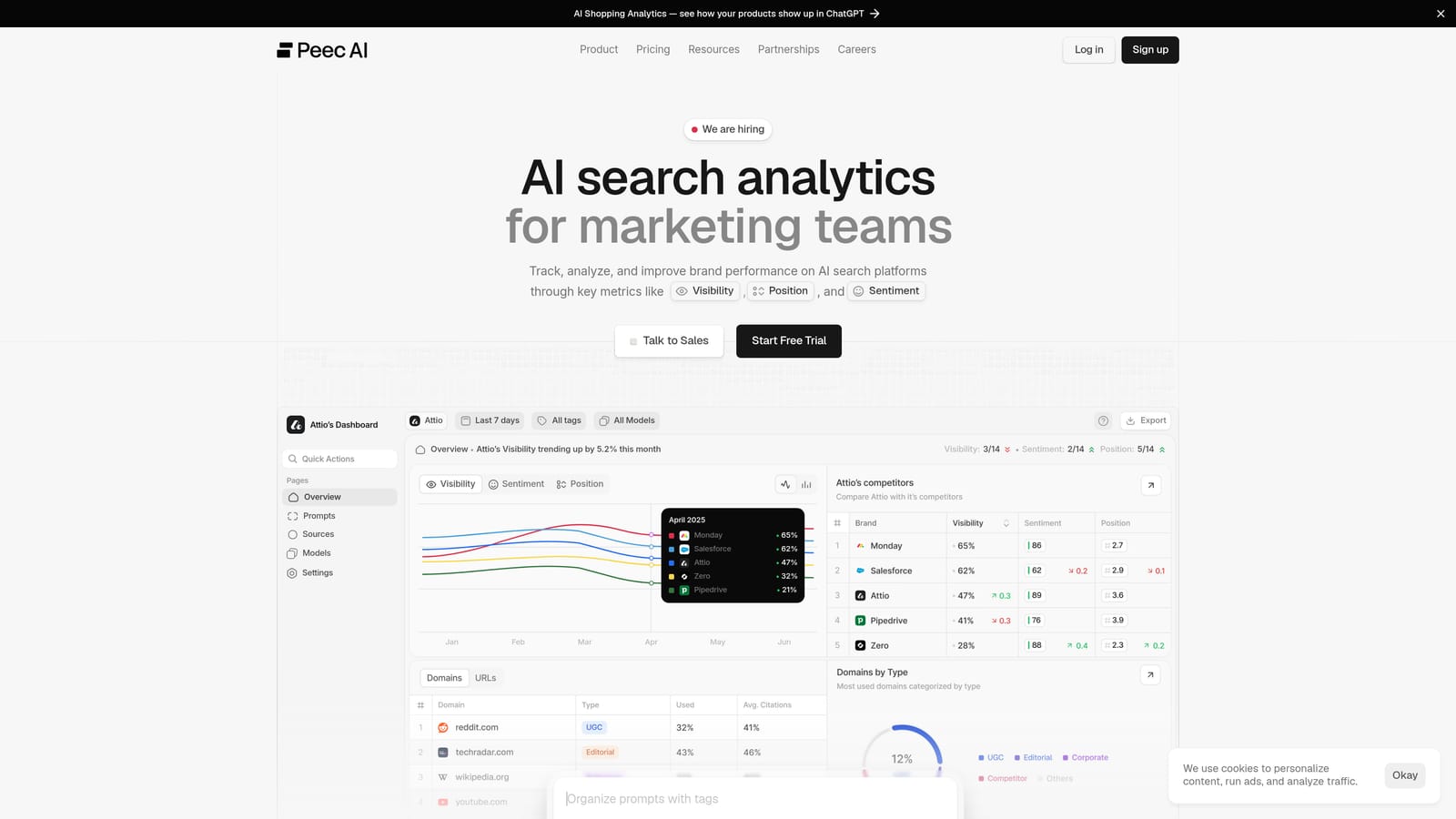
Peec is an AI visibility monitoring tool that tracks how AI models reference your brand and published content, helping teams understand whether their guides are being surfaced in AI-generated responses.
Where This Tool Shines
Publishing a guide is one thing. Knowing whether that guide is actually being cited by ChatGPT, Claude, or Perplexity when users ask relevant questions is another challenge entirely. Peec closes that feedback loop by continuously monitoring AI model outputs for brand and content mentions, giving you a clear picture of your AI visibility after content goes live.
The sentiment analysis layer adds useful context beyond simple mention counting. Understanding whether AI models describe your guides as authoritative, surface them in a positive context, or reference them alongside competitors gives content teams actionable data for refining both their writing approach and their GEO strategy over time.
Key Features
AI Mention Monitoring: Tracks brand and content references across AI model outputs to surface which guides are earning citations in generated responses.
Sentiment Analysis: Evaluates the context and tone of AI mentions to understand how models describe your guides and expertise.
Prompt Tracking: Tests how different user queries surface your content in AI responses, helping identify which search intents your guides are winning.
Competitor Comparison: Benchmarks your AI mention share against competitors to identify where you're winning and where you're losing visibility.
Change Alerts: Notifies teams when AI model behavior around their brand or content shifts, enabling faster strategic responses.
Best For
Peec suits marketing teams and agencies that are actively publishing guides and want post-publication data on AI visibility. It's a monitoring and analytics tool rather than a content creation platform, so it works best alongside a writing tool rather than as a standalone solution.
Pricing
Visit peec.ai for current pricing details.
6. Promptwatch
Best for: Teams building internal AI guide systems who need systematic prompt management and optimization
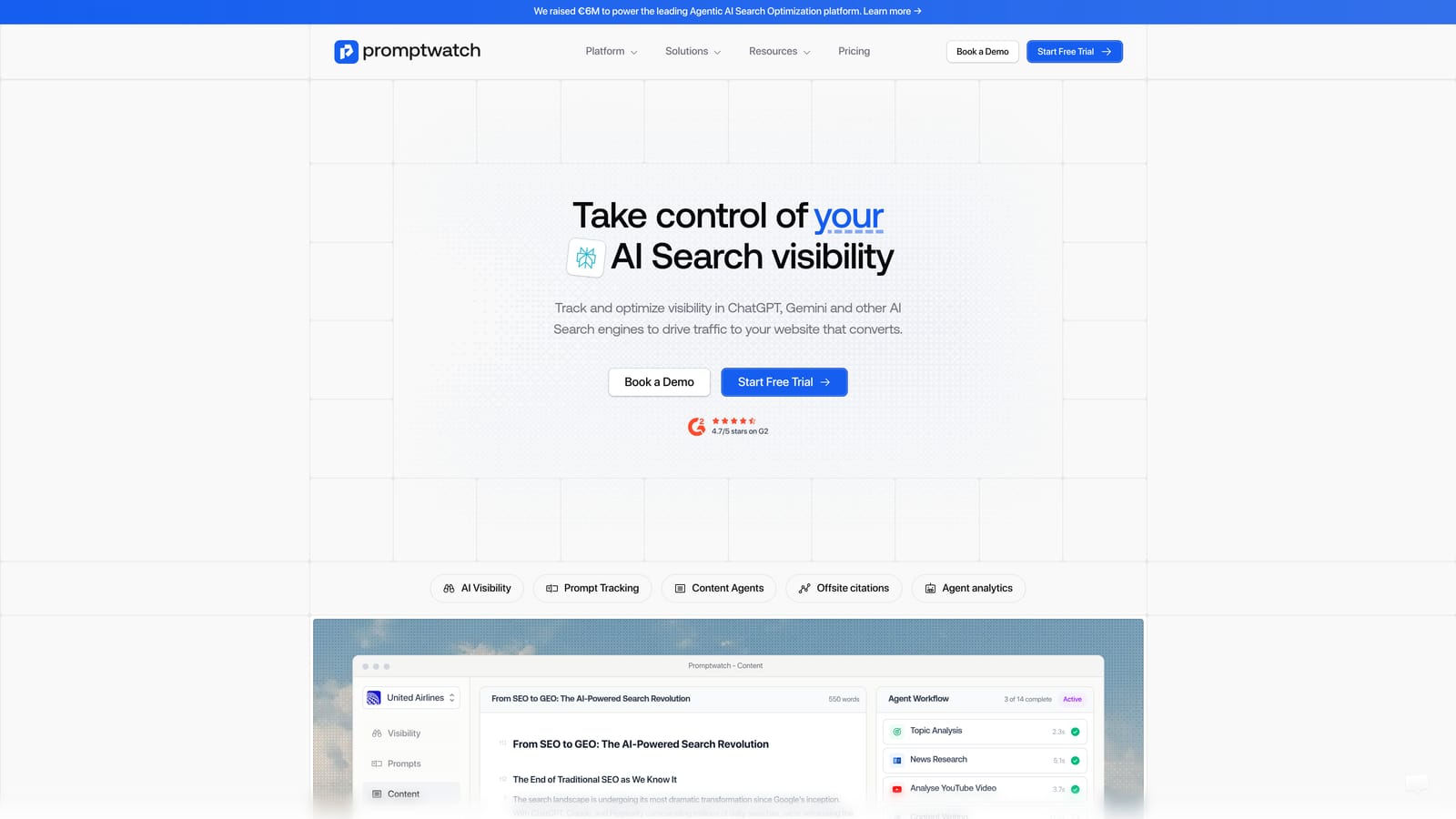
Promptwatch is a prompt management and versioning platform for teams building AI-generated guide systems, enabling systematic tracking, testing, and optimization of the prompts that drive content quality.
Where This Tool Shines
If you've built or are building an internal AI writing system for guide production, you've likely run into the problem of prompt drift: a prompt that produced excellent guides last month starts producing weaker output, and you can't pinpoint why or what changed. Promptwatch is built to solve exactly that problem by treating prompts as managed assets with version history, performance analytics, and A/B testing capabilities.
For technically sophisticated content teams or developers building custom guide generation pipelines, this level of prompt governance is genuinely valuable. It brings engineering-grade discipline to a part of AI content production that most teams manage informally through shared documents or tribal knowledge.
Key Features
Prompt Versioning: Maintains a full history of prompt changes so teams can track how modifications affect guide output quality over time.
A/B Testing: Tests prompt variations head-to-head to identify which approaches produce better guide structure, depth, and accuracy.
Team Prompt Library: Centralizes approved prompts in a shared library so all contributors work from consistent, tested AI writing standards.
LLM API Integration: Connects with major language model APIs, giving teams flexibility in which AI models power their guide generation workflows.
Performance Analytics: Tracks which prompts consistently produce the strongest guide outputs, enabling data-driven iteration rather than guesswork.
Best For
Promptwatch is best suited for technically comfortable content teams, developers, and organizations building custom AI writing systems internally. It's less accessible for non-technical users looking for a turnkey guide writing solution, but for teams with existing AI pipelines, it adds meaningful structure and accountability to the prompt layer.
Pricing
A free tier is available. Paid plans unlock team features. Visit promptwatch.io for current plan details.
Choosing the Right Tool for Your Situation
The honest answer is that the best guide writing AI tool depends on where you are in the content lifecycle and what your biggest bottleneck actually is. Here's how to think through the decision based on your situation.
Solo founders and small teams who need to produce high-quality guides without a large content operation will get the most value from a platform that handles multiple stages in one place. Sight AI's Autopilot Mode and integrated AI visibility tracking remove the need to stitch together separate tools for writing, indexing, and monitoring. Writesonic is a strong alternative if you primarily need fast, SEO-optimized drafts at an accessible price point.
Marketing agencies and content teams managing multiple clients or verticals benefit most from workflow repeatability and structured production systems. AirOps excels here, letting you build guide production pipelines that run consistently across accounts. Pair it with Peec or Profound for post-publication AI visibility data, and you have a capable multi-tool stack.
Enterprise teams and technically sophisticated operations building internal AI content systems will find Promptwatch valuable for governing the prompt layer of their guide production. Profound adds strategic intelligence on which topics and formats earn AI citations, making it a useful input at the planning stage.
For teams that want to consolidate rather than stack, Sight AI remains the only tool on this list that closes the full loop: from writing a guide with GEO optimization built in, to indexing it automatically, to tracking whether it earns citations from AI models after publishing.
Stop guessing how AI models like ChatGPT and Claude talk about your brand. Get visibility into every mention, track content opportunities, and automate your path to organic traffic growth. Start tracking your AI visibility today and see exactly where your brand appears across top AI platforms.