As AI-generated answers increasingly replace traditional search results, the rules of content marketing have shifted in a fundamental way. It's no longer enough to rank on Google. Your brand needs to show up when someone asks ChatGPT for a recommendation, when Claude synthesizes a comparison, or when Perplexity pulls together an answer from across the web.
The tools you use to create and distribute content now need to do double duty: optimizing for traditional SEO while also earning citations in AI-generated responses. That's what generative engine optimization (GEO) is all about, and most legacy AI writing tools weren't built for it.
This comparison breaks down the best AI content tools available in 2026, starting with Writesonic (the most searched option in this category) and stacking it against platforms that go further. Whether you're a solo founder or an agency managing multiple clients, here are the tools worth evaluating.
1. Sight AI
Best for: Teams that want content generation, AI brand visibility tracking, and indexing automation in one platform.
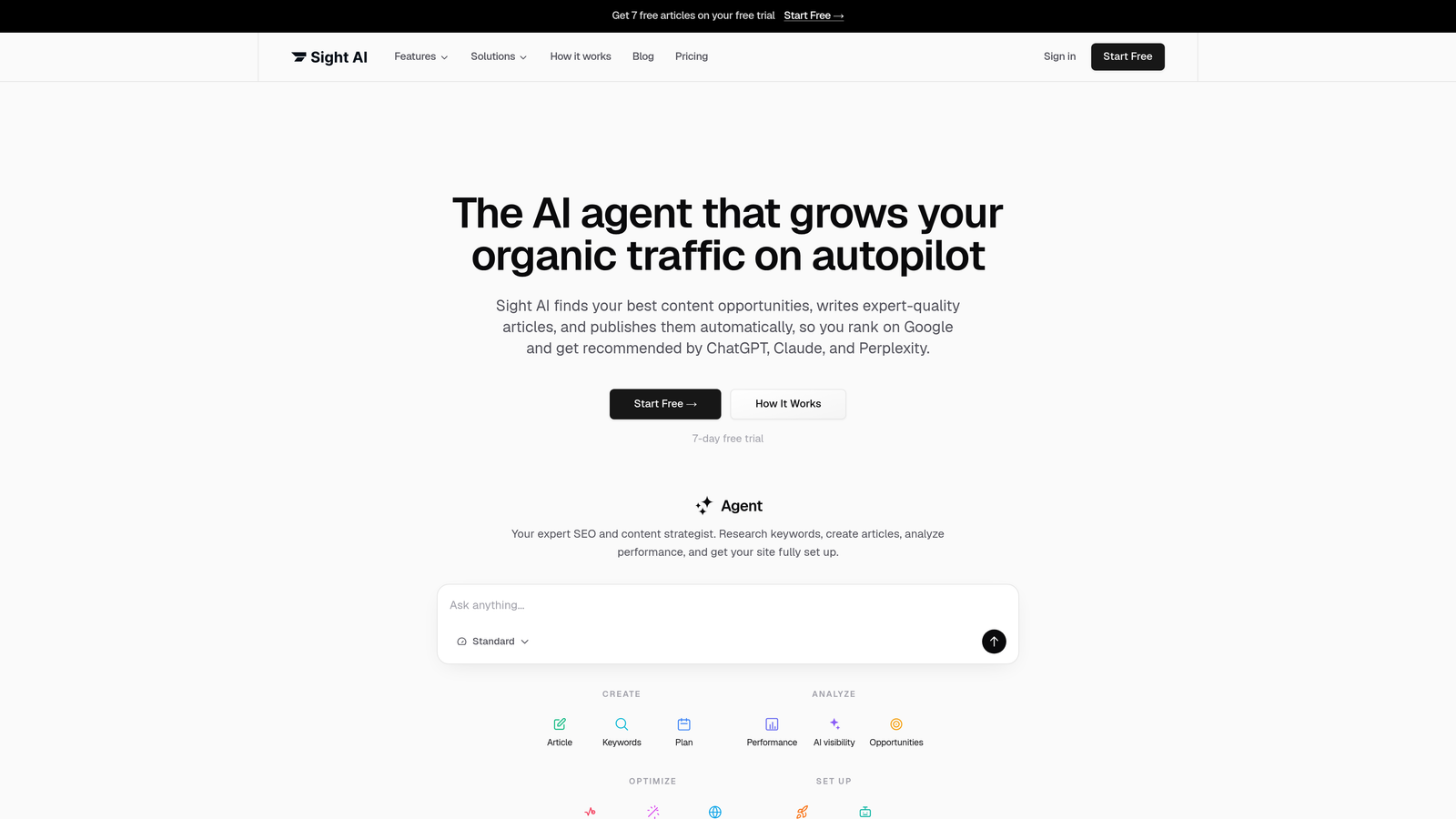
Sight AI is the only platform in this comparison that covers the full GEO and SEO pipeline: AI brand mention tracking, multi-agent content generation, and automated website indexing.
Where This Tool Shines
Most tools in this space solve one piece of the puzzle. Sight AI is built around the idea that content creation, AI visibility measurement, and indexing automation should live in the same workflow. You can see how AI models talk about your brand, generate content designed to improve those mentions, and push that content to search engines automatically.
The AI Visibility Score gives you a concrete metric to track over time, with sentiment analysis layered on top. This means you're not just counting mentions; you're understanding whether those mentions are positive, neutral, or negative across platforms like ChatGPT, Claude, and Perplexity.
Key Features
AI Visibility Score: Monitors brand mentions across 6+ AI platforms with sentiment analysis so you understand not just if you're being mentioned, but how.
Prompt Tracking: Identifies which specific queries surface your brand (or your competitors) in AI-generated responses, giving you a clear content roadmap.
13+ Specialized AI Agents: Generates SEO and GEO-optimized content formats including listicles, guides, and explainers, each agent tuned for a specific content type.
Autopilot Mode: Handles content generation at scale without manual intervention, useful for agencies running high-volume content programs.
IndexNow Integration: Automatically notifies search engines of new content and updates sitemaps, reducing the time between publishing and discovery.
Best For
Marketers, founders, and agencies who want a single platform to track AI brand visibility, generate GEO-optimized content, and automate the indexing pipeline. Particularly strong for growth teams that are serious about appearing in AI-generated answers, not just traditional search results.
Pricing
Visit trysight.ai for current pricing plans. Multiple tiers are available depending on team size and usage volume.
2. Writesonic
Best for: Content teams that need fast, high-volume AI writing across multiple formats.
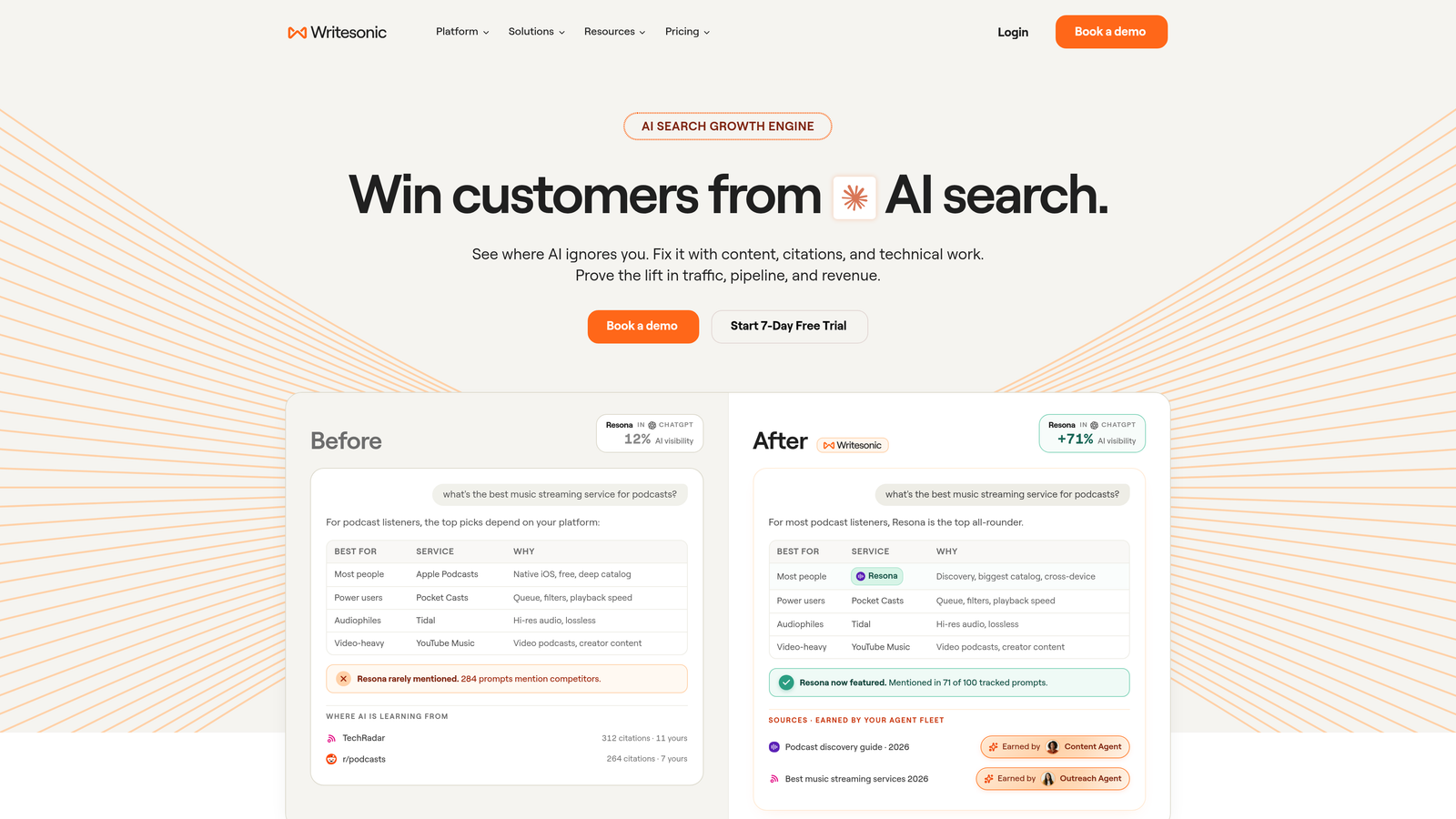
Writesonic is one of the most established AI writing platforms, offering a broad template library for blogs, ads, landing pages, and product descriptions alongside a conversational AI assistant.
Where This Tool Shines
Writesonic has built a reputation for covering a wide range of content types under one roof. If your team regularly produces blog posts, ad copy, email sequences, and product descriptions, the template library reduces the time spent setting up prompts from scratch. The SEO article writer mode is particularly useful for long-form content where keyword targeting matters.
Chatsonic, its conversational AI assistant, adds real-time web access to the mix, which helps when you need content that references current events or recent data. It's a practical tool for teams focused primarily on output volume and content variety.
Key Features
AI Article Writer with SEO Mode: Generates long-form blog content with keyword optimization built into the workflow.
Chatsonic: A conversational AI assistant with real-time web access for research and content generation in a chat interface.
100+ Content Templates: Covers ad copy, landing pages, product descriptions, social posts, and more, reducing setup time for recurring content types.
Botsonic: Allows teams to build custom AI chatbots for customer-facing applications without deep technical knowledge.
Brand Voice Customization: Lets you define tone and style parameters so outputs stay consistent across different writers and projects.
Best For
Content teams and freelancers who need a reliable AI writing tool for traditional content formats. Strong choice if your primary goal is increasing content output speed. Less suited for teams whose priority is AI search visibility or GEO, as Writesonic does not offer native AI mention tracking or indexing automation.
Pricing
Freemium plan available. Paid plans vary by word count and feature access. Check writesonic.com for current pricing.
3. AirOps
Best for: Technically capable teams that want to build custom AI content workflows connected to their own data and CMS.
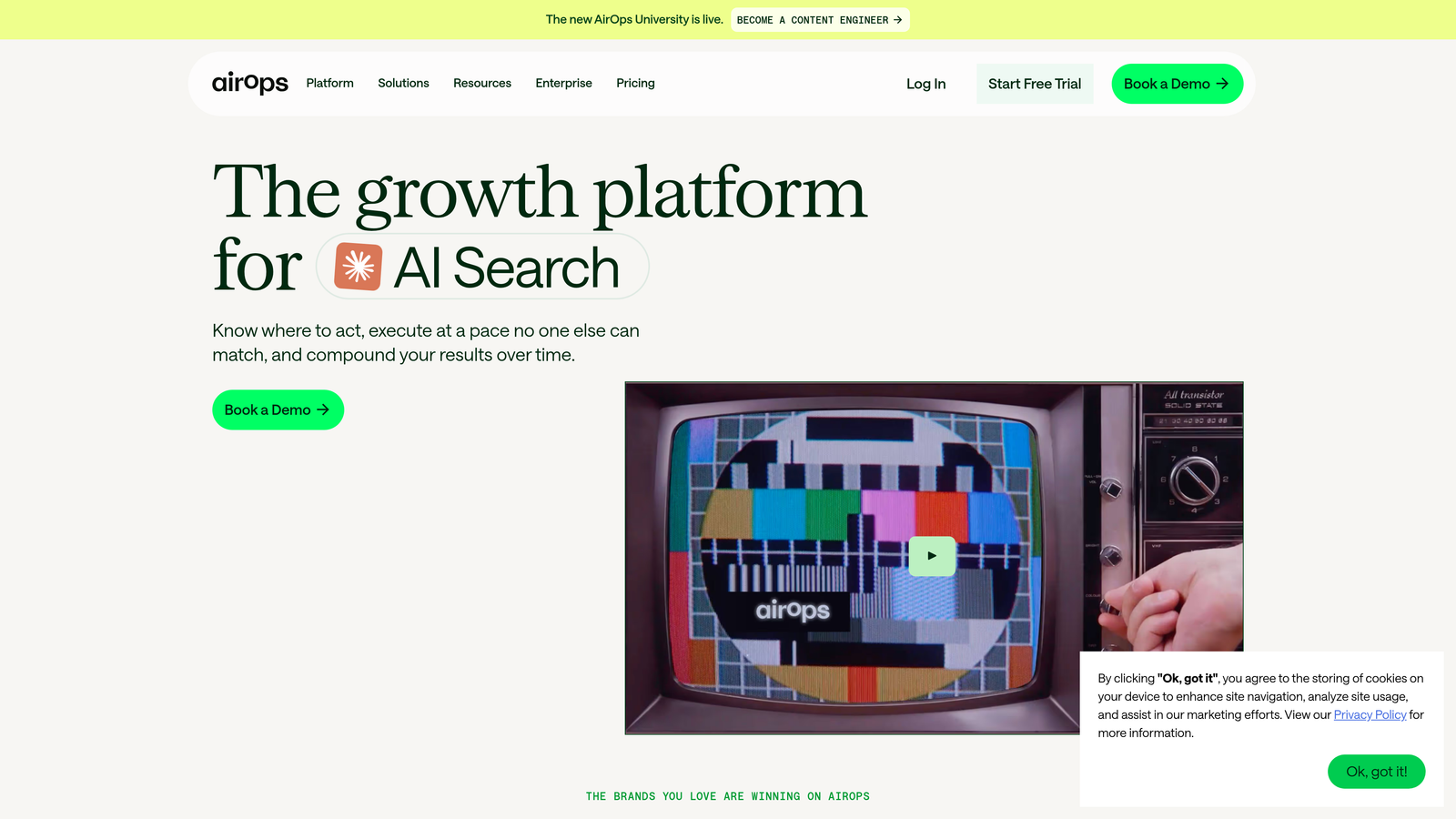
AirOps is an AI workflow automation platform that lets teams design multi-step content pipelines by connecting AI models to existing data sources, APIs, and CMS platforms.
Where This Tool Shines
AirOps is less of a turnkey content tool and more of a content infrastructure layer. If your team has specific data inputs, unique content transformation needs, or wants to automate repetitive content tasks at scale, the visual workflow builder gives you a high degree of control. You're essentially designing your own AI content factory, with the flexibility to wire in whatever data sources or output destinations your process requires.
This makes it particularly appealing to agencies with established processes that need to be systematized, rather than teams looking for out-of-the-box GEO or AI visibility features.
Key Features
Visual Workflow Builder: Design multi-step AI content automations without writing code, connecting inputs, models, and outputs in a drag-and-drop interface.
CMS and API Integrations: Connect to popular content management systems and data sources so content flows directly into your existing stack.
Content Generation and Transformation: Supports creating new content, enriching existing content, and transforming data into structured outputs at scale.
Custom Prompt Engineering: Build and refine prompts within workflows so every step in the pipeline produces consistent, on-brand output.
Team Collaboration: Shared workflow management so multiple team members can build, edit, and run automations together.
Best For
Agencies and technical content teams that need repeatable, customizable content processes. Best suited for teams comfortable with workflow design who want flexibility over a pre-built solution. Not the right fit for teams looking for AI visibility tracking or GEO-specific features out of the box.
Pricing
Check airops.com for current pricing plans.
4. Profound
Best for: Enterprise teams that need detailed brand visibility monitoring across AI-powered search engines.
Profound is an enterprise-grade AI search visibility platform focused on tracking how AI-powered engines represent your brand in generated responses, with competitive benchmarking built in.
Where This Tool Shines
Profound takes an analytics-first approach to AI visibility. Rather than helping you create content, it helps you understand how your brand is currently positioned in AI-generated answers and how that compares to competitors. The competitive benchmarking features are particularly useful for enterprise teams that need to report on share-of-voice in AI search, not just traditional search rankings.
Visibility scoring and trend tracking over time give teams a structured way to measure whether their GEO efforts are moving the needle, which is valuable for stakeholder reporting and strategy validation.
Key Features
Brand Visibility Monitoring: Tracks how AI search engines including Perplexity and ChatGPT represent your brand in generated responses.
Competitive Benchmarking: Measures your share of AI-generated answers relative to competitors, giving context to your visibility data.
Visibility Scoring and Trend Tracking: Provides a scored metric over time so teams can measure progress and identify inflection points.
Enterprise Reporting and Dashboards: Structured reporting features designed for larger teams and stakeholder communication.
Brand Representation Alerts: Notifies teams when their brand representation in AI responses changes significantly.
Best For
Enterprise marketing and SEO teams that need rigorous AI search visibility data and competitive benchmarking. Works best when paired with a separate content generation tool, as Profound focuses on measurement rather than creation.
Pricing
Check profound.ai for current pricing plans.
5. Peec
Best for: SEO and growth teams focused on understanding AI search presence and competitor share-of-voice.
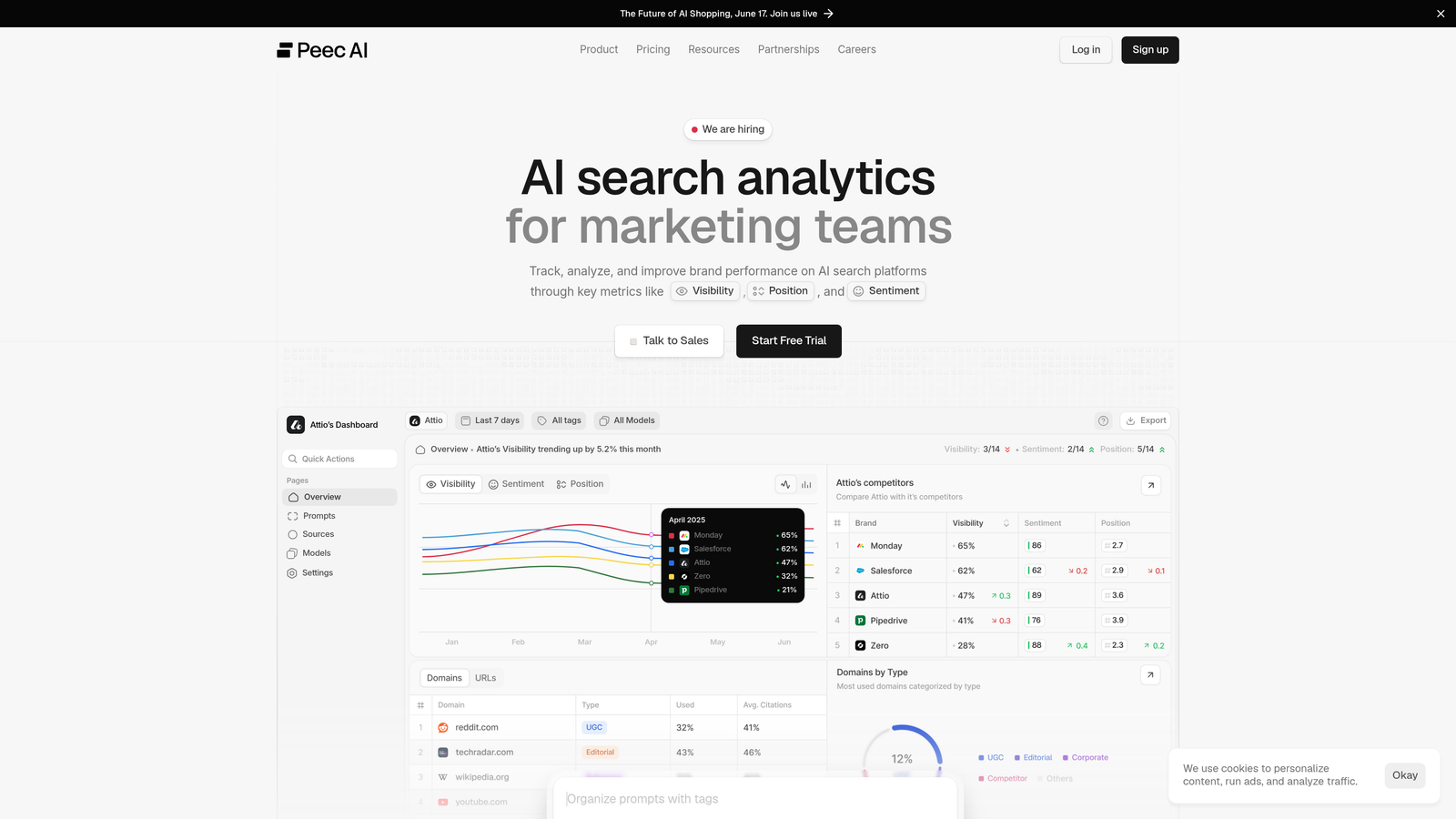
Peec is an AI search analytics platform built around prompt-based brand tracking and competitor visibility analysis across AI-generated search responses.
Where This Tool Shines
Peec approaches AI visibility from a keyword and prompt performance angle that will feel familiar to SEO practitioners. Instead of thinking about traditional keyword rankings, you're tracking which prompts surface your brand in AI answers and how that compares to your competitors. This framing makes it easier to translate AI visibility data into actionable content strategy.
The competitor share-of-voice analysis is particularly useful for teams that want to understand not just their own AI presence, but the full competitive landscape within specific topic areas or query categories.
Key Features
Prompt-Level Brand Tracking: Identifies which specific queries surface your brand in AI-generated answers, giving you a clear view of where you have presence and where you don't.
Competitor Share-of-Voice Analysis: Measures how often competitors appear in AI responses for the same prompts, providing competitive context.
Keyword and Prompt Performance Reporting: Tracks performance data over time so you can see which content efforts are improving your AI visibility.
Multi-Platform Monitoring: Covers multiple major AI engines so you're not limited to a single platform's data.
Data Export and Reporting: Allows SEO strategy teams to pull data into their existing reporting workflows.
Best For
SEO practitioners and growth teams who want data-driven insight into their AI search presence relative to competitors. Analytics-focused; no content creation or indexing capabilities included.
Pricing
Check peec.ai for current pricing plans.
6. Promptwatch
Best for: Teams actively running GEO campaigns who need granular, prompt-level monitoring to validate their strategy.
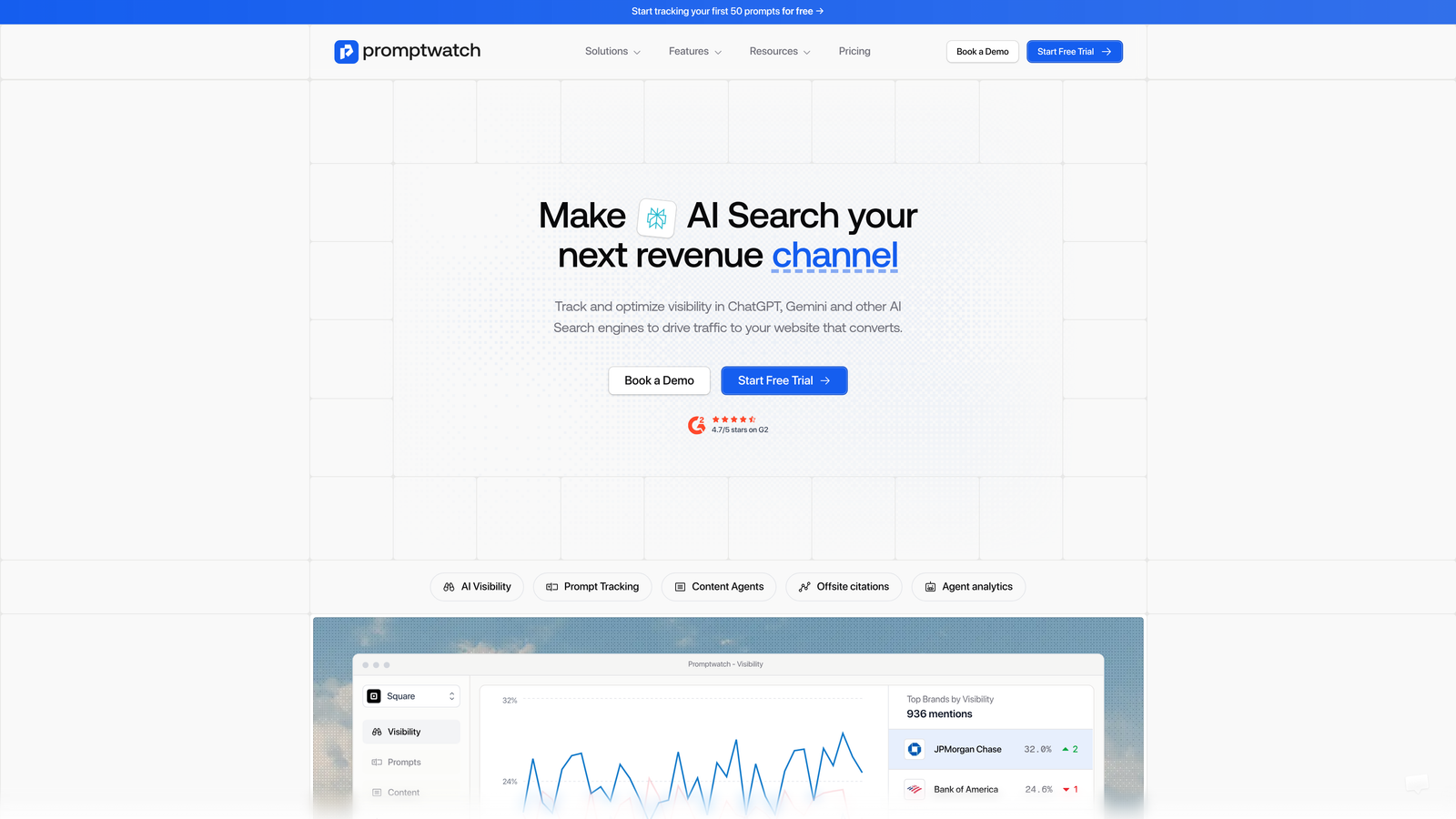
Promptwatch is a prompt monitoring tool designed for teams that want to track exactly how specific queries surface brand mentions across AI platforms over time.
Where This Tool Shines
Promptwatch is built for teams that are already executing a GEO strategy and need to know whether it's working. The granular prompt-level tracking lets you see how brand representation shifts as you publish and update content, which is exactly the feedback loop you need when optimizing for AI-generated answers rather than traditional rankings.
The competitor mention tracking within specific prompt categories adds a layer of competitive intelligence that helps you understand not just your own trajectory, but whether competitors are gaining or losing ground in the same query spaces.
Key Features
Granular Prompt-Level Monitoring: Tracks specific prompts across AI platforms so you can see exactly which queries are and aren't surfacing your brand.
Brand Representation Change Tracking: Monitors how your brand's presence in AI responses evolves as you update and publish new content.
Competitor Mention Tracking: Tracks competitor mentions within specific prompt categories so you can benchmark your GEO performance against the field.
GEO Campaign Measurement: Validates whether content strategy changes are producing measurable improvements in AI brand mentions.
Alerts and Reporting: Notifies teams of significant shifts in brand mention patterns so nothing slips through unnoticed.
Best For
Growth and SEO teams running active GEO campaigns who need detailed tracking to measure impact. Monitoring-focused; best paired with a content generation tool to act on the data it surfaces.
Pricing
Check promptwatch.io for current pricing plans.
Which Tool Is Right for Your Growth Goals?
The tools in this comparison split cleanly into two categories: content generation platforms and AI visibility measurement platforms. Understanding which problem you're trying to solve first will help you narrow the field quickly.
If your immediate priority is producing more content faster, Writesonic is the most accessible starting point. Its broad template library and SEO article writer cover the most common content needs without a steep learning curve. If your team has more specific workflow requirements and technical resources to match, AirOps gives you the flexibility to build a content pipeline that fits your exact process.
If you already have content production covered and want to understand how your brand appears in AI-generated answers, Profound, Peec, and Promptwatch each offer a distinct angle. Profound leans toward enterprise reporting and competitive benchmarking. Peec takes a keyword-centric approach that translates naturally for SEO teams. Promptwatch goes deepest on prompt-level granularity, making it the strongest choice for teams actively running and iterating on GEO campaigns.
Here's the honest reality though: most growth-focused teams need both sides of this equation. You need to create content that earns AI citations, and you need to track whether it's working. Running separate tools for content generation, AI visibility monitoring, and indexing creates friction, reporting gaps, and coordination overhead that compounds over time.
That's the case for Sight AI as the default recommendation for teams serious about AI-driven organic growth. It's the only platform in this comparison that handles the full pipeline: generating GEO-optimized content through 13+ specialized AI agents, tracking brand mentions across 6+ AI platforms with sentiment analysis, and automatically indexing new content through IndexNow integration. Nothing else in this list does all three.
If you're ready to stop guessing how AI models like ChatGPT and Claude talk about your brand, Start tracking your AI visibility today and see exactly where your brand appears across top AI platforms. The brands showing up in AI-generated answers in 2026 are the ones that started optimizing for it early.