The best AI content tools with CMS integration publish directly to WordPress, Webflow or a headless CMS through an API, so a generated draft becomes a live post without copy-paste. For teams that want to publish content based on AI visibility data, the strongest options combine generation, auto-publishing and AI citation monitoring in one loop: Sight AI does all three, Writesonic and AirOps excel at generation and pipelines, and Profound and Peec lead on AI search monitoring.
Below, each tool is evaluated on content quality, publishing automation, SEO/GEO optimization and fit for organic growth teams. We only included tools with verified CMS connectivity, not ones that offer a copy-paste "export to WordPress" plugin. If you need more than CMS publishing, such as scheduling, approvals and multi-channel distribution, see our guide to content publishing automation tools.
How AI-to-CMS integrations actually work
Before comparing tools, it helps to know which integration type you are buying. In practice there are four levels:
- Export only: The tool produces HTML or Markdown and you paste it into the CMS. This is not a real integration.
- Draft push: The tool creates a draft post via the CMS API, such as the WordPress REST API with an application password or the Webflow CMS API with a site token. An editor reviews it and publishes it.
- Auto-publish: The tool publishes on a schedule and fills fields like slug, meta title, meta description, categories and featured image. It may also ping IndexNow or update the sitemap.
- Closed loop: Visibility data, such as rankings, AI citations or prompt tracking, decides what gets written or refreshed. The tool then publishes the update and measures the effect.
When you evaluate a tool, check these points:
- Which CMSs it supports natively: WordPress, Webflow, Shopify, HubSpot, Ghost, Contentful or Sanity.
- Whether it maps custom fields and preserves formatting, including headings, tables and images.
- Whether it can update existing posts, not just create new ones.
- Whether it supports draft-versus-publish permissions for editorial review.
1. Sight AI
Best for: Teams that want to generate, publish, index and track AI-optimized content in one platform.
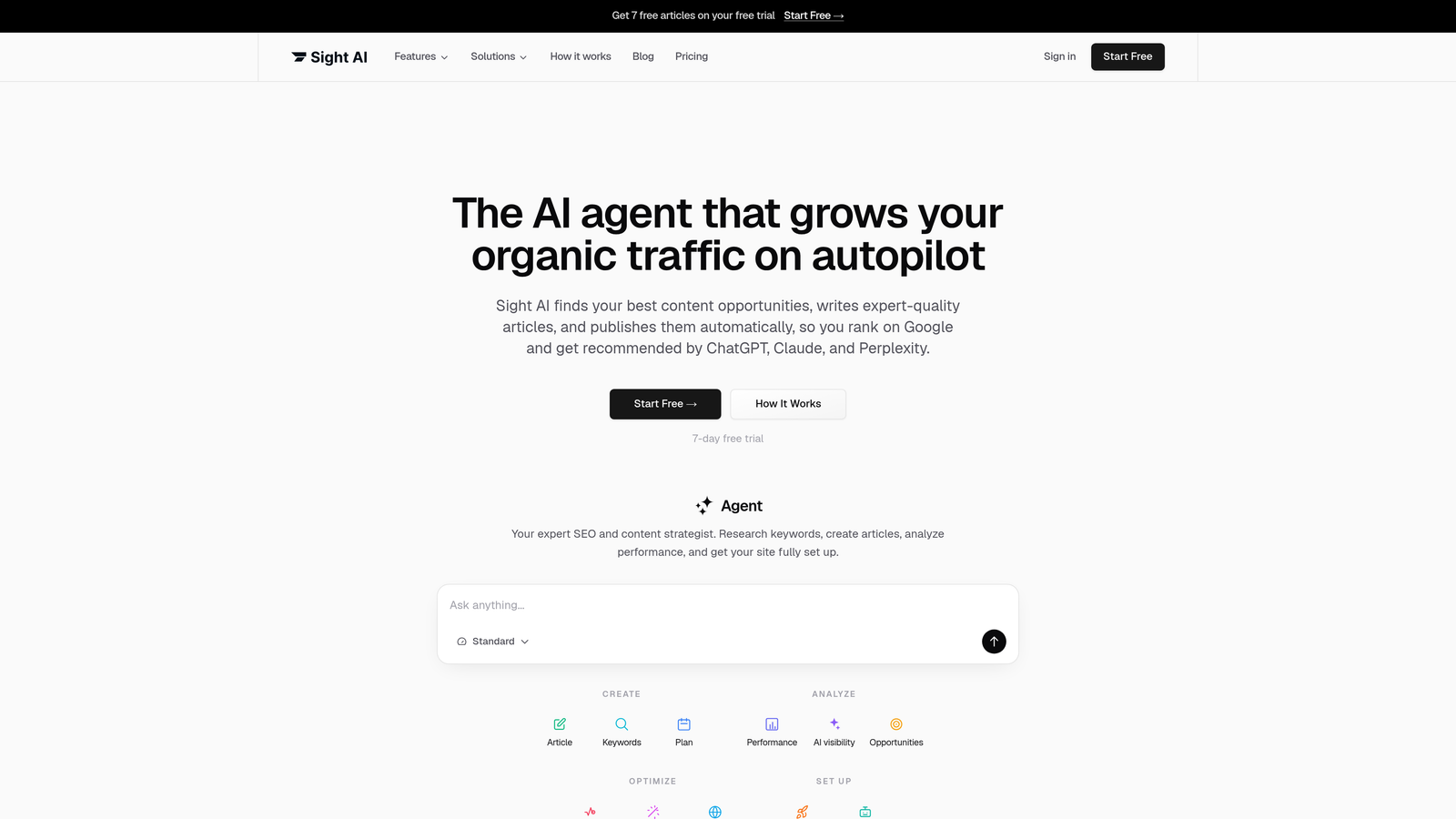
Sight AI is an all-in-one AI content and visibility platform. It generates SEO/GEO-optimized articles, auto-publishes them to your CMS and tracks how your brand appears across AI models like ChatGPT, Claude and Perplexity.
Where This Tool Shines
Most AI content tools stop at the draft. Sight AI extends the pipeline further. After content is generated, it submits the page via IndexNow for faster search engine discovery. It then monitors whether that content actually influences how AI models respond to relevant queries. That last step is rare in this category.
The 13+ specialized AI agents cover a wide range of content formats, from listicles and how-to guides to explainers and comparison articles. Autopilot Mode is the standout feature for busy teams: it deploys content hands-free, so you are not babysitting a publish queue.
Key Features
13+ Specialized AI Agents: Purpose-built agents generate listicles, guides, explainers and other formats with SEO and GEO optimization built in.
CMS Auto-Publishing with Autopilot Mode: Finished content is deployed to your CMS automatically, which removes the copy-paste step entirely.
IndexNow Integration: Each new page is submitted for faster indexing, and your sitemap is updated automatically after every publish.
AI Visibility Score: Tracks brand mentions, sentiment and share of voice across 6+ AI platforms, including ChatGPT, Claude and Perplexity.
Prompt Tracking: Shows which user queries surface your brand in AI responses, so you can see where you appear and where you are missing.
Best For
Sight AI is the strongest fit for marketers, founders and agencies who want to run a complete content operation from a single platform. It was built for teams that treat GEO (generative engine optimization) as part of SEO.
Pricing
Paid plans are available. Plans are updated regularly, so check trysight.ai for current pricing tiers.
2. Writesonic
Best for: Content teams and agencies producing high volumes of SEO-optimized long-form articles with direct CMS publishing.
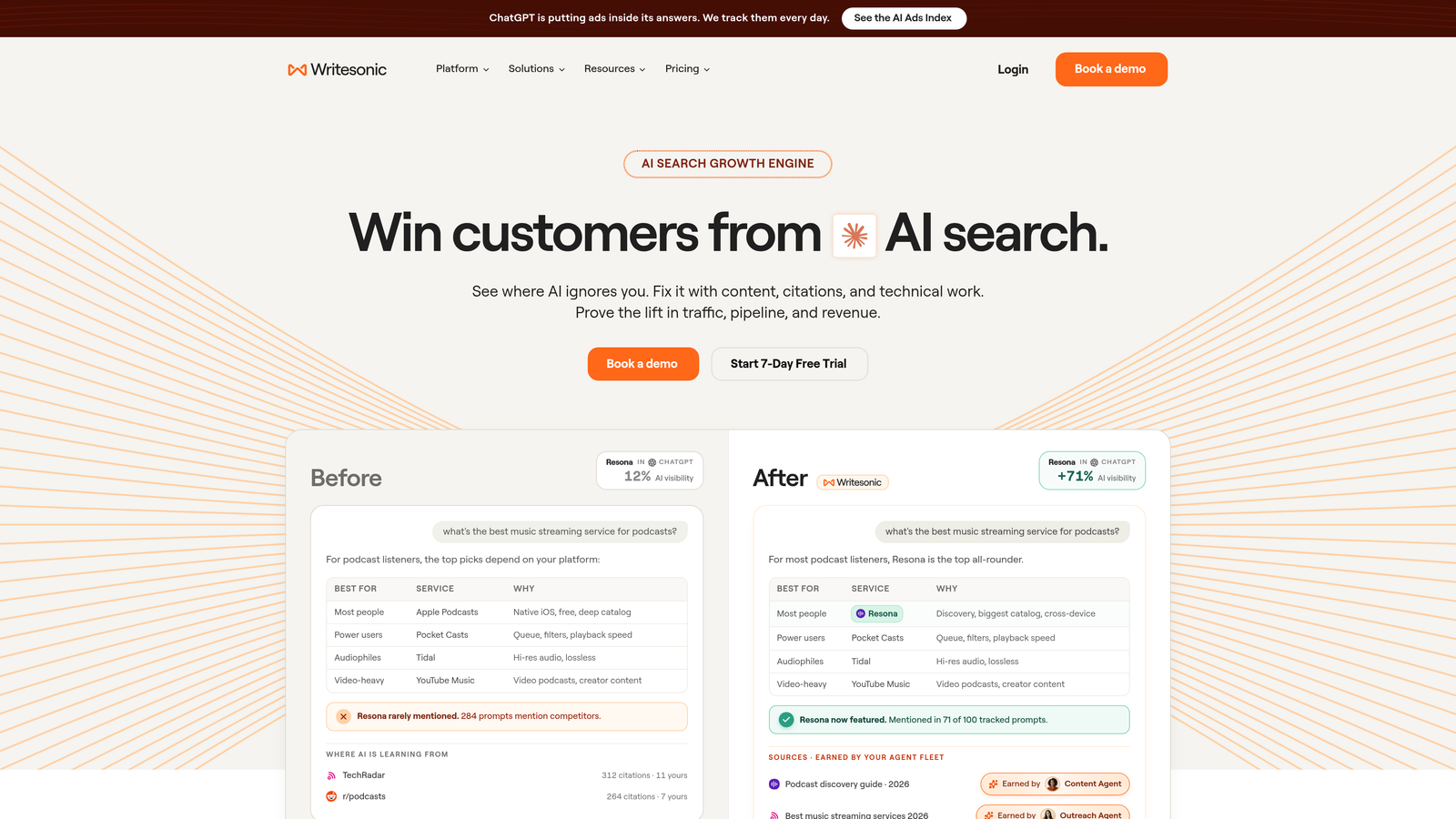
Writesonic is a high-volume AI content platform. It offers direct WordPress and Webflow publishing, SEO optimization and brand voice controls built for content teams and agencies.
Where This Tool Shines
Writesonic's Article Writer is one of the more polished long-form generation tools available. It uses SERP data to build outlines, so the structure reflects what is actually ranking rather than what merely sounds logical. Its publishing connection to WordPress and Webflow is a direct integration, not a workaround.
Brand voice configuration is practical for agencies managing multiple clients. You can define tone, style and vocabulary rules so outputs stay consistent across writers and AI runs. Chatsonic adds a chat interface for refining drafts without leaving the platform.
Key Features
Long-Form Article Writer: Generates full articles from SERP-informed outlines, with a built-in SEO mode for on-page optimization.
Direct CMS Publishing: Pushes finished content straight to WordPress and Webflow, with no copy-paste step.
Brand Voice Configuration: Lets teams define and enforce tone and style guidelines across all outputs.
Chatsonic: A chat interface for refining, expanding or reworking generated content in real time.
Bulk Content Generation: Supports high-volume publishing for teams with large content calendars.
Best For
Writesonic suits content teams and agencies that need volume without sacrificing SEO quality. It is a strong choice if WordPress or Webflow is your main CMS and you want a polished article writer with real publishing automation rather than a generic export.
Pricing
A free plan is available, and paid plans start at roughly $16/month. Tiers change frequently, so verify current pricing at writesonic.com.
3. AirOps
Best for: Ops-minded teams building structured, repeatable AI content pipelines connected to CMS platforms via APIs.
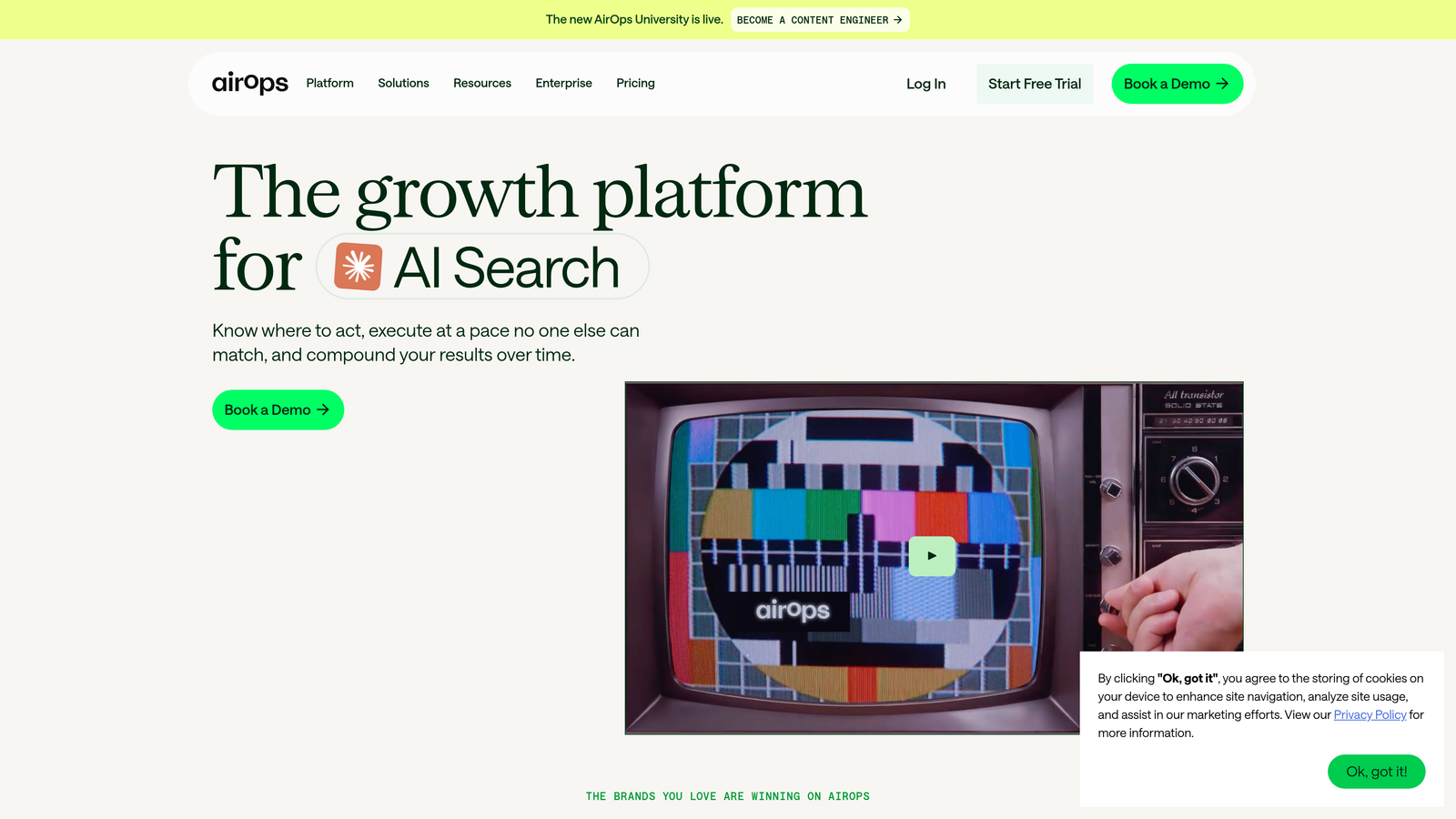
AirOps is a workflow-driven AI content platform. Growth and ops teams use it to build multi-step pipelines that connect data sources, AI models and CMS platforms through no-code automation.
Where This Tool Shines
AirOps takes a different approach from most content tools. Instead of a single "write an article" interface, it lets you design the whole pipeline: pull data from a source, run it through an AI prompt, apply formatting rules and push the result to your CMS. For teams with complex, repeatable content operations, that flexibility is valuable.
The visual workflow builder lets non-technical team members build and modify pipelines without writing code. Because a single workflow can use multiple AI models, you can send each content type to the model best suited for it.
A common question is how to connect AirOps to WordPress. Typically you add a WordPress publishing step at the end of a workflow and authenticate it with your site URL and an application password. You then map workflow outputs to post fields, such as title, content, slug, status and categories. A safe pattern is to publish as draft first so an editor can approve the post, and switch to publish once output quality is stable.
Key Features
Visual Workflow Builder: A drag-and-drop interface for designing multi-step AI content pipelines without engineering resources.
CMS and Data Source Integrations: Connects to CMS platforms and external data sources through APIs and no-code connectors.
Templated AI Workflows: Pre-built templates for common content types keep production consistent and repeatable at scale.
Multi-Model Support: Assigns each step of a workflow to the AI model best suited for it.
Team Collaboration: Shared workflow management for content operations teams working across multiple projects or clients.
Best For
AirOps is best suited for growth teams and content operations managers who think in systems rather than individual articles. If your process involves structured data inputs, multiple approval steps or programmatic publishing at scale, AirOps is worth a serious look.
Pricing
Paid plans are available, with custom pricing for enterprise use cases. Verify current options at airops.com.
4. Promptwatch
Best for: Teams managing large-scale CMS publishing who need consistent brand voice and reproducible content quality across many AI-generated outputs.
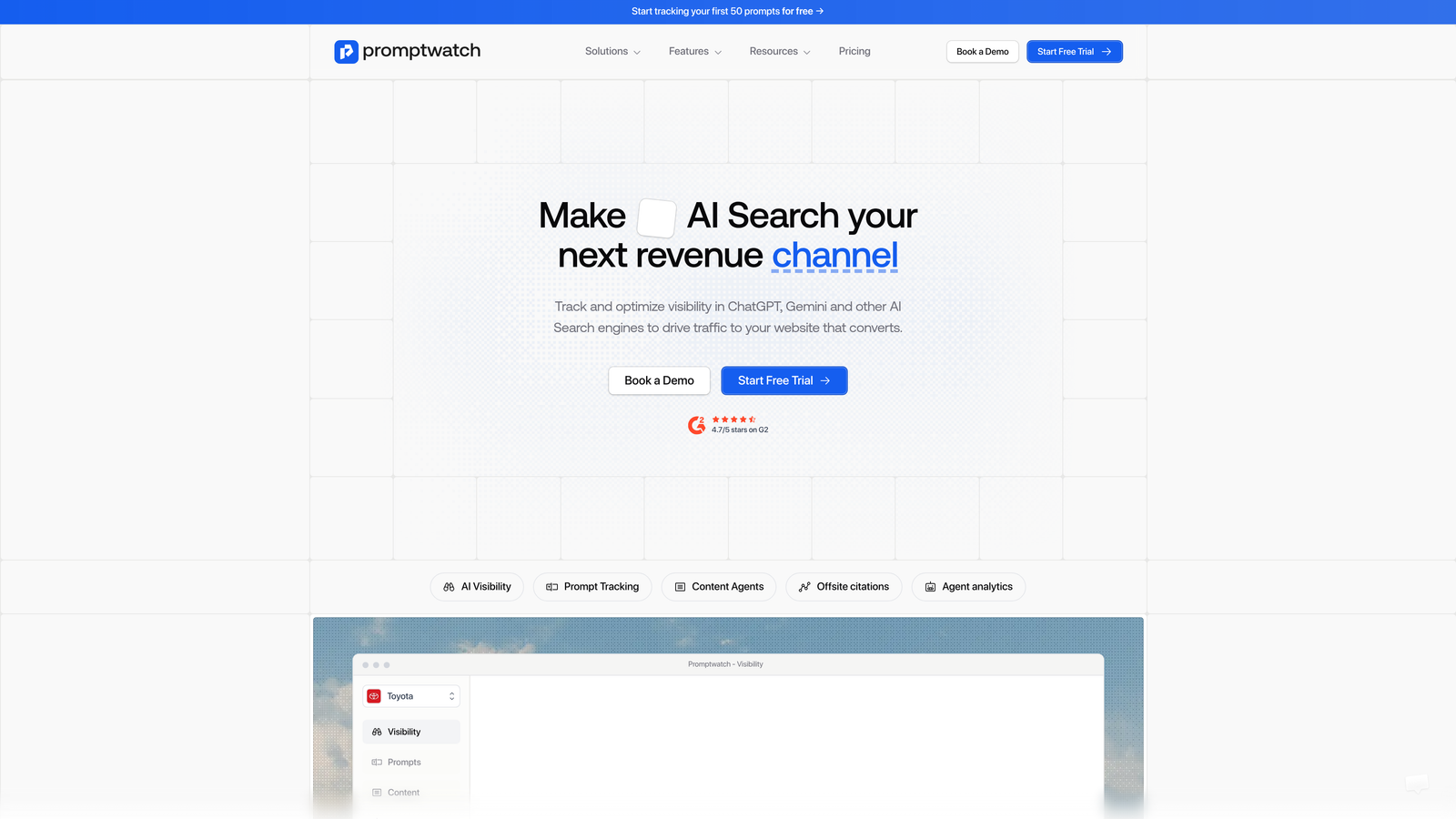
Promptwatch is a prompt management and content consistency platform. It versions, tracks and optimizes prompts so teams can keep brand voice and quality consistent across high-volume CMS publishing.
Where This Tool Shines
Brand voice drift is a real problem for teams producing AI content at scale. When team members use different prompts, or prompts change informally over time, output quality becomes inconsistent. Promptwatch solves this with a structured prompt library and version history, so every content run is traceable and reproducible.
Its performance analytics add a useful feedback loop. You can see which prompt versions produce the best-performing content and standardize on them across the team. A/B testing of prompt variations is rare in this category.
Key Features
Prompt Versioning and History: Tracks every prompt version, so teams can reproduce successful outputs and audit changes over time.
Team Prompt Library: A central repository of shared prompts with access controls and governance features.
Performance Analytics: Shows which prompts consistently produce the highest-quality content.
CMS Publishing Connectors: Integrates with CMS platforms to shorten the path from approved output to live content.
A/B Testing for Prompts: Tests prompt variations against each other before you commit to a standard.
Best For
Promptwatch fits content operations teams where several people generate AI content and consistency is a priority. It is especially useful for agencies managing brand guidelines across multiple clients and for enterprise teams where prompt governance matters.
Pricing
Verify current pricing and plan details at promptwatch.io.
5. Profound
Best for: Brands that want to understand and improve how they appear in AI-generated search responses, with CMS publishing to act on those insights.
Profound is an AI answer engine optimization platform. It helps brands monitor their visibility in AI-generated responses and publish optimized content to close the gaps it finds.

Where This Tool Shines
Profound starts from AI search visibility rather than content generation. Its core value is showing what AI models say about your brand, your competitors and your category. You then use that intelligence to decide what to publish next, which is a different starting point from most content tools.
Its content gap analysis is particularly useful for SEO and GEO strategy. Instead of guessing what to write, you see where your brand is underrepresented in AI responses and prioritize content accordingly. Publishing integrations then connect those insights to your CMS workflow.
Key Features
AI Search Visibility Monitoring: Tracks how your brand appears across major AI answer engines and shows trends over time.
Content Gap Analysis: Identifies topics and queries where your brand is missing or underrepresented in AI-generated responses.
CMS Publishing Integrations: Links visibility insights to a publishing workflow, so you can act on recommendations without switching tools.
Competitor Share-of-Voice Tracking: Benchmarks your brand's presence in AI responses against key competitors.
Optimization Recommendations: Gives specific guidance on improving your brand's presence in AI-generated answers.
Best For
Profound suits SEO strategists and brand managers who take AI answer engine optimization seriously. If your main goal is understanding and improving AI search visibility, with publishing as a downstream step, it is a strong tool to evaluate.
Pricing
Verify current pricing at profound.co.
6. Peec
Best for: Brands monitoring AI model mentions in real time and connecting those insights to a CMS-integrated content publishing workflow.
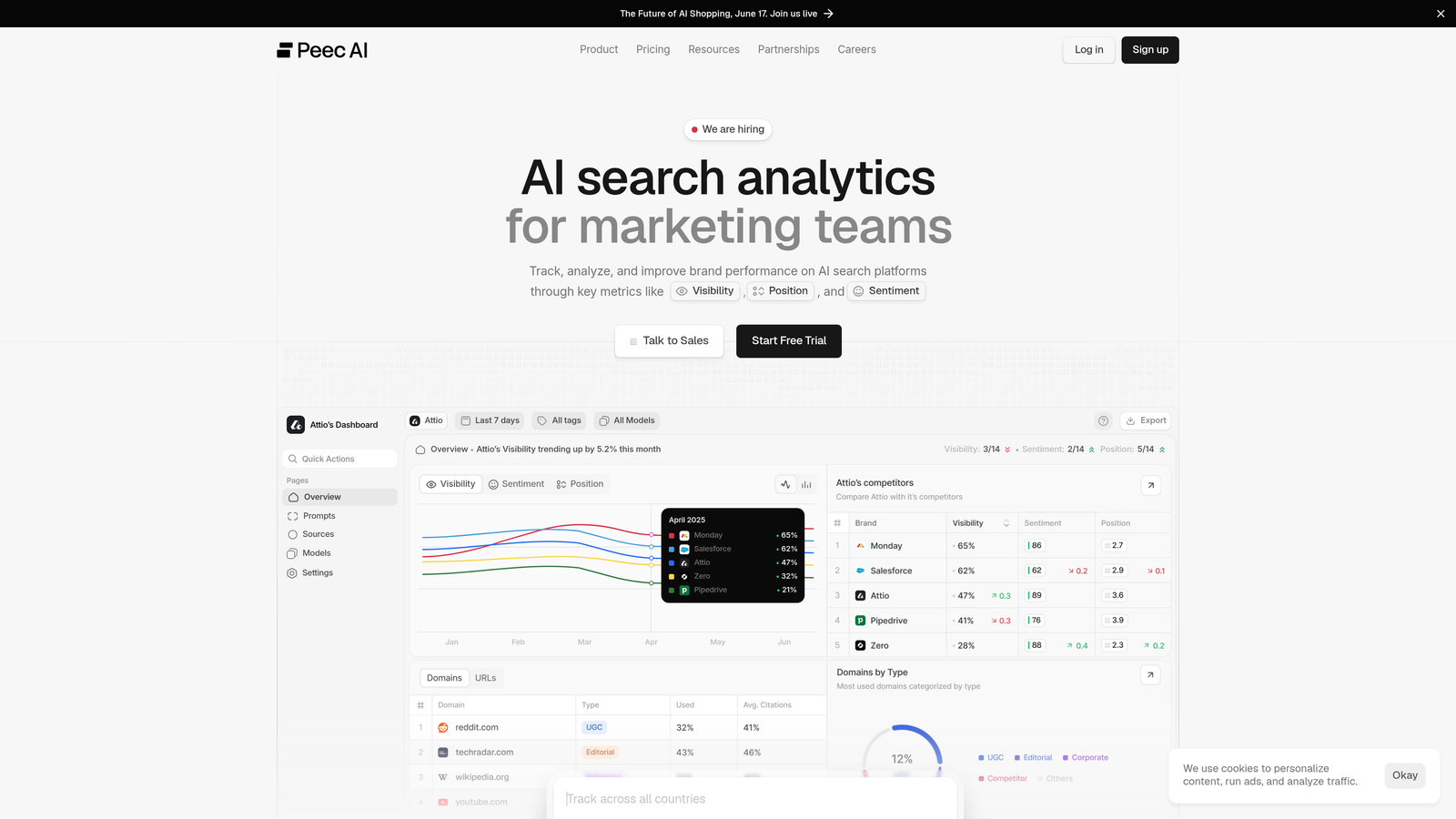
Peec is an AI brand monitoring tool. It shows how your brand appears in AI model responses and connects those insights to a content workflow with CMS publishing support.
Where This Tool Shines
Peec focuses on the monitoring side of AI visibility. It gives brands a real-time picture of how they are described, positioned and compared across AI platforms. Its sentiment analysis adds context: you see not only whether your brand appears, but how it is characterized.
The content recommendations feature connects monitoring to action. When Peec spots a gap or a negative trend in how AI models describe your brand, it suggests content to address it, which you can push directly to your CMS. This closed loop helps teams act on AI visibility data quickly.
Key Features
Real-Time Brand Mention Tracking: Monitors how your brand appears across AI platforms as queries are run, so you see shifts in AI responses as they happen.
Sentiment Analysis: Evaluates the tone and framing AI models use to describe your brand, not just whether you appear.
Content Recommendations: Suggests specific content to create based on AI visibility gaps or negative sentiment patterns.
CMS Connectivity: Publishes AI-optimized content recommendations directly to your CMS from within the platform.
Competitive Benchmarking: Compares your brand's AI search presence against competitors to show relative strengths and gaps.
Best For
Peec is a solid fit for brand managers and digital marketers who want ongoing visibility into how AI models talk about them, with a direct path from that intelligence to published content. It is especially relevant in competitive categories where AI search is becoming a meaningful traffic source.
Pricing
Verify current pricing at peec.ai.
Quick comparison
| Tool | Primary strength | CMS integration type | AI visibility tracking |
|---|---|---|---|
| Sight AI | Generation, publishing, indexing and tracking in one platform | Auto-publish (Autopilot) plus IndexNow | Yes: score, prompts, sentiment |
| Writesonic | High-volume long-form writing | Direct push to WordPress and Webflow | Limited |
| AirOps | Custom multi-step pipelines | API and no-code connectors | Via workflows |
| Promptwatch | Prompt governance and consistency | Publishing connectors | No |
| Profound | AI answer engine monitoring | Publishing integrations | Yes |
| Peec | Real-time AI brand monitoring | CMS connectivity | Yes |
How to automate CMS updates from AI visibility insights
If you are trying to connect AI search monitoring to your CMS, a practical workflow looks like this:
- Track prompts. Define 50–200 buyer-intent prompts and monitor which AI models cite or mention you for each one.
- Flag gaps. Mark prompts where competitors are cited and you are not, as well as prompts where sentiment is negative.
- Map gaps to pages. Decide whether each gap needs a new article or a refresh of an existing URL. Refreshes usually show impact faster.
- Generate and push as drafts. Send content to the CMS via its API with draft status so an editor can review it. Move to auto-publish only for formats with a proven quality record.
- Index and re-measure. Submit updated URLs via IndexNow or Search Console. Then re-check the same prompts after 2–4 weeks and log the change in citations.
For automated reporting, schedule a weekly export of visibility metrics alongside a list of published and updated URLs. This lets you attribute changes in citations to specific content actions. For a broader shortlist of monitoring options, see our roundup of AI visibility software tools.
Which Tool Fits Your Workflow?
The right choice depends on where your biggest bottleneck is. Here is a quick way to think it through.
If you want a single platform that handles content generation, CMS publishing, indexing and AI visibility tracking, Sight AI is the most complete option on this list. The combination of Autopilot Mode and AI Visibility Score sets it apart, especially for teams that treat GEO as part of SEO.
If your main need is high-volume long-form content with solid SEO and real WordPress or Webflow publishing, Writesonic is a proven, accessible choice with a lower entry price.
For teams that need structured, repeatable content pipelines across data sources and CMS platforms, AirOps offers the most flexibility and suits teams with an ops mindset.
If brand voice consistency across large AI content volumes is your core challenge, Promptwatch fills a gap that most content tools ignore. If your main goal is understanding and improving how AI models talk about your brand, with publishing as a downstream step, Profound and Peec both bring strong AI visibility intelligence.
Before choosing any tool, ask one question: does "CMS integration" mean auto-publish, or export-and-paste? The answer narrows the list quickly.
Frequently asked questions
Which AI SEO platforms publish directly to a CMS from visibility data?
Sight AI is the most direct example. It tracks prompts and AI citations, generates content to close the gaps it finds, publishes to your CMS through Autopilot Mode and submits the new URLs via IndexNow. Profound and Peec also pair AI visibility monitoring with publishing integrations, but their main strength is monitoring rather than generation. AirOps can achieve a similar result if you build the workflow yourself.
How do I connect AI search monitoring to my CMS for automated reporting?
Use a platform that both monitors AI answers and publishes to your CMS, or connect a monitoring tool to your CMS through its API or a workflow tool like AirOps. Then schedule weekly reports that pair citation changes with recently published or updated URLs. The step-by-step workflow section above covers the full process, including how long to wait before re-measuring.
What is the best way to integrate AI writing tools with an existing CMS?
Choose a tool with a native connector for your CMS, such as WordPress or Webflow. Authenticate with an API key or application password and map generated fields to your CMS fields: title, body, slug, meta tags and categories. Start with draft-only publishing and an editorial review step. Once output quality is consistently good, enable scheduled auto-publishing for proven content formats.
What are alternatives to Peppertype.ai with workflow orchestration and CMS integrations?
Peppertype.ai focuses on short-form copy generation. If you need multi-step pipelines, AirOps is the closest match for workflow orchestration with CMS connectors. Writesonic covers long-form writing with direct WordPress and Webflow publishing. Sight AI adds auto-publishing, indexing and AI visibility tracking, so it suits teams that want content decisions driven by search and AI citation data.
How do AI tools integrate with a CMS at a mid-size company?
At companies with roughly 250–1,000 employees, AI tools usually connect through the CMS API using role-based service accounts. This keeps editorial approval, legal review and brand governance in place. Typical setups push AI drafts into the CMS workflow rather than publishing live. They also add prompt governance, with tools like Promptwatch, and SSO and audit logs on the AI platform itself.
If AI visibility is part of your growth strategy, the next step is seeing exactly where your brand already appears and where it doesn't. Start tracking your AI visibility today and get a clear picture of how ChatGPT, Claude, Perplexity and other AI platforms are talking about your brand right now.