Managing content across multiple channels—your blog, social media, email, and now AI search engines—has become a logistical nightmare for marketing teams. A unified content publishing platform consolidates creation, scheduling, and distribution into a single workflow, eliminating the chaos of juggling disconnected tools.
This guide evaluates nine platforms that streamline multi-channel publishing, with special attention to those optimizing for both traditional SEO and emerging AI visibility. We've assessed each tool based on publishing capabilities, integration depth, AI optimization features, and value for marketing teams of all sizes.
1. Sight AI
Best for: Marketing teams optimizing content for both traditional search and AI model visibility
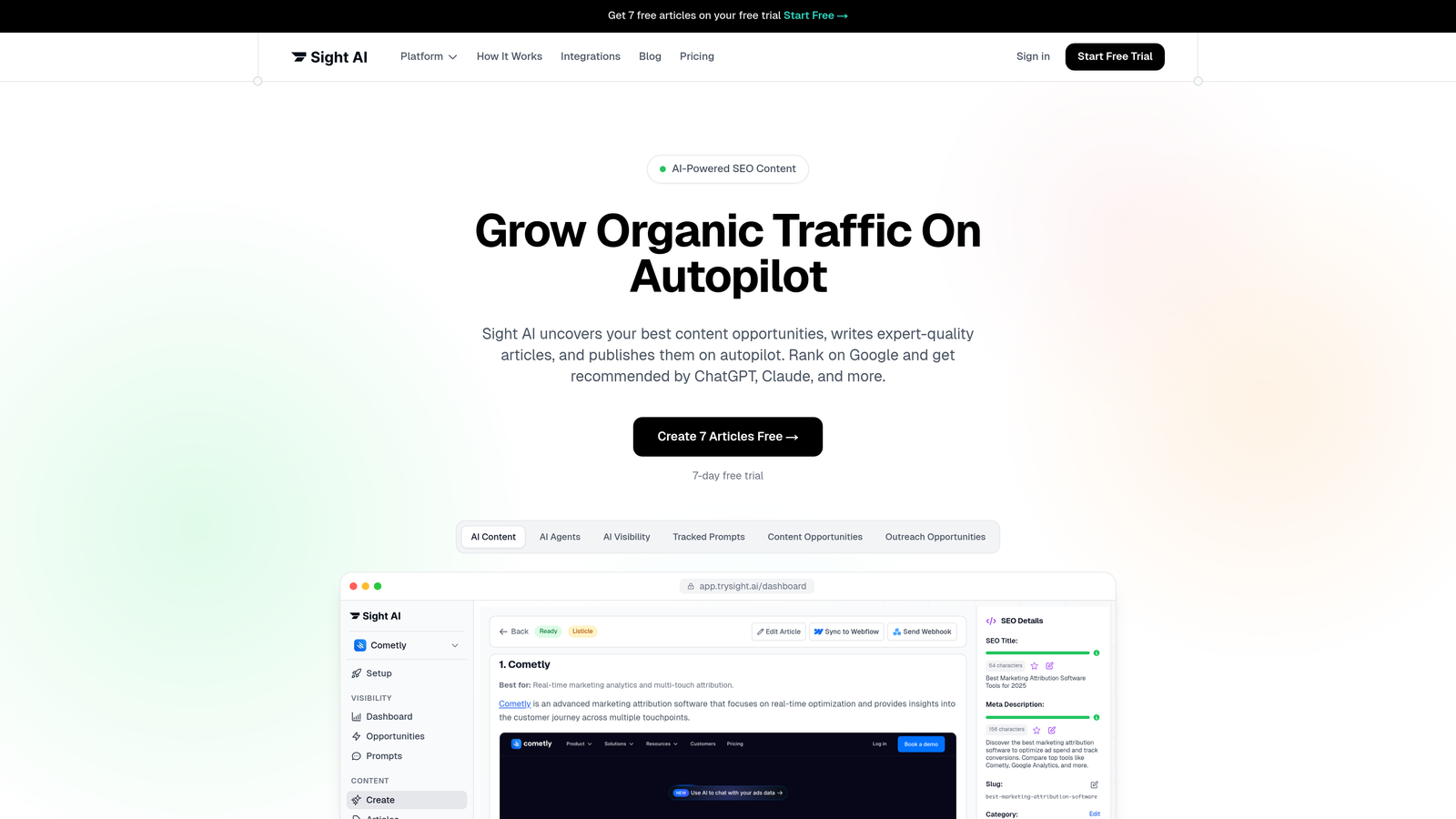
Sight AI is an AI-powered content publishing platform that bridges the gap between traditional SEO and the emerging world of AI search visibility.
Where This Tool Shines
Sight AI addresses a critical blind spot in modern content marketing: understanding how AI models like ChatGPT, Claude, and Perplexity talk about your brand. While other platforms focus solely on traditional search rankings, Sight AI tracks your brand mentions across six AI platforms with sentiment analysis and prompt tracking.
The platform's IndexNow integration means your published content gets discovered faster by search engines, while the AI Visibility Score helps you understand your actual presence in AI-generated responses. This dual optimization approach makes it particularly valuable for brands investing in content marketing for long-term organic growth.
Key Features
AI Visibility Tracking: Monitor how ChatGPT, Claude, Perplexity, and other AI models mention your brand with detailed sentiment analysis.
13+ Specialized AI Agents: Generate SEO/GEO-optimized content with Autopilot Mode for listicles, guides, and explainers that get mentioned by AI.
Automated Content Indexing: CMS auto-publishing with IndexNow protocol integration ensures faster discovery by search engines.
Brand Mention Monitoring: Track specific prompts and queries that trigger your brand mentions across AI platforms.
Automated Sitemap Updates: Keep search engines informed of new content without manual intervention.
Best For
Marketing teams, founders, and agencies focused on building long-term organic traffic through both traditional SEO and AI visibility. Particularly valuable for SaaS companies and B2B brands investing in content-led growth strategies where AI model mentions can drive qualified traffic.
Pricing
Contact for pricing with a free trial available to test AI visibility tracking and content generation capabilities.
2. HubSpot Content Hub
Best for: Enterprise teams needing deep CRM integration with content publishing workflows
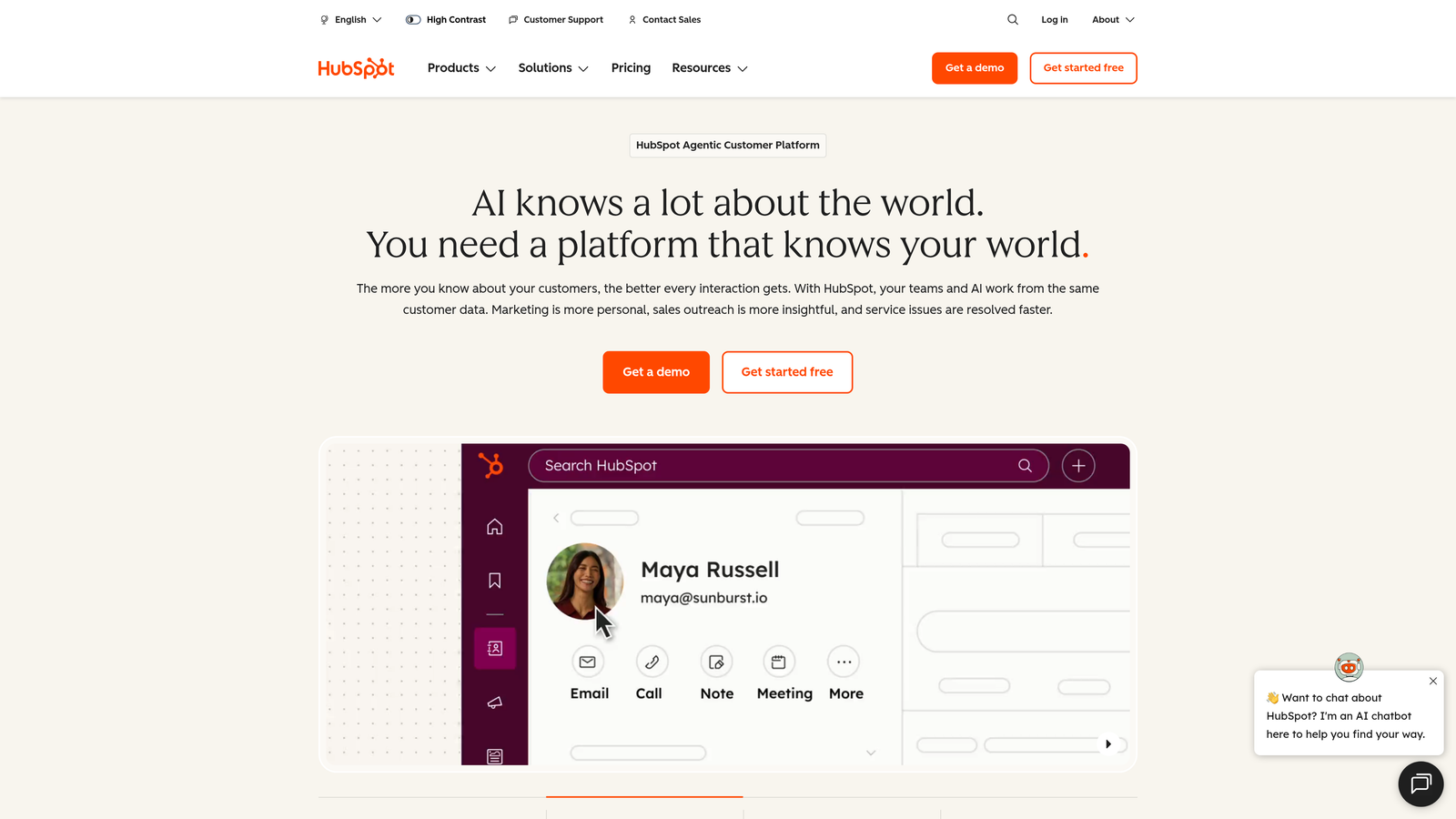
HubSpot Content Hub is an enterprise marketing platform that unifies content management with customer relationship data for personalized multi-channel delivery.
Where This Tool Shines
The real power of HubSpot Content Hub lies in its CRM integration. You're not just publishing content—you're delivering personalized experiences based on contact properties, lifecycle stages, and engagement history. This makes it exceptionally valuable for B2B marketing teams running sophisticated nurture campaigns.
The platform's AI content assistant helps draft blog posts and optimize existing content, while built-in attribution reporting connects content performance directly to pipeline and revenue. For teams already using HubSpot's CRM, the seamless data flow eliminates the integration headaches common with standalone publishing tools.
Key Features
CRM-Powered Personalization: Deliver different content variations based on contact properties and behavior.
AI Content Assistant: Draft blog posts, optimize headlines, and generate content variations with built-in AI.
Multi-Channel Publishing: Manage blog, email, and social content from a unified dashboard.
Attribution Reporting: Track which content drives conversions, deals, and revenue with closed-loop analytics.
Landing Page Builder: Create and publish landing pages with drag-and-drop editing and A/B testing.
Best For
Mid-market to enterprise B2B companies already invested in the HubSpot ecosystem. Teams that need tight alignment between marketing content and sales processes will benefit most from the unified data model.
Pricing
Free tier available with basic features; paid Content Hub plans start at $800/month for Professional tier with full publishing capabilities.
3. Contentful
Best for: Developer-led teams building custom digital experiences across multiple frontends
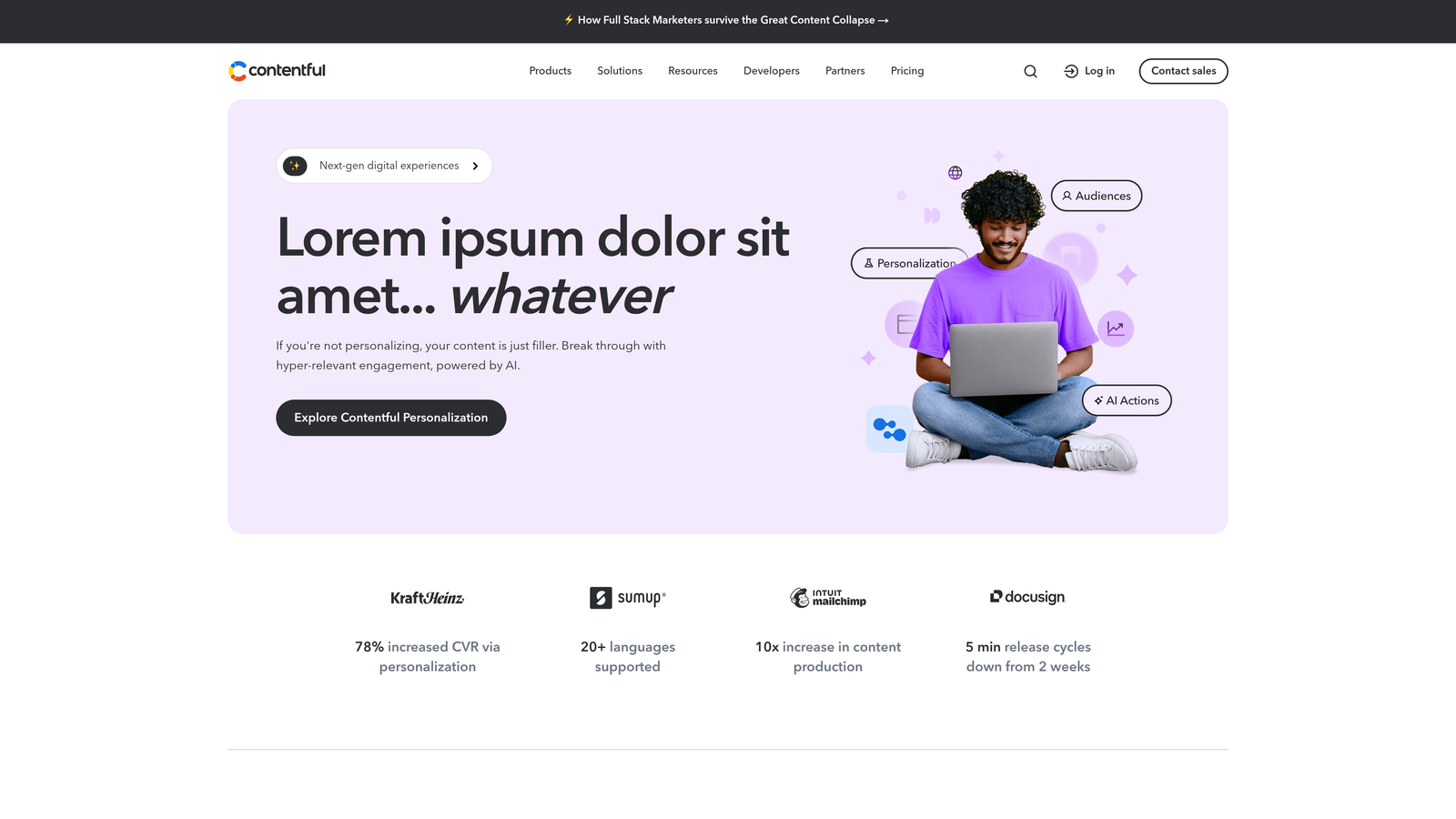
Contentful is a headless CMS platform that separates content management from presentation, enabling API-first omnichannel delivery to any frontend.
Where This Tool Shines
Contentful excels when you need complete control over how content appears across different platforms. Because it's headless, your content lives in a structured format that can be delivered to websites, mobile apps, IoT devices, or any custom interface through APIs.
The structured content modeling approach means you define exactly how content should be organized—product catalogs, blog posts, marketing pages—and that structure remains consistent regardless of where it's displayed. This makes it particularly powerful for brands managing complex content across multiple properties or international markets.
Key Features
API-First Architecture: Deliver content to any frontend using RESTful and GraphQL APIs.
Structured Content Models: Define custom content types with relationships and validations.
Real-Time Collaboration: Multiple team members can edit content simultaneously with version control.
Extensive App Marketplace: Integrate with translation services, DAM systems, and publishing workflows.
Enterprise Security: SOC 2 compliance, SSO, and role-based permissions for large organizations.
Best For
Technology companies and digital-first brands with development resources to build custom frontends. Organizations managing content across multiple websites, apps, or international markets benefit from the structured, reusable content approach.
Pricing
Free tier for small projects with limited API calls; Team plan starts at $489/month with increased limits and collaboration features.
4. WordPress with Jetpack
Best for: Budget-conscious teams wanting proven publishing with extensive customization options
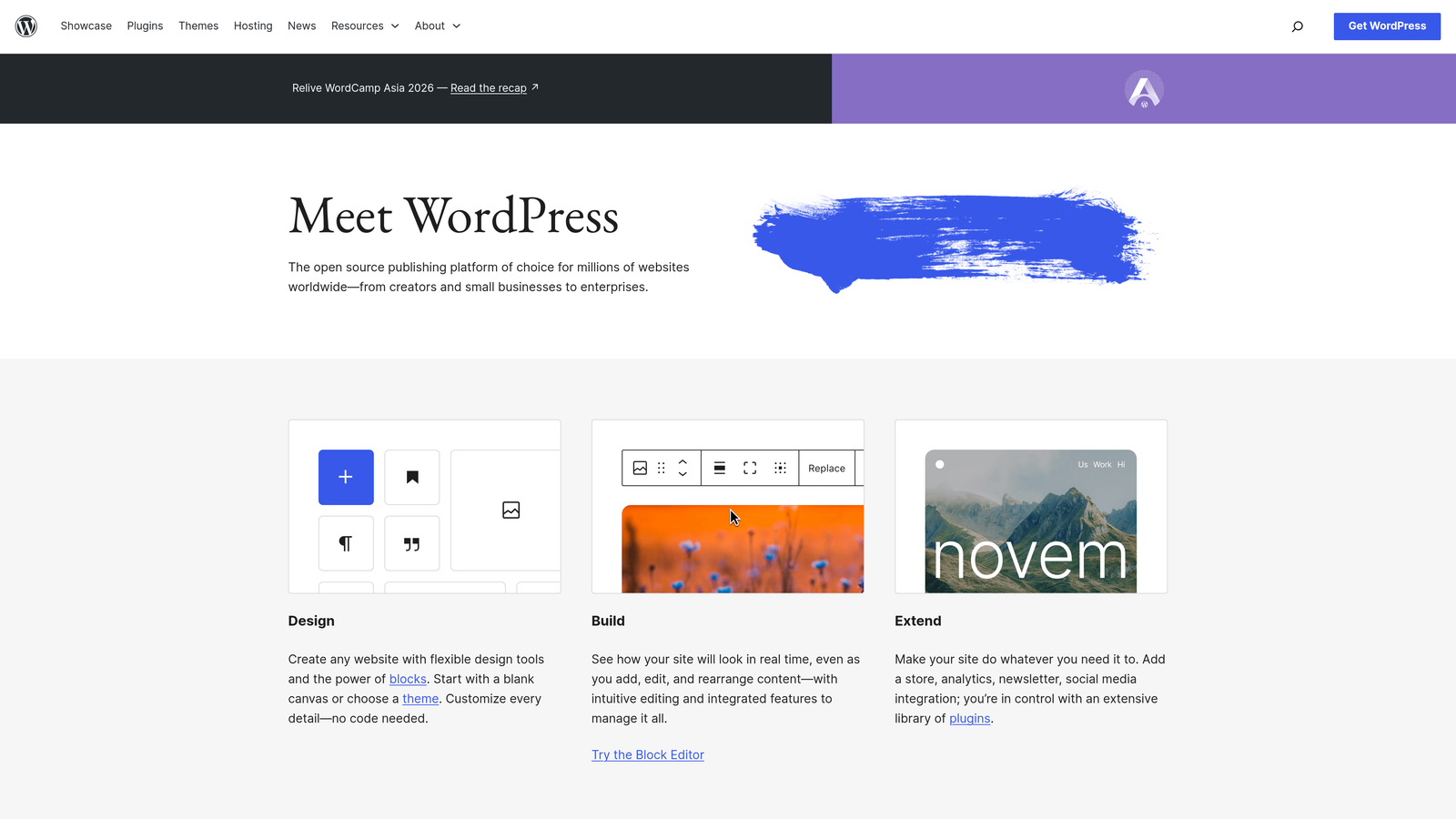
WordPress is the world's most popular content management system, powering over 40% of all websites, with Jetpack adding enhanced publishing and social sharing capabilities.
Where This Tool Shines
WordPress remains unbeatable for pure publishing flexibility. The massive plugin ecosystem means you can add virtually any functionality—from advanced SEO tools to membership systems to e-commerce. Jetpack specifically enhances the core WordPress experience with automatic social sharing, site stats, and performance optimization.
The combination gives you enterprise-level publishing capabilities at a fraction of the cost. You're not locked into proprietary systems, and the open-source nature means you truly own your content and infrastructure. For teams with technical resources, this flexibility is invaluable.
Key Features
Auto-Share to Social: Automatically publish new posts to Facebook, Twitter, LinkedIn, and other platforms.
Built-In SEO Tools: Optimize content for search with Yoast, Rank Math, or other popular SEO plugins.
Massive Plugin Ecosystem: Extend functionality with 60,000+ plugins for any use case.
Content Scheduling: Queue posts for future publication with granular timing control.
Site Analytics: Track traffic, engagement, and popular content with Jetpack Stats.
Best For
Small to medium-sized businesses with technical resources or agencies managing multiple client sites. Teams that value ownership and customization over managed simplicity will appreciate the flexibility.
Pricing
WordPress core is free; Jetpack plans start at $4/month for basic features, scaling to $45/month for complete security and performance tools.
5. CoSchedule
Best for: Marketing teams coordinating content calendars across blog and social channels
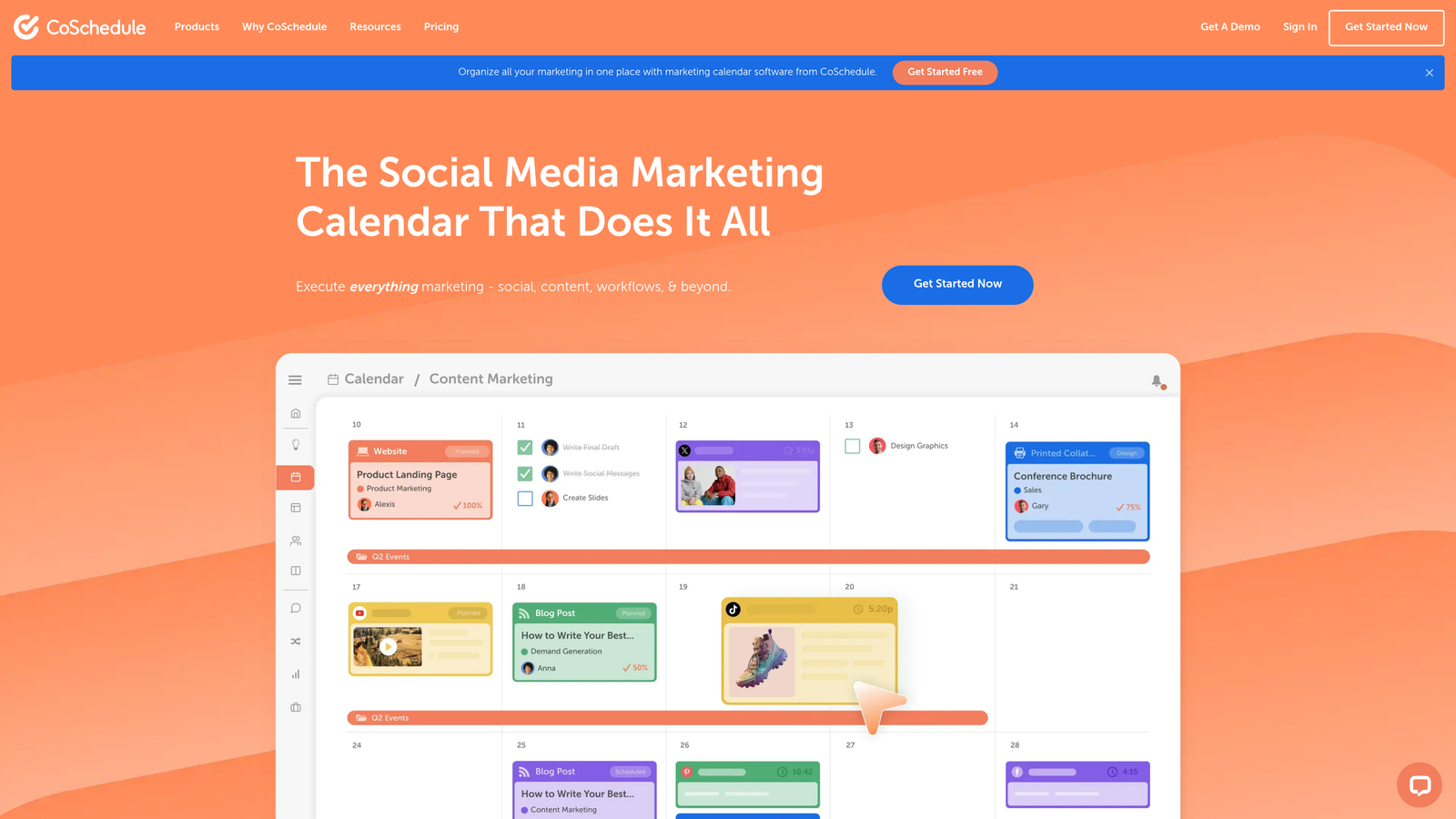
CoSchedule is a marketing calendar platform that unifies content planning, social scheduling, and team workflow management in a visual drag-and-drop interface.
Where This Tool Shines
CoSchedule's calendar-first approach makes it exceptionally easy to visualize your entire marketing operation. You can see blog posts, social campaigns, email sends, and product launches on a single timeline, making it simple to identify gaps or overwhelming periods.
The ReQueue feature automatically recycles your best-performing evergreen content, keeping your social channels active without constant manual scheduling. For small marketing teams juggling multiple responsibilities, this automation saves hours each week while maintaining consistent social presence.
Key Features
Drag-and-Drop Calendar: Visual planning interface for all marketing activities across channels.
Social Queue Management: Schedule posts to multiple platforms with intelligent timing recommendations.
Team Workflows: Built-in approval processes and task assignments for collaborative content creation.
WordPress Integration: Publish directly to WordPress blogs from the CoSchedule calendar.
ReQueue Automation: Automatically reshare evergreen content based on performance data.
Best For
Small to mid-sized marketing teams managing 3-5 channels who need better coordination between content creation and distribution. Particularly valuable for teams transitioning from spreadsheets to dedicated marketing software.
Pricing
Free marketing calendar with basic features; Marketing Suite starts at $29/month per user with full publishing and automation capabilities.
6. Sprinklr
Best for: Enterprise organizations managing customer experience across 30+ digital channels
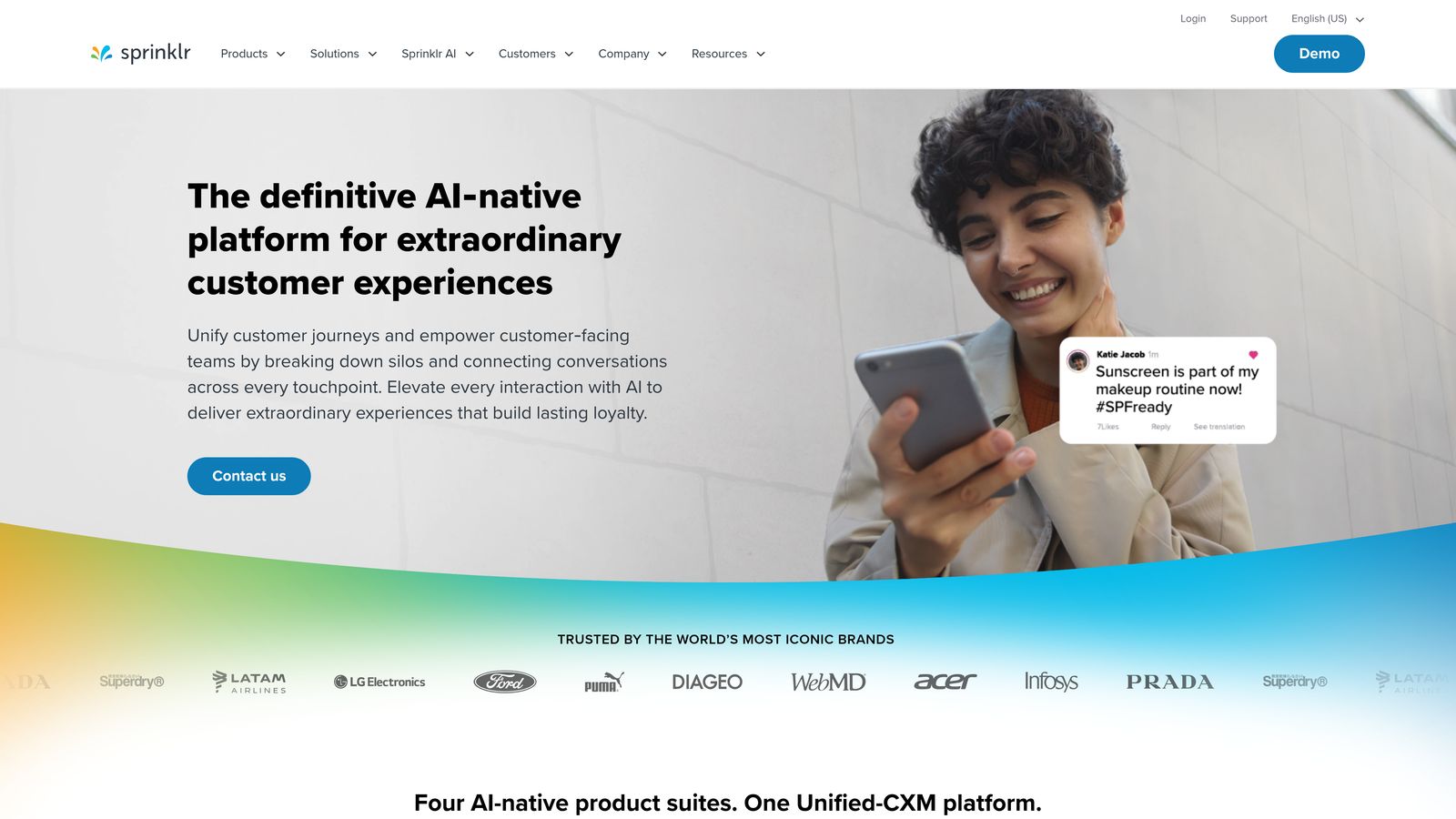
Sprinklr is an enterprise unified customer experience platform that consolidates publishing, engagement, and analytics across social media, messaging apps, and review sites.
Where This Tool Shines
Sprinklr operates at a scale most platforms can't match. With support for over 30 channels including WhatsApp, WeChat, TikTok, and traditional social networks, it's built for global brands managing complex multi-market operations. The unified inbox consolidates customer interactions from all channels, enabling support and social teams to respond efficiently.
The AI-powered content recommendations analyze performance data to suggest optimal posting times, content types, and messaging strategies. For enterprise teams publishing hundreds of posts weekly across multiple regions and brands, this intelligence prevents the platform from becoming overwhelming.
Key Features
30+ Channel Support: Publish and engage across social networks, messaging apps, and review platforms.
AI Content Recommendations: Get data-driven suggestions for content strategy and optimization.
Unified Inbox: Manage customer interactions from all channels in a single interface.
Advanced Analytics: Enterprise-grade reporting with custom dashboards and attribution modeling.
Governance and Compliance: Approval workflows, brand guidelines enforcement, and audit trails for regulated industries.
Best For
Large enterprises and global brands with complex multi-channel requirements, particularly those in regulated industries needing strong governance. Organizations with dedicated social media teams managing multiple brands or regional accounts.
Pricing
Enterprise pricing model; contact Sprinklr for custom quotes based on channels, users, and feature requirements.
7. Sanity
Best for: Development teams wanting maximum customization with real-time collaboration
Sanity is a customizable headless CMS platform with a real-time collaborative content studio and flexible content modeling using portable text.
Where This Tool Shines
Sanity gives developers unprecedented control over the editing experience. Unlike traditional headless CMS platforms with fixed interfaces, Sanity's content studio can be completely customized to match your team's workflow. You can build custom input components, create specialized editing views, and design exactly the experience your content team needs.
The real-time collaboration feels like Google Docs—multiple editors can work simultaneously on the same content with instant updates. The GROQ query language provides powerful, flexible data retrieval that goes far beyond standard REST APIs, making it easier to build complex content relationships.
Key Features
Real-Time Collaboration: Multiple team members edit simultaneously with instant synchronization.
Fully Customizable Studio: Build custom editing interfaces tailored to your content workflows.
GROQ Query Language: Flexible, powerful queries for retrieving exactly the content you need.
Portable Text: Rich text format that works across any platform or frontend framework.
Developer Experience: Excellent documentation, TypeScript support, and active community.
Best For
Technology companies and digital agencies with strong development teams who need complete control over both content structure and editing experience. Teams building complex digital products where standard CMS interfaces feel limiting.
Pricing
Free tier for small projects; Team plan starts at $99/month with increased API limits and collaboration features.
8. Buffer
Best for: Small teams and solopreneurs managing social media on a tight budget
Buffer is a simple, affordable social media scheduling tool focused on clean interfaces and essential publishing features without overwhelming complexity.
Where This Tool Shines
Buffer's greatest strength is its simplicity. While enterprise platforms overwhelm with features, Buffer focuses on doing the basics exceptionally well. The scheduling interface is intuitive enough that new team members can start publishing within minutes, no training required.
The browser extension makes content curation effortless—find an interesting article, click the Buffer icon, and schedule it to your queue. For small businesses and consultants managing 3-5 social accounts, this straightforward approach eliminates the complexity tax of enterprise tools.
Key Features
Clean Scheduling Interface: Intuitive calendar and queue management without feature bloat.
Multi-Platform Queues: Manage posting schedules for Facebook, Twitter, LinkedIn, Instagram, and Pinterest.
Basic Analytics: Track engagement metrics and identify top-performing content.
Browser Extension: Share content from anywhere on the web with a single click.
Team Collaboration: Add team members on paid plans for approval workflows and shared calendars.
Best For
Solopreneurs, small businesses, and consultants managing a handful of social accounts who prioritize ease of use over advanced features. Teams with limited budgets who need reliable social scheduling without enterprise costs.
Pricing
Free plan for 3 channels with basic scheduling; Essentials plan starts at $6/month per channel with full features and analytics.
9. Notion + Make
Best for: Technical teams wanting maximum flexibility with custom automation workflows
Make is an automation platform that, when combined with Notion's flexible database system, creates a highly customizable content management and publishing workflow.
Where This Tool Shines
This combination represents the ultimate in flexibility for technical teams. Notion becomes your content database and editorial calendar, while Make (formerly Integromat) handles the automation—publishing to WordPress, scheduling social posts, updating Airtable, sending Slack notifications, or any custom workflow you can imagine.
Unlike proprietary platforms that limit you to their feature set, this approach lets you build exactly the publishing system your team needs. The learning curve is steeper, but the payoff is a system that adapts to your workflow rather than forcing you into someone else's vision.
Key Features
Notion Databases: Organize content with flexible properties, filters, and views tailored to your process.
Make Automation: Build custom workflows connecting Notion to WordPress, social platforms, and hundreds of other tools.
Custom Publishing Logic: Create conditional workflows based on content type, status, or any database property.
Highly Flexible: Adapt the system to your exact needs without platform limitations.
Budget-Friendly: Achieve enterprise functionality at a fraction of traditional platform costs.
Best For
Startups and agencies with technical team members who can build and maintain custom automation workflows. Teams frustrated by the limitations of traditional platforms who want complete control over their publishing process.
Pricing
Notion offers a free tier for individuals; Make starts at $9/month for basic automation with 10,000 operations monthly.
Finding Your Publishing Solution
The right unified content publishing platform depends on your specific needs and constraints. For teams optimizing for both traditional search and AI visibility, Sight AI provides unique tracking capabilities that reveal how AI models mention your brand while automating content indexing for faster discovery.
Enterprise organizations already invested in CRM workflows will find HubSpot Content Hub's deep integration invaluable for personalized content delivery. Development-led teams building custom digital experiences should explore Contentful or Sanity for their headless architecture and API flexibility.
Budget-conscious small teams can achieve excellent results with Buffer's straightforward social scheduling or the WordPress-Jetpack combination for full-featured publishing. CoSchedule bridges the gap for mid-sized marketing teams needing better coordination without enterprise complexity.
The emergence of AI search has fundamentally changed content strategy. It's no longer enough to optimize for Google—your content must also be discoverable and accurately represented by AI models like ChatGPT, Claude, and Perplexity. Platforms that integrate AI visibility tracking alongside traditional publishing capabilities represent the next evolution in content marketing technology.
Stop guessing how AI models like ChatGPT and Claude talk about your brand—get visibility into every mention, track content opportunities, and automate your path to organic traffic growth. Start tracking your AI visibility today and see exactly where your brand appears across top AI platforms.