Creating content is only half the battle. The real challenge lies in publishing it effectively across multiple channels while ensuring maximum visibility in both traditional search and AI-powered systems. With AI search engines like ChatGPT, Claude, and Perplexity now influencing how audiences discover content, choosing the right content publishing platform has become more critical than ever.
Modern content publishing platforms have evolved far beyond simple blog hosting. Today's leading solutions offer AI-powered optimization, automated distribution across multiple channels, real-time performance tracking, and features that help your content get discovered by AI systems. Whether you're a solo creator, marketing team, or enterprise organization, the platform you choose can make the difference between content that gets buried and content that drives real business results.
The challenge isn't finding a publishing platform—it's finding one that aligns with your specific content strategy, integrates with your existing tools, and positions your content for success in an AI-driven world. Some platforms excel at SEO optimization and traditional search visibility, while others focus on social distribution or enterprise-level content management.
Here are eight leading content publishing platforms, each offering unique strengths for different content strategies.
1. Sight AI
Best for: AI-optimized content creation and publishing with built-in SEO and GEO optimization
Sight AI represents the next generation of content publishing platforms, specifically designed to help brands get mentioned across AI search engines while maintaining strong traditional SEO performance.

Where This Tool Shines
Sight AI uniquely combines content creation, optimization, and publishing in a single platform designed for the AI search era. Unlike traditional publishing platforms that focus solely on website publishing, Sight AI optimizes content for both traditional search engines and AI systems like ChatGPT and Claude through generative engine optimization, a methodology specifically designed to increase visibility in AI-powered search results.
The platform's AI agents handle everything from keyword research to content creation, ensuring every piece of content is optimized for maximum visibility across all search channels. What sets Sight AI apart is its ability to track how AI models actually talk about your brand, giving you unprecedented insight into your AI visibility while simultaneously generating content that gets recommended by these systems.
Key Features & Capabilities
AI Content Generation: 13+ specialized AI agents work together to create long-form, SEO-optimized articles with autopilot mode for hands-free publishing.
AI Visibility Tracking: Monitor brand mentions across ChatGPT, Claude, and Perplexity with sentiment analysis and prompt tracking to understand how AI systems discuss your brand.
Automated Indexing: Instant IndexNow submissions and always-updated sitemaps ensure faster content discovery and quicker organic traffic growth.
Multi-Channel Publishing: Auto-publishing to your CMS with seamless integration into existing content workflows.
Competitive Analysis: Track how AI models mention competitors and identify content opportunities to increase your share of AI-powered search visibility.
Best For / Ideal Users
Perfect for marketing teams, content creators, and businesses looking to dominate both traditional and AI search results. Particularly valuable for companies wanting to establish thought leadership and get consistently mentioned by AI systems.
Ideal for agencies managing multiple client content strategies, founders building brand authority in competitive spaces, and marketing teams focused on organic traffic growth through both SEO and AI visibility.
Pricing
Offers flexible pricing tiers starting with a free plan, scaling to enterprise solutions based on content volume and feature requirements.
2. WordPress
Best for: Flexible, customizable content publishing with extensive plugin ecosystem
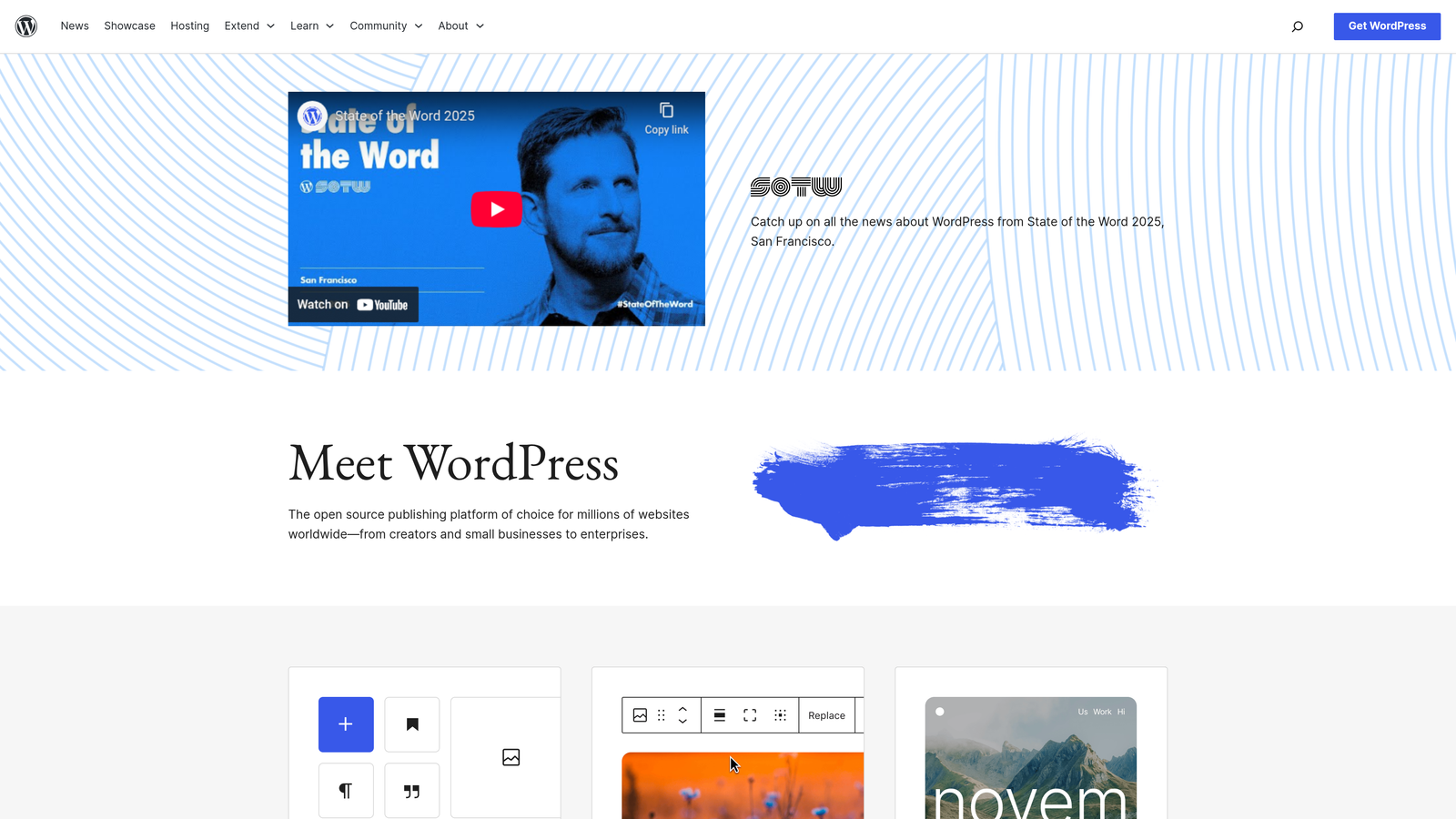
WordPress powers over 40% of all websites globally, making it the most widely-used content publishing platform in existence.
Where This Tool Shines
WordPress excels in customization and scalability. Whether you're running a personal blog or managing content for a Fortune 500 company, WordPress can adapt to your needs through its open-source foundation.
The platform's strength lies in its vast ecosystem of over 60,000 plugins and thousands of themes that allow you to build virtually any type of content experience. From simple blogs to complex membership sites, WordPress provides the foundation for sophisticated content strategies without vendor lock-in or proprietary restrictions.
Key Features & Capabilities
Extensive Plugin Ecosystem: Access to thousands of plugins that add functionality without modifying core code, from SEO tools to e-commerce capabilities.
Advanced SEO Tools: Popular plugins like Yoast and RankMath provide on-page optimization, XML sitemaps, schema markup, and content analysis.
Multi-User Collaboration: Built-in role management allows teams to collaborate with customizable permissions for editors, authors, and contributors.
E-commerce Integration: WooCommerce transforms WordPress into a full-featured online store with payment processing and inventory management.
Content Scheduling: Advanced editorial calendar features allow you to plan and automate content publication across time zones.
Best For / Ideal Users
Ideal for businesses and creators who want complete control over their content experience and have technical resources to manage customization and maintenance.
Perfect for organizations requiring specific functionality through plugins, multiple content types, or extensive design customization.
Works well for teams with development partners or in-house technical expertise who can handle regular updates, security management, and performance optimization.
Pricing
Free open-source software with hosting costs starting around $5-15/month for basic shared hosting. Premium themes and plugins range from $50-500+ annually depending on functionality needs.
3. HubSpot CMS
Best for: Integrated content publishing within a comprehensive marketing and sales ecosystem
HubSpot CMS combines content publishing with powerful marketing automation, CRM integration, and analytics tools designed for businesses that want their content strategy tightly integrated with their overall marketing and sales operations.

Where This Tool Shines
HubSpot CMS excels at connecting content performance directly to business outcomes. Unlike standalone publishing platforms, HubSpot tracks how your content influences lead generation, customer acquisition, and revenue through its integrated CRM.
The platform's smart content features allow you to personalize content based on visitor behavior, location, and lifecycle stage. This means a first-time visitor sees different content than a qualified lead, creating more relevant experiences that drive conversions. For B2B companies, this connection between content and pipeline is invaluable.
Key Features & Capabilities
Integrated CRM and Marketing Automation: Content performance data flows directly into contact records, showing which pieces influenced deal progression.
Smart Content Personalization: Dynamic content blocks adjust based on visitor data, delivering tailored experiences without creating separate pages.
Revenue Attribution Analytics: Track how content contributes to pipeline and revenue, not just traffic and engagement metrics.
Built-in A/B Testing: Test headlines, layouts, and content variations to optimize conversion rates systematically.
SEO Recommendations: Real-time optimization suggestions and content strategy tools help improve search visibility.
Drag-and-Drop Page Builder: Create professional pages without coding using conversion-focused templates and modules.
Best For / Ideal Users
Perfect for B2B companies and marketing teams that want to measure content ROI and integrate publishing with lead generation. Particularly valuable for organizations already using HubSpot's marketing automation or CRM tools.
Ideal for teams that need to demonstrate how content influences revenue and want marketing and sales working from the same platform and data.
Pricing
Starts at $23/month for basic CMS features (billed annually). Professional tier begins at $360/month with advanced personalization and analytics. Enterprise pricing available for larger organizations requiring custom features and support.
4. Medium
Best for: Thought leadership publishing and reaching engaged professional audiences
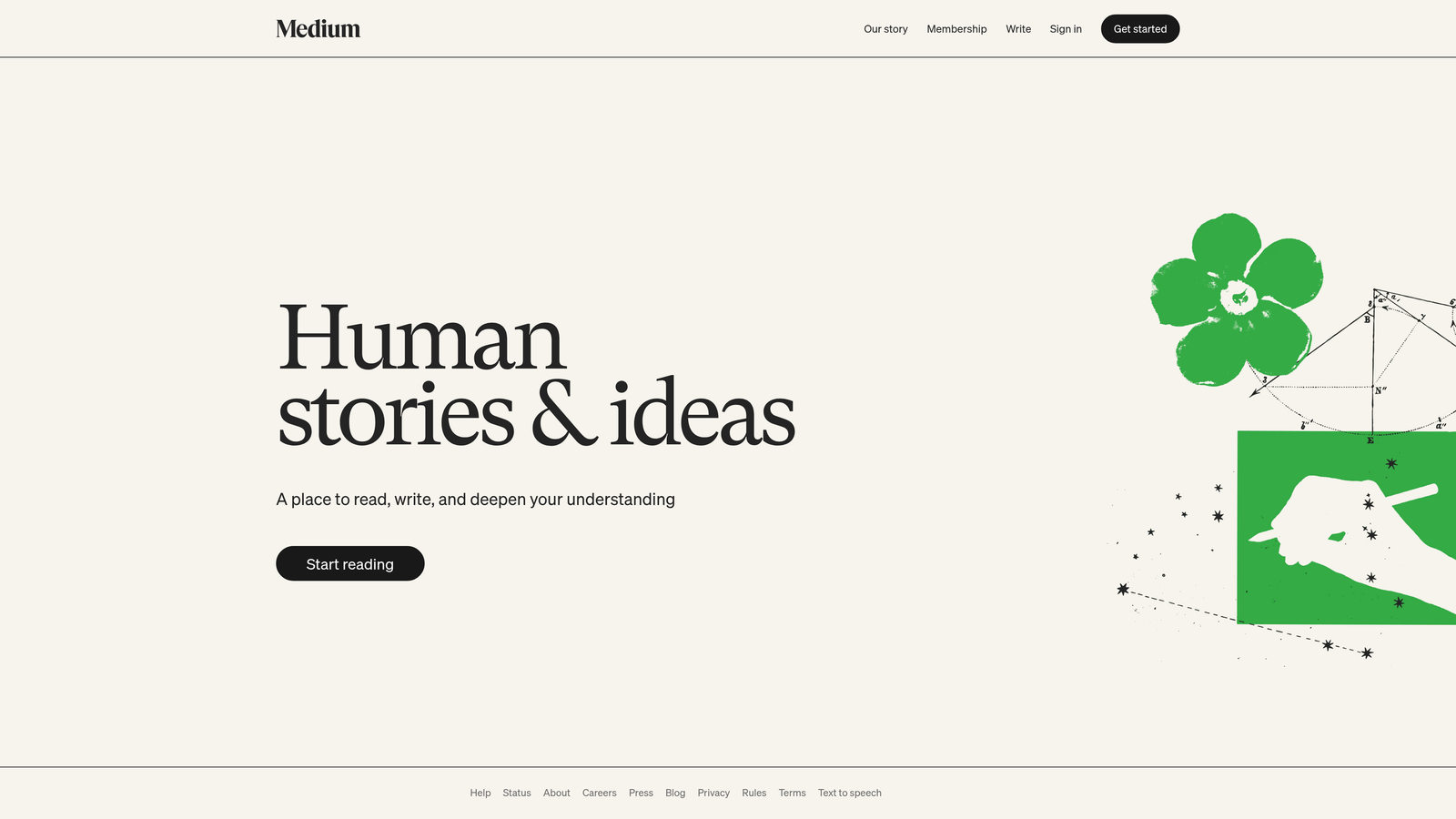
Medium has established itself as the go-to platform for thought leadership content, attracting millions of engaged readers interested in business, technology, and professional development topics.
Where This Tool Shines
Medium's strength lies in its built-in audience and discovery algorithms. Unlike other platforms where you start with zero readers, Medium's recommendation system can expose your content to thousands of relevant readers from day one based on topic relevance and reader interests.
The platform's clean, distraction-free reading experience keeps readers focused on your message without competing ads or cluttered sidebars. This professional environment attracts executives, entrepreneurs, and decision-makers actively seeking insights, making it ideal for establishing thought leadership and building professional credibility.
Key Features & Capabilities
Built-in Audience Discovery: Medium's recommendation algorithm surfaces your content to readers interested in your topics, eliminating the cold-start problem of building an audience from scratch.
Publication Partnerships: Join established publications to amplify your reach and gain credibility through association with recognized brands in your industry.
Engagement-Focused Analytics: Track reader engagement through claps, reading time, and highlights rather than just pageviews, providing deeper insight into content resonance.
Distraction-Free Writing Interface: Simple, elegant editor that lets you focus on writing without wrestling with formatting or design decisions.
Built-in Social Features: Readers can highlight passages, leave responses, and follow your work, creating natural engagement opportunities.
Best For / Ideal Users
Excellent for executives, consultants, and professionals looking to build thought leadership without investing in building their own platform infrastructure. Perfect for sharing insights, industry analysis, and professional perspectives.
Particularly valuable for B2B professionals who want to reach decision-makers and industry peers actively seeking expert content on business, technology, and professional development topics.
Pricing
Free for basic publishing with unlimited stories. Medium Partner Program offers revenue sharing opportunities for premium content, allowing writers to earn based on member engagement.
5. Ghost
Best for: Professional publishing with membership and subscription capabilities
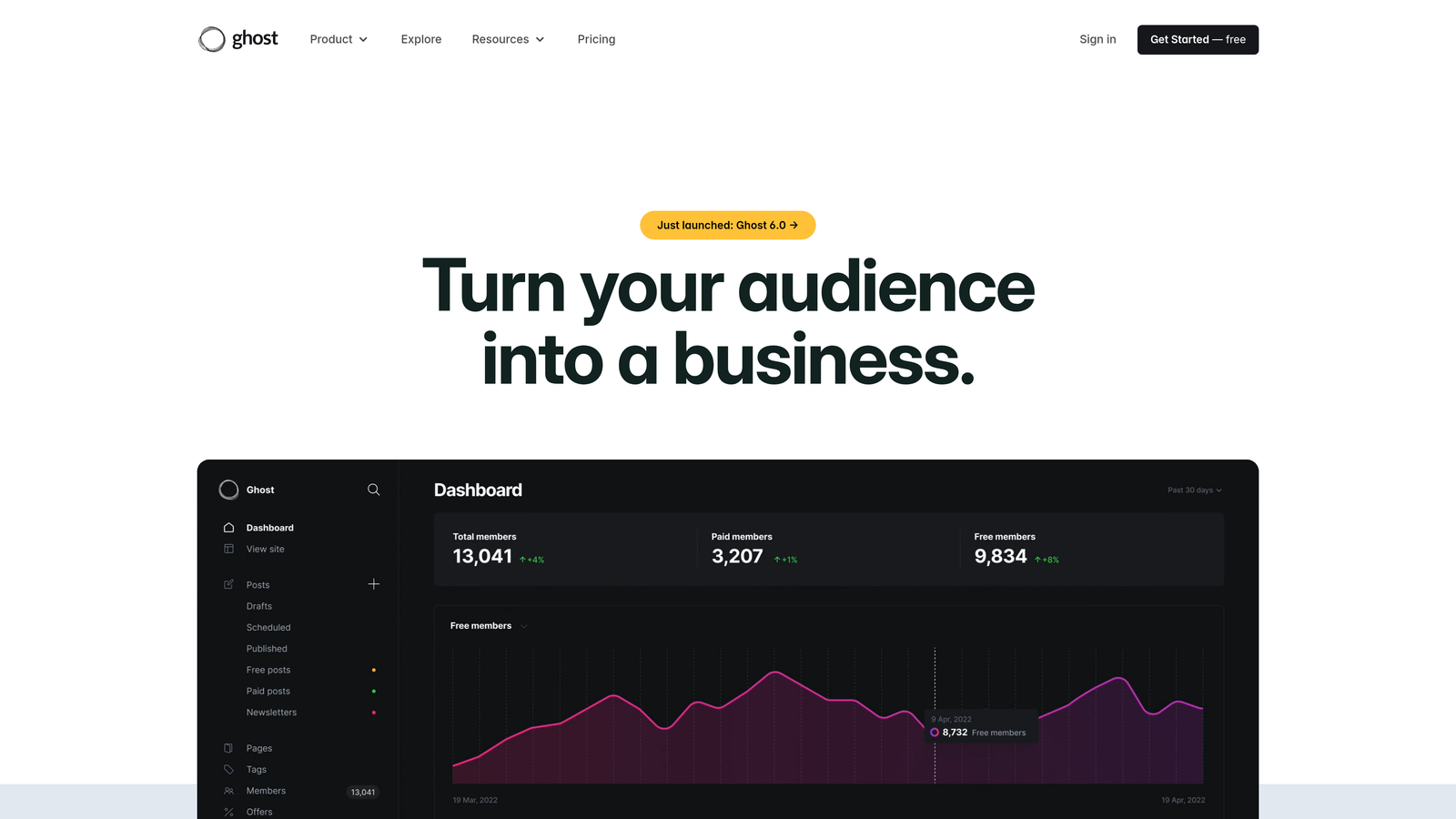
Ghost is a modern, open-source publishing platform built specifically for creators who want to monetize their content through memberships and subscriptions while maintaining complete control over their brand and audience.
Where This Tool Shines
Ghost takes a fundamentally different approach than traditional content management systems. Rather than trying to be everything to everyone, it focuses exclusively on what professional publishers actually need: fast performance, beautiful design, and powerful monetization tools built directly into the platform.
The platform's architecture delivers exceptional speed, with Ghost sites typically loading significantly faster than equivalent WordPress installations. This performance advantage stems from Ghost's modern Node.js foundation and streamlined codebase that eliminates the bloat common in older CMS platforms. For content creators, this means better user experience, improved SEO rankings, and higher reader engagement.
Key Features & Capabilities
Built-in Membership System: Native subscription management with multiple membership tiers, allowing you to offer free and paid content without third-party plugins.
Integrated Email Newsletters: Send newsletters directly from Ghost with full segmentation capabilities, eliminating the need for separate email marketing tools.
Advanced Analytics: Track subscriber growth, content performance, and revenue metrics with analytics focused on what matters for publishers.
Custom Themes and Branding: Professional themes designed for readability and conversion, with complete customization options for brand alignment.
SEO Optimization Tools: Clean URL structures, automatic sitemaps, and built-in optimization features that help content rank in search engines.
Best For / Ideal Users
Ghost excels for independent publishers, newsletter creators, and media companies building direct relationships with their audience. It's particularly valuable for creators who've outgrown platforms like Substack but want similar monetization features with more control.
The platform works exceptionally well for journalists, authors, and content creators who prioritize writing quality and reader experience over complex functionality. If your content strategy centers on building a loyal, paying audience rather than maximizing ad revenue, Ghost provides the tools you need.
Technical teams appreciate Ghost's modern architecture and API-first approach, which makes it easy to integrate with other tools and build custom functionality when needed.
Pricing
Ghost offers flexible pricing starting at $9/month for basic publishing features, scaling to $199/month for advanced membership capabilities and higher traffic volumes. Self-hosting is also available for teams with technical resources who want complete control.
6. Webflow
Best for: Design-focused content publishing with visual development capabilities
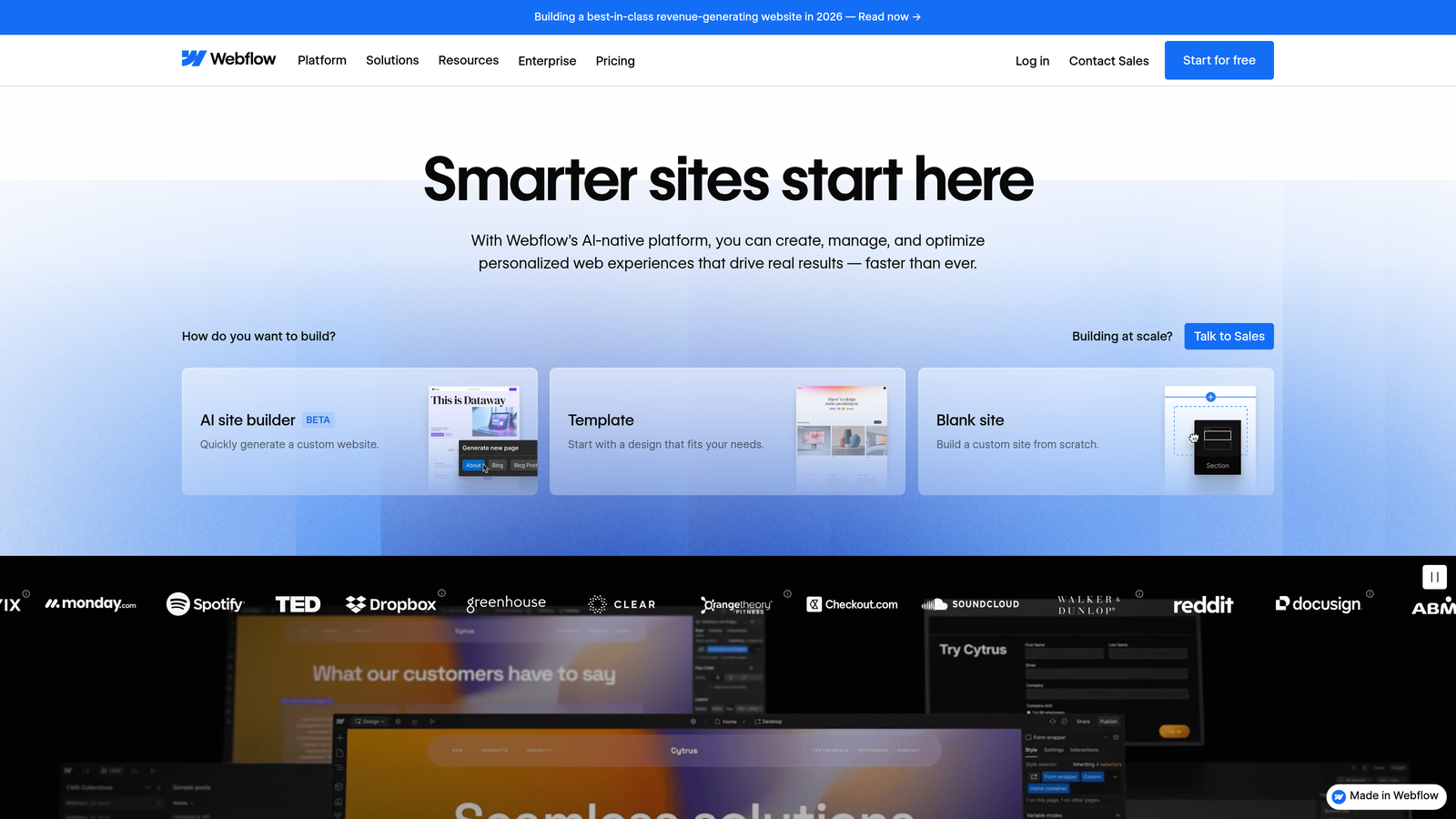
Webflow is an AI-native visual website builder that allows creators to build custom, responsive websites with the power of code — visually, featuring a flexible CMS and top-tier hosting.
Where This Tool Shines
Webflow excels for teams that prioritize design and want pixel-perfect control over their content presentation. The platform's visual development approach allows designers to create custom layouts and interactions that would typically require extensive coding.
For content that needs to stand out visually or integrate complex design elements, Webflow provides unmatched creative control. The platform bridges the gap between design tools like Figma and traditional web development, letting you build production-ready sites without writing code while maintaining the flexibility of custom development.
Key Features & Capabilities
Visual Development Environment: Design and build websites visually while Webflow generates clean, semantic HTML, CSS, and JavaScript in the background.
AI-Powered Creation: Generate production-ready apps and reusable components with AI assistance, accelerating the design and development process.
Flexible CMS: Visual, composable content management system that allows you to structure content exactly how you need it without database configuration.
Advanced Interactions: Create sophisticated animations, transitions, and interactive elements without JavaScript knowledge.
Responsive Design Tools: Build sites that automatically adapt to any screen size with visual breakpoint controls and device-specific customization.
Best For / Ideal Users
Ideal for design-focused teams, creative agencies, and brands that want complete visual control over their content presentation without waiting for development resources.
Perfect for marketing teams who need to launch campaigns quickly with custom designs, and freelancers who want to deliver professional, unique websites to clients.
Particularly valuable for brands in creative industries where visual differentiation matters — fashion, design studios, architecture firms, and creative portfolios.
Pricing
Free plan available for basic site building and learning. Paid plans start at $12/month for basic sites, scaling to $36/month for advanced CMS features and higher traffic limits.
7. Contentful
Best for: Headless content management and multi-channel publishing across websites, apps, and digital experiences
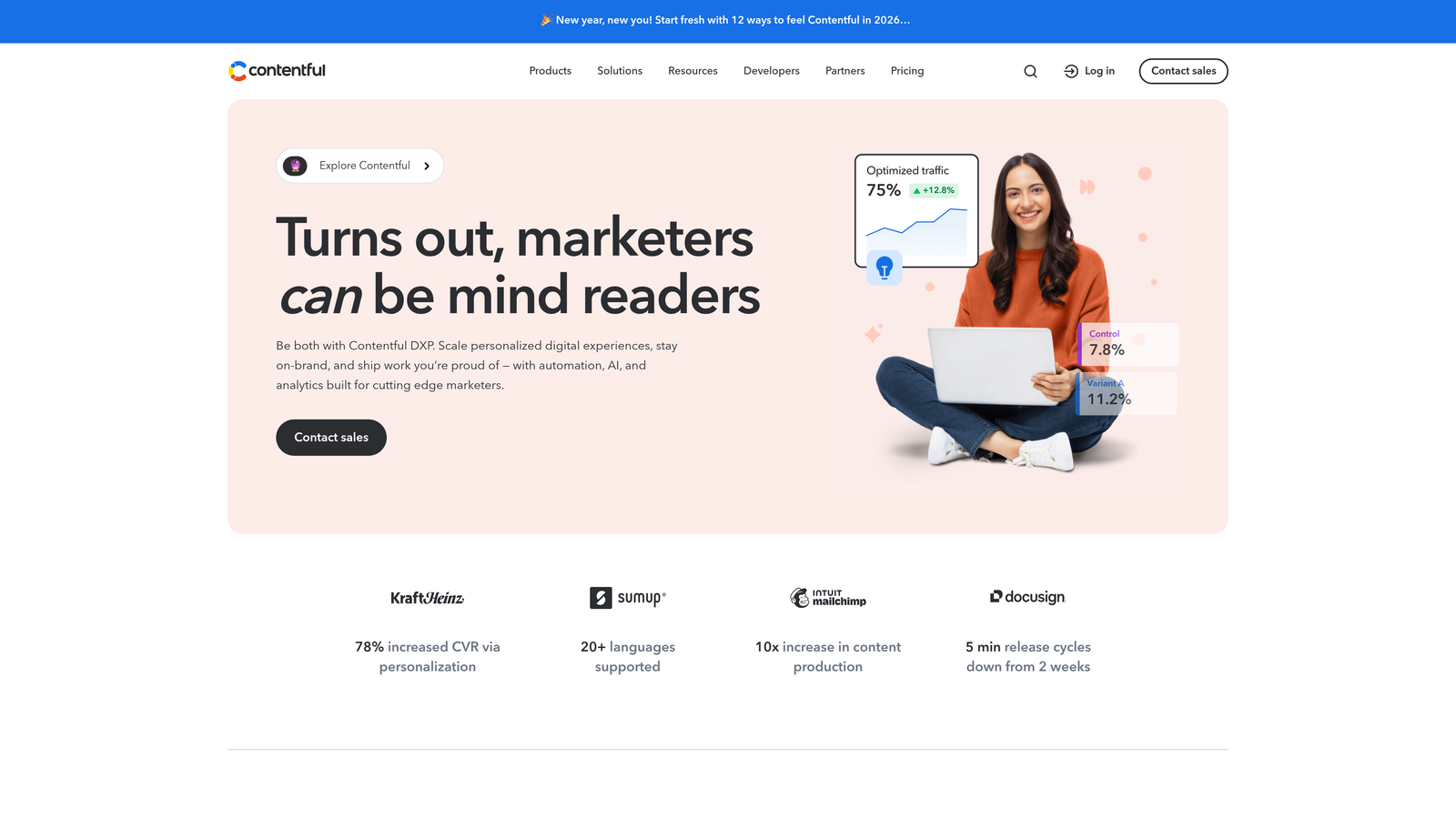
Contentful is a digital experience platform that separates content creation from presentation, allowing teams to create once and publish everywhere through powerful APIs and AI-driven personalization.
Where This Tool Shines
Contentful excels when your content needs to live beyond a single website. As a headless CMS, it stores your content in a structured format that can be delivered to any digital channel through APIs. This approach is particularly powerful for brands managing content across websites, mobile apps, smart devices, and emerging platforms like voice assistants.
The platform's AI-driven analytics and personalization capabilities set it apart from traditional content management systems. Contentful's agentic analytics integrate directly into your workflow, providing real-time insights about content performance without switching between tools. This means you can optimize experiences on the fly based on actual user behavior and engagement patterns.
Key Features & Capabilities
Headless Architecture: Content stored independently from presentation layer, enabling delivery to any digital channel through APIs.
AI-Powered Personalization: Intelligent content suggestions and automated personalization based on user behavior and preferences.
Visual Studio: Assemble and orchestrate digital experiences at scale without requiring developer intervention for every change.
Workflow Automation: AI-powered workflows eliminate repetitive tasks and streamline content operations across teams.
Real-Time Experimentation: Built-in testing and performance insights help optimize content effectiveness continuously.
Enterprise Scalability: Infrastructure designed to handle high-traffic scenarios and complex content relationships across global organizations.
Best For / Ideal Users
Enterprise Marketing Teams: Organizations managing content across multiple digital touchpoints who need centralized control with distributed delivery.
Development Teams: Technical teams building custom applications that require flexible, API-driven content delivery and integration with modern development frameworks.
Multi-Brand Organizations: Companies managing multiple brands or product lines who need to maintain consistency while enabling customization across properties.
Pricing
Free tier available for small projects and testing. Professional plans start at $489/month for team collaboration features, advanced workflows, and increased API limits. Enterprise pricing available for organizations requiring dedicated support, SLAs, and custom infrastructure.
8. Notion
Best for: Collaborative content creation and knowledge management with publishing capabilities
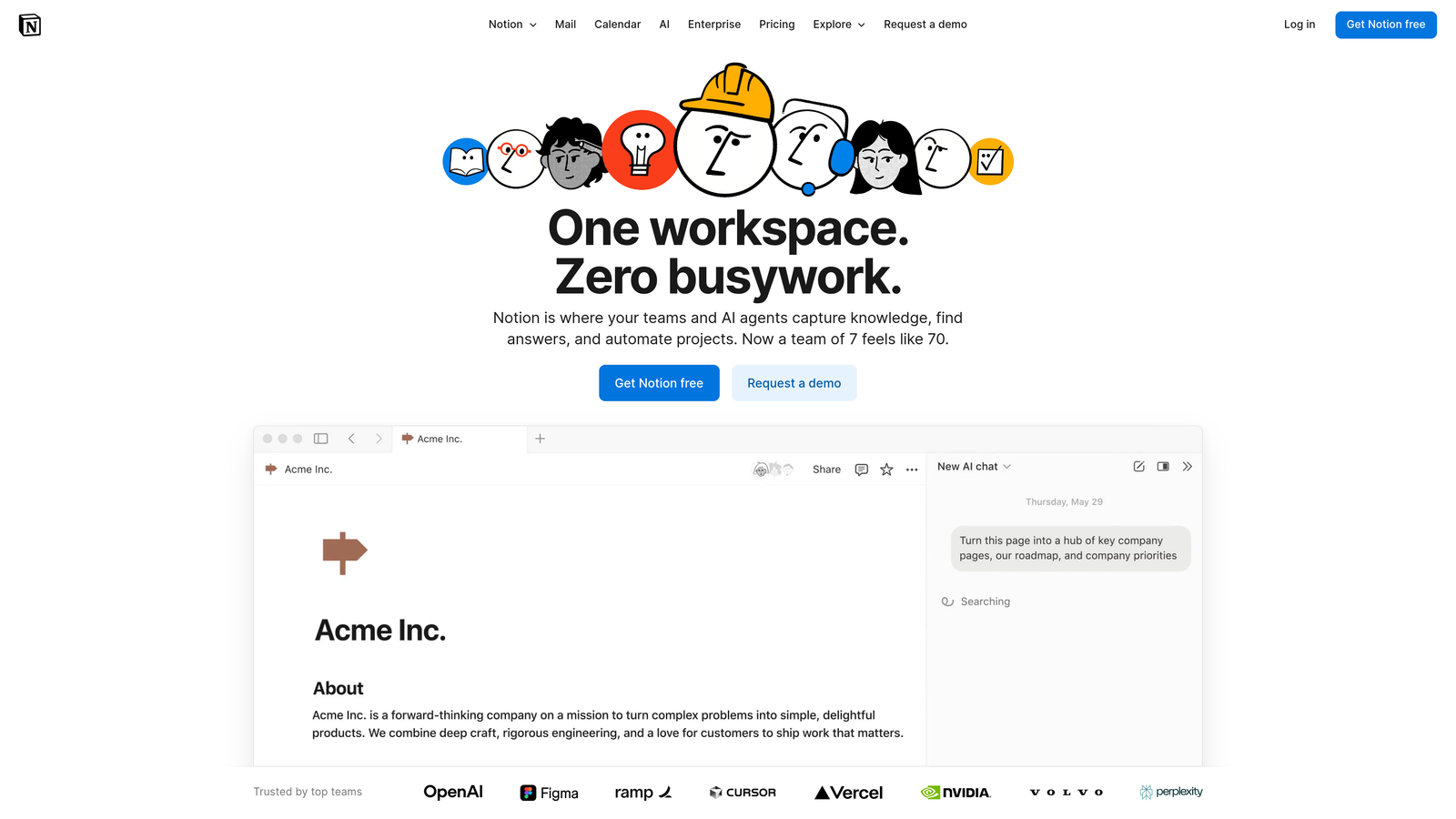
Notion has evolved from a note-taking app into a comprehensive AI-powered workspace that combines content creation, team collaboration, and public publishing in a single platform.
Where This Tool Shines
Notion excels at bridging the gap between internal content development and external publishing. Teams can brainstorm ideas, create detailed outlines, collaborate on drafts, and publish finished content to the web—all without switching platforms. The workspace structure allows content teams to maintain organized editorial calendars, track content status, and manage complex publishing workflows while keeping everything interconnected.
The platform's database functionality transforms content management into a strategic operation. You can create custom views to track content by status, author, publication date, or topic category. This makes Notion particularly powerful for teams managing multiple content streams or maintaining extensive knowledge bases that occasionally need public visibility.
Key Features & Capabilities
AI-Powered Content Assistance: Custom AI agents help with writing, editing, and content optimization directly within your workspace.
Real-Time Collaboration: Multiple team members can edit simultaneously with live cursor tracking and inline comments for feedback.
Database-Driven Content Management: Create custom databases to organize content with filters, tags, and multiple view options for different workflows.
One-Click Publishing: Transform private workspace pages into public websites instantly, with custom domains and SEO settings available.
Template System: Build reusable content templates to maintain consistency across articles, ensuring brand voice and structure remain uniform.
Cross-Referencing and Linking: Connect related content pieces through internal links, creating a web of interconnected knowledge that's easy to navigate.
Best For / Ideal Users
Content teams already using Notion for project management will find the publishing features integrate seamlessly with existing workflows. The platform works particularly well for organizations that value collaborative creation and need to maintain detailed content documentation alongside published pieces.
Knowledge-focused companies building extensive resource libraries benefit from Notion's organizational capabilities. You can maintain private research and notes while selectively publishing polished content to external audiences.
Startups and small teams appreciate the all-in-one approach, eliminating the need for separate tools for planning, writing, and publishing. The unified workspace reduces context-switching and keeps everyone aligned on content strategy.
Pricing
Free for personal use with unlimited pages and blocks. Team plans start at $8 per user monthly, with enterprise options providing advanced permissions, security features, and dedicated support for larger organizations requiring enhanced collaboration capabilities.
Putting It All Together
Selecting the right content publishing platform depends on your specific goals, technical requirements, and content strategy. Each platform in this guide serves different needs, from AI-optimized publishing to enterprise content management.
For businesses focused on AI search visibility and modern SEO, Sight AI offers the most comprehensive solution for optimizing content across both traditional and AI-powered search engines. Its integrated approach to content creation, optimization, and publishing makes it particularly valuable for teams looking to establish thought leadership in the AI era. WordPress remains the best choice for maximum flexibility and customization, especially if you have technical resources and want complete control over your content experience.
HubSpot CMS excels for B2B companies that need tight integration between content and sales processes, while Medium provides immediate access to engaged audiences for thought leadership content. Ghost offers the best combination of performance and monetization features for subscription-based strategies, and Webflow delivers unmatched design control for visually-focused brands.
Consider your team's technical capabilities, content goals, and audience when making your decision. The most successful content strategies often involve using multiple platforms strategically—for example, creating comprehensive content on your primary platform while repurposing key insights on Medium for thought leadership.
The key is choosing a platform that not only meets your current needs but can scale with your content strategy as it evolves. In 2026's competitive content landscape, the right publishing platform can be the difference between content that gets lost and content that drives real business results. Start tracking your AI visibility today and ensure your content gets discovered across all search channels.