Picture this: you've just done your keyword research, and you've found what looks like the perfect term for your brand. The topic aligns with your product, the phrasing matches how your audience talks, and your content team is excited to write about it. Then someone asks, "What's the search volume?" You pull up a tool, see a number, and move forward. But here's the problem: that number tells you far less than you think.
SEO search volume is defined as the estimated number of times a specific query is searched within a given timeframe, typically calculated as a monthly average. It's one of the first metrics marketers look at when evaluating keywords, and for good reason. Volume gives you a rough sense of demand. But treating it as a standalone signal is one of the most common and costly mistakes in content strategy.
This article is designed to change how you think about search volume. Not just what the number represents, but how to interpret it, what to pair it with, and why in 2026, any keyword strategy that ignores AI-driven discovery is working with an incomplete map. Whether you're a marketer building a content calendar, a founder trying to capture organic traffic, or an agency managing multiple clients, understanding search volume at a deeper level will sharpen every decision you make.
The Anatomy of a Search Volume Metric
When a keyword tool tells you a term gets 5,000 searches per month, what does that actually mean? The short answer: it's an estimate, not a measurement. Search volume figures are derived from a combination of clickstream data (anonymized browsing behavior from panels of users), search engine APIs, and proprietary modeling. No tool has perfect access to Google's internal query data, which means every platform is making an educated approximation.
This is why the same keyword can show dramatically different numbers across tools. Google Keyword Planner, Ahrefs, Semrush, and Moz all use different methodologies and data sources. Keyword Planner, for instance, groups keywords into broad volume ranges unless you're running an active ad campaign, which makes it less useful for precise organic research. Ahrefs and Semrush use their own clickstream panels and modeling to produce more specific estimates, but even those figures can diverge significantly from each other.
The practical implication: don't treat any single tool's number as ground truth. Use multiple tools to triangulate, and focus on relative comparisons rather than absolute counts. If one keyword consistently shows higher volume than another across three platforms, that directional signal is reliable even if the exact numbers vary.
Beyond the raw figure, search volume has several important nuances that change its meaning entirely.
Seasonality: Most tools display a 12-month rolling average, which can mask dramatic fluctuations. A keyword averaging 3,000 searches per month might spike to 12,000 in December and drop to 800 in July. If you're publishing content in June expecting steady traffic, you may be disappointed. Always check monthly trend breakdowns before committing to a keyword.
Geographic filters: Global volume and local volume are very different numbers. A keyword that gets substantial worldwide searches may have minimal volume in your target market. If you're a US-based business targeting domestic customers, filter your research accordingly. Most tools allow country-level and even city-level filtering, which is especially important when optimizing for local SEO keywords.
Search intent modifiers: Two keywords with identical volume can represent completely different user behaviors. "Running shoes" and "best running shoes for flat feet" may both have measurable volume, but the second query signals a much more specific intent. Volume alone doesn't tell you what the searcher actually wants, which is critical for matching content to demand.
Global vs. local search volume: This distinction matters especially for businesses with regional offerings. Local search volume often reflects higher commercial intent, meaning a lower-volume local keyword can outperform a high-volume global one in terms of actual business results.
Understanding these layers transforms search volume from a blunt instrument into a nuanced signal you can actually build strategy around.
The Misleading Comfort of Big Numbers
There's a psychological pull to high-volume keywords. A term with 50,000 monthly searches feels like opportunity. But this is where many content strategies go wrong, chasing volume without asking whether that traffic is realistically capturable, relevant, or even valuable.
Consider the competition dimension. A keyword with 50,000 monthly searches dominated by established domain authorities means a new or mid-tier site has virtually no chance of ranking on page one. The volume is real; the opportunity is not. High-volume keywords in competitive niches often require years of authority-building before they become viable targets. Meanwhile, a cluster of lower-volume keywords with moderate difficulty might deliver consistent, compounding traffic much faster. Conducting thorough SEO competitive research helps you identify where these realistic opportunities exist.
Then there's the intent alignment problem. Volume without intent matching is noise. If your product is a B2B project management tool and you rank for a high-volume informational query like "what is project management," you'll attract researchers, students, and curious readers, but very few buyers. The traffic looks good in your analytics dashboard, but it doesn't move the needle on revenue. Intent alignment is what converts volume into value.
The zero-click reality compounds this further. In 2026, a significant portion of high-volume searches never produce a click to any website. Google's AI Overviews, featured snippets, People Also Ask boxes, and knowledge panels answer many queries directly in the SERP. A user searching "what is the capital of France" gets an instant answer and moves on. For more complex informational queries, AI Overviews increasingly synthesize answers from multiple sources, reducing the incentive to click through.
This means the relationship between search volume and actual traffic is weaker than it used to be. A keyword with 20,000 monthly searches might deliver a click-through rate of two or three percent to organic results, depending on how the SERP is structured. The effective traffic opportunity is far smaller than the headline volume suggests.
There's also a growing blind spot that most marketers haven't fully accounted for yet. AI search platforms like ChatGPT, Claude, and Perplexity are now generating brand mentions, product recommendations, and answers to commercial queries entirely outside of traditional search. When someone asks ChatGPT to recommend a project management tool, that interaction doesn't register in any keyword volume tool. Yet it influences purchasing decisions just as much as a Google search. Traditional search volume metrics are simply blind to this entire discovery channel.
Pairing Search Volume with the Right Keyword Metrics
Search volume is most useful when it's one variable in a multi-metric evaluation framework. Here are the essential companions that turn a raw volume figure into an actionable signal.
Keyword Difficulty (KD): This score estimates how hard it would be to rank on the first page for a given keyword based on the authority and quality of current ranking pages. A keyword with high volume and high difficulty is a long-term bet. High volume with low difficulty is a rare opportunity worth prioritizing immediately. Most tools score difficulty on a 0-100 scale, though the thresholds for "easy," "medium," and "hard" vary by platform.
Cost Per Click (CPC): CPC data from paid search is a useful proxy for commercial intent. When advertisers are willing to pay significant amounts per click, it signals that the keyword drives conversions. A high-CPC keyword with moderate volume often outperforms a low-CPC keyword with massive volume in terms of actual business value. CPC is essentially the market's vote on a keyword's revenue potential.
Click-Through Rate (CTR) potential: As discussed, SERP features erode organic CTR. Tools like Ahrefs provide estimated click data that accounts for zero-click searches, giving you a more realistic sense of the traffic you'd actually receive. Prioritize keywords where organic results still capture meaningful clicks.
Search intent classification: Every keyword falls into one of four intent categories: informational (learning something), navigational (finding a specific site), commercial (researching before buying), and transactional (ready to purchase). Understanding what search intent means in SEO is essential because two keywords with identical search volume can have completely different strategic value depending on where they sit in this framework. A transactional keyword with 500 monthly searches may be worth more than an informational keyword with 10,000.
Trend velocity: A keyword with 2,000 monthly searches and a sharp upward trend is often more valuable than a keyword with 8,000 searches and a declining trajectory. Rising keywords represent emerging demand that competitors haven't fully saturated yet. Tools like Google Trends and the historical volume charts in Ahrefs and Semrush help you identify these inflection points before they become obvious to everyone else.
The goal is to build a scoring framework that weights these variables according to your specific situation. A newer site with limited domain authority should weight difficulty heavily. An e-commerce brand should prioritize transactional intent and CPC signals. A content-led SaaS business might focus on informational keywords with strong trend velocity to build topical authority over time.
A Step-by-Step Process for Search Volume Research
Knowing which metrics matter is one thing. Having a repeatable process for applying them is another. Here's a practical framework for conducting search volume research that actually informs your content strategy.
Step 1: Seed keyword brainstorming and expansion. Start with the language your audience actually uses, not the language your internal team uses. Interview customers, read support tickets, browse community forums, and analyze competitor content. These sources surface the real vocabulary of your market. From your seed keywords, use topic cluster modeling to expand into related subtopics. If you're new to this process, a comprehensive guide on what keyword research is in SEO can help you build a strong foundation. Plug seeds into keyword tools and explore the "related keywords," "questions," and "also rank for" sections to build a comprehensive list. Don't filter yet at this stage. Capture everything.
Step 2: Filtering and prioritizing with a scoring framework. Now apply your multi-metric lens. For each keyword, record volume, difficulty, CPC, intent classification, and trend direction. Create a simple scoring system that reflects your priorities. For example, you might score keywords on a 1-5 scale across three dimensions: business relevance, traffic potential (volume adjusted for realistic CTR), and ranking feasibility (inverse of difficulty). Multiply the scores together and sort the list. This gives you a prioritized queue that balances opportunity with achievability.
Step 3: SERP validation and content format mapping. Before committing to any keyword, manually review the current SERP. What types of content are ranking? Are they long-form guides, quick listicles, product pages, or video results? The SERP tells you what Google believes satisfies the intent behind that query. If the top results are all comprehensive guides and you're planning a 500-word post, you're misaligned. Match your content format to what's already winning.
Also check for AI visibility gaps at this stage. Search the keyword in Perplexity or ask a related question in ChatGPT. Are your competitors being mentioned in AI-generated responses? Is your brand absent? Understanding how competitors ranking in AI search are gaining visibility helps you identify these GEO opportunities: places where well-structured, authoritative content could earn citations from AI models, not just rankings from Google.
Finally, map validated keywords to specific content formats: comprehensive guides for high-volume informational terms, focused explainers for mid-tail queries, and detailed comparison or use-case content for commercial and transactional terms. This mapping becomes your editorial calendar, grounded in actual demand data rather than gut instinct.
Search Volume in the Age of AI-Driven Discovery
Here's the uncomfortable truth for anyone relying exclusively on traditional SEO search volume data in 2026: you're measuring roughly half the picture. The other half is happening on AI platforms, and it's growing fast.
AI search engines like ChatGPT with browsing, Perplexity, and Claude are now handling a meaningful share of informational and commercial queries. When a user asks Perplexity "what's the best tool for tracking SEO performance" or asks ChatGPT to recommend a content marketing platform, they're engaging in a discovery process that produces no keyword search volume data anywhere. These interactions are invisible to traditional keyword research tools, yet they directly influence brand awareness, consideration, and purchase decisions.
This creates a parallel discovery channel with fundamentally different rules. In traditional search, you optimize for ranking signals: backlinks, content quality, page speed, and topical authority. In AI-driven discovery, the question is whether AI models have enough high-quality, well-structured information about your brand and products to cite you confidently in their responses. This is the core of GEO, Generative Engine Optimization. For a deeper dive into these emerging factors, explore the latest AI search engine ranking factors shaping visibility in 2026.
GEO focuses on creating content that AI models can easily parse, understand, and reference. This means clear definitions, structured explanations, authoritative sourcing, and content that directly answers the types of questions users ask AI assistants. It's not entirely different from good SEO writing, but the emphasis shifts toward comprehensiveness, clarity, and citation-worthiness rather than keyword density and backlink acquisition.
The implication for your keyword strategy is significant. When you identify a high-value keyword through traditional search volume research, you should simultaneously ask: "Is this also a topic that AI models are being asked about? And if so, is my brand part of the answer they give?" If not, you have both an SEO opportunity and an AI visibility gap to close.
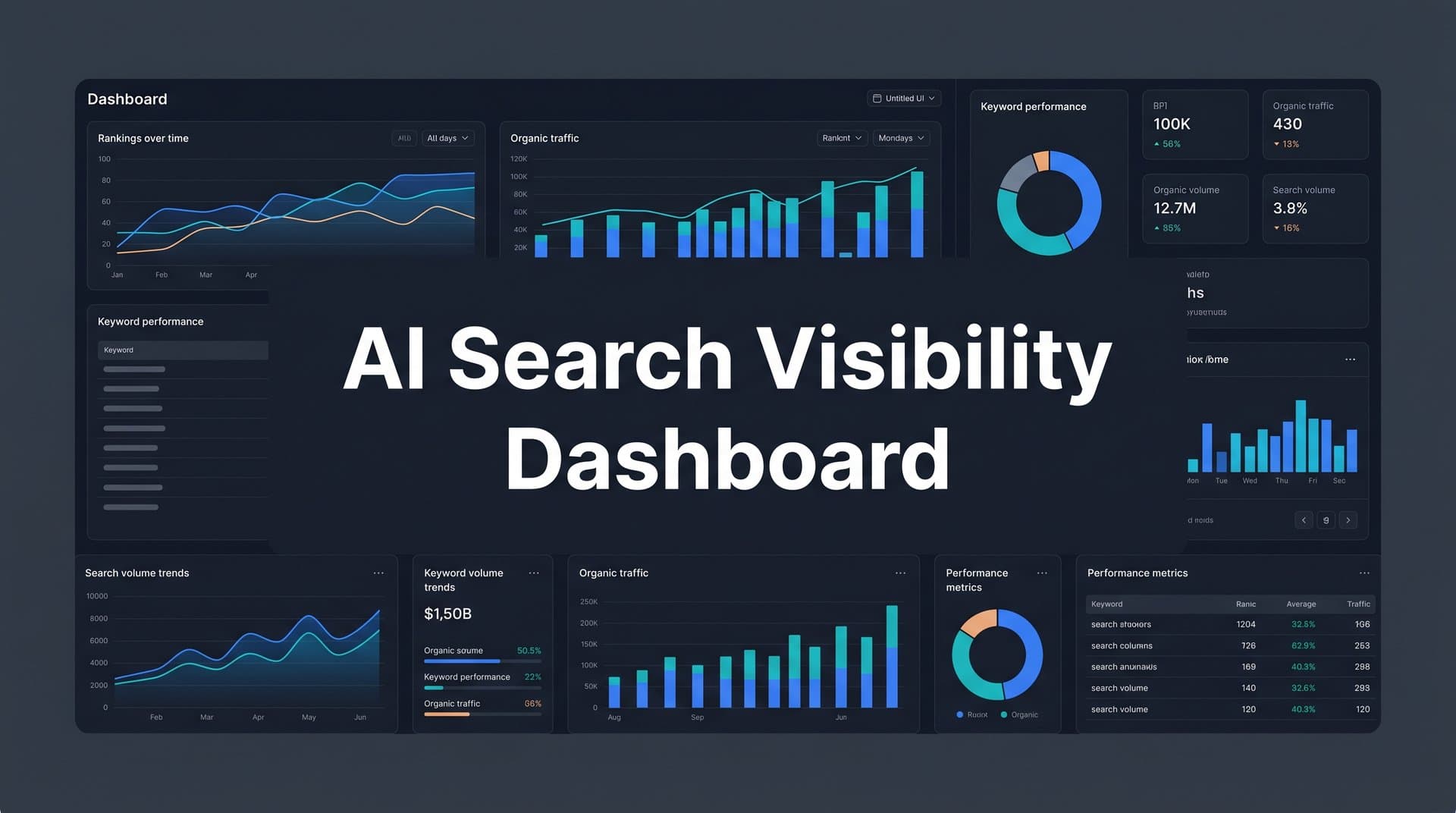
Tracking AI visibility requires different tools than traditional rank tracking. Platforms like Sight AI monitor how AI models like ChatGPT, Claude, and Perplexity mention and recommend your brand, giving you an AI Visibility Score alongside sentiment analysis and prompt tracking. This kind of data lets you understand your share of voice in AI-generated responses, which is increasingly where purchasing journeys begin.
Turning Search Volume Data into a Content Engine
Research without execution is just a spreadsheet. The goal is to turn your search volume analysis into a systematic content production process that builds organic reach across both traditional and AI-driven discovery channels.
Start by organizing your validated keywords into volume tiers. Head terms (typically high volume, high competition) are long-term brand authority plays. Mid-tail keywords (moderate volume, moderate competition) are your core content engine: achievable within a reasonable timeframe with the right effort. Long-tail keywords (lower individual volume, high specificity) often convert best and can be clustered into comprehensive pieces that capture multiple related queries simultaneously. A solid approach to keyword research for organic SEO ensures you're building these tiers with the right data.
Map each tier to a content type and publishing cadence. Head terms might anchor quarterly pillar content. Mid-tail terms drive monthly guides and explainers. Long-tail clusters feed weekly supporting articles that reinforce topical authority. This structure ensures you're building depth across your topic landscape, which signals expertise to both search engines and AI models.
When producing content, design it to serve both traditional SEO and AI discoverability. This means structuring articles with clear headings that mirror how users phrase questions, including concise definitions that AI models can extract, and citing authoritative sources that lend credibility. Effective SEO content planning ensures every piece is built to perform across both traditional and AI-driven channels.
Measuring success in this environment requires expanding your performance framework beyond rankings. Track organic traffic growth as the primary indicator of SEO effectiveness. Monitor indexing speed: how quickly Google discovers and indexes new content matters for capturing timely opportunities. And track AI brand mentions using dedicated visibility tools to understand how your content strategy is influencing your presence in AI-generated responses.
Platforms like Sight AI combine all three dimensions: AI visibility tracking across major AI platforms, an AI content writer with specialized agents for generating SEO and GEO-optimized articles, and website indexing tools with IndexNow integration for faster content discovery. This kind of integrated approach closes the gap between keyword research and measurable organic growth.
Putting It All Together
SEO search volume is a foundational metric, but it was never meant to carry the full weight of a keyword strategy on its own. The number tells you that demand exists. It doesn't tell you whether that demand is capturable, convertible, or even visible to your audience through the channels they're increasingly using.
Smart keyword strategy in 2026 combines volume with keyword difficulty, search intent, CPC signals, trend velocity, and SERP structure. It validates opportunities against real competitive landscapes rather than abstract numbers. And critically, it accounts for the growing share of discovery happening through AI platforms where traditional volume metrics simply don't apply.
The brands winning at organic growth right now are those treating SEO and GEO as complementary disciplines: building content that ranks in Google and earns citations from AI models, tracking performance across both channels, and continuously closing the gaps where competitors are visible and they are not.
Your keyword research is only as valuable as the action it drives. Use search volume as your starting point, not your finish line. Pair it with the right metrics, validate it against real SERPs and AI responses, and build a content engine that captures demand wherever it lives.
Start tracking your AI visibility today and see exactly where your brand appears across top AI platforms. Stop guessing how AI models like ChatGPT and Claude talk about your brand. Get visibility into every mention, uncover content opportunities grounded in real data, and automate your path to organic traffic growth across every discovery channel that matters.