Your brand just lost a sale you didn't even know you were competing for. Somewhere, a potential customer asked ChatGPT for software recommendations in your category. Three competitors got mentioned. You didn't. The customer never visited your website, never saw your product, never knew you existed.
This isn't hypothetical. It's happening right now, thousands of times per day across ChatGPT, Claude, Perplexity, and other AI search platforms.
While you've been optimizing for Google, your competitors have been capturing a different kind of visibility—the kind that happens when AI models recommend solutions directly in conversational responses. These aren't traditional search results you can monitor with rank tracking tools. They're contextual recommendations embedded in AI-generated answers, and most marketers have no visibility into this emerging battleground.
The challenge runs deeper than simply not knowing where you rank. You likely don't know which competitors are consistently appearing in AI responses, what queries trigger their mentions, or what content strategies are driving their visibility. Your true AI search competitors may not even be the same brands you compete with in Google rankings.
This guide breaks down the exact process for identifying, tracking, and analyzing competitor visibility in AI search. You'll learn how to discover which brands AI models recommend, understand why they're getting mentioned, and use that competitive intelligence to inform your own content strategy. By the end, you'll have a systematic approach to monitoring the AI search landscape and identifying gaps where your competitors are visible but you're not.
Step 1: Identify Your AI Search Competitors
Your first assumption to challenge: your AI search competitors are probably not identical to your traditional SEO competitors. AI models pull from different data sources, weight authority signals differently, and recommend brands based on factors that don't always align with Google's ranking algorithm.
Start by directly querying AI platforms. Open ChatGPT, Claude, and Perplexity in separate browser tabs. Ask straightforward questions that your target customers would ask: "What are the best [product category] tools?" or "Which [solution type] should I choose for [specific use case]?"
Document every brand mentioned across these three platforms. You'll likely notice patterns—certain brands appear consistently, while others show up on one platform but not others. This variance matters because it reveals which brands have broader AI visibility versus those that dominate specific models.
Create a testing matrix with 10-15 prompts covering different aspects of your product category. Include broad category queries, specific feature comparisons, use-case scenarios, and problem-solution questions. Run each prompt across all three major AI platforms and record which competitors appear in the responses.
Pay attention to surprises. You might discover that a smaller competitor with modest Google rankings gets consistently recommended by AI models. Or that a major industry player you track closely never appears in AI responses. These discrepancies reveal the different dynamics at play in AI search visibility.
Your goal is a shortlist of 5-10 brands that consistently appear in AI-generated recommendations within your category. These are your true AI search competitors—the brands capturing visibility when potential customers ask AI for guidance. This list becomes the foundation for all subsequent tracking and analysis.
Document not just who appears, but the context. Is a competitor mentioned first or buried in a longer list? Are they recommended for specific use cases or as general solutions? This contextual intelligence matters as much as simple presence. Understanding why competitors are ranking in AI answers helps you identify the specific strategies driving their visibility.
Step 2: Build Your AI Search Query Framework
Effective competitor tracking requires a systematic query framework that mirrors how real users interact with AI search platforms. Random testing produces random insights. A structured approach reveals patterns.
Develop 20-30 prompts that represent the full spectrum of how your target audience seeks recommendations. Think beyond simple "best of" queries. Real users ask nuanced questions: "I'm currently using [Tool A] but struggling with [specific problem], what should I switch to?" or "For a team of [size] focused on [goal], what's the most cost-effective option?"
Categorize your prompts by buyer intent stage. Awareness-stage queries are broad: "What tools help with [general problem]?" Consideration-stage queries involve comparisons: "What's the difference between [Brand A] and [Brand B]?" Decision-stage queries are specific: "Is [Brand] worth it for [specific use case]?" Understanding search intent in SEO helps you craft prompts that match real user behavior.
Include different query structures that trigger different AI response patterns. Comparison queries often generate side-by-side analyses. Recommendation queries typically produce ranked lists. Problem-solution queries may yield more contextual, narrative responses where brands are woven into explanations rather than listed explicitly.
Test question variations that include different qualifiers. "Best [product] for small businesses" may produce different recommendations than "best [product] for enterprises." "Affordable [solution]" triggers different responses than "most powerful [solution]." These variations help you understand where competitors dominate specific market segments or positioning angles.
Document your query framework in a spreadsheet with columns for the prompt text, intent stage, query type, and expected information goal. This structure allows you to test systematically and compare results over time.
Success indicator: You should be able to hand your query framework to a team member who could replicate your testing process and get comparable data. If your queries are too vague or inconsistently structured, your tracking results will be unreliable.
Update your framework quarterly as you discover new query patterns from actual customer conversations, support tickets, or sales calls. The most valuable prompts are those your real audience actually uses, not theoretical queries you think they might ask. Applying conversational search optimization techniques ensures your framework captures how people naturally interact with AI.
Step 3: Conduct Your First Competitive Audit
Now comes the systematic testing phase. This isn't a quick spot-check—it's a comprehensive audit that establishes your baseline understanding of the competitive AI search landscape.
Take your query framework and run each prompt across ChatGPT, Claude, and Perplexity. For each response, document which competitors appear, their position in the response (first mention, second mention, included in a longer list), and the context of the mention.
Context matters enormously. A competitor mentioned as "the industry-leading solution" carries different weight than one described as "a budget-friendly alternative." Note whether mentions are positive recommendations, neutral inclusions in comparison lists, or qualified suggestions with caveats.
Here's the critical part most people miss: AI responses vary between sessions. The same prompt can generate different recommendations depending on factors we don't fully control. Test each query 3-5 times across different sessions, preferably at different times of day.
Track the consistency of competitor appearances. If a brand shows up in 4 out of 5 tests for a specific query, that's strong visibility. If they appear once out of 5, that's weak or inconsistent visibility. This frequency data reveals which competitors have truly established AI search presence versus those that occasionally get mentioned.
Pay close attention to the specific language AI models use when recommending competitors. Does the AI emphasize specific features, use cases, or differentiators? This language reveals what content signals and positioning strategies are driving visibility. If Claude consistently describes a competitor as "particularly strong for technical teams," that phrasing likely comes from how that competitor describes themselves in their content.
Create a simple scoring system. Assign points based on mention position (first mention = 5 points, second = 3 points, included in list = 1 point) and multiply by frequency. This gives you a quantitative visibility score for each competitor across different query types.
Common pitfall: Don't just track who appears—track who doesn't. If you run 30 queries and a competitor only appears in responses to 3 of them, that tells you something important about their narrow AI visibility. They may dominate a specific niche but lack broader category presence.
Your first audit should take several hours of focused work. The output is a comprehensive map of competitor visibility across your query framework, revealing patterns about who dominates which query types and how consistently they appear across different AI platforms. Conducting thorough SEO competitive research provides the foundation for understanding these dynamics.
Step 4: Analyze Competitor Content Patterns
Raw visibility data tells you who appears in AI search results. Content analysis tells you why. This step transforms competitive intelligence into actionable strategy.
For each competitor with strong AI visibility, examine their most-cited content. When AI models mention a brand, they often reference specific pages, guides, or resources. Visit these pages and analyze what makes them citation-worthy from an AI perspective.
Look for structural patterns. Comprehensive guides with clear hierarchies, detailed comparison tables, and specific use-case breakdowns tend to earn more AI citations than shallow marketing content. Content that directly answers common questions in a straightforward, authoritative manner gets referenced more frequently than content focused primarily on promotion.
Evaluate how competitors position themselves in their content. If a competitor consistently gets mentioned by AI as "the best option for technical teams," examine how they establish that positioning. Do they feature technical documentation prominently? Include code examples? Highlight integration capabilities? The positioning that appears in AI responses typically mirrors how the brand describes itself.
Identify content formats that correlate with visibility. Some competitors may earn citations through detailed blog content. Others through comprehensive documentation, case studies, or comparison pages. Map which content types drive visibility for which query types in your framework. Understanding AI search engine ranking factors helps you identify what signals matter most.
Pay attention to authoritative signals. Competitors with strong AI visibility often have clear expertise indicators: detailed author bios, cited credentials, published research, or industry recognition. AI models weight authority heavily when deciding which brands to recommend.
Look for citation patterns in their content. Do they reference studies, include data, or cite other authoritative sources? Content that demonstrates research and backs up claims with evidence tends to earn more trust from AI models, which translates to more frequent recommendations.
Map competitor strengths to specific query types. You may discover that Competitor A dominates awareness-stage queries with their educational content, while Competitor B captures decision-stage queries with detailed comparison pages. These patterns reveal strategic content gaps and opportunities.
Success indicator: You should be able to articulate specific content attributes that correlate with each competitor's AI visibility. "Competitor X appears frequently because they have comprehensive guides covering every use case" or "Competitor Y gets mentioned for technical queries because they publish detailed documentation."
Step 5: Set Up Ongoing Monitoring
Your initial audit provides a snapshot, but AI search visibility shifts over time. Competitors publish new content, AI models update their training data, and recommendation patterns evolve. One-time analysis becomes outdated quickly.
Establish a systematic monitoring cadence. Monthly testing of your core query framework provides sufficient frequency to spot trends without becoming overwhelming. For high-priority queries where you're directly competing for visibility, consider weekly testing.
Manual tracking works initially but doesn't scale. If you're serious about competitive AI search monitoring, consider AI search visibility tools designed for tracking. These platforms can automate query testing across multiple AI models, track mention frequency over time, and alert you to significant changes in competitor visibility.
Track not just presence but sentiment shifts. A competitor consistently mentioned positively who suddenly starts appearing with qualifiers or caveats signals a change worth investigating. Did they have a product issue? Did new competitors enter the space? Did their content strategy shift?
Monitor for new competitors entering the AI search landscape. Run broader category queries monthly to discover brands that weren't on your initial radar but are gaining AI visibility. Early detection of emerging competitors gives you time to respond before they establish dominant positions.
Set up alert triggers for significant changes. If a competitor's visibility score increases by more than 20% month-over-month, that's worth investigating. What content did they publish? What positioning changes did they make? Rapid visibility gains often indicate successful content strategies worth analyzing. Learning how to track brand in AI search systematically makes this process manageable.
Document patterns in your monitoring data. If competitor mentions increase during specific months, that may correlate with industry events, product launches, or seasonal search patterns. Understanding these cycles helps you time your own content initiatives strategically.
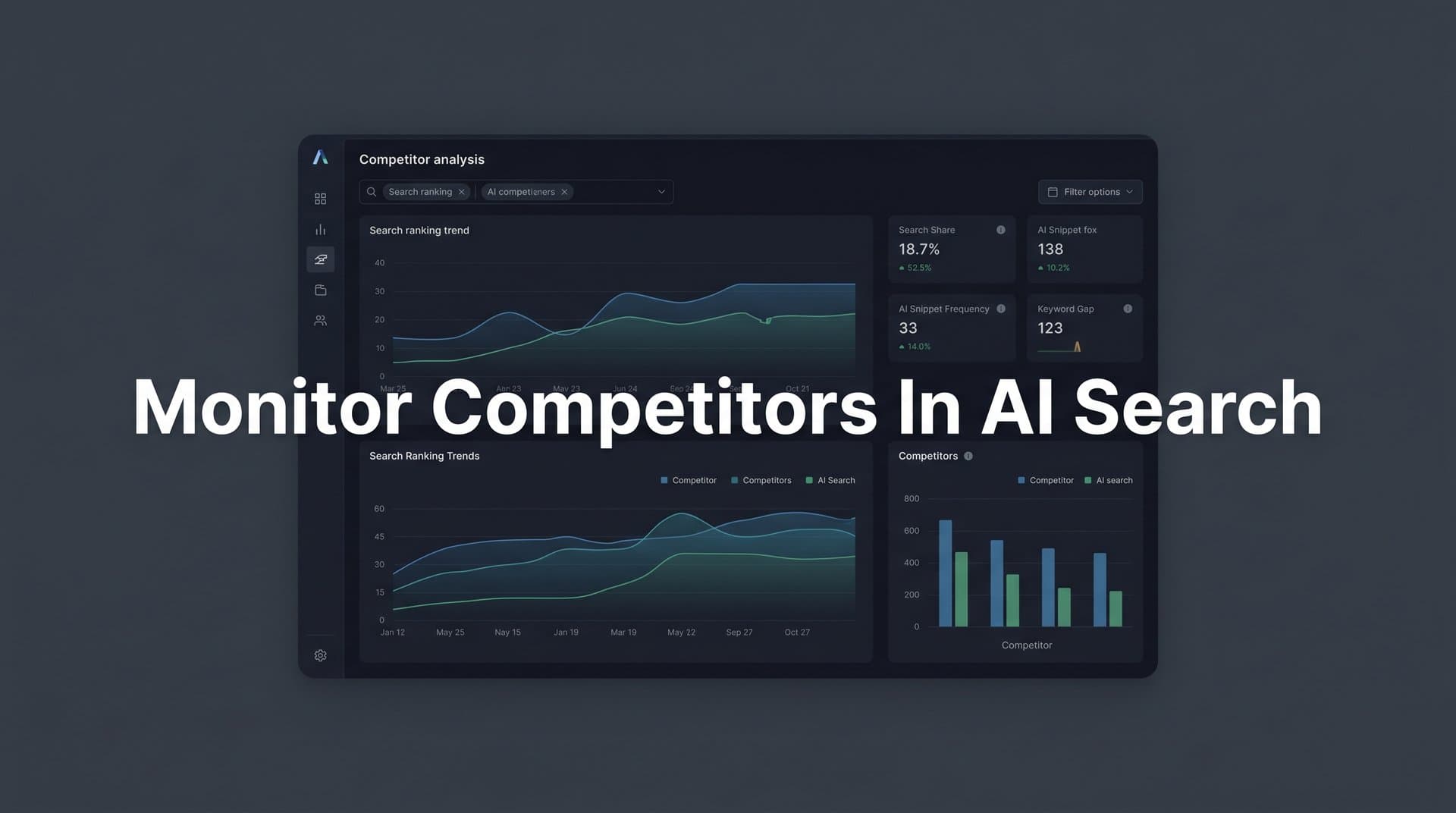
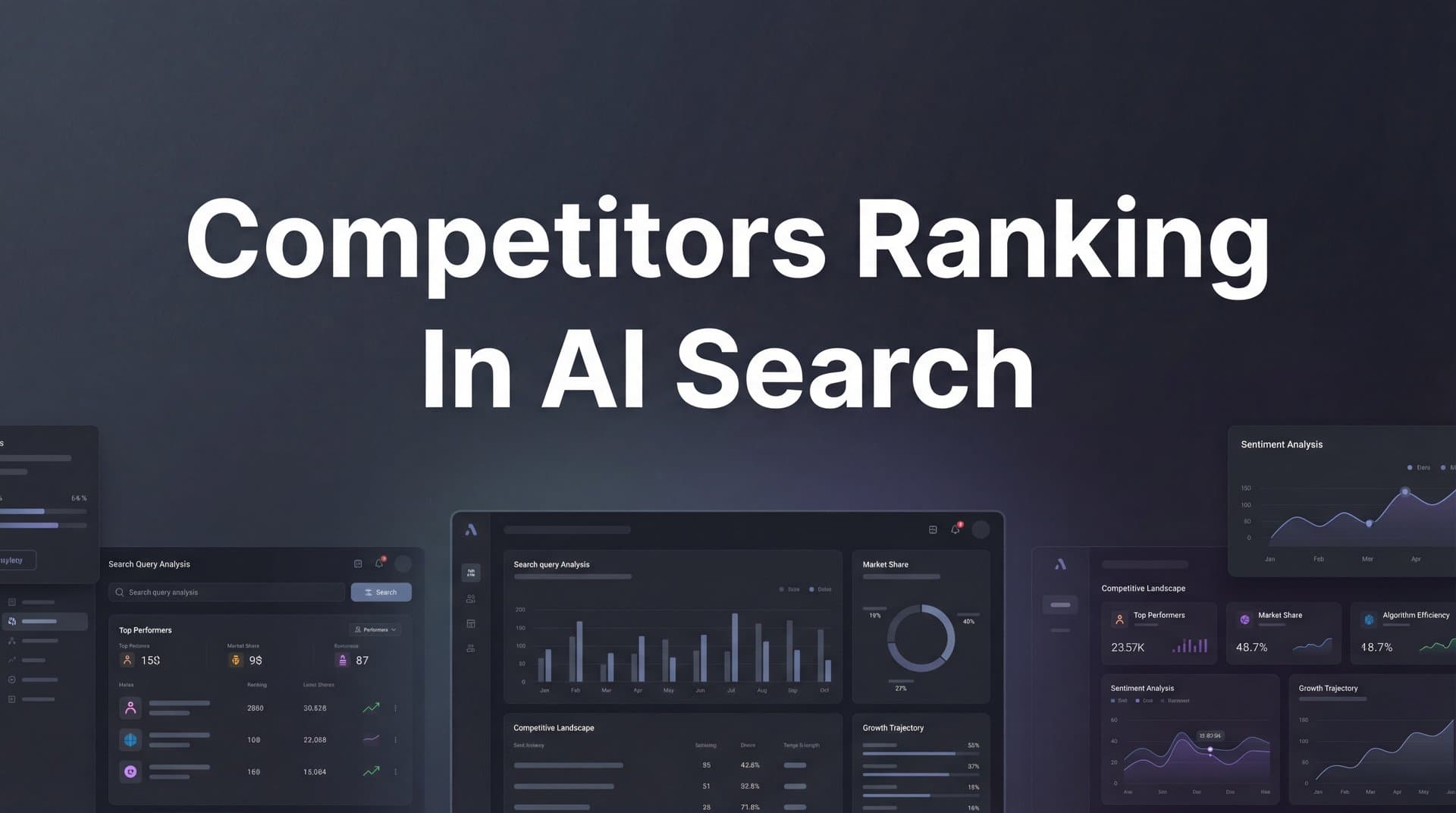
Create a simple dashboard that tracks key metrics over time: competitor visibility scores, mention frequency by query type, sentiment trends, and new competitor appearances. Visual tracking makes patterns obvious that might be missed in raw data.
The goal isn't obsessive daily monitoring—it's establishing a sustainable system that keeps you informed about competitive dynamics without consuming excessive time. Consistency matters more than frequency.
Step 6: Turn Insights Into Your Content Strategy
Competitive intelligence without action is just interesting data. This final step transforms everything you've learned into a concrete content strategy that improves your own AI search visibility.
Start by identifying visibility gaps. Map queries where competitors consistently appear but you don't. These gaps represent your highest-priority content opportunities. If three competitors get mentioned for "best [solution] for technical teams" but you're absent, creating comprehensive content targeting that query becomes a strategic priority.
Prioritize based on intent stage and business value. Decision-stage queries where competitors dominate but you're invisible represent immediate revenue opportunities. Awareness-stage gaps may have longer-term value but lower immediate impact. Focus first on high-intent queries where competitor visibility is costing you potential customers.
Analyze the content patterns that drive competitor visibility in your gap areas. If competitors ranking for your priority queries all have detailed comparison guides, that format becomes your template. If they emphasize specific features or use cases, incorporate similar positioning in your content.
Optimize existing content using competitive insights. You may already have pages targeting important queries but lacking the elements that earn AI citations. Add the structured information, authoritative signals, and clear positioning you observed in competitor analysis. Our guide on optimizing content for AI search covers the specific elements that drive visibility.
Create new content specifically designed to capture AI visibility in your gap areas. Apply the patterns you've identified: comprehensive coverage, clear structure, authoritative positioning, and direct answers to common questions. Content created with AI search visibility in mind differs from traditional SEO content in its emphasis on clarity and authoritative signals over keyword optimization.
Test your content's impact by monitoring whether it starts appearing in AI responses. After publishing new content or optimizing existing pages, run your query framework again. Track whether your visibility scores improve for targeted queries. This feedback loop helps you understand which content strategies actually work for your brand.
Success indicator: A prioritized content roadmap with specific pieces mapped to competitive visibility gaps, expected business impact, and success metrics. You should know exactly what content to create next and why it matters for your AI search visibility.
Putting It All Together
Tracking competitors in AI search isn't a one-time audit—it's an ongoing discipline that reveals how AI recommendation patterns shift and where new opportunities emerge. The brands capturing AI-driven traffic today understand not just where they appear in AI responses, but where their competitors appear and why.
Start with the fundamentals: identify your true AI search competitors through systematic testing across major platforms. These may differ significantly from your traditional SEO competitors, revealing a new competitive landscape that requires different strategies.
Build a query framework that mirrors real user behavior across different intent stages and query types. This structured approach transforms random testing into reliable competitive intelligence you can track over time.
Conduct comprehensive audits that document not just competitor presence but position, context, and consistency. The nuances matter—being mentioned first versus fifth, recommended enthusiastically versus included in a list, appearing consistently versus occasionally.
Analyze the content patterns driving competitor visibility. Understanding why competitors earn AI citations gives you a playbook for improving your own visibility. Look for structural elements, positioning strategies, and authoritative signals that correlate with strong AI search presence.
Establish ongoing monitoring that tracks changes over time. AI search visibility is dynamic, and early detection of competitor gains or new entrants gives you strategic advantages. Consistent tracking reveals trends that one-time audits miss.
Most importantly, transform competitive insights into action. Identify your visibility gaps, prioritize based on business impact, and create content specifically designed to capture AI recommendations in areas where competitors currently dominate. Following a comprehensive AI search engine optimization guide ensures you're applying proven strategies.
The AI search landscape is still emerging, which means early movers have outsized opportunities to establish visibility before competition intensifies. Brands that build systematic competitor tracking now will be positioned to capture the growing volume of AI-driven traffic as these platforms continue gaining user adoption.
Stop guessing how AI models like ChatGPT and Claude talk about your brand—get visibility into every mention, track content opportunities, and automate your path to organic traffic growth. Start tracking your AI visibility today and see exactly where your brand appears across top AI platforms.