Testing an SEO automation tool before committing your budget isn't just smart—it's essential. Free trials let you evaluate whether a platform actually fits your workflow, delivers real time savings, and justifies the price tag before you're locked into an annual contract.
This list covers nine SEO automation platforms offering genuine free trials in 2026. We're not talking about limited freemium tiers that tease features you can't access. These are proper trials where you can test AI content generation, rank tracking, technical audits, visibility monitoring, and workflow automation.
Each tool has been selected for automation depth, trial accessibility, and relevance to modern SEO—including the growing importance of AI search optimization. Here are the top tools worth testing.
1. Sight AI
Best for: Tracking brand mentions across AI models and automating SEO/GEO content creation
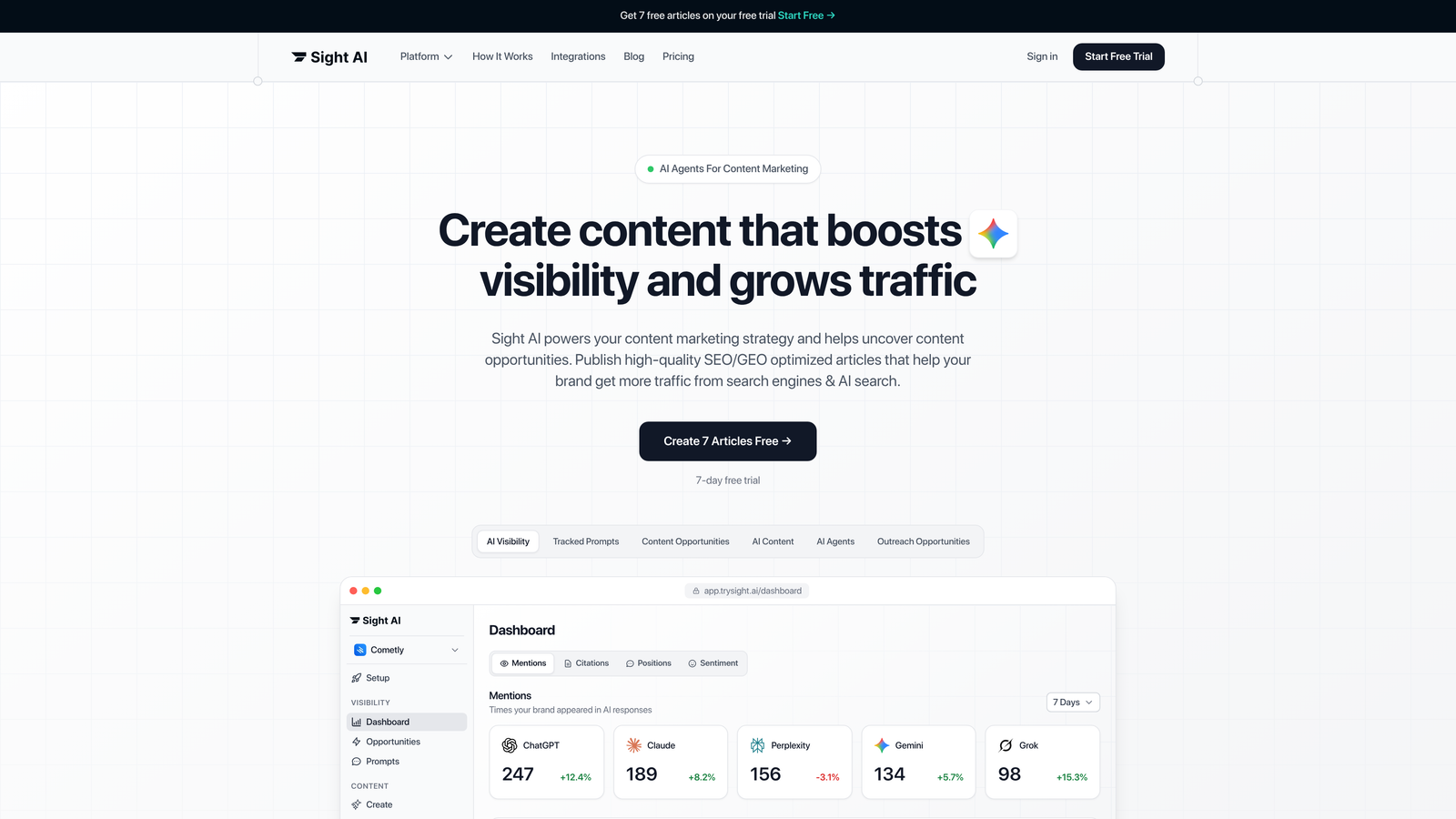
Sight AI tackles a visibility problem most SEO tools ignore: how AI models like ChatGPT, Claude, and Perplexity actually talk about your brand.
Where This Tool Shines
As AI-powered search gains market share, traditional rank tracking tells an incomplete story. Sight AI monitors your brand mentions across six major AI platforms, giving you an AI Visibility Score that tracks sentiment, prompt contexts, and competitive positioning in AI responses.
The platform combines visibility tracking with automated content generation through 13 specialized AI agents. These agents create SEO and GEO-optimized articles designed to increase your brand's presence in AI search results—then automatically publish and index them through IndexNow integration.
Key Features
AI Visibility Score: Real-time tracking of brand mentions across ChatGPT, Claude, Perplexity, and other AI models with sentiment analysis.
13+ Specialized AI Agents: Automated content generation for listicles, guides, and explainers optimized for both traditional and AI search.
Autopilot Mode: Hands-off content creation and publishing that runs on a schedule you define.
IndexNow Integration: Instant URL submission to search engines for faster discovery and indexing.
Prompt Tracking: See exactly which user queries trigger mentions of your brand in AI responses.
Best For
Marketers and agencies focused on AI search visibility, brands needing content automation at scale, and teams tracking how AI models represent their company compared to competitors.
Pricing
Free trial available. Paid plans start at competitive SaaS pricing with scaling based on content volume and AI visibility tracking needs.
2. Semrush
Best for: Enterprise teams needing comprehensive SEO automation across multiple channels
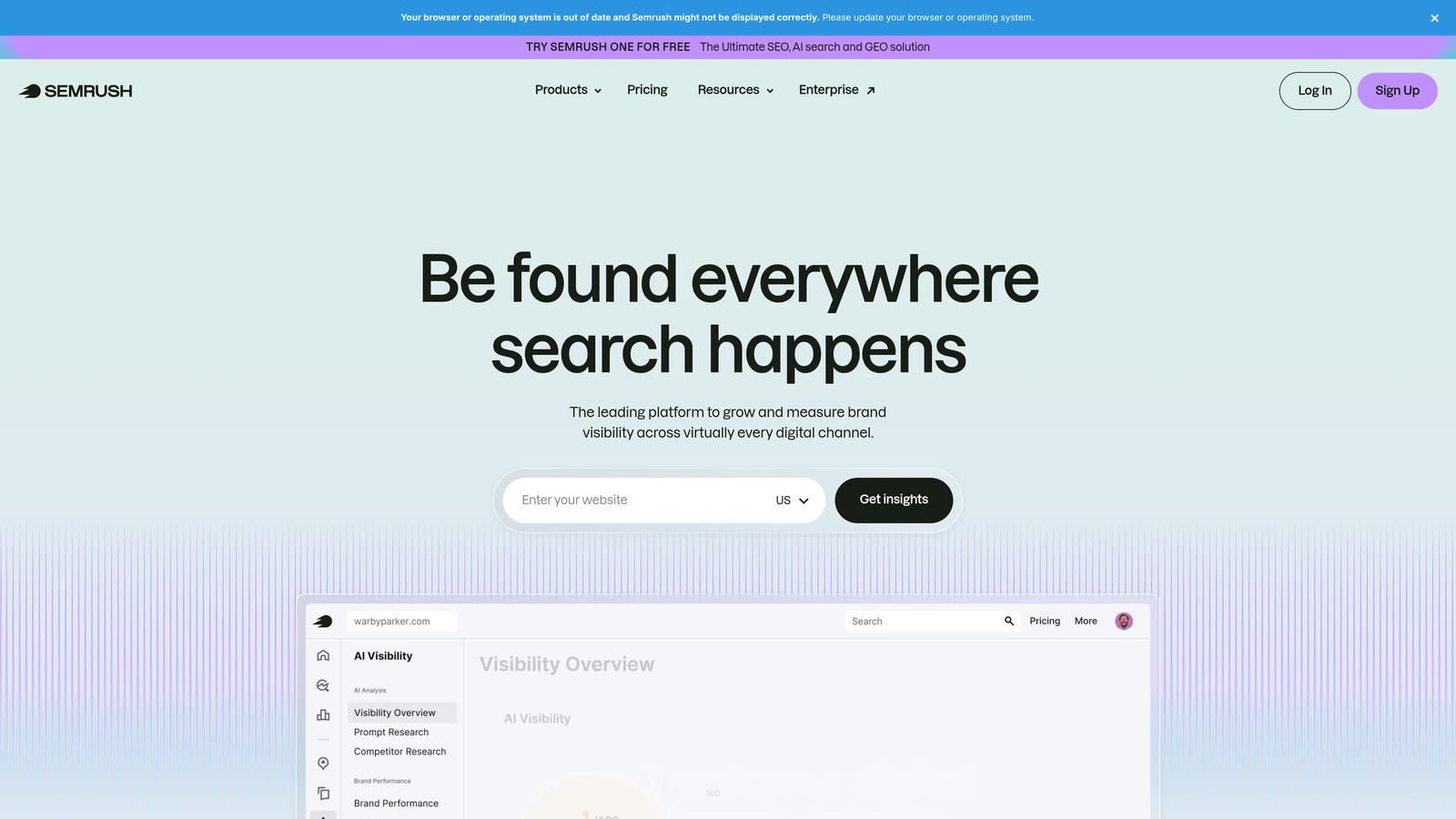
Semrush is the Swiss Army knife of SEO platforms, combining rank tracking, site audits, content marketing, and competitive analysis in one ecosystem.
Where This Tool Shines
Semrush excels at workflow automation for large teams managing multiple campaigns. Scheduled site audits run automatically, catching technical issues before they impact rankings. Position tracking sends alerts when rankings shift, so you're never caught off guard by algorithm updates.
The Content Marketing Platform automates topic research and content brief generation, while the social media tools schedule posts across channels. For agencies, the automated competitive analysis reports save hours of manual data collection.
Key Features
Automated Site Audits: Schedule crawls to run daily, weekly, or monthly with email alerts for critical issues.
Position Tracking Automation: Daily rank updates with customizable alerts for ranking changes and SERP feature appearances.
Content Marketing Platform: Topic research automation with SEO Writing Assistant for real-time optimization.
Competitive Analysis Reports: Automated reports tracking competitor rankings, backlinks, and content strategies.
Social Media Scheduling: Automated posting across platforms with performance tracking.
Best For
Enterprise marketing teams, agencies managing multiple clients, and businesses needing comprehensive SEO automation beyond just rank tracking.
Pricing
7-day free trial available. Pro plan starts at $139.95/month with higher tiers for agencies and enterprises.
3. Ahrefs
Best for: Backlink-focused workflows with powerful link monitoring automation
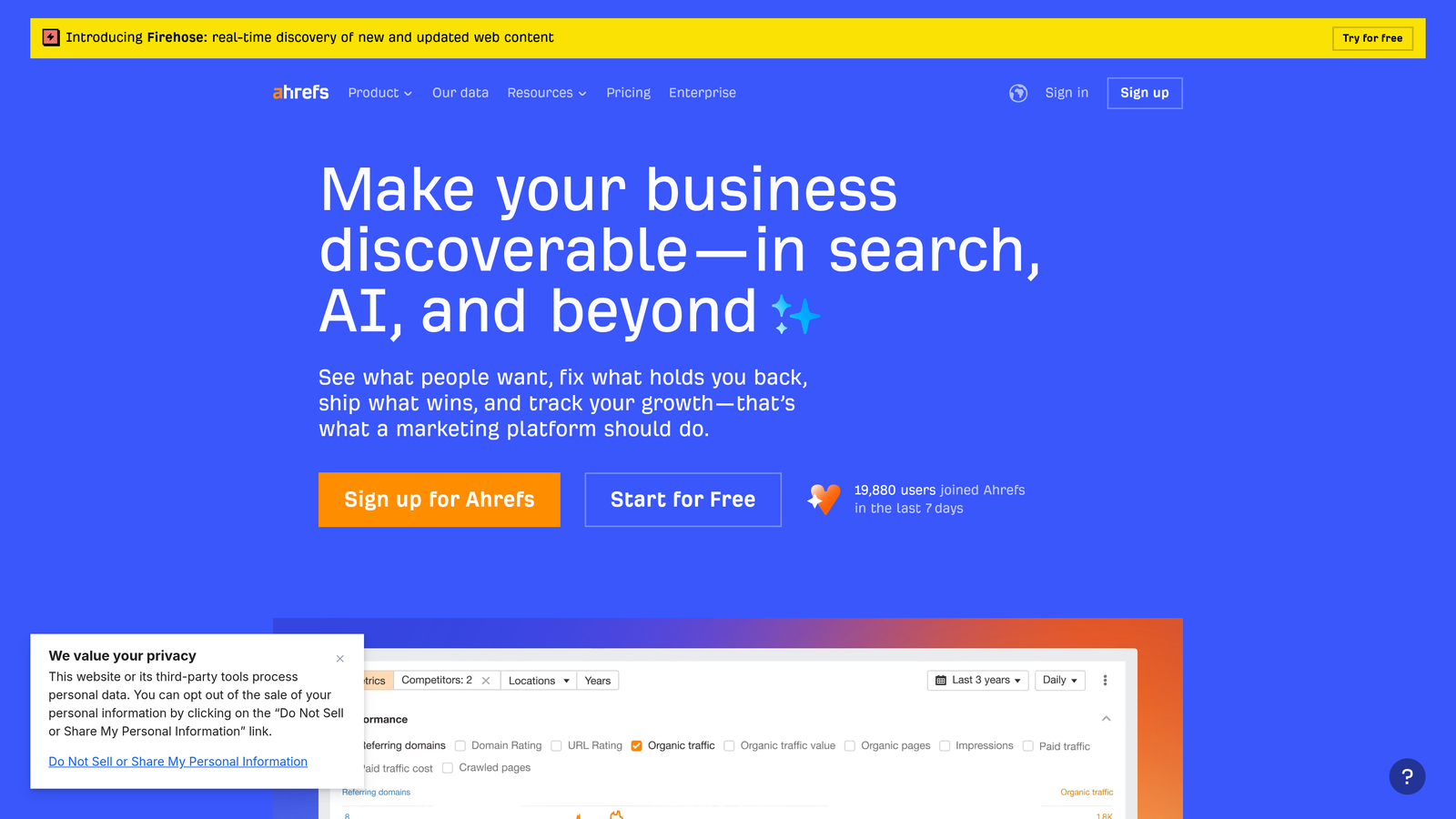
Ahrefs built its reputation on backlink analysis, and that focus shows in its automation capabilities around link monitoring and opportunity discovery.
Where This Tool Shines
Ahrefs monitors your backlink profile continuously, sending instant alerts when you gain or lose links. This matters because catching toxic links early or capitalizing on new link opportunities can make the difference in competitive niches.
The platform's Content Explorer automates content research by tracking top-performing content in your niche. Combined with keyword alerts that notify you of new ranking opportunities, Ahrefs helps you stay ahead of content trends without manual monitoring.
Key Features
Automated Backlink Monitoring: Real-time alerts for new and lost backlinks with email notifications.
Scheduled Site Audits: Automated technical SEO crawls with prioritized issue lists.
Content Explorer Automation: Track top content by topic with automatic updates on performance metrics.
Keyword Alerts: Get notified when new keywords trigger ranking opportunities or when competitors rank for target terms.
Broken Link Detection: Automated identification of broken internal and external links.
Best For
SEO professionals focused on link building, content marketers tracking competitive content performance, and agencies needing robust backlink analysis.
Pricing
Trial available with limited features. Lite plan starts at $129/month with full access requiring higher-tier plans.
4. Surfer SEO
Best for: Content teams automating optimization and brief generation workflows
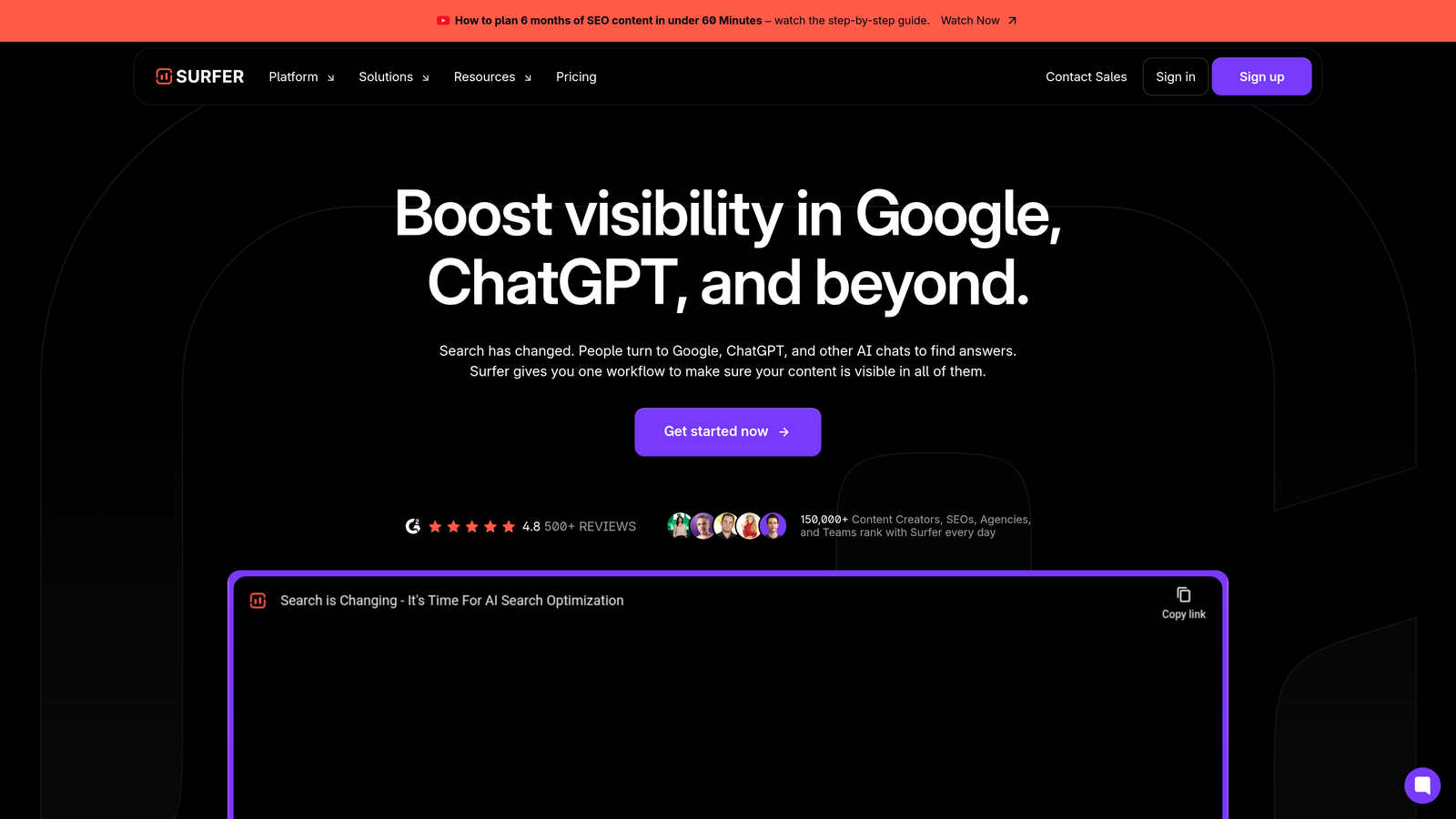
Surfer SEO focuses on one thing exceptionally well: automating the content optimization process from brief creation to final scoring.
Where This Tool Shines
Surfer's AI-generated content outlines save hours of manual SERP analysis. The platform analyzes top-ranking pages and generates detailed briefs with recommended structure, word count, and key topics to cover.
Real-time content scoring updates as you write, showing exactly how your content stacks up against top performers. The automated NLP term suggestions ensure you're covering semantic variations search engines expect without keyword stuffing.
Key Features
AI Content Brief Generation: Automated outline creation based on SERP analysis of top-ranking pages.
Real-Time Content Scoring: Live optimization feedback as you write with actionable improvement suggestions.
Automated NLP Analysis: Semantic term suggestions based on what top-ranking content includes.
SERP Analyzer Automation: Batch analysis of multiple keywords with automated data extraction.
Content Audit Tools: Automated analysis of existing pages with optimization recommendations.
Best For
Content writers and editors optimizing at scale, agencies producing client content, and marketing teams focused on content-driven SEO.
Pricing
7-day money-back guarantee functions as a trial period. Essential plan starts at $89/month.
5. SE Ranking
Best for: Agencies needing white-label automation and client reporting
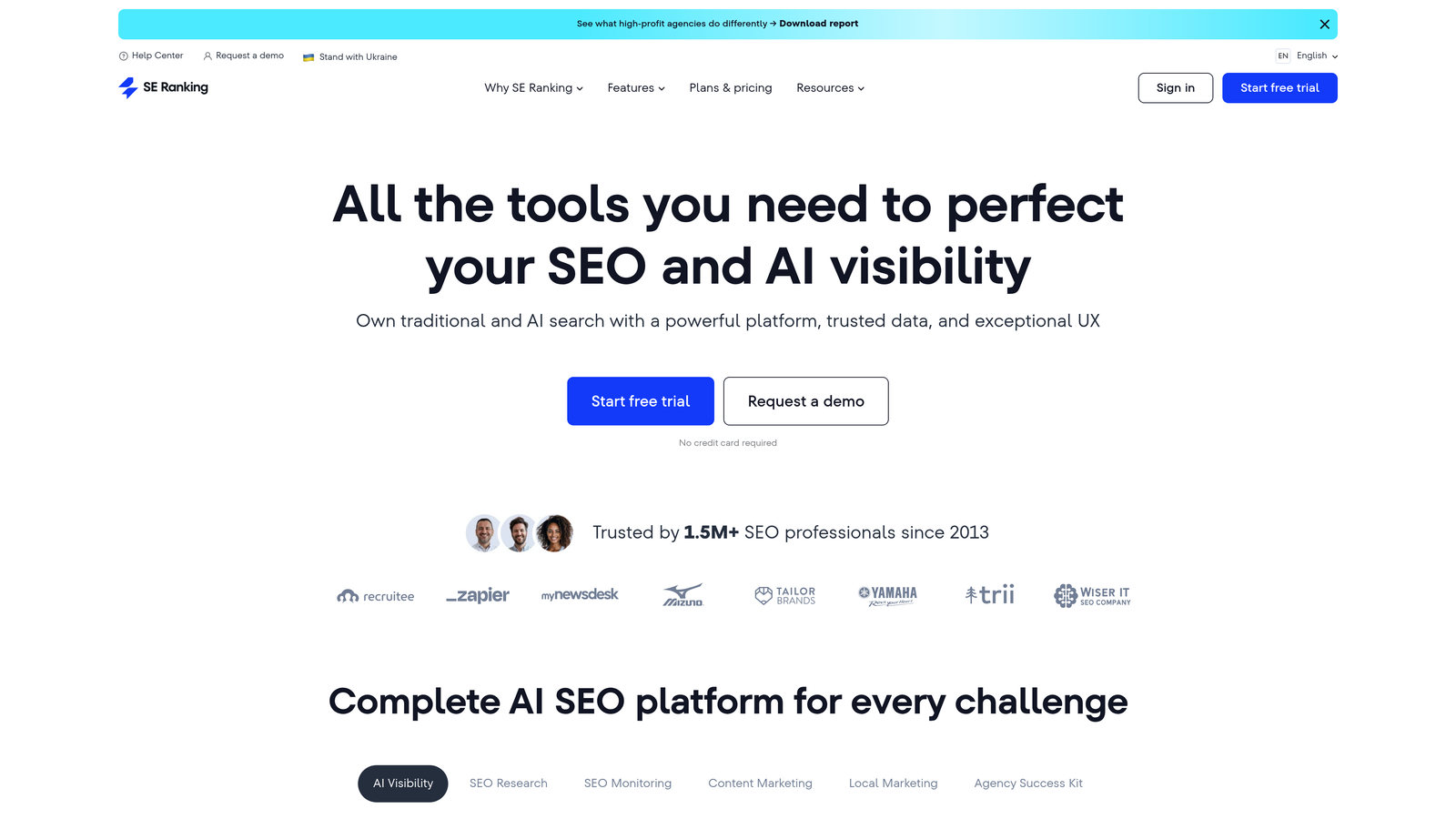
SE Ranking positions itself as the agency-friendly alternative, with white-label capabilities and client management automation built into its core.
Where This Tool Shines
The automated white-label reporting system lets agencies generate branded client reports without manual data compilation. Scheduled rank tracking runs automatically, and alerts keep clients informed without requiring constant manual updates.
SE Ranking's marketing plan feature automates task management across client campaigns. The lead generation widget automation helps agencies capture and qualify prospects directly through their website, integrating SEO services with business development.
Key Features
White-Label Client Reporting: Automated branded reports with customizable metrics and scheduling.
Scheduled Rank Tracking: Daily updates with automated client alerts for significant ranking changes.
Automated Site Audits: Scheduled technical SEO crawls with white-label reporting.
Lead Generation Automation: Widget tools that capture and qualify prospects automatically.
Marketing Plan Automation: Task management system that automates workflow across client campaigns.
Best For
Digital marketing agencies managing multiple clients, white-label SEO providers, and consultants needing professional client reporting.
Pricing
14-day free trial available. Essential plan starts at $65/month with agency-focused features in higher tiers.
6. Screaming Frog SEO Spider
Best for: Technical SEO audits with deep crawling automation
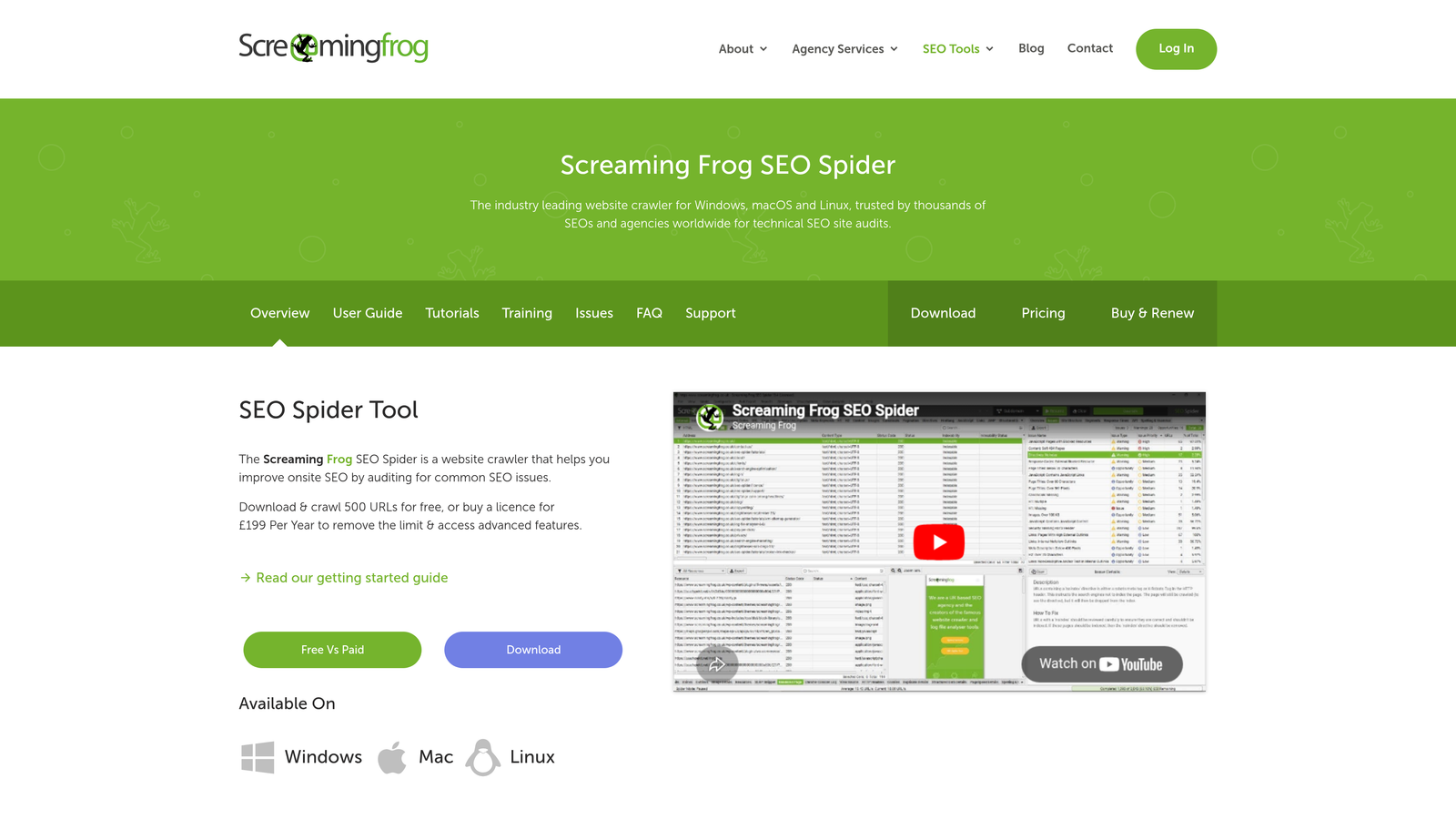
Screaming Frog SEO Spider is a desktop application that technical SEOs swear by for comprehensive site auditing and crawling automation.
Where This Tool Shines
Screaming Frog's scheduled crawls with change detection catch technical issues the moment they appear. The tool monitors for broken links, redirect chains, duplicate content, and structural problems automatically.
Integration with Google Analytics and Search Console automates data enrichment, pulling performance metrics directly into crawl reports. Custom extraction automation lets you pull specific data points from pages at scale, perfect for large-site audits.
Key Features
Scheduled Crawls: Automated crawling with change detection alerts for technical issues.
Analytics Integration: Automatic data pulls from Google Analytics and Search Console.
Custom Extraction Automation: Programmatic data extraction from pages using XPath and CSS selectors.
XML Sitemap Generation: Automated sitemap creation based on crawl data.
Structured Data Validation: Automated schema markup testing and error detection.
Best For
Technical SEO specialists, developers working on large sites, and agencies conducting comprehensive technical audits.
Pricing
Free version available with 500 URL crawl limit. Paid license costs £199/year with unlimited crawling and full automation features.
7. Mangools
Best for: Keyword research automation with user-friendly interfaces
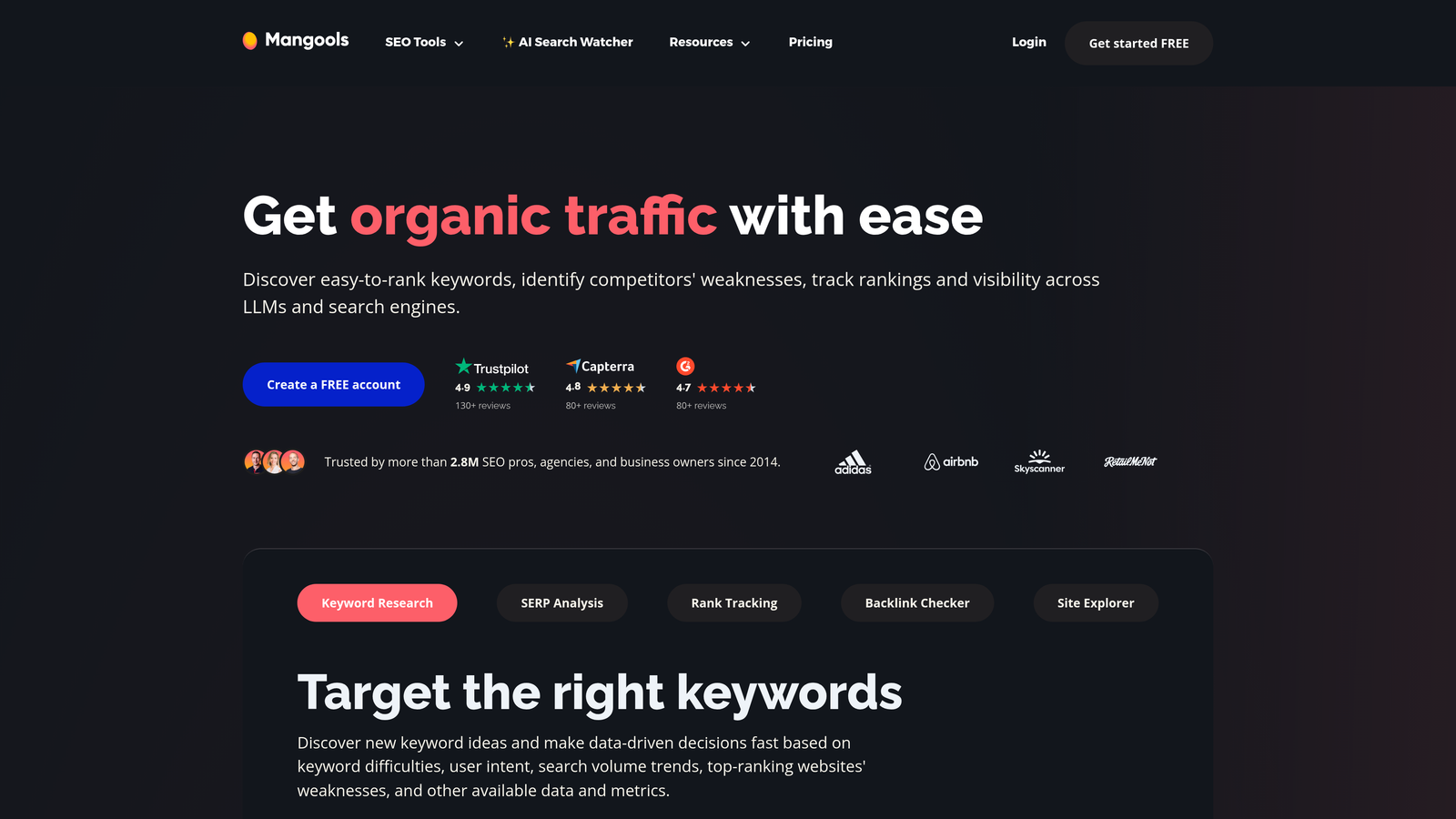
Mangools packages five SEO tools into one suite, focusing on simplicity without sacrificing automation power.
Where This Tool Shines
SERPWatcher's automated daily rank tracking removes the manual check-in routine. KWFinder generates keyword suggestions automatically, finding long-tail opportunities competitors miss.
The automated SERP analysis tracks ranking changes and SERP feature appearances without requiring manual monitoring. LinkMiner automates backlink discovery and opportunity identification, while SiteProfiler provides automated domain analysis for competitive research.
Key Features
SERPWatcher Automation: Daily rank tracking with performance graphs and automated alerts.
KWFinder Suggestions: Automated keyword research with difficulty scoring and search volume data.
Automated SERP Analysis: Continuous tracking of SERP features and ranking patterns.
LinkMiner Automation: Backlink discovery and opportunity alerts without manual searches.
SiteProfiler Analysis: Automated domain metrics and competitive analysis.
Best For
Small marketing teams, freelance SEO consultants, and businesses prioritizing keyword research and rank tracking over comprehensive toolsets.
Pricing
10-day free trial available. Mangools Basic starts at $29.90/month with higher tiers for additional features.
8. Serpstat
Best for: Growth-focused teams needing AI-powered automation at mid-range pricing
Serpstat positions itself as the growth hacking SEO platform, combining traditional automation with AI-powered content tools.
Where This Tool Shines
Serpstat's automated rank tracking sends alerts for ranking changes while the AI-powered content generation tools help you respond quickly with optimized content. The batch keyword analysis automation processes hundreds of keywords simultaneously, saving hours of manual research.
Automated competitor tracking monitors rival strategies without constant manual checking. The site audit scheduling catches technical issues before they impact performance, with automated reports highlighting priority fixes.
Key Features
Automated Rank Tracking: Daily position updates with customizable alert thresholds.
AI Content Generation: Automated content brief creation and optimization suggestions.
Site Audit Scheduling: Automated technical SEO crawls with prioritized issue lists.
Batch Keyword Analysis: Process large keyword lists automatically with difficulty and volume data.
Competitor Tracking Automation: Continuous monitoring of competitor rankings and strategies.
Best For
Mid-sized marketing teams, growth hackers focused on rapid testing, and businesses balancing feature depth with budget constraints.
Pricing
7-day free trial available. Individual plan starts at $59/month with team and agency tiers at higher price points.
9. Ubersuggest
Best for: Solopreneurs and small teams needing essential automation affordably
Ubersuggest brings Neil Patel's SEO expertise into an affordable tool with essential automation features for budget-conscious users.
Where This Tool Shines
Ubersuggest's automated daily rank tracking delivers the core functionality larger tools offer at a fraction of the price. The Chrome extension provides on-page SEO analysis automatically as you browse, eliminating the need to manually check pages.
Automated site audit reports catch technical issues without complex setup. The AI Writer generates content suggestions, while automated backlink opportunity alerts help you discover link building prospects without manual prospecting.
Key Features
Automated Daily Rank Tracking: Position monitoring with historical data and change alerts.
Chrome Extension Analysis: On-page SEO scoring that runs automatically while browsing.
Automated Site Audits: Scheduled technical SEO reports with actionable recommendations.
AI Writer: Content generation assistance with SEO optimization suggestions.
Backlink Opportunity Alerts: Automated discovery of potential link building targets.
Best For
Solo entrepreneurs, bloggers, and small businesses with limited SEO budgets who still need reliable automation.
Pricing
7-day free trial available. Individual plan starts at $29/month or $290 for lifetime access.
Making the Right Choice
Your ideal SEO automation tool depends on your primary workflow need. If AI visibility matters—and in 2026, it increasingly does—Sight AI tracks how AI models mention your brand while automating content creation to increase those mentions. For enterprise-level comprehensive automation, Semrush delivers across all SEO channels. Backlink-focused teams get the most value from Ahrefs' link monitoring automation.
If you want to compare dedicated monitoring platforms side by side, our roundup of the best AI visibility software tools breaks down the top options for tracking brand mentions across ChatGPT, Claude, and Perplexity.
Content optimization workflows run smoothest with Surfer SEO's brief generation and real-time scoring. Agencies needing white-label client reporting should test SE Ranking's automated branded reports. Technical SEO specialists conducting deep audits rely on Screaming Frog's scheduled crawls and change detection.
Budget-conscious teams can find solid automation in Mangools for keyword research, Serpstat for growth hacking workflows, and Ubersuggest for essential features at entry-level pricing. The free trial periods let you test these tools in your actual workflow before committing budget.
Start with the tool matching your primary need. Most teams eventually use multiple tools, but beginning with one focused on your biggest pain point delivers faster results. The automation features in these platforms save hours weekly—time better spent on strategy than manual data collection.
Start tracking your AI visibility today and see exactly where your brand appears across top AI platforms. Stop guessing how AI models like ChatGPT and Claude talk about your brand—get visibility into every mention, track content opportunities, and automate your path to organic traffic growth.