Enterprise SEO workflow automation uses software to handle repeatable SEO work: crawling and technical audits, rank and AI-visibility tracking, content briefs and optimization, publishing, indexing, and stakeholder reporting. Large sites, multiple teams, and constant algorithm changes make these jobs too big for spreadsheets and manual checks. The best platform for you depends on your biggest bottleneck. Sight AI covers AI visibility and content automation, Botify and Lumar cover technical scale, Conductor and BrightEdge cover content operations, seoClarity covers rank tracking and reporting, and Semrush and Ahrefs offer broad all-in-one suites.
Coordination is a bigger problem than technical complexity. Teams have to align content, engineering and analytics, and now they also need to understand how AI search engines like ChatGPT and Perplexity describe their brand. Each tool below was evaluated on scalability, integration capabilities, automation depth, and value for large organizations.
Which enterprise SEO workflows should you automate first?
Before you compare vendors, map your workflows and find the ones that eat the most hours or cause the most costly mistakes. In most enterprise programs, these six workflows deliver the biggest automation returns:
- Technical monitoring and QA: Run scheduled or continuous crawls, use log file analysis, and add pre-deployment checks that catch broken canonicals, noindex tags or redirect chains before release.
- Rank and AI visibility tracking: Collect keyword positions daily and track brand mentions in AI answers, with alerts on significant movements.
- Content briefs and optimization: Turn intent research into briefs automatically and get optimization suggestions while writers draft, not after publication.
- Publishing and indexing: Push approved content to the CMS and notify search engines through IndexNow or sitemaps.
- Issue routing: Create Jira tickets or Slack alerts automatically so problems reach the team that owns them.
- Reporting: Build role-based dashboards for executives, channel owners and analysts, with no manual exports.
Use these criteria to evaluate any platform: crawl and keyword limits at your real scale, API and BI connectors, SSO and SOC 2 support, CMS and ticketing integrations, AI search coverage, and whether the automation takes action (creates tickets, publishes, alerts) or only reports.
1. Sight AI
Best for: Enterprises tracking AI visibility and automating content generation at scale
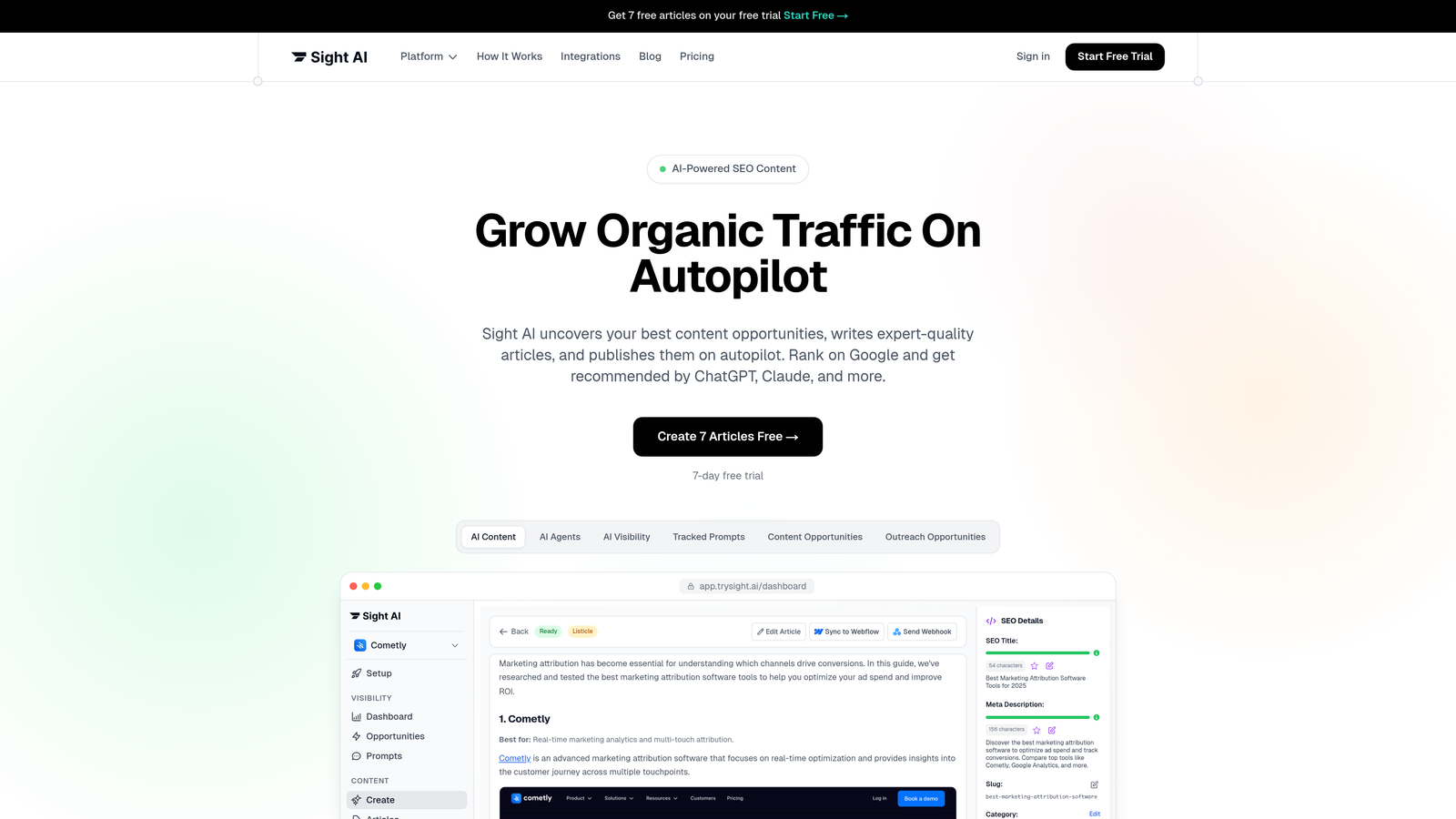
Sight AI covers a gap that traditional SEO platforms don't address. It monitors how AI models mention your brand and automates content that improves those mentions.
Where This Tool Shines
Most enterprise SEO tools focus on Google rankings. Sight AI also tracks your brand's visibility across ChatGPT, Claude, Perplexity, and six additional AI platforms. It produces an AI Visibility Score that measures how often and how positively AI models reference your brand.
The platform pairs monitoring with action. Its 13 specialized AI agents generate SEO- and GEO-optimized content designed to improve your presence in AI responses. Autopilot Mode handles everything from content creation to CMS publishing, and the IndexNow integration speeds up search engine indexing. You can configure these steps as automated SEO workflows instead of manual handoffs.
Key Features
AI Visibility Tracking: Monitors brand mentions across ChatGPT, Claude, Perplexity, and other AI platforms, with sentiment analysis.
13+ AI Content Agents: Specialized agents generate listicles, guides, and explainers optimized for both traditional and AI search.
IndexNow Integration: Notifies search engines automatically when new content publishes, for faster indexing.
Autopilot Mode: Automates the full path from content generation to CMS publishing without manual intervention.
Prompt Tracking: Shows which user queries trigger AI mentions of your brand and where you have content gaps.
Best For
Marketing teams running large content operations who need to track AI visibility alongside traditional SEO metrics. It is especially useful for brands in competitive markets where AI search adoption is growing quickly.
Pricing
Contact Sight AI for enterprise pricing based on content volume and AI monitoring needs.
2. Botify
Best for: Technical SEO at massive scale with billions of pages
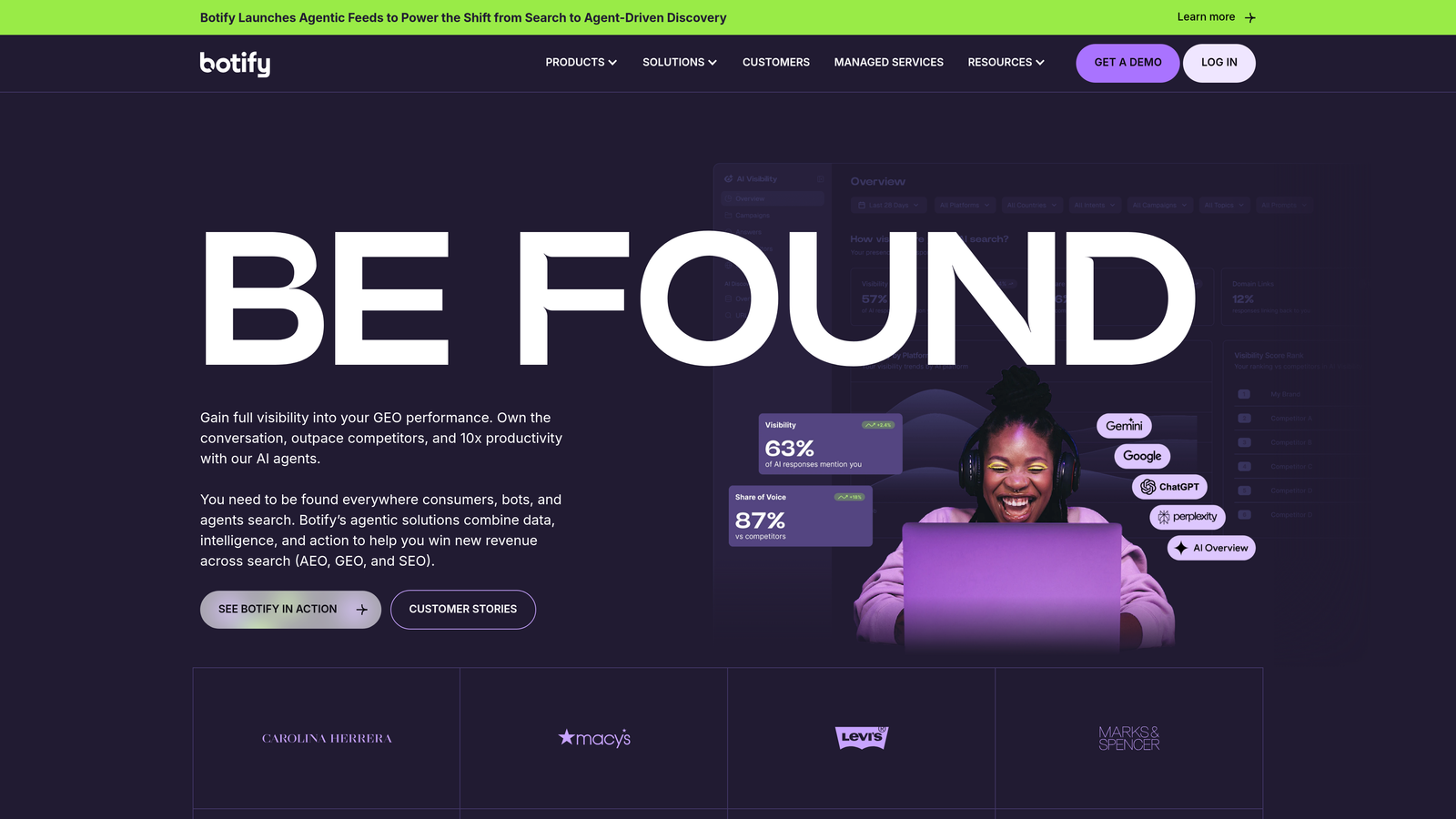
Botify handles technical SEO complexity that breaks other platforms. It can crawl billions of pages on infrastructure built for Fortune 500 operations.
Where This Tool Shines
Botify's architecture supports websites that would overwhelm standard crawlers. The platform analyzes log files to optimize crawl budget, so search engines focus on your most valuable pages instead of wasting resources on low-priority URLs.
Its integration with engineering workflows sets Botify apart. Direct connections to Jira and Slack turn technical issues into developer tickets automatically, and pre-deployment SEO testing catches problems before they reach production.
Key Features
Enterprise Crawling: Crawls and analyzes billions of pages without performance degradation.
Log File Analysis: Finds crawl budget waste and shows how search engines interact with your site.
Automated Issue Prioritization: Uses machine learning to rank technical problems by business impact, not just severity.
Engineering Integrations: Connects natively to Jira, Slack, and development tools to speed up issue resolution.
Pre-Deployment Testing: Runs automated SEO checks before code releases to prevent ranking drops.
Best For
Large e-commerce sites, publishers, and enterprises with complex technical architectures that need advanced crawl management and developer collaboration.
Pricing
Custom enterprise pricing based on site size and crawl volume.
3. Conductor
Best for: Content-heavy enterprises needing workflow automation and optimization
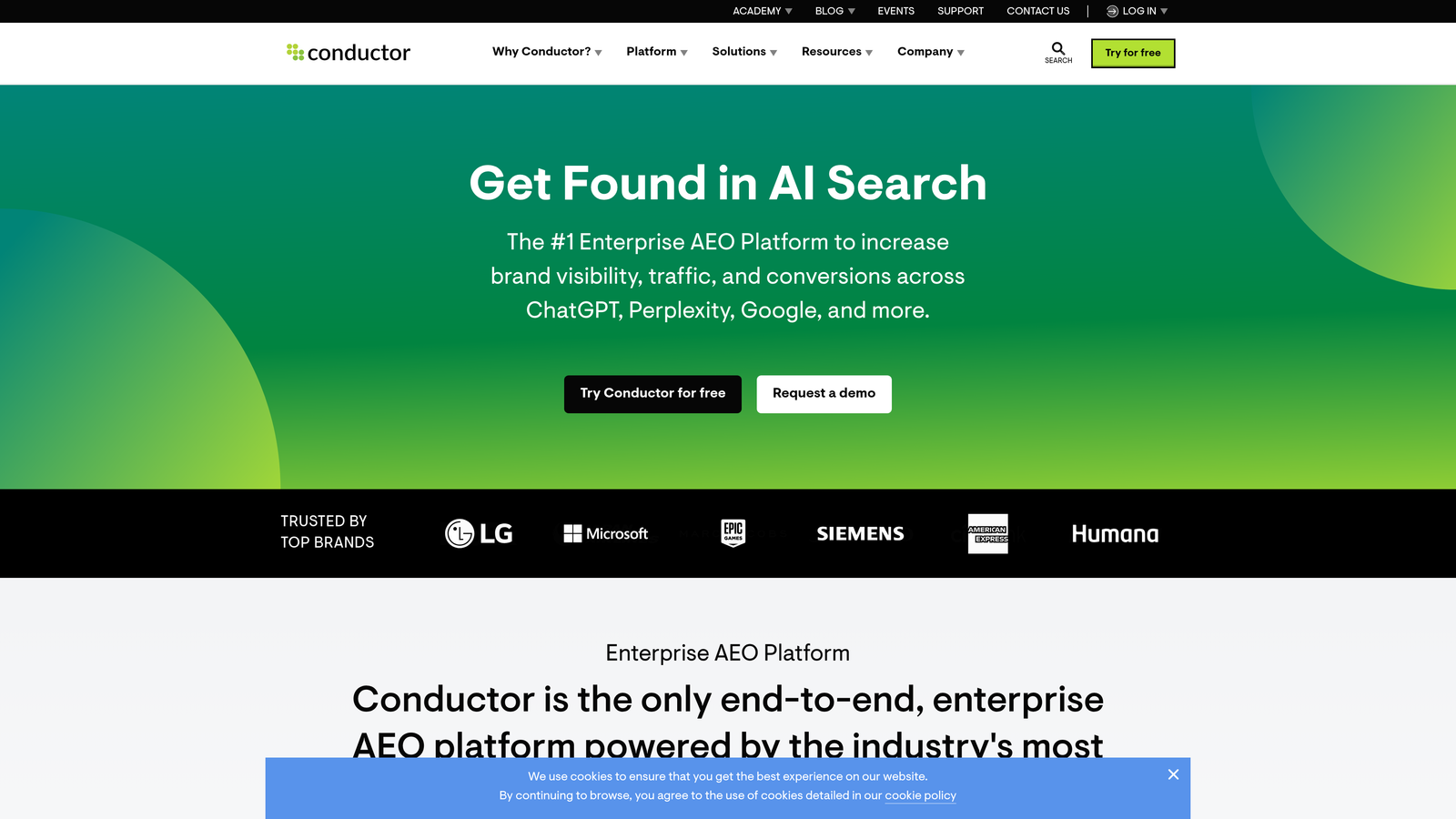
Conductor supports content operations with real-time optimization recommendations and cross-team workflow management for organizations that publish at scale.
Where This Tool Shines
Conductor is strong at coordinating content across multiple teams. Writers get optimization suggestions while they create content, not after publication. The platform also tracks competitor activity and sends automated alerts when competitors make significant content changes in your space.
Its intent-based keyword research automation finds content opportunities based on user search behavior. This goes beyond keyword volumes to show what users actually want to accomplish.
Key Features
Real-Time Optimization: Gives content creators improvement suggestions during writing, not as post-publication audits.
Competitive Monitoring: Tracks competitor content changes automatically and alerts you to strategic shifts.
Workflow Management: Coordinates content creation, approval, and publication across distributed teams.
Intent Research: Analyzes search intent patterns automatically to surface high-value content opportunities.
CMS Integration: Connects directly to major content management platforms to simplify publishing.
Best For
Publishers, media companies, and content-driven enterprises managing large editorial teams across many topics or regions.
Pricing
Custom pricing for enterprise deployments based on content volume and team size.
4. seoClarity
Best for: Large-scale rank tracking and automated reporting across massive keyword sets
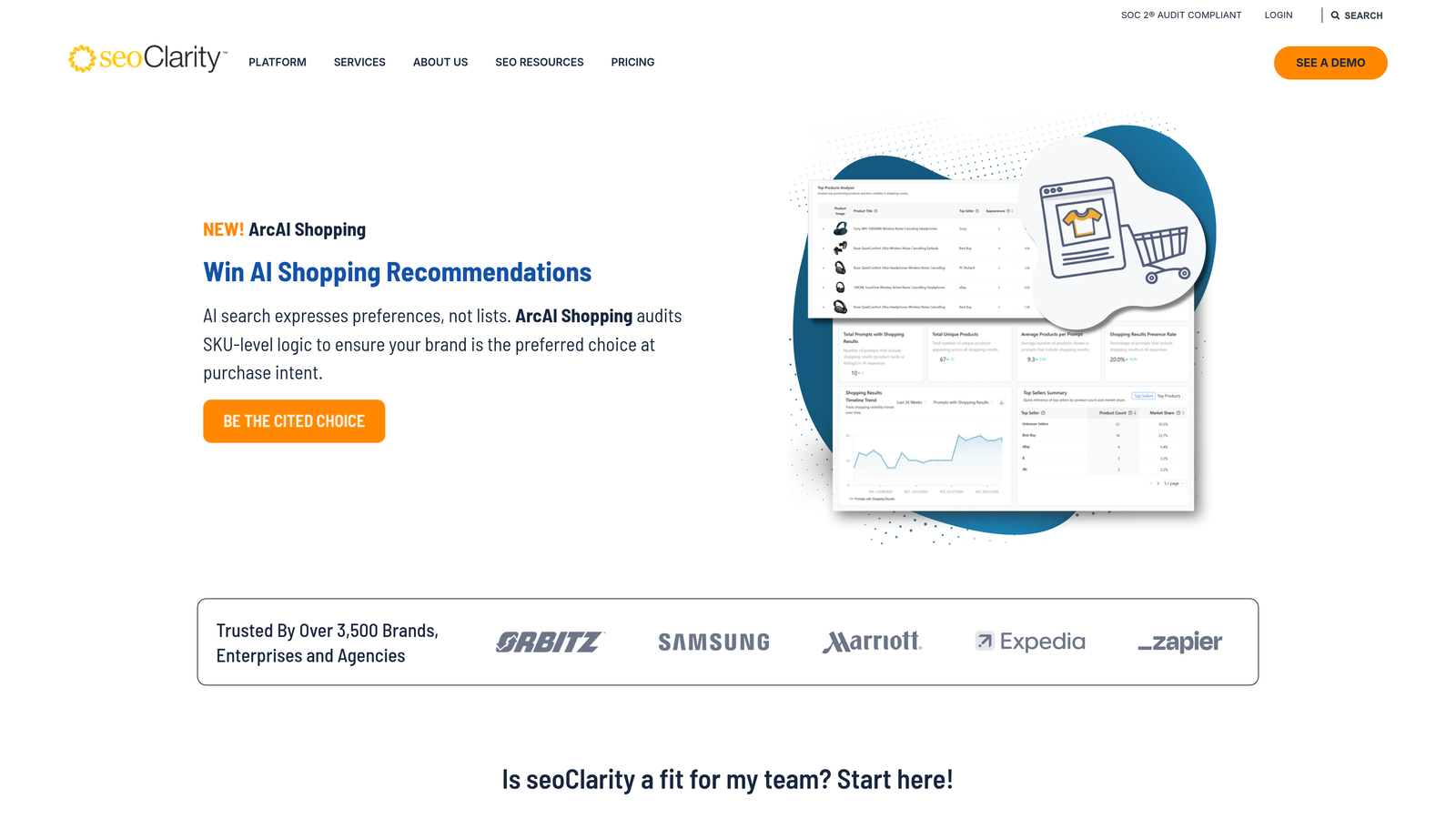
seoClarity specializes in tracking millions of keywords daily. Its reporting automation keeps stakeholders informed without anyone building dashboards by hand.
Where This Tool Shines
The platform's rank tracking handles keyword volumes that would overwhelm consumer-grade tools. Daily updates across millions of terms give enterprises the data granularity they need for accurate performance analysis.
Clarity AI powers content optimization recommendations by analyzing top-ranking content for patterns and gaps. Automated custom reporting gives executives, marketing teams, and analysts dashboards tailored to their needs, with no manual report generation.
Key Features
Million-Keyword Tracking: Monitors rankings daily across massive keyword portfolios.
Automated Reporting: Updates custom dashboards automatically and distributes them to stakeholders by role.
Clarity AI: Uses machine learning to identify the ranking factors that matter in your industry.
Site Audit Automation: Runs scheduled technical audits and prioritizes issues by traffic impact.
API Access: Offers an extensive API for custom integrations with internal analytics and business intelligence systems.
Best For
Enterprises tracking performance across multiple brands, regions, or product lines that need comprehensive rank monitoring and stakeholder reporting.
Pricing
Enterprise plans start at $3,000 per month, depending on keyword volume and features.
5. BrightEdge
Best for: AI-powered insights and enterprise content performance tracking
BrightEdge combines data-driven SEO intelligence with AI recommendations for enterprises managing complex content portfolios across multiple channels.
Where This Tool Shines
DataMind AI analyzes your SEO data and surfaces opportunities and threats automatically. It learns your business context over time, so its recommendations become more relevant to your goals.
ContentIQ automates content audits at scale, evaluating thousands of pages against performance benchmarks. Share of voice tracking runs automatically, showing how your visibility compares to competitors without manual competitive analysis.
Key Features
DataMind AI: Surfaces insights and actionable recommendations from your SEO data automatically.
ContentIQ: Audits content performance automatically and flags underperforming assets and optimization opportunities.
Share of Voice Automation: Tracks competitive visibility continuously across your keyword universe.
Enterprise Security: Provides SOC 2 compliance and enterprise-grade security controls for regulated industries.
Opportunity Detection: Identifies quick wins automatically based on competitive gaps and ranking potential.
Best For
Large brands in competitive markets that want AI-powered insights, and enterprises in regulated industries that require SOC 2 compliance.
Pricing
Custom enterprise pricing based on content volume and features.
6. Lumar
Best for: Continuous technical monitoring and pre-deployment QA automation
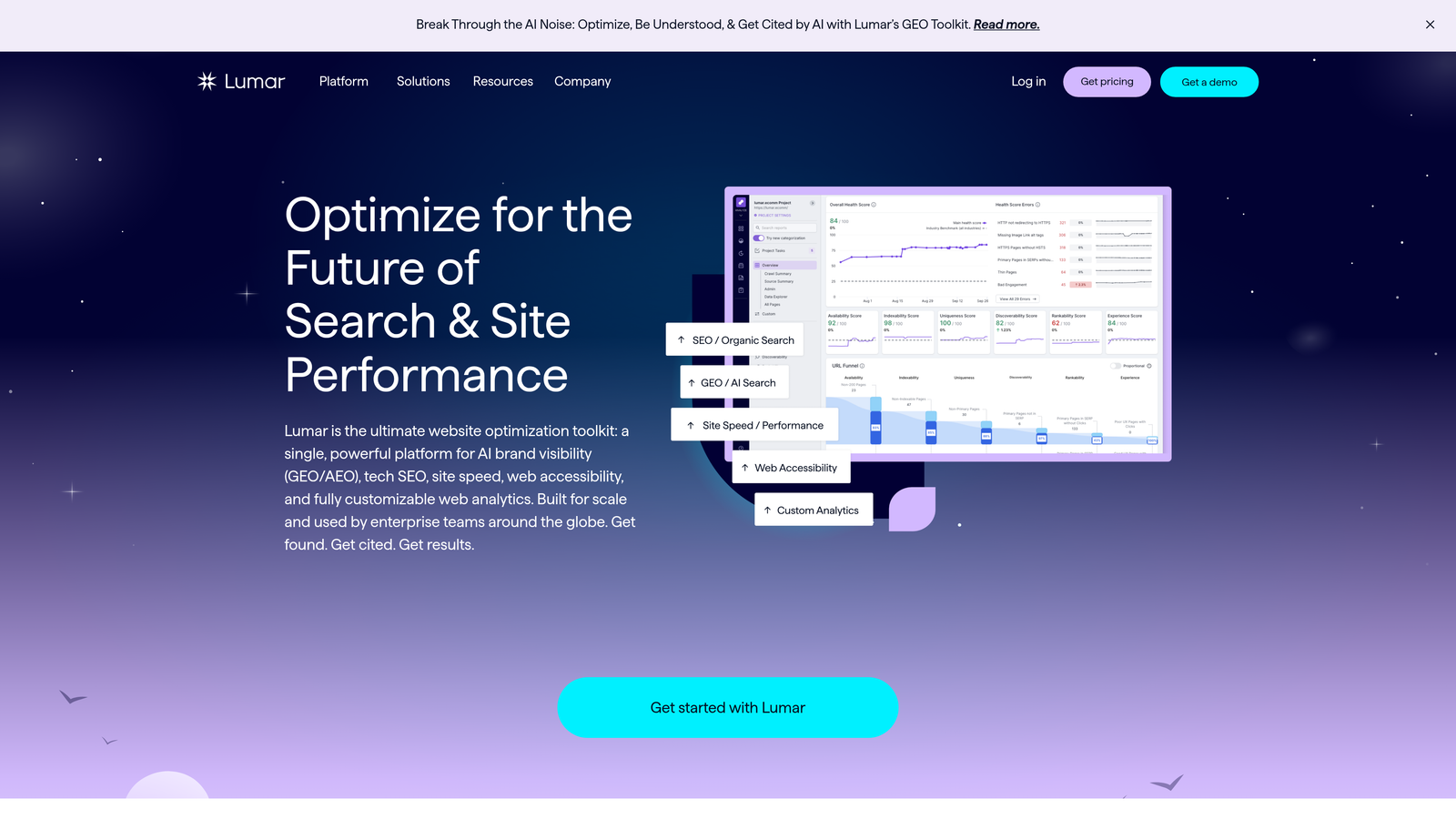
Lumar provides continuous website intelligence, with QA automation that catches technical issues before they affect rankings or user experience.
Where This Tool Shines
Many tools crawl on a schedule. Lumar offers continuous monitoring that detects technical changes as they happen, so you catch problems immediately instead of days later in a scheduled audit.
Its CI/CD pipeline integration runs SEO checks automatically during development. Accessibility automation helps your site meet WCAG standards, which matters more as regulatory requirements expand.
Key Features
Continuous Crawling: Monitors your site in real time and detects technical changes immediately.
Pre-Deployment QA: Runs automated SEO tests in development workflows before code reaches production.
CI/CD Integration: Connects natively to continuous integration and deployment pipelines.
Accessibility Automation: Checks WCAG compliance continuously and prioritizes the issues it finds.
Custom Alerting: Sends configurable alerts for specific technical changes or threshold violations.
Best For
Technology-driven organizations with mature development workflows, and enterprises that need accessibility compliance monitoring.
Pricing
Custom pricing based on crawl volume and monitoring frequency.
7. Semrush Enterprise
Best for: Comprehensive SEO automation across technical, content, and competitive analysis
Semrush Enterprise is an all-in-one SEO suite with enterprise-grade automation across every area of search optimization.
Where This Tool Shines
Semrush covers technical audits, content marketing, competitive analysis, and rank tracking in one platform. Site audits run on a schedule, and alerts fire when critical issues appear.
The extensive API supports custom integrations with internal systems. Automated competitive gap analysis shows where competitors rank for valuable terms you're missing, and content workflow automation coordinates ideation, creation, and distribution across teams.
Key Features
Automated Site Audits: Runs scheduled technical crawls with configurable alerts for critical issues.
Position Tracking Automation: Monitors rankings daily and alerts you to significant movements or competitor changes.
Content Workflow Automation: Manages the content marketing process from research to publication.
Extensive API: Provides comprehensive API access for integrations with business intelligence and analytics platforms.
Competitive Gap Analysis: Finds keywords where competitors rank and you don't.
Best For
Organizations that want one platform for multiple SEO functions instead of separate point solutions.
Pricing
Custom enterprise pricing. Standard plans start at $499 per month for smaller operations.
8. Ahrefs Enterprise
Best for: Backlink intelligence and content research at enterprise scale
Ahrefs Enterprise provides backlink analysis and content research with enterprise-scale monitoring and automation.
Where This Tool Shines
Ahrefs maintains one of the web's largest backlink indexes and updates it continuously. Automated monitoring alerts you when you gain or lose significant links, and competitor backlink tracking reveals their link building strategies.
Automated content gap analysis shows topics where competitors rank and you don't, based on actual search demand. Site audits run on your schedule, and API access supports custom data integrations.
Key Features
Automated Backlink Monitoring: Tracks your backlink profile continuously and alerts you to significant gains or losses.
Content Gap Automation: Identifies keywords and topics where competitors outrank you.
Scheduled Rank Tracking: Monitors positions automatically with configurable reporting frequency.
Site Audit Automation: Runs technical SEO audits on custom schedules and prioritizes issues.
API Access: Lets you pull Ahrefs data into custom dashboards and analytics systems.
Best For
Content-driven enterprises and organizations where backlink intelligence and competitive content analysis drive strategy.
Pricing
Enterprise plans start at $14,990 per year, with custom configurations for larger operations.
9. Screaming Frog SEO Spider (Server License)
Best for: Technical teams wanting customizable crawling with server deployment
Screaming Frog SEO Spider with a server license provides enterprise-scale technical auditing and extensive customization at a fraction of platform costs.
Where This Tool Shines
The server license adds scheduled crawls and automated reporting, turning the desktop tool into an enterprise automation solution. Technical teams value its extensive customization options and command-line automation.
Integrations with PageSpeed Insights, Google Analytics 4, and Search Console add performance and analytics context to crawl data. Custom extraction and data enrichment let you tailor the tool to your technical requirements.
Key Features
Scheduled Crawling: Runs crawls on custom schedules with email reporting and data export.
API Integrations: Connects to PageSpeed, GA4, Search Console, and other services to enrich technical data.
Custom Extraction: Extracts and analyzes custom data points beyond standard SEO elements.
Command-Line Automation: Lets you script complex crawling workflows and connect them to existing automation systems.
Cost Efficiency: Delivers enterprise capabilities at a much lower cost than platform solutions.
Best For
Technical SEO teams with development resources who want maximum control over crawling without platform costs.
Pricing
Server licenses start at £5,000 per year, well below the cost of enterprise platforms.
Making the Right Choice
The right enterprise SEO automation solution depends on your main pain points and how your organization is structured.
| Primary need | Best fit | Trade-off |
|---|---|---|
| AI visibility and content automation | Sight AI | Pair it with a crawler for deep technical audits |
| Technical scale and crawl budget | Botify, Lumar | Weaker on content workflows |
| Content operations at scale | Conductor, BrightEdge | Long contracts and onboarding |
| Rank tracking and reporting | seoClarity | Pricing scales with keyword volume |
| Broad all-in-one coverage | Semrush, Ahrefs | Less depth in specialized areas |
| Low-cost technical automation | Screaming Frog server | Requires in-house scripting |
If AI visibility matters as much as traditional SEO, Sight AI offers capabilities that traditional platforms lack. Monitoring how ChatGPT, Claude, and Perplexity mention your brand reveals opportunities in AI search, and automated content generation helps you act on them. To report that work to leadership, use a structured approach to measuring AI visibility performance alongside rankings and traffic.
Technical-first teams benefit most from Botify or Lumar, with their deep crawl capabilities and engineering integrations. Content-heavy operations do best with the optimization workflows in Conductor or BrightEdge. All-in-one suites like Semrush or Ahrefs reduce tool sprawl but may lack depth in specialized areas.
Start with the platform that closes your most pressing automation gap, then expand as your SEO program matures.
Frequently asked questions
What is the best enterprise SEO automation platform?
No single platform wins on every workflow. Botify leads on technical scale, Conductor and BrightEdge on content operations, seoClarity on rank tracking and reporting, and Sight AI on AI visibility and automated content. Most enterprises combine a crawler with a visibility and content platform. The comparison table above maps each platform to the need it serves best.
Is Profound or Conductor better for enterprise AI search optimization?
They solve different problems. Conductor is a mature content and SEO workflow platform that has added AI search features. Profound focuses specifically on monitoring brand presence in AI answers. Choose Conductor if your bottleneck is coordinating large editorial teams. Choose a dedicated AI visibility tool such as Profound or Sight AI if you need prompt-level tracking across ChatGPT, Perplexity and Claude. Sight AI also generates content to close the gaps it finds.
How do enterprise SEO teams prove ROI as search shifts to AI answers?
Track three layers. The first is classic metrics: rankings, clicks and conversions. The second is AI visibility: mention rate, share of voice and sentiment across answer engines. The third is business outcomes such as pipeline from organic and AI referral traffic. Automated dashboards that report all three by role make the case to leadership far more convincingly than rankings alone.
What are the best AI SEO workflows for a small in-house team?
Small teams should automate the highest-volume tasks first. Those are typically scheduled technical crawls with alerts, daily rank and AI mention tracking, brief generation from keyword research, and automatic indexing notifications after publishing. One platform that covers content and visibility, plus a low-cost crawler like Screaming Frog, usually beats a stack of enterprise suites.
Stop guessing how AI models like ChatGPT and Claude talk about your brand. Get visibility into every mention, track content opportunities, and automate your path to organic traffic growth. Start tracking your AI visibility today and see exactly where your brand appears across top AI platforms.