Classic rank trackers answer one question: where does this URL sit for this keyword, in this place, on this device? That still matters, but it no longer covers how people find brands. This list is for marketers, founders, and agency leads who need to pick tracking software for Google positions, AI search visibility, or both. Tools were chosen on tracking accuracy, SERP feature and local coverage, AI search visibility, reporting, integrations, and pricing transparency.
Quick Comparison of the Search Rank Tracking Tools
- Sight AI: teams measuring brand visibility in AI answers; pricing on the website; turns AI visibility gaps into published, indexed content in the same platform.
- Semrush Position Tracking: marketing teams wanting one suite; subscription pricing on the website; rank tracking bundled with the broadest all-in-one SEO toolkit.
- Ahrefs Rank Tracker: SEO specialists who diagnose ranking changes; subscription pricing on the website; ties ranking movement to best-in-class backlink data.
- AccuRanker: agencies and enterprises with large keyword sets; keyword-volume pricing on the website; fast on-demand refresh at scale.
- SE Ranking: small agencies and SMBs on a budget; subscription pricing on the website; tracking, audits, and client reporting at a lower price tier.
- Advanced Web Ranking: agencies needing custom client reports; pricing on the website; the most customizable reporting and exports.
- Nightwatch: freelancers and small agencies wanting simple tracking; pricing on the website; streamlined interface focused on local tracking and Looker Studio reporting.
- BrightLocal: local businesses and local SEO agencies; subscription pricing on the website; geo-grid local pack ranking views.
- Google Search Console: everyone, as a baseline; free; first-party data on real impressions and clicks.
1. Sight AI
Sight AI is our own product, so weigh this section accordingly. It is an AI visibility platform: it tracks how models such as ChatGPT, Claude, and Perplexity talk about your brand, then connects those findings to content creation, publishing, and indexing. It is built for marketers, founders, and agencies who want to know whether AI answers mention them at all.
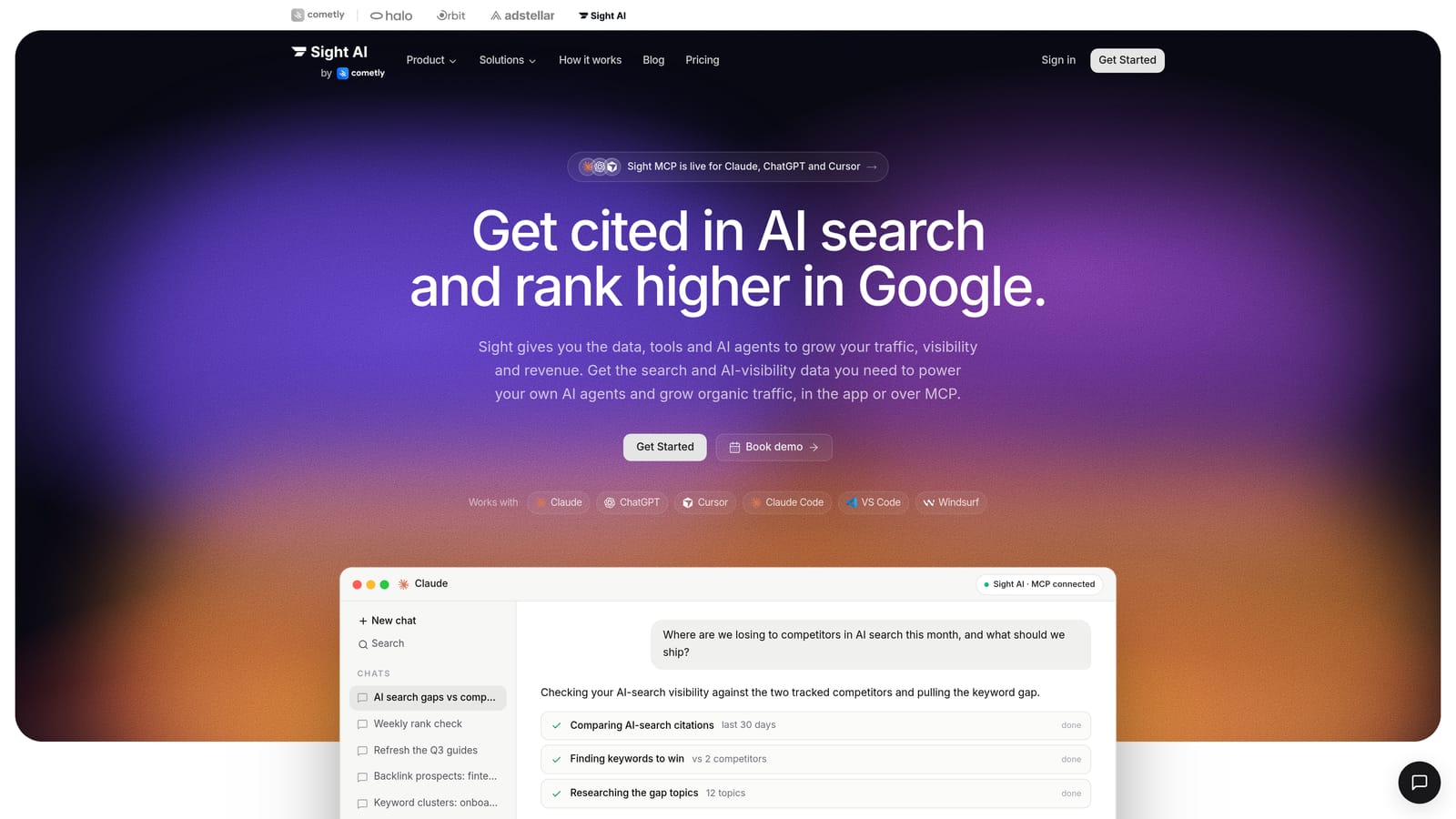
What sets it apart on this list is the loop. Most trackers stop at reporting. Sight AI reports a visibility gap, helps you write content aimed at closing it, publishes that content to your CMS, and pushes it for indexing. AI answers also vary by prompt and by run, so a fixed "position" is the wrong mental model. A visibility score built from many tracked prompts is a more honest measure than a single rank.
- AI Visibility Score with sentiment analysis shows how often your brand appears and whether the framing is positive, neutral, or negative.
- Prompt tracking across 6+ AI platforms lets you monitor the questions your buyers actually ask rather than guessing at them.
- AI Content Writer with 13+ agents and Autopilot Mode drafts SEO and GEO-optimized articles such as listicles, guides, and explainers with less manual effort.
- IndexNow indexing and automated sitemaps notify participating search engines of new pages so content is discovered faster.
- CMS auto-publishing moves approved articles to your site without copy-and-paste.
Setup is light: connect your site and CMS, define the brand and prompts to track, and a marketer can run it day to day without developer help. Integrations center on IndexNow and CMS publishing.
The limitation is plain: Sight AI is not a traditional daily Google keyword-position tracker. If you need exact positions by city and device, pair it with one of the classic tools below. Pricing is listed on the Sight AI website.
Best for: Teams that need to measure and improve brand visibility in AI search.
2. Semrush Position Tracking
Semrush offers Position Tracking as a module inside its SEO suite, aimed at marketing teams that would rather run research, audits, and tracking in one login than stitch together separate tools.
Its edge is breadth. Tracking sits next to keyword research, site audits, and competitive analysis, so you can spot a ranking drop and move straight into diagnosing it without exporting data.
- Daily tracking by device and location keeps mobile and desktop results, and different markets, separate rather than blended.
- SERP feature tracking shows whether you hold featured snippets, local packs, and similar placements, not only blue-link positions.
- Competitor visibility share gives a share-of-voice style view of how much of the tracked keyword set each rival captures.
- Tags and reporting let you segment keywords by page type or campaign and share reports with stakeholders.
- Integrated keyword research and audits connect tracked terms to the work that moves them.
It connects with Google Search Console, Google Analytics, and Looker Studio. Setup is quick for the tracking itself, though getting value from the wider suite takes some learning, and it suits an SEO or content lead who will use more than one module.
The trade-off is cost and limits. Suite pricing and keyword caps are heavy if all you need is rank tracking, and you pay for tools you may never open. Pricing is subscription-based and tiered, with plan limits shaping the cost; check the website for current plans, as these change. AI search features have been expanding across Semrush's products, so confirm what is included in your plan.
Best for: Marketing teams wanting one suite for research, audits, and tracking.
3. Ahrefs Rank Tracker
Ahrefs' Rank Tracker is the tracking layer of a platform best known for its backlink index. It is built for SEO specialists who want to understand why rankings moved, not only that they did.
That is the distinguishing point. When a position changes, you can jump into Site Explorer data and check whether a competitor gained links, whether you lost some, or whether a content update coincided with the shift.
- Location and device tracking lets you measure results the way your audience actually sees them.
- SERP feature tracking flags the features present for each keyword and whether you own them.
- Competitor comparison puts your positions beside rivals for the same keyword set.
- Share of voice condenses visibility across a keyword group into one trendable figure, useful for reporting upward.
- Link to Site Explorer data connects ranking movement to backlink and traffic context.
It integrates with Google Search Console, Google Analytics, and Looker Studio. Setup is straightforward, and the tool rewards someone comfortable reading link profiles and content analyses.
Limitations: keyword caps and update frequency vary by plan, so a team tracking many terms may hit ceilings or find lower tiers refresh less often than they want. It is also less of a client-reporting machine than the agency-focused trackers. Pricing is subscription-based and depends on plan tier and tracking limits; see the website for current details.
Best for: SEO specialists who diagnose ranking changes through links and content.
4. AccuRanker
AccuRanker is a dedicated rank tracker, not a suite. It is known for speed and for handling very large keyword sets, which is why agencies and enterprise SEO teams gravitate to it.
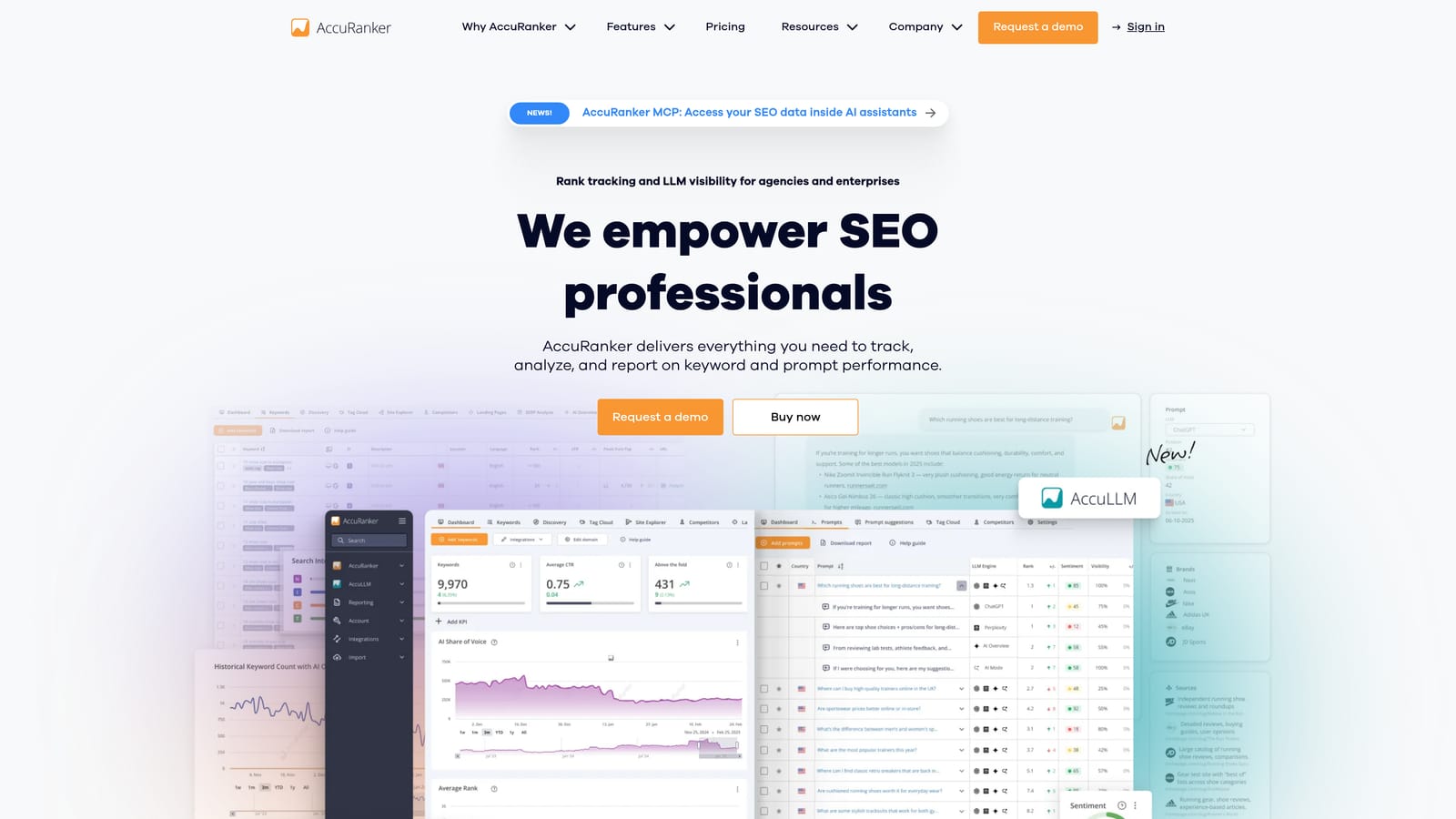
The standout is on-demand refresh. When you ship a change and want to see whether it moved anything, you do not have to wait for the next scheduled update. That matters during migrations, launches, and incident response.
- On-demand refreshes let you check results right after a release instead of waiting a day.
- Large keyword volumes support portfolios in the tens or hundreds of thousands without the tool slowing down.
- Tagging and segmentation help you slice rankings by brand, product line, market, or client.
- White-label reports let agencies deliver branded reporting to clients.
- API access feeds ranking data into your own dashboards and warehouses.
It works with Looker Studio, Google Search Console, and its API. Setup is quick, and day-to-day use usually falls to an SEO analyst or agency account team.
The limitation is scope: there is little SEO research functionality beyond tracking, so you will need a separate tool for keyword discovery, audits, and backlinks. Pricing is based on keyword volume, so cost rises as your tracked set grows; check the website for current tiers.
Best for: Agencies and enterprises tracking large keyword portfolios.
5. SE Ranking
SE Ranking is an all-in-one SEO platform positioned as the affordable option, combining rank tracking with site audits, competitor research, and reporting. It fits small agencies and SMBs that need several jobs covered without enterprise budgets.
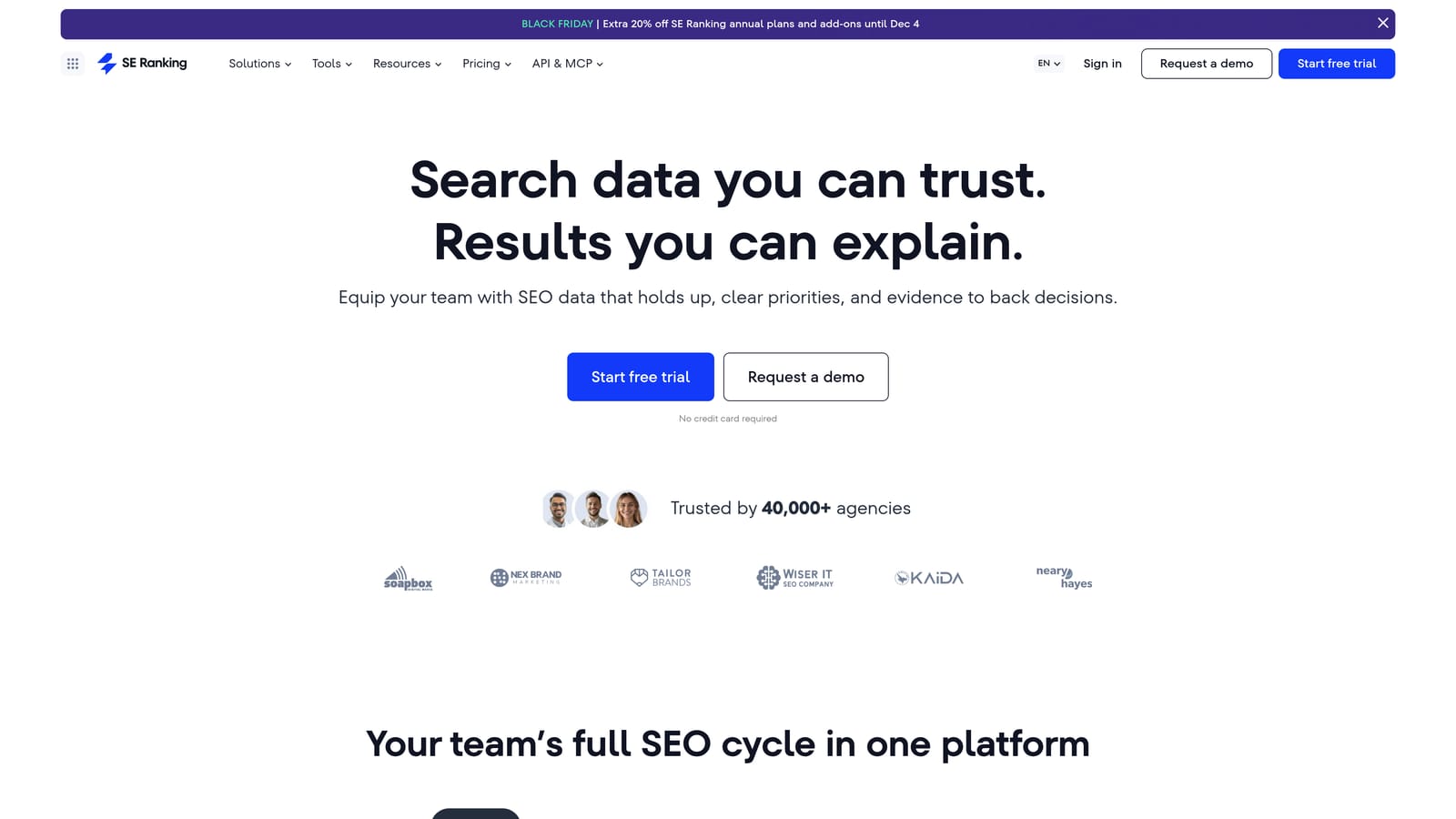
Its distinguishing strength is value. Tracking, audits, and client-ready reporting come at a lower price tier than the larger suites, and as of 2026 it also includes AI search tracking, which most budget tools lack.
- Rank tracking by location and device covers the core local and mobile needs of most small clients.
- Site audit surfaces technical issues so you can fix problems that hold rankings back.
- Competitor research shows what rivals rank for and where gaps exist.
- White-label reports let agencies send branded reports without a separate reporting tool.
- AI search tracking gives an early view of visibility in AI-generated answers. Confirm which platforms and plan levels it covers.
It integrates with Google Search Console, Google Analytics, and Looker Studio. Setup is easy and a generalist marketer can run it alone.
The limits show at scale: data depth and enterprise controls such as granular permissions trail the top suites. Pricing is subscription-based and moves with plan tier and tracked keyword volume; see the website for current rates.
Best for: Small agencies and SMBs on a budget.
6. Advanced Web Ranking
Advanced Web Ranking (AWR) is a rank tracking and reporting platform built around agency workflows, where the deliverable is often a tailored client report rather than a raw rank table.
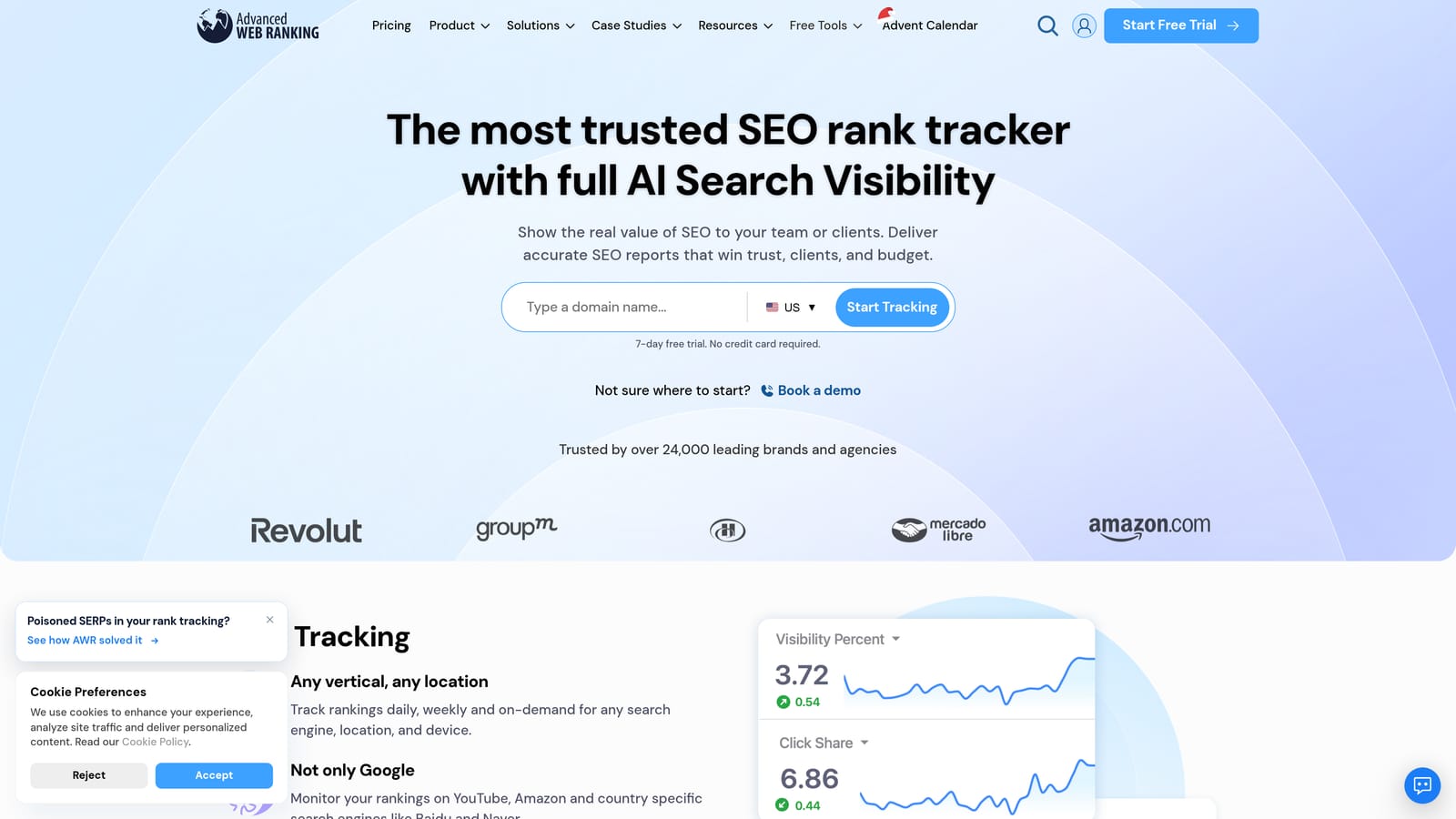
Its differentiator is control over output. You can shape dashboards, build client-facing reports, and export data in ways many competitors do not allow, which helps when each client wants different metrics.
- Granular location tracking lets you target results at a fine geographic level for clients with specific markets.
- Custom dashboards let you arrange the metrics each client cares about.
- Client reporting produces polished deliverables you can schedule and share.
- API and exports move data into your own systems and BI tools.
- Competitor tracking benchmarks your clients against named rivals.
It integrates with Google Analytics, Google Search Console, and an API. Setup takes more effort than simpler tools because of the configuration options, and it is best run by someone who owns reporting for the agency.
The limitation is the interface: it is dense, and new users face a steeper learning curve. A solo marketer who wants a quick glance at positions may find it more than they need. Pricing details are on the website; check for current plans and what drives them.
Best for: Agencies needing custom client reports.
7. Nightwatch
Nightwatch is a rank tracker with local tracking and clean reporting. It suits freelancers and small agencies who want to see positions and share results without wading through an enterprise interface.
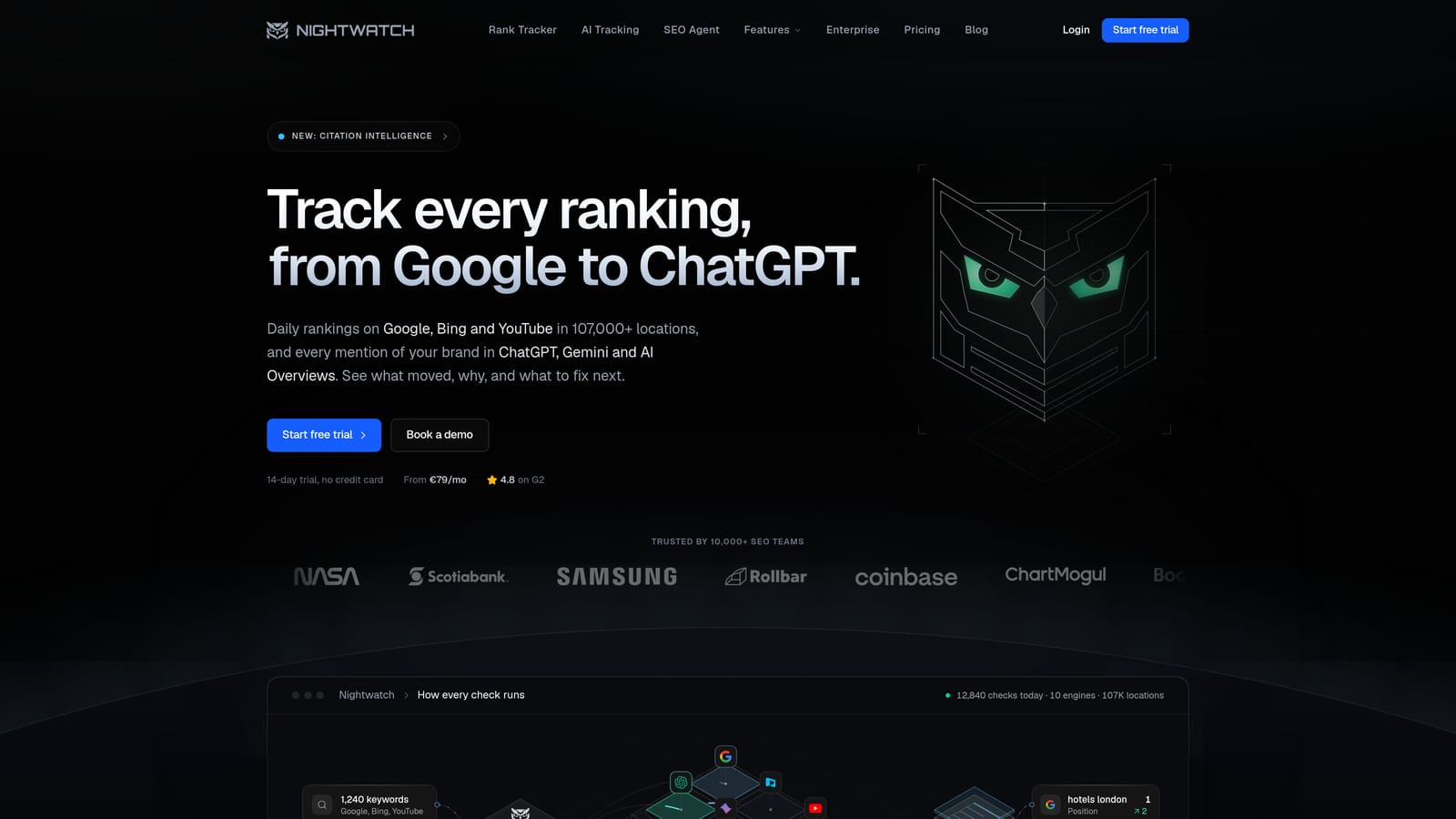
What it does differently is keep things streamlined. The interface centers on local tracking and a Looker Studio connector, so building a client dashboard in a tool they already use takes little setup.
- Local rank tracking shows how keywords perform in specific cities or regions, important for service businesses.
- Looker Studio connector pipes ranking data into dashboards you already maintain.
- Reports and dashboards give clients a readable view without extra formatting work.
- Competitor tracking lets you compare against the rivals that matter in each market.
- AI visibility monitoring adds a view of AI search presence; check the current scope before relying on it.
It integrates with Looker Studio and Google Search Console. Setup is quick, and one person can manage it.
The ecosystem is smaller, with fewer research tools than the suites, so keyword discovery and backlink analysis need to come from elsewhere. Teams with very large keyword sets or complex permissions may outgrow it. Pricing is on the website; confirm current plans and limits.
Best for: Freelancers and small agencies wanting simple tracking.
8. BrightLocal
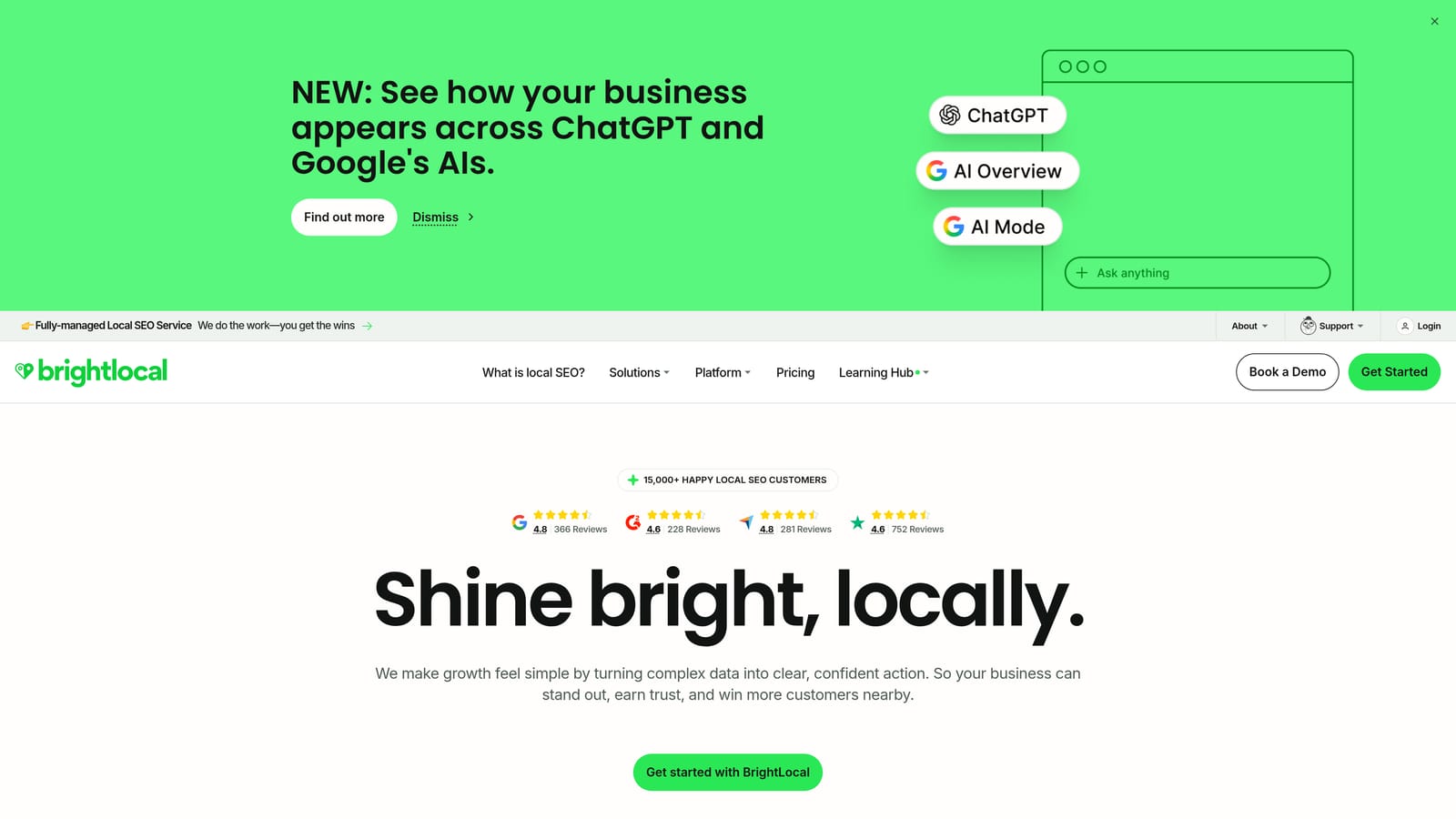
BrightLocal is a local SEO platform that tracks local pack and Google Business Profile rankings. It answers a question general trackers handle poorly: where does a business appear, block by block, around its physical locations?
What geo-grid tracking adds
A geo-grid places a grid of points over a map and records your local pack position at each one. A single "rank in Chicago" hides the fact that you may appear first near your shop and vanish two miles away. For multi-location businesses, that map view is the main reason to choose BrightLocal.
Features and fit
- Local rank tracking monitors organic and local results for each location.
- Google Business Profile tracking shows how listings perform in search and maps.
- Local pack grid views reveal geographic gaps in visibility.
- Citation monitoring checks directory listings for consistency in name, address, and phone details.
- Review tracking keeps ratings and new reviews in view across locations.
It integrates with Google Business Profile and Looker Studio. Setup involves adding each location and its listings, so effort scales with location count; it is usually run by a local SEO specialist or agency.
It is not designed for national or ecommerce keyword tracking, so do not buy it to monitor product category terms. Pricing is subscription-based and varies with the number of locations and features; see the website for current plans.
Best for: Local businesses and local SEO agencies.
9. Google Search Console
Google Search Console is Google's free tool for reporting real search performance. It is not a rank tracker in the usual sense, but it belongs on every list because it is first-party data about actual impressions and clicks.
That is its distinguishing strength: every third-party tracker estimates by sampling results, while Search Console reports what Google recorded for your site. It is the reference point for checking whether another tool's numbers line up with reality.
- Impressions, clicks, and CTR show how often you appeared and how often people chose you.
- Average position by query and page gives a directional view of where you show up.
- Index coverage reports flag pages Google has not indexed and explain why.
- Search Console API exports data into warehouses and dashboards.
- Performance filters slice by country, device, search appearance, and date range.
It connects to Google Analytics, Looker Studio, and the API. Setup means verifying site ownership, usually a short task for whoever manages the site.
A common misconception is that average position equals rank. It is an average across every impression, including different locations, devices, and personalized results, so a page can show position 6 while never sitting at 6 for any single searcher. It also offers no competitor tracking and no exact daily ranks. It is free.
Best for: Everyone, as a free baseline to validate other trackers.
Matching a Tracker to the Job You Need Done
Classic position tracking and AI visibility measurement are now separate jobs, and most teams need one tool for each. For AI visibility, Sight AI is the pick: it measures how AI models discuss your brand and helps you act on the gaps with content and indexing. It does not replace a daily Google position tracker, so pair it with one.
For agencies, AccuRanker suits large keyword portfolios and fast refreshes, SE Ranking suits budget-conscious teams that want audits and reporting in one place, and Advanced Web Ranking suits those who need tailored client reports. If you want a single suite, Semrush and Ahrefs are the choices: Semrush for breadth, Ahrefs when backlink diagnosis drives your work. BrightLocal is the answer for multi-location businesses that care about local pack visibility, and Search Console should be running regardless as your free baseline.
Stop guessing how AI models like ChatGPT and Claude talk about your brand. Get visibility into every mention, track content opportunities, and automate your path to organic traffic growth. Start tracking your AI visibility today and see exactly where your brand appears across top AI platforms.