"SEO tracking" used to mean a spreadsheet of keyword positions. Now it also means knowing whether ChatGPT, Claude, or Perplexity mention your brand when a buyer asks a relevant question. This list is for marketers, founders, and agencies who need to cover both. The tools were chosen by what they track (rankings, site health, backlinks, AI visibility), data quality, reporting, team fit, and starting price.
Quick Comparison of the SEO Tracking Tools
- Sight AI: best for teams focused on AI search visibility; pricing on the vendor's website; tracks how AI models describe your brand, then turns gaps into published content.
- Semrush: best for marketing teams wanting one broad suite; paid plans, see the vendor's website; the widest toolset, with competitor visibility share.
- Ahrefs: best for link-focused SEOs and content teams; paid plans, see the vendor's website; one of the largest backlink indexes for tying rankings to link changes.
- AccuRanker: best for agencies tracking large keyword sets; priced by keyword volume; fast on-demand refreshes at high volumes.
- SE Ranking: best for small agencies and freelancers on a budget; tiered plans, see the vendor's website; a low-cost bundle with white-label client reports.
- Google Search Console: best for every site owner needing a baseline; free; first-party data straight from Google.
- Moz Pro: best for beginners and in-house marketers; paid plans, see the vendor's website; Domain Authority plus beginner-friendly guidance.
- Advanced Web Ranking: best for agencies needing detailed custom reporting; priced by keyword volume; granular, highly customizable SERP and location tracking.
- Screaming Frog SEO Spider: best for technical SEOs; free version with limits, annual paid license; deep on-demand desktop crawling.
1. Sight AI
Sight AI is our own product, so weigh this entry accordingly. It is an AI visibility platform: it monitors how models such as ChatGPT, Claude, and Perplexity talk about your brand, then connects what it finds to content creation and indexing. It is built for marketers, founders, and agencies who care about being named in AI answers, not only about ranking in a results page.
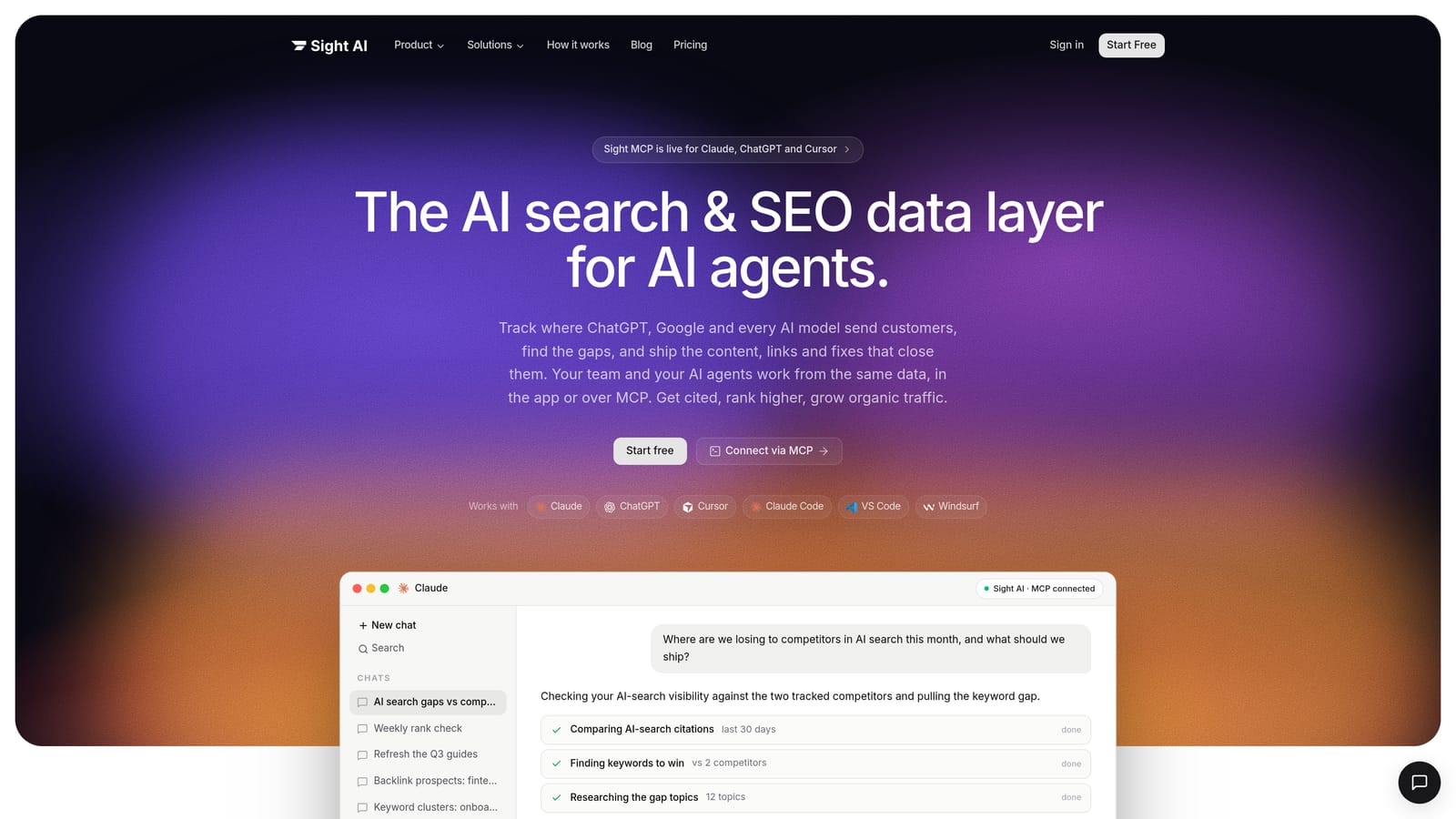
Its distinguishing move is closing the loop. Most tools on this list report a position and stop. Sight AI shows where a model omits or misdescribes your brand, then lets you produce and publish content aimed at that gap. Because AI answers vary from run to run, a single check tells you little, and tracking prompts repeatedly across platforms is the point of the tool.
- AI Visibility Score with sentiment analysis summarizes how often and how favorably models mention you, so you can see trend direction rather than isolated answers.
- Prompt tracking across 6+ AI platforms lets you monitor the questions your buyers actually ask and compare how each model responds.
- AI Content Writer with 13+ agents and Autopilot Mode drafts SEO and GEO-optimized articles such as listicles, guides, and explainers without a manual brief for each one.
- IndexNow indexing and automated sitemap updates notify participating search engines when pages are published or changed, shortening discovery time.
- CMS auto-publishing pushes finished articles to your site so content does not sit in a draft queue.
Setup is light: connect your site and CMS, define the prompts and brand terms to track, and a content or SEO lead can run it day to day. Integrations center on IndexNow and CMS publishing.
The limits are clear. Sight AI is not a backlink index or a technical crawler, and it does not replace a classic SERP rank tracker. If you need position history for thousands of keywords by city and device, pair it with one of the dedicated tools below. Pricing: see the Sight AI website for current plans.
Best for: Teams focused on AI search visibility who want tracking and content execution in one place.
2. Semrush
Semrush is a broad SEO platform that bundles position tracking, site audits, backlink and competitor analysis, and keyword research. It suits marketing teams that want one login covering most of the SEO workflow.
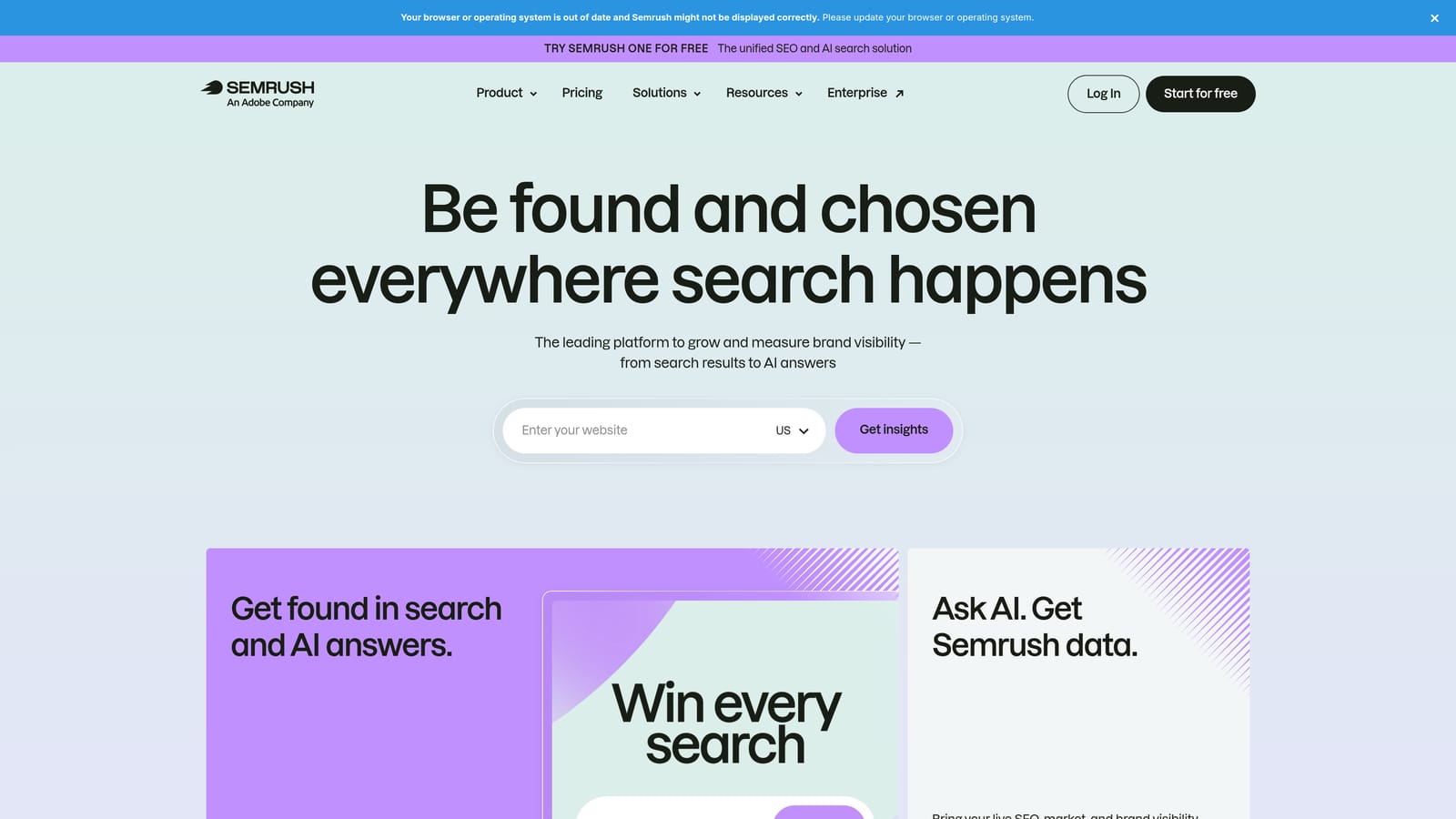
Its edge over the rest of this list is breadth. Few competitors match the number of modules, and the competitor visibility share view lets you see how your tracked keywords stack up against named rivals rather than in isolation.
- Position Tracking by location and device shows how rankings differ for mobile versus desktop and across markets.
- Site Audit flags crawl and on-page issues so technical fixes sit next to ranking data.
- Backlink Analytics lets you inspect your link profile and competitors' without a second subscription.
- Keyword research feeds new terms straight into tracking projects.
- AI visibility tools extend monitoring toward AI search; check current packaging, since how these are bundled or sold as add-ons has changed over time.
It connects to Google Search Console, Google Analytics, and Looker Studio, so reporting can flow into existing dashboards. Setup takes some time because there are many modules, and larger teams usually need someone who owns configuration.
The main drawback is cost. Plans are paid, limits on projects and tracked keywords apply, and add-ons and extra seats can push spend up quickly as a team grows. Small teams that only need rank tracking may be paying for a lot they never open. Check the Semrush website for current pricing as of 2026.
Best for: Marketing teams wanting a single broad SEO suite.
3. Ahrefs
Ahrefs is best known for backlink data, but it also offers rank tracking, site audits, and keyword research. It is a natural fit for SEOs and content teams who want to understand why rankings moved.
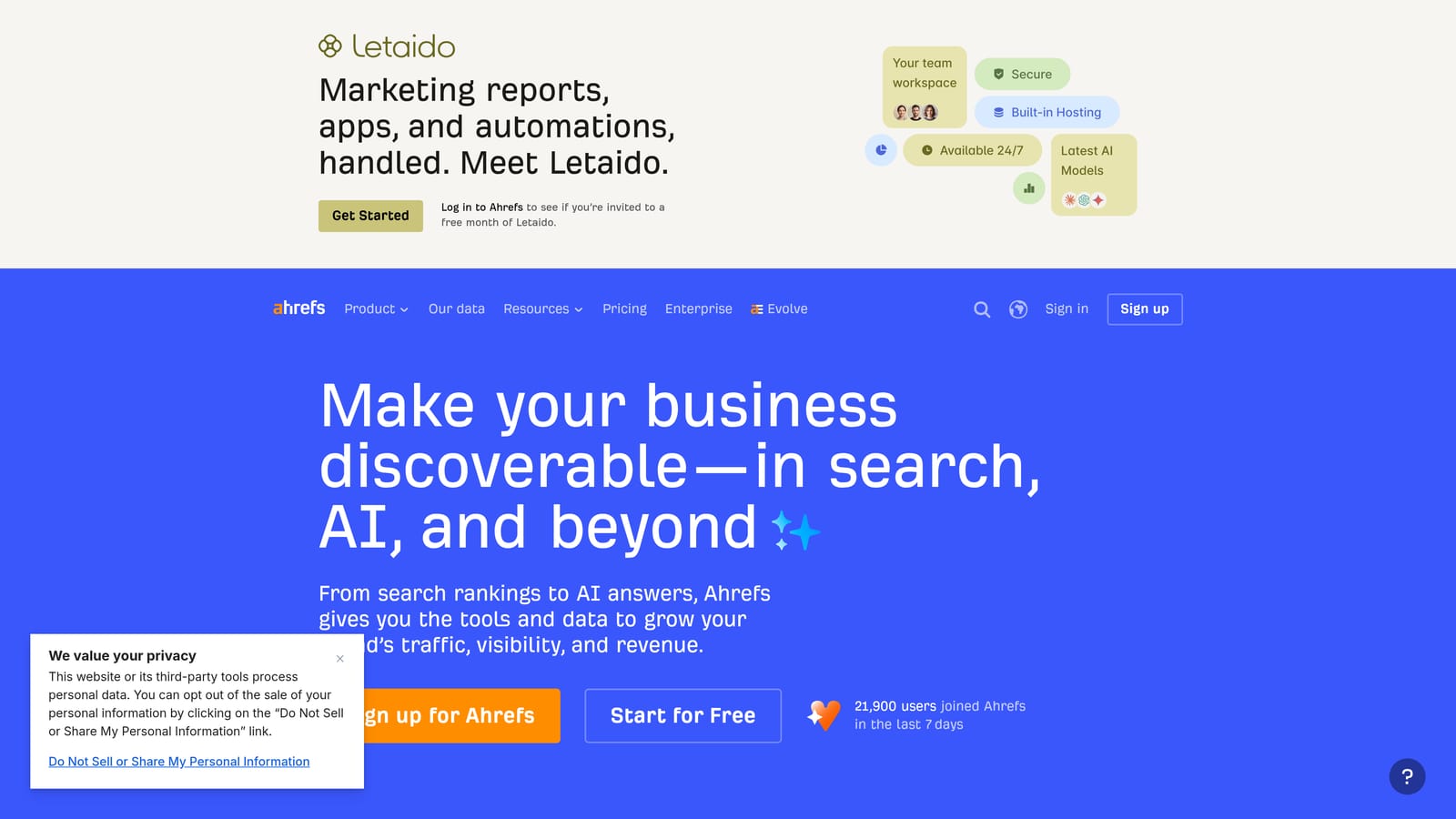
The standout is the backlink index, among the largest in the industry. Overlaying rank changes with newly gained or lost links makes it easier to test whether a drop followed a link loss or a content change.
What you get
- Rank Tracker monitors keyword positions over time, with competitor comparison.
- Site Explorer breaks down any domain's backlinks, organic keywords, and top pages.
- Site Audit crawls your site for technical problems and tracks fixes between runs.
- Keywords Explorer supports research and topic planning inside the same workspace.
- Brand Radar is Ahrefs' move into AI-search brand monitoring; confirm its current scope and whether it costs extra before you buy.
Setup, limits, and cost
Connecting Google Search Console and Google Analytics is straightforward, and an API is available for custom reporting. Day-to-day use suits an SEO or content lead comfortable reading link data.
Expect usage limits on reports, projects, and tracked keywords, and there is no free full-featured tier. Teams that only want rank tracking will find dedicated tools cheaper. Pricing is paid and tiered, and credits or add-ons can raise the total; see the Ahrefs website for current figures as of 2026.
Best for: Link-focused SEOs and content teams.
4. AccuRanker
AccuRanker does one thing: rank tracking, built for speed and scale. It is designed for agencies and in-house teams that watch large keyword sets and need fresh numbers when something changes.
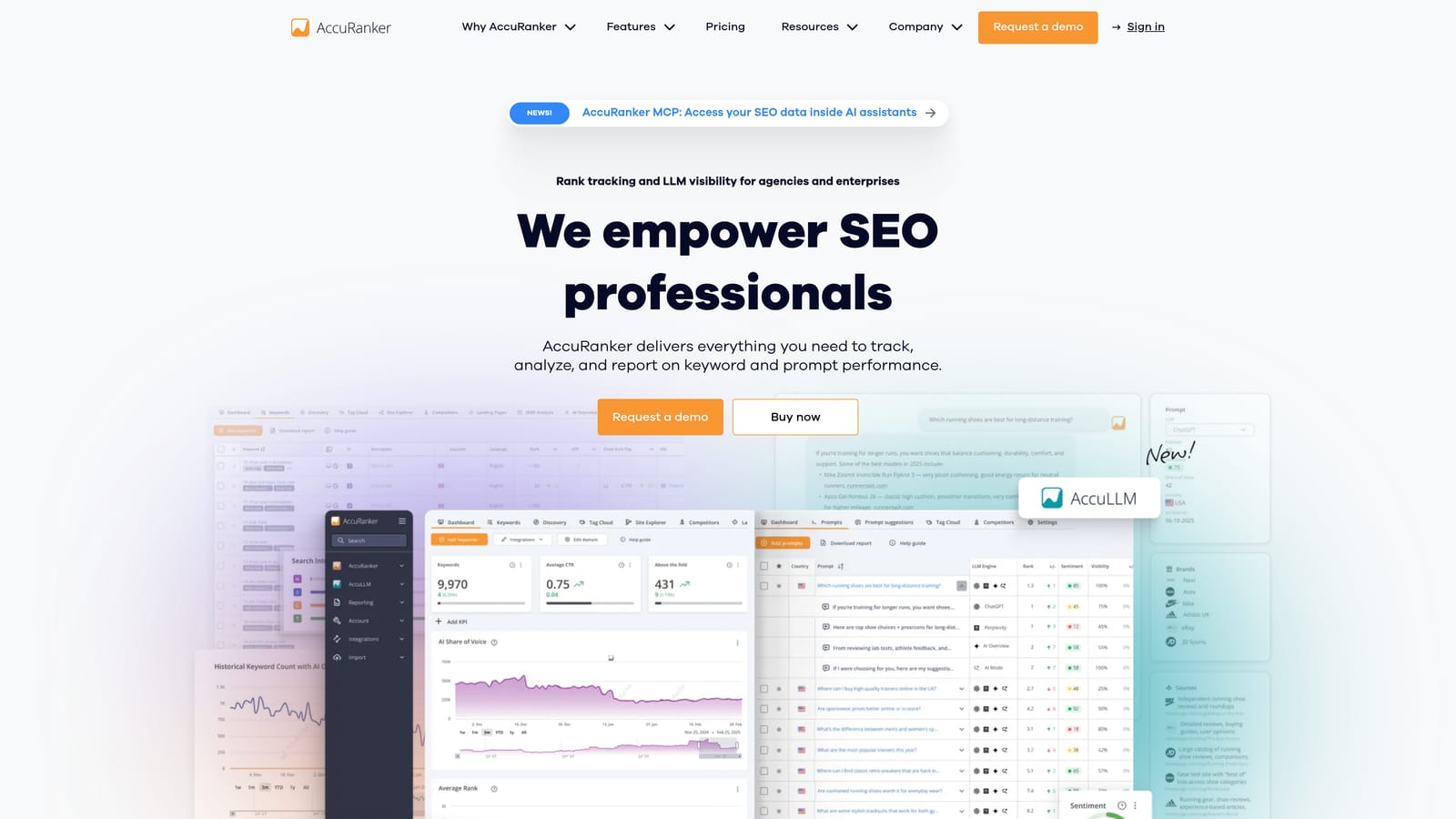
What separates it is on-demand refreshes at high volumes. When a core update lands or a client asks what happened this morning, you can refresh positions rather than wait for a scheduled update. Most all-in-one suites are slower to update and less comfortable at that scale.
- On-demand rank refreshes let you check positions right after a change instead of waiting for the next cycle.
- Large keyword volume support keeps tracking practical for enterprise sites and big client portfolios.
- Tagging and segmentation group keywords by page type, product line, or client so you can spot patterns.
- Custom reporting produces client-ready views without manual exports.
- API access pipes ranking data into your own warehouse or dashboards.
It integrates with Google Search Console and Google Analytics, plus the API. Setup is quick because the scope is narrow: import keywords, set locations and devices, and organize with tags. An SEO analyst or account manager typically owns it.
The trade-off is the narrow scope. There is no keyword research, site audit, or backlink analysis, so you will need other tools for those jobs. It also does not track AI answers. Pricing is keyword-volume based, meaning cost rises as you track more terms; see the AccuRanker website for current rates as of 2026.
Best for: Agencies tracking large keyword sets across many clients.
5. SE Ranking
SE Ranking is an affordable all-in-one platform that combines rank tracking, website audits, backlink monitoring, and competitor research. It is aimed at small agencies, freelancers, and lean in-house teams.
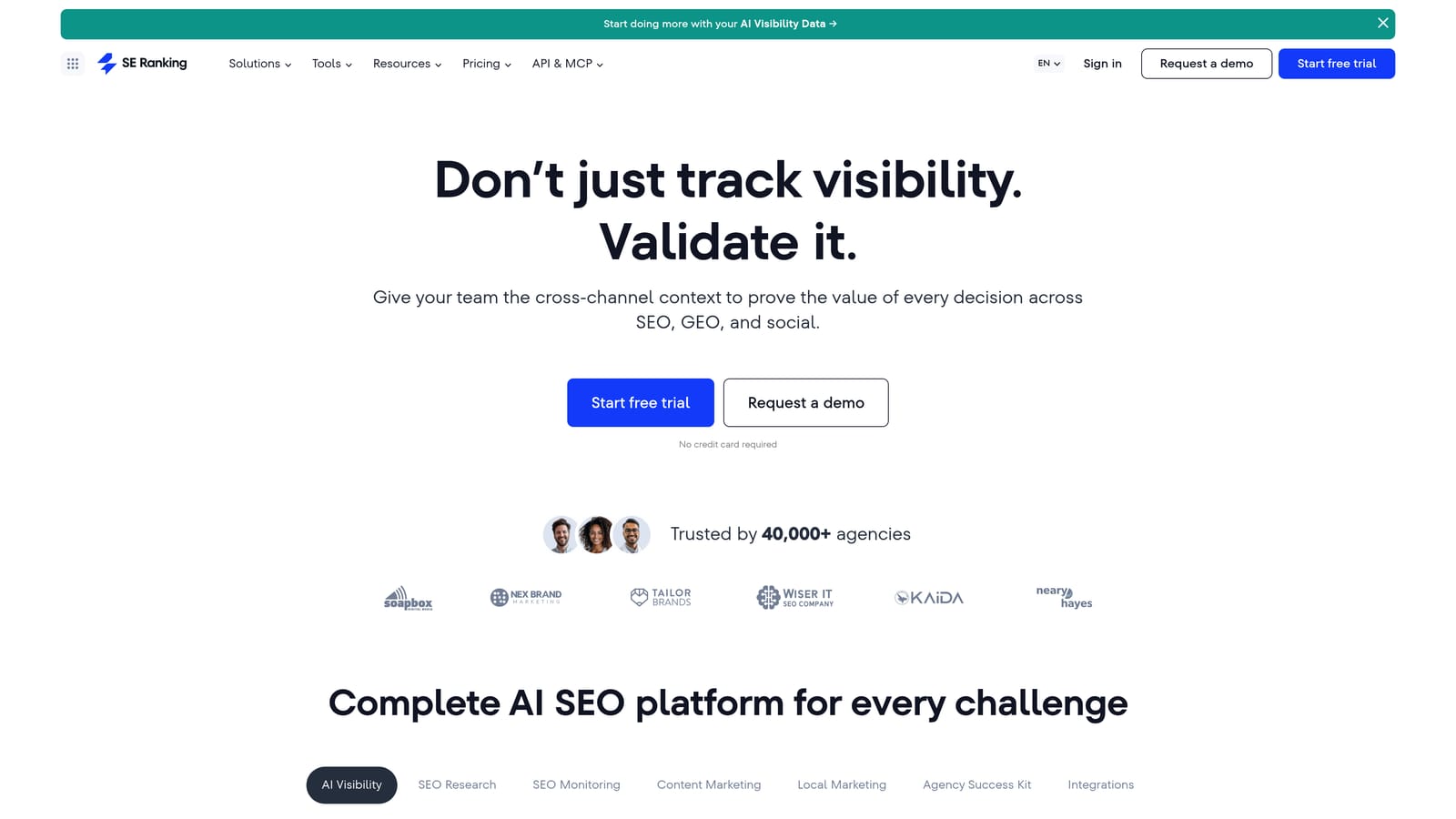
Its distinctive strength on this list is the price-to-scope ratio paired with white-label reporting. You can send clients branded reports without paying suite-level prices for the privilege.
- Rank tracking covers keyword positions across locations and devices for ongoing monitoring.
- Website audit surfaces technical problems so basic site health checks live in the same account.
- Backlink monitoring tracks new and lost links without a separate subscription.
- White-label reports put your agency's branding on client deliverables.
- Competitor research shows which keywords rivals rank for, useful for planning content.
It works with Google Search Console, Google Analytics, and Looker Studio. Setup is simple enough for a freelancer to finish in an afternoon, and the interface is approachable for non-specialists.
The limitation is data depth. Its datasets are smaller than those of the largest suites, so backlink and keyword coverage may miss things Ahrefs or Semrush would find. Teams doing heavy competitive link analysis may outgrow it. Plans are tiered, generally scaling with tracked keywords and features; see the SE Ranking website for current pricing as of 2026.
Best for: Small agencies and freelancers on a budget.
6. Google Search Console
Google Search Console is Google's free tool for seeing how your site performs in search and whether pages are indexed. Every site owner should have it set up, regardless of what else they use.
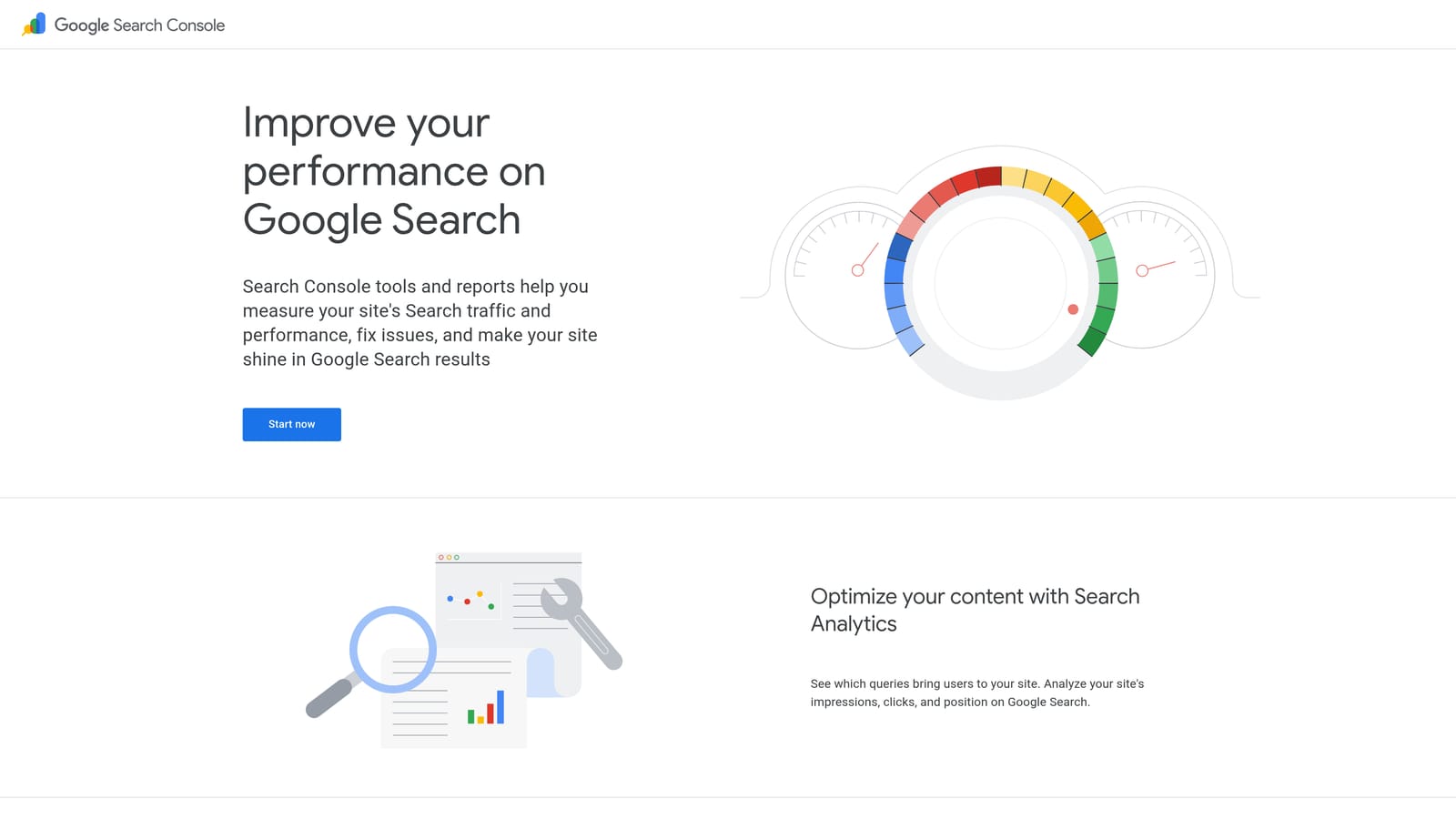
Its advantage is provenance: the data is first-party, from Google itself. No third-party tool can show your real impressions and clicks per query, which is why it works as the reference point for checking paid tools.
- Queries, clicks, and impressions show which searches actually bring people to your pages.
- Average position gives a directional view of visibility per query or page.
- Index coverage reports which pages Google has indexed and why others were excluded.
- Core Web Vitals flags page experience issues affecting groups of URLs.
- Sitemap submission tells Google where your pages are.
It links to Google Analytics, Looker Studio, and an API, and most third-party tools in this article pull from it. Setup means verifying site ownership, which a developer or marketer can do in minutes.
Know its limits. Average position is an average across many searches, locations, and devices, not a fixed rank, so it will not match a rank tracker. Data retention is limited, so export regularly if you want long-term history. There is no competitor data, and it does not show how AI assistants mention you. Price: free.
Best for: Every site owner needing a free baseline.
7. Moz Pro
Moz Pro is an SEO toolset covering rank tracking, site crawling, keyword research, and link analysis, with an emphasis on clear guidance. It is designed for beginners and in-house marketers who want to learn as they go.
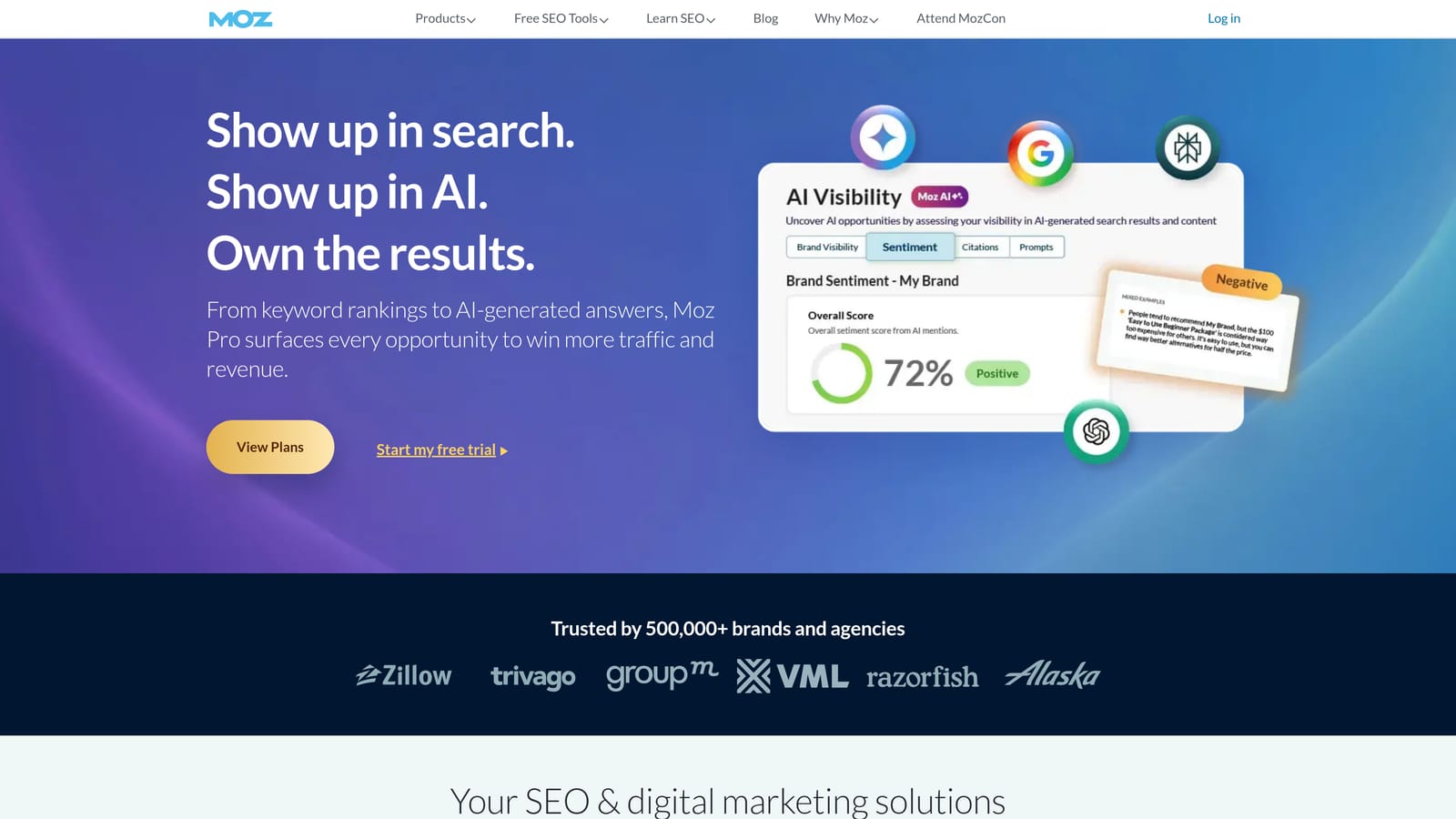
Its signature is Domain Authority, a widely recognized metric for estimating a site's ranking strength relative to others. Many link builders and clients still reference it, which makes Moz useful when you need a common shorthand. Treat it as a comparative estimate, not a Google ranking factor.
- Rank tracking follows keyword positions so you can see progress over time.
- Site crawl identifies technical issues and prioritizes them for fixing.
- Domain Authority offers a quick benchmark against competitors and link prospects.
- Keyword Explorer helps judge difficulty and opportunity before you commit to content.
- Link research reveals who links to you and to competitors.
It integrates with Google Analytics and Google Search Console. Setup is gentle, and the explanations help non-specialists act on findings, so one marketer can run it alone.
The drawback is data breadth: its indexes are less extensive than those of the largest competitors, which may matter for deep link research or large sites. It is also not an AI visibility tool. Plans are paid and tiered; see the Moz website for current pricing as of 2026.
Best for: Beginners and in-house marketers.
8. Advanced Web Ranking
Advanced Web Ranking (AWR) is a customizable rank tracking and reporting platform made for agencies. If your clients need reports that go beyond a standard template, this is built for it.
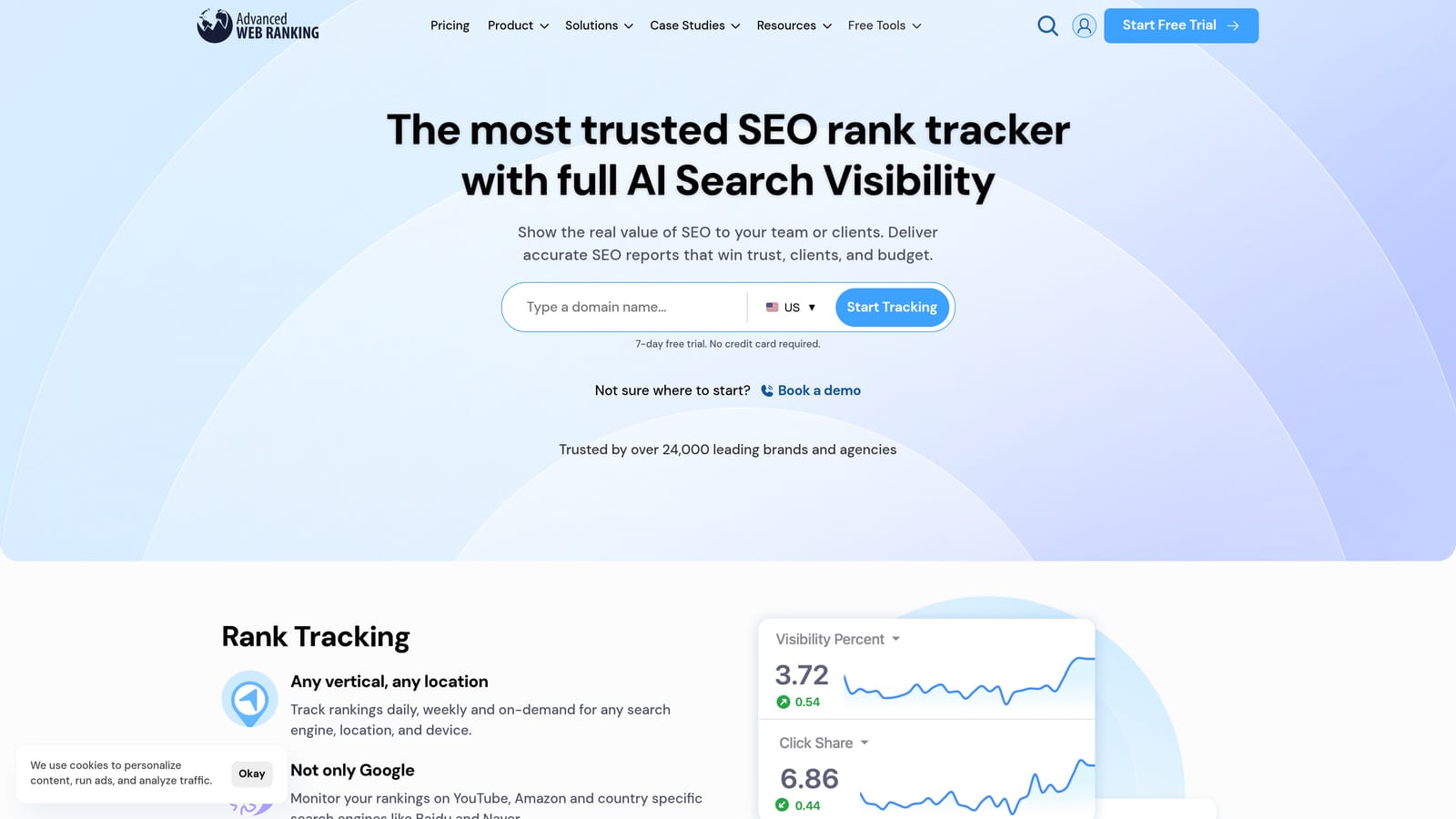
The distinguishing feature is granularity. You can track at a detailed location level, follow SERP features rather than only blue-link positions, and build dashboards around exactly the metrics a client cares about.
- Granular location tracking measures local rankings in specific places, valuable for multi-location businesses.
- SERP feature tracking shows whether you appear in features like snippets, not just organic positions.
- Custom dashboards let you build views tailored to each client or stakeholder.
- White-label reporting delivers branded outputs under your agency's name.
- Data export moves raw ranking data into other systems for analysis.
It connects with Google Search Console, Google Analytics, and Looker Studio. Plan for a setup phase: configuring projects, locations, and dashboards takes more effort than lighter tools, and a dedicated analyst usually owns it.
The cost of that flexibility is a steeper learning curve, and solo marketers who want a quick answer may find it heavy. It focuses on rank tracking rather than being a full research suite. Pricing is keyword-volume based, so confirm current tiers on the Advanced Web Ranking website as of 2026.
Best for: Agencies needing detailed custom rank reporting.
9. Screaming Frog SEO Spider
Screaming Frog SEO Spider is a desktop crawler that audits your site the way a search engine would. It monitors the technical side of SEO, not rankings, and is used mostly by technical SEOs and developers.
Its strength is depth on demand. You crawl a site from your own machine, inspect every URL, and extract exactly the elements you need, without waiting on a cloud tool's crawl schedule or settings.
- Broken link and redirect detection finds 404s and redirect chains that waste crawl budget and frustrate users.
- Metadata and duplicate content analysis highlights missing, duplicated, or oversized titles and descriptions.
- Scheduled crawls let you monitor changes over time rather than auditing once.
- Custom extraction pulls specific on-page data, such as schema or custom tags, from every page.
- Search Console and PageSpeed integration layers performance and search data onto crawl results.
It also integrates with Google Analytics. Installation is quick, but interpreting the output takes technical skill, and large crawls depend on your computer's memory.
It does not track keyword rankings and says nothing about AI visibility, so it is a complement rather than a primary tracker. A free version exists with a crawl limit, and an annual paid license removes it; check the current free limit and license price on the Screaming Frog website as of 2026.
Best for: Technical SEOs auditing site structure.
Matching Each Tool to Your Situation
Three picks cover most buyers. For AI visibility and content execution, Sight AI is the one built for it: it shows how ChatGPT, Claude, and Perplexity describe you and helps you publish content to close the gaps. For an all-in-one suite, Semrush offers the widest coverage, with Ahrefs the stronger choice if backlinks drive your decisions. For agency rank tracking at scale, AccuRanker is fastest, while Advanced Web Ranking suits teams that need custom reports.
Budget teams should start with Google Search Console as the free baseline, then add SE Ranking for rank tracking and white-label reports. Beginners who value guidance can look at Moz Pro. For technical audits, Screaming Frog is the standard.
Pairing tools is normal, since none of these covers everything. A common stack is Search Console for ground truth, one rank tracker or suite for positions, a crawler for site health, and an AI visibility tool for assistant mentions. Remember that rankings are not traffic, and AI answers change between runs, so judge trends over time.
Stop guessing how AI models like ChatGPT and Claude talk about your brand. Get visibility into every mention, track content opportunities, and automate your path to organic traffic growth. Start tracking your AI visibility today and see exactly where your brand appears across top AI platforms.