Rank tracking used to mean one question: where does this page sit on Google for this keyword? Marketers, founders, and agency leads now also need to know whether ChatGPT, Claude, or Perplexity mention their brand at all. This list covers both layers: classic SERP trackers and a newer AI visibility platform. Tools were judged on tracking accuracy, update frequency, reporting, scalability, and price. For related reading, see the Sight AI blog.
Quick Comparison of the Nine Tools
- Sight AI: teams that want to measure and improve brand mentions in AI search; pricing on the vendor site; connects AI mention tracking to content generation and indexing in one workflow.
- Semrush: in-house marketers who want one suite for the full SEO workflow; subscription tiers, see vendor site; rank tracking inside the broadest SEO toolset here.
- Ahrefs Rank Tracker: link-focused SEOs already on Ahrefs; subscription tiers, see vendor site; ties ranking changes directly to backlink data.
- AccuRanker: agencies tracking thousands of keywords; priced by keyword volume, see vendor site; fast on-demand refreshes at high scale.
- SE Ranking: small agencies and growing teams on a budget; subscription tiers, see vendor site; white-label client reporting at a lower price point.
- Advanced Web Ranking: established agencies needing tailored client reporting; see vendor site; the most customizable reporting and data granularity.
- Nightwatch: local businesses and multi-location brands; see vendor site; granular local-location tracking in a simple interface.
- Google Search Console: site owners who need a free baseline; free; first-party data from real searches.
- Serpstat: freelancers and small sites on a tight budget; subscription tiers, see vendor site; a low-cost bundle of tracking, research, and audits.
1. Sight AI
Sight AI is the company's own product, so weigh this entry with that in mind. It is an AI visibility platform: it tracks how AI models describe and mention your brand, then connects those findings to content creation and indexing. Where the other tools here answer "what position am I in on Google?", Sight AI answers "does ChatGPT, Claude, or Perplexity recommend us, and in what tone?"
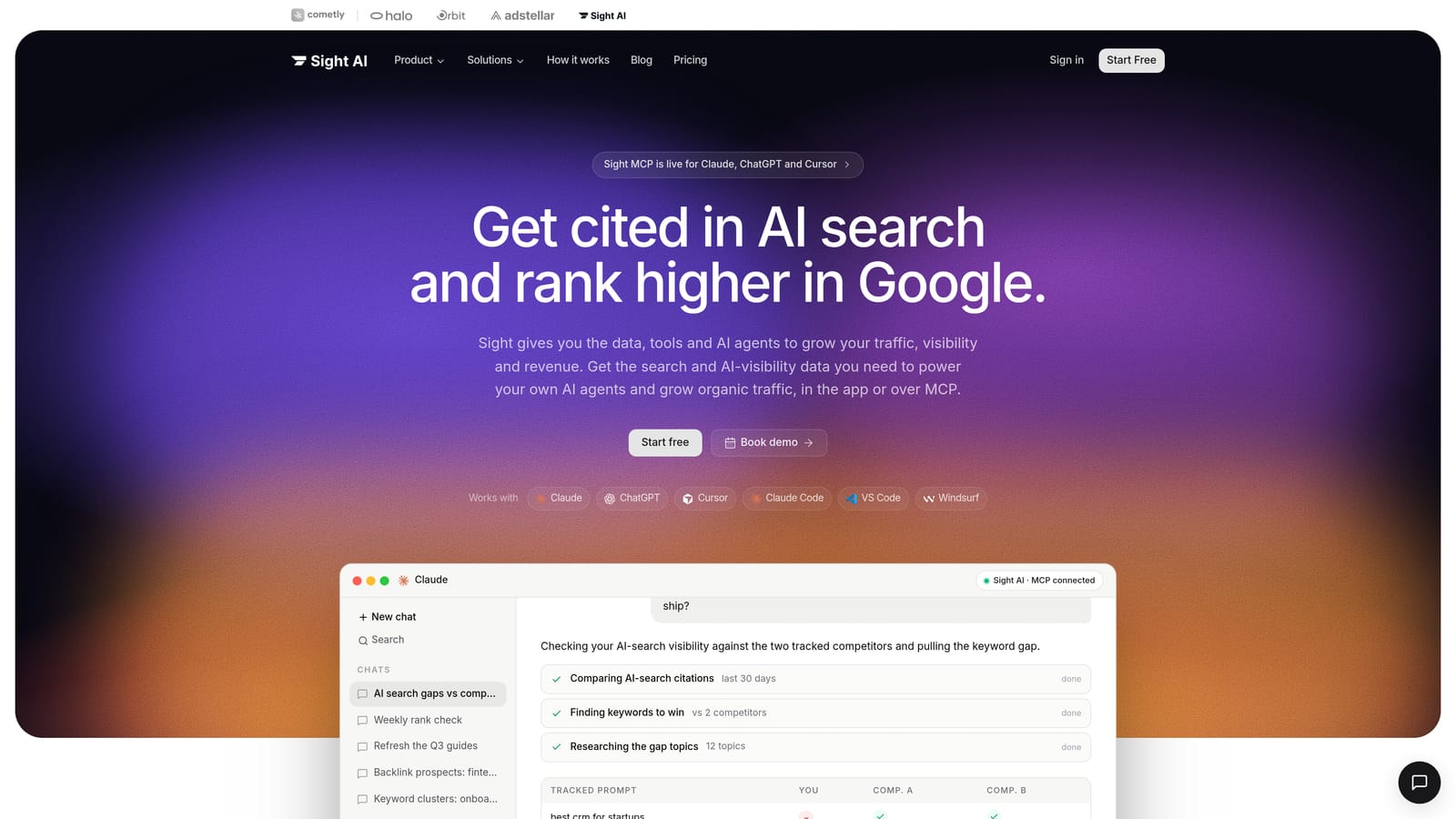
Its distinctive strength is the workflow. Most AI mention trackers stop at reporting. Sight AI takes a gap it finds, such as a prompt where competitors are named and you are not, and moves it through content generation, publishing, and indexing without leaving the platform.
- An AI Visibility Score with sentiment analysis shows how often and how favorably your brand appears in AI answers.
- Prompt tracking across 6+ AI platforms, including ChatGPT, Claude, and Perplexity, lets you monitor the specific questions your buyers ask.
- An AI Content Writer with 13+ specialized agents drafts SEO and GEO (generative engine optimization) articles such as listicles, guides, and explainers, with an Autopilot Mode for hands-off production.
- IndexNow integration and automated sitemap updates notify participating search engines of new and changed pages quickly.
- CMS auto-publishing pushes finished articles live without manual copy and paste.
Setup is light: connect your site and CMS, define the prompts and competitors you care about, and a marketer or content lead can run it day to day. Integrations center on IndexNow and CMS publishing rather than a broad connector library.
The limitation is plain: Sight AI is not a traditional Google keyword position tracker. It will not give you daily SERP positions, SERP feature data, or local rank grids, so most teams will pair it with one of the tools below. It also suits teams willing to act on findings by publishing content; if you only want a reporting dashboard, the content features are wasted. Pricing is listed on the Sight AI website; confirm current plans there as of November 2026.
Best for: Teams that want to measure and improve brand mentions in AI search.
2. Semrush
Semrush is an all-in-one SEO suite whose Position Tracking tool updates daily and compares you against competitors. Its edge over the rest of this list is breadth: keyword research, site audits, and tracking share one login and one dataset.
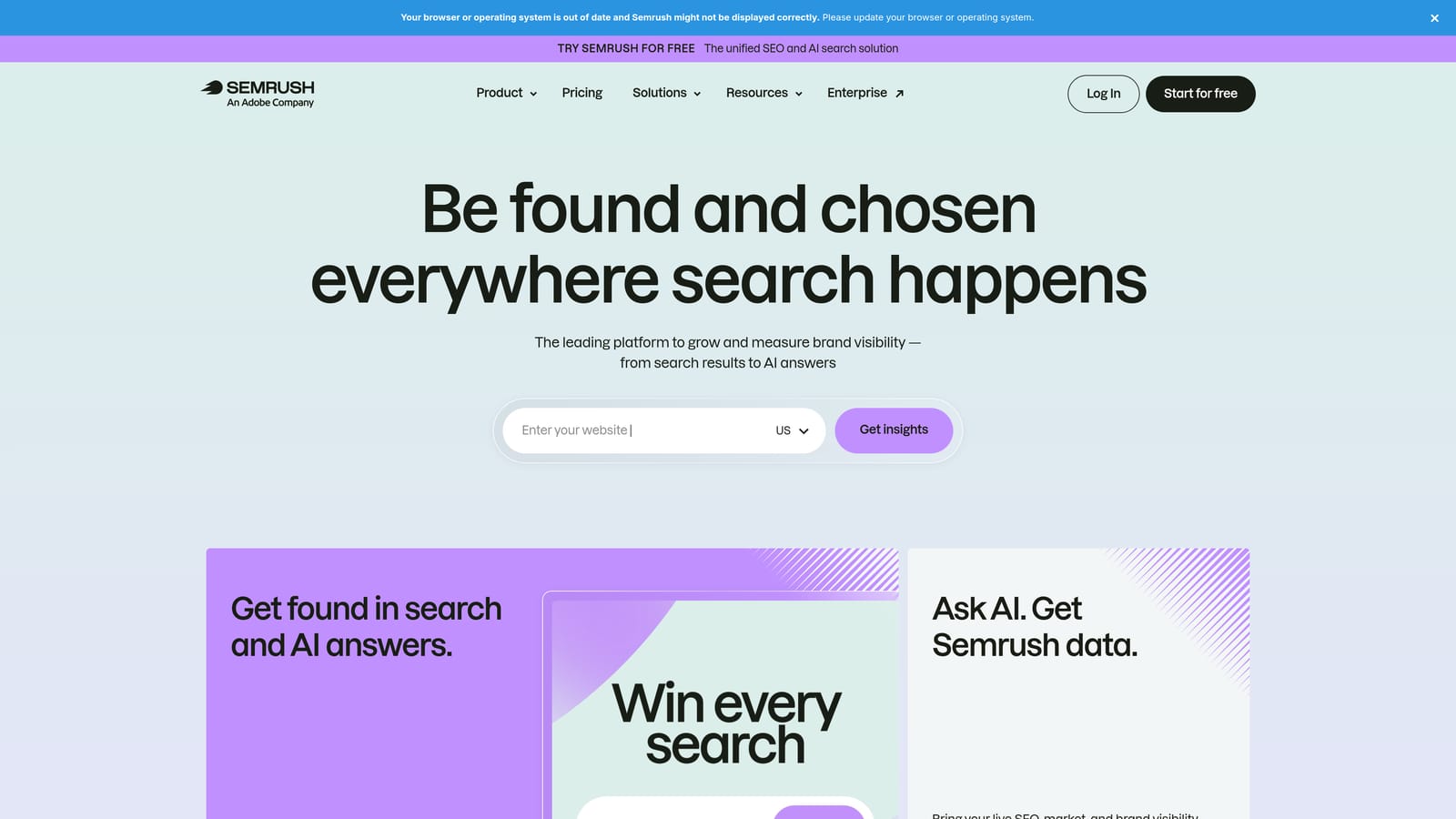
That matters when ranking drops need diagnosing. You can see a position change, open the audit for the affected page, and check the keyword's competitive landscape without exporting anything. Setup is moderate: add a domain, import keywords, choose locations and devices, and an in-house SEO or marketing manager can own it.
- Device and location targeting shows rankings the way a mobile user in a specific city sees them, not a generic average.
- Competitor tracking puts your visibility next to named rivals for the same keyword set.
- SERP feature tracking flags featured snippets, local packs, and similar elements you own or miss.
- Built-in site audit and keyword research turn a ranking change into a next step.
It connects to Google Search Console, Google Analytics, and Looker Studio for reporting. The main drawbacks are cost and complexity. Costs rise as you add extras and higher limits, and the interface can overwhelm a small team that only wants rankings. Pricing is subscription-tiered, with plan limits on tracked keywords and projects; check the vendor's pricing page for current figures as of November 2026.
Best for: In-house marketers who want one suite for the full SEO workflow.
3. Ahrefs Rank Tracker
Ahrefs Rank Tracker sits inside the Ahrefs platform and is best understood as a ranking layer on top of its backlink and site data. Its distinctive value is context: when a position moves, you can look at new or lost links to the page in Site Explorer rather than guessing at the cause.
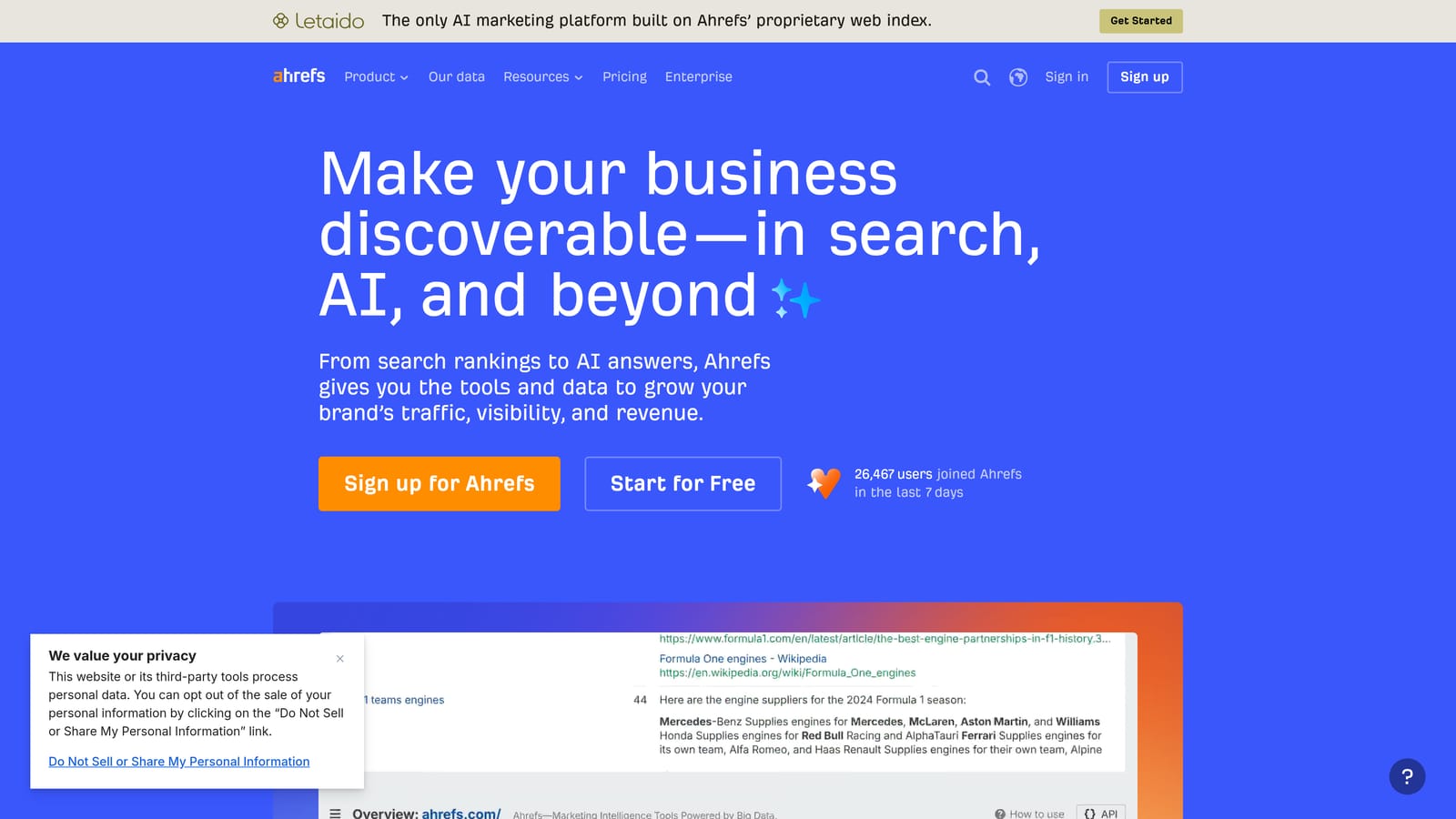
It suits SEOs who already live in Ahrefs for link analysis and content research. A single practitioner can set it up in minutes by creating a project and adding keywords.
- Position history charts show how each keyword has moved over time, so you can match changes to updates or site edits.
- SERP feature tracking shows which results include snippets or other features and whether you hold them.
- Competitor tracking lets you compare your visibility against sites you name.
- Site Explorer integration links a ranking change to the backlink profile behind it.
Integrations include Google Search Console, Google Analytics, and an API for custom reporting. The limitation is that this is not a cheap standalone tracker: you are buying into the broader Ahrefs subscription, and tracked-keyword allowances are tied to plan level. If you only need positions, a dedicated tool will cost less. Pricing is subscription-tiered; verify current plans on the vendor site as of November 2026.
Best for: Link-focused SEOs already using Ahrefs.
4. AccuRanker
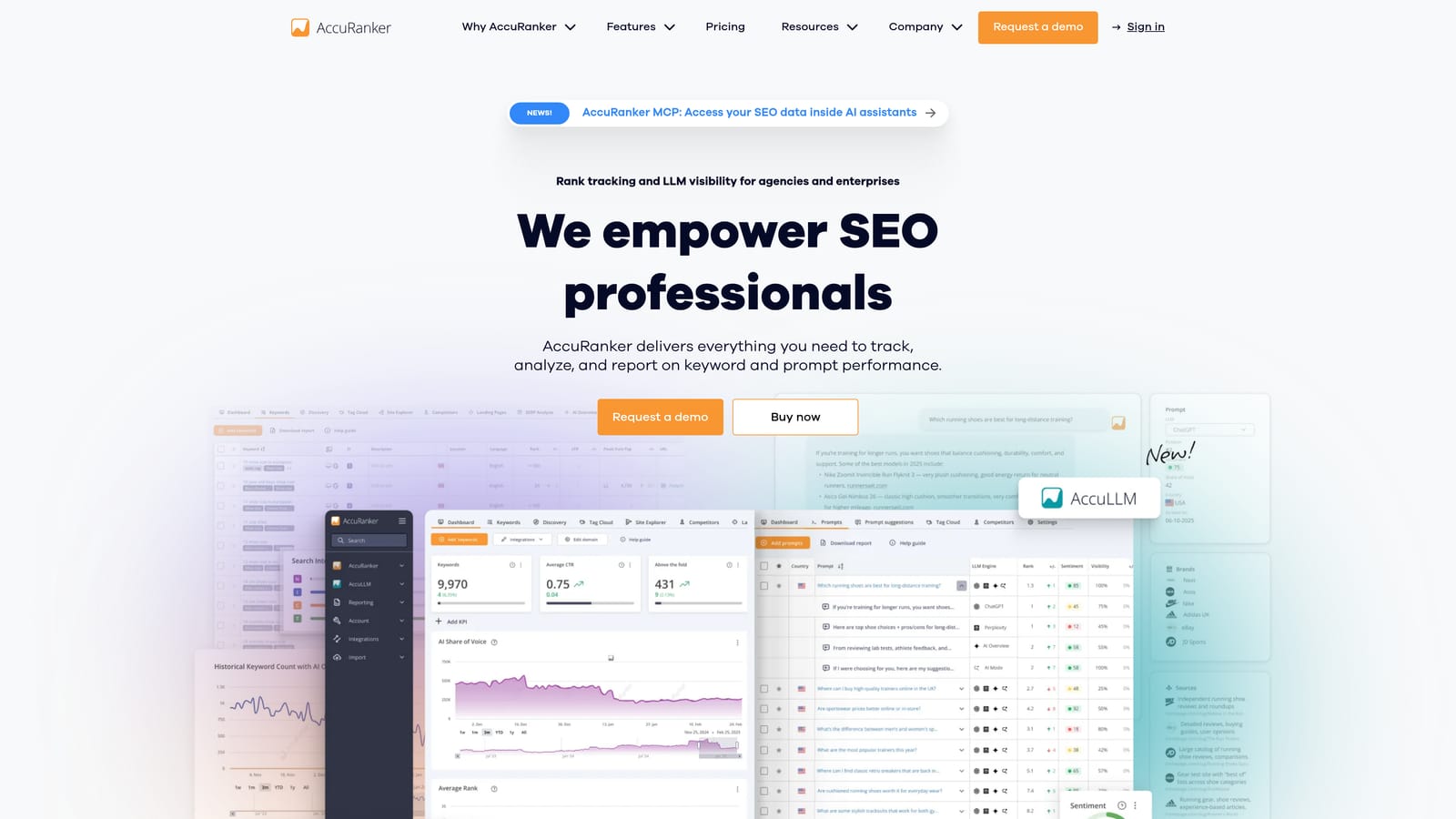
AccuRanker is a dedicated rank tracker built around speed and large keyword sets. It does one job and tries to do it quickly, which is why agencies managing many client sites gravitate to it.
What it does well
The standout is on-demand refreshing at scale. After you ship a title change or fix a technical issue, you can request fresh positions instead of waiting for the next scheduled update. Few tools on this list handle that at high keyword counts as comfortably.
- On-demand rank refreshes let you check the effect of a change the same day.
- Support for large keyword volumes suits portfolios with thousands of terms across many domains.
- Share of voice metrics, which estimate the portion of available search visibility your tracked keywords capture, give clients a single trend line.
- API access feeds rankings into your own dashboards and data warehouse.
Setup, limits, and cost
Setup is quick, and an SEO analyst or account manager typically runs it. It integrates with Google Search Console, Google Analytics, and Looker Studio, plus the API. The trade-off is that it is tracking only: no keyword research, no site audit, no backlink data, so you will need other tools alongside it. Pricing depends mainly on the number of keywords you track; confirm current tiers on the vendor site as of November 2026.
Best for: Agencies tracking thousands of keywords.
5. SE Ranking
SE Ranking is an affordable all-in-one SEO platform that leans into agency needs. Its differentiator is white-label reporting at a price point below the largest suites, so a small agency can send branded client reports without enterprise spend.
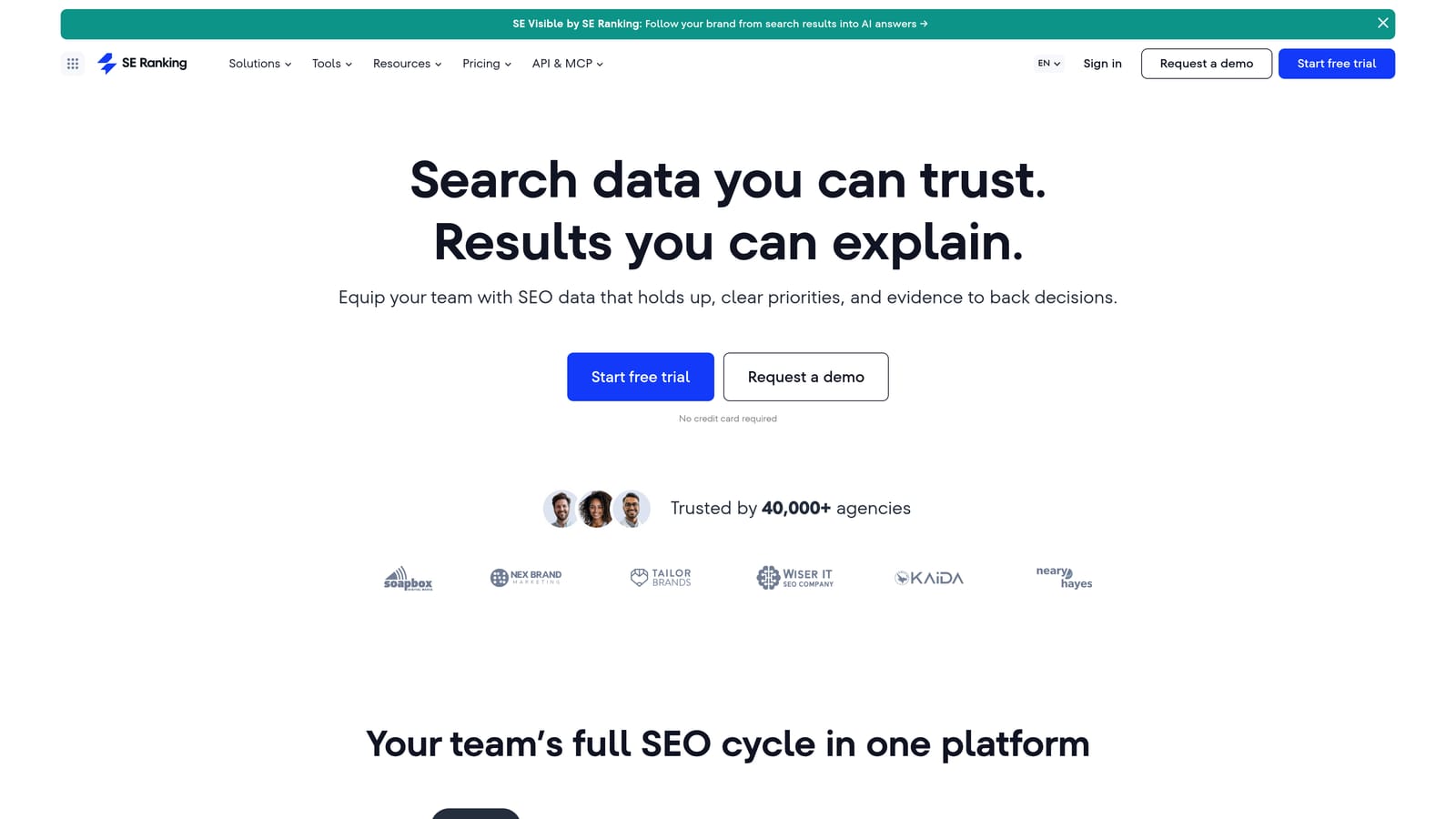
Rank tracking sits beside a site audit and competitor research, which covers most of what a small team does weekly. A single marketer can set up projects and schedules in an afternoon.
- Rank tracking monitors your keyword positions on a schedule so trends are visible without manual checks.
- Site audit finds technical issues that could explain a drop.
- White-label reports carry your agency branding, saving hours of slide building each month.
- Competitor research shows which keywords rivals rank for that you do not.
It connects to Google Search Console, Google Analytics, and Looker Studio. The limitation is a smaller data index than the largest suites, so keyword and competitor datasets may feel thinner for big or niche markets. Pricing is subscription-tiered, with cost moving by plan level and tracked-keyword allowance; verify on the vendor site as of November 2026.
Best for: Small agencies and growing teams on a budget.
6. Advanced Web Ranking
Advanced Web Ranking (AWR) is an agency-focused tracker known for how far you can shape its reports. If a client wants a specific layout, grouping, or metric, AWR is more likely to accommodate it than most rivals.
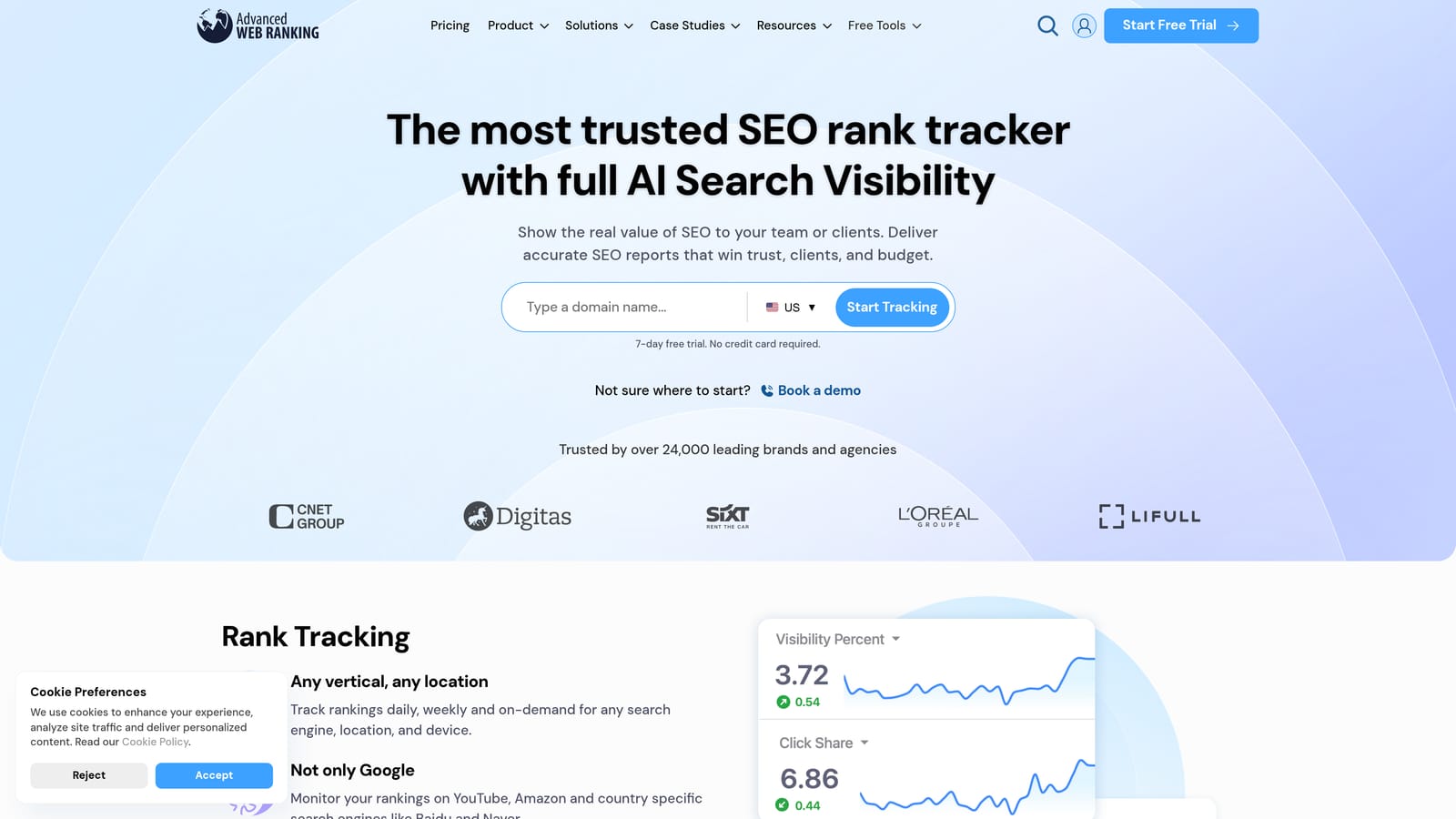
The cost of that flexibility is a learning curve. Small teams without a dedicated reporting owner may find it more than they need, and initial configuration takes real time. Established agencies with standardized client deliverables usually get the most from it.
- Custom dashboards let you build views per client or per stakeholder instead of forcing one template.
- Flexible reporting controls which metrics, segments, and date ranges appear.
- Share of voice tracks your visibility share across a keyword group against competitors.
- Local and device tracking shows how rankings differ by place and phone versus desktop.
Integrations include Google Search Console, Google Analytics, Looker Studio, and an API, which helps agencies that pipe data into their own reporting stack. It is a tracker, not a full SEO suite, so research and audits come from elsewhere. Pricing is listed on the vendor site; check current plans and what drives them as of November 2026.
Best for: Established agencies needing tailored client reporting.
7. Nightwatch
Nightwatch is a rank tracker with a clear local and mobile focus. Its main strength is granular location tracking inside an interface that stays easy to read, which helps when "rank" means something different in each city you serve.
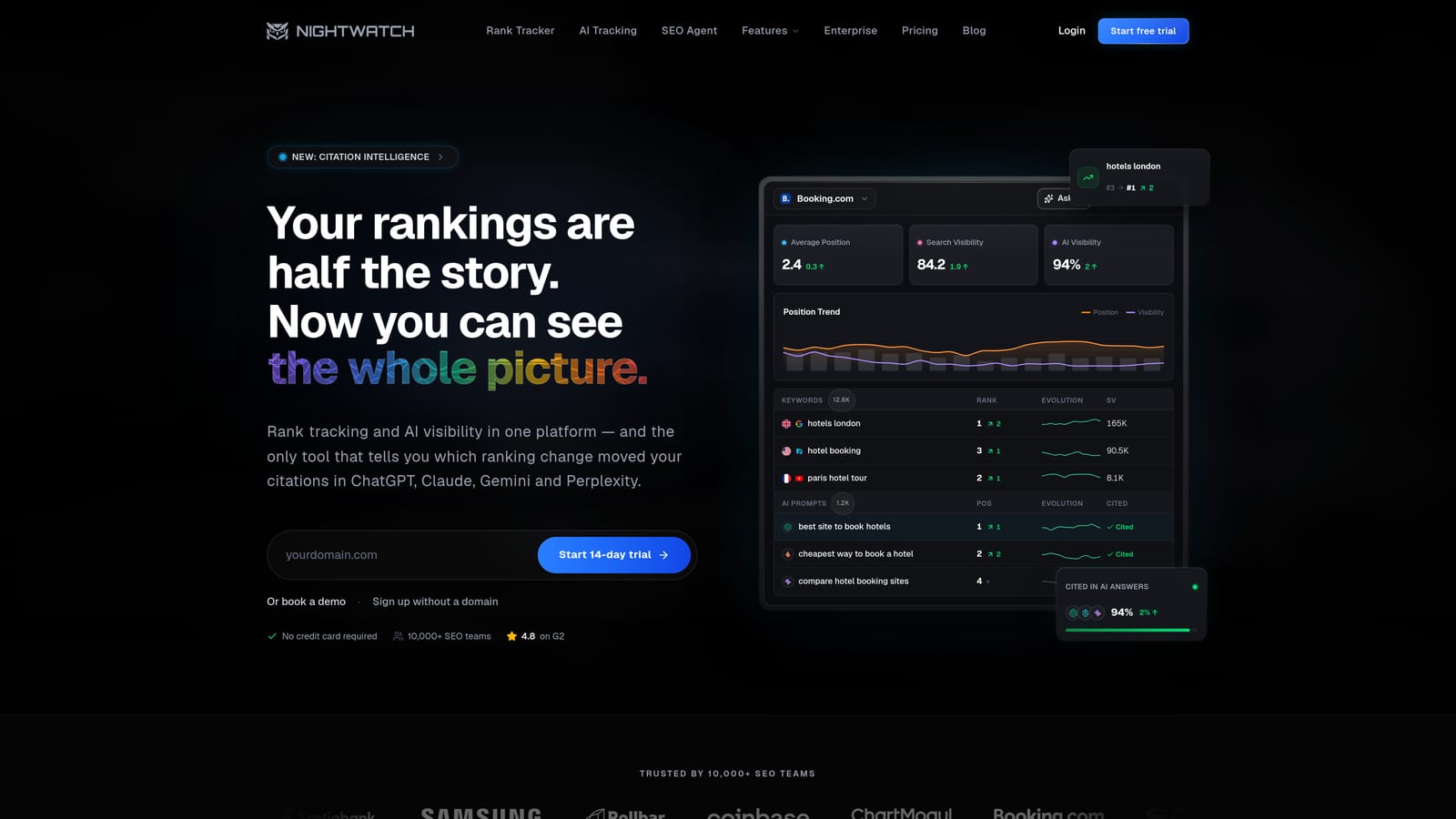
That matters because results vary by searcher location and device; a single national position can hide a weak showing in specific markets. Nightwatch makes that visible without a heavy setup, and a marketing generalist can usually run it.
- Local rank tracking checks positions from specific locations, which suits storefronts and service-area businesses.
- Mobile and desktop tracking shows where one device type underperforms.
- Reporting dashboards present trends cleanly for clients or internal stakeholders.
- Competitor tracking compares your positions against rivals in the same markets.
It works with Looker Studio, Google Search Console, and Google Analytics. The limitation is a thinner research toolset than full suites: you will not find deep keyword databases or backlink analysis here. Pricing details are on the vendor site; confirm tiers and what scales cost (typically tracked keywords and locations) as of November 2026.
Best for: Local businesses and multi-location brands.
8. Google Search Console
Google Search Console is free and reports real query data for sites you have verified. Its edge over every paid tool here is that it is first-party: impressions, clicks, and positions come from actual searches rather than simulated checks.
It also carries the most common misconception in this category. Search Console reports average position, which blends every impression across locations, devices, and personalized results. It is not the rank a given person saw, and it is not a daily snapshot of one keyword.
- Average position by query and page shows where your content tends to appear.
- Impressions and clicks reveal whether visibility is turning into traffic.
- Indexing reports surface pages Google has not indexed and why.
- Filters by country and device narrow the data to the markets that matter.
It connects to Google Analytics, Looker Studio, and an API. Setup means verifying site ownership, usually by DNS record or a tag, and a site owner or SEO can manage it. The limits are real: no competitor tracking, no per-keyword daily positions, and no view of sites you do not own. Cost is nothing.
Best for: Site owners who need a free baseline of real search performance.
9. Serpstat
Serpstat is a budget all-in-one SEO platform that bundles rank tracking with keyword research, site audits, and competitor analysis. Its pitch is cost: a single low-priced subscription replaces several separate tools for people who cannot justify bigger suites.
It fits freelancers and small sites that need a bit of everything. Setup is straightforward, and one person can run it, though expect to spend time learning where features live.
- Rank tracking monitors your positions for chosen keywords over time.
- Keyword research helps find terms worth tracking in the first place.
- Site audit flags technical problems that can hold rankings back.
- Competitor analysis shows which domains and keywords overlap with yours.
It integrates with Google Search Console, Google Analytics, and an API. The trade-offs are a smaller database than the largest platforms and reporting that is less polished, so agencies sending client-facing decks may want something stronger. Pricing is subscription-tiered, with limits that scale by plan; verify current numbers on the vendor site as of November 2026.
Best for: Freelancers and small sites on a tight budget.
Pairing a SERP Tracker With an AI Visibility Layer
No single tool here covers both layers well, so the practical answer is a pair. Pick the classic tracker by the way you work:
- Agencies: AccuRanker for large keyword sets and fast refreshes, or SE Ranking when white-label reporting and budget matter more.
- Teams wanting a suite: Semrush for the broadest workflow, or Ahrefs if backlink analysis drives your decisions.
- Anyone starting out: Google Search Console, as a free baseline, remembering that average position is not a single rank.
Then add Sight AI for the layer those tools do not measure: how ChatGPT, Claude, and Perplexity talk about your brand, and what to publish to change it. It is not a Google position tracker, and it is not meant to replace one. Its job is to turn AI mention gaps into content that gets published and indexed.
Stop guessing how AI models like ChatGPT and Claude talk about your brand. Get visibility into every mention, track content opportunities, and automate your path to organic traffic growth. Start tracking your AI visibility today and see exactly where your brand appears across top AI platforms.