Your blog has a publishing schedule. You have a content calendar. You're putting in the work — and yet, when you open Google Analytics, the organic traffic line is practically horizontal. If this sounds familiar, you're dealing with one of the most common and most fixable problems in digital marketing: low organic traffic from your blog despite consistent effort.
Here's the uncomfortable truth: publishing more content is rarely the answer. The problem almost never lives in your output volume. It lives in how your existing content is structured, targeted, optimized, and distributed. More posts on a broken foundation just means more posts that don't rank.
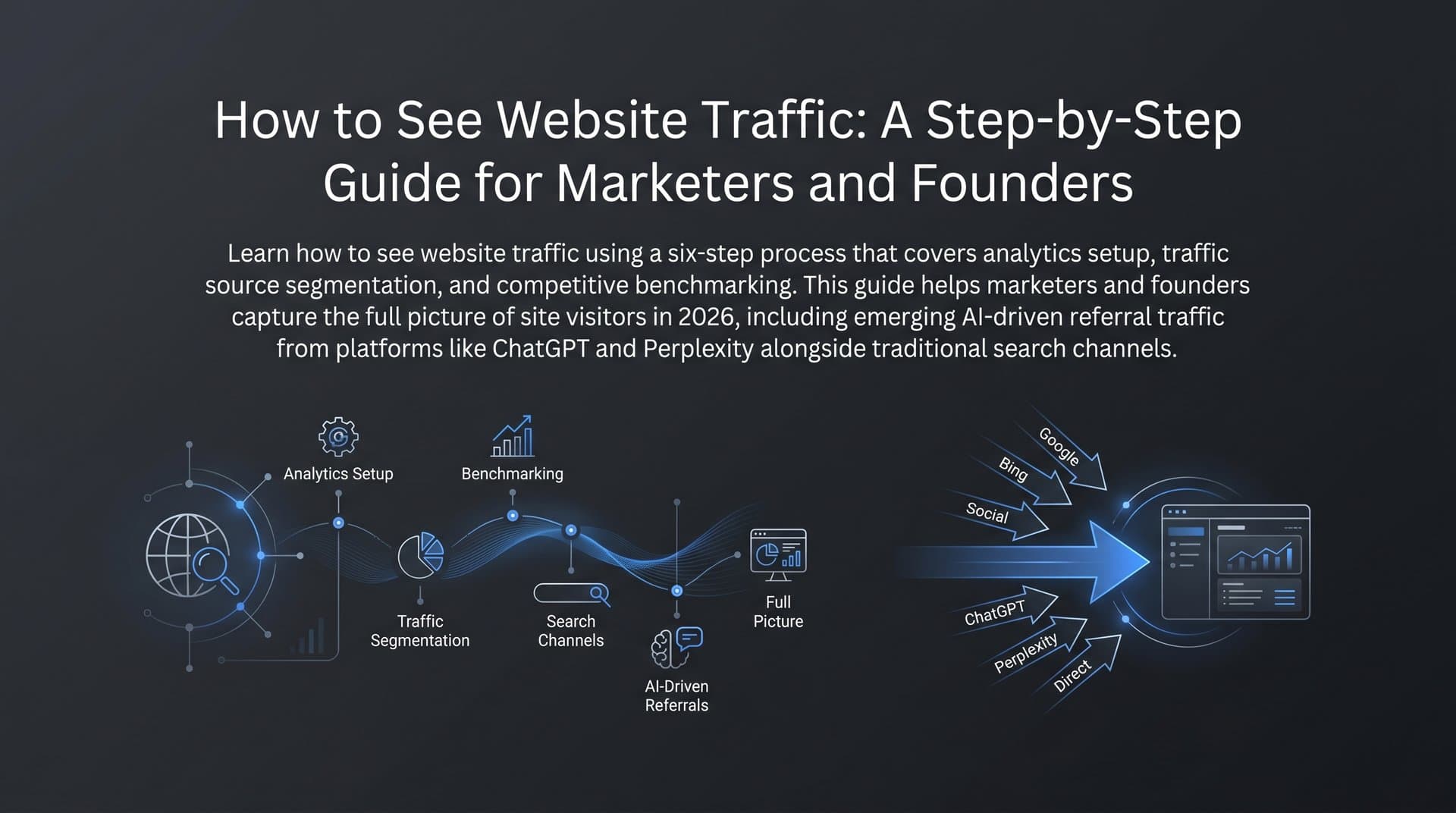
This guide walks you through a sequential, six-step process for diagnosing and fixing the real causes of low blog traffic. You'll start with an honest audit of what's already broken, then work through keyword strategy, on-page optimization, technical health, internal linking, and finally, AI search visibility — the emerging channel that many blogs are still completely ignoring.
Each step builds on the one before it. Technical fixes make your optimization more effective. Strong on-page structure improves your chances of appearing in AI-generated answers. Follow these steps in order, and the compounding effect becomes significant.
Whether you're a marketer managing a brand blog, a founder trying to drive inbound leads, or an agency optimizing client content, this process applies directly to your situation. And because AI platforms like ChatGPT, Claude, and Perplexity are increasingly becoming discovery channels in their own right, this guide covers both traditional SEO and the emerging discipline of Generative Engine Optimization (GEO) — so your content gets found everywhere your audience is looking.
Let's get into it.
Step 1: Audit Your Existing Blog Content Before Adding More
Before you write a single new post, you need a clear picture of what your existing content is doing — and not doing. Most blogs suffering from low organic traffic have a mix of posts that are performing quietly, posts that are underperforming despite having potential, and posts that search engines have essentially ignored entirely. Treating all three the same way is a mistake.
Start with Google Search Console. Pull up the Performance report and sort by impressions. You're looking for posts that have meaningful impressions but low click-through rates. These are your fastest wins: search engines already know about this content and it's appearing in results, but something about the title or meta description is failing to earn the click. You can fix that without starting from scratch.
Next, categorize your posts into three buckets:
Performing posts: These have steady impressions, reasonable CTR, and some ranking positions in the top 20. Protect these. Don't make major structural changes — small optimizations only.
Underperforming posts: These have impressions but weak rankings (positions 15-50) or low CTR. These are candidates for targeted optimization — better titles, stronger on-page structure, updated content.
Not indexed or zero-impression posts: These are either not being discovered by search engines or targeting keywords with no search demand. Each requires investigation before you decide whether to optimize, consolidate, or redirect.
One issue that quietly destroys blog performance is content cannibalization. If you've been publishing for a year or more without a structured keyword map, there's a good chance multiple posts are targeting the same or very similar keywords. When this happens, your own posts compete against each other in search results, splitting authority and confusing search engines about which page to rank. Identify these conflicts and either consolidate the posts or clearly differentiate their target keywords.
A quick note on what not to do: don't delete underperforming posts without first checking whether they have backlinks pointing to them or internal link equity built up. Removing a post that other sites link to can actually hurt your domain, not help it. Redirect or consolidate rather than delete.
An SEO performance dashboard that aggregates this data across your entire blog makes this audit significantly faster. The goal is a clear, prioritized list of posts to fix before you publish anything new.
Step 2: Fix Your Keyword Strategy Around Search Intent
One of the most common reasons blogs flatline on organic traffic is that they're targeting the wrong keywords — not wrong in topic, but wrong in intent. A post that answers "what is content marketing" will struggle to rank if the people searching that term are looking for a quick definition, but your post is a 3,000-word strategic guide. Mismatched intent is a top driver of poor rankings, and it's often invisible until you look closely.
Search intent falls into a few primary categories. Informational queries are research-oriented: "how to improve blog SEO," "what causes low organic traffic." Navigational queries are brand or destination-specific: "HubSpot blog," "Ahrefs keyword explorer." Transactional queries signal purchase intent: "best SEO tool for bloggers," "content marketing software pricing." Each type requires a different content format and depth. Go through your underperforming posts and ask honestly: does this post match what someone searching this keyword actually wants?
When it comes to keyword selection, avoid the trap of targeting broad head terms. "SEO" or "content marketing" are dominated by high-authority domains with years of backlinks behind them. Instead, prioritize middle-funnel keywords: specific enough to rank, broad enough to drive meaningful volume. Think "how to fix low organic traffic from blog" rather than "organic traffic."
Question-based keywords deserve special attention. Queries starting with who, what, how, and why align closely with how AI models surface answers and how featured snippets are triggered in traditional search. If your content answers these questions directly and clearly, it has a higher chance of appearing both in Google's answer boxes and in AI-generated responses on platforms like Perplexity and ChatGPT.
Map each post to a single primary keyword. That keyword should appear in the title tag, the H1, and the meta description — clearly and naturally. Posts that try to rank for five different keywords often rank well for none of them.
Finally, look at what's already ranking for your target keywords. Check competitor blogs in the top five positions and note the content format they're using: is it a listicle, a step-by-step guide, a comparison post, or a definition piece? Search engines have already validated which format satisfies intent for that query. Match the format, then outperform the content quality.
Step 3: Optimize On-Page Elements for Both Search Engines and AI Models
Once your keyword strategy is solid, the next layer is on-page optimization. This is where you make sure each post is structured to satisfy both traditional search algorithms and the AI models that are increasingly surfacing content to users directly.
Start with your title tags and meta descriptions for posts that have high impressions but low CTR — the ones you identified in Step 1. These are your fastest wins because the traffic opportunity already exists. A stronger title that speaks more directly to search intent, adds a number, or signals a clear benefit can meaningfully improve click-through rate without changing a word of the actual post content.
Inside the post, structure matters more than most bloggers realize. Use a clear H2 and H3 hierarchy that breaks the article into answerable questions. Search engines use heading structure to understand what a post covers. AI models use it to extract specific answers to specific questions. A wall of text with no heading structure is hard for both to parse.
Add a concise, direct answer within the first 100 words of each post. This serves two purposes: it improves your eligibility for featured snippets in traditional search, and it increases the likelihood that AI models will cite your content when answering related queries. AI platforms tend to pull from content that states its point clearly upfront rather than burying the answer in paragraph five.
Don't overlook the smaller on-page elements. Image alt text, internal anchor text, and URL slugs should all reflect your target keyword naturally. These aren't ranking silver bullets, but they contribute to the overall signal consistency that search engines look for.
This is also where Generative Engine Optimization (GEO) becomes a practical discipline rather than just a buzzword. Writing for AI citability means using clear factual statements, structured lists, well-defined terms, and authoritative language. Think about how an AI model would extract a useful answer from your post. If your content is vague, meandering, or structured like a personal essay, it's less likely to be pulled into an AI-generated response.
Include entity-rich content: mention related concepts, tools, and brands that help AI models understand the topical context of your post. A post about fixing low organic traffic should naturally reference concepts like crawl budget, search intent, keyword cannibalization, and indexing — not because you're stuffing keywords, but because comprehensive topical coverage signals authority.
One pitfall to avoid: keyword stuffing still hurts rankings. Natural language that comprehensively covers a topic outperforms forced repetition of a target phrase every time.
Step 4: Resolve Technical Issues That Block Indexing and Crawling
You can have perfectly optimized content with excellent keyword targeting, and it will still get zero organic traffic if search engines can't find or index it. Technical SEO is the foundation everything else rests on — and it's frequently where blogs have silent, invisible problems.
Start with a simple but critical check: verify that all your blog posts are actually indexed. Go to Google Search Console, open the Index Coverage report, and look for posts flagged as "Excluded," "Crawled but not indexed," or "Discovered but not indexed." Any post in these categories is getting zero organic traffic regardless of its quality. Investigate each one — the reason for exclusion is usually listed and actionable.
Make sure your sitemap is submitted to Google Search Console and kept automatically updated. An outdated sitemap means newly published posts may wait days or weeks before search engines discover them. If you're publishing frequently, this delay compounds quickly and slows down your traffic growth timeline.
IndexNow is a protocol worth implementing if you haven't already. It allows publishers to notify search engines instantly when new or updated content is available, rather than waiting for natural crawl cycles. Bing, Yandex, and other engines support it natively. For blogs publishing multiple times per week, the difference between waiting for a crawl and pushing an instant notification can mean faster indexing and earlier ranking opportunities.
Beyond indexing, audit your blog for crawl efficiency issues. Redirect chains — where a URL redirects to another URL that redirects again — waste crawl budget and dilute link equity. Broken internal links send crawlers to dead ends. Both are common on blogs that have been through CMS migrations or URL structure changes.
Page speed and Core Web Vitals are also ranking factors. A slow-loading blog post will rank lower than a faster competitor with comparable content quality. Use Google's PageSpeed Insights to check your blog posts and address the highest-impact issues: image compression, render-blocking scripts, and server response times are common culprits.
Success indicator: All published blog posts appear as "Indexed" in Google Search Console within 48 to 72 hours of publishing. If you're regularly seeing longer delays, your sitemap update process or crawl budget allocation needs attention.
Step 5: Build Internal Links That Distribute Authority Across Your Blog
Internal linking is one of the most underutilized levers for improving blog traffic, and it's entirely within your control. Unlike backlinks, which require external effort to earn, internal links are something you can build today across your entire content library.
The core principle is straightforward: PageRank (the authority signal that flows through links) can be distributed across your site through internal links. Your highest-authority pages — the ones with the most backlinks or the strongest rankings — are sitting on pools of authority that can be directed toward underperforming posts. Find those high-authority pages and add internal links from them to the posts you're trying to lift.
When you add internal links, use descriptive, keyword-rich anchor text. Instead of "click here" or "read more," use phrases like "how to fix content cannibalization" or "step-by-step guide to blog keyword strategy." This anchor text tells search engines what the linked page is about and reinforces its topical relevance.
Topic clusters are the structural approach that makes internal linking systematic rather than ad hoc. The model works like this: create a comprehensive pillar page on a broad topic, then publish cluster pages that go deep on specific subtopics, and interlink all of them. This architecture signals topical authority to search engines — not just for individual posts, but for the entire cluster. Blogs that implement topic clusters often see ranking improvements across multiple posts simultaneously.
Check for orphan pages: posts that have no internal links pointing to them at all. These pages are often invisible to crawlers because there's no pathway to reach them from the rest of your site. A quick internal link audit will surface these quickly.
Common pitfall: Over-linking within a single post dilutes the link equity being passed to each destination. Prioritize three to five high-relevance internal links per post rather than linking to everything tangentially related.
Step 6: Expand Your Visibility Into AI Search Channels
Here's a shift that's already underway and accelerating: a growing share of search queries are now being answered directly by AI models. When someone asks ChatGPT "why is my blog not getting traffic" or asks Perplexity "how to improve organic traffic from content," they're not clicking through to ten blue links. They're getting a synthesized answer — and that answer is drawn from specific sources. Your blog needs to be one of those sources.
This is AI visibility, and unlike traditional SEO rankings, most marketers and founders currently have no idea whether their brand and content are appearing in AI-generated responses. That gap is a competitive opportunity right now, before AI search visibility becomes as competitive as traditional search.
The first step is simply to start tracking it. Tools like Sight AI allow you to monitor whether your brand is being mentioned or cited by AI platforms like ChatGPT, Claude, and Perplexity. You can track which prompts trigger mentions of your brand, what sentiment those mentions carry (positive, neutral, absent), and which competitor brands are being recommended instead of yours. This data tells you exactly where your content gaps are relative to AI search.
To make your content more AI-citable, apply the principles from Step 3 at a higher level. AI models favor content that is factually clear, well-structured, topically comprehensive, and authoritative. Posts that hedge everything, bury their main point, or lack a clear structure are less likely to be extracted and cited. Posts that define terms clearly, answer questions directly, and cover a topic with genuine depth are more likely to appear in AI responses.
Monitor which competitor brands are being recommended by AI models for your target topics. If a competitor's blog is consistently cited when someone asks about fixing low organic traffic, and yours isn't, that's a content gap worth closing. The AI model has essentially told you what kind of content it considers authoritative on that topic.
One important insight: the steps in this guide are mutually reinforcing with AI visibility. Posts that are properly indexed, well-structured, keyword-targeted, and internally linked tend to rank well in traditional search — and those same qualities make them more likely to be cited by AI models. Fixing Steps 1 through 5 directly improves your AI visibility, even before you start tracking it explicitly.
Success indicator: Your brand begins appearing in AI-generated responses for the target topics you've built content around. With AI visibility tracking in place, you can measure this directly rather than guessing.
Putting It All Together: Your Blog Traffic Recovery Checklist
Low organic traffic from a blog is a solvable problem. But it requires working through the right sequence rather than jumping to the most visible fix. Here's the six-step sequence in brief:
1. Audit first. Categorize your existing posts by performance status, identify cannibalization, and find indexing gaps before publishing anything new.
2. Fix keyword strategy. Map each post to a single primary keyword, align with search intent, and prioritize middle-funnel and question-based queries.
3. Optimize on-page elements. Rewrite titles and meta descriptions for high-impression, low-CTR posts. Structure content for both search engines and AI citability using clear answers, headings, and entity-rich language.
4. Resolve technical issues. Verify indexing for all posts, submit and automate your sitemap, implement IndexNow, and fix crawl errors and page speed issues.
5. Build internal links. Create topic clusters, fix orphan pages, and distribute authority from your strongest pages to your underperforming ones.
6. Track and expand AI visibility. Monitor whether your content is being cited by AI models, identify competitor gaps, and optimize for generative engine citation.
The reason to follow these steps in order is the compounding effect. Technical fixes ensure your optimized content actually gets indexed. Strong on-page structure improves both traditional rankings and AI citation likelihood. Internal linking amplifies the authority of every post you've optimized. Each step makes the next one more effective.
Sustainable traffic growth doesn't come from a single fix or a content sprint. It comes from building the right foundation and executing consistently on top of it.
Stop guessing how AI models like ChatGPT and Claude talk about your brand. Get visibility into every mention, track content opportunities, and automate your path to organic traffic growth. Start tracking your AI visibility today and see exactly where your brand appears across top AI platforms.