Keyword ranking analysis has evolved well beyond simple position tracking. In 2026, the tools that matter most don't just show where you rank on Google — they reveal how your brand appears across AI search platforms like ChatGPT, Claude, and Perplexity, where a growing share of discovery now happens.
Whether you're a marketer trying to prioritize content, a founder monitoring competitive positioning, or an agency managing multiple client campaigns, the right keyword ranking analysis tool can be the difference between guessing and knowing. This guide covers the best tools available today, selected based on depth of analysis, AI visibility capabilities, ease of use, and value for teams focused on organic and AI-driven traffic growth.
1. Sight AI
Best for: Teams that need AI visibility tracking, SEO content generation, and automated indexing in one platform.
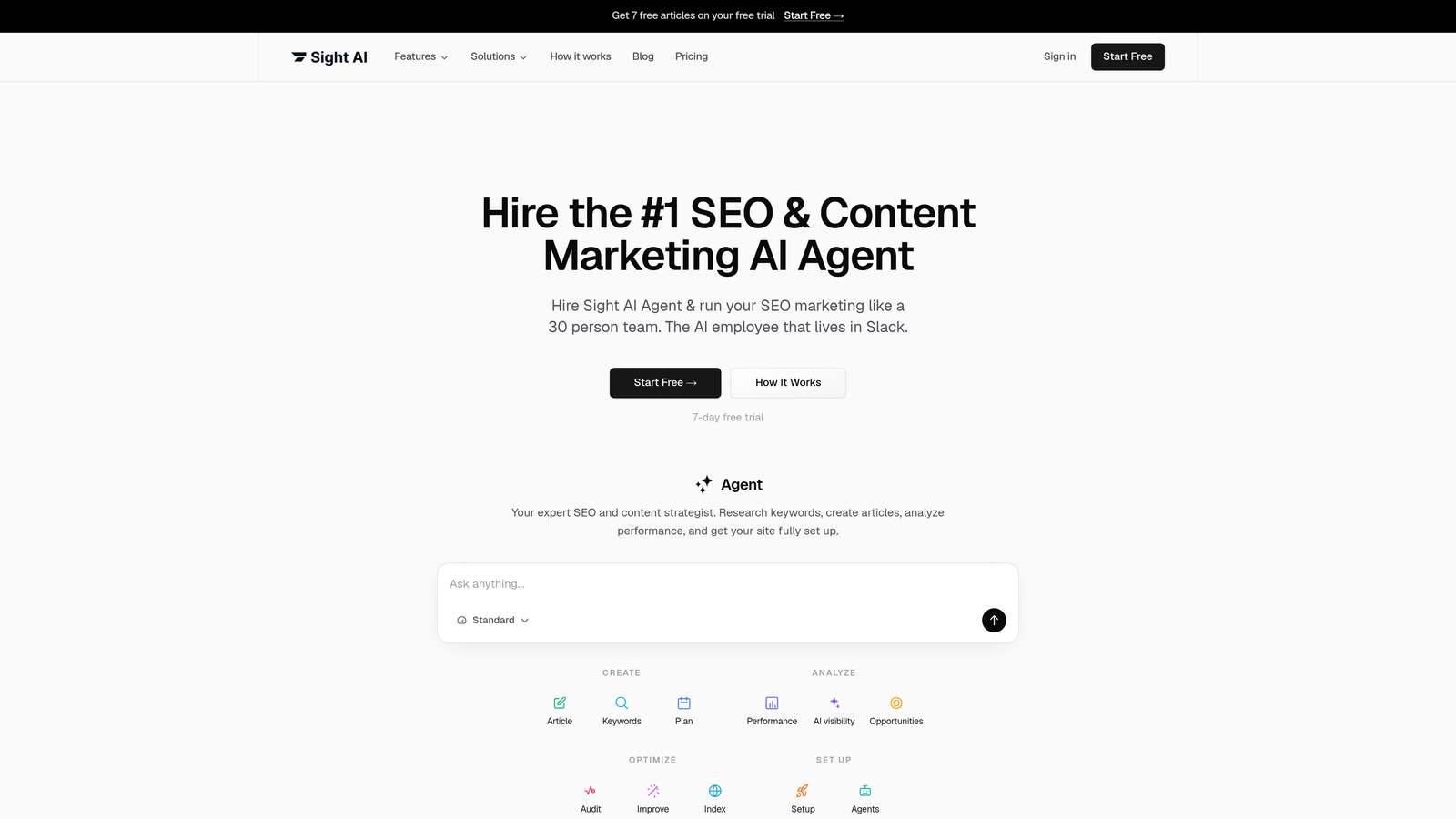
Sight AI is an all-in-one platform combining AI visibility tracking, SEO/GEO content generation, and automated website indexing — built for teams that want to rank in both traditional search and AI-generated answers.
Where This Tool Shines
Most keyword ranking tools stop at the SERP. Sight AI goes a layer deeper by monitoring how your brand is actually described and mentioned inside AI-generated responses across ChatGPT, Claude, Perplexity, and three or more additional platforms. This matters because AI answer engines now surface for many informational and commercial queries, and if your brand isn't appearing there, you're invisible to a growing segment of your audience.
The platform also closes the loop between visibility data and content production. Rather than exporting keyword insights into a separate writing tool, Sight AI lets you act on those insights directly with 13+ specialized AI agents that generate SEO and GEO-optimized articles, listicles, and guides. Add IndexNow integration for faster indexing and CMS auto-publishing, and you have a workflow that covers discovery, creation, and distribution.
Key Features
AI Visibility Score: Tracks brand mentions across ChatGPT, Claude, Perplexity, and 3+ other AI platforms with sentiment analysis so you understand not just whether you appear, but how you're described.
Prompt Tracking: Shows which specific queries and prompts are surfacing your brand in AI model outputs, revealing gaps and opportunities in your content strategy.
13+ Specialized AI Agents: Generates SEO and GEO-optimized content formats including listicles, guides, and explainers — with an Autopilot Mode for hands-off content production.
IndexNow Integration: Automatically submits new content to search engines and updates your sitemap, reducing the lag between publishing and indexing.
CMS Auto-Publishing: Streamlines content deployment by connecting content generation directly to your CMS, removing manual steps from the publishing workflow.
Best For
Sight AI is particularly well-suited for marketers and founders who need to compete in both traditional search and AI-generated answers. Agencies managing multiple client brands will find the AI Visibility Score and prompt tracking especially useful for demonstrating measurable progress on AI search presence alongside conventional SEO metrics.
Pricing
Visit trysight.ai for current plan details and pricing tiers. Plans are designed to scale with team size and content volume.
2. Writesonic
Best for: Content teams that need to produce SEO-optimized articles at scale from keyword data.
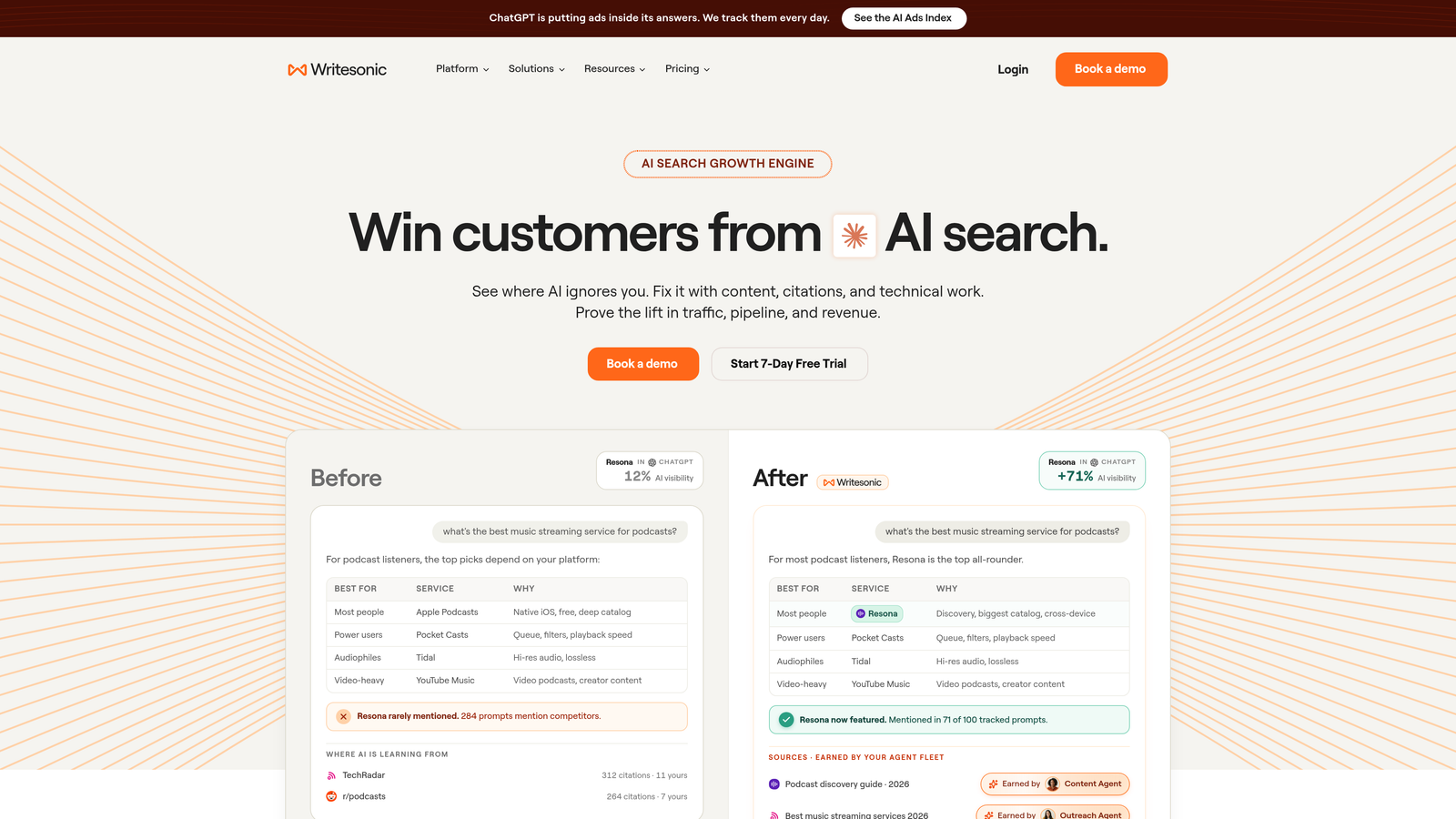
Writesonic is an AI content generation platform with keyword-aware writing tools designed to help content teams produce SEO-optimized articles at scale.
Where This Tool Shines
Writesonic's strength is speed. If you have a list of target keywords and need to move from brief to published article quickly, the platform's AI article writer integrates keyword targeting directly into the writing workflow rather than treating it as a separate step. This makes it practical for content teams running high-volume operations where throughput matters.
The content brief and outline generation features are particularly useful for teams managing multiple writers or scaling content production without proportionally scaling headcount. It won't replace a dedicated rank tracker, but as a tool for acting on keyword data through content production, it covers a lot of ground efficiently.
Key Features
AI Article Writer: Generates full-length SEO articles with keyword targeting built into the generation workflow from the start.
Keyword-Aware Content Briefs: Produces structured outlines and briefs based on target keywords, reducing research time for writers and editors.
Paraphrasing and Editing Tools: Allows teams to refine, rewrite, and adjust tone across existing content without starting from scratch.
Bulk Content Generation: Supports high-volume content operations where multiple articles need to be produced simultaneously from keyword sets.
Best For
Writesonic works best for content marketing teams and agencies that already have keyword research in place and need a fast, reliable way to turn those keywords into published content. It's less suited for teams looking for rank tracking or AI search visibility monitoring.
Pricing
Writesonic offers a freemium tier for getting started. Check writesonic.com for current paid plan pricing, as tiers and features are updated regularly.
3. AirOps
Best for: Growth and content teams that want to build custom AI-powered pipelines connecting keyword data to content outputs.
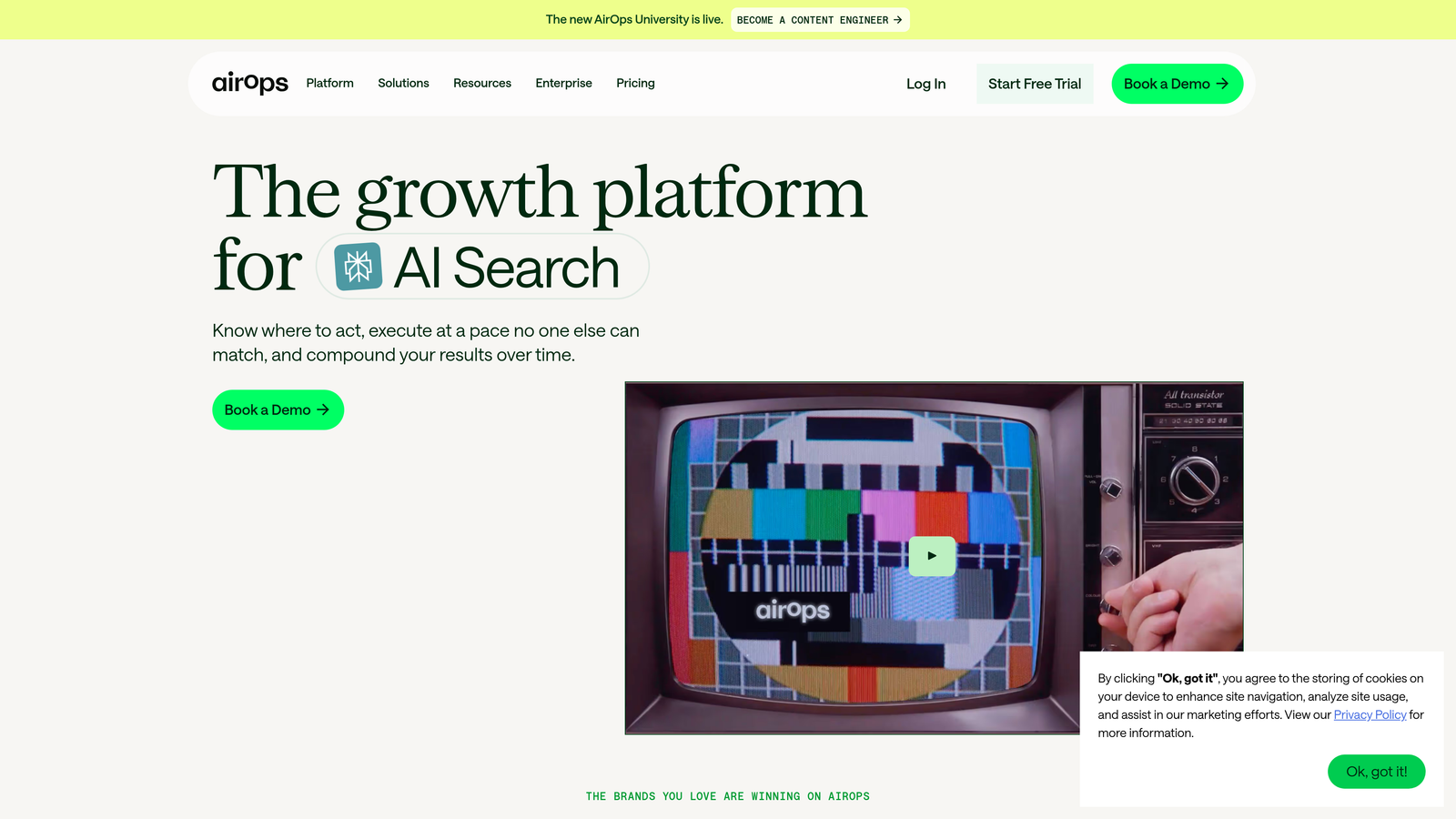
AirOps is a workflow automation platform that enables growth and content teams to build scalable AI-powered pipelines connecting keyword data to content production.
Where This Tool Shines
AirOps takes a different approach from most tools in this category. Rather than offering a fixed feature set, it gives teams a flexible workflow builder that can connect keyword inputs to content generation outputs in whatever configuration makes sense for their operation. This makes it especially valuable for ops-minded marketers who want custom pipelines rather than off-the-shelf workflows.
The platform is accessible enough for non-technical operators, which means growth teams can build and iterate on keyword-to-content workflows without relying on engineering resources. If your team already has keyword data flowing in from other sources and needs a smarter way to act on it at scale, AirOps provides the connective tissue.
Key Features
Custom AI Workflow Builder: Lets teams design multi-step content and data operations that connect keyword inputs to content or analysis outputs.
Integration Capabilities: Connects with external data sources so keyword research tools can feed directly into production workflows.
Team Collaboration Features: Supports repeatable, shareable workflows across teams, making it easier to standardize and scale content operations.
Non-Technical Accessibility: Designed so that operators without coding backgrounds can build and manage complex pipelines independently.
Best For
AirOps is a strong fit for growth teams and content operations leads who want flexibility over a fixed toolset. It's particularly useful when existing keyword tools and content tools need to be bridged with a custom logic layer rather than replaced entirely.
Pricing
Check airops.com for current pricing tiers, as plan structures vary by team size and workflow complexity.
4. Profound
Best for: Enterprise marketing teams monitoring brand presence and competitive positioning in AI-generated search responses.
Profound is an AI answer engine monitoring platform that tracks how brands appear in AI-generated search responses, helping enterprise teams optimize for AI search visibility.
Where This Tool Shines
Profound is built specifically for the enterprise use case: understanding, at scale, how your brand and your competitors are represented inside AI-generated answers. For large brands where reputation and positioning in AI search responses carry real commercial weight, this kind of monitoring provides a layer of insight that traditional rank trackers simply don't offer.
The competitive analysis features are particularly relevant here. Knowing that your brand appears in AI-generated responses is useful; knowing how that compares to how competitors appear for the same queries is actionable. Profound is designed to surface both dimensions for marketing and brand teams managing visibility across enterprise accounts.
Key Features
Brand Presence Monitoring: Tracks how and when your brand appears across AI answer engines at the query level.
Competitive Analysis: Shows how rival brands appear in AI-generated responses for overlapping queries, enabling direct comparison.
Query-Level Insights: Identifies which specific topics and queries are surfacing your brand in AI search, highlighting content gaps and strengths.
Enterprise Reporting: Delivers structured reporting designed for marketing and brand teams working within larger organizational reporting requirements.
Best For
Profound is best suited for enterprise marketing and brand teams that need structured, scalable monitoring of AI search presence. Smaller teams or startups may find the enterprise positioning less aligned with their needs and budget.
Pricing
Check withprofound.com for current pricing and enterprise plan details.
5. Peec
Best for: Startups and growing teams that want accessible AI visibility monitoring without enterprise complexity.
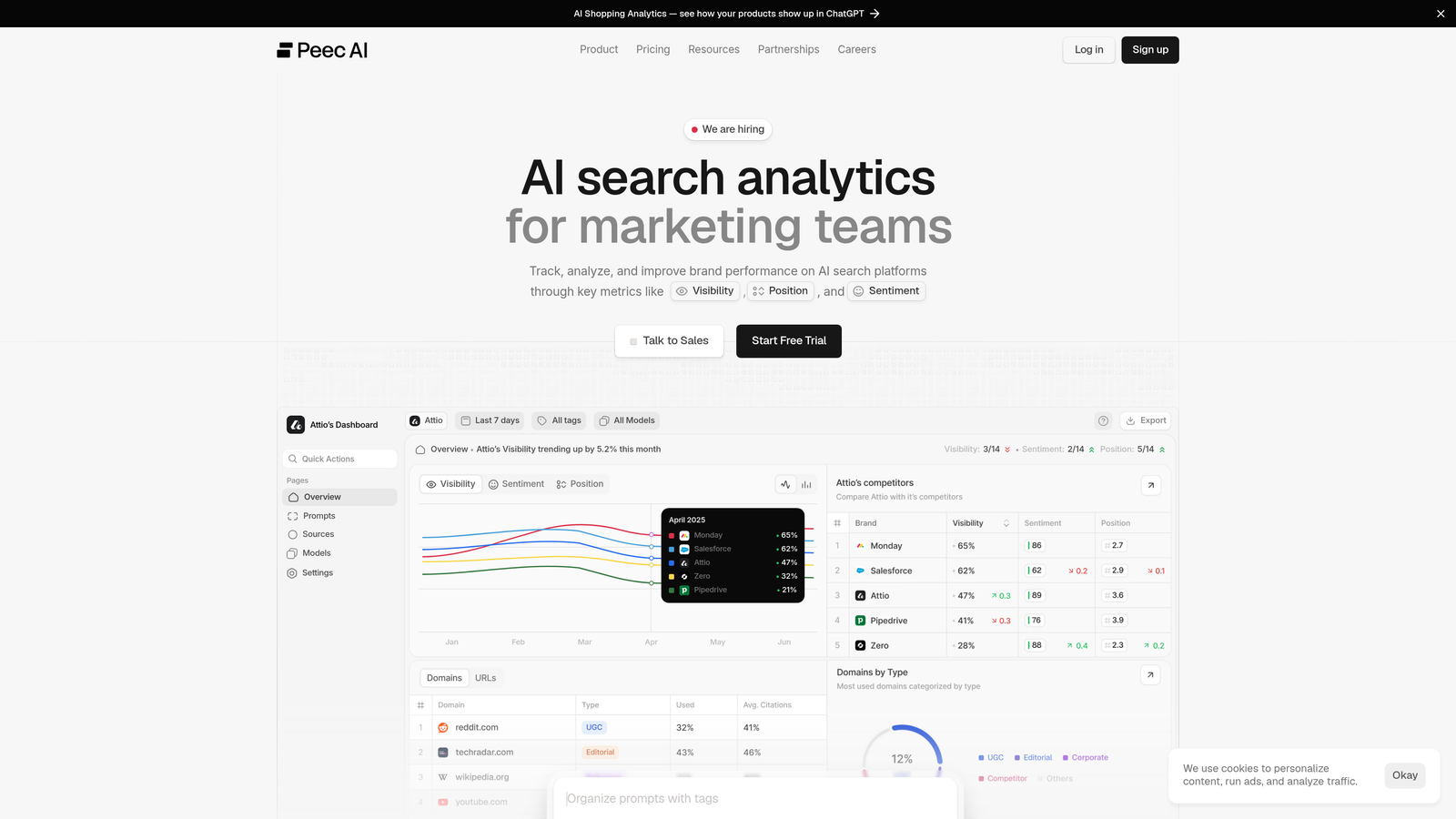
Peec is a lightweight AI visibility monitoring tool that tracks brand and keyword mentions inside AI-generated responses, accessible for startups and growing teams.
Where This Tool Shines
Peec fills an important gap in the AI visibility monitoring space: it makes brand and keyword tracking in AI-generated outputs accessible to teams that aren't operating at enterprise scale. The interface is designed to be approachable, which means smaller teams can get meaningful visibility data without needing a dedicated analyst to interpret it.
For founders and early-stage marketing teams who want to start tracking how AI models mention their brand without committing to a complex enterprise platform, Peec offers a practical entry point. The alert and reporting features keep teams informed without requiring them to log in and manually check results.
Key Features
Brand Mention Tracking: Monitors when and how your brand appears across AI platforms in generated responses.
Keyword-Level Visibility Monitoring: Tracks specific keywords in AI-generated outputs, not just brand name mentions.
Accessible Interface: Designed for smaller teams without dedicated data or analytics resources.
Alerts and Reporting: Notifies teams when brand appearances change, making ongoing monitoring manageable without manual effort.
Best For
Peec is a natural fit for startups, small marketing teams, and founders who are beginning to take AI search visibility seriously but don't need the depth or cost of an enterprise-grade platform.
Pricing
Check peec.ai for current pricing options and available plans.
6. Promptwatch
Best for: Marketers and researchers who want prompt-level insight into which queries surface their brand across AI model outputs.
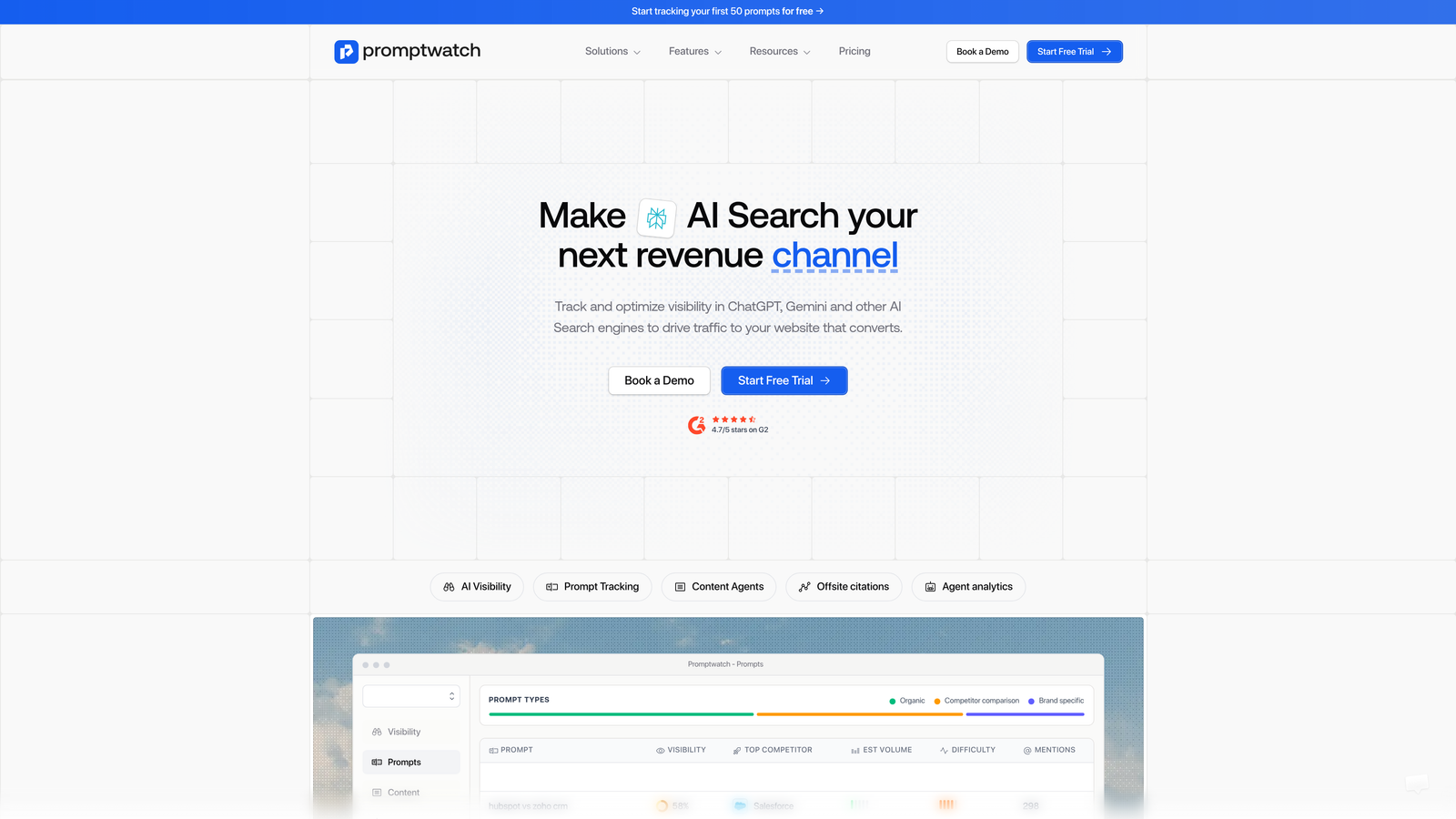
Promptwatch is a prompt-centric AI monitoring tool that tracks how specific queries and prompts surface brands across AI model outputs.
Where This Tool Shines
Where most AI visibility tools track brand mentions broadly, Promptwatch takes a more granular approach: it focuses on the specific prompts and queries that determine whether your brand appears in AI-generated responses. This prompt-level perspective is particularly valuable for marketers who want to understand not just whether they're visible, but which questions are and aren't triggering brand mentions.
This makes Promptwatch useful not only for monitoring but for research. If you're trying to understand how AI models behave around a particular topic or category, the query-level data provides a structured way to analyze that behavior and identify where content investment would improve brand surfacing.
Key Features
Prompt-Level Tracking: Shows which specific queries are surfacing your brand in AI platforms and which are not, enabling targeted content responses.
Cross-Platform Monitoring: Tracks brand visibility across multiple AI models rather than a single platform, giving a broader picture of AI search presence.
Visibility Gap Analysis: Surfaces queries where competitors appear and your brand does not, identifying direct content opportunities.
Model Behavior Insights: Useful for researchers and marketers analyzing how different AI models respond to category and brand queries.
Best For
Promptwatch suits marketers who are already thinking in terms of AI search optimization and want detailed, query-level data to guide their content strategy. It's also a strong fit for researchers and agencies analyzing AI model behavior across a category.
Pricing
Check promptwatch.io for current pricing and plan details.
Which Tool Is Right for Your Team?
The right keyword ranking analysis tool in 2026 depends on what layer of visibility matters most to you right now. Here's a quick way to think about it.
If your priority is AI search visibility and content production together: Sight AI is the strongest option. It's the only tool in this list that combines AI Visibility Score tracking across 6+ platforms, GEO-optimized content generation via 13+ AI agents, and automated indexing in a single workflow. It's built for teams that want to compete in both traditional search and AI-generated answers without stitching together multiple tools.
If your priority is scaling SEO content production from keyword data: Writesonic or AirOps are worth evaluating. Writesonic is faster for teams that need high-volume article output. AirOps is better for teams that want to build custom keyword-to-content pipelines with flexibility over how data flows between tools.
If your priority is monitoring AI search presence specifically: Profound suits enterprise teams that need structured competitive reporting. Peec is the more accessible option for startups and smaller teams. Promptwatch is the right choice if you want granular, prompt-level insight into which queries are and aren't surfacing your brand.
For most growth-focused teams, the most important shift in 2026 is recognizing that keyword ranking analysis now has two layers: traditional SERP positions and AI search visibility. Ignoring either one means leaving traffic and brand presence on the table.
Stop guessing how AI models like ChatGPT and Claude talk about your brand. Start tracking your AI visibility today and see exactly where your brand appears across top AI platforms — then use that data to drive content that earns mentions in both search and AI-generated answers.