SEO automation has shifted dramatically in 2026. It's no longer just about ranking in Google — it's about being cited by AI models like ChatGPT, Claude, and Perplexity that millions of users now treat as their primary search interface. The tools that matter today don't just optimize for crawlers; they help you generate content that AI engines surface, track whether AI models mention your brand, and index your pages fast enough to stay competitive.
This list covers the best SEO automation tools built for content teams, founders, and agencies who need to win in both traditional search and AI-driven discovery. Each tool was evaluated on automation depth, content quality output, AI visibility capabilities, and value for growing teams.
1. Sight AI
Best for: Teams that need content generation, AI visibility tracking, and indexing automation in one platform.
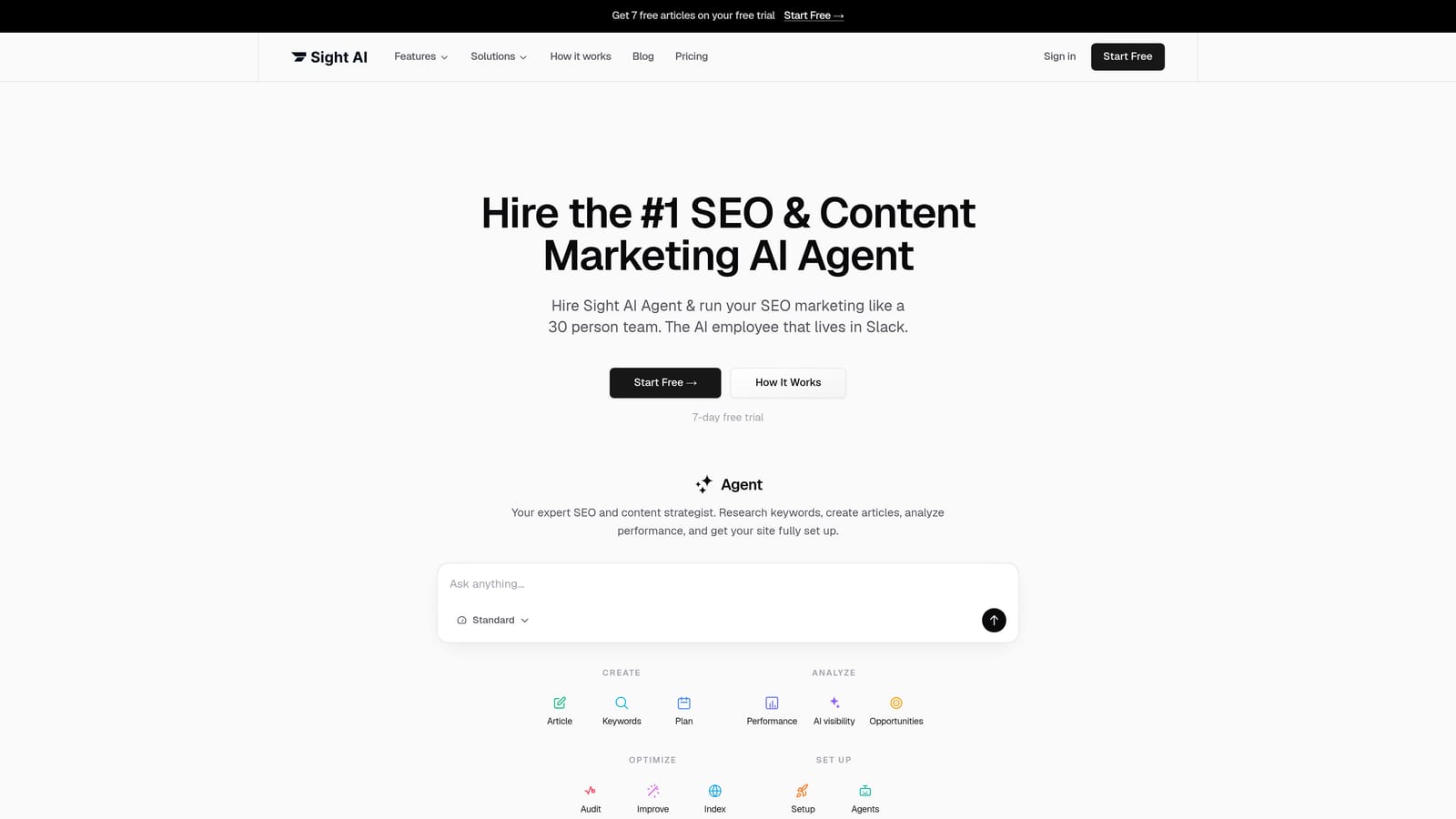
Sight AI is an all-in-one SEO automation platform combining AI visibility monitoring, a multi-agent content writer, and automated website indexing with CMS publishing capabilities.
Where This Tool Shines
Most content teams today are stitching together three or four separate tools: one for AI brand monitoring, another for content generation, and something else for technical indexing. Sight AI collapses all three into a single workflow. That's its core differentiator, and it matters because context flows between these tasks. Knowing which prompts trigger AI citations directly informs what content you should produce next.
The Autopilot Mode is particularly compelling for teams with high output demands. It takes a content brief through research, writing, optimization, and publishing without requiring manual handoffs at each step. For agencies managing multiple clients or founders running lean, this kind of end-to-end automation removes the friction that typically slows content programs down.
Key Features
AI Visibility Score: Tracks how ChatGPT, Claude, Perplexity, and other AI platforms mention your brand, with sentiment analysis to surface whether those mentions are positive, neutral, or negative.
Prompt Tracking: Identifies which user queries trigger brand citations in AI responses, and just as importantly, which queries your brand is missing from entirely.
13+ Specialized AI Agents: Dedicated agents for different content formats including listicles, guides, and explainers, each optimized for both traditional SEO and Generative Engine Optimization (GEO).
Autopilot Mode: End-to-end content automation from brief to published, removing manual steps across the entire content production pipeline.
IndexNow Integration: Pushes new and updated pages to search engines immediately rather than waiting for the next crawl cycle, so your content competes from day one.
CMS Auto-Publishing: Connects directly to your CMS so content moves from generation to live without requiring manual uploads or formatting.
Best For
Sight AI is built for marketers, founders, and agencies who want a unified platform rather than a fragmented stack. It's especially valuable for teams that are already investing in AI content but haven't yet addressed the monitoring side: knowing whether AI models actually cite your brand is the missing piece for most content programs in 2026.
Pricing
Tiered plans are available. Visit trysight.ai for current pricing details, as tiers are updated regularly.
2. Writesonic
Best for: Content teams needing high-volume AI writing with keyword targeting and brand voice consistency.
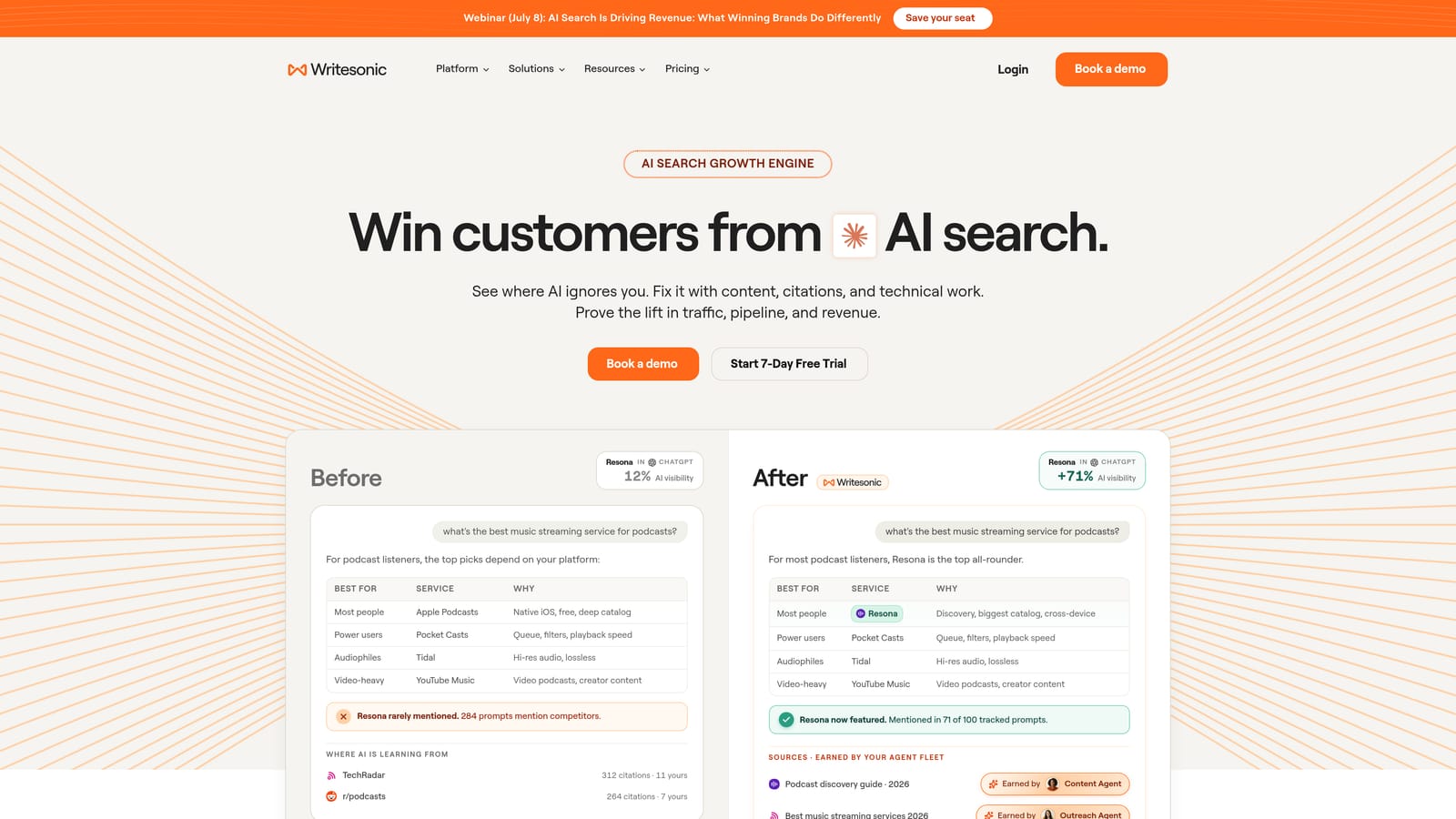
Writesonic is a widely-used AI content generation platform that automates article writing, landing page copy, and other SEO content formats with built-in keyword targeting and brand voice customization.
Where This Tool Shines
Writesonic has built a broad feature set that covers most content generation use cases a marketing team encounters. Its SEO mode integrates keyword targeting directly into the article generation process, which helps teams produce content that's structured for search from the start rather than retrofitting optimization afterward.
The brand voice configuration is genuinely useful for agencies managing multiple client accounts. Once a voice profile is set, generated content stays on-tone without requiring heavy editing. For teams producing content at volume, that consistency saves meaningful time in the review and revision cycle.
Key Features
AI Article Writer with SEO Mode: Generates keyword-targeted long-form content with structure informed by search intent.
Brand Voice Configuration: Stores tone and style preferences so all generated content reflects a consistent voice across formats.
Template Library: Covers blog posts, product descriptions, ads, email copy, and more, reducing setup time for common content formats.
Chatsonic: A conversational AI interface useful for research, ideation, and exploring content angles before committing to a full draft.
Bulk Content Generation: Supports teams with high output requirements by processing multiple content briefs in parallel.
Best For
Writesonic is a strong fit for content teams and agencies that need reliable, high-volume AI writing output. It's worth noting that Writesonic focuses on content generation. It does not offer AI visibility monitoring or indexing automation, so teams serious about tracking AI citations will need to pair it with a separate monitoring tool.
Pricing
Tiered plans based on word and generation volume. A free trial is available to test the platform before committing.
3. AirOps
Best for: SEO and content operations teams building custom, scalable AI content pipelines without engineering resources.
AirOps is an AI workflow automation platform that lets teams build custom LLM-powered pipelines for programmatic content generation and content operations at scale.
Where This Tool Shines
AirOps occupies a different category from most AI writing tools. Rather than giving you a finished content product, it gives you the infrastructure to build your own content production system. For teams running programmatic SEO at scale, generating thousands of location pages, category pages, or product descriptions, this kind of flexible pipeline builder is far more practical than trying to adapt a general-purpose writing tool.
The no-code workflow builder is the key unlock here. Content and SEO teams can design multi-step AI pipelines that pull from data sources, apply different LLMs to different tasks, and push output to a CMS, all without requiring engineering support. That independence matters for teams that want to move quickly and iterate on their content operations without waiting on a development queue.
Key Features
No-Code Workflow Builder: Visual interface for designing custom AI content pipelines without writing code.
Data Source Integrations: Connects to spreadsheets, databases, and CMS platforms so content pipelines can pull from real business data.
Programmatic SEO Support: Well-suited for generating large volumes of structured content like location pages and category descriptions.
Flexible LLM Selection: Allows teams to assign different language models to different steps in a workflow based on task requirements.
Team Collaboration Features: Shared workflow access and version control for content operations teams working across multiple projects.
Best For
AirOps is best suited for SEO teams with sophisticated programmatic content needs and the operational maturity to design and manage custom workflows. It's more of a content operations infrastructure tool than a turnkey writing solution, so it rewards teams that know exactly what pipeline they want to build.
Pricing
Contact AirOps directly for current plan pricing, as it varies based on usage volume and team size.
4. Profound
Best for: Enterprise and mid-market brands tracking their presence and competitive positioning in AI-generated search answers.
Profound is an AI search visibility platform that monitors how brands appear in AI-generated answers, helping marketing teams understand and improve their position in AI-driven search.

Where This Tool Shines
Profound is built specifically for the monitoring side of AI visibility. It tracks how your brand appears inside AI-generated search responses across major platforms and surfaces competitive gaps where rivals are being cited instead. For enterprise brand teams trying to understand their AI search footprint at scale, this kind of structured analytics is difficult to replicate manually.
The topic and query analytics are particularly useful for informing content strategy. Knowing which prompts currently trigger brand citations, and which relevant queries your brand is absent from, creates a clear roadmap for where to invest content production effort. That connection between monitoring data and content planning is where Profound adds the most strategic value.
Key Features
AI Response Brand Tracking: Monitors brand mentions inside AI-generated answers across major AI search platforms.
Competitive Gap Analysis: Identifies where competitors are cited in AI responses and your brand is not, surfacing priority content opportunities.
Topic and Query Analytics: Shows which prompts trigger brand citations and which relevant queries your brand is missing from entirely.
Reporting Dashboards: Structured reporting for brand and SEO teams to track AI visibility trends over time.
Enterprise Positioning: Built with the data volume and reporting depth that larger organizations with dedicated brand teams typically require.
Best For
Profound is best suited for enterprise and mid-market organizations with dedicated brand or SEO teams who need rigorous AI visibility analytics. It focuses on monitoring and analytics rather than content generation or technical indexing, so it works best as part of a broader stack.
Pricing
Enterprise pricing model. Contact Profound directly for current plan details and to discuss fit for your organization's scale.
5. Peec
Best for: Growth marketers who want actionable GEO optimization recommendations alongside AI brand monitoring.
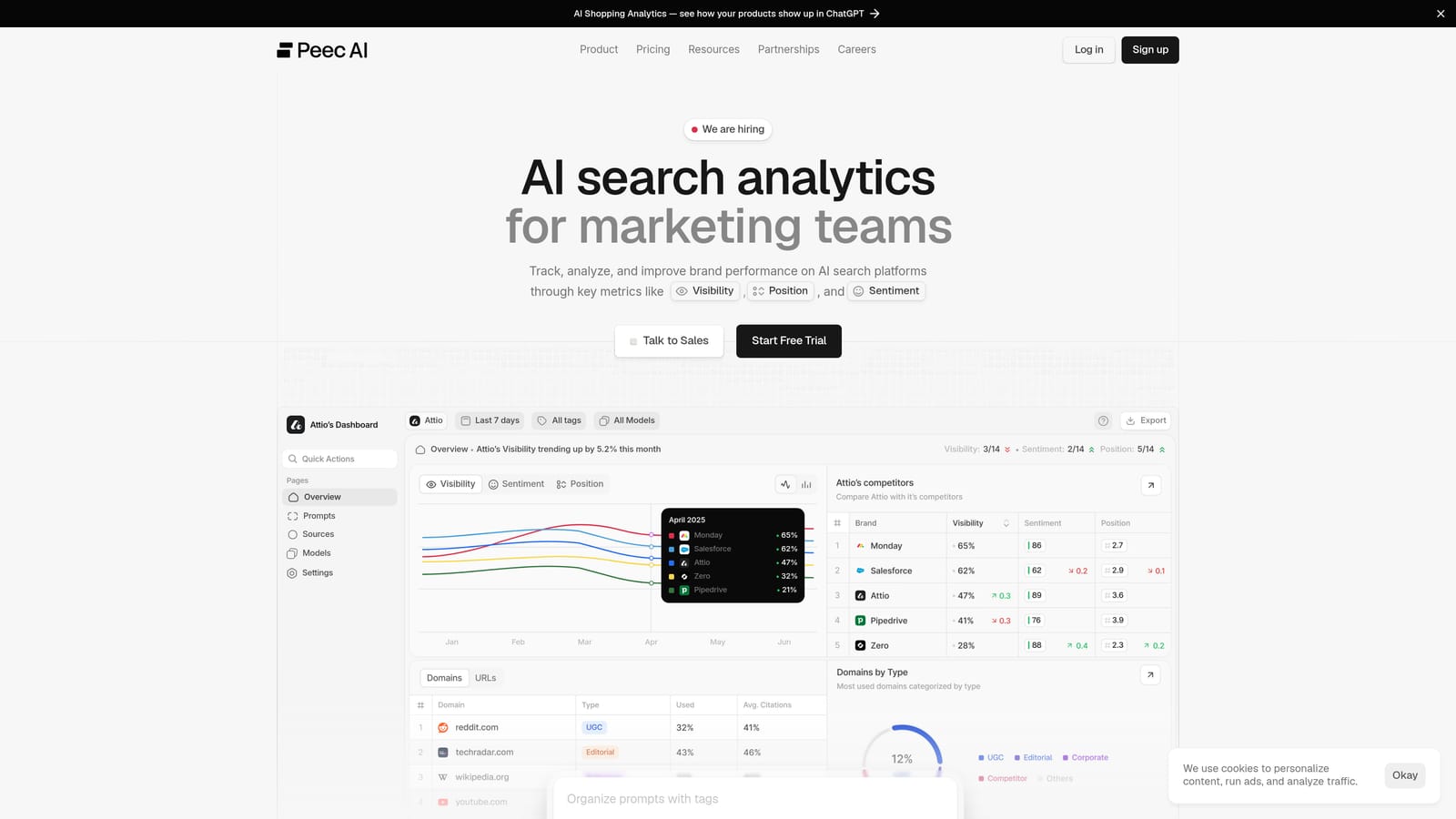
Peec is a GEO-focused monitoring tool that tracks brand presence in AI-generated search results and provides recommendations for improving how AI engines represent your brand.
Where This Tool Shines
Peec sits at the intersection of monitoring and optimization guidance. Where some AI visibility tools focus purely on reporting what's happening, Peec pairs that monitoring data with recommendations for improving your GEO positioning. For growth marketers who want to act on insights rather than just observe them, that guidance layer reduces the gap between data and action.
The competitive benchmarking feature helps teams contextualize their AI search presence. Knowing your brand is cited in a certain percentage of relevant queries is more useful when you can see how that compares to direct competitors. That competitive context helps prioritize where to focus GEO optimization efforts first.
Key Features
Brand Mention Tracking: Monitors brand appearances across AI answer engines to give a clear picture of current AI search presence.
GEO Optimization Recommendations: Surfaces actionable suggestions for improving how AI models represent your brand based on response analysis.
Competitive Benchmarking: Compares your AI search presence against competitors to identify priority gaps.
Prompt Performance Monitoring: Tracks how branded and category-level queries perform in terms of triggering brand citations.
Growth Marketer Focus: Interface and workflow designed for marketers adapting to AI-first search rather than traditional SEO analysts.
Best For
Peec is a good fit for growth-oriented marketing teams that want monitoring plus guidance rather than raw data alone. Like the other monitoring-focused tools on this list, it doesn't generate content or handle indexing, so it works best alongside a content production tool.
Pricing
Check peec.ai directly for current pricing tiers, as the platform is actively evolving.
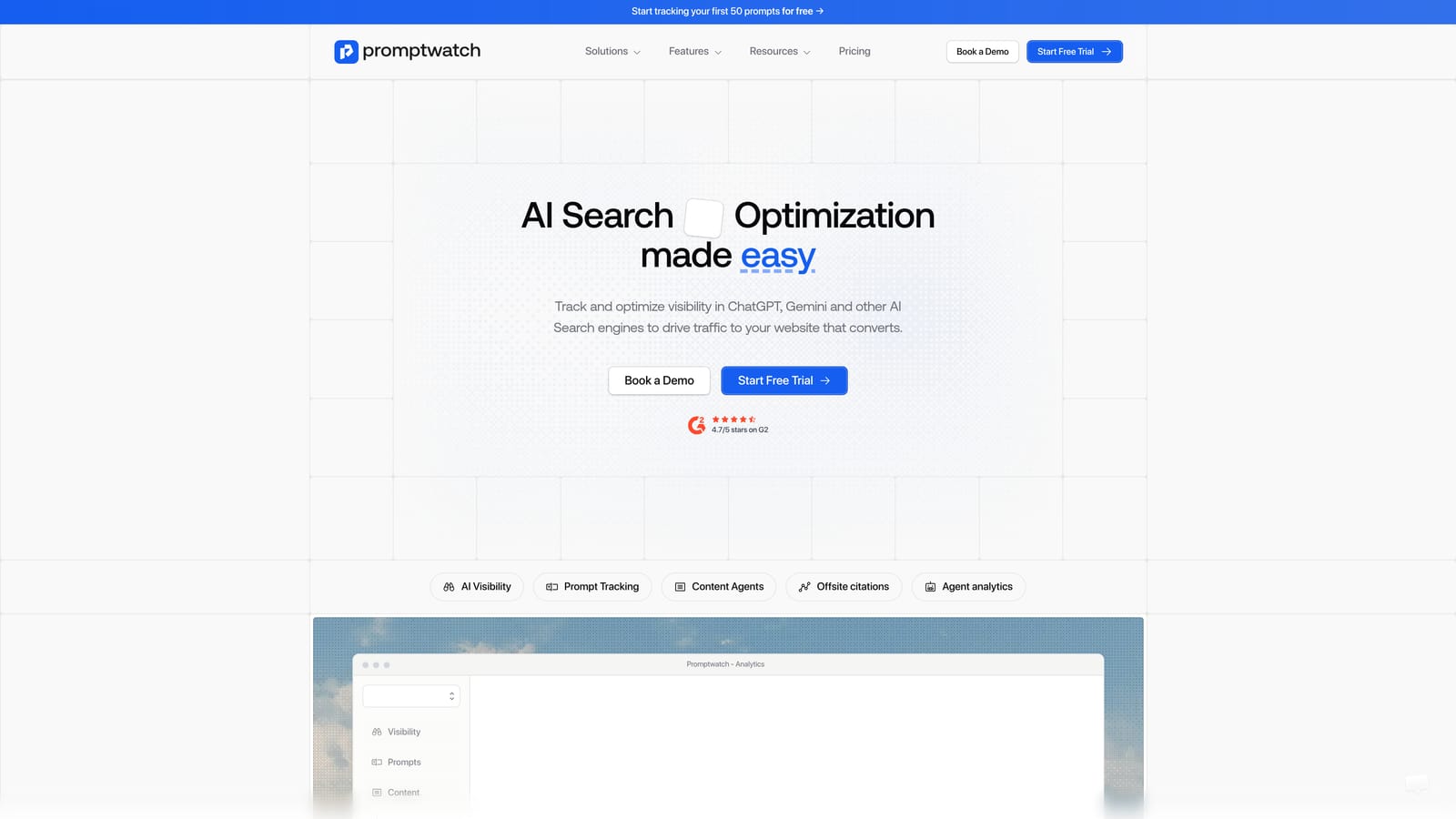
6. Promptwatch
Best for: Teams focused on competitive intelligence around how AI models respond to branded and category-level queries.
Promptwatch is a brand monitoring tool focused on tracking how AI language models respond to specific prompts, including branded queries and category-level searches, to help teams understand and improve their AI citation presence.
Where This Tool Shines
Promptwatch takes a prompt-first approach to AI visibility monitoring. Rather than just tracking whether your brand appears in AI responses generally, it lets you monitor specific prompts and see exactly how AI models respond to them over time. That granularity is valuable for teams running structured AI search experiments or tracking whether content changes are moving the needle on specific queries.
The trend analysis and response history features help teams understand whether their AI citation presence is improving or declining, and when changes occur. For competitive intelligence specifically, the ability to monitor which prompts surface competitors instead of your brand is a useful input for both content strategy and GEO optimization efforts.
Key Features
Prompt-Level Brand Tracking: Monitors how AI models respond to specific prompts, including branded queries and category searches, with granular visibility into response content.
Category Query Monitoring: Identifies where competitors are cited in category-level AI responses and your brand is absent.
AI Response History and Trends: Tracks how AI model responses to monitored prompts change over time, surfacing shifts in citation patterns.
Competitive Intelligence: Surfaces which competitors are winning AI citations on queries relevant to your brand.
Change Alerts: Notifies teams when AI models change how they represent a brand in response to monitored prompts.
Best For
Promptwatch is well-suited for SEO and brand teams that want detailed, prompt-level intelligence on AI search positioning. It's a monitoring tool focused on insight and competitive intelligence rather than content generation or indexing automation.
Pricing
Check promptwatch.io for current pricing options.
Choosing the Right Tool for Your Stack
The tools on this list split naturally into two categories: content generation and automation platforms on one side, and AI visibility monitoring tools on the other. Understanding which gap you need to fill first is the most useful frame for making a decision.
If content generation is your primary need: Writesonic is the most accessible starting point for teams that want reliable AI writing output with keyword targeting built in. AirOps is the better choice if you're running programmatic SEO at scale and need a flexible pipeline infrastructure rather than a fixed writing interface.
If AI visibility monitoring is your priority: Profound, Peec, and Promptwatch each approach the same core problem from slightly different angles. Profound is oriented toward enterprise-scale analytics and reporting. Peec adds optimization recommendations on top of monitoring data. Promptwatch goes deepest on prompt-level granularity and competitive intelligence. The right choice depends on whether you need breadth, guidance, or specificity.
If you need both, without managing multiple vendors: Sight AI is the only platform on this list that covers content generation, AI visibility monitoring, and technical indexing automation in a single workflow. For growing teams and agencies where tool sprawl is already a budget and coordination problem, consolidating on a unified platform often makes more practical sense than assembling the best-in-class option for each function separately.
The most important step right now is auditing what you're currently missing. If AI models are increasingly influencing how users discover brands in your category, and for most industries they are, then not knowing how those models represent your brand is a real blind spot. That's the gap worth closing first.
Start tracking your AI visibility today and see exactly where your brand appears across top AI platforms. Stop guessing how ChatGPT, Claude, and Perplexity talk about your business, and start using that intelligence to guide the content you create next.