AI search is reshaping how brands get discovered. Platforms like ChatGPT, Claude, and Perplexity are now answering questions that used to send users to Google — and if your brand isn't showing up in those answers, you're invisible to a fast-growing segment of your audience.
The challenge is that traditional SEO tools weren't built for this. They track rankings, backlinks, and keyword positions — not whether an AI model mentions your brand when someone asks for a recommendation. A new category of tools has emerged to fill that gap, helping marketers monitor AI-generated responses, identify content opportunities, and publish the kind of structured, authoritative content that AI platforms are more likely to surface.
This guide covers the top tools for improving your visibility in AI platforms in 2026, evaluated on tracking depth, content capabilities, ease of use, and overall value. Whether you're just starting to think about Generative Engine Optimization (GEO) or looking to systematize an existing strategy, there's a tool here for you.
1. Sight AI
Best for: Marketers and agencies who want an all-in-one AI visibility, content, and indexing workflow.
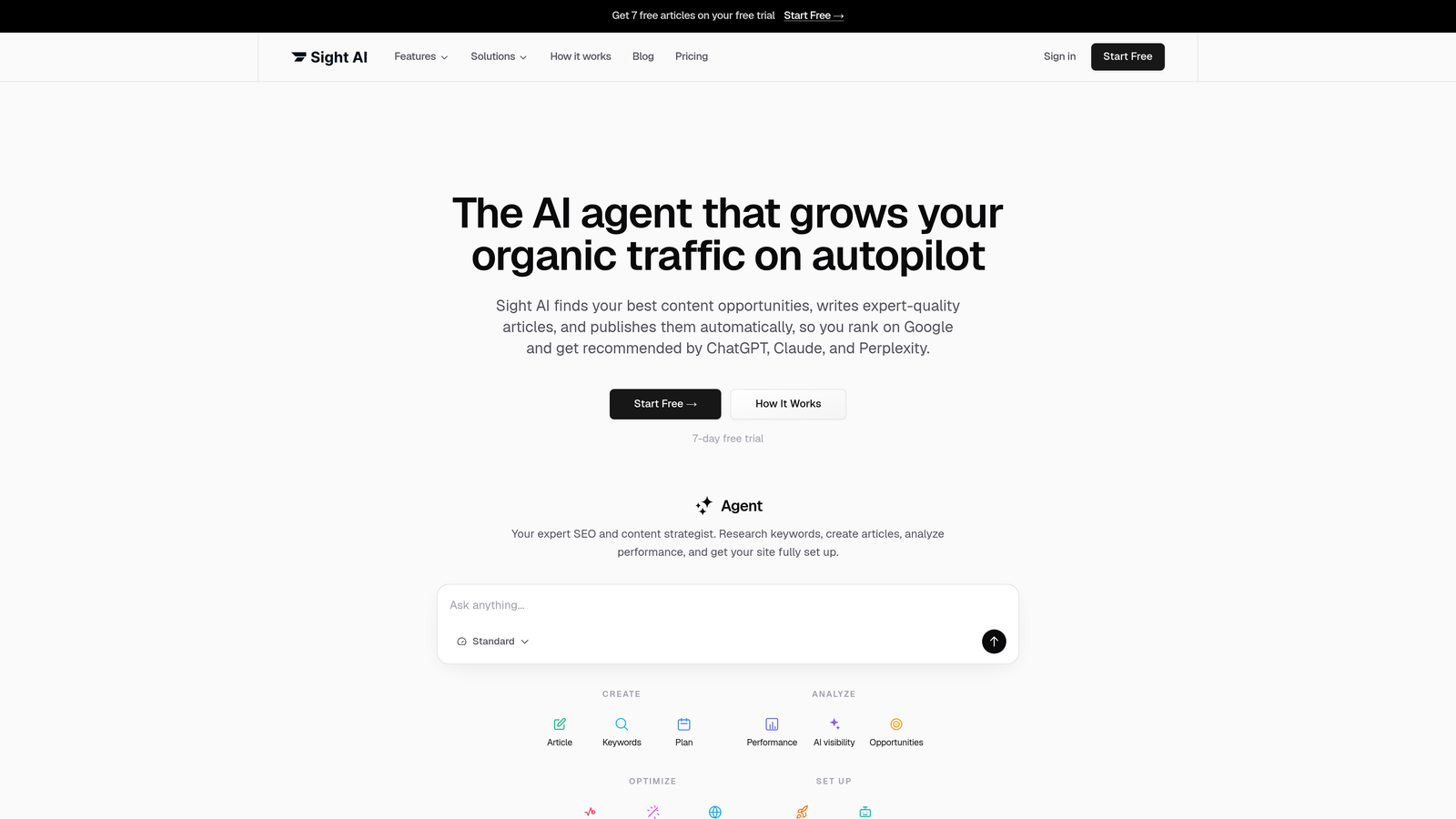
Sight AI is an all-in-one AI visibility platform that tracks brand mentions across 6+ AI models, generates SEO/GEO-optimized content with 13+ specialized AI agents, and automates website indexing with IndexNow integration.
Where This Tool Shines
Most tools in this space do one thing: they either track AI mentions or they help you create content. Sight AI connects both sides of the workflow. You can see exactly which prompts surface your brand across ChatGPT, Claude, Perplexity, and other major AI platforms, then move directly into content creation and publishing without switching tools.
The Autopilot Mode is particularly useful for teams managing content at scale. Rather than manually triggering each piece, you can configure content pipelines that run on their own, from generation through to CMS publishing and indexing. For agencies managing multiple clients or founders with limited bandwidth, this kind of automation changes what's actually achievable.
Key Features
AI Visibility Score: A consolidated score with sentiment analysis showing how your brand is characterized across AI platforms, not just whether it appears.
Prompt Tracking: See exactly which user queries surface your brand and which ones don't, giving you a clear picture of content gaps to address.
13+ AI Content Agents: Specialized agents for generating listicles, guides, explainers, and other formats optimized for both traditional SEO and GEO.
IndexNow Integration: Automated content indexing that pushes new pages to search engines faster, reducing the lag between publishing and discovery.
CMS Auto-Publishing: Streamlines the path from draft to live, reducing manual steps in the content workflow.
Best For
Sight AI is best suited for marketers, founders, and agencies who want a unified platform rather than a patchwork of separate tools. If you're serious about building an AI visibility strategy and need to move from monitoring to content production to indexing in a single workflow, this is the most complete option available.
Pricing
Check trysight.ai for current pricing and plan details. Multiple tiers are available depending on team size and usage needs.
2. Promptwatch
Best for: Teams that want to test and iterate on which content strategies influence AI-generated responses.
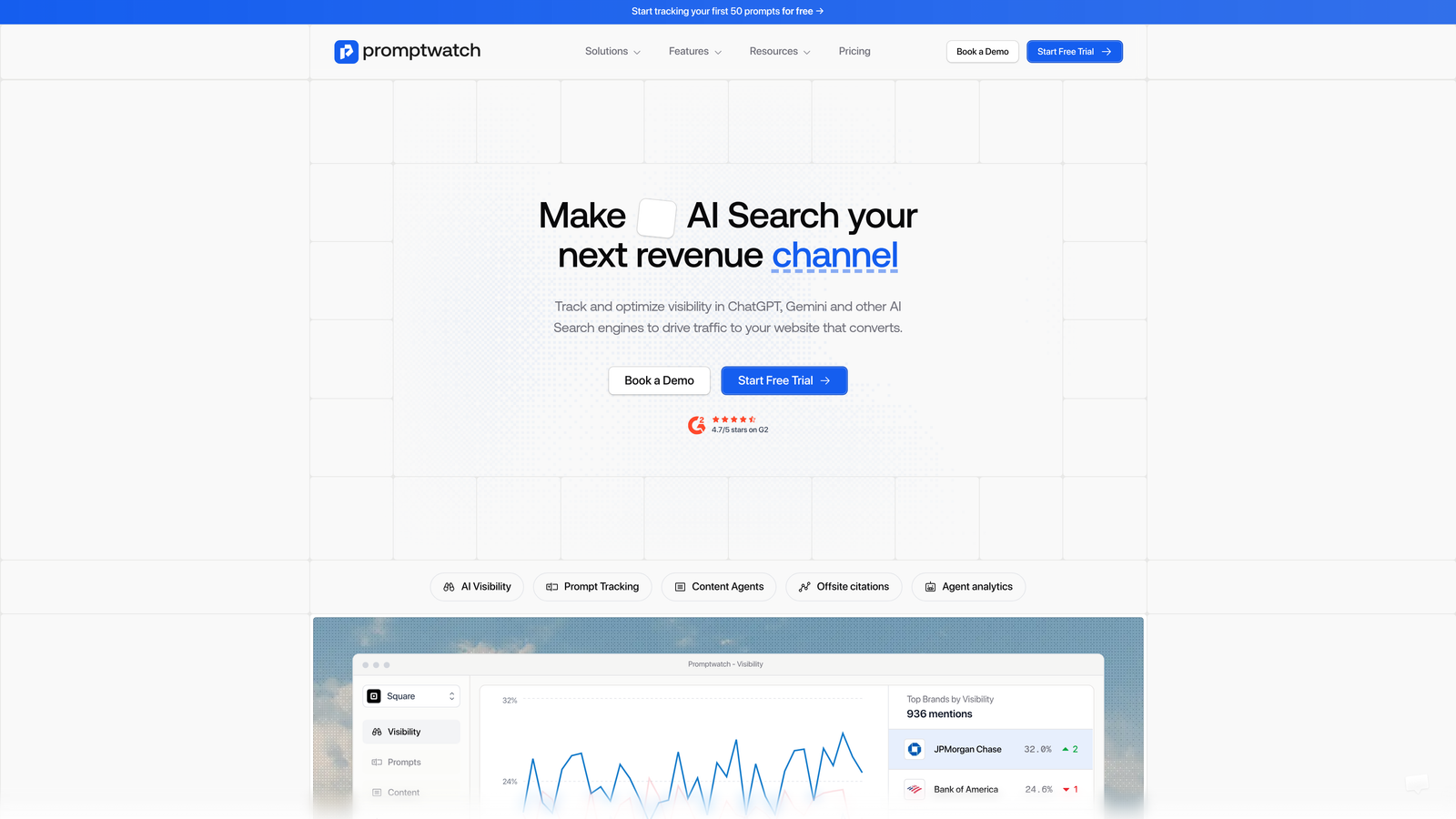
Promptwatch is a prompt-level AI monitoring tool that tracks how specific queries return responses about your brand across major AI platforms.
Where This Tool Shines
Promptwatch takes a granular approach to AI monitoring. Rather than giving you a broad overview of brand mentions, it lets you track specific prompts over time, so you can see whether a piece of content you published actually changed how an AI model responds to a given query. That iterative feedback loop is valuable for teams actively testing their GEO strategy.
The response logging feature is particularly useful here. Being able to compare how AI platforms responded to the same prompt a month ago versus today gives you a concrete way to measure whether your content investments are paying off in terms of AI visibility.
Key Features
Prompt-Specific Tracking: Monitor individual prompts across major AI platforms to understand exactly what triggers a brand mention.
Response Logging: Historical logs of AI-generated responses let you identify trends and measure change over time.
Brand Mention Detection: Automated detection of when and how your brand appears within AI-generated answers.
Iterative Testing: Run content experiments and track whether changes in your content strategy translate into changes in AI responses.
Best For
Promptwatch suits content strategists and SEO teams who want to move beyond passive monitoring and actively test which content formats, structures, and topics influence AI-generated answers. It's a strong complement to a broader content production workflow.
Pricing
Check promptwatch.io for current pricing and plan options.
3. Profound
Best for: Enterprise marketing teams that need share-of-voice measurement and competitive intelligence across AI search channels.
Profound is an enterprise-grade AI search analytics platform focused on share-of-voice measurement and competitive brand intelligence across AI-generated responses.

Where This Tool Shines
Where many AI monitoring tools focus on whether your brand appears, Profound focuses on how much your brand appears relative to competitors. The share-of-voice framing is familiar to enterprise marketing teams and makes it easier to translate AI visibility data into the kind of reporting that resonates with leadership and stakeholders.
The competitive benchmarking capability is a standout feature for larger organizations. Understanding not just your own AI presence but how it compares to key competitors across AI platforms gives you the context needed to prioritize content investments and identify where you're losing ground.
Key Features
AI Share-of-Voice Analysis: Measure how often your brand appears in AI-generated responses relative to competitors in your category.
Competitive Benchmarking: Compare brand visibility across AI search channels against specific competitors.
Enterprise-Scale Tracking: Built to handle the volume and complexity of large brand portfolios and multiple product lines.
Analytics Dashboards: Reporting interfaces designed for marketing teams that need to present AI visibility data to broader stakeholders.
Best For
Profound is best suited for enterprise marketing teams with dedicated analytics resources and a need for competitive intelligence. If you're at a company where share-of-voice reporting is already part of your marketing cadence, Profound brings that familiar framework to AI search.
Pricing
Profound is typically enterprise-focused in its pricing. Check profound.co for current plan details and to request a demo.
4. Peec
Best for: Brand and reputation teams that need to understand how AI platforms characterize their brand, not just whether it appears.
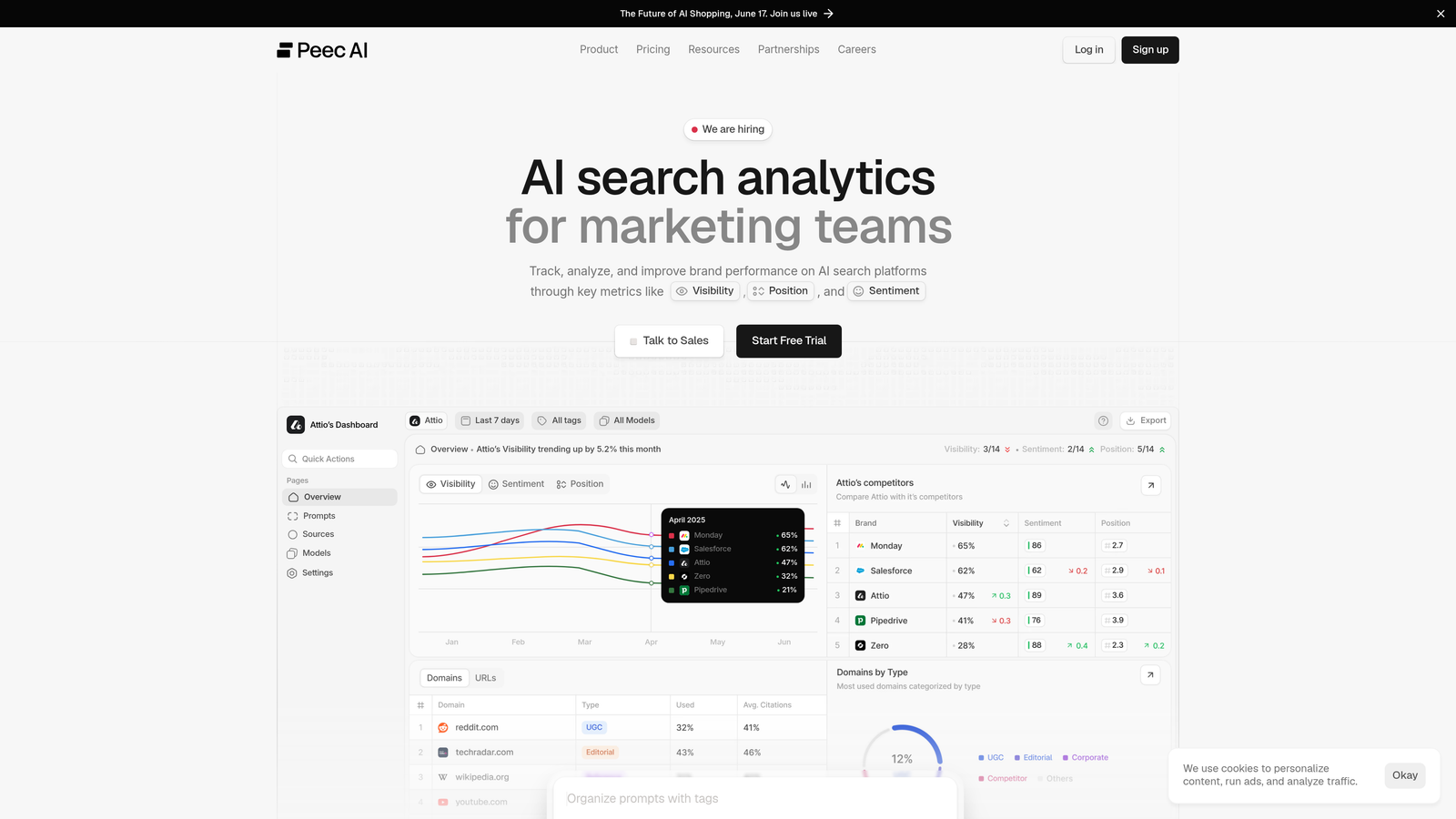
Peec is an AI brand monitoring tool that layers sentiment analysis on top of mention tracking, giving teams visibility into how they're characterized within AI-generated responses.
Where This Tool Shines
There's a meaningful difference between appearing in an AI response and appearing favorably. A brand can be mentioned frequently in AI-generated answers while being consistently framed in a negative or neutral context. Peec addresses this by combining mention tracking with sentiment scoring, so you get a more complete picture of your AI presence.
The alert system is useful for reputation management workflows. Rather than manually reviewing AI responses on a regular basis, teams can set up notifications for significant shifts in sentiment, catching potential issues early and responding with targeted content before a negative characterization becomes entrenched.
Key Features
Mention Tracking with Sentiment Scoring: Tracks brand appearances in AI responses and assigns sentiment scores to understand the quality of each mention.
Brand Characterization Analysis: Goes beyond detection to analyze how AI models describe and frame your brand in context.
Multi-Platform Monitoring: Covers multiple AI platforms to give a consistent view across different AI environments.
Sentiment Alerts: Notifications for significant changes in how AI platforms are characterizing your brand, enabling faster response.
Best For
Peec is a strong fit for brand managers, communications teams, and reputation-focused marketers who need to go beyond raw mention counts. It's particularly relevant for brands in competitive or sensitive categories where how you're described matters as much as whether you appear.
Pricing
Check peec.ai for current pricing and available plan tiers.
5. AirOps
Best for: Content operations teams that need to build scalable, repeatable AI content pipelines.
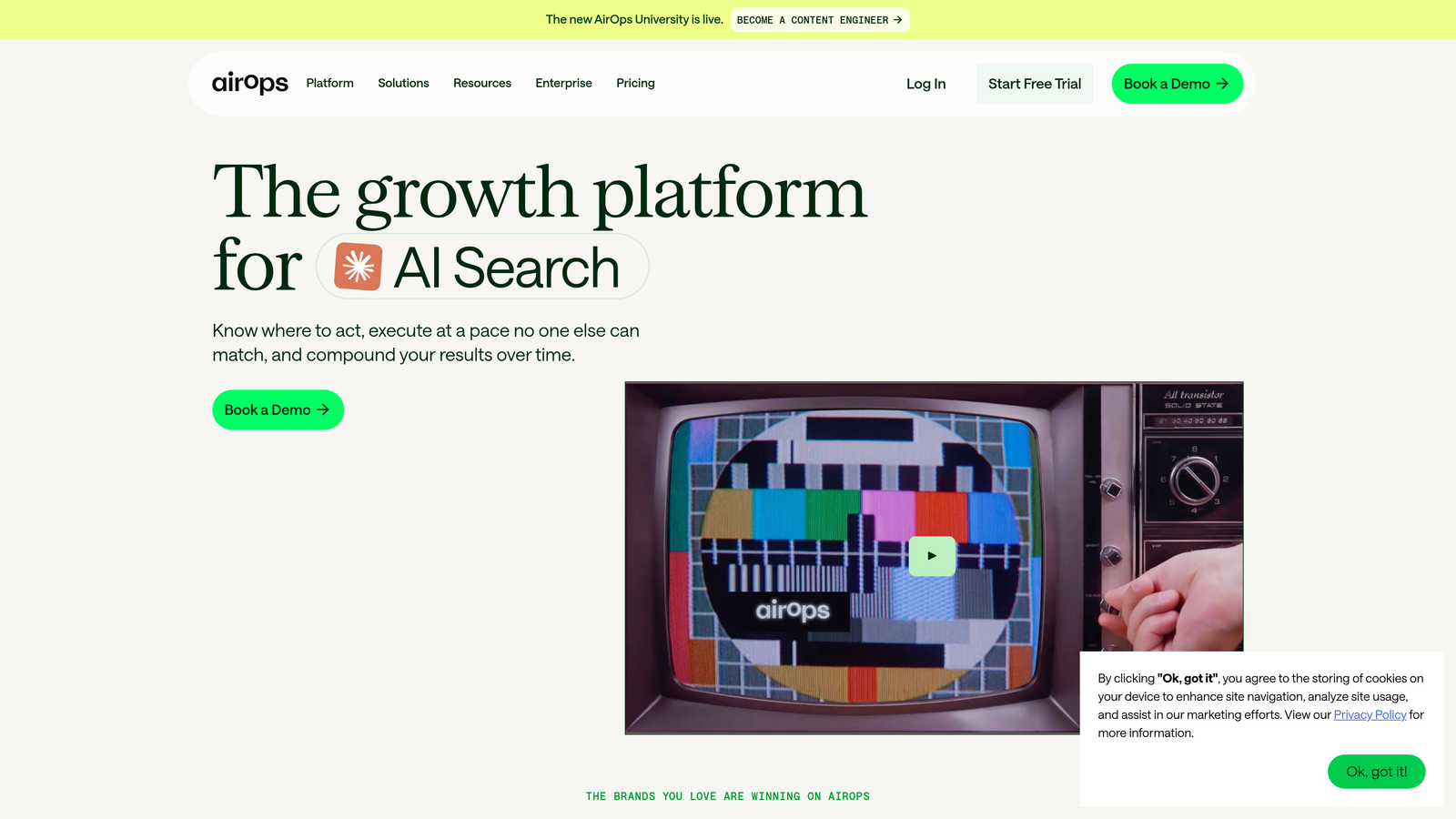
AirOps is an LLM-powered workflow automation platform that helps content teams build repeatable, scalable AI content pipelines for producing the volume and structure of content that AI platforms are more likely to cite.
Where This Tool Shines
AirOps isn't a tracking tool. It won't tell you whether your brand is mentioned in AI responses. What it does is help you build the content infrastructure that makes those mentions more likely. AI platforms tend to surface content that is well-structured, authoritative, and comprehensive, and producing that kind of content at scale requires a systematic approach that AirOps is designed to support.
The workflow builder is flexible enough to accommodate a range of content operations, from single-article pipelines to multi-step production workflows that pull from data sources, apply brand guidelines, and route content for review. For teams that have identified content gaps through monitoring tools and need to close them quickly, AirOps can significantly accelerate output.
Key Features
LLM Workflow Builder: A visual interface for building custom AI content workflows without needing to write code.
Pipeline Templates: Pre-built templates for common content operations, making it faster to get repeatable workflows running.
CMS and Data Integrations: Connects with popular content management systems and data sources to pull context into content generation.
Team Collaboration: Features for managing content workflows across multiple contributors and reviewers.
Best For
AirOps is best for content operations managers and marketing teams that have a clear content strategy and need to execute it at volume. It pairs well with monitoring tools that identify what content to create, while AirOps handles the production side of that equation.
Pricing
Check airops.com for current pricing and available plan tiers, which vary based on usage and team size.
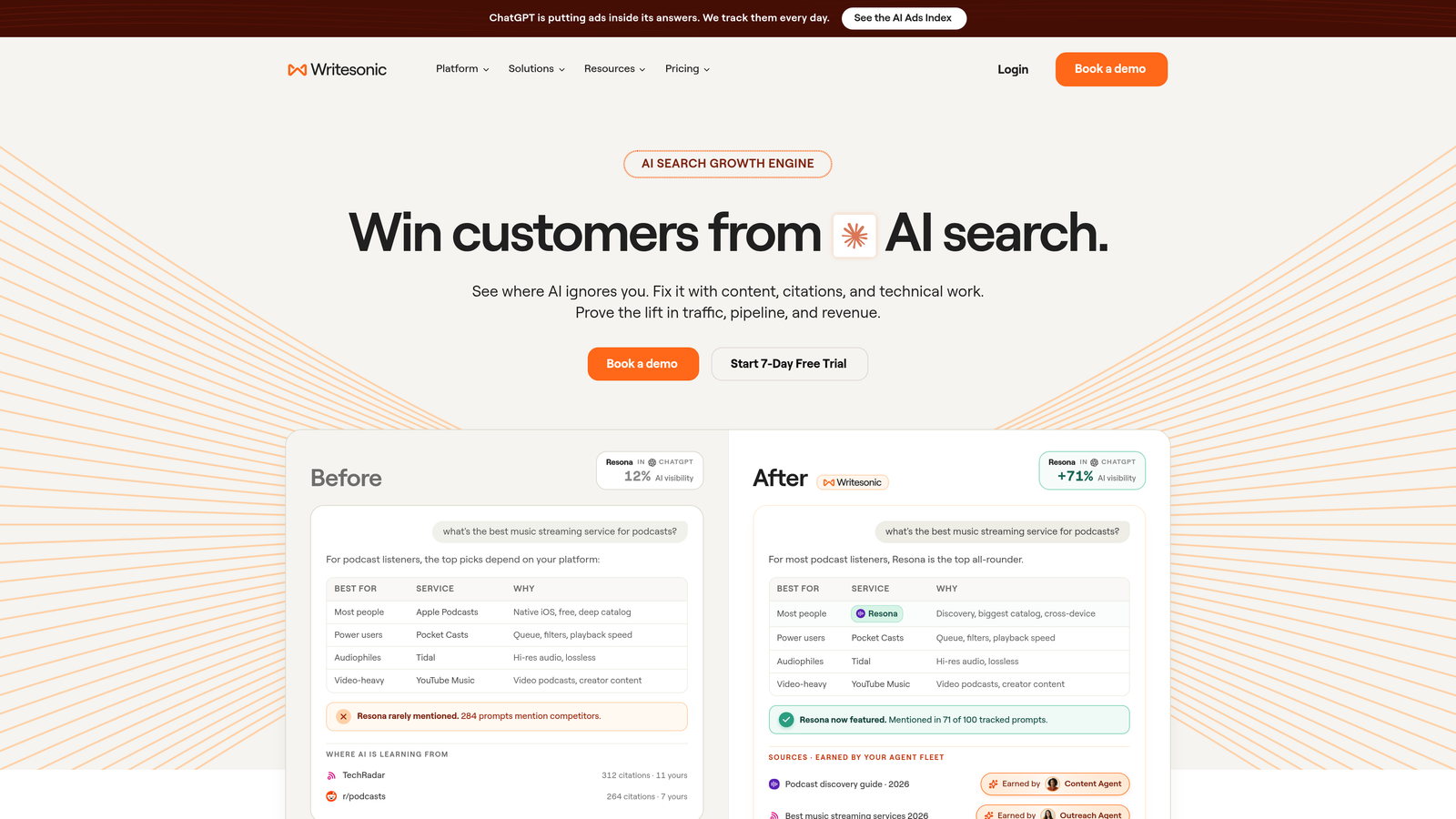
6. Writesonic
Best for: Smaller teams and individuals who need accessible AI content generation with built-in SEO features.
Writesonic is a broad AI content generation platform with SEO-focused article writing tools and an AI assistant called Chatsonic, useful for teams that need to increase content output as part of their AI visibility strategy.
Where This Tool Shines
Writesonic's strength is accessibility. It offers a wide range of content formats, a relatively low barrier to entry in terms of pricing, and enough SEO-focused features to make it genuinely useful for teams working to improve their organic and AI search presence. For smaller teams or founders who don't yet have a dedicated content operation, it provides a practical starting point.
Chatsonic, the platform's AI assistant, is useful for research and ideation phases, helping teams quickly explore angles, identify topics, and draft outlines before moving into full article production. The brand voice customization feature helps maintain consistency across content produced by different team members or at different times.
Key Features
AI Article Writer: Generates long-form content with SEO optimization features including keyword integration and structure guidance.
Chatsonic: An AI assistant for research, ideation, and conversational content development.
Brand Voice Customization: Allows teams to define and apply a consistent brand tone across generated content.
Multi-Format Support: Covers a wide range of content types including blog posts, landing pages, and social copy.
Best For
Writesonic is well-suited for smaller marketing teams, solo founders, and early-stage companies that need to increase content output without a large budget. It's a practical tool for building content volume, though teams with more advanced AI visibility needs will likely want to pair it with a dedicated monitoring platform.
Pricing
A free plan is available. Paid plans start at accessible price points. Check writesonic.com for current rates and plan details.
Which Tool Is Right for Your Strategy?
The right choice depends on where you are in your AI visibility journey and what you need most right now.
If you want a single platform that covers monitoring, content creation, and indexing in one workflow, Sight AI is the most complete option available. The combination of AI Visibility Score tracking, specialized content agents, and automated indexing means you're not stitching together multiple tools to accomplish what one platform can handle end to end.
For enterprise teams with competitive intelligence needs, Profound's share-of-voice framing and benchmarking capabilities make it a strong fit. If sentiment and brand characterization are your primary concern, Peec fills that niche well. Teams that want to run iterative content experiments and track prompt-level responses will find Promptwatch valuable as a testing tool.
On the content production side, AirOps is the better choice for teams building sophisticated, scalable content pipelines, while Writesonic offers a more accessible entry point for smaller teams focused on increasing output volume.
One thing worth noting: GEO (Generative Engine Optimization) is not a replacement for traditional SEO. It's a complement to it. The brands that will win in AI search are the ones building authoritative, well-structured content that serves both human readers and AI models simultaneously. The tools above help you do exactly that.
Stop guessing how AI models like ChatGPT and Claude talk about your brand. Start tracking your AI visibility today and see exactly where your brand appears across top AI platforms, which content gaps are costing you mentions, and how to close them systematically.