AI platforms are quietly reshaping how people discover brands, products, and services. When someone asks ChatGPT for the best project management tool or prompts Perplexity for a software recommendation, the brands that appear in those answers win attention that never touches a traditional search results page.
The problem? Most brands have no idea whether they're being mentioned in AI-generated answers at all. Poor visibility in AI platforms is a growing blind spot, and unlike traditional SEO rankings, it doesn't show up in your usual dashboards.
Fixing this requires a combination of monitoring where you stand, optimizing content AI systems are likely to cite, and ensuring your pages are technically discoverable. Here are the top tools helping marketers, founders, and agencies tackle each layer of that challenge.
1. Sight AI
Best for: Teams wanting an all-in-one platform to diagnose, monitor, and fix AI visibility gaps.
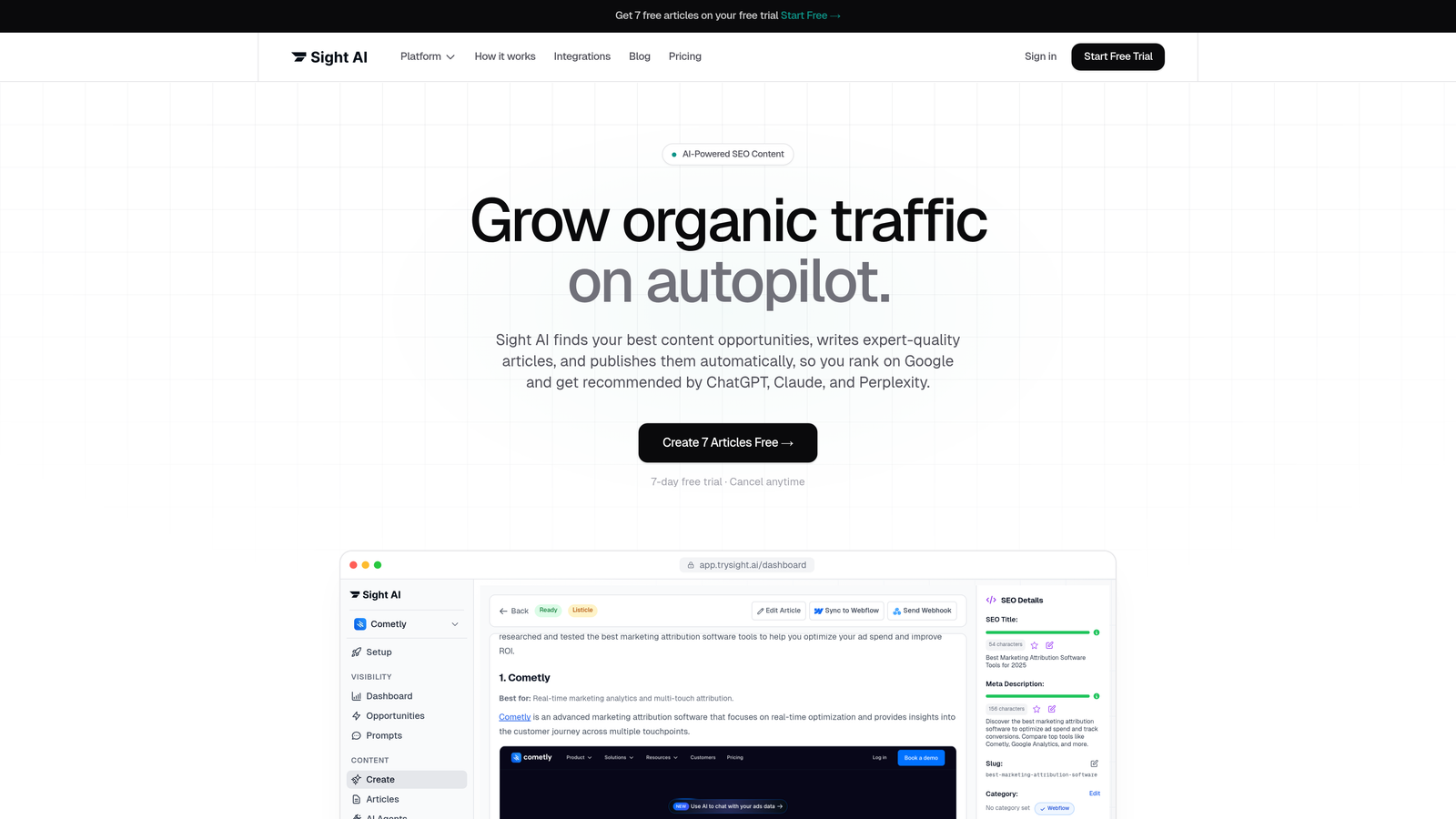
Sight AI is an AI visibility platform that combines brand mention tracking, GEO-optimized content generation, and automated indexing in a single workflow.
Where This Tool Shines
Most tools in this space do one thing: they either track mentions or help you create content. Sight AI connects those two functions, so when you discover your brand isn't appearing in AI-generated answers, you can act on it immediately without switching platforms.
The platform monitors how AI models like ChatGPT, Claude, and Perplexity talk about your brand, then gives you the content infrastructure to close the gaps it finds. For teams with limited bandwidth, that integrated loop is a significant advantage.
Key Features
AI Visibility Score: Tracks brand mentions with sentiment analysis across ChatGPT, Claude, Perplexity, and more, giving you a clear picture of where you stand.
Prompt Tracking: Shows which specific queries trigger your brand mentions in AI outputs, so you know exactly which topics to prioritize.
13+ Specialized AI Agents: Generates SEO and GEO-optimized content including listicles, guides, and explainers designed to improve AI citation rates.
Autopilot Mode: Automates content publishing through CMS integrations, reducing the manual overhead of running a consistent content operation.
IndexNow Integration: Automatically notifies search engines when new content is published, accelerating discovery by AI retrieval systems.
Best For
Marketers and agency teams who want to move beyond guessing and build a systematic approach to AI visibility. Particularly strong for teams that need both the diagnostic layer (where do we appear?) and the production layer (how do we improve?) in one place.
Pricing
A free tier is available for getting started. Paid plans start at an accessible monthly rate. Visit the Sight AI pricing page for current plan details.
2. Otterly.AI
Best for: Competitive benchmarking and ongoing AI search mention monitoring.
Otterly.AI is an AI search monitoring platform that tracks how brands appear in AI-generated answers across multiple large language models.
Where This Tool Shines
Otterly is built specifically for the AI search monitoring use case, which means its tracking capabilities are more focused than general SEO suites that have bolted on AI features. If competitive visibility is your primary concern, it delivers clear benchmarking data showing how your brand compares to competitors across AI platforms.
The trend analysis feature is particularly useful for understanding whether your AI visibility is improving or declining over time, which helps teams measure the impact of content and optimization efforts.
Key Features
Multi-Platform Tracking: Monitors brand mentions across ChatGPT, Perplexity, Google AI Overviews, and other AI-powered answer engines.
Competitive Benchmarking: Compares your AI mention frequency and sentiment against named competitors in your space.
Scheduled Query Monitoring: Automates the process of running tracked queries on a regular cadence so you don't have to check manually.
Trend Analysis: Surfaces visibility changes over time, helping you correlate content updates with shifts in AI mention rates.
Best For
Marketing teams and agencies focused on understanding competitive positioning in AI search. A strong choice when the primary goal is monitoring and reporting rather than content production.
Pricing
Paid plans are available at multiple tiers. Check the Otterly.AI website for current pricing, as the platform continues to evolve its offerings.
3. Profound
Best for: Enterprise teams needing deep analytical insight into AI citation and sourcing behavior.
Profound is an AI search analytics platform that provides granular data on how AI models source, cite, and rank content in their generated responses.
Where This Tool Shines
Where other tools tell you whether your brand is mentioned, Profound digs into why certain sources get cited and others don't. That sourcing intelligence is valuable for understanding the structural and content characteristics that make AI models more likely to reference your brand.
Its enterprise-grade reporting makes it well-suited for larger organizations that need to present AI visibility data to stakeholders and justify content investment decisions.
Key Features
Citation and Source Analysis: Breaks down which content types and formats are being pulled into AI-generated responses across major LLMs.
Competitive Landscape Mapping: Shows how your brand's AI presence compares to competitors across different query categories.
Content Gap Identification: Highlights topic areas where competitors are being cited but your brand is absent.
Enterprise Dashboards: Structured reporting designed for team collaboration and executive-level visibility into AI search performance.
Best For
Enterprise marketing and SEO teams that need detailed AI search analytics and are prepared to invest in a platform built for that specific depth of insight.
Pricing
Enterprise-focused pricing model. Contact Profound directly for a demo and custom quote based on your organization's needs.
4. Surfer SEO
Best for: On-page content optimization using NLP analysis to improve content structure and depth.
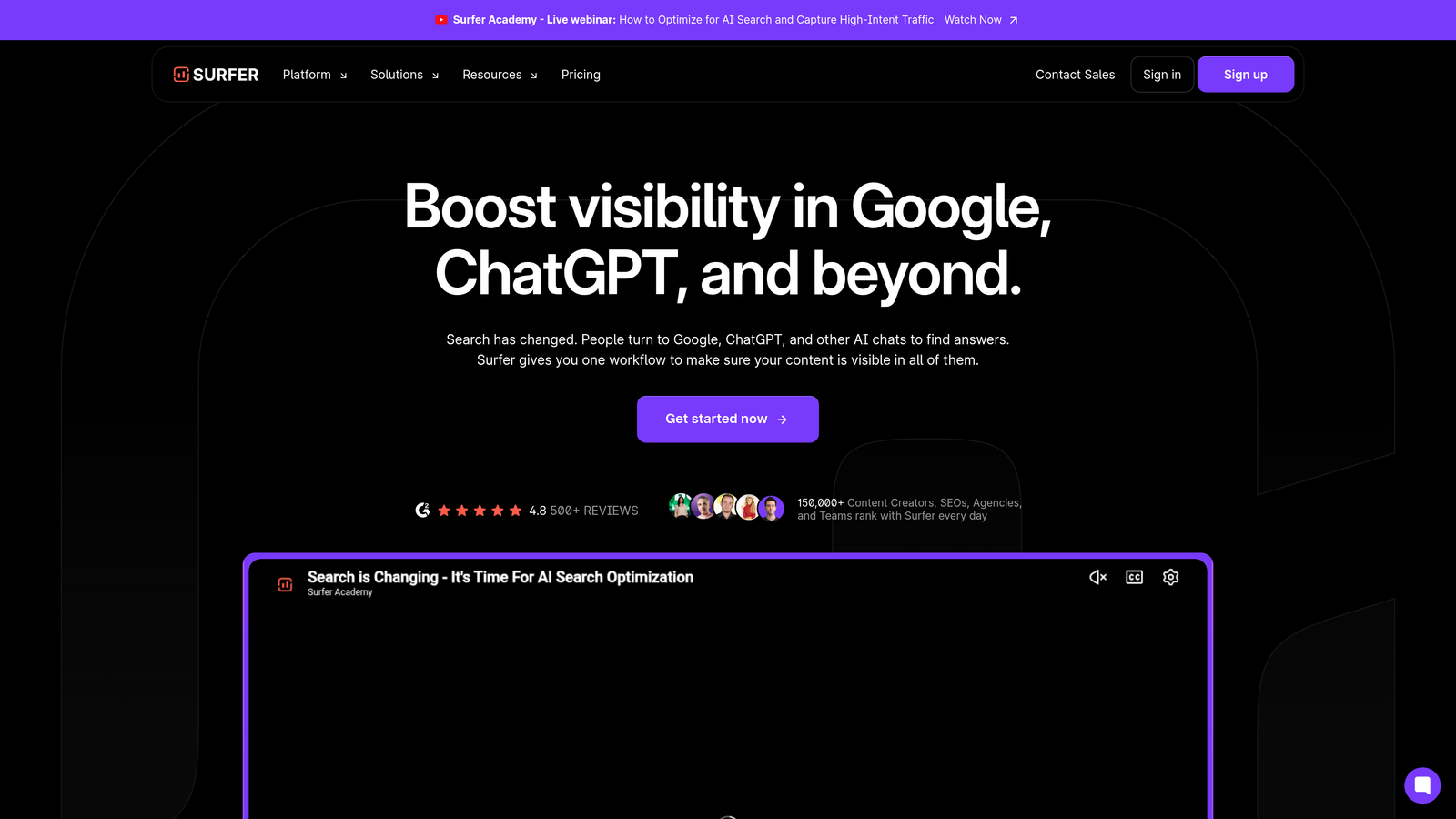
Surfer SEO is an on-page optimization platform that uses NLP-driven analysis to help teams create content that performs well in both traditional search and AI-generated results.
Where This Tool Shines
Surfer's content editor provides real-time feedback as you write, scoring your content against top-ranking pages for a given query. Since AI models tend to draw from well-structured, topically comprehensive content, the same optimization signals that help with traditional SEO also improve AI citation potential.
The SERP analyzer gives you a data-driven view of what makes competing content rank, which helps you understand the content standards AI systems are likely to treat as authoritative.
Key Features
NLP Content Editor: Provides real-time optimization scores and keyword recommendations as you write or edit content.
SERP Analyzer: Benchmarks your content structure against top-ranking competitors for any target keyword.
Content Audit Tool: Identifies existing pages that need optimization to close performance gaps.
Multi-Language Support: Supports content optimization across multiple languages for global content strategies.
Best For
Content teams and SEO professionals who want a structured, data-driven workflow for creating and optimizing content that meets the depth standards AI models favor.
Pricing
Plans start at around $89/month, with multiple tiers available depending on content volume and team size.
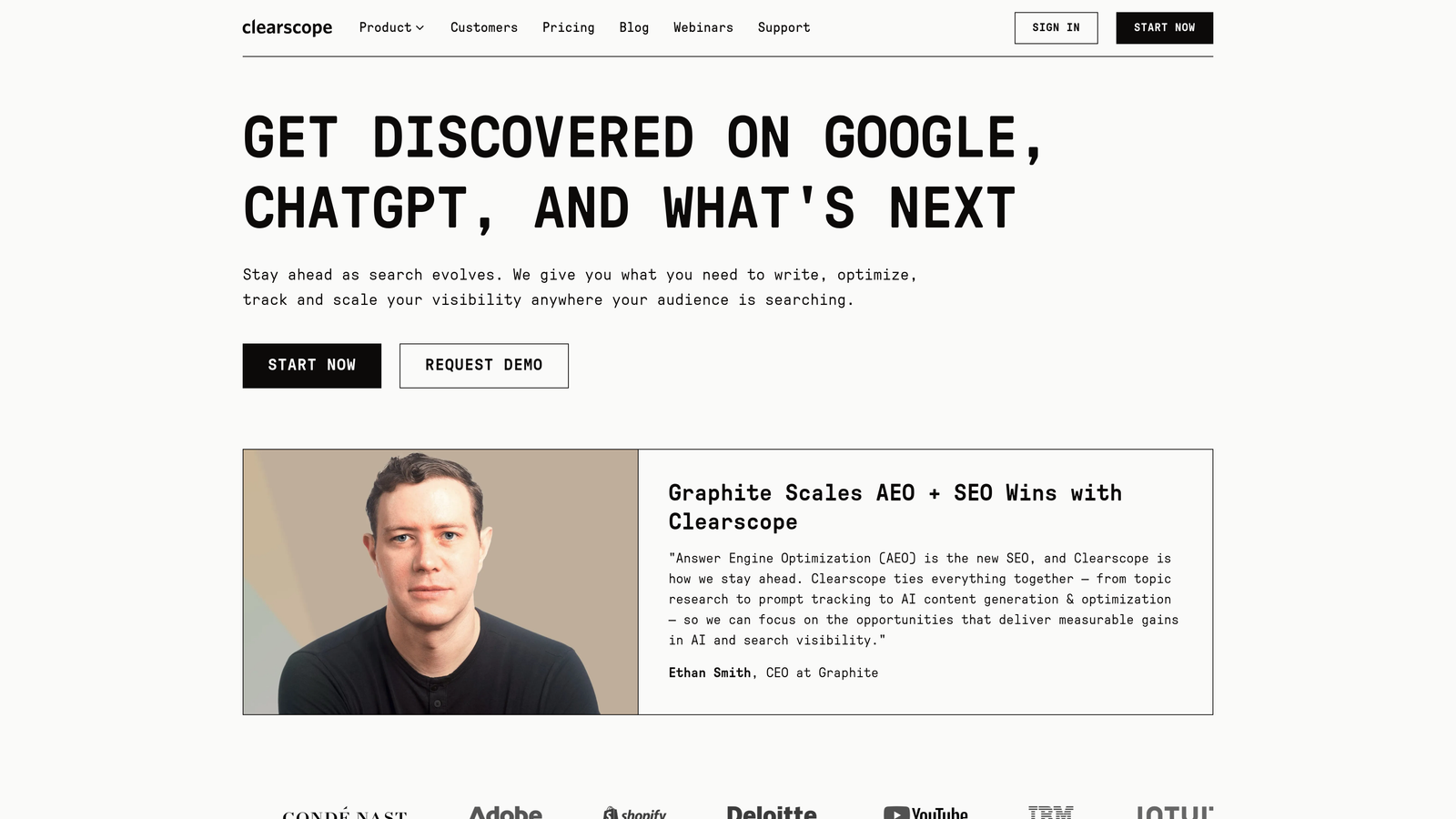
5. Clearscope
Best for: Building topical depth and content authority that earns AI citations.
Clearscope is a content optimization platform that grades content for topical comprehensiveness, helping teams build the depth and authority that AI models tend to cite.
Where This Tool Shines
Clearscope's grading system gives writers clear, actionable targets for topic coverage. Content that scores well on Clearscope tends to be the kind of thorough, well-structured material that AI models pull from when constructing answers on a given topic.
Its Google Docs integration makes it easy to embed optimization into existing writing workflows without forcing teams to change how they work.
Key Features
A++ Content Grading: Scores content for topical comprehensiveness using a clear letter-grade system that writers can target.
Semantic Keyword Recommendations: Surfaces related terms and topics that signal subject authority to both search engines and AI models.
Google Docs and WordPress Integrations: Embeds optimization guidance directly into the tools writers already use.
Competitive Content Analysis: Identifies gaps between your content and top-performing competitor pages on any topic.
Best For
Content teams focused on building long-term topical authority, particularly those producing high-volume editorial content where consistency and depth matter most.
Pricing
The Essentials plan starts at around $170/month. Higher tiers are available for larger teams with greater content volume.
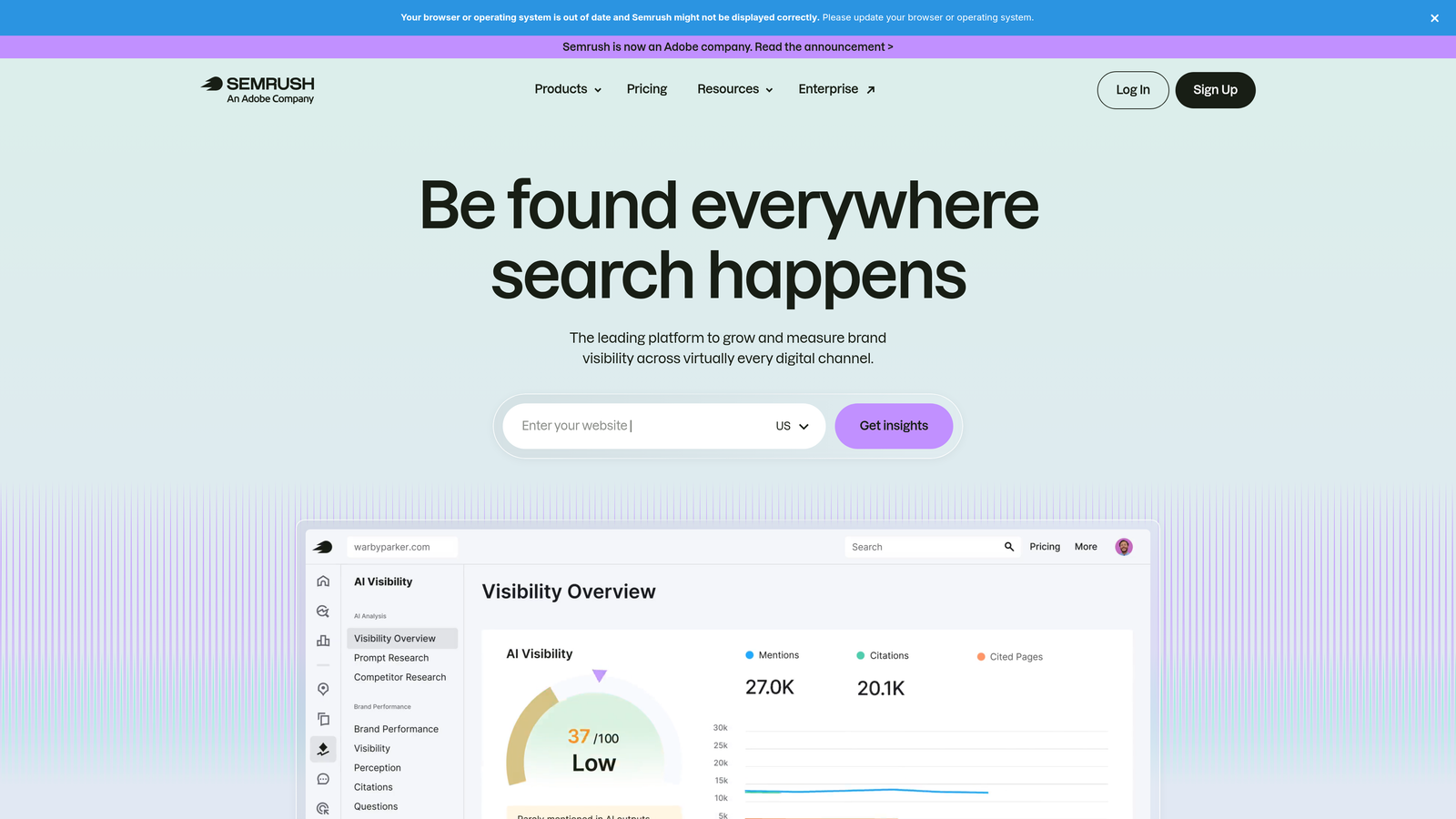
6. Semrush
Best for: Broad SEO intelligence with growing AI Overview tracking capabilities.
Semrush is a comprehensive SEO and digital marketing suite that now includes AI Overview tracking alongside its established keyword research and competitive intelligence tools.
Where This Tool Shines
Semrush's strength is breadth. If you need keyword research, technical site auditing, competitive analysis, and AI Overview tracking without managing multiple subscriptions, it covers a lot of ground in one platform. For teams that are already using it for traditional SEO, the AI search features represent a natural extension of existing workflows.
The sheer size of its keyword database also makes it useful for identifying the topic clusters where AI-generated answers are most active in your industry.
Key Features
AI Overview Tracking: Monitors which of your target keywords trigger AI Overviews in Google Search and how your content performs within them.
Keyword Research Database: One of the largest keyword databases available, useful for mapping the full landscape of queries in your space.
Site Audit Tools: Identifies technical SEO issues that can limit content discoverability by both traditional crawlers and AI retrieval systems.
Content Marketing Toolkit: Includes topic research and content templates to support ongoing content production.
Best For
Marketing teams and agencies that want a single platform for traditional SEO and AI search monitoring, particularly those already invested in the Semrush ecosystem.
Pricing
Pro plan starts at $139.95/month. Business and Agency tiers are available at higher price points.
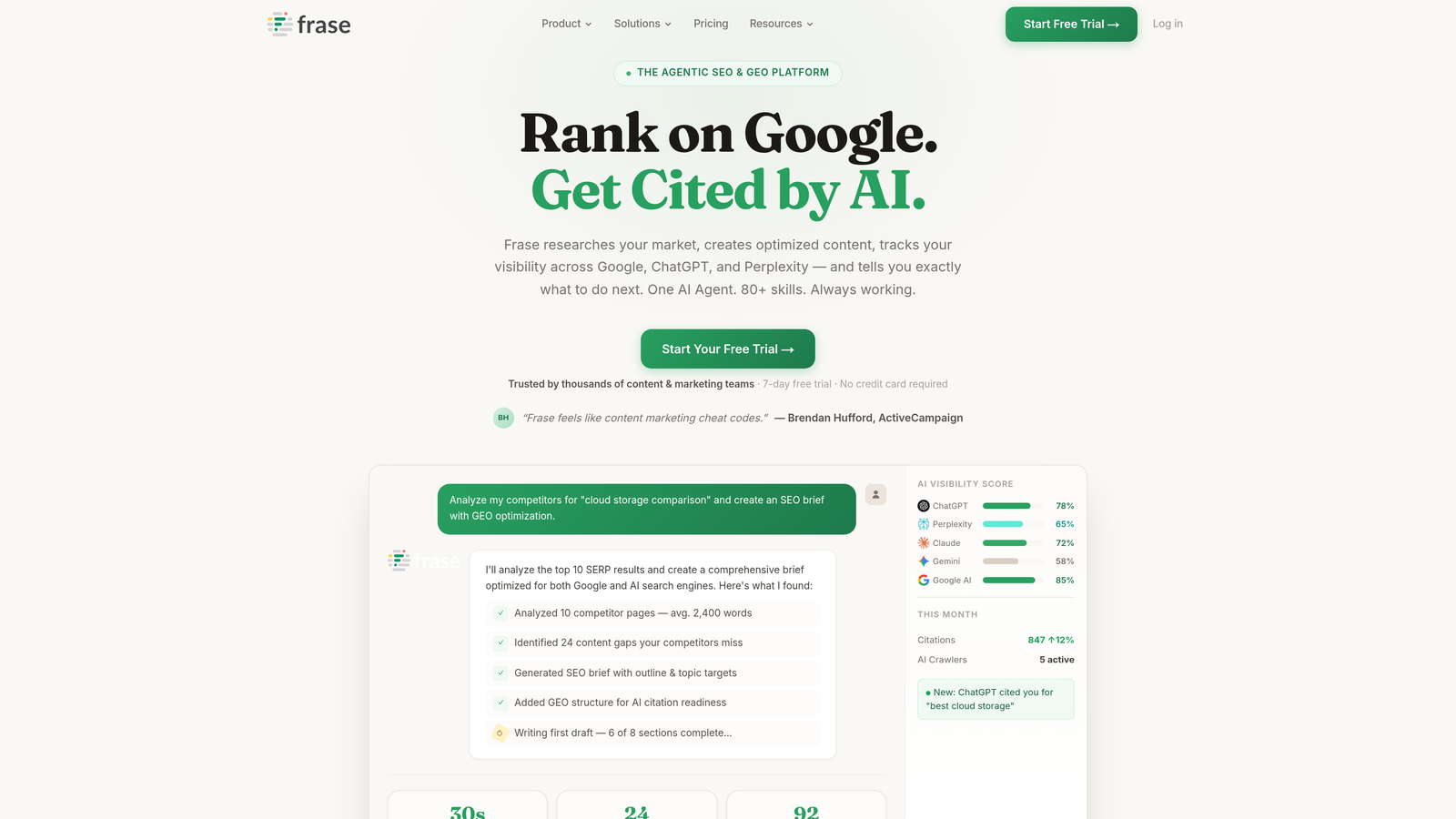
7. Frase
Best for: Fast content brief creation and AI-assisted drafting based on SERP analysis.
Frase is an AI content tool that automates research and brief creation by analyzing top-ranking pages, helping teams produce content that covers the topics AI models draw from.
Where This Tool Shines
Frase accelerates the research phase of content production. Rather than manually reviewing competitor pages to understand what a piece needs to cover, it aggregates that information automatically and structures it into a working brief. That speed is valuable when you need to produce a high volume of content to improve AI visibility across multiple topic areas.
Its question clustering feature surfaces the specific queries people are asking around a topic, which maps closely to the kinds of prompts AI models receive and answer.
Key Features
Automated Content Briefs: Generates research-backed briefs from SERP analysis, pulling together key topics, questions, and headings from top-ranking pages.
AI Writing Assistant: Helps generate draft content from briefs, reducing time from research to first draft.
Question and Topic Clustering: Groups related search questions to help teams understand the full scope of a topic before writing.
Optimization Scoring: Benchmarks draft content against competitor pages to identify coverage gaps before publishing.
Best For
Content teams and solo creators who need to produce well-researched content efficiently, particularly when scaling output across many topics simultaneously.
Pricing
Solo plan starts at $15/month, making it one of the more accessible options in this list. Team plans are available at higher tiers.
8. IndexNow
Best for: Eliminating crawl lag so new and updated content is discovered by AI retrieval systems faster.
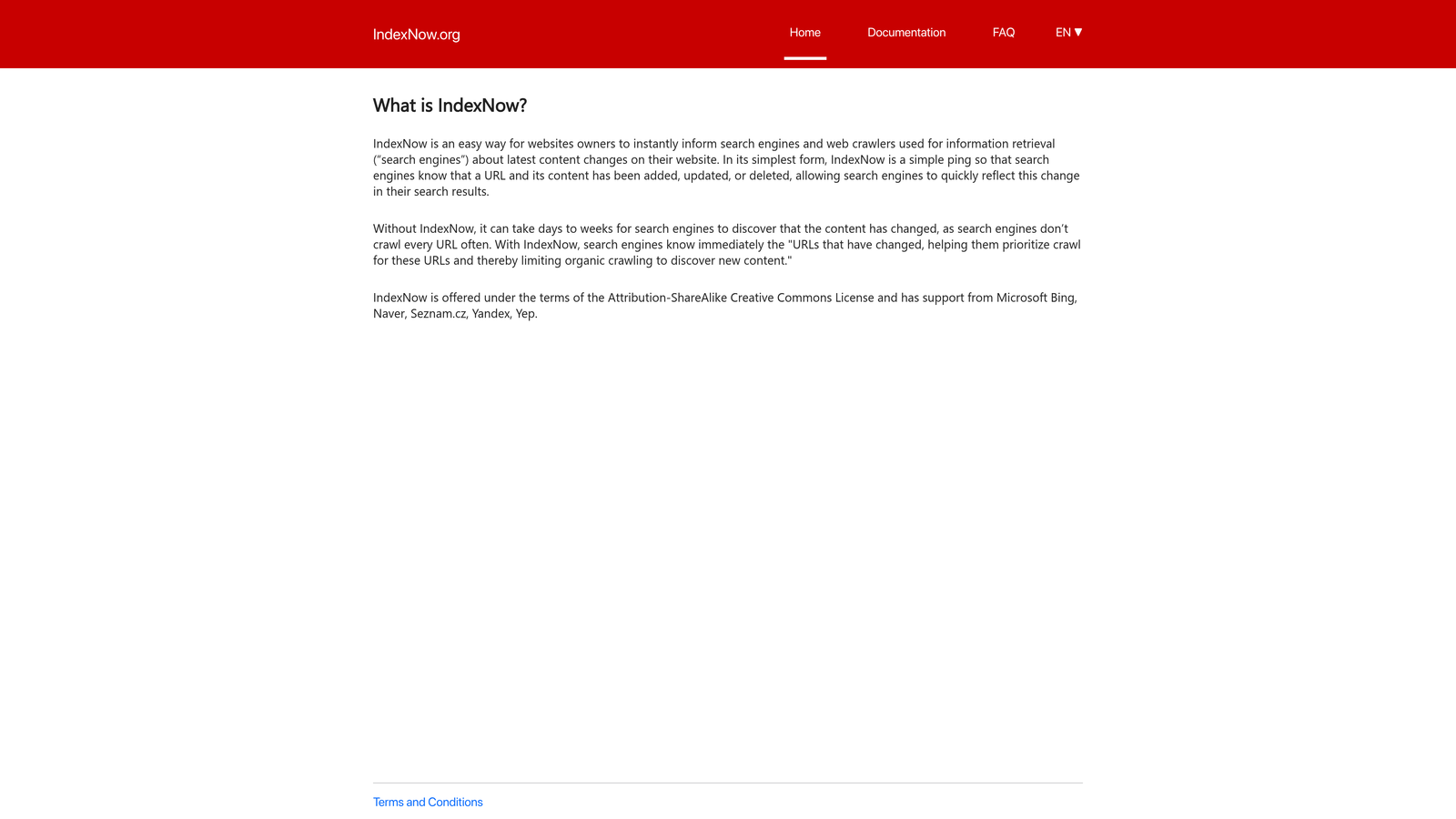
IndexNow is an open protocol that lets publishers instantly notify participating search engines when content is created or updated, accelerating the discovery process that feeds AI knowledge systems.
Where This Tool Shines
AI models and AI-powered search engines can only cite content they know exists. If your new content sits undiscovered for days or weeks because crawlers haven't gotten to it yet, you miss the window where freshness matters most. IndexNow solves that by pushing notifications to search engines the moment you publish.
For teams publishing time-sensitive content or operating in fast-moving industries, the reduction in crawl lag can meaningfully improve how quickly new pages enter the pool of content AI systems draw from.
Key Features
Instant Push Notifications: Alerts participating search engines immediately when content is published or updated, rather than waiting for scheduled crawls.
Open Protocol: Free to implement with no licensing fees or vendor lock-in.
Broad Search Engine Support: Supported by Bing, Yandex, and integrated into many popular CMS platforms including WordPress plugins.
Crawl Efficiency: Reduces wasted crawl budget by directing crawlers to pages that have actually changed.
Best For
Any publisher or content team that regularly creates or updates content and wants to minimize the delay between publishing and discoverability. Particularly important for news, product updates, and time-sensitive content.
Pricing
IndexNow is a free, open-source protocol. There is no cost to implement it beyond the technical setup.
9. Schema App
Best for: Enterprise-scale structured data management to help AI models understand your content's entities and relationships.
Schema App is an enterprise structured data platform that manages schema markup at scale, helping AI models accurately parse and understand the entities, relationships, and authority signals within your content.
Where This Tool Shines
Structured data is the layer of your content that explicitly tells AI systems what your pages are about, who you are as an entity, and how your content relates to other concepts in a knowledge graph. Without it, AI models have to infer that context from unstructured text, which introduces ambiguity and can reduce citation confidence.
Schema App handles the complexity of implementing and maintaining schema markup at scale, which is particularly challenging for large sites with many content types and frequent updates.
Key Features
Automated Schema Generation: Creates and deploys structured data markup across your site without requiring manual coding for each page.
Knowledge Graph Management: Manages entity relationships to help AI models understand how your brand, products, and content connect within a broader topic landscape.
Schema Performance Analytics: Tracks how structured data implementations are performing and validates markup against schema.org standards.
CMS and CDN Integrations: Connects with major content management systems and delivery networks for seamless deployment at scale.
Best For
Enterprise marketing and technical SEO teams managing large content libraries who need a systematic, scalable approach to structured data rather than page-by-page manual implementation.
Pricing
Enterprise pricing model with custom quotes based on site size and complexity. Contact Schema App directly for a tailored proposal.
Which Tool Is Right for Your Situation
Fixing poor visibility in AI platforms isn't a single-tool problem. The brands that will win in AI search are those that monitor their presence, create content AI systems want to cite, and ensure the technical foundations are solid enough for that content to be discovered and understood.
Here's a quick guide to matching tools with your most pressing need:
For an all-in-one diagnose-and-fix workflow: Sight AI is the natural starting point. It covers monitoring, content generation, and indexing in one platform, which matters when your team doesn't have the bandwidth to stitch together multiple tools.
For dedicated AI mention monitoring: Otterly.AI or Profound give you focused tracking and competitive benchmarking. Profound is the stronger choice for enterprise teams that need deep citation analytics; Otterly.AI is well-suited for teams that want clear, actionable monitoring without the enterprise price tag.
For content optimization: Surfer SEO works well for teams that want real-time guidance during the writing process. Clearscope is the better choice when building long-term topical authority is the goal. Frase is ideal when speed and research automation matter most.
For broad SEO intelligence with AI features: Semrush covers the most ground if you need traditional SEO and AI Overview tracking without adding another subscription.
For technical foundations: IndexNow handles indexing speed at no cost, and Schema App manages structured data at scale for enterprise sites. Both address layers of AI visibility that content optimization alone can't fix.
The most effective approach combines at least one monitoring tool, one content optimization tool, and solid technical implementation. If you're starting from scratch, beginning with visibility tracking tells you where the gaps are before you invest in fixing them.
Start tracking your AI visibility today and see exactly where your brand appears across top AI platforms. Stop guessing how ChatGPT, Claude, and Perplexity talk about you, and start building a strategy based on real data.