AI-powered search has quietly rewritten the rules of brand discovery. When someone asks ChatGPT to recommend a project management tool or asks Perplexity for the best CRM for startups, the brands that appear in those responses win mindshare that traditional SEO simply cannot capture. The problem is that most marketing stacks were built for Google rankings, not AI-generated answers.
AI brand visibility platforms are the tools built for this new reality. They monitor how AI models represent your brand, analyze sentiment and share of voice, and in some cases help you create the content that earns those mentions in the first place. Here are the top platforms worth evaluating in 2026, covering the full spectrum from monitoring-only tools to all-in-one solutions.
1. Sight AI
Best for: Teams that want AI monitoring, content generation, and indexing in a single platform.
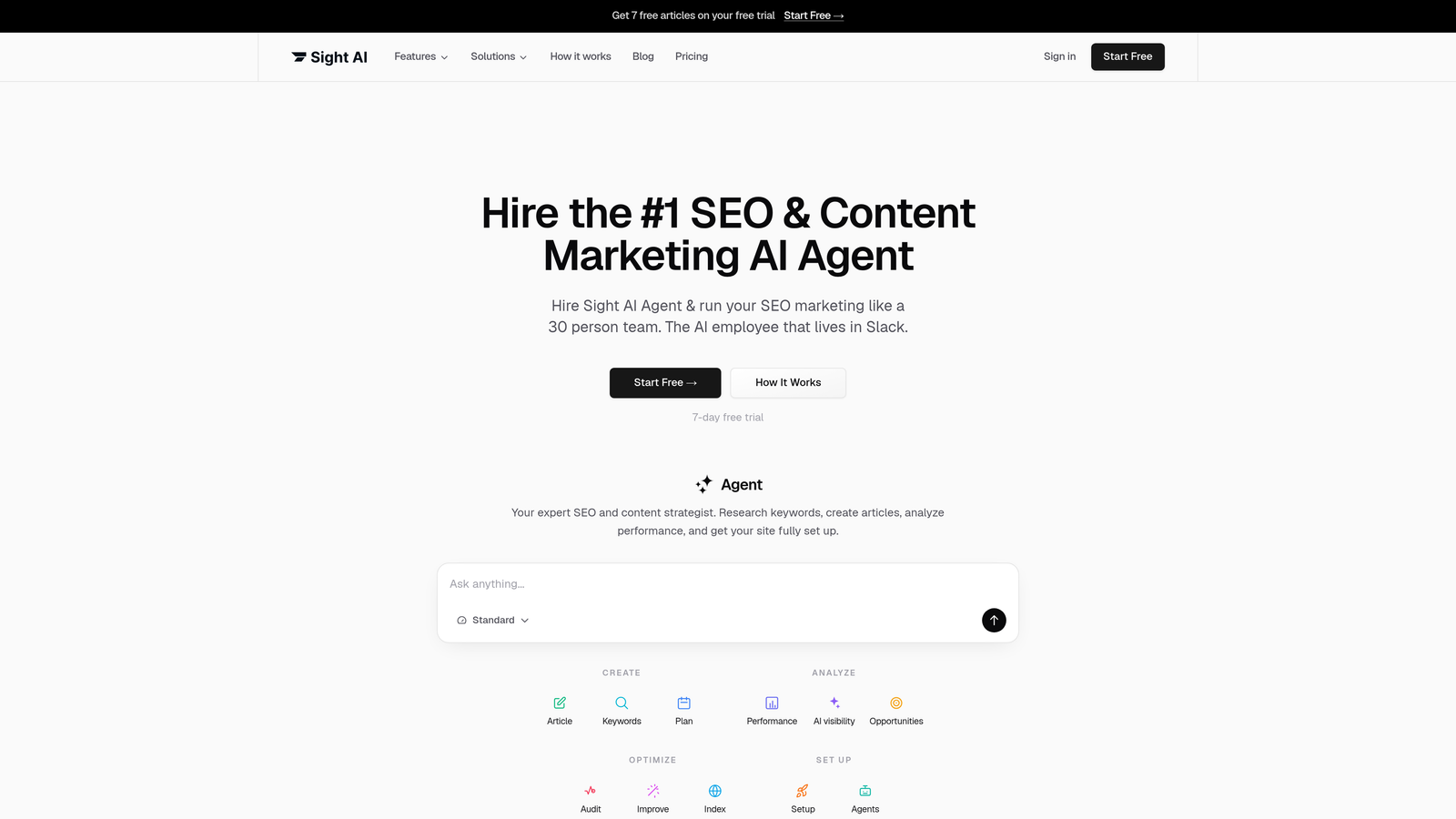
Sight AI is an all-in-one AI brand visibility platform that combines brand monitoring across 6+ AI models, GEO/SEO-optimized content creation, and automated website indexing under one roof.
Where This Tool Shines
Most platforms in this space solve one piece of the puzzle: either they tell you where you stand in AI responses, or they help you create content, but rarely both. Sight AI is built around the idea that visibility and content are inseparable. Knowing your AI Visibility Score is useful; knowing it and having the tools to act on it immediately is what drives results.
The platform's 13+ specialized AI agents handle different content formats, from listicles and guides to explainers, all optimized for both traditional search and generative engine optimization. Autopilot Mode takes this further by automating the workflow end-to-end, reducing the gap between identifying a content opportunity and publishing something that can earn AI citations.
Key Features
AI Visibility Score: Tracks brand mentions across ChatGPT, Claude, Perplexity, and 3+ additional AI platforms, with sentiment analysis and prompt-level tracking built in.
13+ Specialized AI Agents: Purpose-built agents for generating listicles, guides, and explainers optimized for both SEO and GEO, not generic AI writing.
Autopilot Mode: Automates content creation workflows from brief to published draft, reducing manual steps in the production process.
IndexNow Integration: Automated sitemap updates and IndexNow support push new content to search engines faster, improving discovery speed.
CMS Auto-Publishing: Connects directly to your CMS to reduce the friction between content creation and going live.
Best For
Marketers, founders, and agencies who want a single platform to track AI visibility, generate content that earns AI citations, and automate the publishing pipeline. Particularly strong for teams that currently use separate tools for monitoring and content and want to consolidate without losing depth.
Pricing
Pricing plans are available at trysight.ai. Check the site directly for current tiers and feature breakdowns.
2. Profound
Best for: Enterprise brand and marketing teams focused on AI answer monitoring and competitive share-of-voice analysis.
Profound is an enterprise-grade AI monitoring platform that tracks how AI models respond to industry-relevant queries and where your brand appears within those responses.
Where This Tool Shines
Profound is built for organizations that need structured reporting on AI-generated brand mentions at scale. The platform focuses on query-level intelligence: understanding which prompts surface your brand, how often, and in what context relative to competitors. For brand and communications teams that need to present AI visibility data to leadership, Profound's reporting structure is well-suited to that use case.
Its competitive benchmarking capabilities stand out for enterprise buyers. Being able to see how your brand's AI share of voice compares to named competitors across specific query categories gives marketing teams a clearer picture of where they're winning and where they're losing ground in AI-generated responses.
Key Features
Brand Mention Monitoring: Tracks where and how your brand appears across major AI platforms in response to relevant industry queries.
Share-of-Voice Analytics: Measures your brand's presence in AI-generated responses relative to competitors in the same space.
Competitive Brand Intelligence: Side-by-side benchmarking against competitor brands across tracked query sets.
Query-Level Reporting: Granular reporting tied to specific prompts, useful for understanding which content topics drive AI citations.
Best For
Mid-market and enterprise marketing and brand teams that need structured AI visibility reporting, particularly those with dedicated brand intelligence or competitive intelligence functions. Less suited to smaller teams or those needing content generation capabilities alongside monitoring.
Pricing
Profound uses enterprise and contact-based pricing. Verify current plans at helloprofound.com.
3. Promptwatch
Best for: Teams that need granular, prompt-level tracking of how AI model outputs change over time.
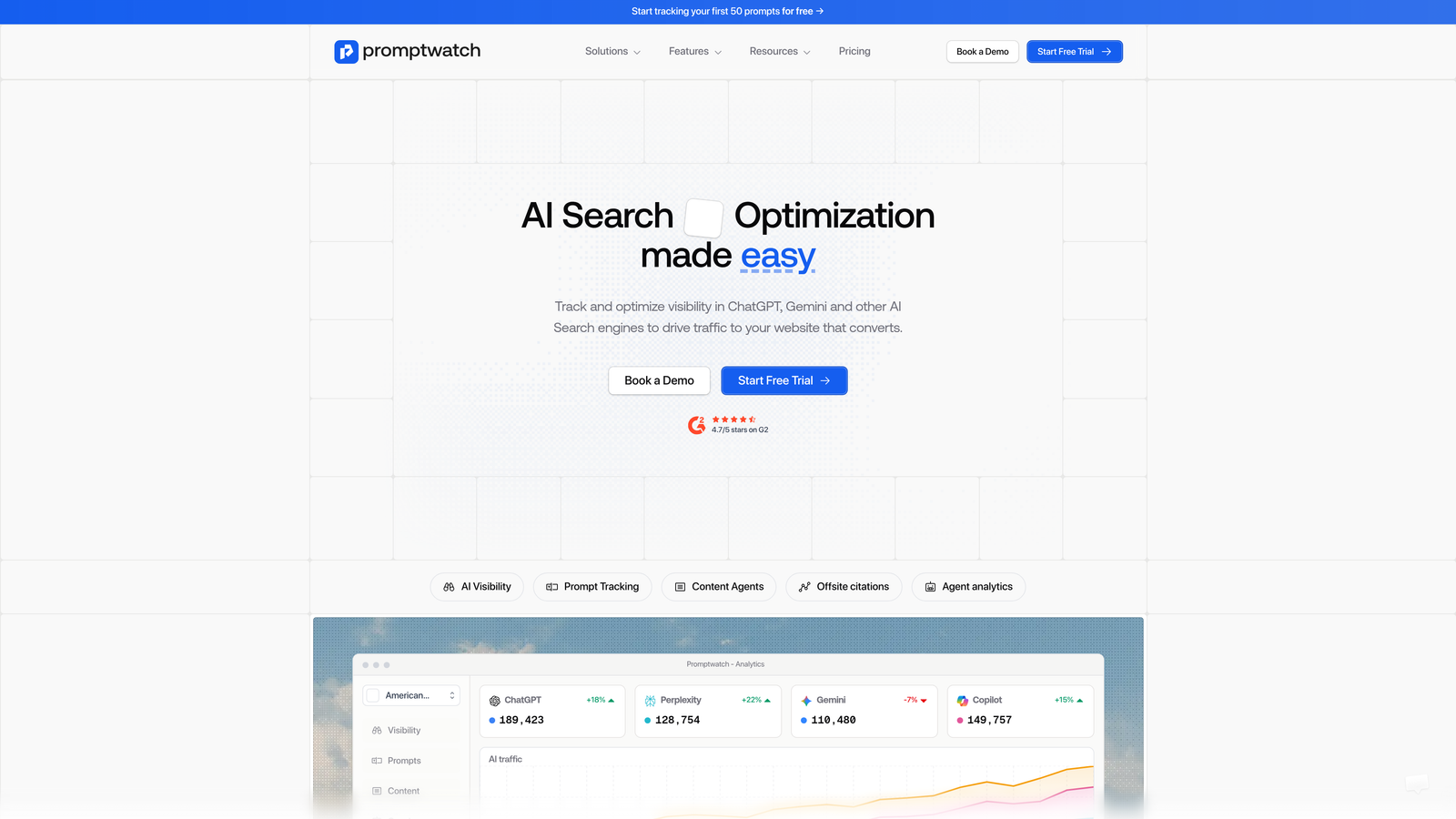
Promptwatch is a specialized monitoring tool that tracks specific prompts across AI models and alerts you when outputs shift, giving you a precise view of brand mention consistency.
Where This Tool Shines
Where broader monitoring tools give you a bird's-eye view of AI visibility, Promptwatch goes deeper at the individual prompt level. If you want to know whether a specific query like "best tools for SEO agencies" consistently mentions your brand, and whether that changes after a model update or after you publish new content, Promptwatch is built for exactly that kind of tracking.
This makes it particularly useful for content teams running experiments. You can test different content strategies and observe whether they move the needle on specific tracked prompts, turning what is often a guessing game into something closer to a feedback loop.
Key Features
Prompt-Level Tracking: Monitor specific queries across AI models with granular output recording over time.
Change Alerts: Get notified when AI model responses shift for your tracked prompts, whether due to model updates or content changes.
Mention Frequency Reporting: Track how consistently your brand appears across different phrasings of similar queries.
Content Strategy Testing: Use tracked prompt data to observe whether content changes influence AI-generated mentions.
Best For
Content strategists and SEO teams who want detailed, prompt-specific monitoring rather than broad brand tracking. Works well as a complementary tool alongside platforms that offer content generation or higher-level reporting.
Pricing
Verify current pricing and plans at promptwatch.io.
4. Peec
Best for: Agencies and competitive intelligence teams benchmarking AI visibility across multiple brands.
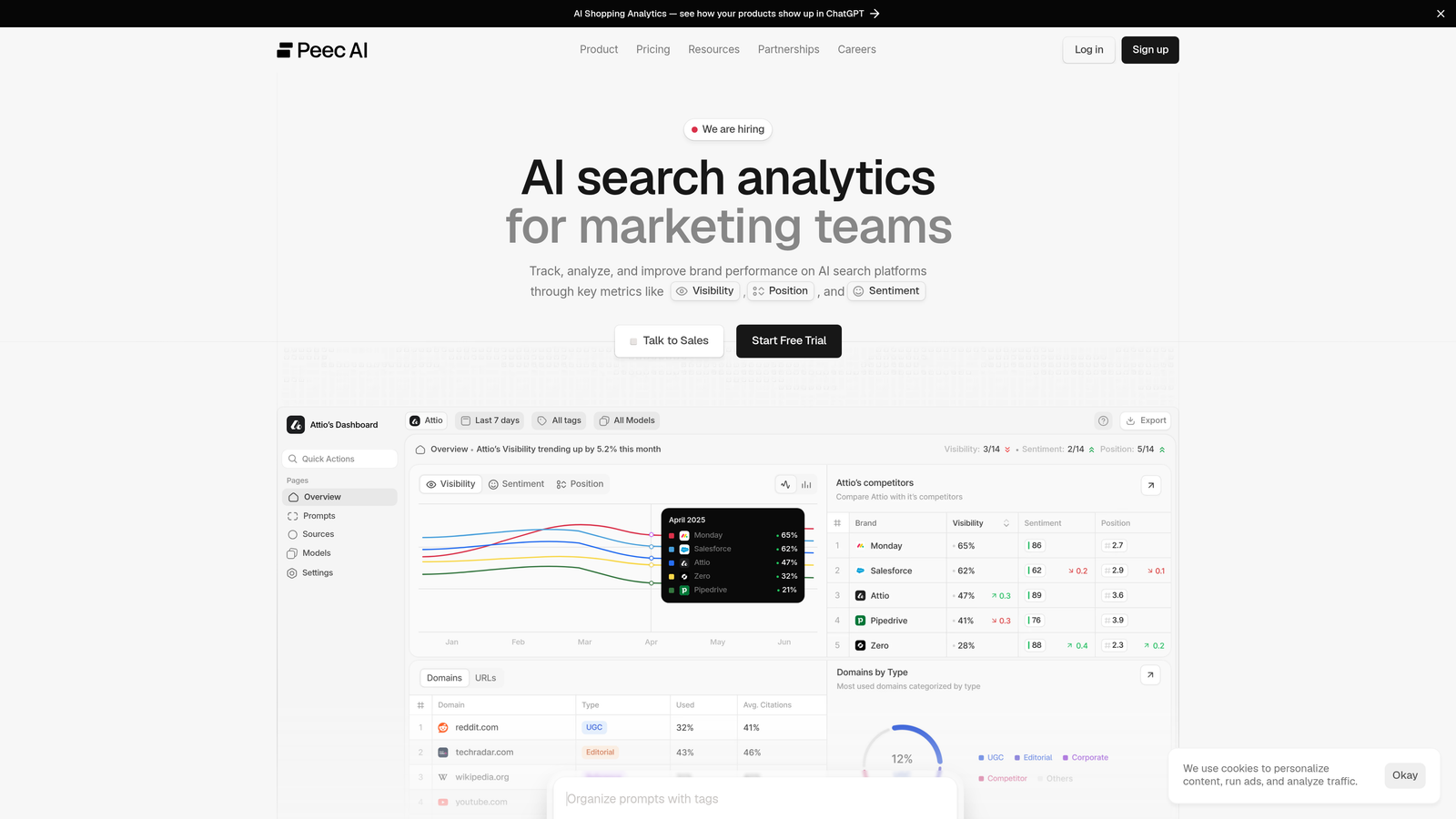
Peec is an AI visibility benchmarking platform focused on showing how your brand compares to competitors in AI-generated search responses across major platforms.
Where This Tool Shines
Peec's core value proposition is competitive context. It's not just about whether your brand appears in AI responses; it's about whether you appear more or less than your competitors, and in which query categories you're winning or losing. For agencies managing multiple clients, the multi-brand monitoring capability is a practical feature that reduces the overhead of running separate tracking setups per client.
The benchmarking reports are designed for competitive positioning conversations, making it easier to show clients where they stand relative to named competitors in AI-generated search, which is increasingly the context that matters most to brand decision-makers.
Key Features
Competitive Share-of-Voice: Side-by-side comparison of AI visibility between your brand and named competitors across tracked queries.
Multi-Brand Monitoring: Manage and report on multiple brands from a single account, designed with agency workflows in mind.
AI Platform Coverage: Tracks brand mentions across major LLM-powered search and answer tools.
Benchmarking Reports: Structured reports designed for competitive positioning analysis and client presentations.
Best For
Digital agencies managing AI visibility for multiple clients, and in-house competitive intelligence teams that need structured benchmarking data rather than raw mention tracking. Monitoring-focused with no native content generation capabilities.
Pricing
Verify current pricing and plan details at peec.ai.
5. AirOps
Best for: Content operations teams building repeatable, scalable AI content production workflows.
AirOps is an AI workflow automation platform that helps content teams design structured, repeatable pipelines for producing and optimizing content using large language models.
Where This Tool Shines
AirOps approaches the content side of AI visibility from an operations angle. Rather than offering pre-built content types, it gives teams a flexible workflow builder where you can design exactly how content moves from brief to draft to review, with structured prompt management at each stage. For teams producing high content volumes, the ability to enforce consistency through structured workflows is a meaningful operational advantage.
The platform supports integration with multiple LLMs, which gives content teams flexibility to route different content types to different models based on quality or cost considerations. It's less a writing tool and more a content production infrastructure layer.
Key Features
Workflow Builder: Design customizable content production pipelines with structured prompts and defined quality checkpoints.
Prompt Management: Centralize and version-control prompts used across content production workflows.
Multi-LLM Integration: Connect to multiple large language models and route tasks based on your team's requirements.
Team Scalability: Built for content operations teams producing content at volume, with collaboration and review features included.
Best For
Agencies and in-house content teams with established content operations that want to systematize AI-assisted production. Less suited to teams looking for AI visibility monitoring or out-of-the-box content types without workflow customization.
Pricing
AirOps offers tiered plans. Verify current pricing and feature access at airops.com.
6. Writesonic
Best for: Marketers who need fast, accessible AI content generation with built-in SEO features and a low barrier to entry.
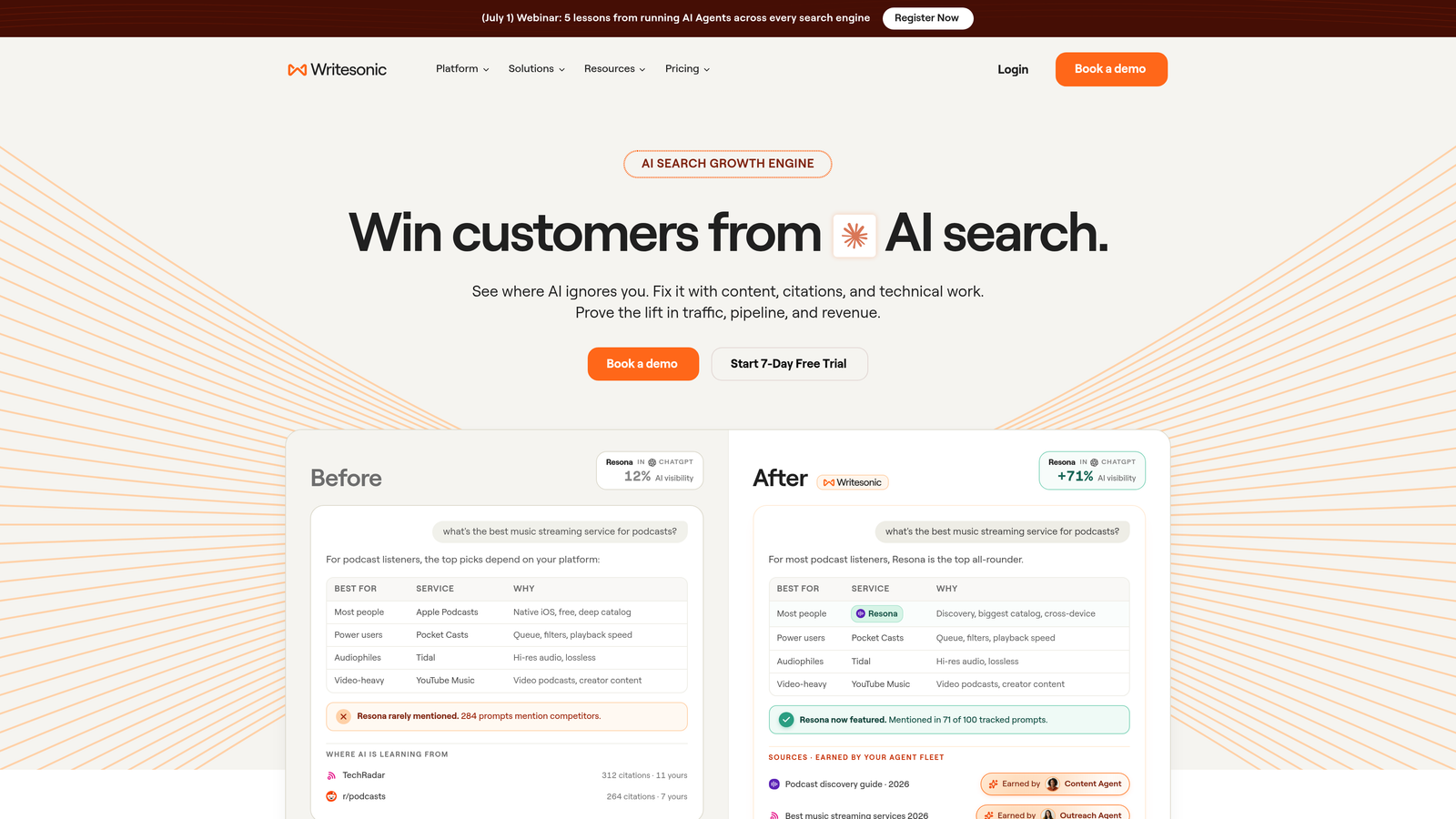
Writesonic is a broad AI writing platform with SEO-oriented features, supporting multiple content formats for marketers who need keyword-aware content production at scale.
Where This Tool Shines
Writesonic's strength is accessibility. It covers a wide range of content formats, from long-form blog posts and product descriptions to social content, and its SEO features include keyword integration and content brief support that make it useful for teams producing search-targeted content regularly. The freemium entry point means smaller teams can test it without a significant upfront commitment.
For marketers who aren't yet running dedicated AI visibility programs but want to produce more content faster with some SEO guardrails built in, Writesonic fits as a practical starting point. It's a broad tool rather than a specialized one, which is both its appeal and its limitation depending on what you need.
Key Features
Multi-Format Content Generation: Supports blog posts, product descriptions, social content, and more from a single platform.
Keyword Integration: Built-in support for incorporating target keywords and working from content briefs.
SEO Optimization Features: Output is structured to align with search-friendly formatting and on-page best practices.
Freemium Access: A no-cost entry tier lets teams evaluate the platform before committing to paid plans.
Best For
Non-technical marketers and small teams who need to produce SEO-oriented content at higher volume without a steep learning curve. Primary strength is content generation; AI visibility monitoring is not a core feature of this platform.
Pricing
Writesonic offers a freemium model with paid tiers for higher volume usage. Verify current plan details at writesonic.com.
Which Platform Fits Your Situation
The right choice depends on which part of the AI visibility problem you're trying to solve first. These platforms fall into three broad categories: monitoring, content creation, and full-stack solutions that combine both.
For pure monitoring: Profound is the strongest option for enterprise teams that need structured share-of-voice reporting and competitive benchmarking. Promptwatch is the better pick if you need granular, prompt-level tracking and change alerts. Peec is purpose-built for agencies managing competitive visibility across multiple client brands.
For content production: AirOps works well for content operations teams that want to build systematic, repeatable AI workflows rather than use pre-built templates. Writesonic is the accessible entry point for marketers who need faster content output with basic SEO support and don't require deep customization.
For teams that want everything in one place: Sight AI is the only platform on this list that combines AI visibility monitoring across 6+ platforms, GEO and SEO-optimized content generation through 13+ specialized agents, and automated indexing with IndexNow integration. If you're currently stitching together separate tools for monitoring, content, and publishing, consolidating onto a single platform reduces both overhead and the lag between insight and action.
The AI search landscape is moving quickly, and the brands building visibility in AI-generated responses now are establishing positions that will compound over time. Stop guessing how AI models like ChatGPT and Claude talk about your brand: Start tracking your AI visibility today and see exactly where your brand appears across top AI platforms.