Your headline is the single most important line of copy you'll write. It determines whether someone clicks your article in search results, shares it on social, or scrolls past entirely. A weak headline means wasted content, no matter how strong the piece underneath it is.
Headline analyzer tools help you score, refine, and optimize titles before you publish, using criteria like word balance, emotional impact, character length, SEO value, and readability. But not all analyzers are built the same. Some focus purely on click-through optimization, others integrate directly into content workflows, and a growing number now account for how AI search engines interpret and surface your content.
This list covers the best headline analyzer tools available in 2026, selected based on feature depth, workflow integration, and relevance to modern SEO and GEO (Generative Engine Optimization) needs. Whether you're a solo founder, a content marketer, or running an agency, there's an option here that fits your stack.
1. Sight AI
Best for: Teams that want headline optimization built into a full content creation and AI visibility workflow.
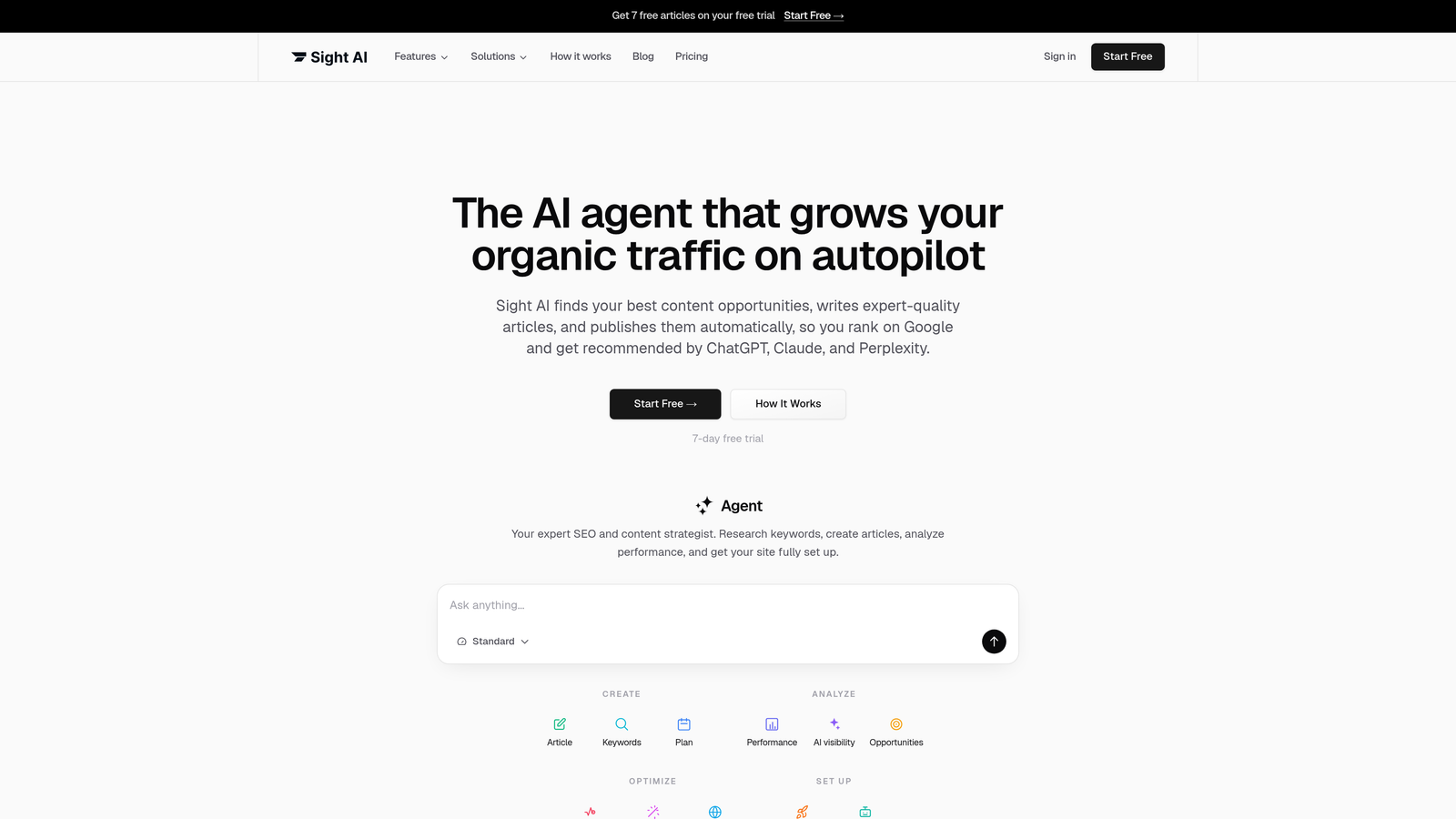
Sight AI is an all-in-one AI content and visibility platform that generates SEO/GEO-optimized articles, including headline-optimized titles, using 13+ specialized AI agents, while simultaneously tracking how your published content is referenced across AI search engines like ChatGPT, Claude, and Perplexity.
Where This Tool Shines
Most headline tools treat optimization as a last step before you hit publish. Sight AI flips that model entirely. Headline quality is baked into the content generation process itself, so the titles your AI agents produce are already calibrated for search intent, readability, and GEO discoverability from the start.
The real differentiator is the AI Visibility layer. After your headline-driven content goes live, Sight AI tracks whether AI models are actually surfacing it. That feedback loop, from content creation to AI search performance, is something no traditional headline scorer can offer.
Key Features
AI Content Writer with 13+ Agents: Generates fully optimized articles, including headlines, calibrated for both traditional SEO and AI search discoverability.
AI Visibility Score: Tracks brand and content mentions across 6+ AI platforms, including ChatGPT, Claude, and Perplexity, with sentiment analysis.
IndexNow Integration: Pushes newly published content to search engines immediately after publish for faster indexing and discoverability.
Autopilot Mode: Automates content production at scale, handling headline generation and article drafting without manual intervention.
CMS Auto-Publishing: Connects content generation directly to your CMS, streamlining the full workflow from draft to live page.
Best For
Content marketers, founders, and agencies who want headline optimization as part of a broader content and AI visibility strategy, rather than a standalone scoring tool. Particularly well-suited for teams already focused on organic traffic growth and GEO performance.
Pricing
Tiered plans are available based on team size and usage. Visit trysight.ai for current pricing details.
2. Writesonic
Best for: Content teams that want to generate and compare multiple headline variants quickly within a single platform.
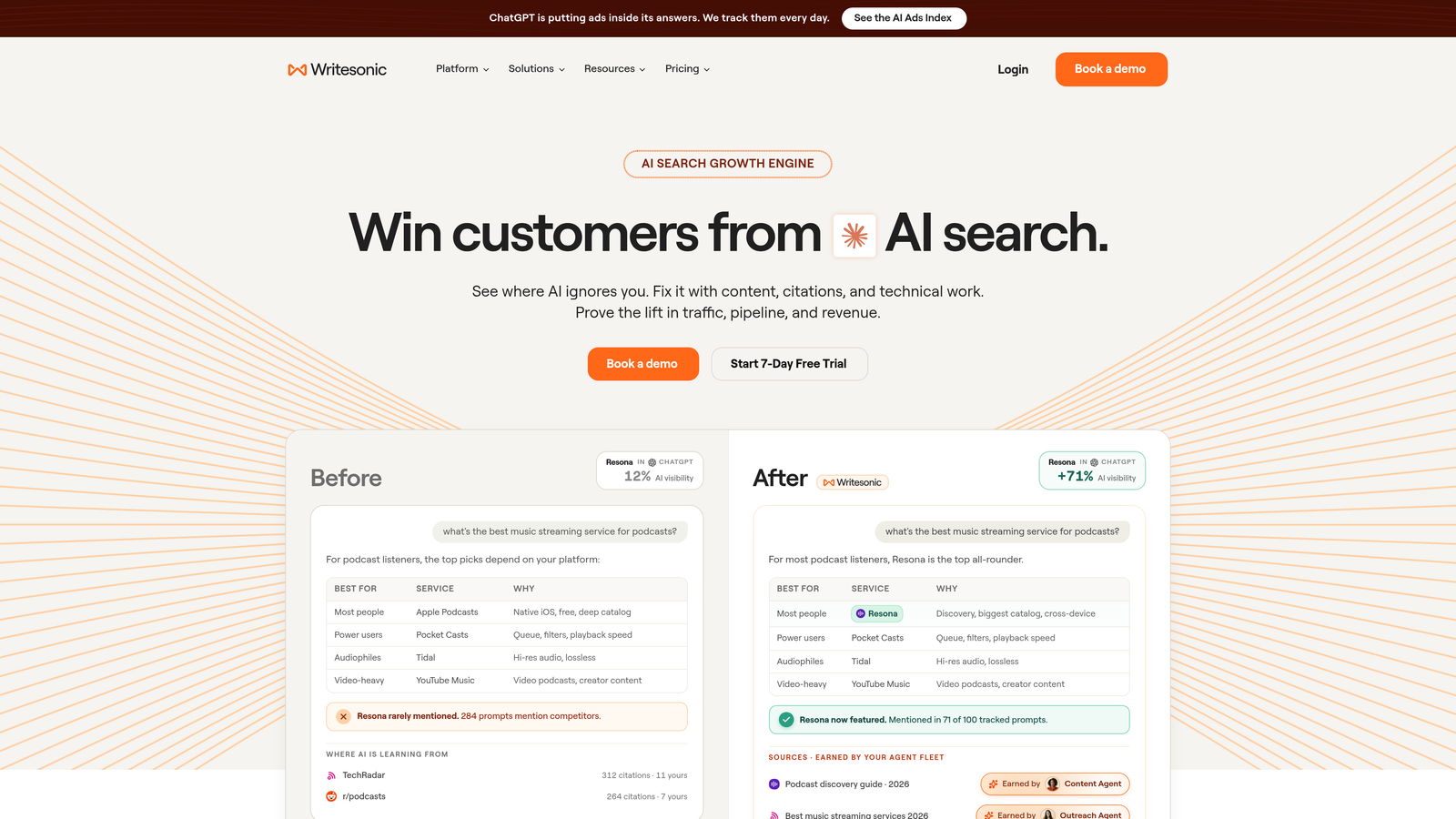
Writesonic is an AI content platform with headline and title generation capabilities, allowing users to produce multiple headline variants from a brief with tone and audience controls.
Where This Tool Shines
Writesonic excels at speed and volume. If you need to generate ten headline options for a blog post in under a minute, it delivers. The tone and audience controls give you meaningful variation across those options, rather than just surface-level rephrasing.
The integrated article writer is a practical bonus. You can move from headline selection directly into drafting without switching tools, which keeps creative momentum intact for solo writers and small teams.
Key Features
AI Headline Variant Generation: Produces multiple title options from a topic brief, covering different angles and framings.
Tone and Audience Controls: Adjusts headline style for different reader personas and content contexts.
Integrated Article Writer: Allows end-to-end content drafting within the same platform after headline selection.
Template Library: Offers pre-built formats for different content types, from listicles to how-to guides.
Brand Voice Settings: Maintains consistent tone and style across all generated outputs.
Best For
Content marketers and freelancers who need fast headline ideation with built-in drafting capabilities. Works well for teams producing high content volume who want AI assistance without complex workflow setup.
Pricing
Freemium plan available. Paid plans scale with usage. Check writesonic.com for current rates.
3. AirOps
Best for: Content operations teams building systematic, repeatable workflows that include headline testing and scoring steps.
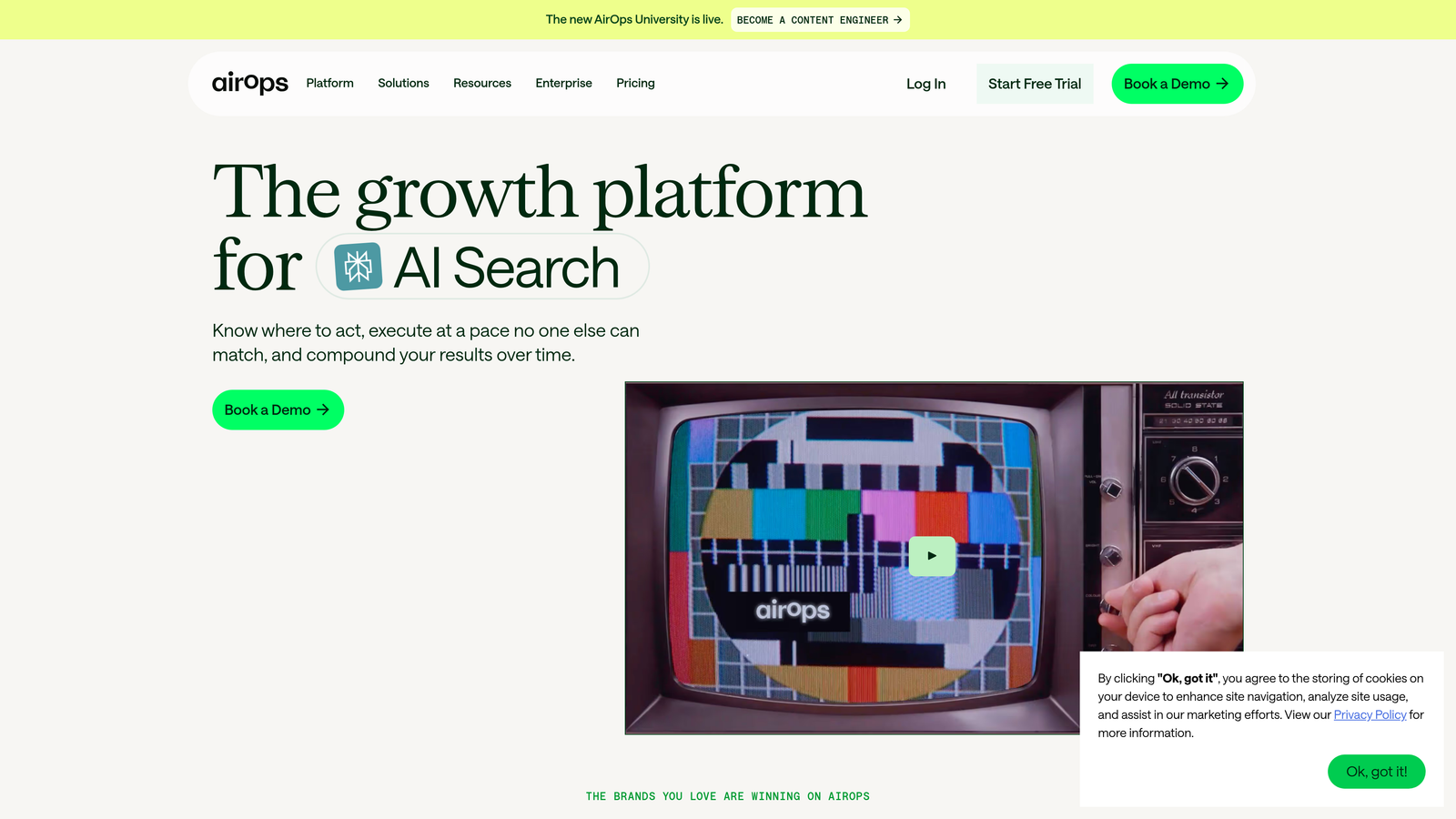
AirOps is a workflow automation platform for AI-powered content operations, enabling teams to build custom pipelines that can include headline scoring, variant generation, and content QA steps.
Where This Tool Shines
AirOps is not a headline analyzer in the traditional sense. It is a platform for building content operations infrastructure. That distinction matters because it means you can design exactly how headline evaluation fits into your workflow, including which criteria matter, which AI model evaluates the output, and what happens next.
For agencies or in-house teams running content at scale, this level of customization is genuinely valuable. You are not constrained by someone else's scoring rubric. You define what a good headline looks like for your specific audience and content goals.
Key Features
Custom LLM-Powered Workflow Builder: Lets teams design content pipelines with headline analysis as a configurable step, using the AI model of their choice.
Embeddable Headline Analysis: Integrates scoring and variant generation steps within larger content production workflows.
Multi-Model AI Support: Supports varied output styles by connecting to multiple underlying AI models.
Team Collaboration and Workflow Sharing: Allows teams to build, share, and iterate on workflows collectively.
CMS and External Data Integration: Connects to external platforms and data sources for end-to-end content operations.
Best For
Content operations leads, agencies, and enterprise teams that want to systematize headline testing as part of a repeatable, scalable production process. Less suited to individual writers looking for a quick score.
Pricing
Contact AirOps directly for current plan details. Visit airops.com for more information.
4. Promptwatch
Best for: GEO-focused teams researching how headline phrasing influences AI search behavior over time.
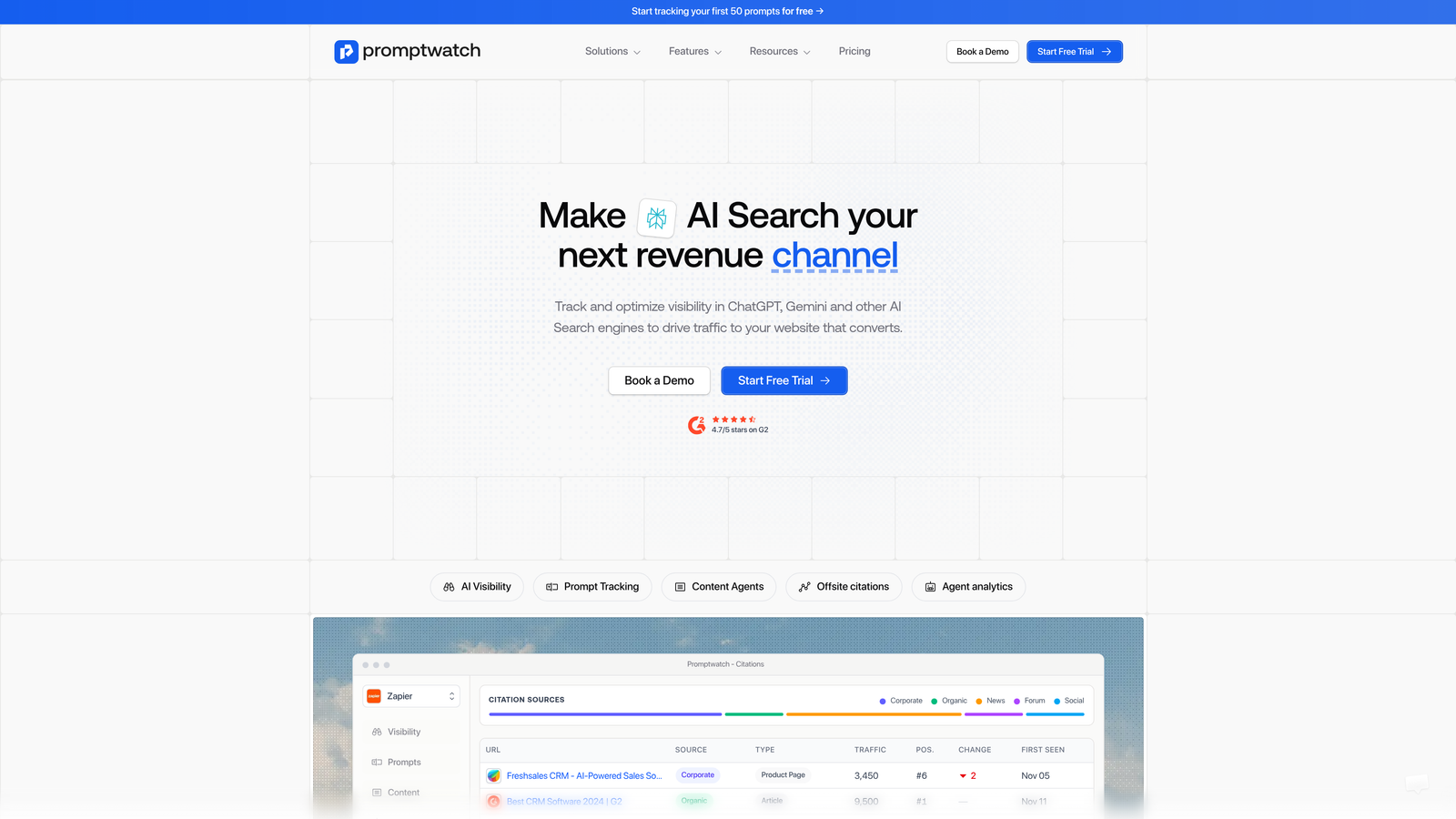
Promptwatch is an AI prompt monitoring and tracking platform that helps teams observe how AI models respond to different prompt structures over time, useful for understanding how headline phrasing influences AI search behavior.
Where This Tool Shines
Here is where the definition of "headline analyzer" starts to expand. Promptwatch does not score your title for emotional word percentage or character count. What it does instead is help you understand how AI models interpret different phrasings and query structures, which is increasingly important for headline strategy in an AI-first search environment.
Think of it this way: if your headline is essentially a query that AI models will encounter, understanding how those models respond to different framings gives you a meaningful edge. Promptwatch provides that observational layer, particularly valuable for teams actively optimizing for AI search visibility.
Key Features
AI Prompt Output Tracking: Monitors and records how AI models respond to specific prompt structures over time.
Version Comparison: Allows side-by-side comparison of how different phrasings perform across AI model outputs.
Historical Prompt Performance Data: Builds a record of AI response patterns to inform ongoing content framing decisions.
GEO-Focused Headline Research: Directly applicable to understanding which headline styles align with AI search surfacing behavior.
AI Model Response Pattern Insights: Surfaces patterns in how AI engines interpret and prioritize different content framings.
Best For
SEO specialists and content strategists with a strong GEO focus who want to understand the relationship between headline phrasing and AI model behavior. Best used as a research and strategy tool alongside traditional content creation tools.
Pricing
Check promptwatch.io for current pricing details.
5. Profound
Best for: Enterprise marketing teams analyzing the language and framing that AI models prefer to surface in generated answers.
Profound is an AI visibility and brand intelligence platform that analyzes how brands, topics, and content appear within AI-generated answers, helping teams identify the language and framing that AI models prefer to surface.
Where This Tool Shines
Profound approaches headline strategy from a brand intelligence angle. Rather than scoring a headline you have already written, it helps you understand the language patterns that AI search engines favor when surfacing content about specific topics. That upstream insight is genuinely useful when crafting headlines for AI-first search contexts.
The competitive benchmarking capability adds another strategic layer. Seeing how competitor content is framed in AI-generated answers reveals the vocabulary and structural patterns that are gaining traction, giving your headline decisions a data-informed foundation.
Key Features
Brand and Topic Visibility Analysis: Examines how brands and specific topics appear within AI-generated search responses.
Language and Framing Insights: Surfaces the phrasing patterns that AI models tend to favor when answering relevant queries.
Competitive Visibility Benchmarking: Compares your AI search presence against competitors in your category.
Content Gap Identification: Highlights topics and framings where AI models are not currently surfacing your content.
Enterprise-Grade Reporting: Provides structured reporting outputs suited to larger marketing teams and stakeholder presentations.
Best For
Enterprise content and SEO teams that are actively investing in AI search visibility and want to ground headline and content strategy in real AI surfacing data. The enterprise reporting focus makes it less practical for solo operators or small teams.
Pricing
Check profound.io for current plan and pricing details.
6. Peec
Best for: Content strategists using competitive intelligence to identify headline framings and topic angles gaining traction in AI search results.
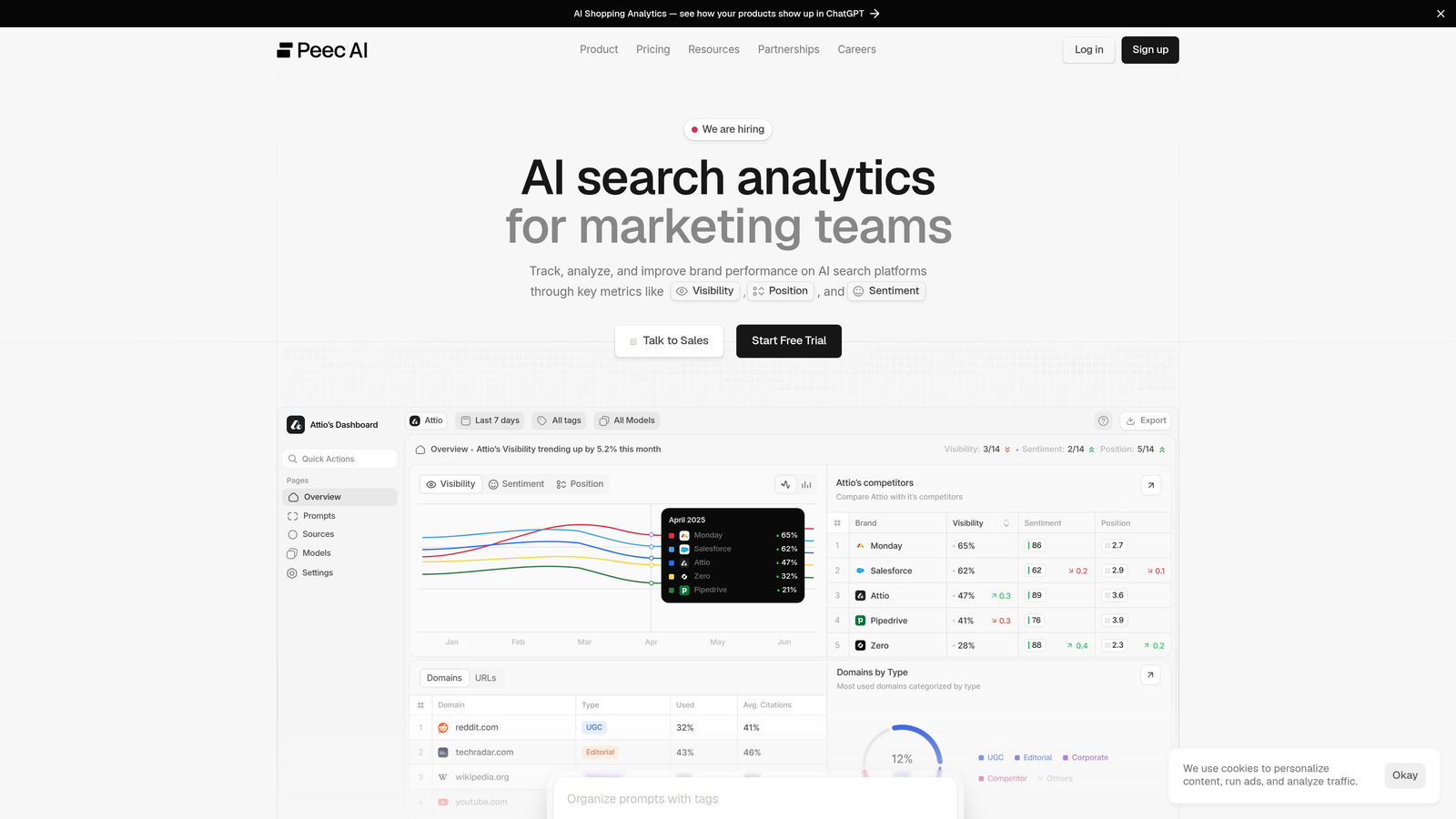
Peec is a competitive intelligence tool focused on AI search results, helping content teams understand how competitors appear in AI-generated responses, informing headline framing and topic strategy.
Where This Tool Shines
Peec takes a competitive angle on AI search visibility. Instead of analyzing your own content in isolation, it maps how your competitors are being surfaced across AI-generated answers. That competitive lens is particularly useful for headline strategy because it shows you which topic framings and content angles are already resonating with AI models in your niche.
The share-of-voice benchmarking is a standout feature for teams managing multiple content programs. Knowing where competitors hold AI search presence, and where gaps exist, turns headline planning from a creative exercise into a strategically informed decision.
Key Features
Competitor Visibility Tracking: Monitors how competing brands appear across AI-generated search results for relevant queries.
Topic and Headline Framing Analysis: Identifies which content framings and headline styles are being surfaced for competitors.
Content Opportunity Identification: Highlights gaps in AI search coverage that represent untapped headline and topic opportunities.
AI Search Share-of-Voice Benchmarking: Quantifies relative AI search presence across your competitive landscape.
GEO-Informed Content Planning: Provides actionable data to guide headline and topic strategy for AI-first search contexts.
Best For
Content strategists and SEO leads at growth-stage companies and agencies who want competitive intelligence to drive headline and topic decisions. Works best as a strategic planning tool rather than a real-time headline scorer.
Pricing
Check peec.ai for current pricing details.
Choosing the Right Tool for Your Headline Strategy
The tools on this list reflect something important about where headline optimization is heading. Traditional scoring, measuring emotional word percentage, character count, and power word density, is still useful. But for marketers and founders focused on organic traffic growth in 2026, the more valuable question is whether your headlines are helping your content get surfaced by AI search engines.
That distinction shapes which tool makes sense for your situation.
For integrated content creation and AI visibility: Sight AI is the strongest option for teams that want headline optimization built into a full content workflow, with the added layer of tracking how published content performs across AI platforms like ChatGPT and Perplexity.
For fast headline ideation and drafting: Writesonic is a practical choice for content marketers and freelancers who need volume and speed without complex setup.
For content operations at scale: AirOps suits teams that want to build systematic, repeatable workflows where headline evaluation is a configurable step, not an afterthought.
For GEO research and AI behavior analysis: Promptwatch, Profound, and Peec each approach AI search visibility from a different angle. Promptwatch focuses on how AI models interpret prompt phrasings. Profound analyzes the language patterns AI engines favor when surfacing brand content. Peec maps competitive presence across AI-generated results. Used together or individually, these tools provide the strategic intelligence that informs smarter headline decisions for AI-first search.
The broader takeaway is that standalone headline scorers, while still useful for quick checks, are becoming a smaller part of the picture. The teams gaining traction in organic search are combining headline quality with AI visibility strategy, understanding not just whether a title is compelling to humans, but whether it is framed in a way that AI search engines will recognize and surface.
If that intersection of content quality and AI discoverability is where you want to compete, Start tracking your AI visibility today and see exactly where your brand appears across top AI platforms.