Agencies managing content at scale face a compounding challenge in 2026: clients expect faster output, AI search is reshaping how brands get discovered, and traditional SEO alone no longer guarantees visibility. The right content marketing stack now needs to cover the full cycle, from tracking where your brand appears in AI-generated answers, to creating optimized content, to getting it indexed and published automatically.
This list covers the best content marketing tools purpose-built for agency workflows. Each was evaluated on scalability, AI-readiness, content quality, and practical fit for teams managing multiple client accounts. Whether you're a boutique agency or a growth-focused team scaling organic traffic, these tools address the real bottlenecks agencies face today.
1. Sight AI
Best for: Agencies that need AI visibility tracking, content creation, and automated indexing in one platform
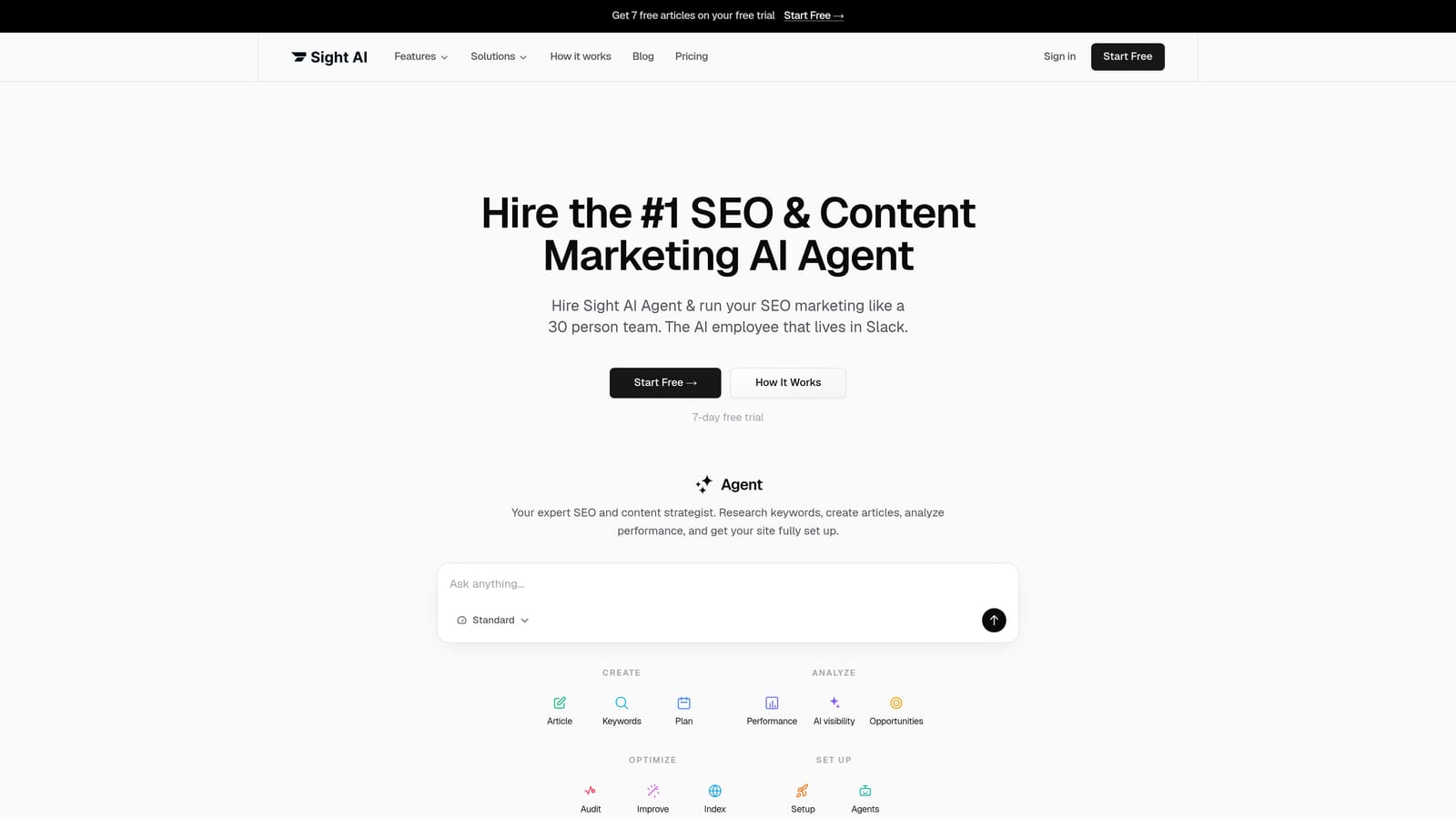
Sight AI is an all-in-one platform combining AI brand monitoring, a multi-agent content writer, and automated indexing workflows built specifically for agency-scale operations.
Where This Tool Shines
Most agencies are stitching together three or four separate tools to handle what Sight AI covers in a single platform: monitoring how client brands appear in AI-generated answers, producing SEO and GEO-optimized content, and ensuring that content gets indexed quickly. That consolidation matters when you're managing multiple client accounts simultaneously.
The AI visibility layer is particularly relevant right now. Clients are starting to ask where they appear in ChatGPT, Claude, and Perplexity responses, and most agencies don't yet have a structured way to answer that question. Sight AI gives you an AI Visibility Score with sentiment analysis, so you can show clients not just whether they're being mentioned, but how they're being described across AI platforms.
Key Features
AI Visibility Score: Tracks brand mentions across ChatGPT, Claude, Perplexity, and 3+ additional AI platforms with sentiment analysis and prompt-level tracking.
13+ Specialized AI Writing Agents: Purpose-built agents for different content formats including listicles, guides, and explainers, with an Autopilot Mode for hands-free content pipelines.
IndexNow Integration: Automatically notifies search engines of new content, accelerating discovery beyond standard crawl cycles.
CMS Auto-Publishing: Eliminates manual upload steps by pushing finished content directly to your CMS across client accounts.
Prompt Tracking: Shows exactly which queries surface client brands in AI-generated answers, giving agencies a clear basis for GEO strategy and client reporting.
Best For
Agencies that want to consolidate their content marketing stack and offer AI visibility reporting as a client deliverable. Particularly strong for teams that are actively building out GEO services alongside traditional SEO, and for those who want to reduce manual overhead across content creation, publishing, and indexing workflows.
Pricing
Visit trysight.ai for current pricing. Plans are structured to accommodate agency-scale usage across multiple client accounts.
2. Writesonic
Best for: High-volume content generation across multiple client accounts with distinct brand voices
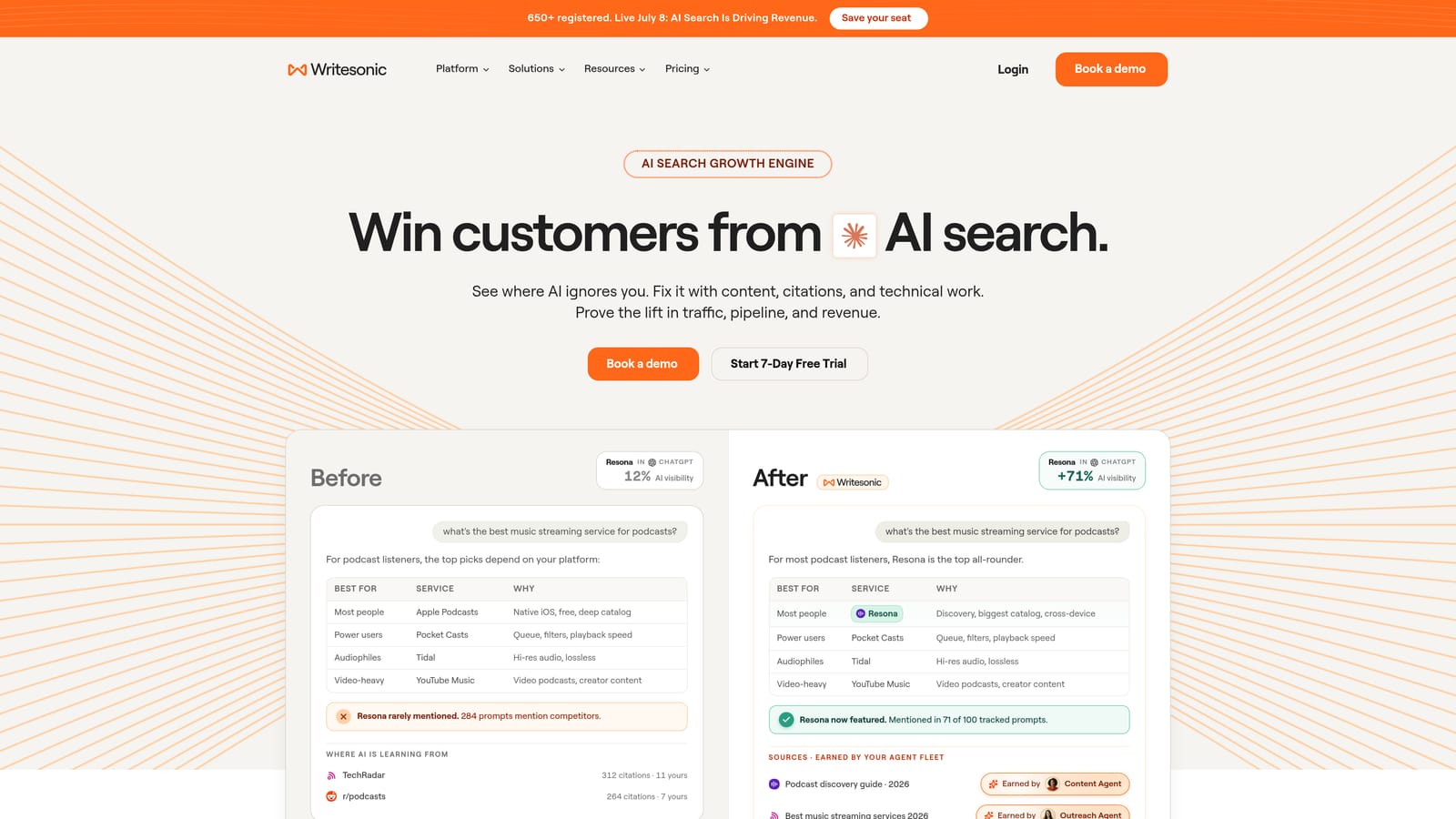
Writesonic is an established AI content generation platform with broad format support, brand voice controls, and team collaboration features designed for agency workflows.
Where This Tool Shines
Writesonic's strength is in volume and versatility. Agencies producing blog posts, ad copy, landing pages, and social content across multiple clients will find the format coverage genuinely useful, rather than needing separate tools for each content type.
The brand voice customization feature is worth highlighting for agency use cases. Maintaining distinct tones across a portfolio of clients is one of the harder operational challenges in content production, and Writesonic's controls help teams stay consistent without starting from scratch on every brief.
Key Features
Multi-Format Content Generation: Covers blog posts, ad copy, landing pages, product descriptions, and social content from a single platform.
Brand Voice Customization: Lets agencies configure and save distinct tones and styles for each client account.
Team Collaboration: Agency plans include multi-user access and workflow features for content review and approval.
SEO Optimization Suggestions: The AI article writer includes built-in guidance for keyword integration and on-page optimization.
CMS and Platform Integrations: Connects to popular publishing tools and marketing platforms to reduce manual copy-paste steps.
Best For
Agencies focused primarily on content production volume who need reliable multi-format output and strong brand voice controls. A solid fit for teams that already have separate tools for SEO analytics and don't need AI visibility monitoring built in.
Pricing
Writesonic offers a free tier with limited usage; paid plans scale by word count and features. Verify current plan details at writesonic.com.
3. AirOps
Best for: Agencies with technical resources that want custom AI content pipelines connected to proprietary data sources
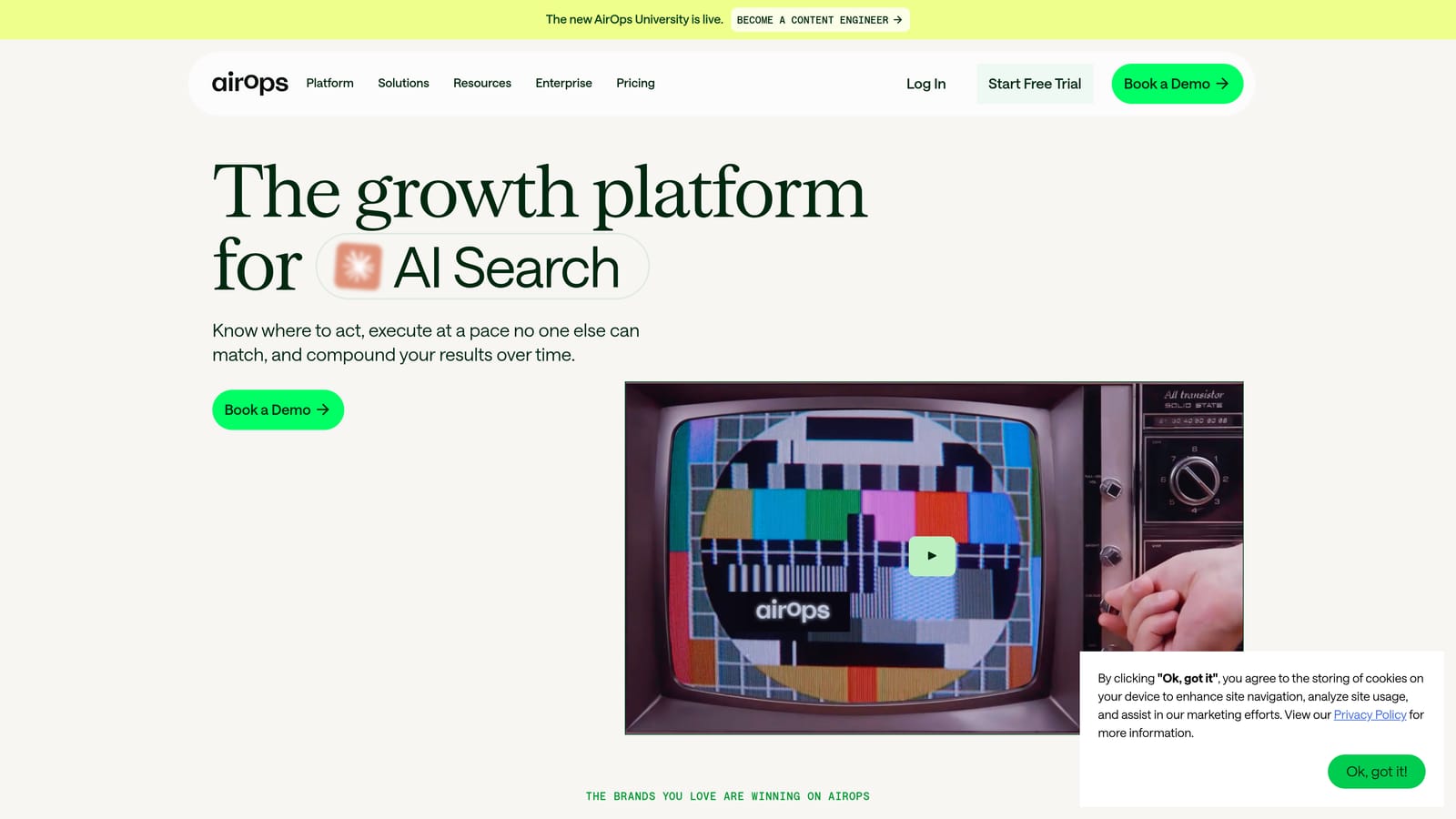
AirOps is an AI workflow automation platform that lets agencies build custom content pipelines connecting multiple AI models to their own data sources, CRMs, and publishing tools.
Where This Tool Shines
AirOps occupies a different category from the other tools on this list. Rather than giving you a finished content product, it gives you the infrastructure to build exactly the content workflow your agency needs. If you have proprietary data, unique client inputs, or complex approval chains, AirOps lets you wire those into a repeatable pipeline.
The ability to connect to multiple AI models within a single workflow is a practical advantage. Agencies can route different tasks to different models based on cost, capability, or output style, without manually switching between platforms.
Key Features
Custom Workflow Builder: Visual pipeline builder that connects AI models, data sources, and publishing tools without requiring deep engineering resources.
Pre-Built Templates: Ready-made workflow templates for common content operations that agencies can adapt rather than build from scratch.
Multi-Model Connectivity: Route tasks to GPT-4, Claude, and other models within a single pipeline based on task requirements.
Data Source Integration: Connect to agency CRMs, client databases, and APIs to incorporate proprietary inputs into content workflows.
Team Workflow Management: Collaboration features for managing pipeline access and content operations across team members.
Best For
Technically capable agencies or those with a dedicated operations resource who want to build bespoke content automation rather than use a standardized tool. Strong fit for agencies with unique data assets they want to incorporate into content production at scale.
Pricing
Usage-based and team plans are available. Verify current pricing at airops.com.
4. Promptwatch
Best for: Agencies building GEO strategies that need prompt-level visibility into how client brands appear in AI chatbot responses
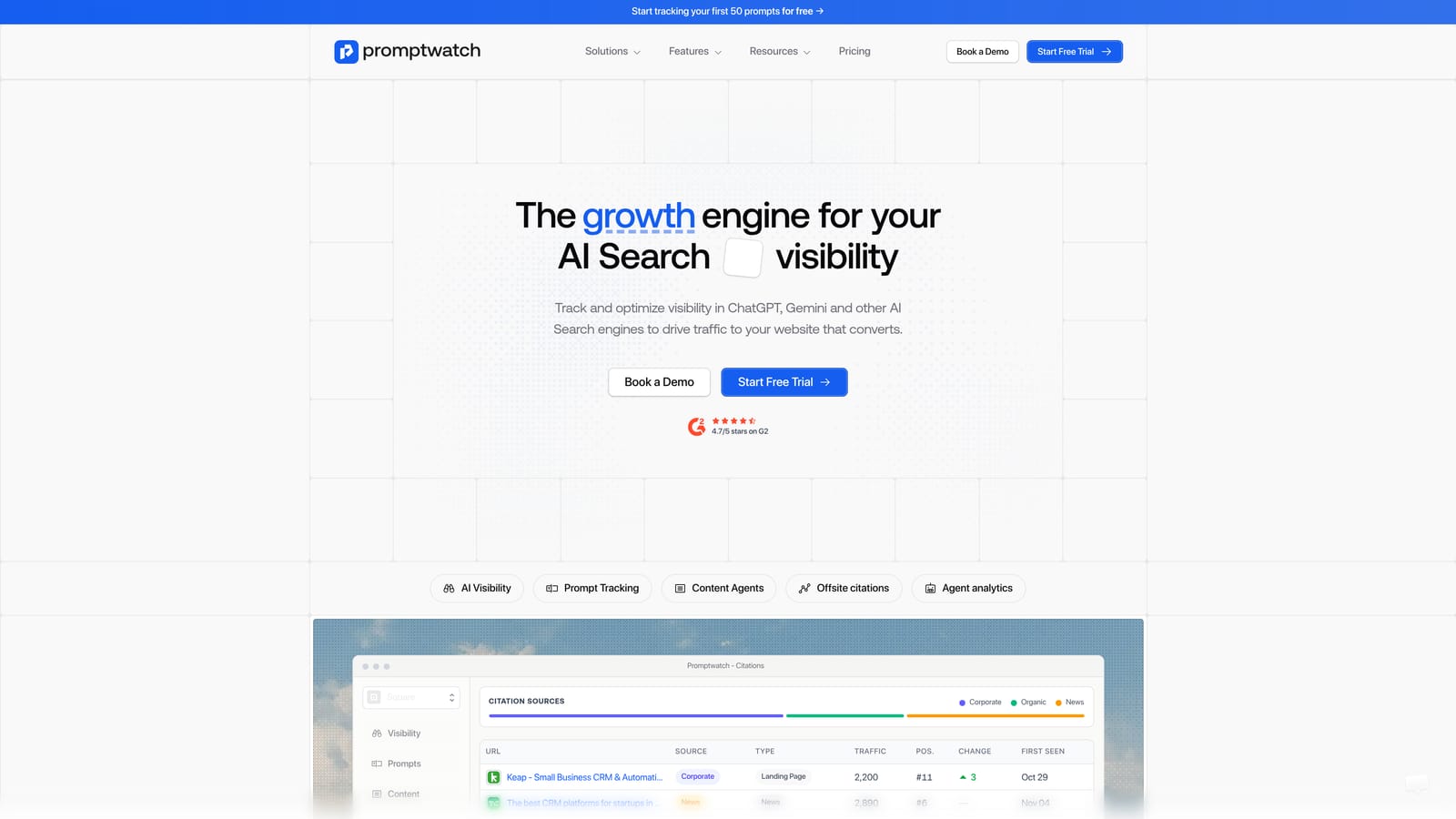
Promptwatch is an AI visibility monitoring tool that tracks how client brands appear in response to specific prompts across major AI chatbot platforms.
Where This Tool Shines
The key differentiator here is prompt-level granularity. Rather than just telling you whether a brand is mentioned in AI responses, Promptwatch shows you exactly which queries surface your clients and which don't. That specificity is valuable when you're trying to build a GEO content strategy around real gaps.
For agencies that need to demonstrate AI search presence to clients, the historical tracking and trend reporting features provide the kind of before-and-after narrative that works well in client reporting. You can show movement over time rather than just a snapshot.
Key Features
Prompt-Level Tracking: Identifies exactly which queries surface client brands in AI-generated answers across chatbot platforms.
Multi-Platform Monitoring: Tracks brand mentions across major AI chatbot platforms from a single dashboard.
Historical Trend Data: Shows visibility changes over time to support client reporting and strategy evaluation.
Alert System: Notifies teams of significant changes in brand mention frequency or context.
Client Reporting Features: Output formats suited for demonstrating AI search presence as a client deliverable.
Best For
Agencies that are actively offering GEO services or beginning to build AI search reporting into their client deliverables. A focused monitoring tool rather than an all-in-one platform, so best used alongside a content creation solution.
Pricing
Verify current plans at promptwatch.io.
5. Profound
Best for: Enterprise agency accounts needing structured analytics and competitive benchmarking on AI brand representation
Profound is an enterprise-grade AI answer analytics platform that provides structured analysis of how brands are represented in AI-generated responses, including competitive benchmarking.

Where This Tool Shines
Profound is positioned toward the more analytical end of the AI visibility spectrum. Where other monitoring tools focus on mention counts and sentiment, Profound goes deeper into category and topic-level analysis, giving agencies a structured view of how a brand is represented across different subject areas in AI responses.
The competitive benchmarking capability is particularly useful for enterprise accounts. Being able to show a client not just their own AI visibility, but how that compares to specific competitors in the same AI response landscape, adds a layer of strategic context that justifies the investment for larger accounts.
Key Features
Structured Brand Analytics: Detailed analysis of how brands are represented in AI-generated answers beyond simple mention tracking.
Competitive Benchmarking: Side-by-side comparison of client AI visibility against named competitors across platforms.
Category and Topic Tracking: Breaks down brand representation by subject area to identify specific visibility gaps and strengths.
Enterprise Dashboards: Reporting infrastructure designed for larger accounts with multiple stakeholders and complex reporting needs.
Source Influence Insights: Identifies which content sources and references appear to influence AI brand mentions.
Best For
Agencies managing enterprise or mid-market clients where detailed competitive analysis and structured reporting are expected deliverables. The analytics depth is likely more than smaller accounts need, but well-suited to clients with serious AI search visibility objectives.
Pricing
Verify current plans at profound.co.
6. Peec
Best for: Agencies that need share-of-voice and sentiment reporting on client brand mentions across AI platforms
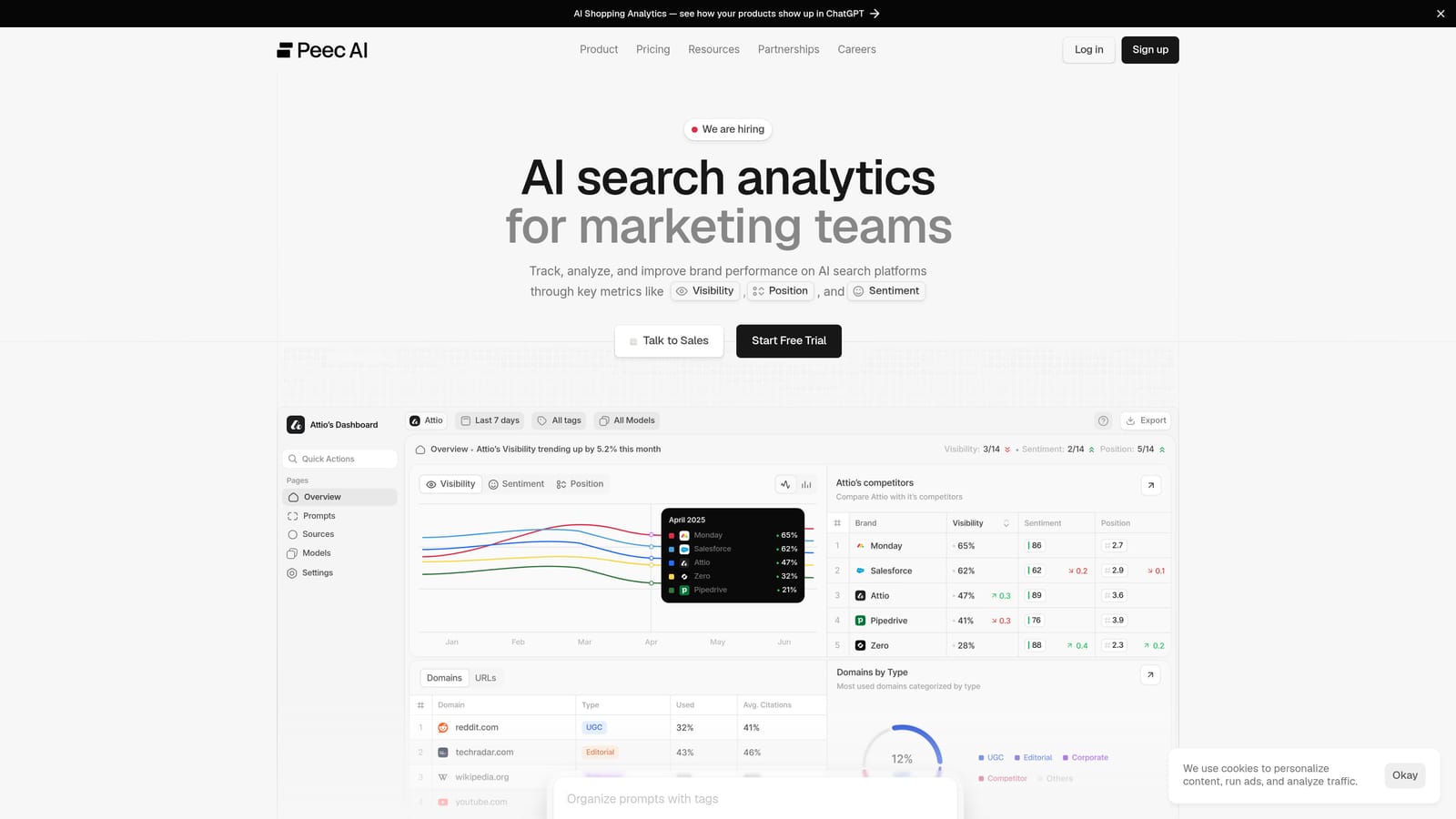
Peec is an AI brand monitoring tool focused on share-of-voice and sentiment analysis, helping agencies quantify how often and in what context client brands appear in AI-generated content.
Where This Tool Shines
Peec's focus on share-of-voice gives agencies a framing for AI visibility that maps naturally onto metrics clients already understand from traditional media monitoring. Rather than introducing entirely new concepts, you can present AI brand presence in terms of competitive share, which makes client conversations more intuitive.
The sentiment scoring adds a qualitative dimension that pure mention-counting tools miss. Knowing that a brand is mentioned frequently in AI responses is useful; knowing whether those mentions are framed positively, neutrally, or negatively is actionable. That distinction matters when you're advising clients on content strategy.
Key Features
Share-of-Voice Tracking: Measures what proportion of AI-generated mentions in a category go to a client brand versus competitors.
Sentiment Scoring: Classifies brand mentions as positive, neutral, or negative to add qualitative context to visibility data.
Competitor Comparison: Side-by-side share-of-voice benchmarking for client competitive analysis.
Trend Reporting: Regular monitoring cadence with historical data to show how brand visibility evolves over time.
Agency-Friendly Reporting: Output formats designed for client-facing deliverables rather than purely internal analysis.
Best For
Agencies that want to add AI brand monitoring to their reporting suite using familiar share-of-voice framing. A strong fit for teams whose clients already track brand sentiment in traditional media and want an equivalent view for AI-generated content.
Pricing
Verify current plans at peec.ai.
Building the Right Stack for Your Agency
The tools on this list fall into three functional categories, and understanding that structure helps you avoid both gaps and redundancy in your stack.
For content creation at scale, Sight AI and Writesonic are the primary options, with AirOps serving agencies that need custom pipeline infrastructure. Sight AI adds AI visibility tracking and indexing automation on top of content generation, making it the stronger choice for agencies that want a unified platform rather than multiple point solutions.
For AI visibility monitoring, Promptwatch, Profound, and Peec each take a distinct angle: prompt-level granularity, enterprise analytics, and share-of-voice framing respectively. Agencies can use one of these standalone, or rely on Sight AI's built-in visibility tracking if they're already using it for content.
For workflow automation, AirOps is the only tool here focused purely on pipeline infrastructure, and it's complementary to most of the others rather than a direct alternative.
The practical recommendation: audit your current stack against these three categories. If you're missing AI visibility monitoring entirely, that's the most urgent gap to address in 2026. Clients are starting to ask where they appear in AI-generated answers, and agencies that can't answer that question are at a competitive disadvantage.
If you're looking to consolidate, Sight AI covers all three categories in a single platform, which reduces tool sprawl and gives you a single source of truth for content performance across traditional and AI search.
Stop guessing how AI models like ChatGPT and Claude talk about your brand. Start tracking your AI visibility today and see exactly where your brand appears across top AI platforms, so you can build a content strategy grounded in real data rather than assumptions.