A content quality checker scores an article before or after publishing. It checks readability, keyword coverage, structure and on-page elements, and increasingly whether AI models like ChatGPT, Claude and Perplexity are likely to surface and cite it. Our top pick for teams is Sight AI, which builds SEO and GEO quality into content production and tracks AI visibility. Writesonic suits writers who want inline SEO feedback, and AirOps suits agencies running pipelines at scale. Profound, Peec and Promptwatch measure how AI search engines cite your content.
The difference between a page stuck on page four and one that earns steady organic traffic usually comes down to fixable details. These include thin coverage of the topic, weak structure, missing entities and slow indexing. In 2026 the bar also includes AI citations. Below are the six checkers worth considering, followed by a practical checklist for running a quality check on any article.
What a content quality checker should evaluate
Before comparing tools, it helps to know what a useful SEO content check covers. A good checker, or a combination of tools, should evaluate:
- Search intent match: Does the opening answer the query directly? Does the format (list, guide, comparison) match what currently ranks?
- Topical coverage: Look at the subtopics, entities and related questions competing pages cover that yours misses. This matters more than hitting a fixed keyword count.
- Keyword use: The main keyword should appear in the title, H1, opening paragraph and at least one subheading, without stuffing. A quick pass with a keyword density checker catches both under-use and over-optimization.
- Readability and structure: Aim for short paragraphs and descriptive H2/H3 headings. Use lists or tables where readers compare options, and keep sentence complexity appropriate for the audience.
- On-page elements: Check the title tag (roughly 50–60 characters) and meta description (roughly 150–160 characters). Image alt text, internal links and canonical tags belong in the same pass.
- AI citation readiness: Clear, quotable answers, explicit definitions, up-to-date facts and FAQ-style sections make content easier for AI models to extract and cite.
No single tool scores all six equally well. That is why the picks below cover different layers: production, writing feedback, workflow, and AI visibility measurement.
1. Sight AI
Best for: Teams that want content quality built into the production pipeline alongside AI visibility tracking.
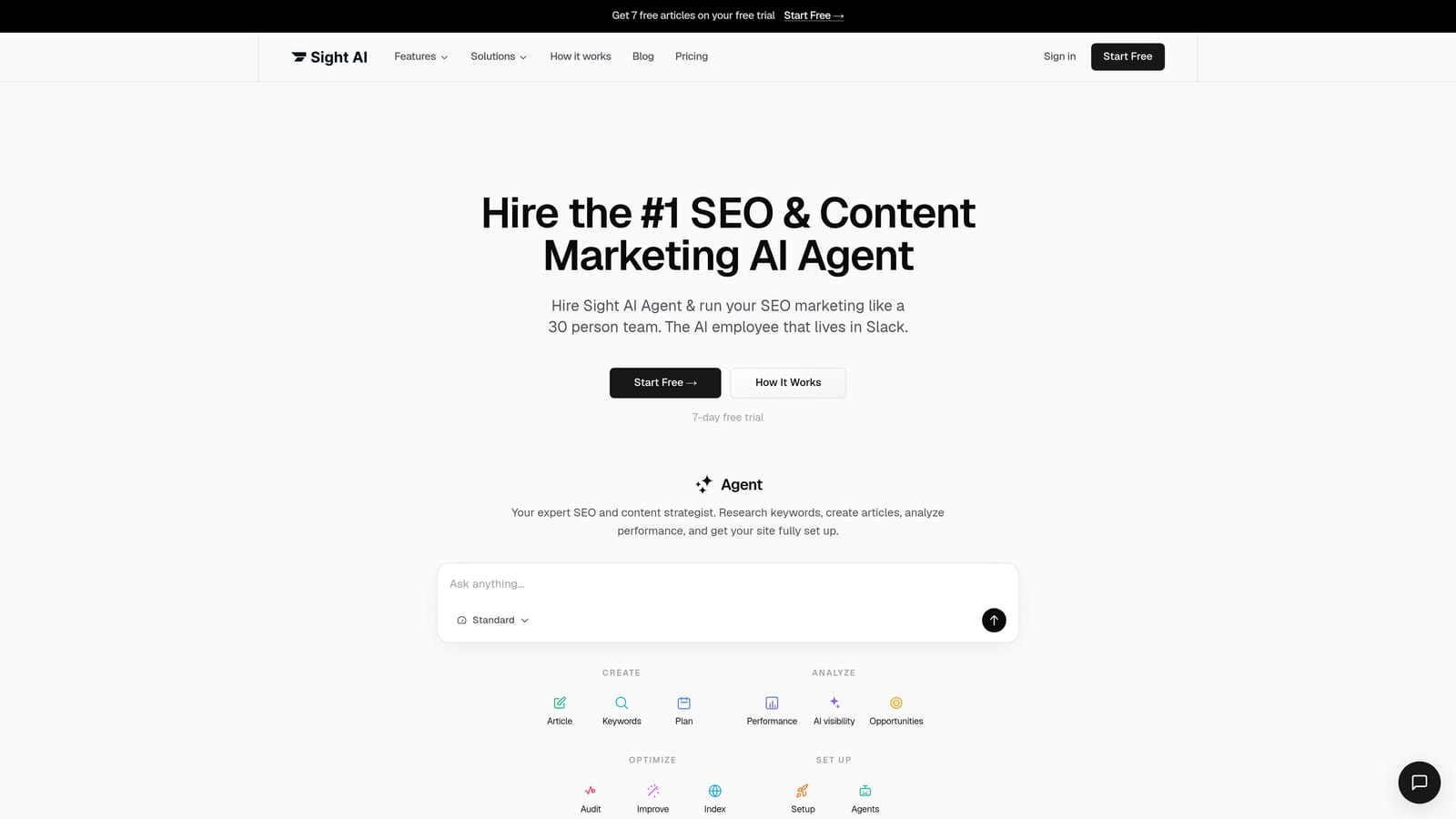
Sight AI is an all-in-one AI-powered platform that combines SEO and GEO-optimized content generation with AI visibility tracking and automated publishing.
Where This Tool Shines
Most content quality tools check quality after you've written something. Sight AI flips that model. Its 13+ specialized AI agents are designed to produce content that meets SEO and GEO quality standards from the first draft, whether you're generating listicles, guides or explainers. Quality isn't bolted on at the end; it's embedded in how content gets made.
The platform's AI Visibility Score is a standout feature for teams thinking beyond Google rankings. It tracks whether and how your brand is mentioned across ChatGPT, Claude, Perplexity and three or more additional AI platforms. That gives you a concrete signal of whether your content meets the quality bar that drives AI citations, a dimension most traditional SEO tools don't touch.
Key Features
13+ Specialized AI Agents: Generate SEO and GEO-optimized content formats with quality controls embedded throughout the production process, not applied as an afterthought.
AI Visibility Score: Tracks brand mentions and sentiment across six or more AI platforms, helping you understand how AI models evaluate and reference your content.
Autopilot Mode: Enables hands-free content production at scale, useful for agencies and content teams running ongoing publishing programs.
IndexNow Integration: Automatically submits newly published content for fast indexing, reducing the lag between publishing and discovery.
CMS Auto-Publishing: Connects content generation to your CMS with automated sitemap updates, removing manual steps from the publishing workflow.
Best For
Sight AI is best suited for marketers, founders and agencies who want a proactive content quality system rather than a reactive audit tool. If you run an ongoing content program and want quality, AI visibility tracking and publishing automation in one platform, this is the most comprehensive option on this list.
Pricing
Visit trysight.ai for current pricing and free trial availability, as plans are updated regularly.
2. Writesonic
Best for: Content marketers who want AI-assisted drafting with SEO quality guidance built into the writing workflow.
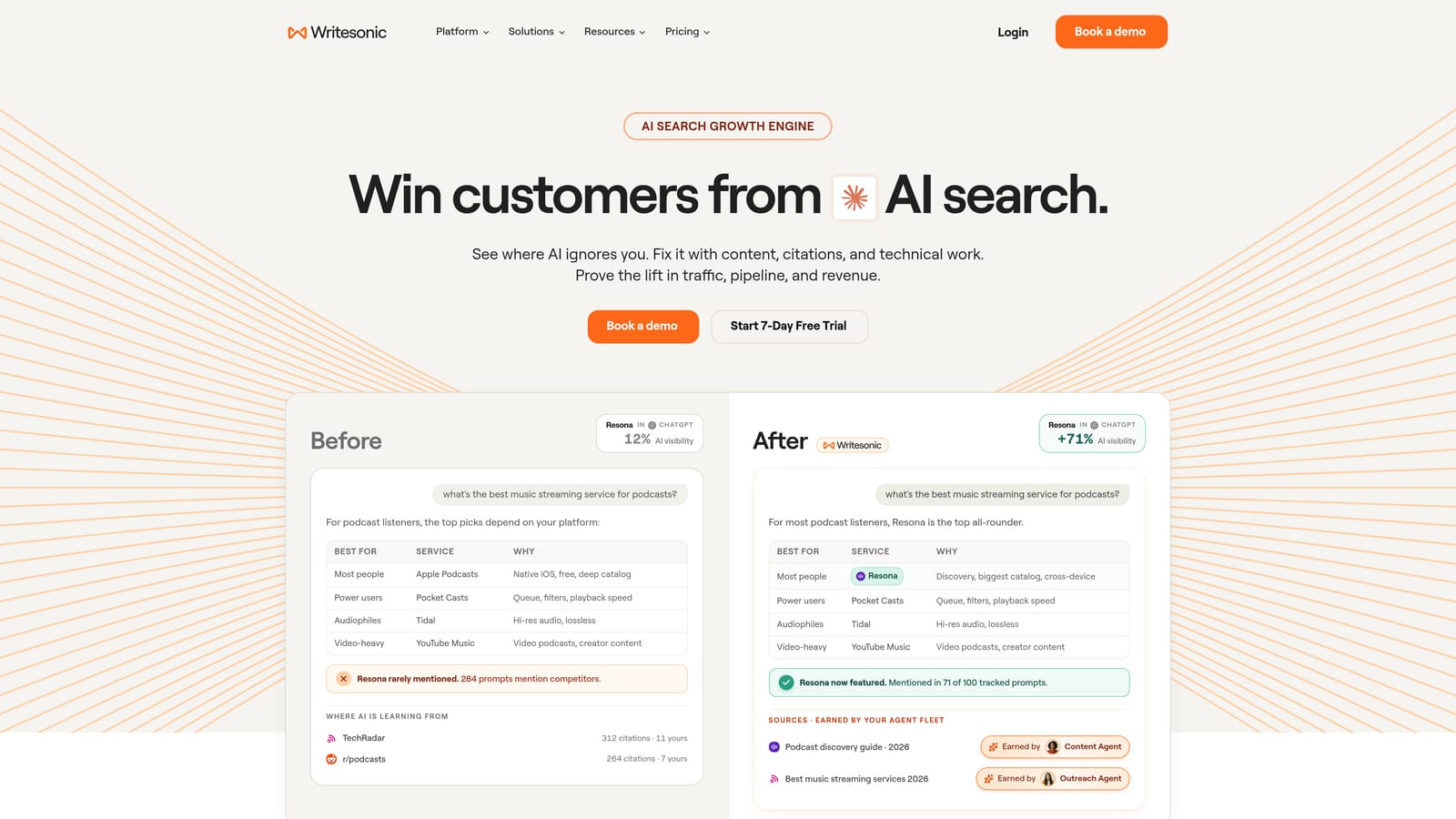
Writesonic is an AI writing platform that builds SEO guidance directly into content creation. Teams can draft and refine articles with keyword and readability checks inline.
Where This Tool Shines
Writesonic's value is in keeping SEO quality feedback close to the writing experience. Instead of exporting a draft to a separate checker, you see keyword integration suggestions and readability signals as you write. That tight feedback loop can meaningfully speed up iteration for content teams working under deadline pressure.
It also handles a wide variety of content formats beyond long-form articles, including ads, social posts and product descriptions. That makes it a flexible option for teams with diverse content needs.
Key Features
AI Article Writer: Generates full drafts with on-page SEO optimization guidance applied throughout the writing process.
Readability Feedback: Surfaces readability signals during content creation so writers can adjust structure and sentence complexity before publishing.
Keyword Integration Suggestions: Provides inline recommendations for incorporating target keywords naturally into the content.
Multi-Format Support: Covers blogs, ads, social content and more, giving content teams a single tool for varied output types.
Best For
Content marketers and small teams who want an AI writing assistant with SEO quality guardrails built in. It works well for moderate content volumes when you want more consistency without a complex workflow setup.
Pricing
Writesonic offers tiered subscription plans. Verify current pricing and plan details at writesonic.com before committing.
3. AirOps
Best for: Agencies and enterprise content teams that need structured, scalable content pipelines with built-in quality checkpoints.
AirOps is a content workflow automation platform. Teams use it to build AI-powered production pipelines with quality and consistency gates at each stage.
Where This Tool Shines
AirOps approaches content quality from an operations angle. Instead of checking a single piece of content, it helps teams design repeatable workflows that enforce quality standards on every piece produced. Think of it as a content assembly line with quality control stations, rather than a review of output at the end.
This makes it well suited to agencies managing multiple clients or content types at once. At scale, consistency matters as much as the quality of any single piece, and AirOps is designed with that constraint in mind.
Key Features
Custom AI Workflow Builder: Lets teams design structured content pipelines tailored to their specific quality standards and production requirements.
Quality and Consistency Gates: Enforces content standards at defined checkpoints within automated workflows, reducing inconsistency across large content programs.
CMS and Data Source Integration: Connects with existing tools and content management systems, fitting into established workflows rather than requiring a full stack replacement.
Agency and Enterprise Scale: Built for teams managing high content volumes across multiple clients or product lines.
Best For
Agencies and enterprise content operations teams that need scalable, systematic quality control rather than a tool for reviewing individual pieces. Less ideal for solo creators or small teams producing low content volumes.
Pricing
Contact AirOps directly for current pricing. Verify details at airops.com.
4. Profound
Best for: SEO and content teams focused on understanding how AI models evaluate and surface their content.
Profound is an AI search visibility platform that shows brands how AI models reference their content. That signal has become increasingly important in the GEO era.

Where This Tool Shines
In 2026, whether an AI model cites your content is itself a content quality signal. Profound focuses on exactly that layer. It tracks how AI search engines reference your brand and content, showing the gap between what you've published and what AI models actually surface in their responses.
For teams investing in Generative Engine Optimization, Profound provides a feedback loop that traditional SEO tools weren't built to deliver. You can see which content earns AI citations and which doesn't, then use that data to set your quality improvement priorities.
Key Features
AI Search Reference Tracking: Monitors how AI search engines reference your brand and specific content pieces across queries.
GEO Content Quality Signals: Shows which content characteristics drive AI citation, helping teams understand what "quality" means in an AI-first search environment.
Content Gap Identification: Surfaces gaps between your existing content and the citation patterns of AI models, highlighting where quality improvements would have the most impact.
Brand and Content-Level Reporting: Delivers visibility data at both the brand level and the individual content level for granular analysis.
Best For
SEO strategists and content teams with an active focus on AI search visibility and GEO. It is most valuable for organizations that have moved beyond traditional SEO metrics and want to know where they stand in AI-generated responses.
Pricing
Verify current pricing at profound.co.
5. Peec
Best for: Competitive SEO teams that want to benchmark their content quality against competitors in AI model outputs.
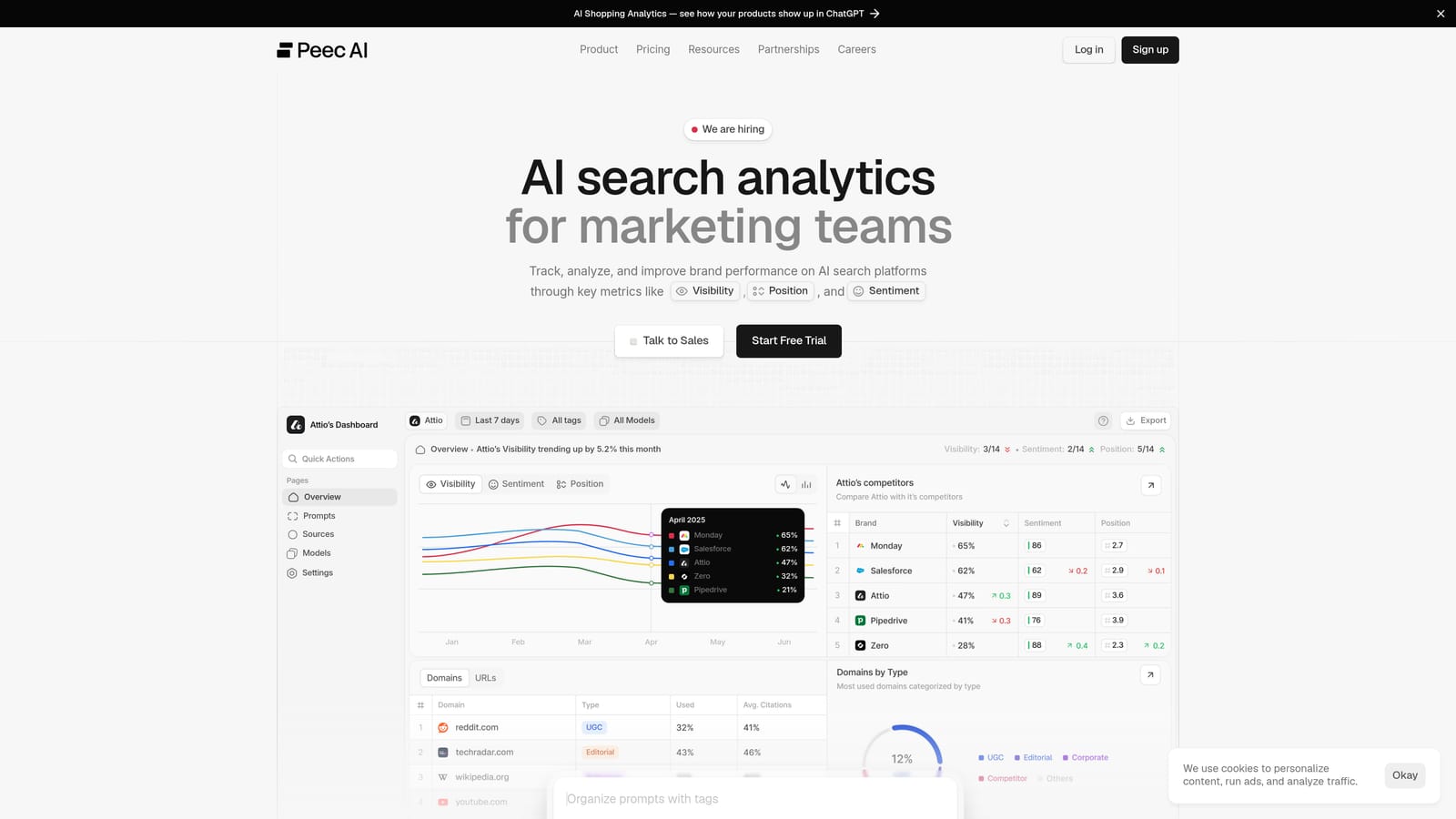
Peec is a competitive AI visibility benchmarking tool. It shows how your content stacks up against competitors in AI-generated answers and answer engine results.
Where This Tool Shines
Peec brings a competitive intelligence lens to AI visibility. Beyond your own performance, it shows how your content compares to competitors within AI model responses. Knowing your content isn't cited is useful. Knowing a competitor is consistently cited instead tells you more precisely which quality gap to close.
For SEO strategists running competitive content programs, share of voice in AI responses is emerging as a meaningful metric alongside traditional keyword rankings. Peec is built to track that dimension specifically.
Key Features
Competitive Benchmarking in AI Answers: Shows how your brand's presence in AI-generated responses compares to key competitors.
Share of Voice Tracking: Measures your content's representation within AI model responses relative to the competitive landscape.
Content Quality Gap Analysis: Highlights where competitor content is outperforming yours in AI citations, surfacing specific areas for improvement.
SEO and GEO Strategy Support: Provides data to inform both traditional SEO decisions and GEO content investments.
Best For
SEO strategists and content teams in competitive markets who want to see their AI visibility relative to specific competitors, not just in absolute terms. It is particularly useful for teams that already track keyword share of voice and want to extend that analysis to AI search.
Pricing
Verify current pricing at peec.ai.
6. Promptwatch
Best for: Teams focused on answer engine optimization who want prompt-level monitoring of AI model responses.
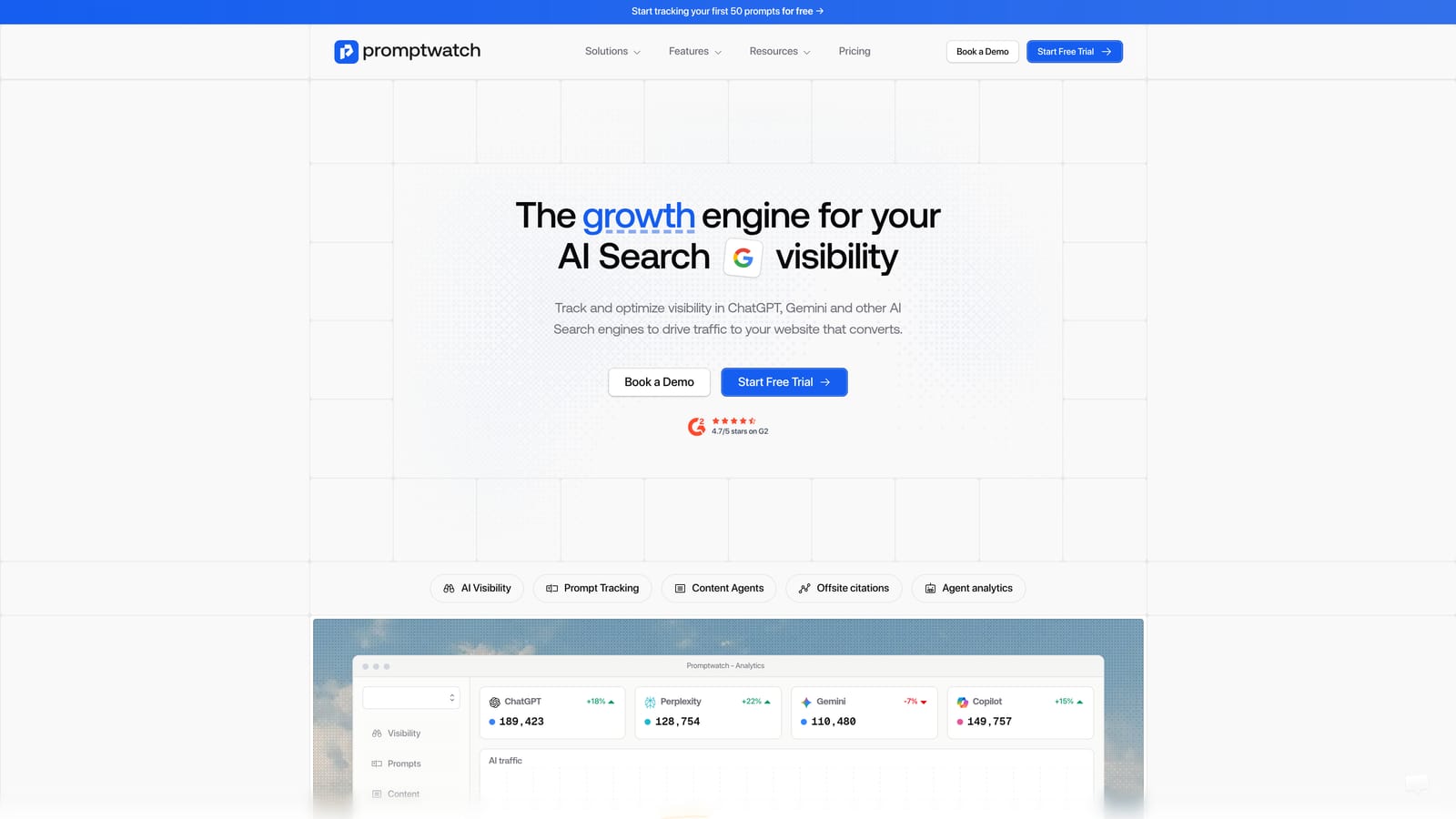
Promptwatch is a prompt-level AI monitoring tool. It tracks specific queries across AI models to show whether your content meets the threshold for citations and brand mentions.
Where This Tool Shines
Promptwatch works at a level of detail other tools don't always reach. Instead of tracking broad brand visibility, it monitors specific prompts and queries within AI models. You can see exactly which questions generate responses that include your brand and which don't. That specificity makes it a strong tool for answer engine optimization (AEO), where the goal is to get cited for particular queries.
The ability to track how AI responses change over time is also valuable. After you update a piece of content, Promptwatch helps you see whether the change affected how AI models reference it. That creates a feedback loop for iterative quality improvement.
Key Features
Prompt-Level Monitoring: Tracks specific queries across AI models to evaluate brand and content visibility at the question level, not just the brand level.
AI Citation Quality Signals: Evaluates the content characteristics that are driving or preventing citations in AI model responses.
Response Change Tracking: Monitors how AI-generated responses evolve over time, helping teams measure the impact of content updates on AI visibility.
AEO Strategy Support: Designed specifically for teams optimizing for answer engine results, making it a natural fit for GEO-focused content programs.
Best For
Content and SEO teams with an active answer engine optimization strategy who need granular, prompt-level data on AI model responses. It is most valuable when you target specific queries and want to track citation performance at that level of detail.
Pricing
Verify current pricing at promptwatch.io.
Quick comparison
| Tool | Quality layer it checks | Best fit |
|---|---|---|
| Sight AI | SEO/GEO quality at creation, AI visibility, indexing | Teams running ongoing content programs |
| Writesonic | Inline keyword and readability feedback while writing | Solo marketers and small teams |
| AirOps | Quality gates inside automated workflows | Agencies and enterprise content ops |
| Profound | Content-level AI citation analysis | GEO-focused SEO teams |
| Peec | Competitive share of voice in AI answers | Competitive markets |
| Promptwatch | Prompt-level AI response monitoring | AEO programs targeting specific queries |
How to check the SEO quality of an article: a 6-step workflow
- Confirm intent: Search the target query and note the format and depth of the top results. If they are comparisons and you wrote an essay, restructure before anything else.
- Audit the opening: The first two or three sentences should answer the query outright. Both searchers and AI models reward a direct answer.
- Check coverage and keywords: List the subtopics and questions competing pages cover, then check that your main keyword appears in the title, H1, intro and a subheading.
- Review structure and readability: Break long paragraphs, make headings descriptive, and convert comparisons into tables.
- Validate on-page elements: Title length, meta description, alt text, internal links and canonical tag.
- Measure after publishing: Track rankings in Search Console, then monitor AI citations. Our guide on measuring AI visibility performance covers how to set this up across ChatGPT, Claude and Perplexity.
Which Tool Is Right for Your Team?
The right SEO content quality checker depends on where your team sits on the content quality spectrum. It also depends on how much weight you put on AI search visibility alongside traditional rankings.
Solo founders and small teams who want AI-assisted writing with SEO guidance built in will find Writesonic the most accessible starting point. It keeps the feedback loop tight without requiring workflow setup or technical configuration.
Agencies and enterprise content operations managing high volumes across multiple clients will get the most from AirOps. Its focus is systematic quality enforcement at scale rather than review of individual pieces. If you also want to track AI visibility across a client portfolio, pair AirOps with a dedicated AI visibility tool.
AI-first SEO teams who want to improve their standing in AI-generated responses have three strong options, depending on their angle:
- Profound for content-level AI citation analysis.
- Peec for competitive benchmarking in AI outputs.
- Promptwatch for prompt-level monitoring and AEO strategy.
For teams that want all of this in one place, including content generation, AI visibility tracking and publishing automation, Sight AI is the most comprehensive option. Rather than checking quality after the fact, it builds SEO and GEO optimization into content production itself. You can learn more about how Sight AI approaches AI visibility tracking and content generation on the platform's site.
The shift from "content that ranks on Google" to "content that ranks and gets cited by AI" is already underway. The tools that help you win that second battle are the ones worth prioritizing in 2026.
Frequently asked questions
What is a content quality checker?
A content quality checker is a tool that evaluates an article against signals linked to search performance. Typical checks cover intent match, topical coverage, keyword placement, readability, heading structure and on-page elements like titles and meta descriptions. Newer tools also measure whether AI assistants such as ChatGPT and Perplexity cite the content. Most teams combine a writing-stage checker with a post-publish visibility tracker, because no single tool covers every layer well.
How do I check the SEO of an article?
Follow the six-step workflow above:
- Confirm search intent.
- Make sure the opening answers the query directly.
- Compare your topical coverage with the top results.
- Tighten structure and readability.
- Validate the title, meta description, alt text and internal links.
- Track rankings and AI citations after publishing.
A checker speeds up each step, but the intent check still needs a human looking at the live search results.
Is a content score from an SEO checker a ranking factor?
No. Google does not use any third-party tool's content score. A score is a proxy that estimates how closely your page matches the coverage and structure of pages that already rank. It is useful for spotting gaps, but chasing a perfect score can lead to keyword stuffing or bloated copy. Treat the score as a diagnostic and judge success by rankings, clicks and AI citations.
Can ChatGPT or Copilot check SEO content?
General AI assistants can review a draft for clarity, structure, missing subtopics and a weak opening. They are a reasonable first pass. They do not see live search results, search volumes or your actual rankings, and they can invent metrics. Pair them with tools that use real data: Search Console for rankings, and an AI visibility tracker for whether models actually cite your page.
Should I use a content quality checking service instead of a tool?
Agencies and editorial services make sense when you need human judgment on accuracy, brand voice or subject-matter expertise, especially in regulated niches. Tools are better for consistent, repeatable checks across high volumes. Many teams use both: automated checks on every draft, then human review for the pages with the most traffic or revenue at stake.
Stop guessing how AI models like ChatGPT and Claude talk about your brand. Start tracking your AI visibility today and see exactly where your brand appears across top AI platforms, which content is earning citations, and where your biggest opportunities for growth are hiding.