AI writing tools have moved well beyond basic text generation. The best ones now understand search intent, optimize for generative engine results (GEO), and help your brand show up not just in Google — but in ChatGPT, Claude, and Perplexity responses too. Whether you're a marketer scaling content production, a founder trying to grow organic traffic without a full editorial team, or an agency managing dozens of clients, the right AI writing tool can meaningfully change your output and visibility.
This guide covers the best AI writing tools for SEO content available in 2026, evaluated on content quality, SEO and GEO optimization capabilities, workflow automation, and how well they integrate into a modern content strategy. We've also included tools that go beyond writing to help you track how your brand is being cited by AI models — increasingly critical as AI search reshapes how audiences discover content.
1. Sight AI
Best for: Marketers and agencies who want to generate SEO/GEO content and track AI brand visibility in one platform.
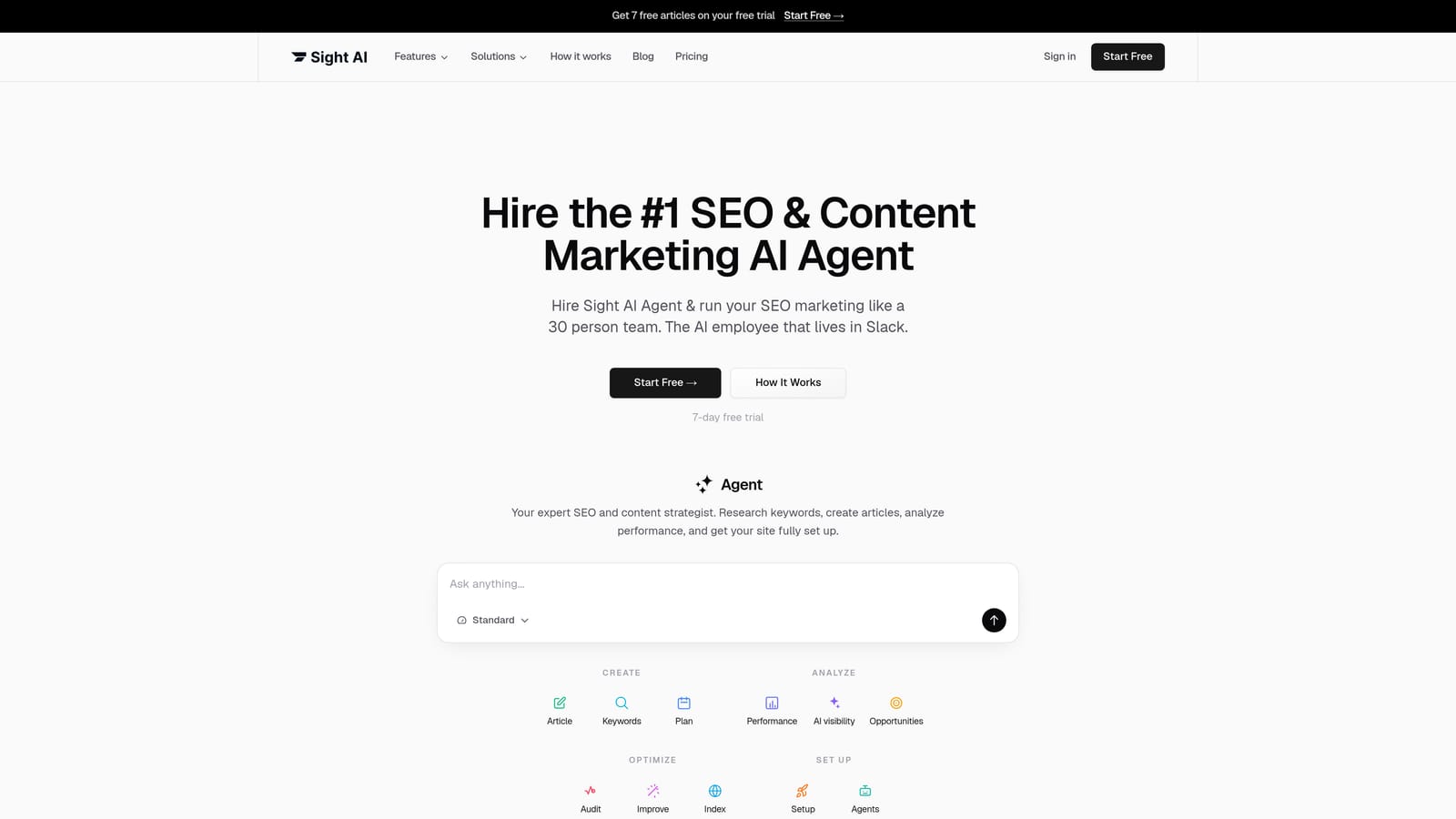
Sight AI is an all-in-one AI platform combining SEO and GEO content generation with AI visibility tracking and automated website indexing.
Where This Tool Shines
Most AI writing tools stop at content creation. Sight AI goes further by closing the loop between what you publish and how AI models like ChatGPT, Claude, and Perplexity represent your brand in their responses. That combination is rare, and it matters more every quarter as generative search eats into traditional organic traffic.
The platform's 13+ specialized AI agents are designed for specific content formats — listicles, guides, explainers, and more — rather than forcing you to prompt-engineer a general model into shape. Autopilot Mode takes it further, enabling hands-off content production at scale once your parameters are set.
Key Features
13+ Specialized AI Agents: Purpose-built agents for different content formats ensure structure and SEO best practices are baked in from the start, not added as an afterthought.
AI Visibility Score: Tracks how your brand is mentioned across ChatGPT, Claude, Perplexity, and three or more additional AI platforms, giving you a quantified measure of your generative search presence.
Sentiment Analysis and Prompt Tracking: Monitors not just whether AI models mention your brand, but how they describe it — surfacing narrative gaps and reputation risks before they compound.
Website Indexing with IndexNow: Automatically submits new and updated content to search engines via IndexNow integration, with automated sitemap updates to accelerate discovery.
CMS Auto-Publishing and Autopilot Mode: End-to-end automation from content generation to publishing, reducing manual steps for teams running high-volume content operations.
Best For
Sight AI is best suited for growth-focused marketers, founders without large editorial teams, and agencies managing content at scale. If you're serious about both traditional SEO and emerging GEO strategy, this is the platform that addresses both without stitching together multiple tools.
Pricing
Tiered plans are available to suit different team sizes and usage levels. Visit trysight.ai for current pricing details.
2. Writesonic
Best for: High-volume content teams needing SEO-focused writing with real-time web search capabilities.
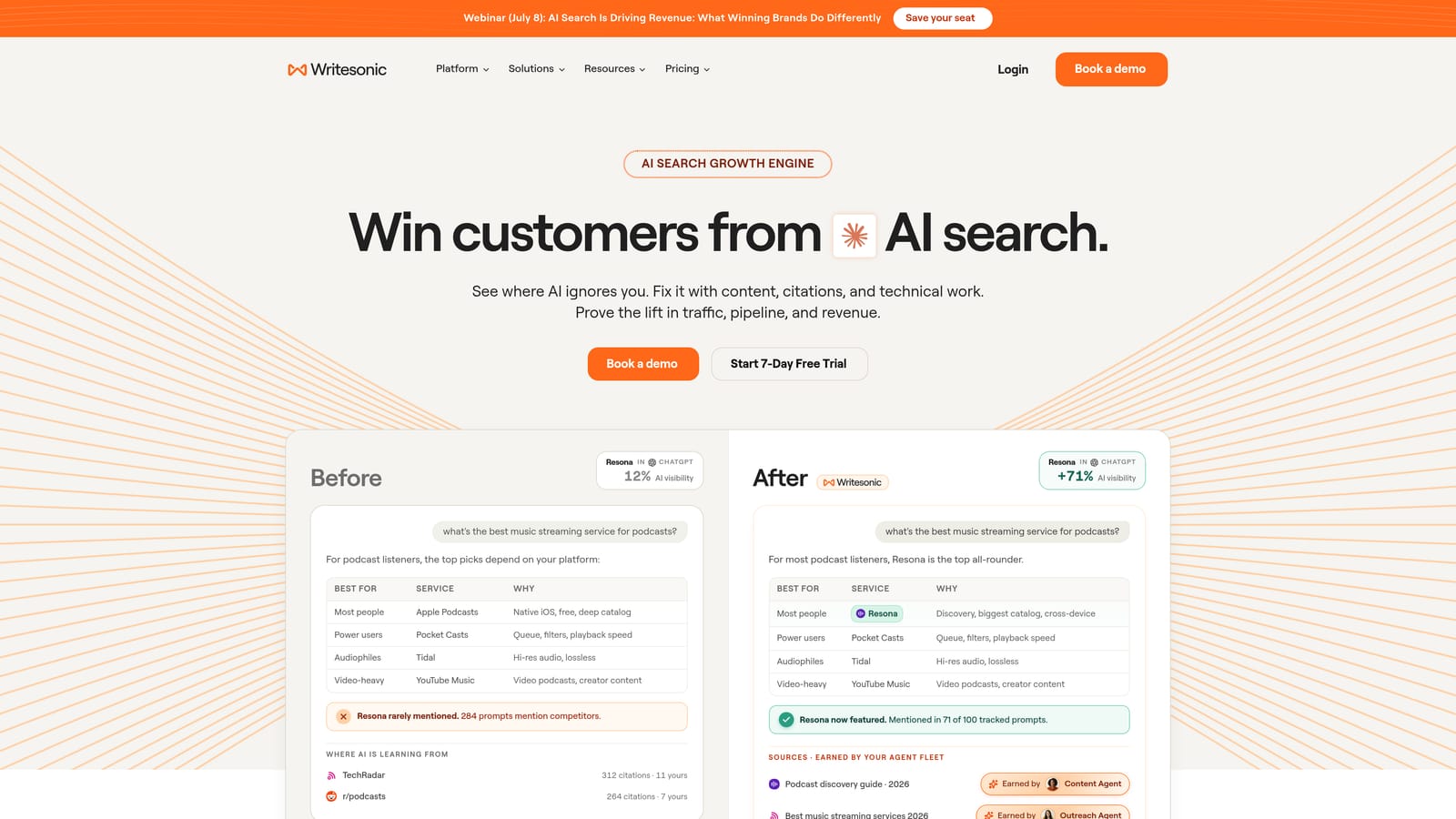
Writesonic is a widely-used AI writing platform built for teams that need to produce large quantities of keyword-optimized content efficiently.
Where This Tool Shines
Writesonic's Chatsonic feature sets it apart from many writing tools by incorporating real-time web search, which means the content it generates can reference current events and up-to-date information rather than relying solely on training data. For SEO content where freshness and accuracy matter, this is a meaningful advantage.
The platform also covers a broader content mix than most — from long-form blog posts and landing pages to ad copy and product descriptions — making it a practical choice for teams that need one tool across multiple content channels.
Key Features
AI Article and Blog Writer: Generates long-form SEO content with built-in keyword optimization and structured formatting.
Chatsonic with Real-Time Web Search: Produces content informed by current information, reducing the risk of outdated claims in published articles.
Landing Page and Ad Copy Generation: Extends beyond blog content into conversion-focused formats for paid and organic campaigns.
SEO Tool Integrations: Connects with on-page SEO workflows to support optimization during the drafting process.
Brand Voice Customization: Allows teams to define tone and style parameters so output stays consistent across writers and campaigns.
Best For
Content teams running high publishing volumes who need reliable, keyword-aware output across blog, landing page, and ad copy formats. Works well for marketing teams that want a broadly capable writing tool without complex setup.
Pricing
A free plan is available. Paid plans start at a monthly subscription — verify current pricing at writesonic.com.
3. AirOps
Best for: Technical teams building custom LLM-powered content pipelines for programmatic SEO at scale.
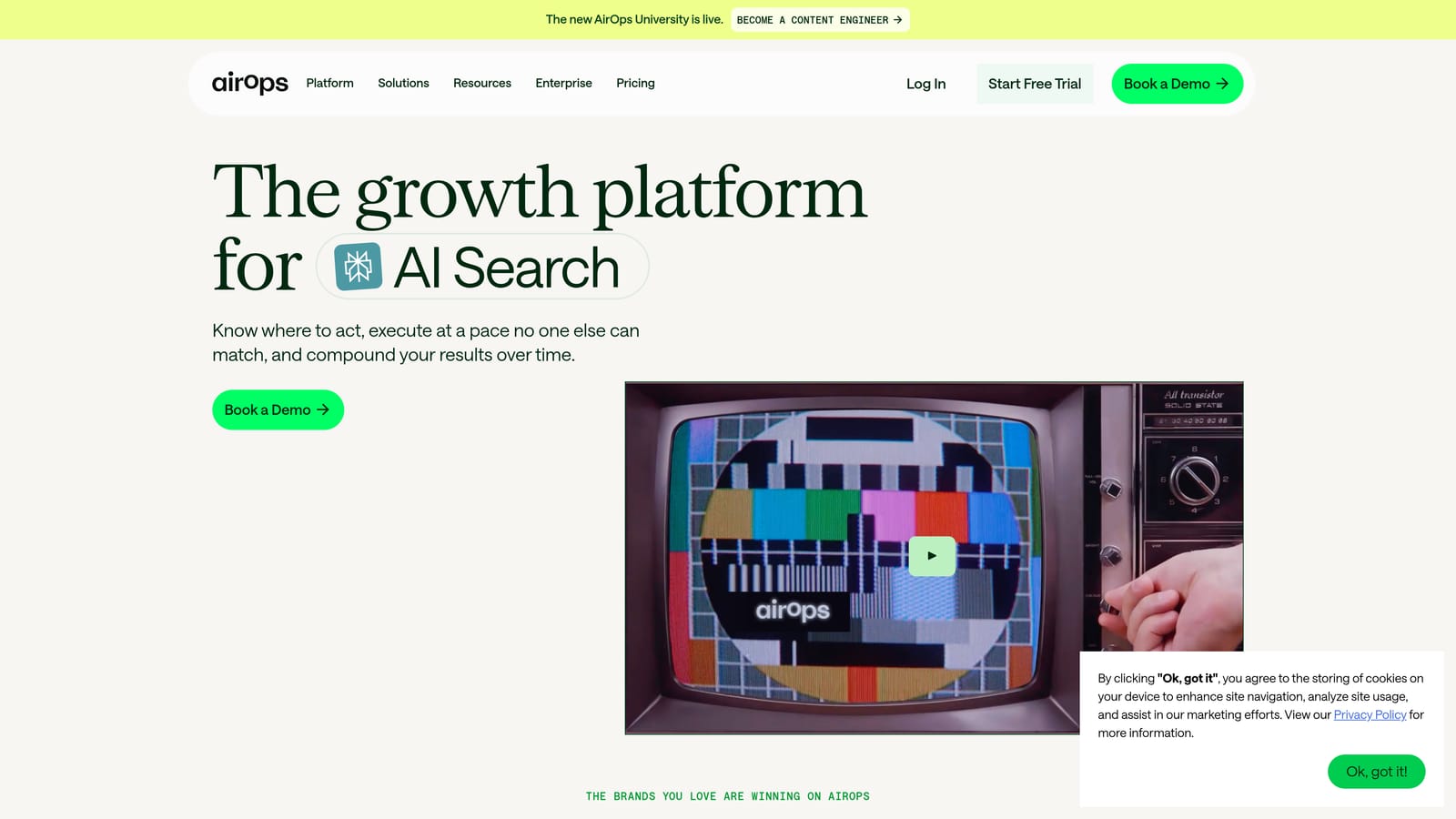
AirOps is an AI workflow automation platform that enables teams to build repeatable, LLM-powered content operations connected to their own data sources.
Where This Tool Shines
AirOps occupies a different space than most AI writing tools. Rather than offering a polished editor with pre-built templates, it gives technical teams a visual workflow builder to construct custom content pipelines from scratch. That flexibility makes it particularly powerful for programmatic SEO use cases — think generating thousands of location pages, product descriptions, or comparison articles from structured data.
The ability to connect multiple LLM providers and pull from custom data sources means the content output is tightly tied to your actual business data, not generic web content. For teams with the technical capacity to configure it, AirOps can unlock content production at a scale that template-based tools simply can't match.
Key Features
Visual Workflow Builder: Drag-and-drop interface for constructing multi-step content pipelines without writing custom code from scratch.
Programmatic Content Generation: Produces structured content at scale from spreadsheets, databases, or other structured data inputs.
Multi-LLM Support: Flexibility to route different workflow steps through different language model providers based on cost or quality requirements.
Repeatable Content Pipelines: Build once and run repeatedly, making large-scale SEO content operations significantly more efficient.
API and Integration Capabilities: Connects to external tools and data systems, suited to teams with existing technical infrastructure.
Best For
Technical SEO teams, growth engineers, and agencies running programmatic content operations. Less suited to individual writers or small teams without the technical resources to configure custom workflows.
Pricing
Tiered pricing based on usage and team size. Verify current plans at airops.com.
4. Profound
Best for: Enterprise teams monitoring brand visibility and content gaps across generative AI search platforms.
Profound is an AI answer monitoring platform that tracks how brands appear in generative AI search responses to inform GEO content strategy.
Where This Tool Shines
Profound approaches the GEO challenge from an analytics-first perspective. Rather than generating content directly, it gives you the intelligence to understand where your brand is appearing, where it's missing, and what competitors are doing better in AI-generated answers. That context is invaluable for prioritizing which content to create or update.
The competitive benchmarking capability is particularly useful for enterprise teams operating in crowded verticals, where understanding your share of voice in AI search responses can directly inform content investment decisions.
Key Features
AI Answer Monitoring: Continuously tracks how your brand appears across generative search platforms to surface visibility trends over time.
Brand Citation Tracking: Identifies when and how AI models cite your brand in responses, with context on the surrounding narrative.
Content Gap Identification: Highlights topics and queries where competitors are appearing in AI answers but your brand is absent.
Competitive Benchmarking: Compares your AI search presence against competitors to quantify relative visibility.
GEO Strategy Insights and Reporting: Translates monitoring data into actionable recommendations for content and optimization efforts.
Best For
Enterprise marketing teams and large agencies that need structured, data-driven visibility into their generative search presence and want to build GEO strategy on real monitoring data rather than assumptions.
Pricing
Enterprise-focused pricing model. Verify current plans and options at profound.com.
5. Peec
Best for: Teams quantifying share of voice in AI search and benchmarking against competitors across AI-powered platforms.
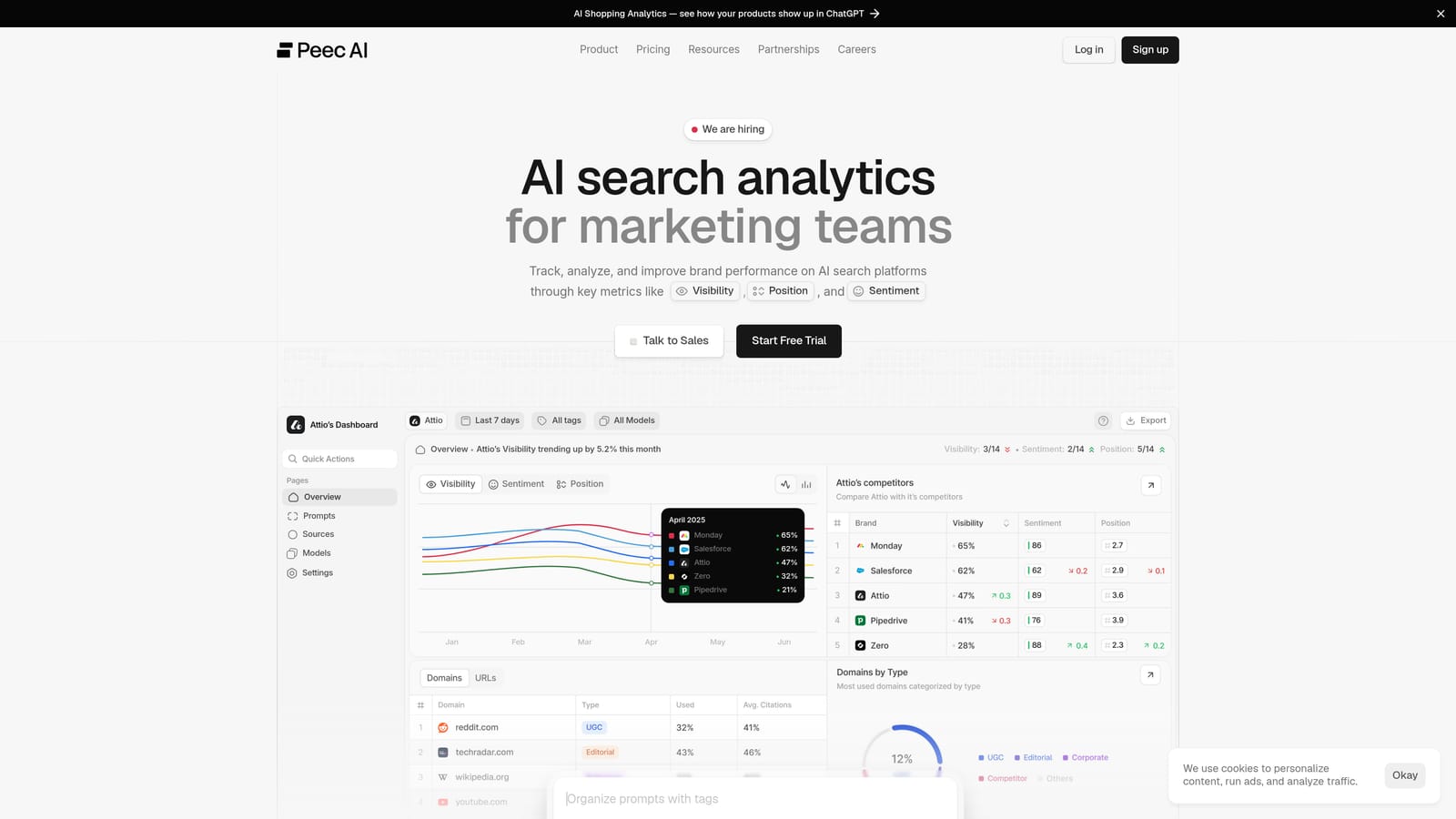
Peec is an AI search visibility analytics platform that tracks brand and competitor presence across AI-powered search engines to measure share of voice in generative answers.
Where This Tool Shines
Peec is built around a specific, increasingly important question: how often does your brand appear in AI-generated answers compared to your competitors? That share-of-voice framing makes it easier for marketing teams to communicate GEO performance in terms that connect to broader business goals.
The trend monitoring capability adds a time dimension to visibility data, helping teams understand whether their content investments are moving the needle in AI search over weeks and months — not just providing a static snapshot.
Key Features
AI Search Share of Voice Tracking: Measures how frequently your brand appears in AI-generated answers relative to competitors across platforms.
Competitor Benchmarking: Side-by-side visibility comparison across AI search environments to identify competitive gaps.
Brand Mention Frequency and Context Analysis: Tracks not just how often your brand appears, but the context and framing of those mentions.
GEO Performance Reporting: Structured reports designed to communicate AI search visibility performance to stakeholders.
Trend Monitoring: Tracks changes in the AI answer landscape over time so teams can measure the impact of content updates and new publications.
Best For
Marketing teams and agencies that need to report on GEO performance, track competitive positioning in AI search, and justify content investment with quantifiable visibility data.
Pricing
Subscription-based pricing. Verify current plans at peec.ai.
6. Promptwatch
Best for: Brands monitoring how AI models respond to brand-relevant queries across different prompt types and platforms.
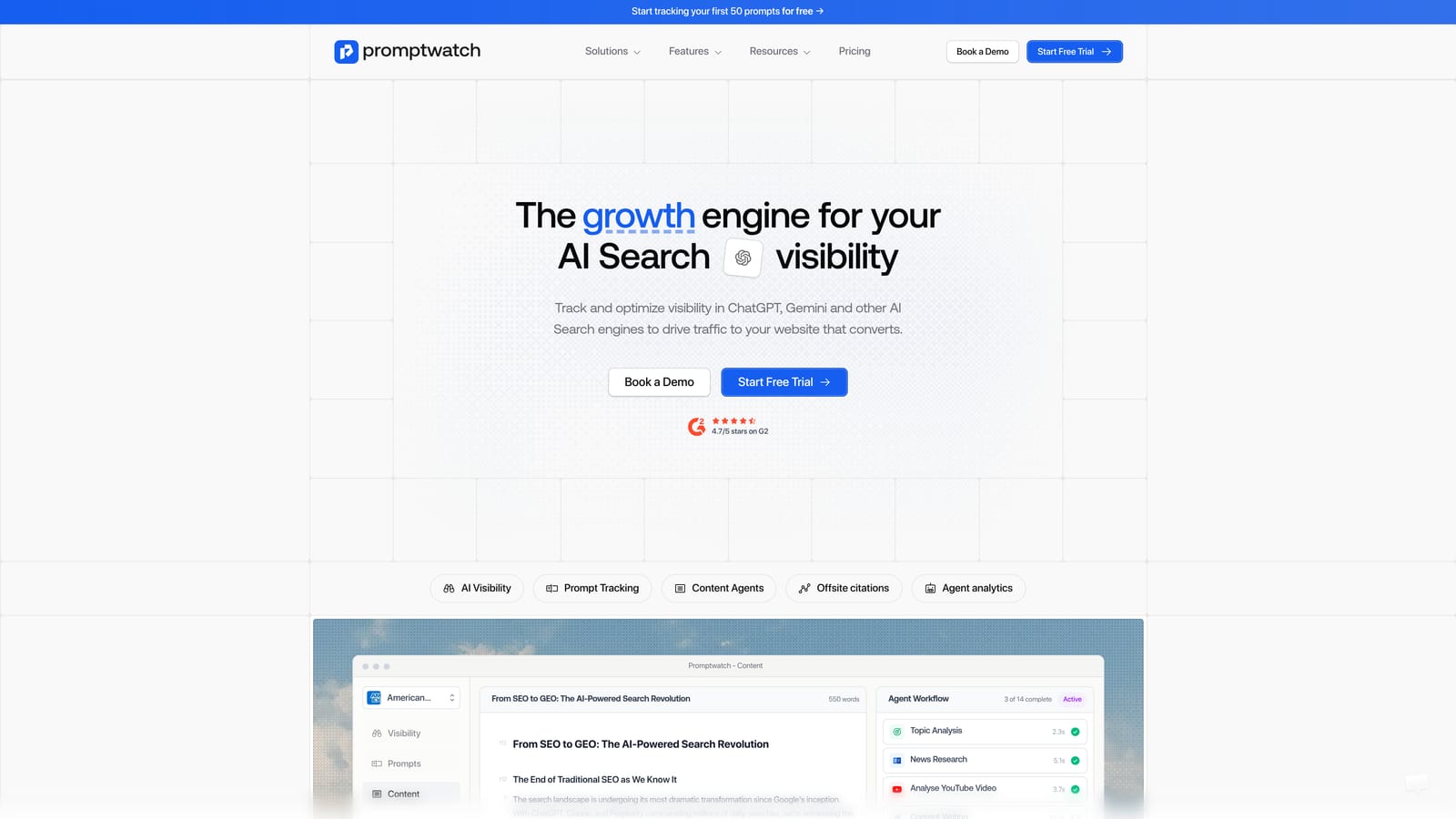
Promptwatch is a prompt and AI response monitoring tool that helps brands track how AI models represent them across different query types to inform GEO content strategy.
Where This Tool Shines
Promptwatch takes a query-level approach to AI visibility monitoring. By tracking how AI models respond to specific prompts related to your brand, products, or industry, it surfaces the exact narrative gaps and misrepresentations that content teams need to address. This is more granular than platform-level visibility tracking — it tells you not just that you're being mentioned, but what AI models are actually saying in response to specific questions.
The alert system is a practical feature for brand teams that need to stay on top of shifts in how AI models describe their products or services, particularly in fast-moving categories where AI training data can lag behind product updates.
Key Features
Prompt Tracking: Monitors AI model responses to brand-relevant queries, revealing how your brand is described in context.
AI Response Logging and Analysis: Stores and analyzes response data over time to identify patterns and changes in brand representation.
Brand Narrative Monitoring: Surfaces how AI platforms frame your brand, products, and key messages across different query types.
Content Strategy Insights: Translates response gap analysis into content recommendations to improve AI brand representation.
Alert System: Notifies teams when AI brand representation shifts significantly, enabling faster response to narrative changes.
Best For
Brand managers, content strategists, and marketing teams that want prompt-level visibility into how AI models describe their brand, and need actionable data to guide GEO content creation.
Pricing
Tiered plans available. Verify current pricing at promptwatch.io.
Which Tool Is Right for Your Strategy?
The tools in this list serve different parts of the same challenge: creating content that performs in both traditional and AI-powered search, and understanding how your brand is represented across the growing landscape of generative AI platforms.
If you need a single platform that handles content generation, GEO optimization, AI visibility tracking, and automated indexing, Sight AI is the most complete option. It's built specifically for teams that don't want to stitch together four separate tools to cover the modern content workflow.
For high-volume writing across multiple content formats, Writesonic remains a strong general-purpose choice. If your needs are more technical and you're running programmatic SEO operations, AirOps gives you the workflow flexibility to build at scale.
For pure GEO monitoring and competitive intelligence, Profound, Peec, and Promptwatch each offer specialized visibility into how AI models represent your brand — with Profound suited to enterprise teams, Peec focused on share-of-voice metrics, and Promptwatch drilling down to the prompt level.
The bottom line: AI search is no longer a future consideration. It's where your audience is discovering content right now. Stop guessing how AI models like ChatGPT and Claude talk about your brand. Start tracking your AI visibility today and see exactly where your brand appears across top AI platforms.