If you're building an SEO dashboard, automating rank tracking, or scaling a reporting workflow, you need a reliable Google position checker API — not a manual tool you refresh every morning. The right API lets you pull keyword rankings programmatically, integrate data into your own systems, and monitor SERP movements at scale without the tedium of manual checks.
This guide covers the best Google position checker APIs available in 2026, evaluated on accuracy, data freshness, scalability, pricing, and developer experience. Whether you're an agency automating client reports, a SaaS founder building rank tracking into your product, or a marketer who wants cleaner data pipelines, there's an option here for you.
Note: Sight AI is our own platform and is listed first. The remaining tools are selected on merit.
1. Sight AI
Best for: Teams wanting SEO tracking, AI visibility monitoring, and content publishing in one platform
Sight AI is an all-in-one SEO and AI visibility platform that goes beyond traditional rank tracking to monitor how your brand appears across AI search engines like ChatGPT, Claude, and Perplexity.

Where This Tool Shines
Most rank tracking tools stop at Google. Sight AI covers that ground while also tracking your brand's presence across six or more AI platforms — giving you a complete picture of how both traditional search engines and AI models reference your content. This dual-layer visibility is increasingly relevant as more users turn to AI assistants for search queries.
The platform's IndexNow integration accelerates Google discovery by automatically notifying search engines when new content is published. Pair that with automated sitemap updates and CMS auto-publishing, and you have a workflow that reduces the gap between publishing and ranking.
Key Features
AI Visibility Score: Tracks brand mentions and sentiment across ChatGPT, Claude, Perplexity, and other AI platforms to show where you appear in AI-generated answers.
IndexNow Integration: Automatically submits new URLs to search engines for faster indexing and discovery, reducing the lag between publishing and appearing in SERPs.
13+ Specialized AI Agents: Generates SEO and GEO-optimized content including listicles, guides, and explainers using purpose-built agents with Autopilot Mode.
Prompt Tracking and Sentiment Analysis: Monitors specific prompts across AI models to understand how and when your brand gets mentioned in AI-generated responses.
Automated Sitemap Updates and CMS Publishing: Keeps your sitemap current and pushes content directly to your CMS, cutting manual steps from your publishing workflow.
Best For
Agencies and in-house teams that want to consolidate SEO tracking, AI brand monitoring, and content production into a single platform. It's particularly well-suited for marketers who need to track visibility in both traditional search and the growing AI search landscape. Note: Sight AI is not a raw SERP JSON API for developers building custom data pipelines — it's a workflow and visibility platform.
Pricing
Paid plans available. Visit trysight.ai for current pricing details and plan options.
2. DataForSEO
Best for: Developers and tool builders needing high-volume, multi-engine SERP data
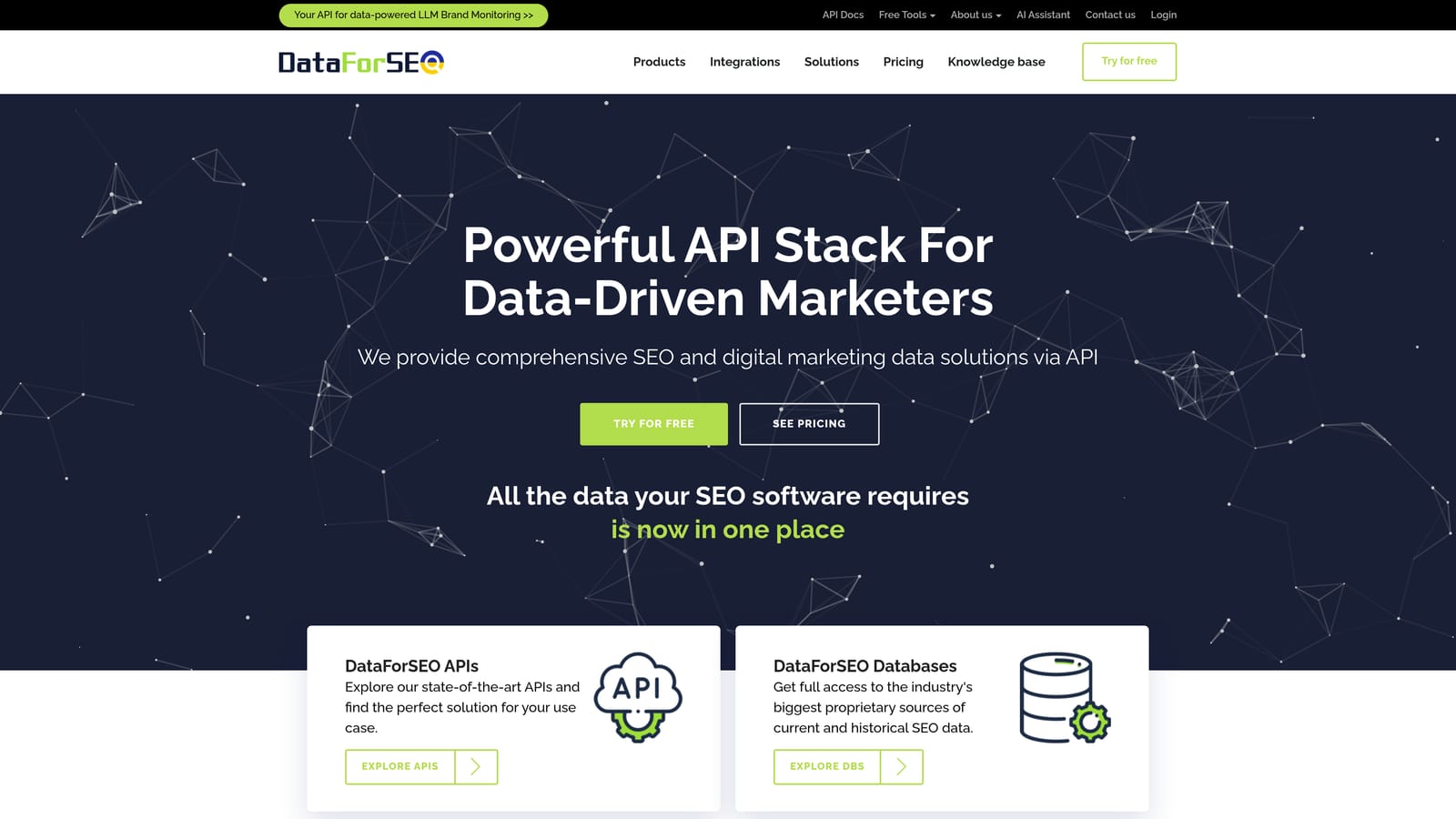
DataForSEO is a comprehensive SERP data API platform offering real-time and on-demand Google position data across 230+ countries, with support for multiple search engines and SERP features.
Where This Tool Shines
DataForSEO has become a go-to data layer for developers building SEO tools and agencies running large-scale reporting workflows. Its breadth of endpoints is hard to match: Google, Bing, YouTube, Maps, and more, all returning structured JSON with rich SERP feature data including featured snippets, People Also Ask boxes, and local packs.
The task-based and on-demand API modes give developers flexibility. If you need results instantly, the live endpoint delivers. If you're running batch jobs overnight, the task-based mode is more cost-efficient. This flexibility makes DataForSEO practical for a wide range of technical architectures.
Key Features
Real-Time and Task-Based Endpoints: Choose between live results for immediate queries or scheduled task-based requests for cost-efficient batch processing.
230+ Country and Locale Targeting: Target specific countries, languages, and locales for precise geographic rank tracking.
Multi-Engine Support: Access SERP data from Google, Bing, YouTube, Google Maps, and additional engines through a unified API.
Rich SERP Feature Data: Structured responses include featured snippets, local packs, image carousels, PAA boxes, and other SERP features beyond the standard blue links.
Consumption-Based Pricing: No minimum commitment or monthly seat fees — you pay for what you use, which suits variable-volume workloads.
Best For
Developers building SEO SaaS products, agencies running automated client reporting at scale, and data teams that need raw, structured SERP data without the overhead of a full SEO platform subscription.
Pricing
Pay-per-use model with pricing that varies by endpoint type and query volume. No minimum commitment required, making it accessible for projects of any size.
3. SEMrush API
Best for: Teams already on SEMrush who want programmatic access to their existing data
SEMrush API provides programmatic access to SEMrush's Position Tracking and Organic Research data, allowing retrieval of keyword rankings and competitive SERP data without logging into the dashboard.
Where This Tool Shines
If your team already uses SEMrush for keyword research and competitive analysis, the API is a natural extension of that investment. You can pull Position Tracking project data, organic keyword rankings, and SERP snapshots directly into your own dashboards or reporting tools without maintaining a separate data subscription.
The API units draw from your existing SEMrush plan, which keeps the cost model straightforward for teams that have already budgeted for the platform. The documentation is thorough, and the endpoint library covers a broad range of SEO data beyond just rank tracking.
Key Features
Position Tracking Data Access: Pull keyword ranking data from your SEMrush Position Tracking projects programmatically for use in custom dashboards.
Organic Ranking History: Access historical keyword ranking data and SERP snapshots to analyze trends over time.
Competitive Domain Comparison: Retrieve side-by-side ranking data for multiple domains to support competitive reporting workflows.
API Units from Existing Subscription: API calls consume units from your active SEMrush plan, avoiding the need for a separate billing arrangement.
Extensive Endpoint Library: Well-documented endpoints covering keyword data, domain analytics, backlinks, and more beyond rank tracking alone.
Best For
Marketing teams and agencies that are already SEMrush subscribers and want to automate reporting or integrate ranking data into custom tools. Less suited for teams looking to minimize platform costs or developers who need raw SERP data without a full SEMrush subscription.
Pricing
Requires an active SEMrush subscription. API access and unit allocations vary by plan tier: Pro, Guru, and Business.
4. Ahrefs API
Best for: Enterprise teams needing high-quality keyword ranking and backlink data via API
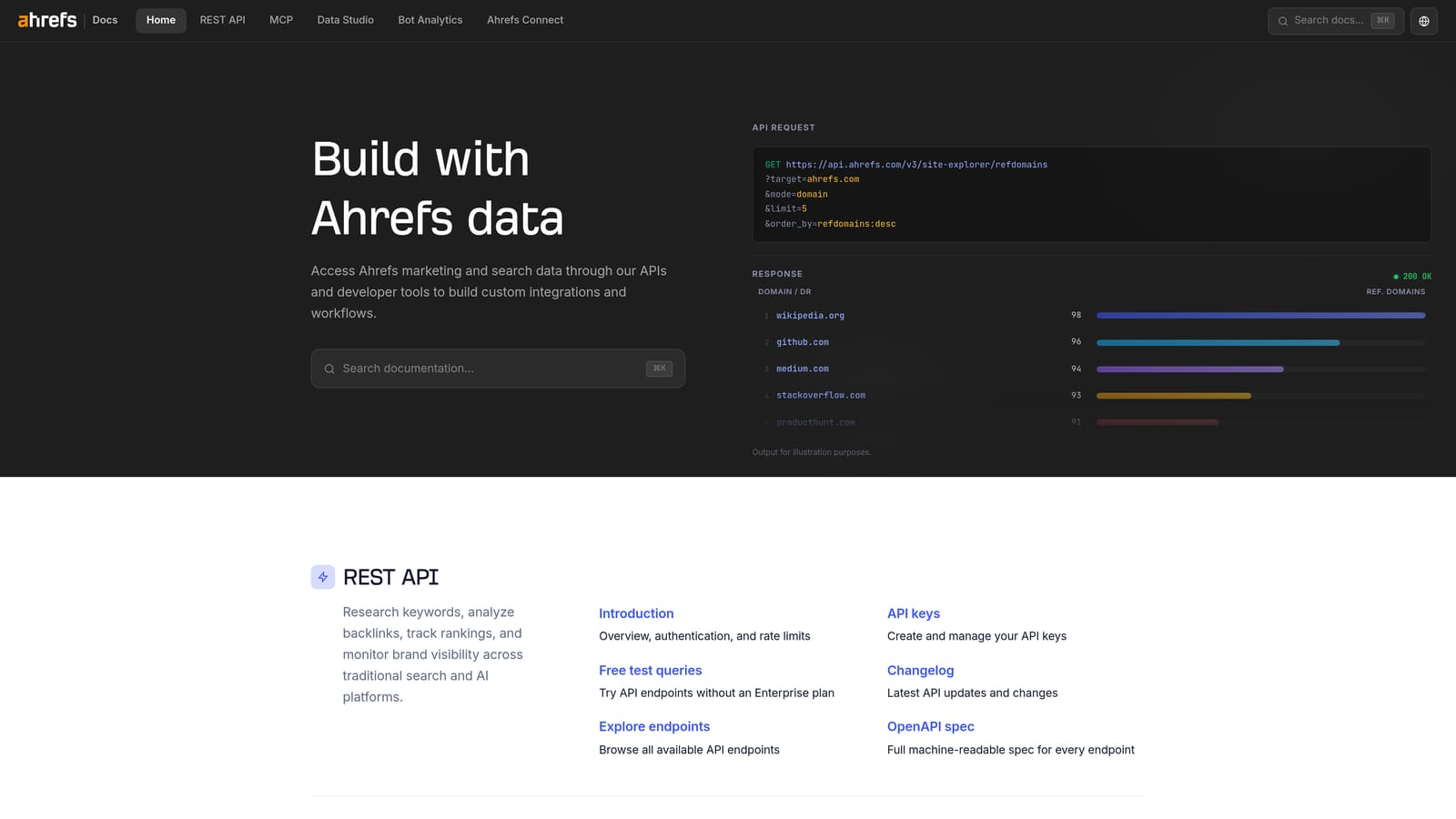
Ahrefs API is an enterprise-grade API providing access to Ahrefs' keyword ranking data, backlink index, and site explorer metrics for programmatic SEO analysis at scale.
Where This Tool Shines
Ahrefs has long been respected for the quality of its backlink index and keyword data. The API brings that data quality into programmatic workflows, letting enterprise teams integrate Ahrefs metrics directly into proprietary tools, data warehouses, or reporting pipelines without relying on the web interface.
The combination of keyword ranking history, backlink data, and keyword difficulty scores in a single API integration is valuable for teams running comprehensive SEO programs. For organizations where data quality is non-negotiable, Ahrefs' reputation in this area is a meaningful differentiator.
Key Features
Keyword Ranking Data with History: Access current and historical keyword rankings to track position changes over time programmatically.
Backlink Index Access: Pull backlink data from Ahrefs' extensive index, including referring domains, anchor text, and link quality signals.
Keyword Difficulty and Search Volume: Retrieve keyword metrics to support content planning and prioritization in automated workflows.
Site Explorer Metrics: Access domain-level and page-level SEO metrics for competitive analysis and reporting.
Enterprise Support: Dedicated support and onboarding assistance for enterprise API customers.
Best For
Enterprise SEO teams and large agencies that prioritize data quality and need to integrate keyword ranking and backlink data into custom internal tools. The pricing model makes it less accessible for smaller teams or indie developers.
Pricing
Enterprise pricing with API access separate from standard Ahrefs plans. Contact Ahrefs directly for API-specific quotes and volume pricing.
5. SerpApi
Best for: Developers who need clean, structured SERP JSON with minimal setup overhead
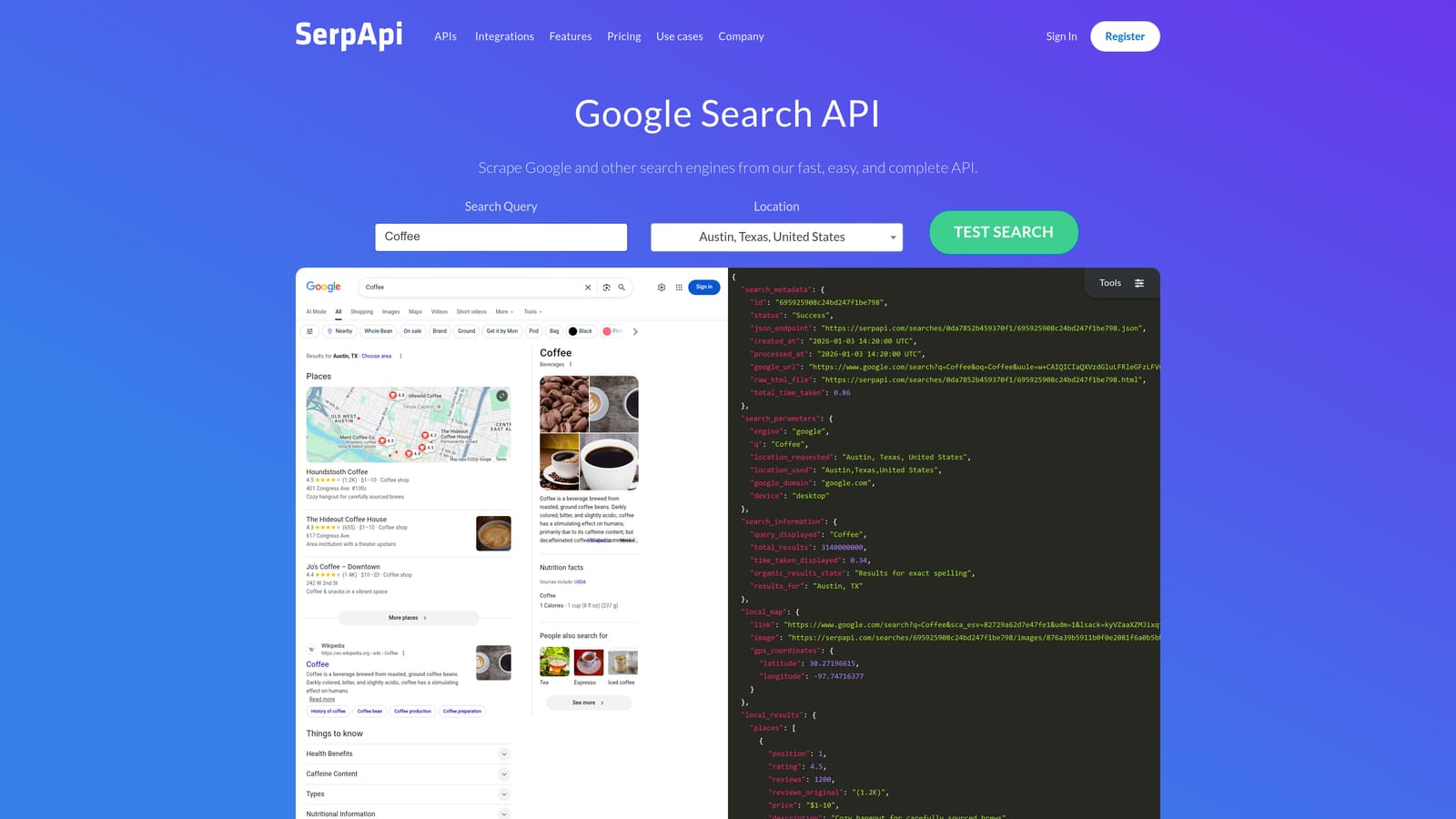
SerpApi is a developer-focused SERP scraping API that returns structured JSON data from Google and 15+ other search engines, handling proxies and CAPTCHAs automatically so you don't have to.
Where This Tool Shines
The appeal of SerpApi is simplicity for developers. Instead of building and maintaining your own scraping infrastructure — managing proxies, rotating user agents, solving CAPTCHAs — SerpApi handles all of that invisibly. You send a request, you get clean JSON back. That reliability is worth a lot when you're building a product that depends on consistent SERP data.
The breadth of supported search engines is also notable. Beyond Google, SerpApi covers Bing, DuckDuckGo, YouTube, Google Maps, Google Shopping, and more — all through a consistent API interface. Multiple SDKs in popular languages reduce integration time significantly.
Key Features
Real-Time SERP Results in JSON: Returns fully parsed, structured JSON for Google and other search engines, including organic results, ads, and SERP features.
15+ Search Engine Support: Access Bing, DuckDuckGo, YouTube, Google Maps, Google Shopping, and more through a unified API interface.
Automatic CAPTCHA and Proxy Management: Handles the infrastructure complexity of SERP scraping so developers can focus on their application logic.
Rich SERP Feature Parsing: Extracts featured snippets, People Also Ask boxes, local packs, image results, and other SERP features in structured format.
Multiple SDKs: Official libraries available for Python, Node.js, Ruby, PHP, Go, and other languages to accelerate integration.
Best For
Developers building rank tracking tools, SEO dashboards, or data pipelines who want reliable SERP data without managing scraping infrastructure. Also well-suited for researchers and data teams that need multi-engine SERP data for analysis.
Pricing
Free plan includes 100 searches per month. Paid plans start at $50/month with higher search volumes and additional features.
6. Moz API
Best for: Agencies reporting on Domain Authority and link metrics alongside keyword rankings
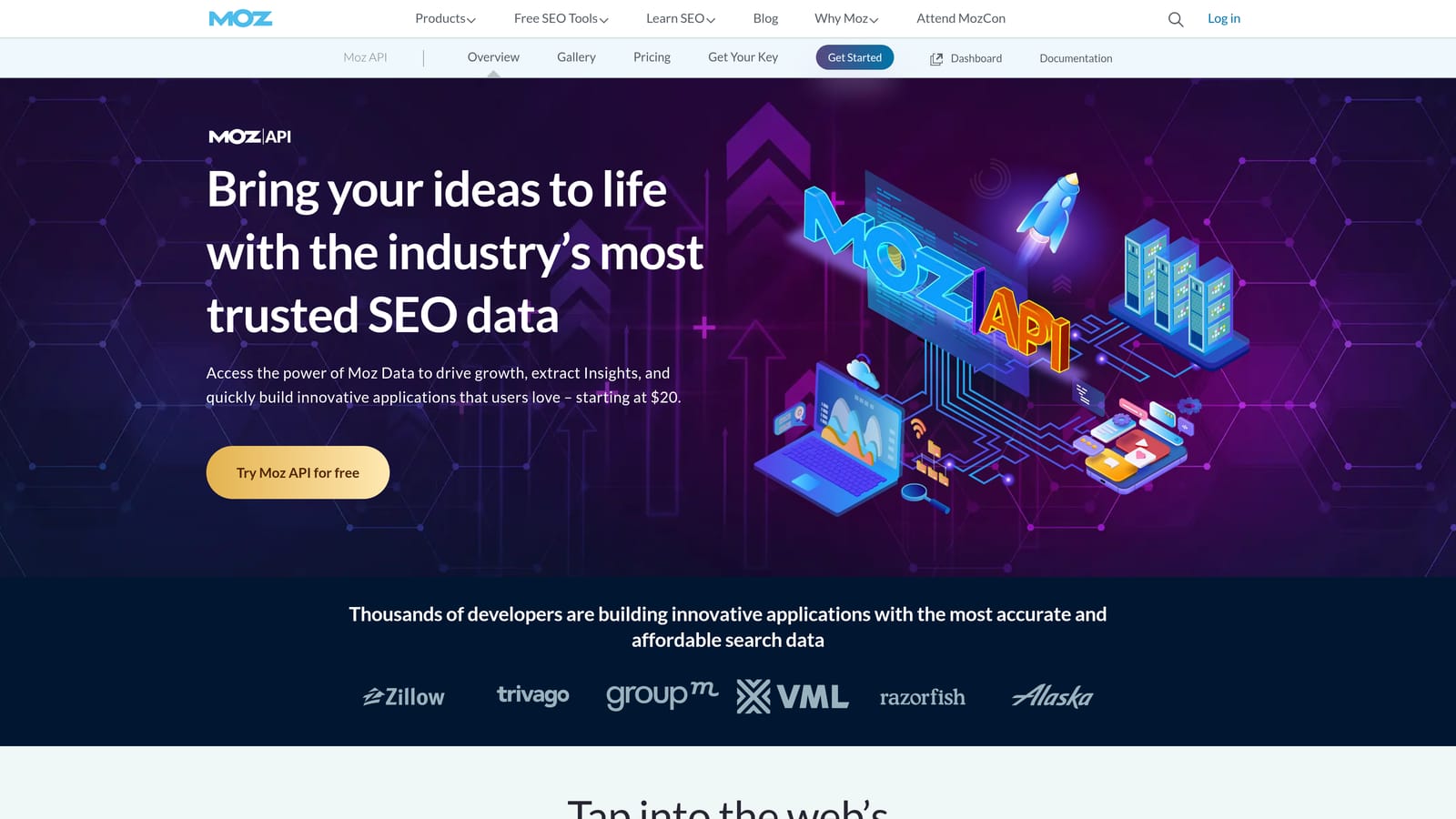
Moz API provides programmatic access to Moz's keyword ranking data combined with their proprietary Domain Authority, Page Authority, and link metrics for comprehensive SEO reporting.
Where This Tool Shines
Moz's proprietary metrics — Domain Authority, Page Authority, and Spam Score — remain widely recognized in agency reporting, particularly with clients who have become familiar with the DA scale as a benchmark. The API lets you pull these metrics programmatically alongside keyword ranking data, which is useful for building client-facing dashboards that combine ranking position with authority signals.
For agencies that have standardized their reporting around Moz metrics, the API is a practical way to automate what would otherwise be manual data exports. It's less developer-centric than DataForSEO or SerpApi, but it covers a useful combination of SEO data points in one integration.
Key Features
Keyword Ranking and SERP Position Data: Retrieve keyword ranking data for tracked domains to power automated reporting workflows.
Domain Authority and Page Authority Metrics: Access Moz's proprietary DA and PA scores programmatically for inclusion in client reports and dashboards.
Link Explorer Data: Pull backlink data including referring domains, anchor text, and link quality signals from Moz's link index.
Spam Score Signals: Access link quality and spam signals to support link audit workflows via API.
Tiered Access: API access and request limits scale with your Moz Pro subscription level.
Best For
SEO agencies that report Moz metrics to clients and want to automate data retrieval. Also useful for teams that need a combined keyword ranking plus link metrics API without managing multiple data sources.
Pricing
API access is included in Moz Pro plans, with limits varying by tier. Standalone API pricing is also available for teams that need API access without the full Moz Pro suite.
7. ValueSERP
Best for: Budget-conscious developers and small teams needing reliable SERP data at low cost
ValueSERP is a cost-effective SERP data API offering structured Google, Bing, and YouTube search results with reliable uptime and straightforward developer documentation.
Where This Tool Shines
ValueSERP positions itself squarely as the cost-effective alternative in the SERP API space. For indie developers, small agencies, or teams running lower query volumes, the per-search pricing is competitive compared to larger platforms. The documentation is clear and the API is simple to integrate, which reduces the time from signup to first successful request.
While it doesn't have the brand recognition of SerpApi or the enterprise depth of DataForSEO, ValueSERP delivers reliable structured SERP data for teams where those larger platforms' pricing would be disproportionate to their actual usage needs.
Key Features
Google, Bing, and YouTube SERP Data: Returns structured JSON results across three major search engines, covering organic results and key SERP features.
Device and Location Targeting: Supports desktop and mobile targeting with country and city-level geographic parameters for precise rank tracking.
Batch Search Support: Submit multiple queries in batch mode to handle higher-volume jobs efficiently without individual request overhead.
Simple REST API: Clean, well-documented REST interface that's straightforward to integrate without complex setup or configuration.
Competitive Per-Search Pricing: Pricing structured around search volume makes it accessible for smaller teams and projects with variable query needs.
Best For
Indie developers, small agencies, and in-house teams running moderate query volumes who find larger SERP API platforms cost-prohibitive. A practical starting point for teams that want to test programmatic rank tracking before committing to a higher-cost solution.
Pricing
Free trial available. Paid plans are structured around search volume, with competitive per-search rates that scale with usage.
8. Serpstat API
Best for: Mid-market teams wanting rank tracking, keyword research, and backlinks in one API
Serpstat API provides programmatic access to Serpstat's all-in-one SEO platform covering rank tracking, keyword research, backlink analysis, and site audit data through a single integration.
Where This Tool Shines
Serpstat's appeal is consolidation. Rather than integrating separate APIs for rank tracking, keyword research, and backlink data, Serpstat bundles all of these into a single platform with a unified API. For mid-market teams that want breadth without paying enterprise prices for multiple specialized tools, this is a practical trade-off.
The platform has a solid user base particularly among agencies in European and global markets. API documentation is well-maintained, and the combination of rank tracking with keyword research and site audit data makes it useful for teams running full SEO programs rather than just position monitoring.
Key Features
Keyword Position Tracking with History: Access current and historical keyword ranking data to track SERP movements over time programmatically.
Keyword Research and Search Volume Data: Retrieve keyword metrics including search volume, competition, and related keyword suggestions via API.
Backlink Analysis Endpoints: Pull backlink data including referring domains and anchor text for link profile analysis in automated workflows.
Site Audit Data via API: Access technical SEO audit results programmatically to integrate site health monitoring into reporting pipelines.
Mid-Market Pricing: Positioned between budget SERP APIs and enterprise platforms, offering solid data breadth at accessible price points.
Best For
Mid-market agencies and in-house SEO teams that want a single API integration covering rank tracking, keyword research, and backlink data without the cost of enterprise-tier platforms. Also useful for teams that want to reduce the number of separate tool subscriptions in their stack.
Pricing
API access is available on Serpstat paid plans, with access levels and limits varying by plan tier. Check Serpstat's website for current plan pricing.
Which Google Position Checker API Is Right for You?
The right choice depends heavily on what you're actually building and what constraints matter most to your team. Here's a quick way to think through it.
If you're a developer who needs raw SERP data at scale with flexible pricing, DataForSEO is the most capable option in this list. Its breadth of endpoints, multi-engine support, and consumption-based pricing make it the default choice for tool builders and large agencies running high-volume queries.
If you want clean JSON output with minimal infrastructure overhead and a free tier to start, SerpApi is the developer-friendly pick. The automatic CAPTCHA and proxy handling removes a significant maintenance burden, and the SDK library speeds up integration across popular languages.
If your team is already invested in SEMrush or Ahrefs, using their native APIs is the path of least resistance. You're already paying for the data — pulling it programmatically is a natural extension that avoids adding another vendor to your stack.
If budget is a primary constraint and your query volumes are moderate, ValueSERP offers reliable SERP data at pricing that makes sense for smaller teams and indie projects. It's a practical starting point before scaling to a more expensive solution.
If you want a single API covering rank tracking, keyword research, and backlinks without enterprise pricing, Serpstat is worth evaluating as a consolidated mid-market option.
And if you're an agency or marketing team that wants to track Google rankings alongside AI search visibility — monitoring how your brand appears in ChatGPT, Claude, and Perplexity responses — Sight AI is the only platform on this list that covers both. As AI search continues to grow as a traffic source, understanding your visibility across both traditional and AI search engines is becoming less optional and more essential.
Stop guessing how AI models like ChatGPT and Claude talk about your brand. Start tracking your AI visibility today and see exactly where your brand appears across top AI platforms — alongside your traditional SEO performance in one unified workflow.
For more on building a complete organic growth strategy, explore how to measure SEO success and the practical steps you can take to improve your website ranking across both search engines and AI platforms.