Explainer content is quietly becoming one of the most strategic assets a brand can publish. Articles, guides, and how-to pieces that break down complex topics don't just rank on Google — they get cited by AI models like ChatGPT, Claude, and Perplexity when users ask questions in your space. That compounding visibility effect is why explainer content has evolved from a pure SEO activity into a full brand presence strategy.
But producing this content consistently, at quality, and at the speed modern search demands is genuinely hard. The right toolset makes the difference between a content program that compounds over time and one that stalls under the weight of production bottlenecks. Whether you need to generate explainer articles faster, optimize them for AI citation, track how AI models describe your brand, or automate your entire publishing pipeline, there's a tool built for that specific job.
Here are the best explainer content creation tools in 2026, evaluated on content quality, SEO and GEO optimization, workflow efficiency, and AI visibility capabilities.
1. Sight AI
Best for: Teams that want to create, publish, and track explainer content in one platform
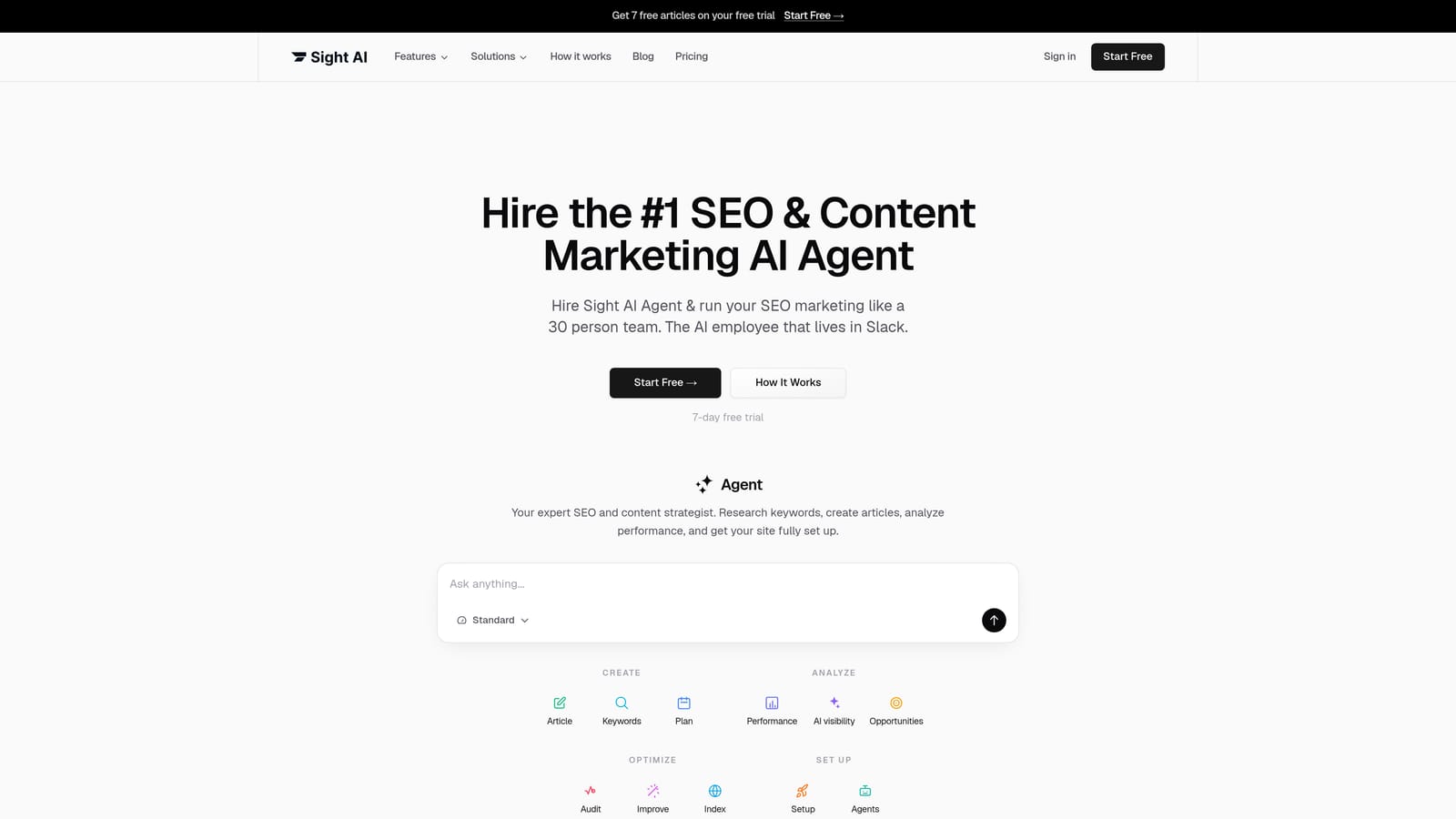
Sight AI is an all-in-one platform that combines AI-powered explainer content generation with AI visibility tracking, website indexing, and CMS auto-publishing — built specifically for marketers who want their content to rank on Google and get cited by AI models.
Where This Tool Shines
What separates Sight AI from standalone writing tools is the closed loop it creates between content creation and AI visibility measurement. You're not just generating explainer articles and hoping they land — you're tracking whether those articles are actually shifting how AI models describe your brand and your topic area. That feedback loop is genuinely rare in the current toolscape.
The platform's Autopilot Mode is particularly valuable for teams managing high content volume. Rather than treating each article as a one-off production task, Autopilot enables continuous, hands-off content production at scale — so your explainer content library keeps growing without requiring constant manual intervention.
Key Features
13+ Specialized AI Agents: Generates SEO and GEO-optimized explainer articles, listicles, and guides using purpose-built agents trained for different content formats.
AI Visibility Score: Tracks how AI models including ChatGPT, Claude, and Perplexity mention and describe your brand, with sentiment analysis built in.
Prompt Tracking: Reveals how AI models characterize your topic expertise across defined queries, so you know exactly where your content is influencing AI outputs.
IndexNow Integration: Automated sitemap updates and IndexNow integration ensure new explainer content is discovered and indexed as fast as possible after publishing.
CMS Auto-Publishing: Connects content creation directly to your live site, reducing the time between draft and live page to near zero.
Best For
Sight AI is the strongest fit for growth marketers, founders, and agencies who need to both produce explainer content at scale and measure its impact on AI citation behavior. If you're running a GEO strategy alongside traditional SEO and want a single platform to manage both, this is where to start.
Pricing
Check trysight.ai for current pricing tiers. The platform offers multiple options depending on content volume and team size.
2. Writesonic
Best for: High-volume explainer content production with built-in SEO scaffolding
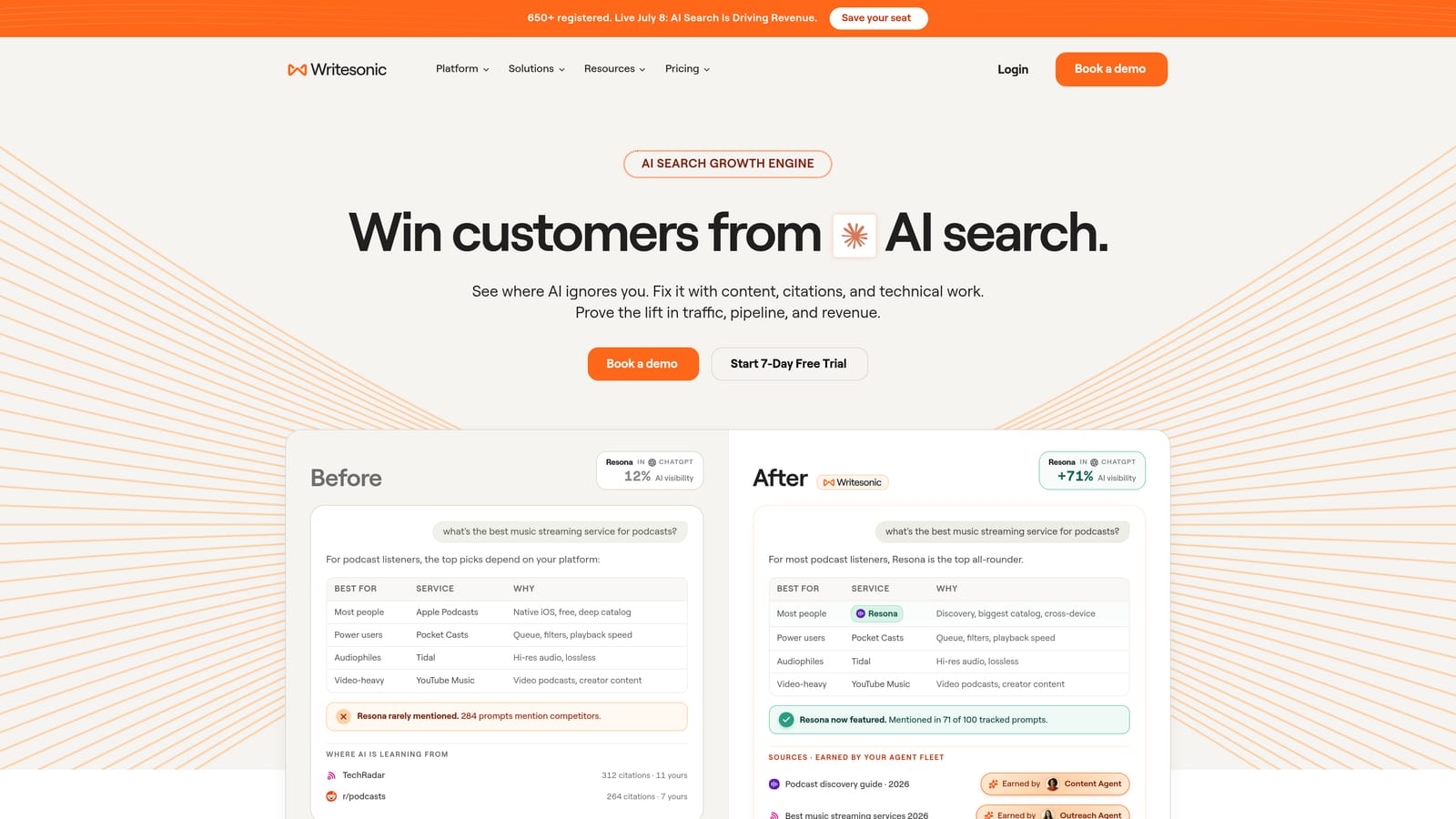
Writesonic is an AI writing platform with long-form article generation, real-time web search grounding, and SEO-focused writing modes designed for teams producing explainer content at scale.
Where This Tool Shines
Writesonic's real-time web search integration is a practical differentiator for explainer content. When you're writing a how-to article or topic breakdown, factual accuracy matters — and grounding AI output in current web data reduces the risk of publishing outdated or hallucinated information. For content teams that need to move fast without sacrificing credibility, that's a meaningful feature.
The Google Search Console integration also adds a layer of strategic intent to content production. Rather than generating articles in a vacuum, teams can pull in keyword data to ensure each explainer piece targets queries with real search demand.
Key Features
Long-Form Article Writer: Dedicated explainer and how-to content modes that structure articles for readability and search performance.
Real-Time Web Search: Grounds AI-generated content in current information, reducing factual drift in time-sensitive explainer topics.
Google Search Console Integration: Pulls keyword data directly into content briefs for targeted explainer article production.
Brand Voice Customization: Maintains consistent tone across explainer content, useful for teams managing multiple content contributors.
Multi-Language Support: Enables global content teams to produce explainer content in multiple languages from a single platform.
Best For
Writesonic works well for content teams and agencies that need to produce large volumes of explainer drafts quickly and want some SEO structure built into the workflow. It's a strong production tool, though teams focused on AI visibility and GEO optimization will need to pair it with a separate monitoring platform.
Pricing
A free plan is available. Paid plans start at approximately $16/month — verify current pricing and feature tiers at writesonic.com.
3. AirOps
Best for: Agencies and content teams that need repeatable, structured explainer content pipelines
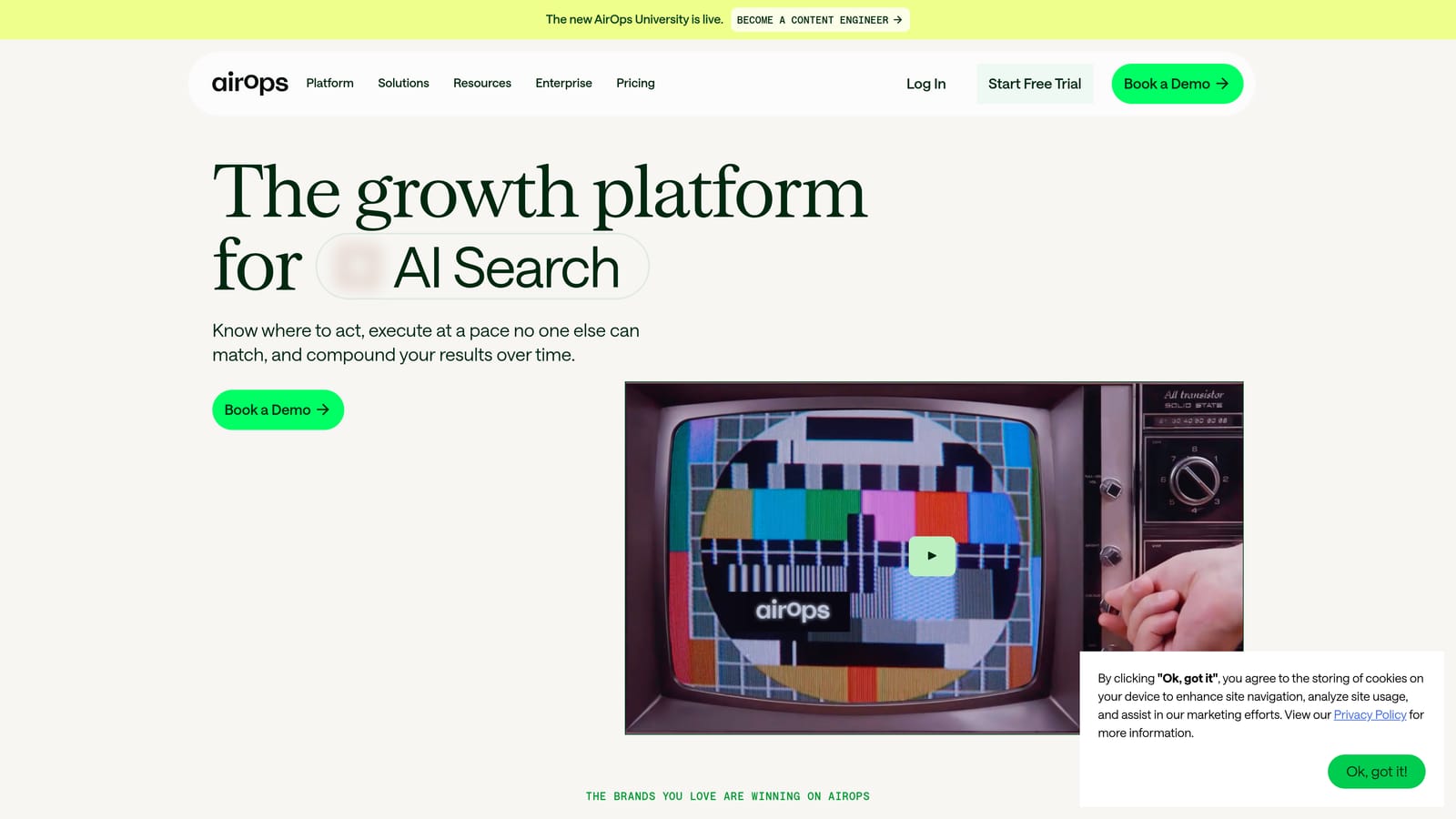
AirOps is a workflow automation platform that lets content teams build custom AI pipelines for structured, repeatable explainer content production at scale.
Where This Tool Shines
AirOps approaches explainer content as a process problem rather than a writing problem. Instead of generating one-off articles, you build a pipeline that enforces your content structure — intro, concept breakdown, examples, CTA — every single time. For agencies managing explainer content across multiple clients with different brand voices and topic areas, that consistency is hard to achieve any other way.
The ability to connect multiple AI models and external data sources within a single workflow also gives AirOps unusual flexibility. You can design pipelines that pull from proprietary data, product documentation, or competitor research before the writing even begins.
Key Features
Custom AI Workflow Builder: Lets teams design and standardize the exact structure of every explainer article before AI generation begins.
Multi-Model Connectivity: Connects to multiple AI models and external data sources within a single pipeline.
Template-Based Content Pipelines: Enforces consistent output quality across high-volume content programs.
Team Collaboration Features: Built for agency-scale operations where multiple people contribute to content workflow design and execution.
API Integrations: Connects to CMS and publishing platforms to reduce manual handoff steps.
Best For
AirOps is best suited for agencies and larger content teams that need to productize explainer content creation across multiple clients or topic verticals. It requires some configuration upfront but pays off significantly at scale. Teams looking for out-of-the-box SEO or GEO optimization will need to supplement it with other tools.
Pricing
Verify current pricing and plan options at airops.com.
4. Profound
Best for: Understanding how AI models describe your brand's topic area and informing explainer content strategy
Profound is an AI search optimization and analytics platform that helps brands understand how AI models describe their topics, enabling smarter explainer content strategy decisions.

Where This Tool Shines
Profound operates at the strategy layer of explainer content. Rather than generating articles, it tells you what to write about by revealing how AI models currently answer questions in your space — and where your brand is absent from those answers. That intelligence is genuinely useful when you're trying to prioritize which explainer topics will have the most impact on AI citation behavior.
The competitive benchmarking capability adds another dimension. You can see how rival brands are being cited in AI responses, which helps you identify the specific topic areas where better explainer content could shift your position relative to competitors.
Key Features
AI Mention Tracking: Monitors brand and topic mentions across major AI search platforms to surface where your content is and isn't influencing outputs.
Knowledge Gap Identification: Reveals where AI models lack information about your brand's subject matter, pointing directly to explainer content opportunities.
Competitive Benchmarking: Shows how competitor brands are cited in AI responses, enabling strategic topic prioritization.
Content Recommendations: Surfaces content ideas based on analysis of actual AI response patterns.
GEO Reporting Dashboards: Provides structured measurement for generative engine optimization campaigns.
Best For
Profound is most valuable for brands running active GEO strategies who need data-driven insight into which explainer topics to prioritize. It functions as an analytics and strategy layer rather than a content creation tool, so it works best alongside a dedicated content generator.
Pricing
Verify current pricing at profound.co.
5. Peec
Best for: Discovering explainer content gaps through AI response monitoring and competitive analysis
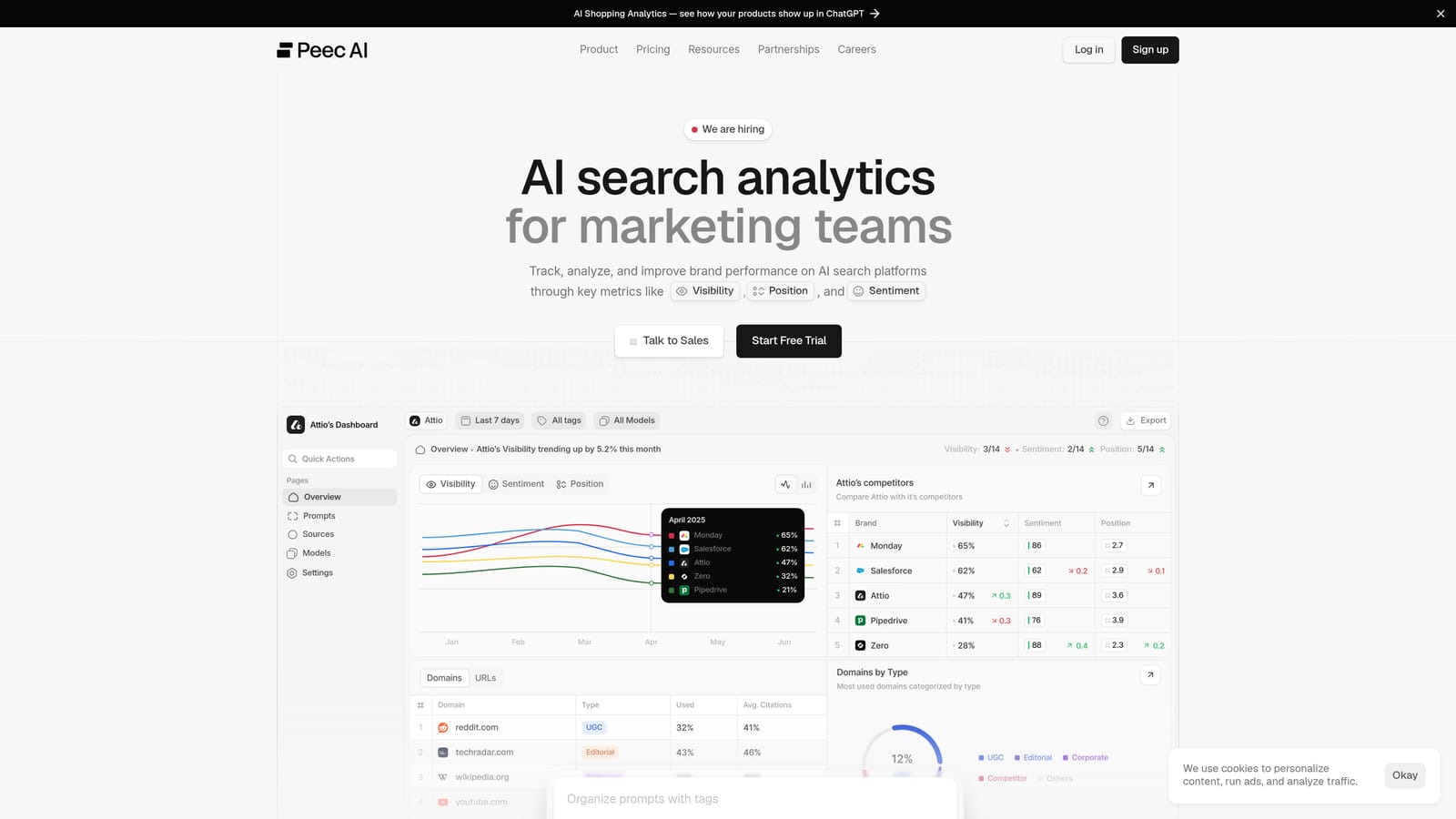
Peec is an AI visibility monitoring tool that tracks how AI models answer brand-relevant queries, helping content teams identify which explainer topics need to be created or improved.
Where This Tool Shines
Peec's topic discovery engine is its most practical feature for explainer content teams. By monitoring how AI models respond to queries in your space, it surfaces the specific subject areas where your brand isn't being mentioned — effectively handing you a prioritized list of explainer content to create. That's a much more targeted approach than keyword research alone.
The competitive angle is equally useful. Seeing how rival brands' explainer content is influencing AI outputs gives you a concrete benchmark and reveals the content investments your competitors are making that are actually working.
Key Features
AI Response Monitoring: Tracks AI-generated answers for brand and competitor mentions across multiple platforms.
Topic Discovery Engine: Surfaces explainer content gaps by analyzing what AI models are and aren't saying about your brand's subject area.
Competitive Analysis: Reveals how competitors' content is influencing AI model outputs, giving you a strategic benchmark.
Multi-Platform Query Tracking: Monitors AI responses across multiple AI search platforms simultaneously.
Actionable Content Briefs: Translates AI response data into specific content recommendations your team can act on directly.
Best For
Peec is a strong fit for content strategists and SEO professionals who want to use AI response data to drive explainer content decisions. It's primarily a research and discovery tool, so teams will need a separate platform for content generation and publishing.
Pricing
Verify current pricing at peec.ai.
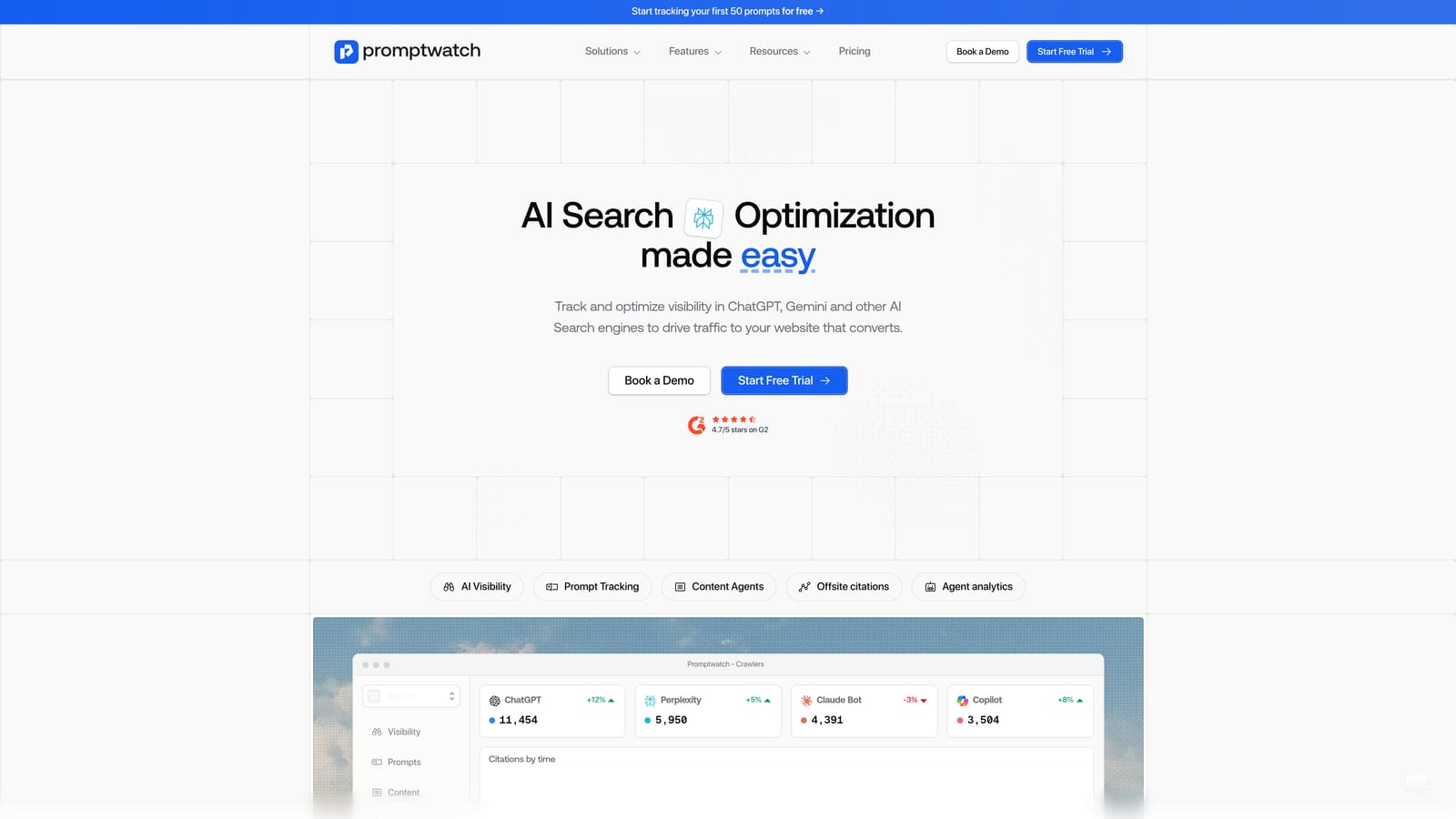
6. Promptwatch
Best for: Measuring whether published explainer content is shifting AI citation behavior over time
Promptwatch is a prompt monitoring tool that tracks AI model responses to specific queries over time, enabling brands to measure whether their explainer content is actually changing how AI models answer related questions.
Where This Tool Shines
Promptwatch fills a measurement gap that most content teams don't even know they have. Publishing explainer content is one thing — knowing whether that content is moving the needle on AI citations is another. Promptwatch's longitudinal tracking lets you define specific prompts, monitor how AI models respond to them over weeks and months, and directly attribute shifts in AI behavior to your content investments.
For agencies managing GEO campaigns on behalf of clients, the before/after measurement capability and exportable reporting make it much easier to demonstrate the impact of explainer content work in concrete, shareable terms.
Key Features
Longitudinal Prompt Tracking: Monitors how AI model responses to defined queries evolve over time as new content is published.
Before/After Measurement: Enables direct comparison of AI citation behavior before and after GEO content campaigns go live.
Multi-Model Monitoring: Tracks responses across major AI platforms simultaneously for a comprehensive view.
Response Quality Scoring: Analyzes trends in how AI models are characterizing your brand and topic area over time.
Exportable Reporting: Produces shareable reports for client or stakeholder updates on GEO campaign performance.
Best For
Promptwatch is best suited for performance-focused marketers and agencies who need to prove the ROI of their GEO content strategy. It's a measurement and tracking tool rather than a content generator, so it sits at the end of the content workflow rather than the beginning.
Pricing
Verify current pricing at promptwatch.io.
Which Tool Fits Your Situation
The right choice depends on where your biggest bottleneck actually lives. Not every team has the same problem, and these tools solve different parts of the explainer content challenge.
If your primary need is content creation speed and volume, Writesonic gives you a capable long-form writer with SEO scaffolding built in. If you need to systematize and scale content production across multiple clients or topic areas, AirOps is built for that workflow automation challenge.
If you're focused on AI visibility strategy, the picture shifts. Profound and Peec both help you understand what AI models are saying about your space and where your brand is missing from those conversations — they're research and strategy tools that tell you what to create. Promptwatch sits at the other end of the workflow, measuring whether the content you've already published is actually shifting AI citation behavior over time.
If you want all of these capabilities in a single platform, Sight AI is the only tool on this list that combines explainer content generation, AI visibility tracking, website indexing, and CMS auto-publishing in one place. For founders, growth marketers, and agencies who are serious about building compounding organic and AI visibility simultaneously, that integration removes a significant amount of operational complexity.
Start by auditing your current explainer content program. Are you publishing consistently? Is your content being indexed quickly? Do you know whether AI models are citing your brand when users ask questions in your space? The answers point directly to which tool you need most urgently.
Stop guessing how AI models like ChatGPT and Claude talk about your brand. Start tracking your AI visibility today and see exactly where your brand appears across top AI platforms — then use that intelligence to build an explainer content program that compounds over time.