Explainer articles have quietly become one of the most valuable content formats in modern search. They answer the specific "what is," "how does," and "why does" questions that both Google users and AI models rely on to generate responses. If your brand publishes well-structured explainer content, you're not just competing for traditional search rankings — you're positioning yourself to be cited by ChatGPT, Claude, and Perplexity when users ask questions in your space.
The challenge is producing this content consistently, at the quality level that earns those citations. That's where the right tool makes all the difference.
This list covers the top explainer article creation tools for 2026, evaluated on AI writing quality, SEO and GEO optimization features, publishing workflow, and overall value for content teams focused on organic growth. Whether you're a solo founder, a growth marketer, or an agency managing multiple clients, there's a tool here that fits your workflow.
1. Sight AI
Best for: Teams that want to create, publish, and track explainer content for both SEO and AI citation.
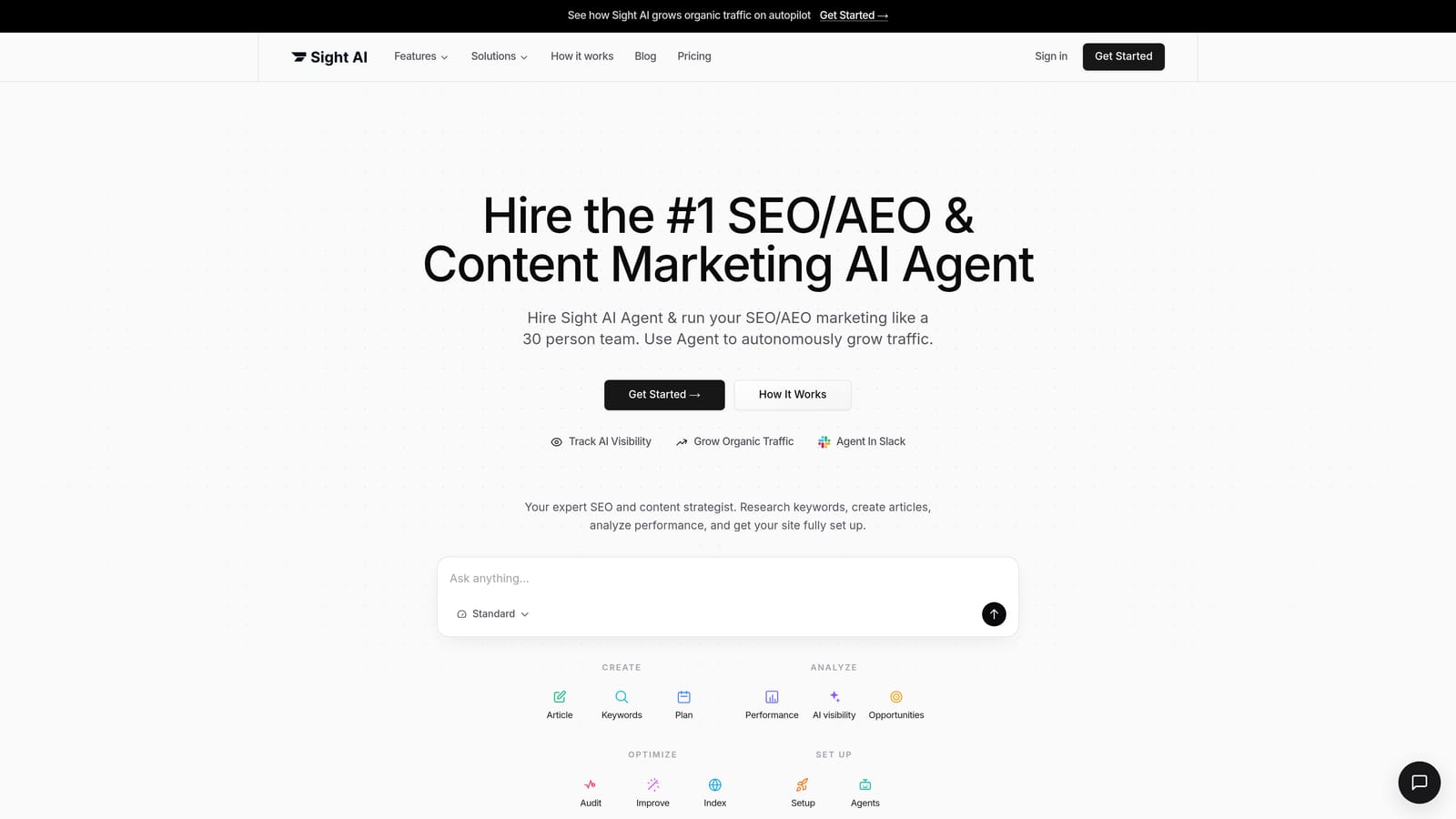
Sight AI is an all-in-one AI content platform that generates SEO and GEO-optimized explainer articles, tracks brand mentions across AI models, and auto-indexes published content via IndexNow.
Where This Tool Shines
Most tools on this list help you create explainer articles. Sight AI is the only one that also tells you whether those articles are actually getting cited by AI models like ChatGPT, Claude, and Perplexity. That closed loop between content creation and AI visibility tracking is genuinely unique, and increasingly important as AI-powered search becomes a primary discovery channel.
The 13+ specialized AI agents handle different content formats — explainers, listicles, guides — each tuned for the structural requirements of that format. Autopilot Mode takes this further, enabling continuous content production without constant manual input, which is a meaningful advantage for teams trying to build topical authority at scale.
Key Features
13+ Specialized AI Agents: Each agent is purpose-built for a content format, ensuring explainer articles follow the right structure for both readability and search performance.
Autopilot Mode: Hands-off content production that keeps your publishing cadence consistent without requiring daily intervention.
AI Visibility Score: Tracks how often and how positively your brand is mentioned across ChatGPT, Claude, Perplexity, and other AI platforms — with sentiment analysis and prompt tracking built in.
IndexNow Integration: Published explainer articles are submitted for indexing automatically, reducing the lag between publication and discoverability.
CMS Auto-Publishing: Removes the manual upload step, connecting content generation directly to your website or CMS.
Best For
Marketers, founders, and agencies who want to build topical authority through explainer content and need visibility into how that content performs in AI-powered search — not just traditional Google rankings. Particularly valuable for brands actively pursuing a GEO strategy.
Pricing
Visit trysight.ai for current pricing plans. Multiple tiers available to suit different team sizes and content volumes.
2. Jasper
Best for: Marketing teams that need brand-consistent long-form content produced at scale.
Jasper is a mature AI writing platform built for marketing teams that need consistent, on-brand explainer content without starting from scratch every time.

Where This Tool Shines
Jasper's Brand Voice feature is its standout differentiator. You train the AI on your company's tone, terminology, and style, and it applies that consistently across every piece of content. For teams managing multiple writers or producing explainers across different product lines, this consistency is genuinely hard to replicate manually.
The Surfer SEO integration adds a meaningful optimization layer, letting you check on-page performance without leaving the Jasper interface. It's a well-rounded workflow for teams that prioritize brand integrity alongside search performance.
Key Features
Brand Voice Training: Trains the AI on your specific tone and style for consistent output across all explainer content.
Long-Form Content Templates: Structured templates designed for articles, guides, and explainers that reduce setup time.
Surfer SEO Integration: Real-time on-page optimization scores without switching tools.
Team Collaboration Features: Review workflows and shared workspaces for content teams.
Large Prompt Library: Pre-built prompts for common content types, speeding up production for recurring formats.
Best For
Marketing teams at established companies where brand consistency is a priority and multiple people are contributing to content production. Less suited for teams whose primary focus is GEO or AI citation tracking.
Pricing
Tiered paid plans; check jasper.ai for current rates. No meaningful free tier for production use.
3. Writesonic
Best for: SEO practitioners creating explainer articles on topics where current, factual information matters.
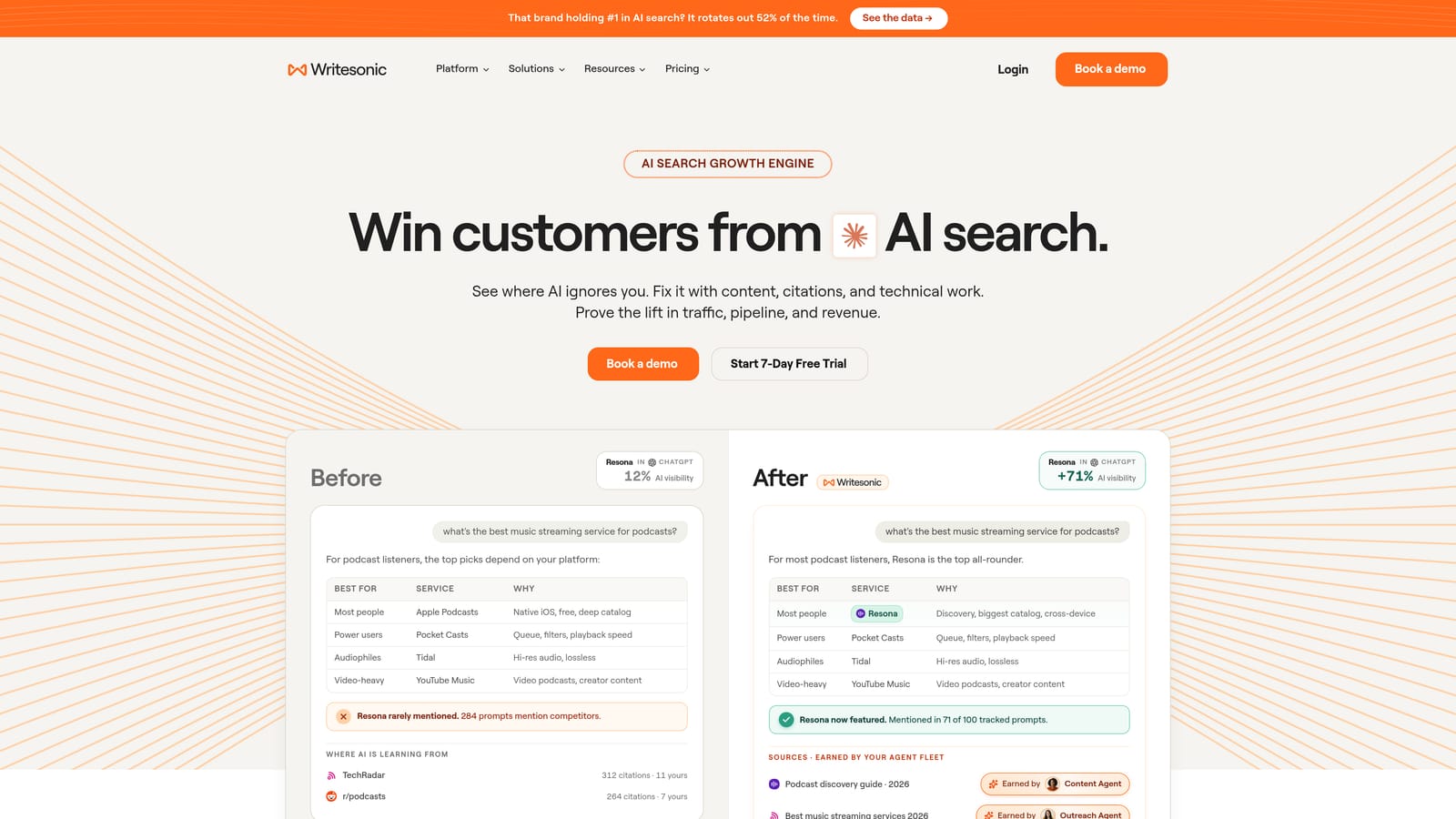
Writesonic is an SEO-focused AI writer that integrates real-time web data into the content generation process, making it particularly useful when accuracy and recency are priorities.
Where This Tool Shines
The Chatsonic feature pulls live information from the web during content generation, which is a meaningful advantage for explainer articles covering fast-moving topics like technology, finance, or healthcare. Rather than relying solely on training data, the tool can ground its output in current sources.
The Google Search Console integration is another practical feature, allowing content decisions to be informed by actual search performance data from your own site. For SEO-focused content teams, this data connection reduces guesswork about what topics and angles to pursue.
Key Features
Real-Time Web Data via Chatsonic: Integrates live search results into content generation for factual, current explainer articles.
Google Search Console Integration: Connects content decisions to real performance data from your own domain.
SEO Article Writer Mode: Structured workflow for producing optimized explainers with appropriate heading hierarchies.
Factual Content Generation: Uses live sources to reduce hallucination risk on factual topics.
Freemium Model: Accessible entry point for individuals and small teams before committing to paid tiers.
Best For
SEO practitioners and content teams working on topics where accuracy and timeliness matter. Less focused on GEO or AI visibility features compared to purpose-built platforms.
Pricing
Freemium model with scalable paid tiers; see writesonic.com for current plans.
4. Copy.ai
Best for: Agencies and content ops teams running high-volume explainer article pipelines.
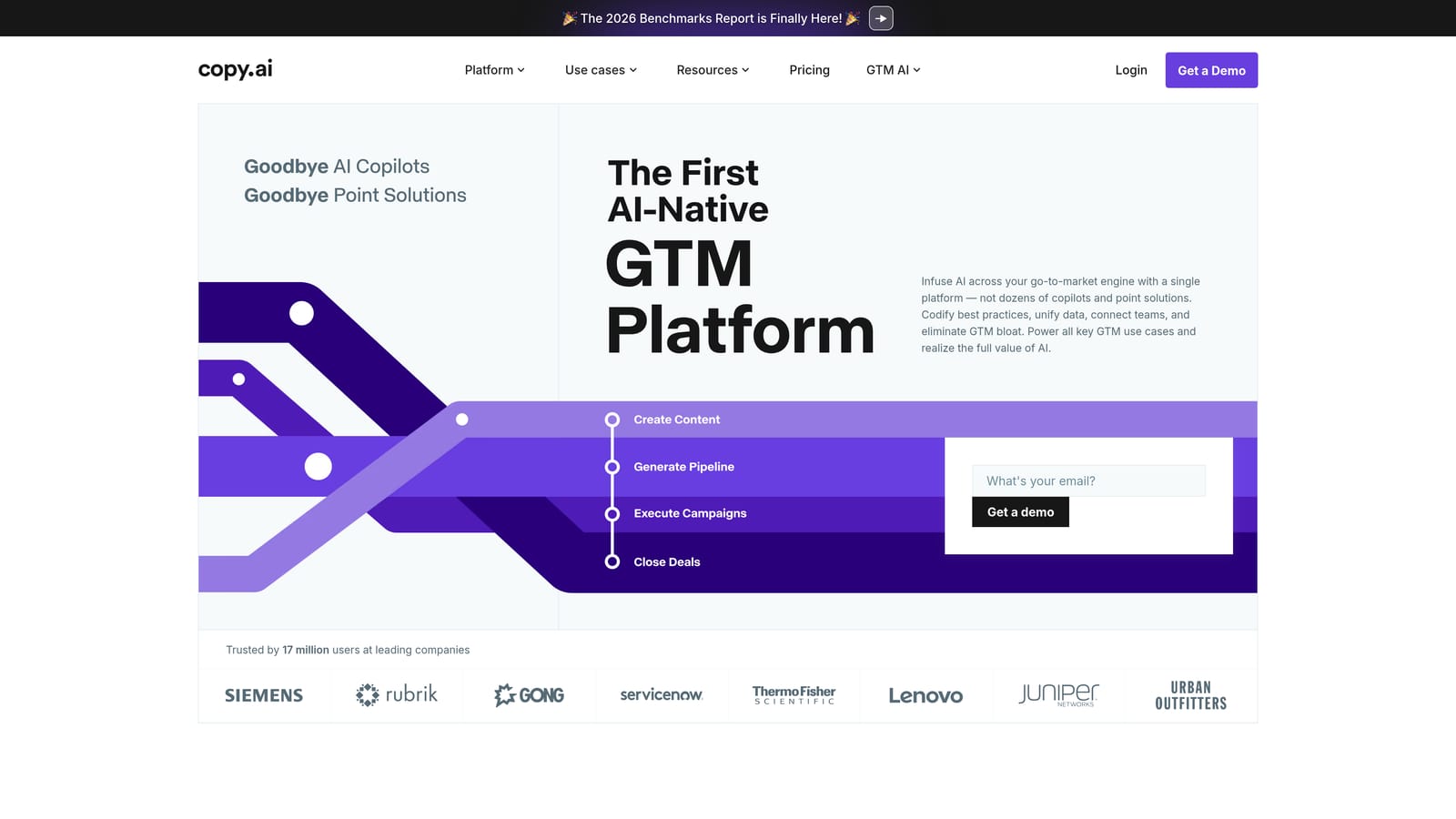
Copy.ai is a content automation platform that chains multiple AI tasks into structured workflows, making it well-suited for teams producing explainer articles at scale across multiple clients or products.
Where This Tool Shines
Copy.ai's Workflows feature is the core differentiator here. Instead of prompting the AI step by step, you can chain tasks — research, outlining, drafting, editing — into a repeatable sequence that runs with minimal intervention. For agencies managing content production across several clients, this kind of automation reduces the per-article time investment significantly.
The platform has shifted toward a go-to-market (GTM) workflow focus, which means it's built with content operations in mind rather than just individual writing tasks. That operational orientation makes it a natural fit for teams rather than solo creators.
Key Features
Multi-Step Workflows: Chain research, outlining, drafting, and editing into automated sequences that run end-to-end.
GTM-Focused Automation: Built around content pipeline efficiency rather than single-piece output.
Team Workspace: Shared environment for collaborative content production and review.
Content Template Library: Pre-built templates for common formats including explainer articles and guides.
Free Tier Available: Accessible starting point before scaling into paid workflow features.
Best For
Content operations teams and agencies producing high volumes of explainer articles across multiple clients. Better for workflow automation than for deep SEO or GEO optimization.
Pricing
Free tier available; paid plans unlock advanced workflow features. See copy.ai for current pricing.
5. Notion AI
Best for: Teams already using Notion who want to draft and iterate on explainer articles without switching tools.
Notion AI brings native AI writing assistance directly into the Notion workspace, eliminating context switching for teams that already manage their content planning and knowledge base there.
Where This Tool Shines
The biggest advantage Notion AI offers is frictionless integration. If your team already lives in Notion — using it for content calendars, briefs, and documentation — adding AI writing assistance in the same environment is a natural extension. There's no new tool to learn, no separate login, and no copy-pasting between platforms.
For collaborative drafting and iteration, Notion AI works well. Multiple team members can contribute to the same explainer article, leave comments, and refine the content in real time. It's genuinely useful as a drafting aid, though it's worth being clear that it's not a dedicated SEO or GEO optimization platform.
Key Features
Native Workspace Integration: AI writing assistance built directly into Notion — no separate tool or context switching required.
Draft, Edit, and Expand: Handles the full writing lifecycle within a single document environment.
Real-Time Collaboration: Multiple team members can contribute and review simultaneously.
Database and Wiki Integration: Works alongside existing Notion content libraries and knowledge bases.
Low Onboarding Friction: Immediate value for existing Notion users with minimal setup.
Best For
Teams already embedded in the Notion ecosystem who need a capable drafting aid. Not the right choice for teams prioritizing SEO scoring, GEO optimization, or AI citation tracking.
Pricing
Available as an add-on to existing Notion plans; see notion.so for current pricing.
6. Surfer SEO
Best for: Content teams that want real-time on-page optimization scores while writing explainer articles.
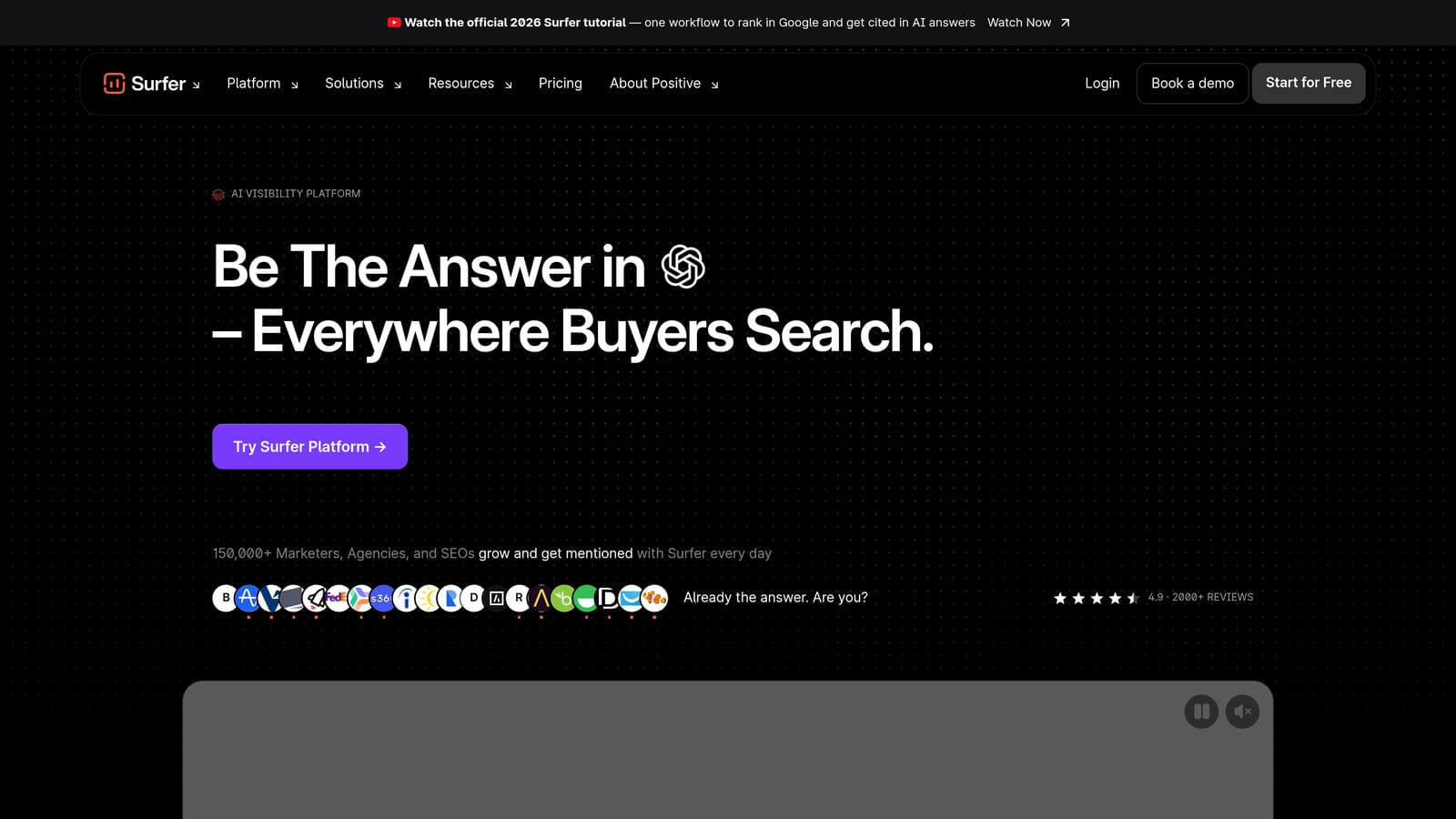
Surfer SEO is an industry-recognized on-page optimization tool that scores your content against top-ranking SERP pages in real time, with NLP-based keyword recommendations for semantic depth.
Where This Tool Shines
Surfer's Content Editor is where most users spend their time. As you write, it scores your article against the top-ranking pages for your target keyword, flagging gaps in keyword usage, heading structure, and content length. For explainer articles — where semantic coverage and topical depth are critical ranking factors — this real-time feedback loop is genuinely valuable.
It's worth noting that Surfer is primarily an optimization layer, not a full content creation system. Most teams use it in combination with another AI writer (Jasper has a native integration) or with human writers who need clear optimization targets to hit.
Key Features
Real-Time Content Score: Scores your article against top SERP competitors as you write, with clear targets to hit.
NLP Keyword Recommendations: Identifies semantically relevant terms that improve topical depth in explainer articles.
Content Editor with Structure Guidance: Provides heading and section recommendations based on what top-ranking pages include.
SERP Analyzer: Breaks down what top-ranking explainer articles cover so you can match or exceed their depth.
Jasper and Google Docs Integration: Works inside tools your team may already be using for drafting.
Best For
SEO-focused content teams and editors who want objective optimization targets. Best used as a layer on top of another drafting tool rather than as a standalone content creation platform.
Pricing
Subscription-based with tiered plans; see surferseo.com for current rates.
7. Frase
Best for: Research-heavy explainer articles on competitive topics where SERP coverage determines rankings.
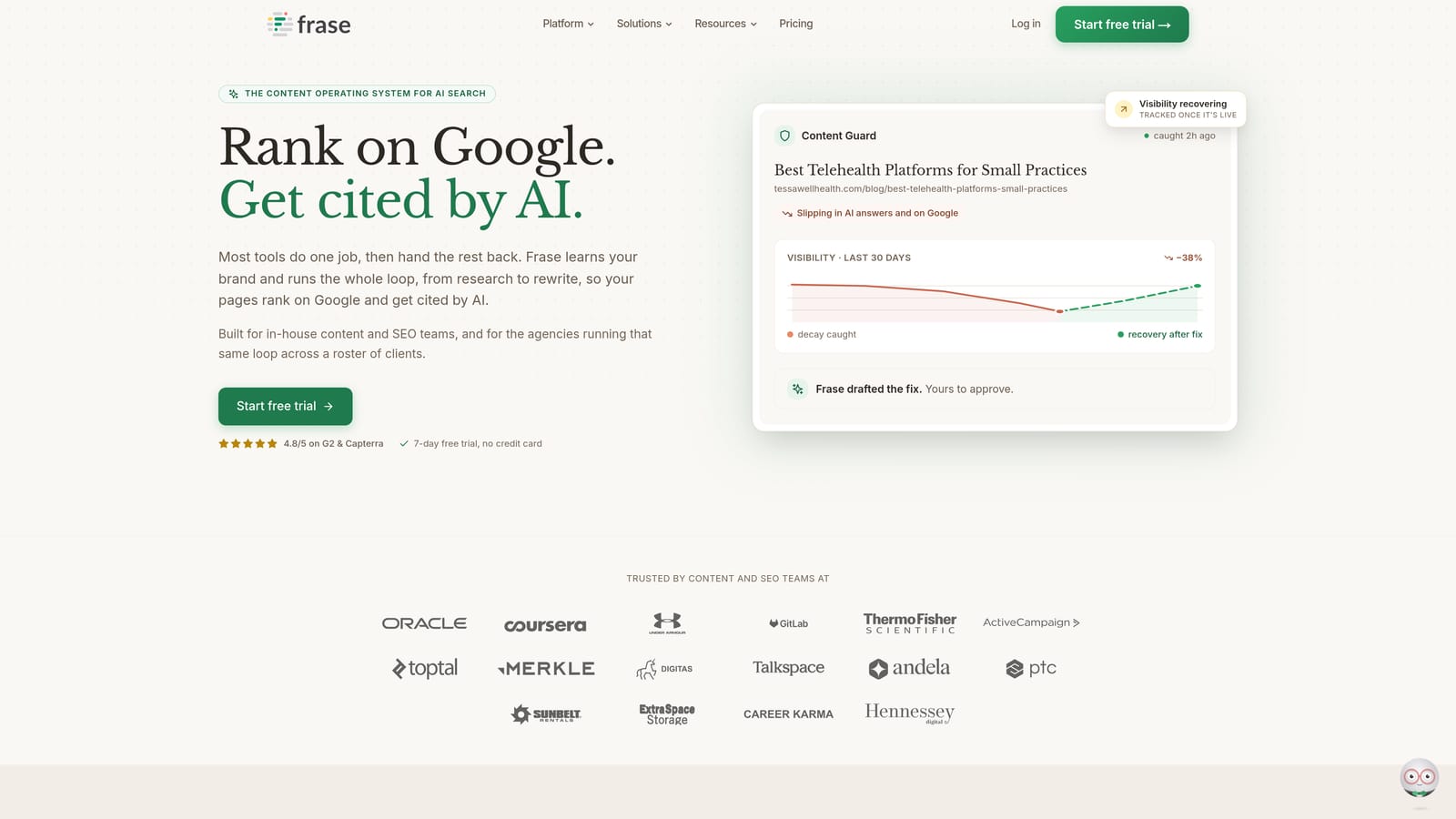
Frase takes a research-first approach to content creation, aggregating top SERP results and generating content briefs before any writing begins.
Where This Tool Shines
Frase's core insight is that good explainer articles start with understanding what already ranks. The tool automatically pulls the top SERP results for your target keyword and synthesizes them into a content brief, showing you the topics, questions, and angles that top-performing content covers. This reduces the risk of writing an explainer that misses key aspects of the topic.
The AI writing is built into the same interface as the research tools, which means you can move from brief to draft without switching platforms. The topic scoring system then measures your draft's coverage against competitors, giving you a clear signal of when the article is ready to publish.
Key Features
Automatic SERP Aggregation: Pulls and analyzes top-ranking pages for your keyword before drafting begins.
Content Brief Generation: Creates structured briefs from SERP analysis, covering topics, headings, and questions to address.
Integrated AI Writing: Draft directly within the same interface as your research tools.
Question Research: Surfaces the actual questions users are asking around your topic, directly informing explainer structure.
Topic Scoring: Measures your content's coverage against competitors with a clear optimization score.
Best For
Content strategists and SEO writers working on competitive topics where understanding the existing SERP landscape is essential before writing. Less focused on GEO or AI citation optimization.
Pricing
Tiered subscription plans; see frase.io for current pricing.
8. Clearscope
Best for: Enterprise content teams that need a rigorous, data-driven optimization standard for published explainer articles.
Clearscope is a premium content optimization platform that uses Google NLP integration and a content grading system to ensure explainer articles achieve deep semantic coverage.
Where This Tool Shines
Clearscope's content grading system — running from D to A++ — gives writers and editors a clear, objective target. This is particularly useful in enterprise environments where multiple contributors need a shared standard for what "ready to publish" actually means. The Google NLP integration means the semantic analysis is grounded in the same signals Google uses to understand content.
It's primarily an optimization and editorial quality tool rather than an AI drafting platform. Most enterprise teams pair it with human writers or other AI tools for drafting, then run final content through Clearscope before publishing. The keyword inventory tracking also makes it useful for managing optimization across a large content library.
Key Features
Google NLP Semantic Analysis: Identifies the terms and concepts that Google associates with your target topic.
Content Grading System: Clear A++ to D grades give writers objective targets and editors a consistent quality bar.
Keyword Inventory Tracking: Monitors semantic coverage across your published content library at scale.
Google Docs and WordPress Integration: Fits into editorial workflows without requiring a platform change.
Team Reporting: Editorial oversight features for managing content quality across large teams.
Best For
Enterprise content teams and large editorial operations where consistent quality standards and semantic rigor are non-negotiable. The price point reflects this positioning.
Pricing
Higher price point aimed at enterprise teams; see clearscope.io for current plans.
9. ChatGPT (Plus / API)
Best for: Technical users building custom explainer article workflows or integrating AI writing into existing content systems.
ChatGPT offers maximum flexibility for content creation through advanced prompting, with API access enabling integration into custom pipelines for teams building their own content systems.
Where This Tool Shines
ChatGPT's flexibility is its defining strength. With the right prompting system, you can produce virtually any explainer structure, tone, or format. Custom GPTs allow teams to encode their preferred explainer article framework once and reuse it consistently, which partially addresses the repeatability challenge that purpose-built tools solve natively.
The API is where ChatGPT becomes genuinely powerful for technical teams. If you're building a custom content pipeline — connecting research tools, CMS publishing, and quality checks — GPT-4o via API can serve as the core drafting engine. The trade-off is that all of this requires setup, and there are no built-in SEO or GEO optimization features. You're working with a powerful foundation, not a finished product.
Key Features
Flexible Prompting: Adaptable to any explainer article structure, tone, or format with the right prompt engineering.
API Access: Enables integration into custom content pipelines and internal tools.
GPT-4o Capabilities: Strong performance on nuanced, detailed explanations that require depth and accuracy.
Custom GPTs: Encode repeatable explainer article workflows for consistent output without re-prompting each time.
Third-Party Ecosystem: Wide range of integrations and tools built on top of the OpenAI API.
Best For
Technical users, developers, and content teams with the capacity to build and maintain custom workflows. Requires the most manual setup of any tool on this list, but offers the most flexibility in return.
Pricing
ChatGPT Plus subscription or usage-based API pricing; see openai.com for current rates.
Which Tool Is Right for Your Team?
The right choice depends on what you're optimizing for. Here's a quick breakdown by use case.
Solo founders and individual creators: Writesonic's freemium model and Notion AI's low friction make them accessible starting points. ChatGPT Plus works well if you're comfortable building your own prompting system.
SEO-focused content teams: Surfer SEO and Frase are the strongest dedicated optimization tools, best used in combination with an AI drafting platform. Writesonic handles both drafting and SEO in one place if you want to simplify the stack.
Agencies managing multiple clients: Copy.ai's multi-step Workflows and Jasper's Brand Voice features are built for this context. Both handle volume and consistency well across different client voices and topics.
Enterprise editorial teams: Clearscope sets the standard for semantic rigor and team-wide quality controls. Pair it with a capable AI drafting tool for a complete production workflow.
Teams focused on AI visibility and GEO: Sight AI is the clear recommendation here. It's the only platform on this list that both generates optimized explainer articles and tracks whether those articles result in AI model citations. As AI-powered search continues to grow as a discovery channel, that closed loop between content creation and AI visibility becomes increasingly valuable.
Explainer articles are no longer just a SEO play. They're the content format that AI models draw from when answering user questions, which means your publishing strategy directly affects how your brand appears in AI-generated responses. Building a consistent library of high-quality explainers is one of the highest-leverage content investments you can make right now.
If you're ready to take that seriously, start tracking your AI visibility today and see exactly where your brand appears across top AI platforms — then use that data to inform every explainer article you publish next.